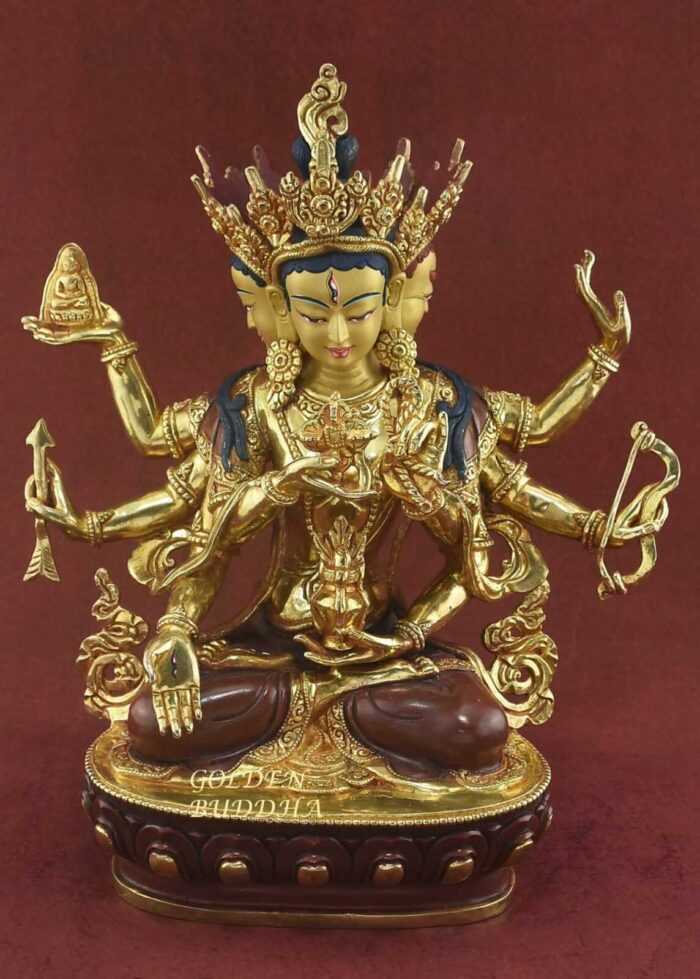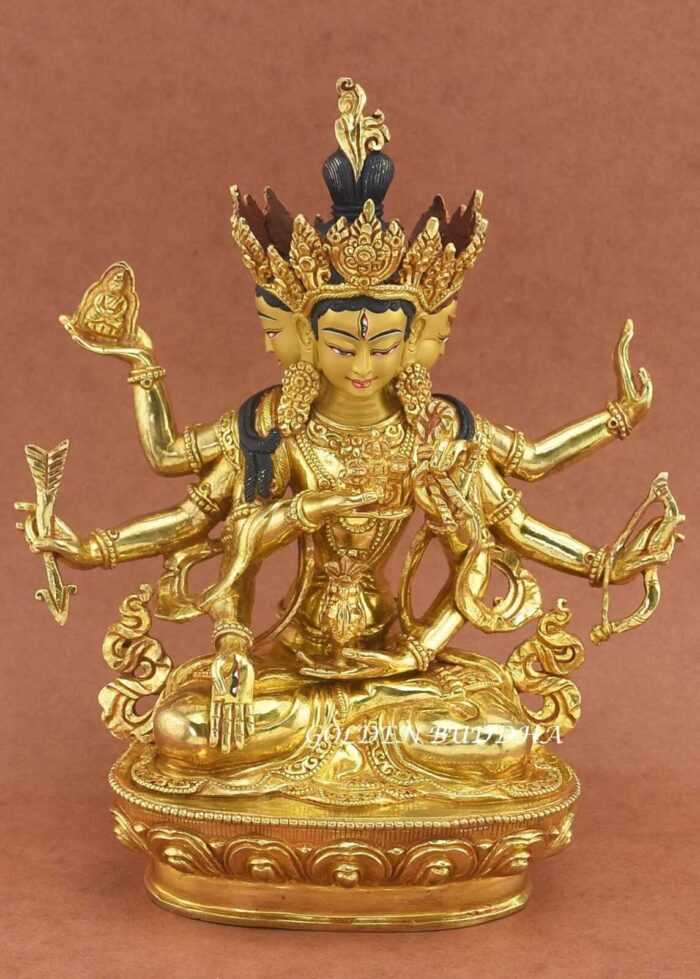
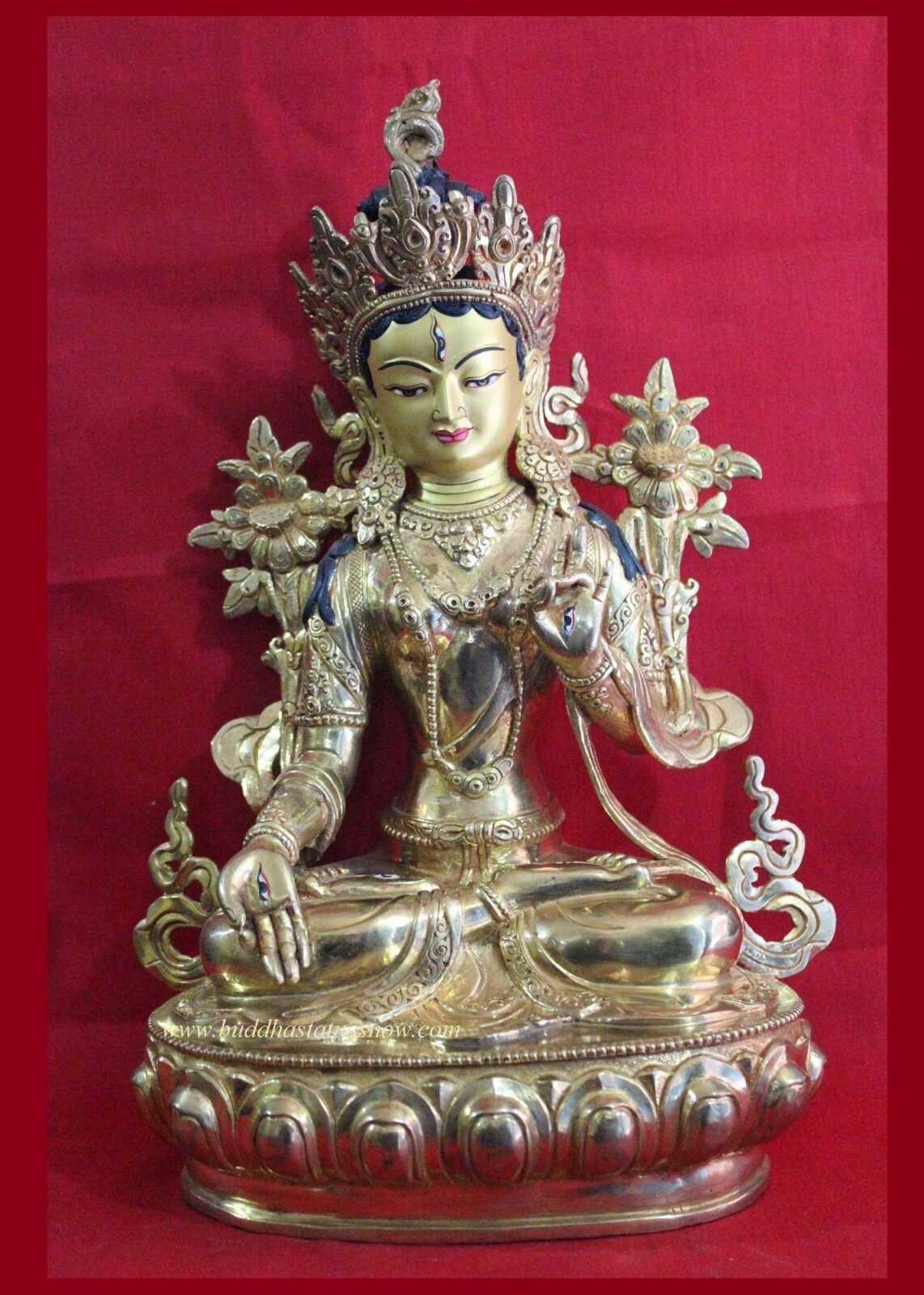

This magnificent 12-inch Tibetan White Tara statue portrays Cintachakra, the “Wish Fulfilling Wheel,” in her distinctive Seven-Eyed Tara form. Handmade by skilled artisans in Patan, Nepal, the sculpture is cast from copper alloy using the traditional lost-wax casting method and fire gilded in 24K gold. White Tara’s graceful proportions, serene expression, elaborate Bodhisattva ornaments, flowering lotuses, and seven wisdom eyes create an especially refined representation of Dolkar, the compassionate female Bodhisattva associated with healing, longevity, and the alleviation of suffering.
The craftsmanship becomes particularly apparent when viewed closely. Tara wears an elaborate openwork crown above her blue-painted hair, accompanied by large floral ear ornaments, layered necklaces, bracelets, armbands, and finely decorated garments. Intricate engraved patterns enrich the sleeves, lower garments, and borders surrounding her seated form. Her face is carefully hand painted with gold and natural pigments, with delicately outlined eyes, brows, and lips producing the calm expression characteristic of White Tara imagery. At the buyer’s request, selected areas of the crown and jewelry may also be embellished with turquoise and red coral gemstones.
The Seven Eyes of Tibetan White Tara Statues
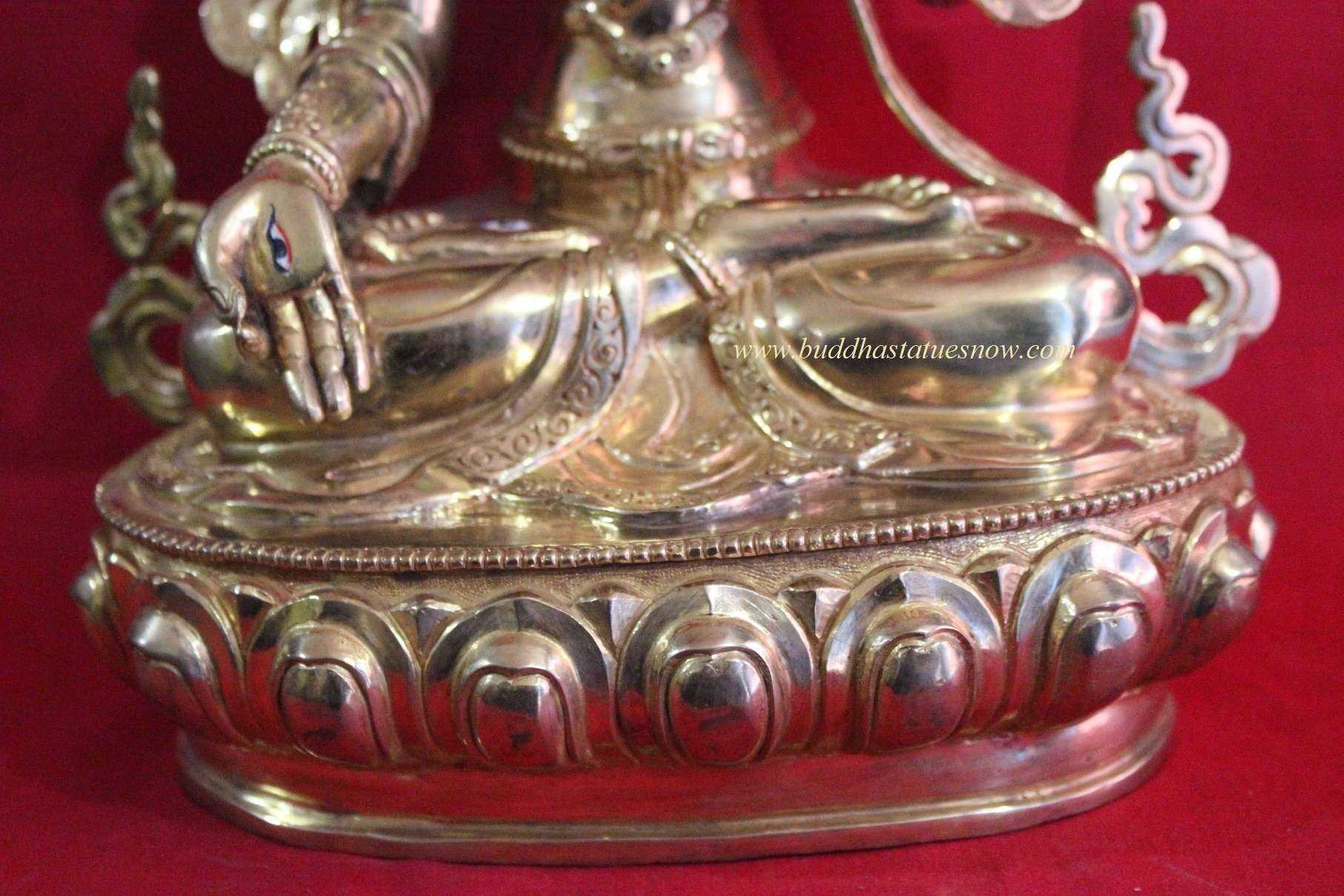
One of the defining characteristics of this Tibetan White Tara statue is Cintachakra’s seven eyes. In addition to her two natural eyes, an upright wisdom eye appears prominently upon her forehead, while additional eyes appear upon the palms of her hands and soles of her feet. Together they symbolize compassionate awareness extending beyond ordinary perception, suggesting Tara’s ability to recognize suffering wherever it occurs. The beautifully painted eye in her open right palm is especially prominent in this sculpture. Our guide explains the deeper symbolism of White Tara’s seven wisdom eyes and their relationship to her compassionate activity.
Lotus Flowers, Mudras and Symbolism
White Tara sits peacefully in full lotus posture upon a broad single-lotus pedestal. Two flowering lotus stems rise beside her body and open into prominent blossoms near her shoulders, surrounded by sculpted leaves and decorative foliage. The lotus is one of Buddhism’s most enduring symbols of spiritual awakening: although rooted in mud, it rises through the water and opens unstained above the surface, providing a visual metaphor for liberation from samsara.
Her extended right hand rests open above the knee in Varada mudra, the gesture of generosity and boon granting. The raised left hand holds the stem of a lotus between the fingers while forming a teaching gesture associated with vitarka mudra. Together these gestures complement White Tara’s peaceful character, expressing generosity, compassionate activity, and the transmission of wisdom. Her seven eyes further distinguish her from Green Tara and emphasize the watchful compassion for which this form of Tara is especially revered.
A Complementary Vajrasattva, Tibetan White Tara and Namgyalma Altar
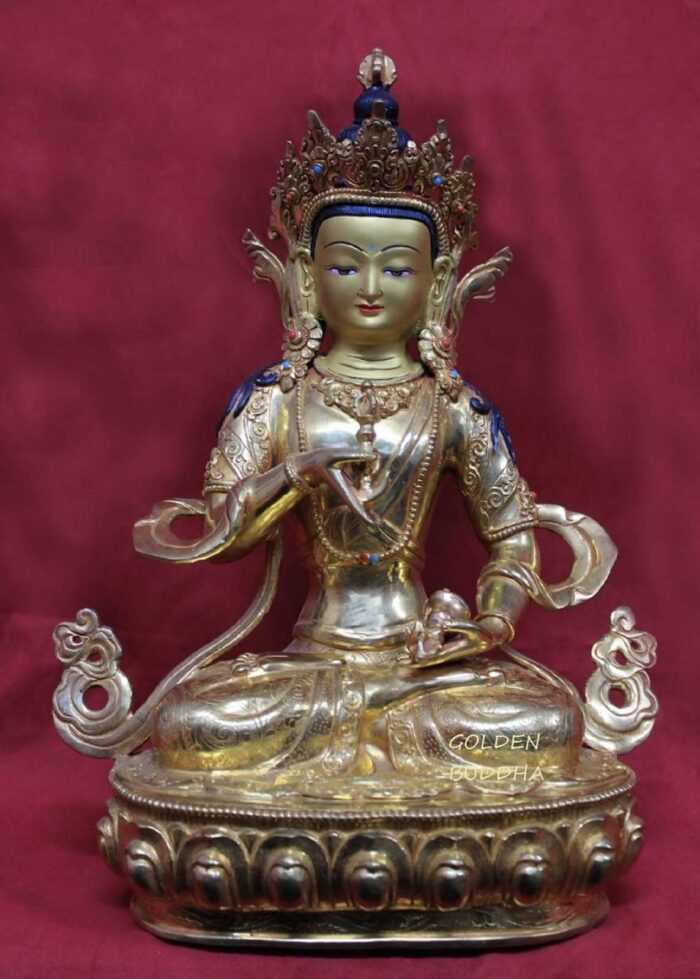
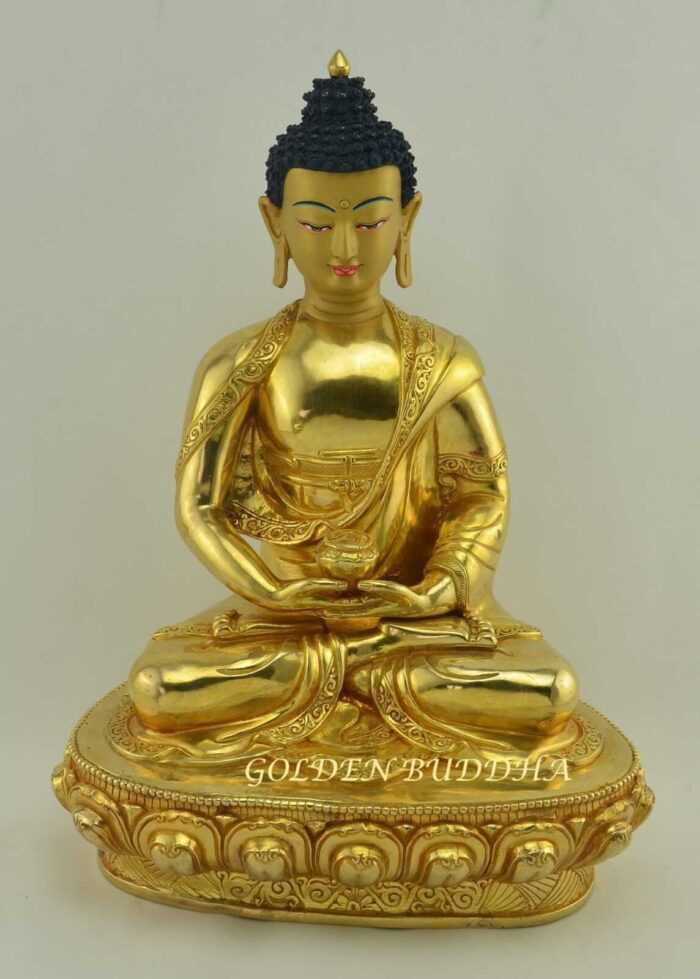
This sculpture can form a particularly harmonious altar grouping with our gold gilded Vajrasattva statue and Namgyalma statue. Their similar traditional Nepalese workmanship and gilded finishes create visual continuity, while their iconography provides a complementary doctrinal relationship. Vajrasattva represents purification of karmic obscurations, White Tara embodies compassionate healing and longevity, and Ushnishavijaya, or Namgyalma, is closely associated with longevity, purification, and overcoming obstacles to life. Together they create a meaningful devotional arrangement centered upon purification, long life, compassionate awareness, and enlightened activity.
Custom Tibetan Buddhist Statues and Altar Sets
Collectors, practitioners, and Dharma centers may also commission custom Tibetan Buddhist statues handmade by our artisans in Nepal. A coordinated White Tara, Vajrasattva, and Namgyalma altar set can be created with complementary dimensions, lotus bases, gilding, gemstones, and artistic detailing. Vajrasattva contributes the purifying dimension by representing the cleansing of negative karma and obscurations. Namgyalma complements White Tara through her strong association with longevity, purification, and protection from conditions that shorten life, while White Tara contributes healing, maternal compassion, and serene long-life activity. Their respective qualities make the three deities a particularly coherent choice for an altar devoted to purification, protection, longevity, healing, and compassionate Buddhist practice.
Authentic, Handmade in Nepal
Every statue is handcrafted in Patan, Nepal, using traditional lost wax casting and comes with a certificate of authenticity issued by Nepal’s Department of Archaeology, verifying its materials, technique, and origin.