
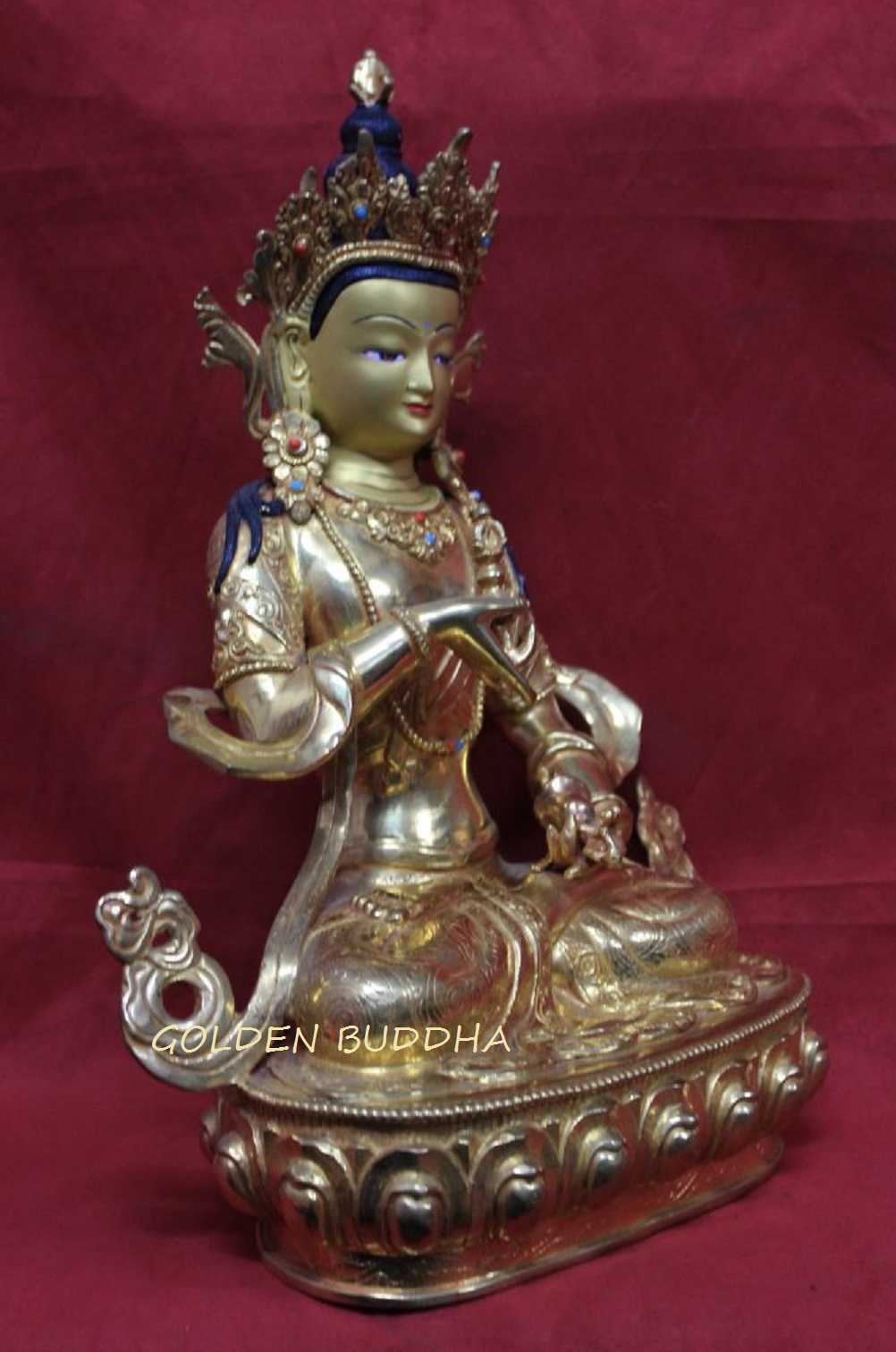
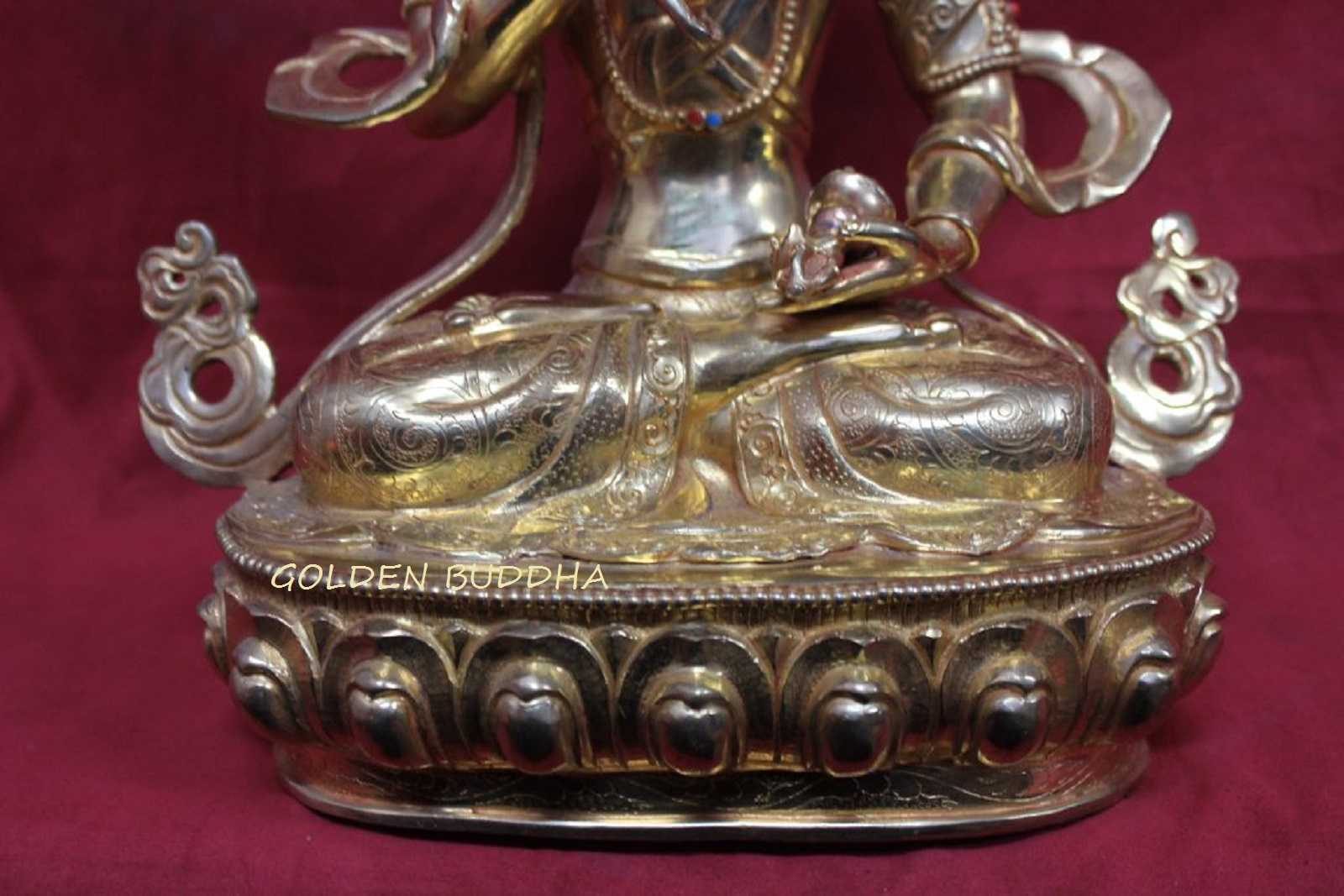
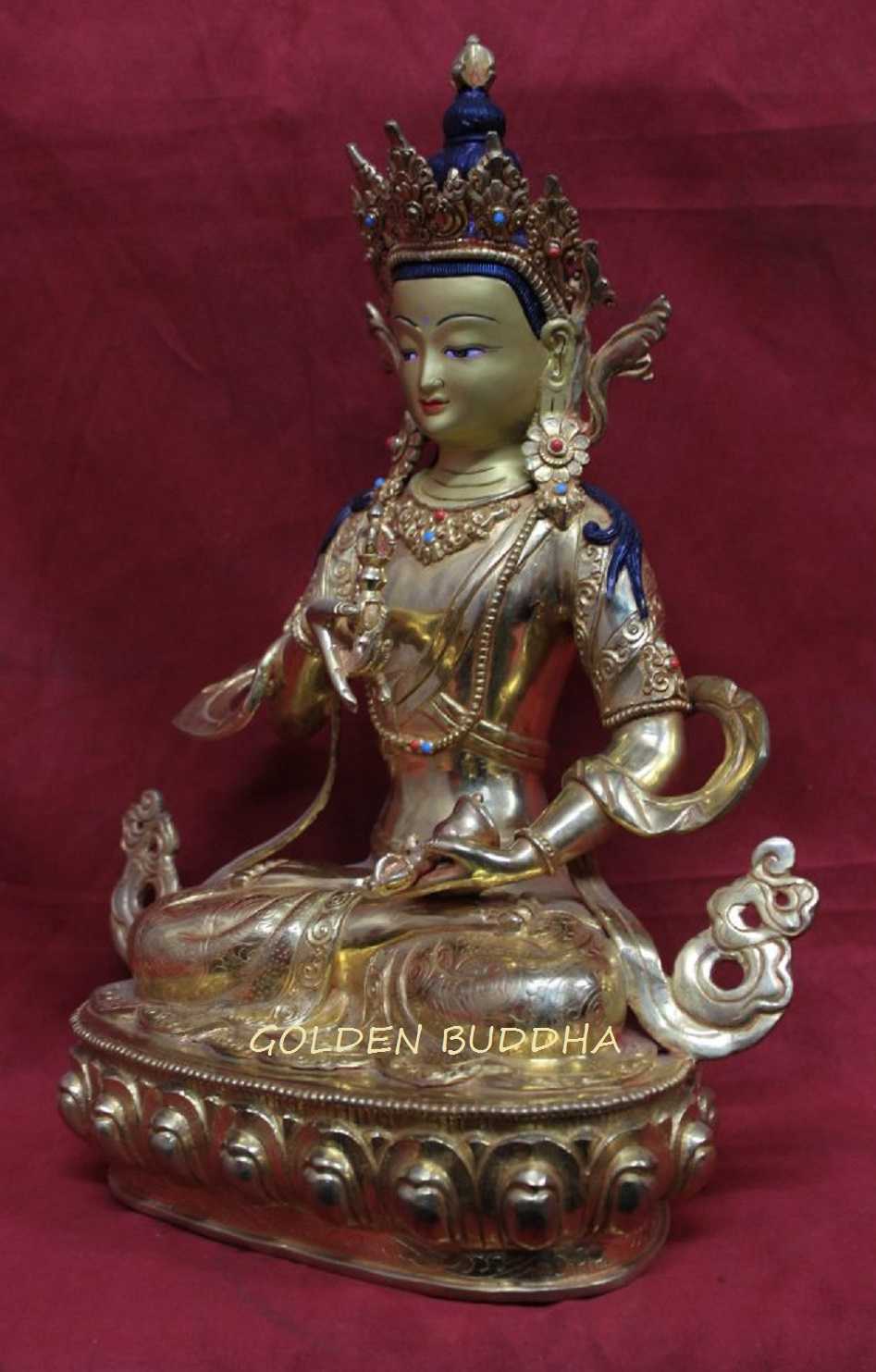
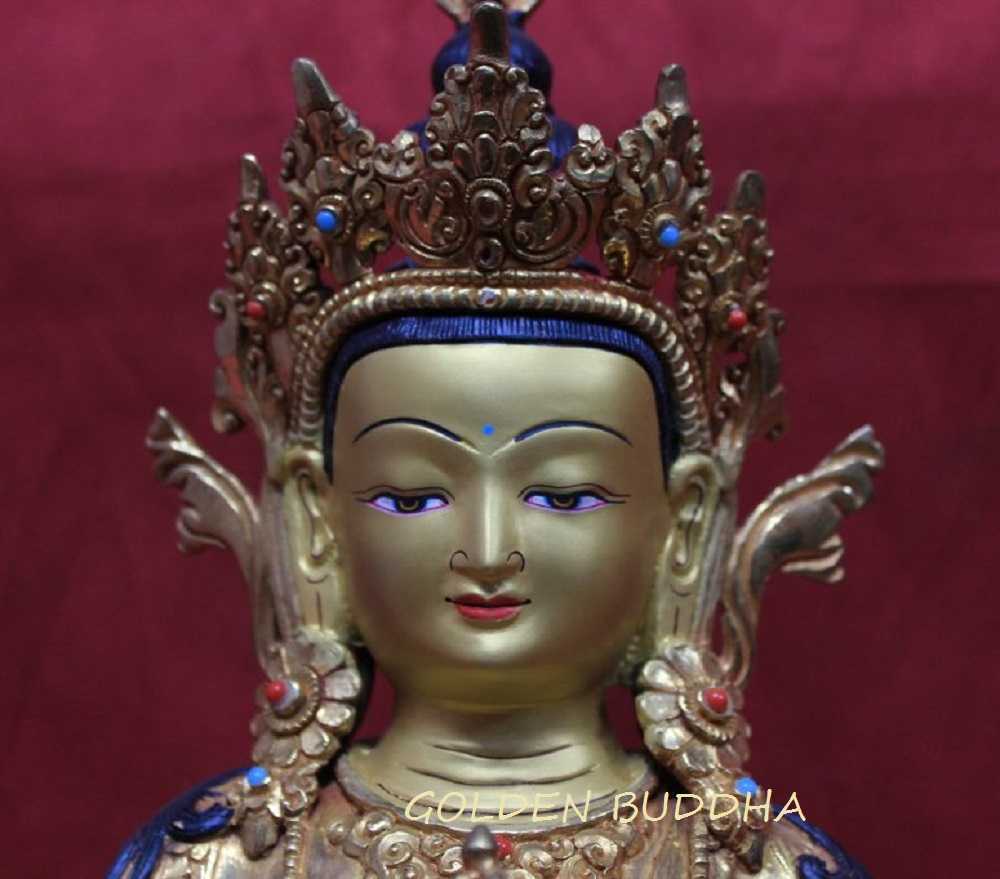
This magnificent 14-inch Tibetan Vajrasattva Sculpture portrays Dorje Sempa, the great Bodhisattva of purification, in an exceptionally detailed traditional Himalayan form. Handmade in Patan, Nepal, the statue is cast in copper alloy using the traditional lost-wax casting method and fire gilded in brilliant 24K gold. Its generous 14-inch height gives the sculpture an impressive altar presence, while extensive hand engraving, embedded gemstones, flowing celestial scarves, and a richly ornamented lotus throne reward closer viewing. The serene expression and balanced proportions create a fitting representation of Vajrasattva Mahāsattva, the “Great Being” whose practice occupies an essential place in Tibetan Buddhism.
The craftsmanship is especially apparent in Vajrasattva’s elaborate Bodhisattva adornments. His tall crown contains intricate floral and scrolling forms accented by turquoise and red coral, while large earrings, layered necklaces, bracelets, arm ornaments, and jeweled details extend across the figure. Fine hand-carved patterns cover the dhoti and garments around both legs, producing an exceptionally textured surface beneath the gold. Blue detailing in the hair and around the shoulders provides a striking contrast with the warm 24K gold finish. The sculpture rests in full lotus posture upon a substantial single-lotus throne framed by a finely beaded upper border.
Iconography of the Tibetan Vajrasattva Sculpture
Vajrasattva holds his characteristic vajra upright before his heart while the ghanta, or ritual bell, rests in his left hand near the lap. These implements are central to Vajrasattva’s traditional iconography. The vajra represents indestructibility and skillful means, while the bell represents wisdom. Their inseparable union expresses a fundamental Vajrayana principle: enlightened realization arises through the integration of wisdom and compassionate method rather than either quality alone.
Known in Tibetan as Dorje Sempa, Vajrasattva is especially associated with the purification of karmic obscurations and negative actions. His practice has an important role in Ngöndro and other Vajrayana traditions, most famously through recitation of the Hundred-Syllable Mantra. The peaceful expression of this sculpture complements that purpose, presenting purification not as punishment but as the restoration of the mind’s unobscured nature. You can explore who Vajrasattva is and his role in Tibetan Buddhism in our detailed guide.
Vajrasattva as a Sambhogakaya Deity
The crown, jewels, silken garments, and celestial ornaments distinguish Vajrasattva’s appearance from the simpler monastic form of Shakyamuni Buddha. These regal adornments correspond to his manifestation in the Sambhogakaya, or enjoyment body of enlightenment. Within Mahayana and Vajrayana teachings, the Sambhogakaya represents a subtle enlightened form accessible to highly realized beings. Our guide provides a fuller explanation of Vajrasattva and the Sambhogakaya.
A Tibetan Vajrasattva, White Tara and Namgyalma Altar Grouping
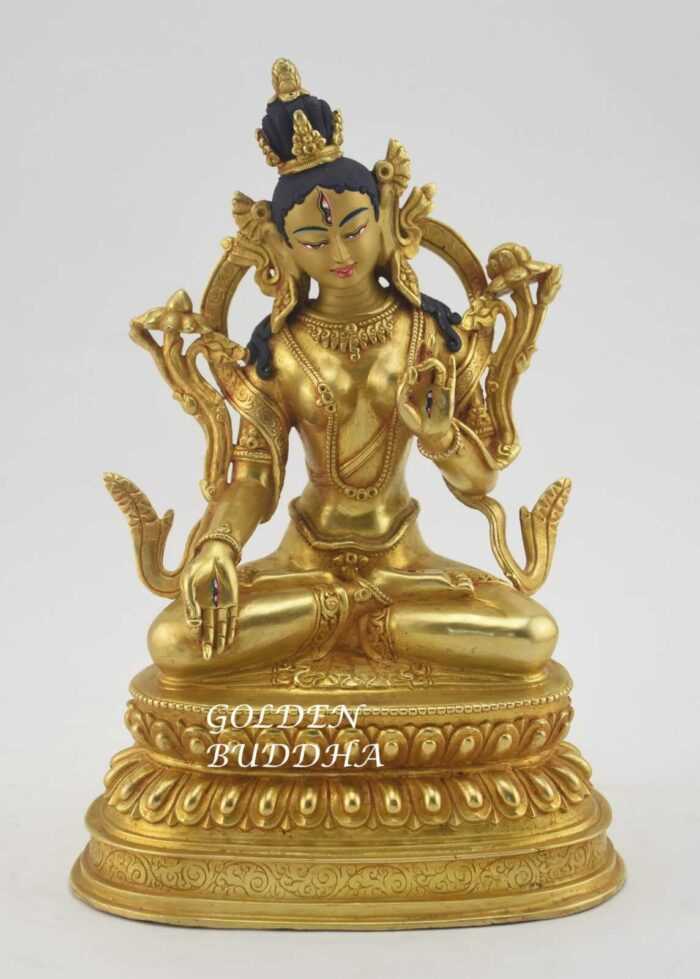
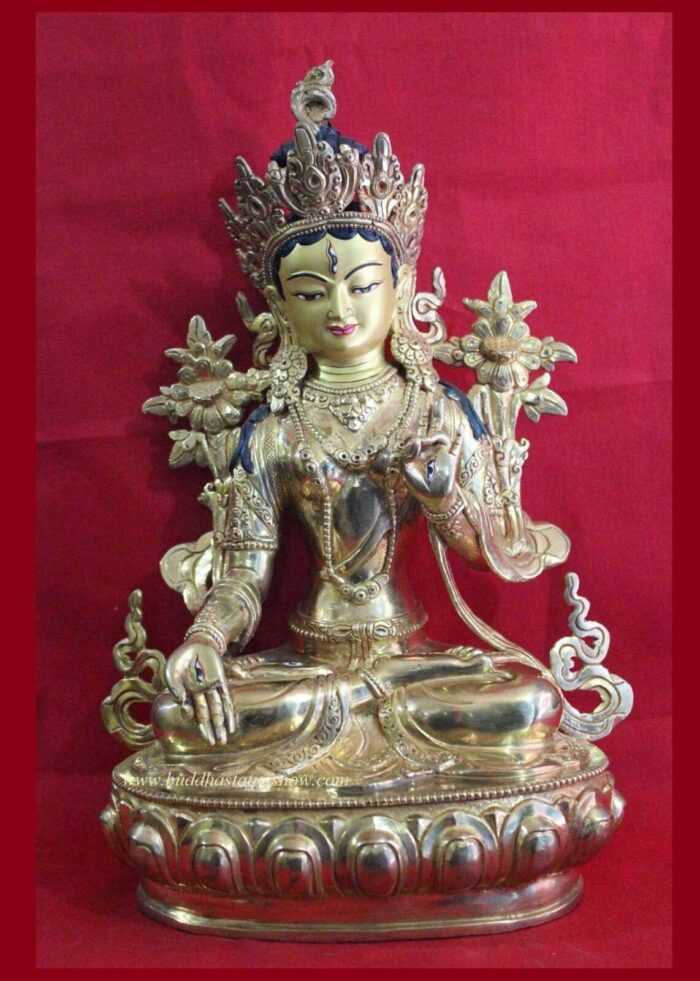
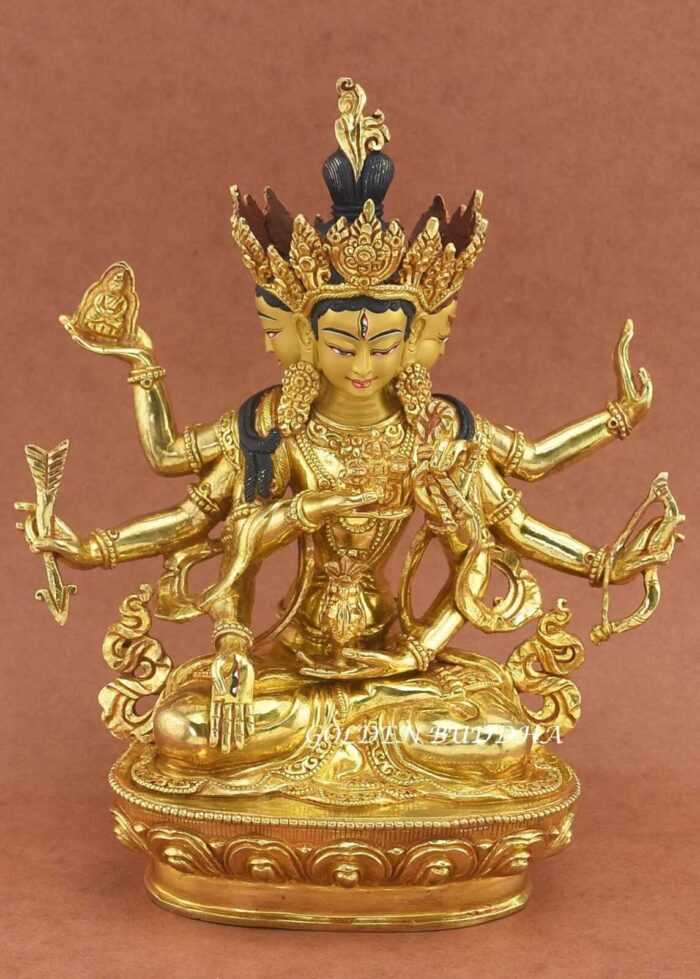
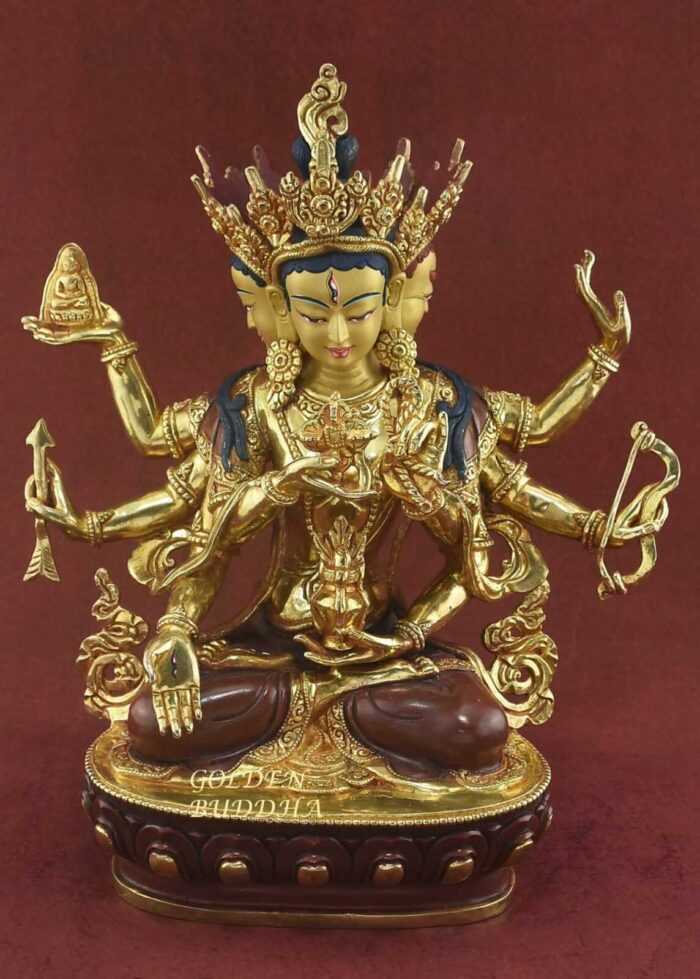
For a larger Buddhist altar, this Vajrasattva forms a particularly meaningful doctrinal grouping with our Seven-Eyed White Tara statue and Namgyalma statue. White Tara is strongly associated with compassionate healing and longevity, while Ushnishavijaya, or Namgyalma, is associated with long life, purification, protection, and overcoming obstacles to life. Vajrasattva adds the central dimension of profound karmic purification. Together, the three figures create a complementary altar centered upon purification, longevity, compassionate activity, and the removal of obscurations.
Custom Tibetan Buddhist Statues
Collectors, Dharma centers, and practitioners seeking a coordinated shrine may also commission custom Tibetan Buddhist statues handmade by our artisans in Nepal. A custom Vajrasattva, White Tara, and Namgyalma grouping can be planned with complementary dimensions, gilding, gemstone decoration, lotus thrones, and artistic details. Such a three-deity arrangement can visually unify an altar while preserving each figure’s distinct function: Vajrasattva embodies purification and the clearing of karmic obscurations, White Tara expresses compassionate healing and serene longevity, and Namgyalma embodies victory over obstacles to life and the purification of conditions associated with untimely death. Together they create a coherent devotional ensemble devoted to purification, long life, protection, and compassionate enlightened activity.
Authentic, Handmade in Nepal
Every statue is handcrafted in Patan, Nepal, using traditional lost wax casting and comes with a certificate of authenticity issued by Nepal’s Department of Archaeology, verifying its materials, technique, and origin.