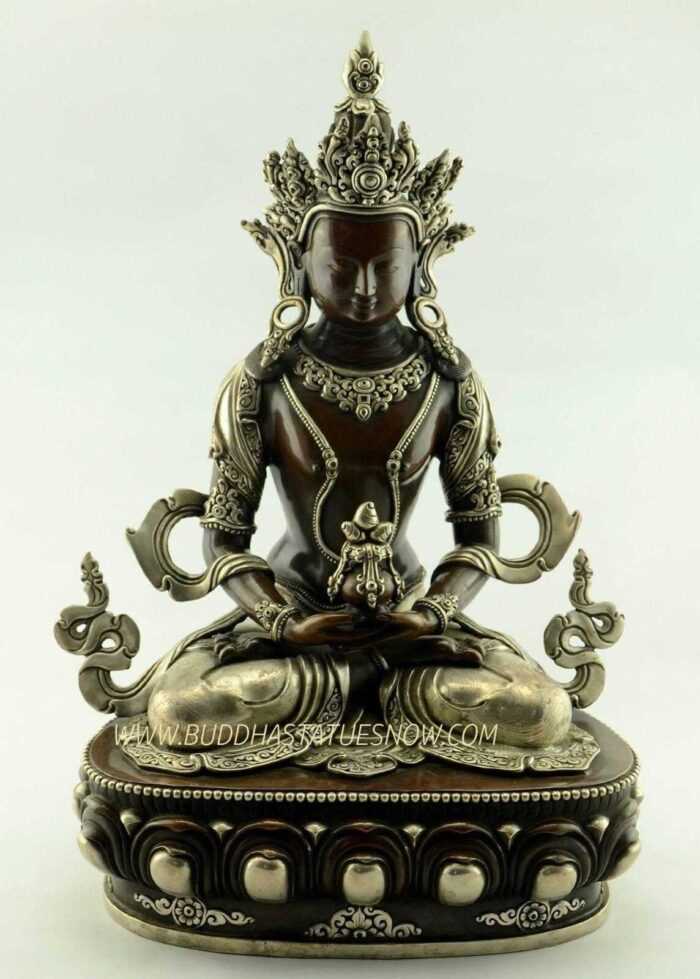


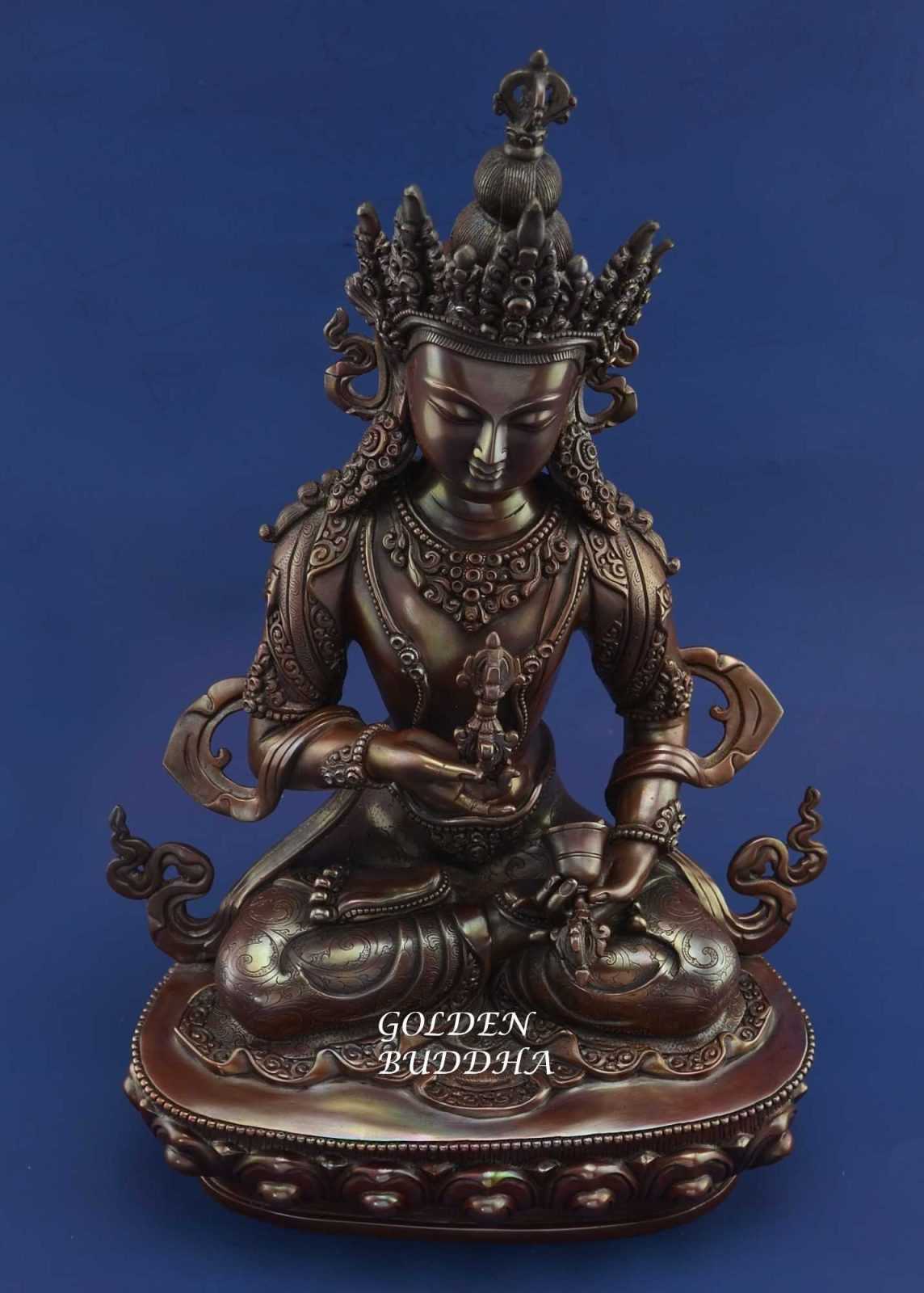


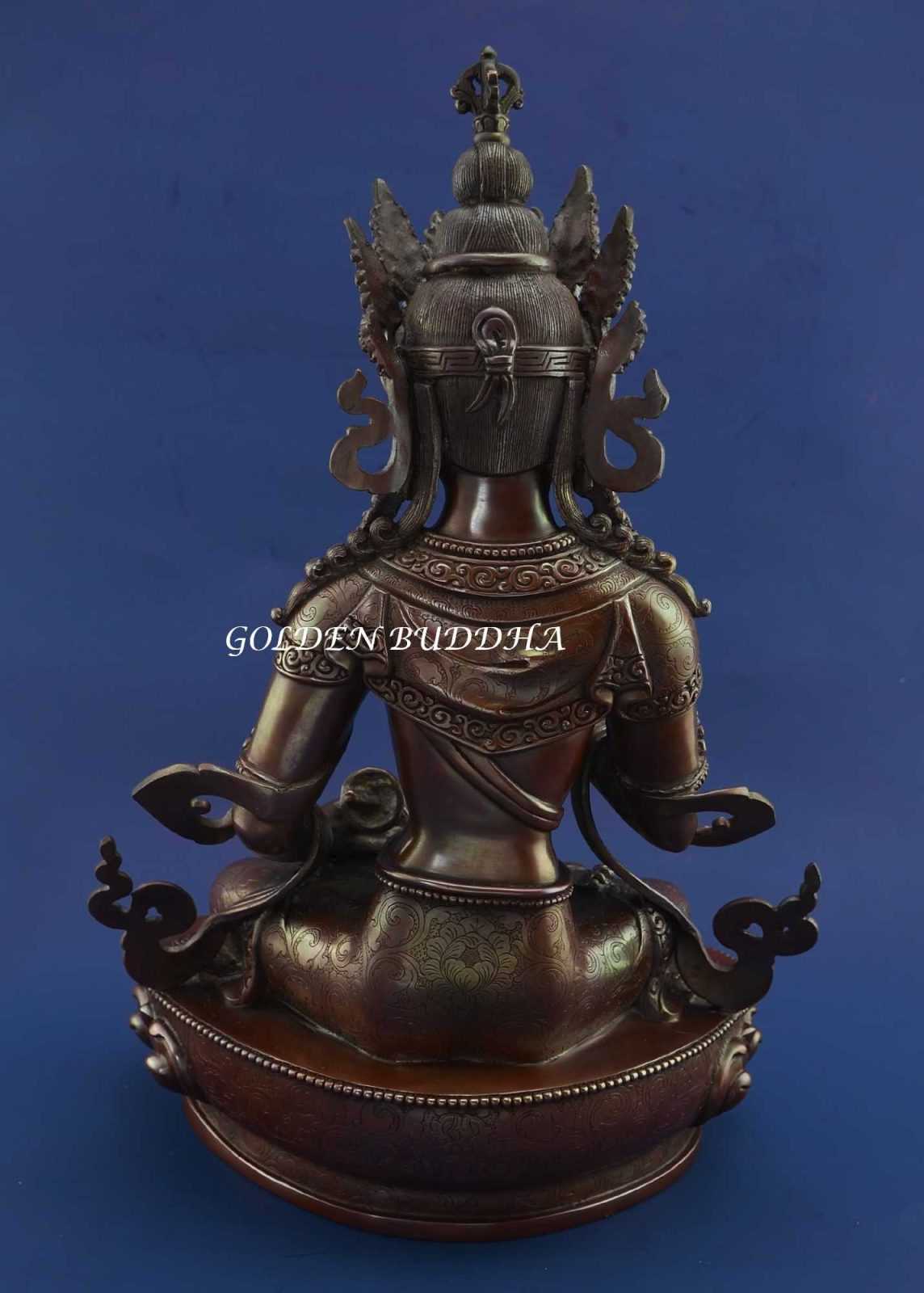
This 14.5-inch Antiquated Vajrasattva Sculpture is a substantial handmade representation of Dorje Sempa, combining traditional Vajrayana iconography with exceptionally detailed Newar metalwork. Handcrafted in Patan, Nepal using the traditional lost-wax casting method, the sculpture is cast in copper alloy and completed with a deep antiquated oxidized finish. Its warm brown-black patina emphasizes the modeling of Vajrasattva’s serene face while bringing remarkable definition to the extensive hand engravings covering his garments, crown, jewelry and lotus throne. The dark finish and subtle copper highlights give the sculpture a dignified appearance particularly well suited to a Buddhist shrine, meditation room or collection of Himalayan art.
Vajrasattva, known in Tibetan as Dorje Sempa, is one of the principal purification deities of Vajrayana Buddhism. His name combines the Sanskrit vajra, representing the indestructible and diamond-like nature of awakened reality, with sattva, referring to a being or spiritual being. Vajrasattva practice is traditionally associated with purification of negative karma, obscurations and harmful habitual tendencies that impede progress along the Buddhist path. Learn more about the meaning and spiritual role of Vajrasattva in Tibetan Buddhism.
Antiquated Vajrasattva Sculpture Iconography
Vajrasattva sits serenely in the full lotus posture upon a broad single lotus throne. His right hand holds the vajra upright before his heart, while his left hand rests beside his hip holding the ghanta, or ritual bell. These two implements form one of the defining iconographic combinations of Vajrasattva. The vajra represents skillful means and compassionate method, while the bell represents transcendent wisdom. Their inseparable union expresses the integration of wisdom and method necessary for awakening. Explore the deeper symbolism of Vajrasattva’s Sambhogakaya form and attributes.
As a Sambhogakaya figure, Vajrasattva is represented with the regal ornaments of an enlightened Bodhisattva. His tall multi-pointed crown rises above carefully modeled hair and is complemented by elaborate earrings, layered necklaces, armlets, bracelets and waist ornaments. The crown and jewelry can also be embellished with genuine turquoise and red coral gemstones at the buyer’s request before shipping, adding traditional Himalayan color while preserving the sculpture’s distinctive antiquated character.
Exceptional Hand Engravings and Antiquated Finish
One of the outstanding qualities of this sculpture is the amount of hand engraving visible throughout the composition. Intricate floral and scrolling designs cover Vajrasattva’s dhoti across both folded legs, following the contours of the fabric and continuing around the sides and rear. His shoulder garments display additional ornamental borders and scrolling patterns, while smaller engraved details enrich the jewelry and waist ornaments. The rear view is equally carefully finished: fine linear detailing defines the hair, decorative bands surround the head and neckline, and engraved floral motifs continue across the garments and lower robes. Even the broad rim of the lotus throne carries subtle decorative engraving, demonstrating that the sculpture was designed to be appreciated from every direction.
Vajrasattva Purification Practice
Vajrasattva occupies an especially important place in Tibetan Buddhist purification practice. Practitioners commonly recite his Hundred-Syllable Mantra while engaging in confession, purification and the resolve to avoid repeating harmful actions. A shorter form, Om Vajrasattva Hum, is also widely practiced. Vajrasattva purification is particularly important within the preliminary practices, or ngöndro, where repeated mantra recitation helps prepare the practitioner for more advanced Vajrayana teachings. Read more about the Vajrasattva mantra and purification practice.
Antiquated Vajrasattva Sculpture and Green Tara Pair
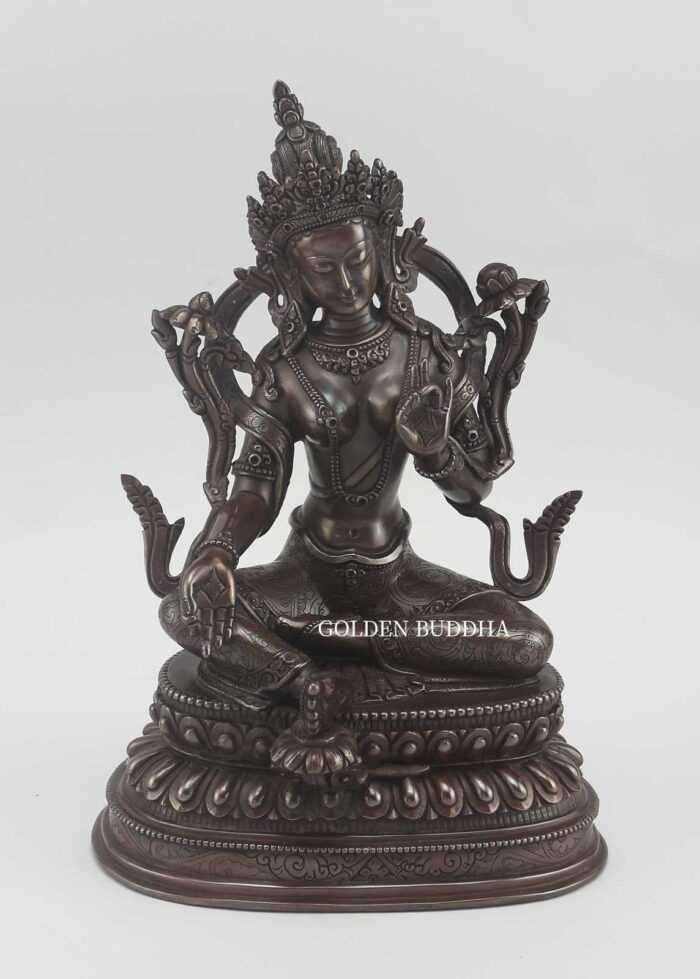
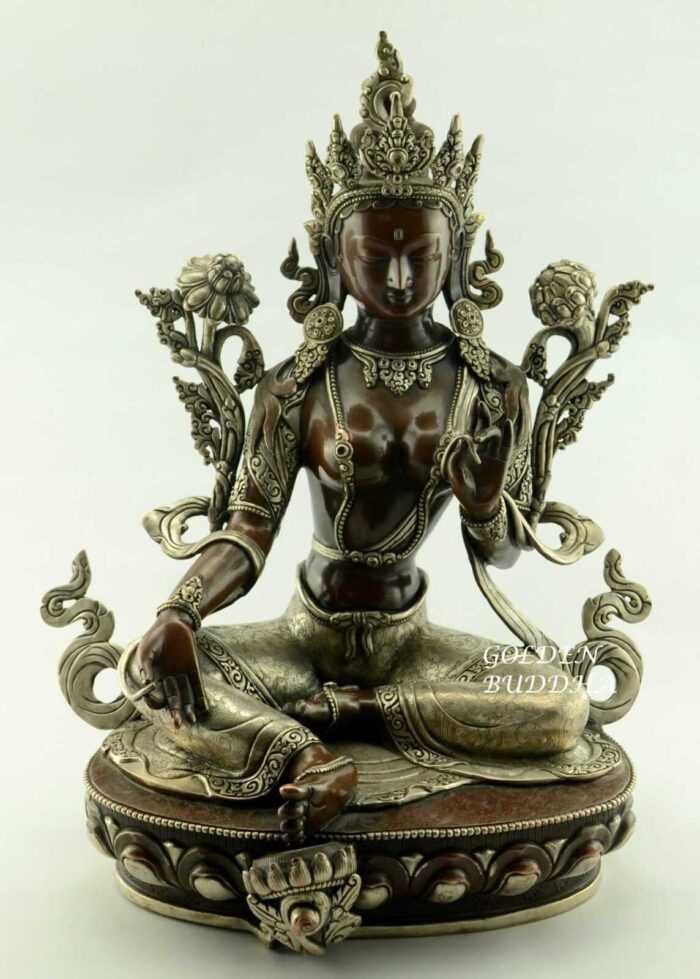
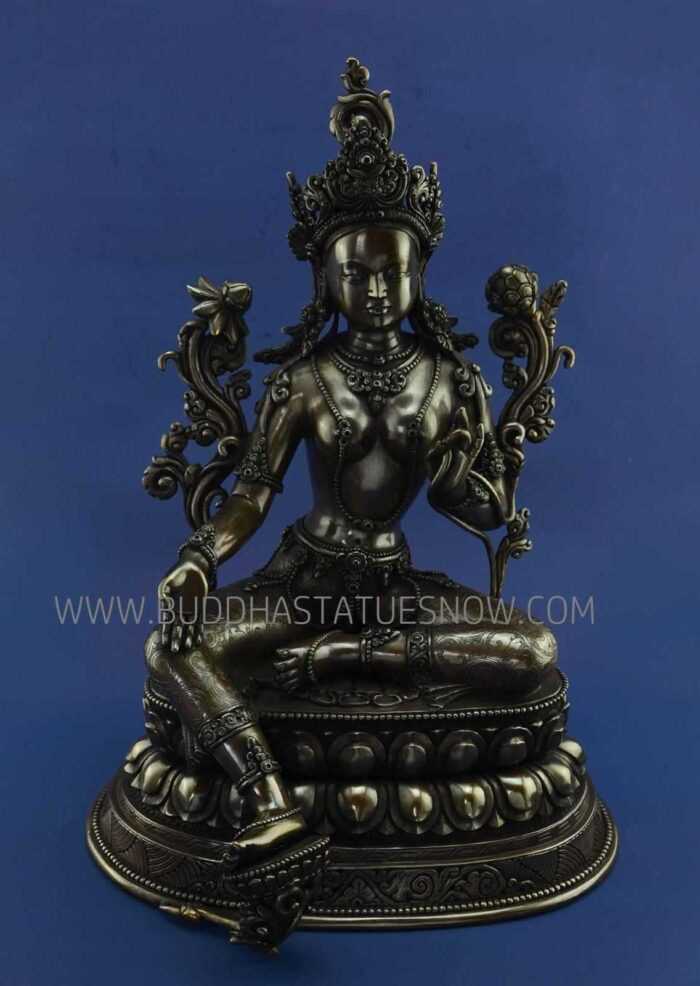
This sculpture makes an especially harmonious companion to our antiquated Green Tara sculpture. Their closely related oxidized copper finishes and elaborate hand engraving create strong visual continuity, while their spiritual functions provide a meaningful Vajrayana complement. Vajrasattva represents purification—the cleansing of karmic obscurations and conditions that cloud the mind—whereas Green Tara embodies swift compassionate activity, protection and the removal of obstacles and fear. Together they can represent both clearing what obstructs spiritual development and cultivating the enlightened activity that carries practice forward.
Custom-Made Antiquated Vajrasattva Sculpture
Collectors seeking coordinated devotional images may also commission custom-made Tibetan Buddhist statues from our Patan artisans, including complementary dimensions, antiquated finishes and traditional ornamental treatments. Vajrasattva and Green Tara are particularly suitable as a coordinated pair because their practices address complementary dimensions of the Vajrayana path. Vajrasattva purification helps clear negative karma, obscurations and habitual impediments, while Tara represents fearless compassionate activity and swift assistance in overcoming obstacles. Presented together, the two sculptures create a coherent devotional pairing centered upon purification, protection and progress toward awakening.
Authentic, Handmade in Nepal
Every statue is handcrafted in Patan, Nepal, using traditional lost wax casting and comes with a certificate of authenticity issued by Nepal’s Department of Archaeology, verifying its materials, technique, and origin.