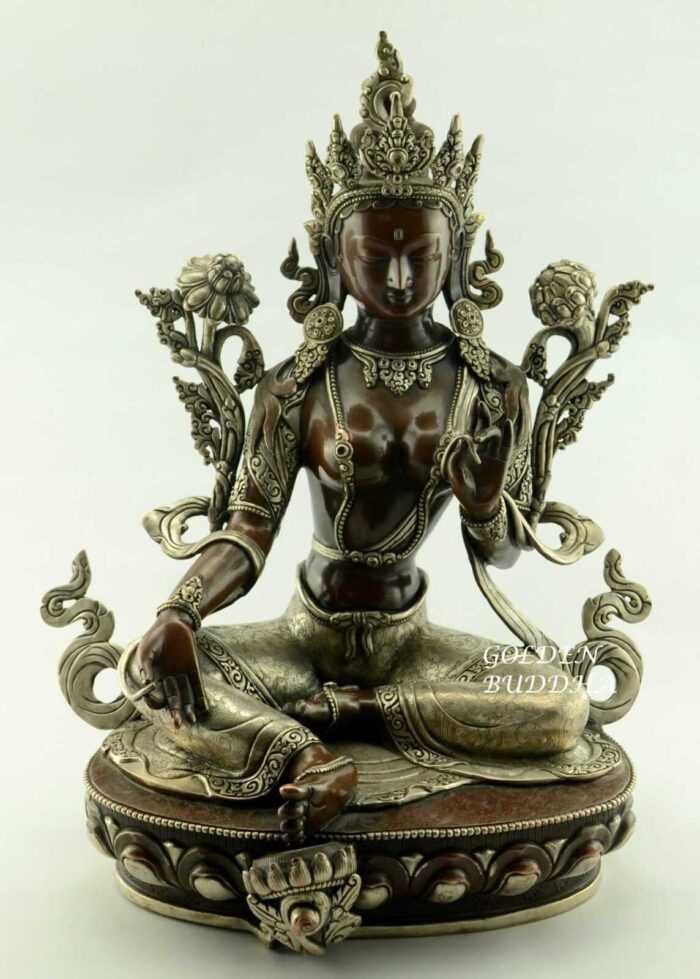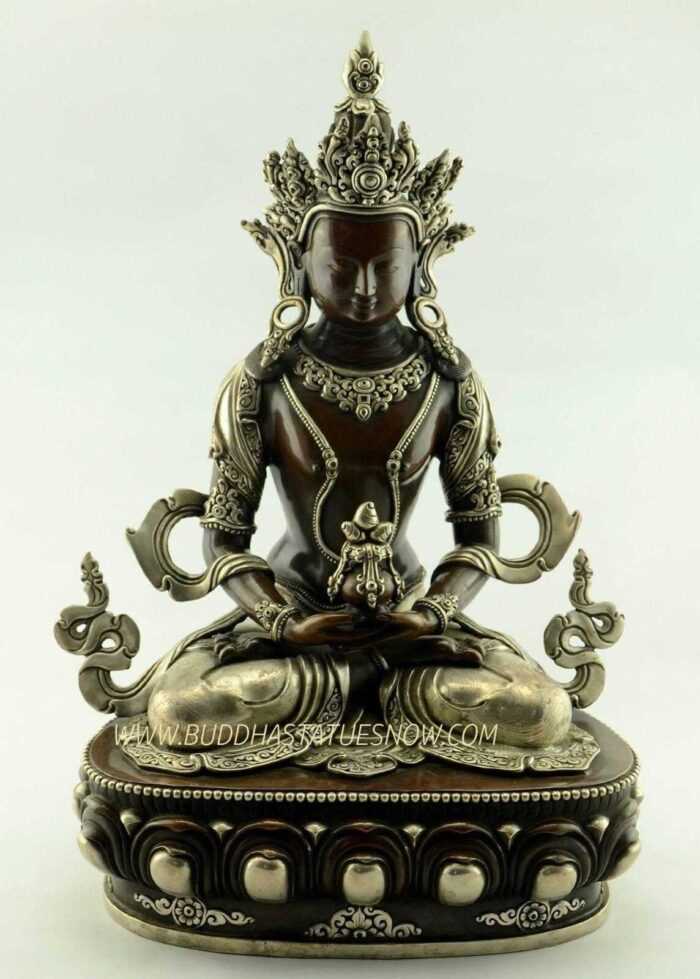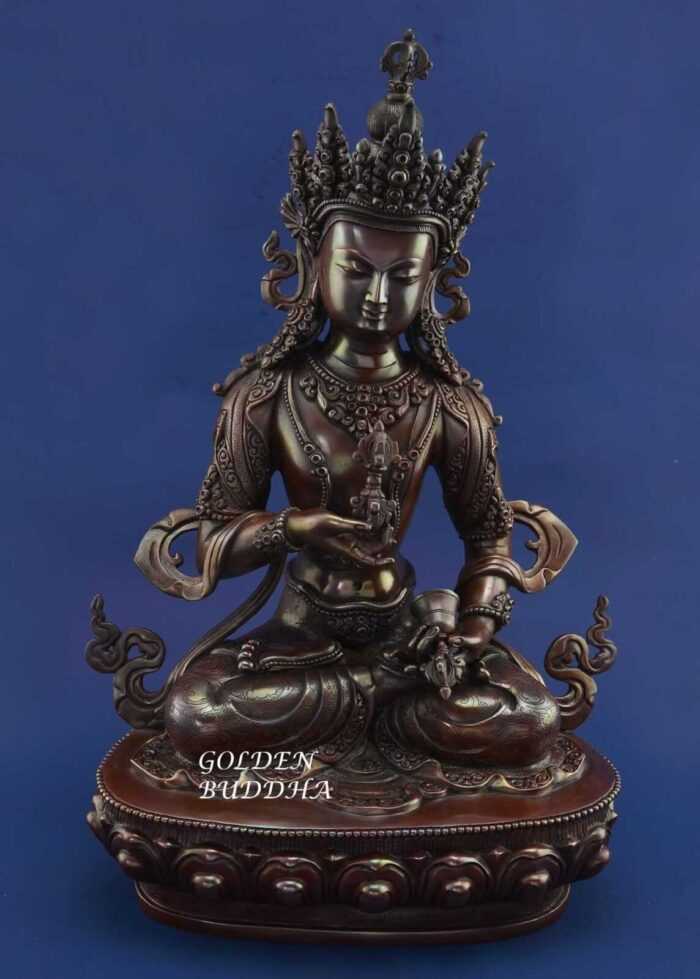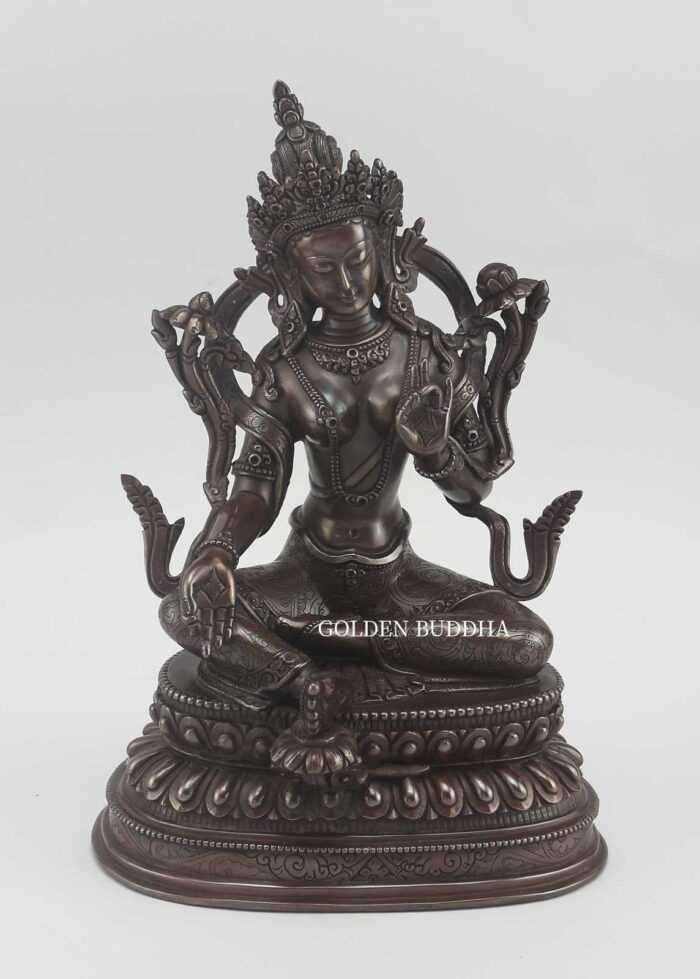
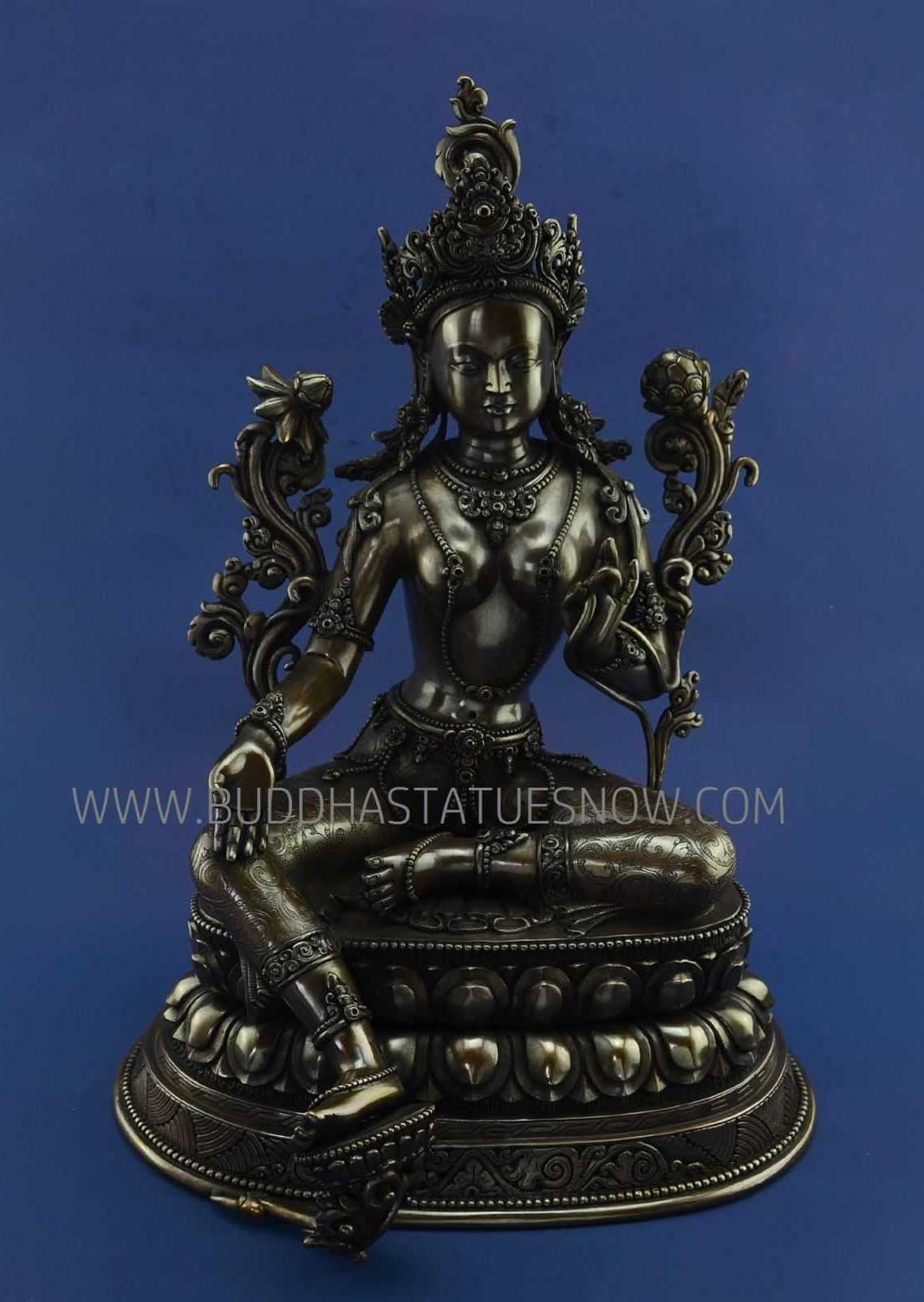
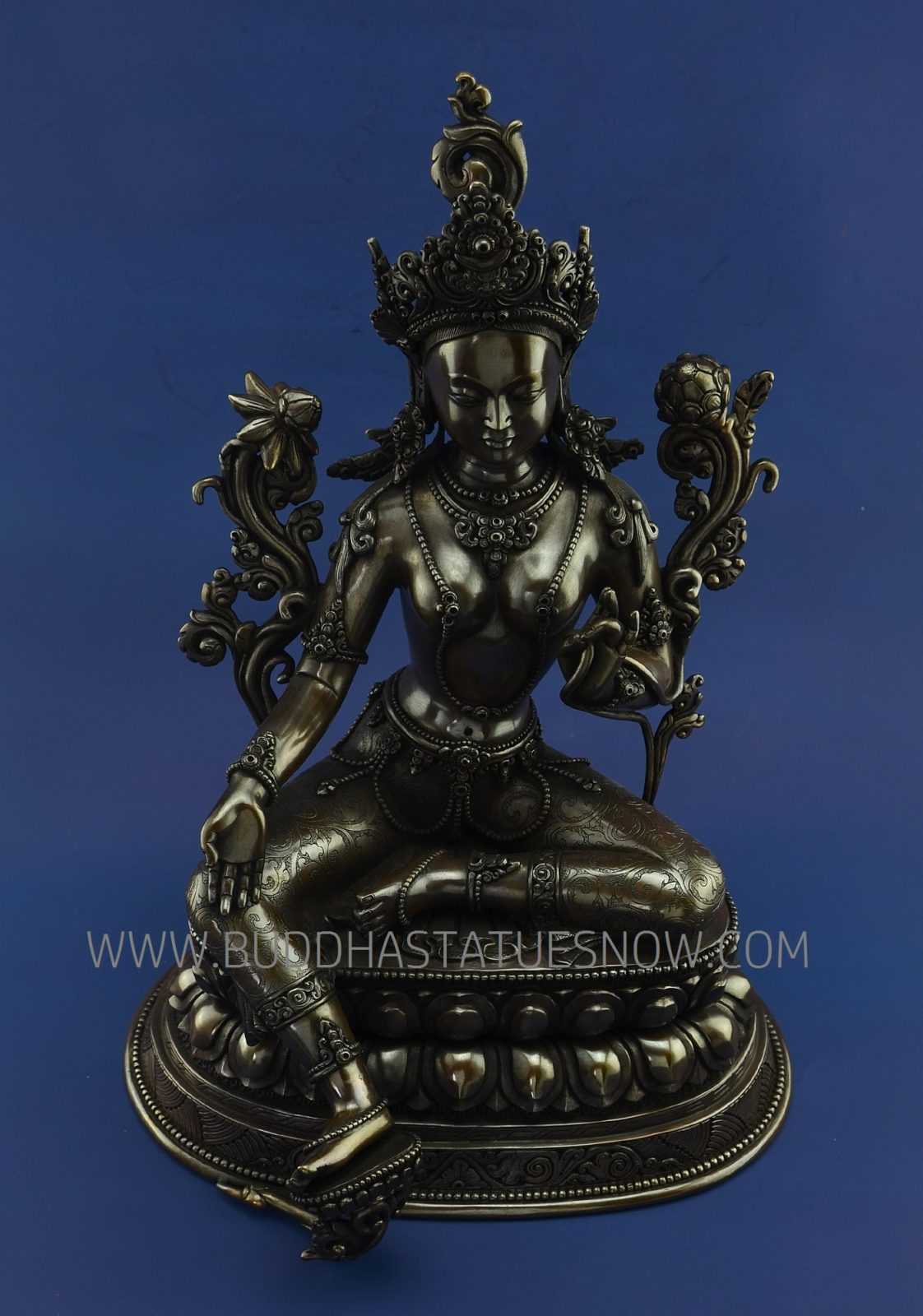
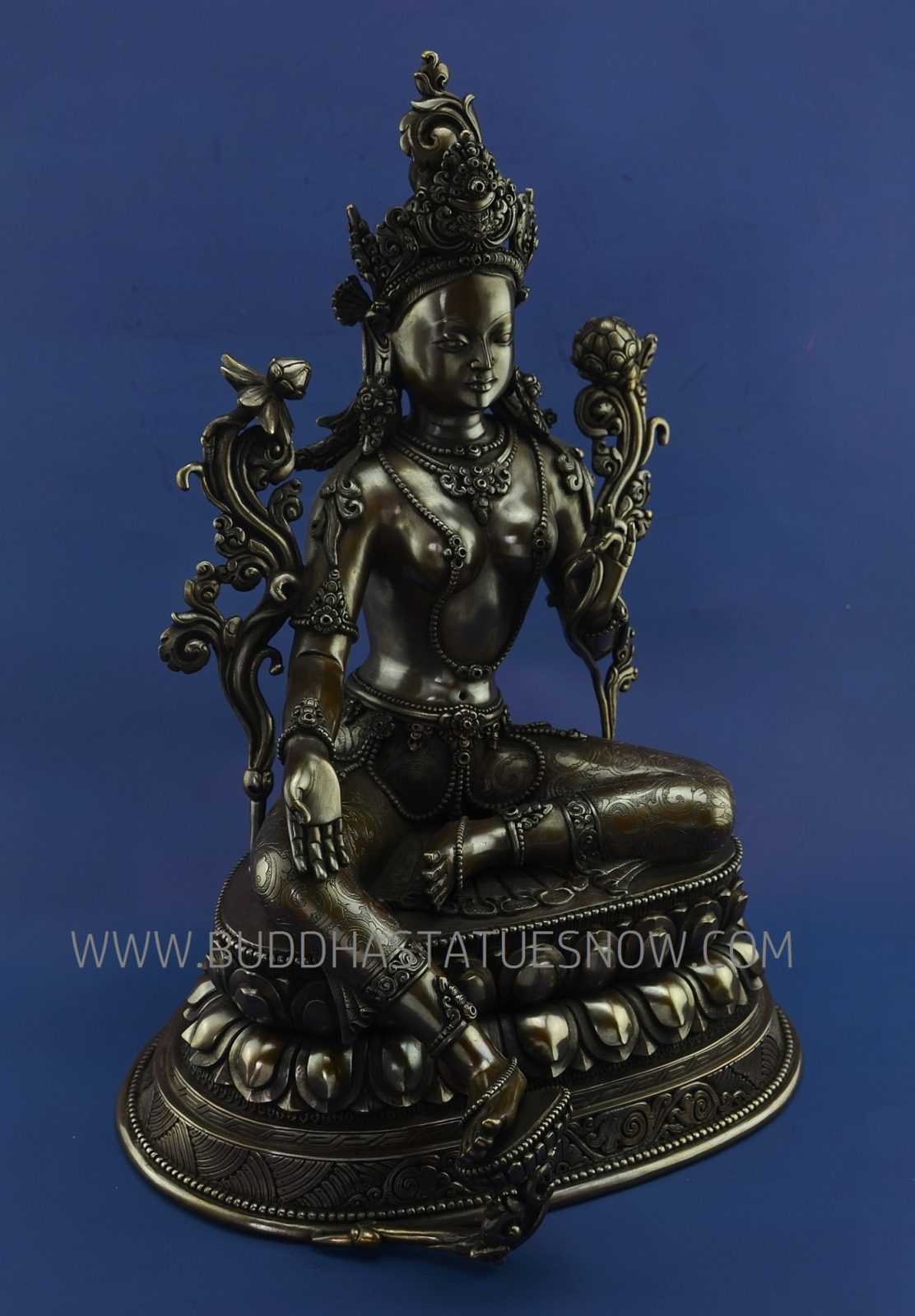
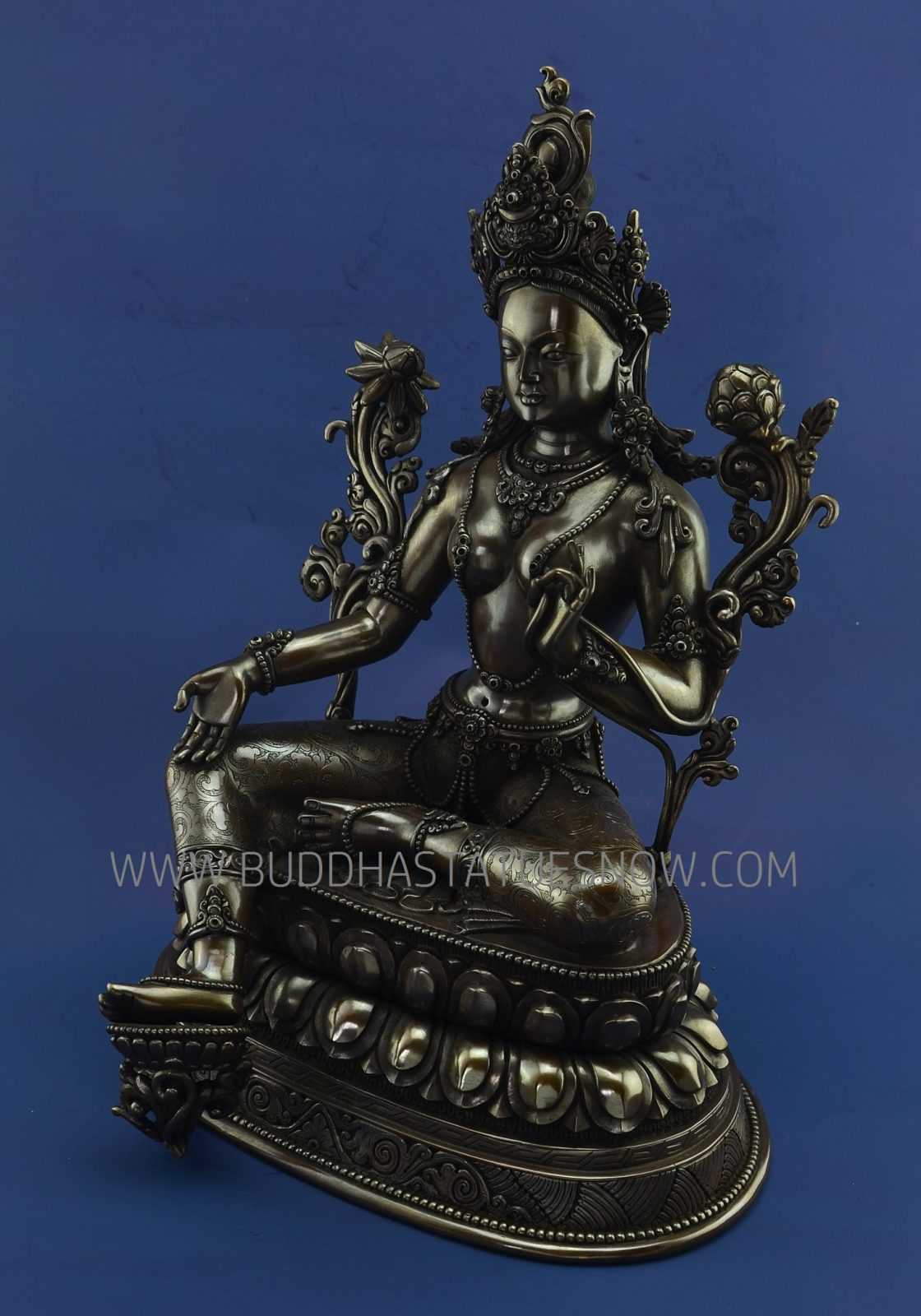
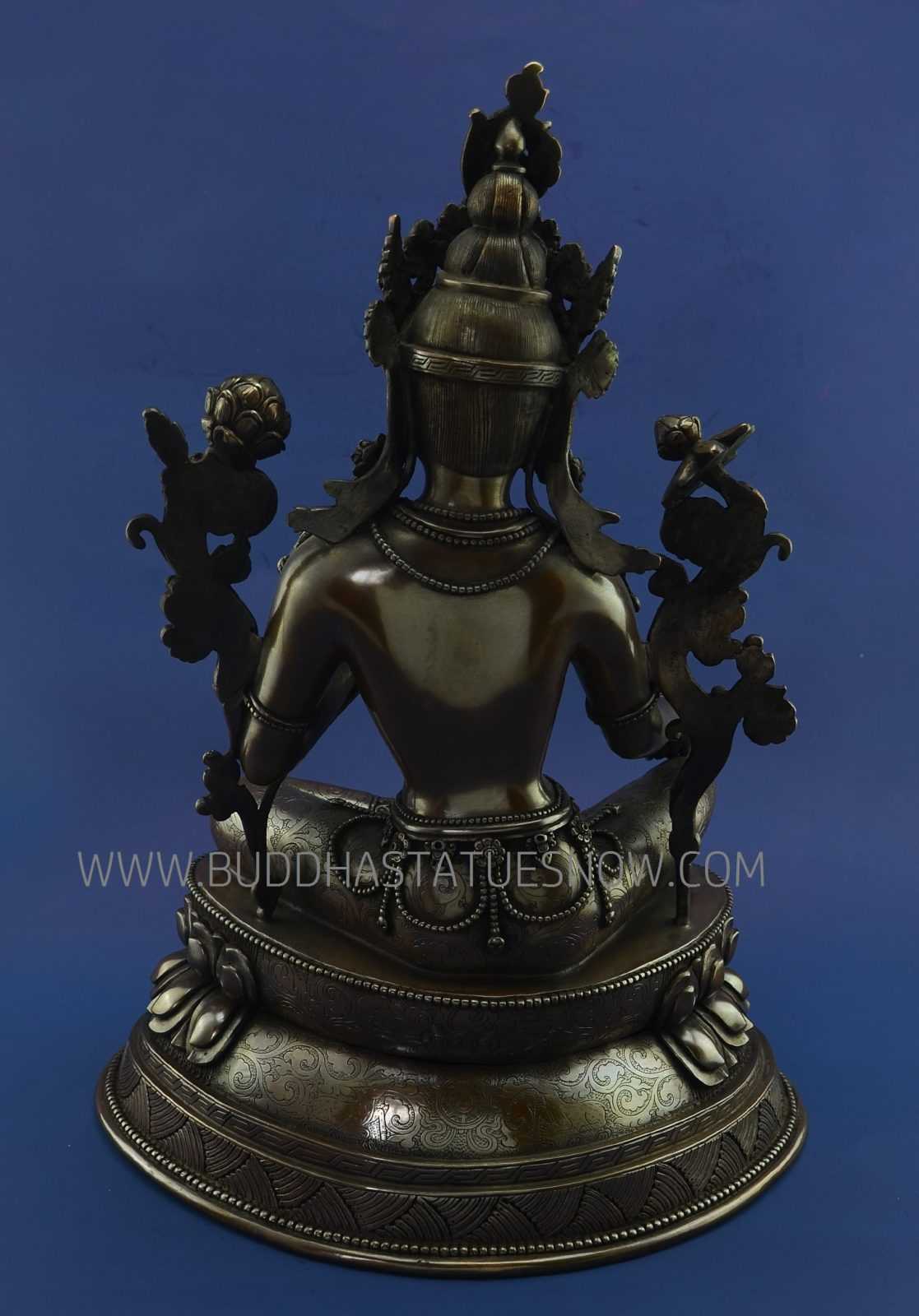
This 15.5-inch Antiquated Khadiravani Tara Statue presents Green Tara in an impressive traditional Himalayan form, combining graceful modeling with unusually extensive ornamental detail. Handmade in Patan, Nepal by skilled Shakya artisans, the sculpture is cast in copper alloy using the centuries-old lost-wax method and completed with a rich antiquated oxidized finish. The deep brown-black surface accentuates the sculpted contours and recessed engravings while allowing subtle copper highlights to emerge across Tara’s face, torso, jewelry and garments. At approximately 8 kilograms, this substantial sculpture has the presence and proportions of a shrine centerpiece while retaining the refined elegance associated with Green Tara.
Khadiravani Tara, also known as Green Tara, Arya Tara and Jetsun Dolma in Tibetan tradition, embodies swift enlightened compassion. Her Tibetan name Dolma conveys the meaning of the liberator or savioress, reflecting Tara’s role in helping beings cross beyond suffering and fear. She is especially invoked for protection, courage and the removal of obstacles. Explore the history and spiritual significance of Green Tara and Jetsun Dolma in our complete Tara guide.
Antiquated Khadiravani Tara Statue Iconography
Tara sits gracefully in lalitasana, the posture of royal ease. Her left leg remains folded inward while her right leg extends downward, with the foot resting upon a separate lotus support projecting from the throne. This distinctive posture expresses one of Green Tara’s defining qualities: although established in meditative awareness, she remains ready to rise immediately in compassionate response to suffering. Her lowered right hand displays the Varada mudra, the gesture of generosity, compassion and the bestowal of blessings. Her raised left hand supports a long utpala stem, while another flowering stem rises beside her opposite shoulder. Learn more about Green Tara’s iconography, posture and symbolic attributes.
The twin lotus blossoms create an elaborate botanical frame around Tara’s upper body, their curling stems and foliage extending alongside her arms. Her tall Bodhisattva crown is densely ornamented, complemented by substantial earrings, necklaces, armlets, bracelets and waist jewelry. The antiquated finish gives these raised details exceptional definition against the smoother surfaces of Tara’s face and torso. Genuine turquoise and red coral gemstones may also be embedded into the crown and jewelry upon request before shipping, adding traditional Himalayan color to the dark copper composition.
Fine Hand Engravings and Double Lotus Throne
The extensive decorative workmanship is especially apparent across Tara’s garments and throne. Her dhoti is covered with delicate scrolling engravings extending across both legs, with ornamental borders following the folds around her knees and ankles. Beneath her sits a substantial double lotus throne formed from deeply modeled rows of lotus petals. The broad lower base introduces another level of craftsmanship, with hand-engraved floral and scrolling patterns continuing around the sculpture and remaining clearly visible across the rear. Repeating geometric bands and beaded borders separate the decorative registers, giving the throne an architectural depth appropriate to the statue’s larger scale. The rear view also reveals the careful finishing of Tara’s hair, jewelry and garment borders, demonstrating that this sculpture was conceived to be appreciated from every angle.
Khadiravani Tara — Protection from the Eight Great Fears
Green Tara is traditionally invoked for protection from the Eight Great Fears, understood both as external dangers and as representations of inner afflictions that obstruct awakening. Her famous mantra, Om Tare Tuttare Ture Svaha, expresses Tara’s liberating and protective activity and remains one of the most widely recited practices in Tibetan Buddhism. Her extended leg, open right hand and serene expression unite readiness for action with compassionate wisdom, making this sculpture particularly meaningful for Tara practice, meditation rooms and Buddhist shrines.
A Complementary Khadiravani Tara Statue and Vajrasattva Pair
This sculpture can be paired beautifully with our antiquated Vajrasattva statue, whose related dark copper finish creates visual harmony while the two figures offer complementary Vajrayana symbolism. Vajrasattva represents purification of negative karma and obscurations, restoring clarity to the practitioner’s path. Green Tara embodies compassionate activity, protection and the swift removal of obstacles. Displayed together, the two can therefore symbolize purification of the conditions that impede spiritual progress alongside the enlightened activity that helps practitioners move beyond them.
Custom-Made Tibetan Buddhist Statues
For collectors seeking coordinated devotional images, our Patan artisans can also create custom-made Tibetan Buddhist statues with complementary dimensions, antiquated finishes and ornamental treatments. A custom Green Tara and Vajrasattva pairing is especially meaningful: Vajrasattva’s purification practice addresses karmic obscurations and accumulated negativity, while Tara’s swift compassionate activity provides protection and assistance in overcoming obstacles and fear. Together they form a coherent Vajrayana pairing centered upon purification, protection and compassionate progress toward awakening.
Authentic, Handmade in Nepal
Every statue is handcrafted in Patan, Nepal, using traditional lost wax casting and comes with a certificate of authenticity issued by Nepal’s Department of Archaeology, verifying its materials, technique, and origin.