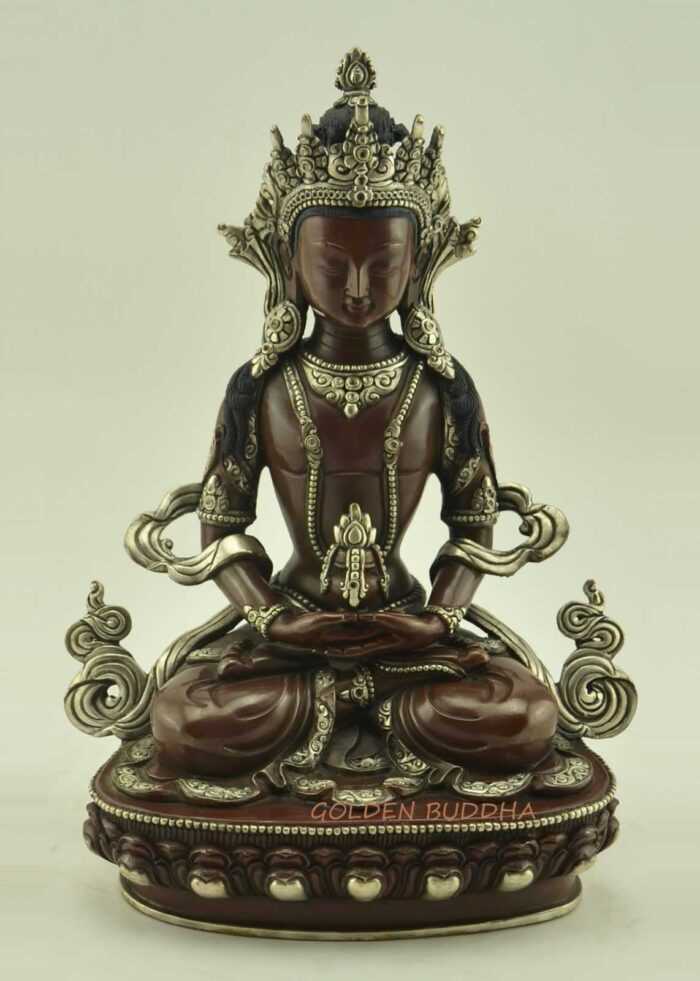

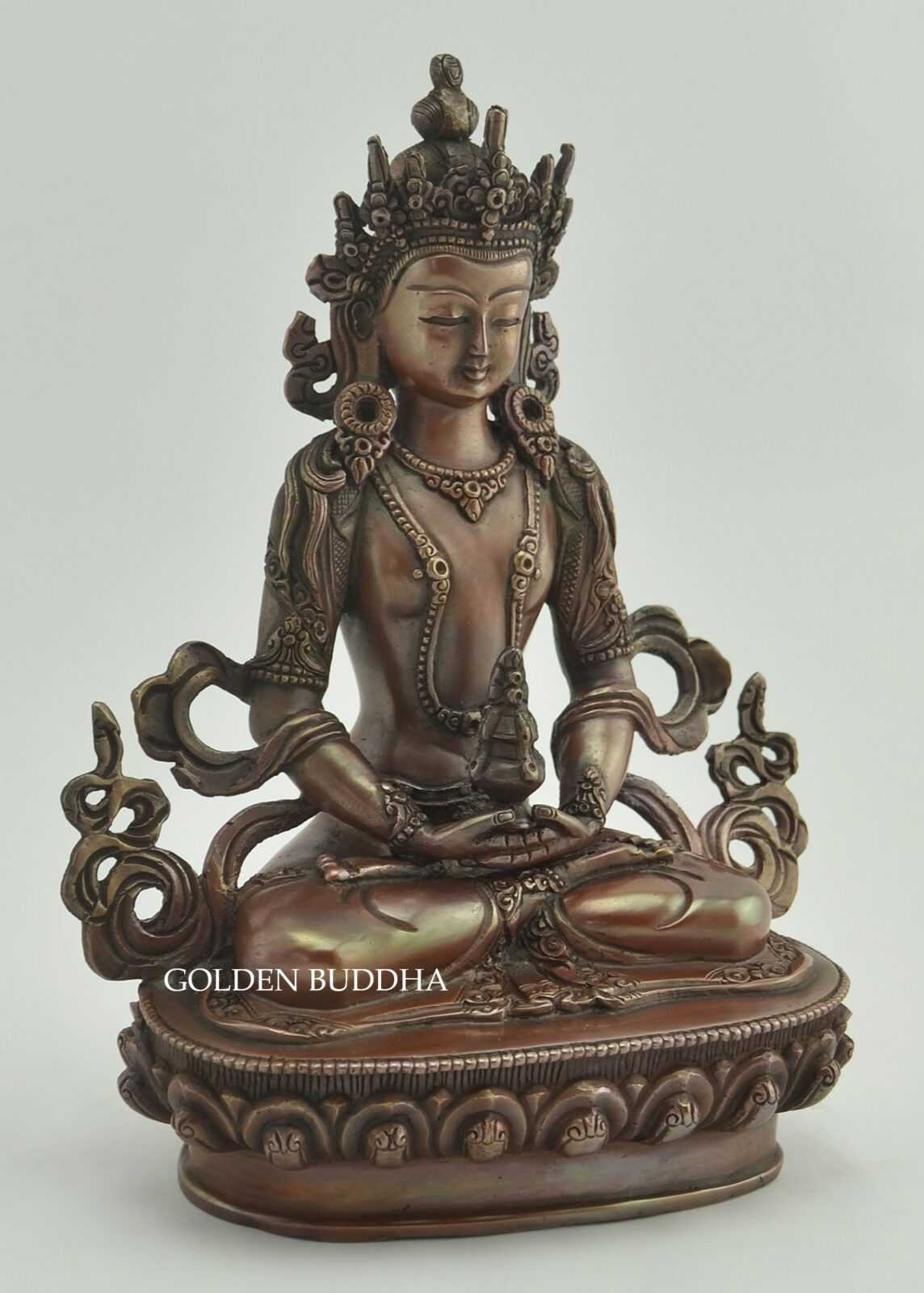
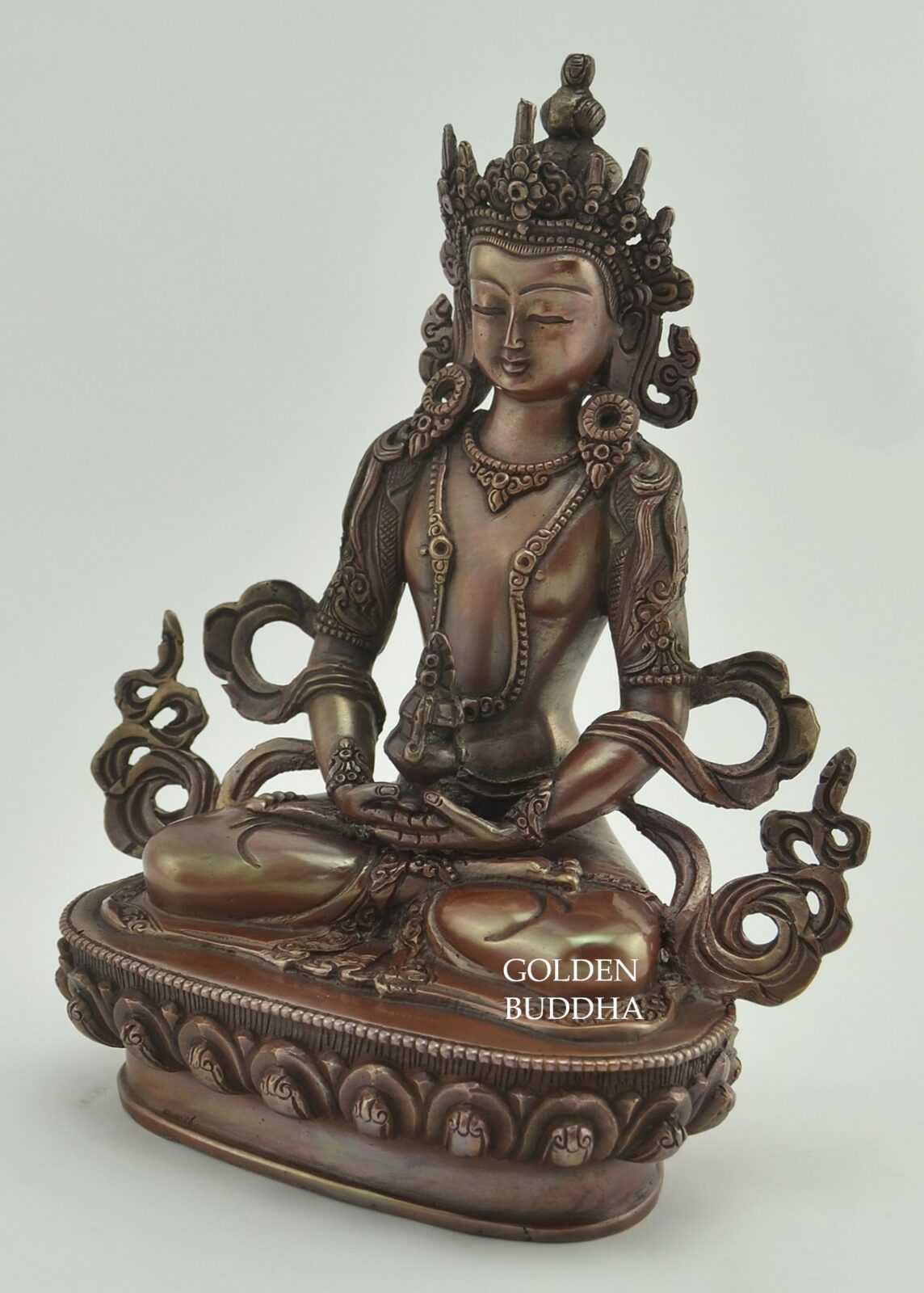

This 8.75″ Oxidized Tsepame statue represents Amitayus, the Buddha of Infinite Life and the principal longevity deity of Tibetan Buddhism. Handcrafted from copper alloy by a master Newar artisan in Patan, Nepal, the sculpture was created through the traditional lost-wax casting method and given a rich oxidized copper finish. Warm reddish-brown highlights appear across the face, torso, hands, garments, and lotus throne, while darker tones remain within the crown, jewelry, robe borders, and other recessed details. This subtle variation gives the newly handmade sculpture the dignified appearance of an older Himalayan monastery image without relying upon gold gilding or painted facial features.
Tsepame is presented in the ornamented Sambhogakaya form of a celestial Buddha. An elaborate five-pointed Bodhisattva crown surrounds his carefully modeled face, while large circular earrings, layered necklaces, armlets, bracelets, and a long ornamental strand enrich the composition. His hair is gathered into a tall topknot above the crown and completed by an ornamental finial. Flowing celestial scarves pass around both arms before expanding into broad loops and curling forms beside the seated figure, lending graceful movement to an otherwise deeply meditative posture.
Oxidized Tsepame Statue Meaning
Tsepame is the Tibetan name for Amitayus, whose Sanskrit name means “Immeasurable Life.” He is closely related to Amitabha Buddha, the Buddha of Infinite Light who presides over the Western Pure Land of Sukhavati. Amitayus may be understood as the Sambhogakaya expression of Amitabha’s infinite-life attribute, appearing in the crown and jewels of a celestial Buddha rather than the simple robes of a monastic figure. His practice is associated with longevity, the accumulation of merit, the renewal of life energy, and the removal of obstacles that may prevent practitioners from completing beneficial spiritual activity.
Longevity in Tibetan Buddhism is not sought merely for the continuation of ordinary worldly experience. A longer life is considered valuable when it provides additional time to study the Dharma, meditate, cultivate compassion and wisdom, support teachers and communities, and benefit other sentient beings. Amitayus therefore represents both the preservation of life and the aspiration to use that life meaningfully. Learn more about his role, rituals, and relationship with White Tara and Namgyalma in our guide to Amitayus and the Three Long Life Deities.
Dhyana Mudra and the Vase of Immortal Nectar
This Oxidized Tsepame statue depicts Amitayus seated in the full lotus posture with both hands resting together in the Dhyana mudra. The right hand rests above the left with the palms facing upward, expressing meditative absorption, concentration, and the perfect equilibrium of an awakened mind. The symmetrical placement of the hands reinforces the figure’s composed presence and directs attention toward the sacred vessel held at the center of the lap.
Resting upon Amitayus’s open palms is the kalasha, or longevity vase, containing the nectar of immortality. Its covered body rises into a sculpted upper ornament suggesting the inexhaustible life-giving nectar associated with his practice. The vase does not imply physical immortality in an ordinary sense. It represents the replenishment of merit and life force, protection from untimely obstacles, and the favorable conditions needed to continue progressing toward enlightenment.
In traditional long-life ceremonies, a ritual vessel corresponding to the vase of Amitayus may be filled with consecrated nectar and presented together with long-life pills. These substances symbolize the blessings of longevity and renewed spiritual vitality. The central placement of the vase makes it the clearest visual identifier distinguishing Amitayus from Amitabha, whose monastic form commonly holds an alms bowl instead. Additional questions about his attributes and practices are answered in our Amitayus Buddha Statues FAQ.
Oxidized Tsepame Statue ‒ Bodhisattva Crown, Jewelry and Celestial Scarves
The crown and ornaments identify Amitayus as a celestial Buddha manifesting in the richly adorned Sambhogakaya form. The crown is composed of individually modeled points decorated with floral and jewel-like patterns. Large circular earrings frame the face, while a short necklace follows the neckline and a longer beaded ornament descends across the chest toward the longevity vase. Additional armbands and bracelets bring structure to the flowing arrangement of the arms and scarves.
The long scarves are among the most visually expressive elements of the statue. They pass behind the shoulders and around the arms before forming open loops beside the waist and cloud-like curls near the lotus throne. Their movement suggests the effortless activity of an enlightened being while preserving the symmetry appropriate to a meditation deity. Viewed from behind, the scarf loops, crown structure, gathered hair, ornamental collar, and waist borders remain fully modeled, making the sculpture suitable for an open shrine where it may be appreciated from several directions.
At the buyer’s request, suitable settings within the crown and jewelry may be adorned with turquoise and red coral stones before delivery. Turquoise introduces a traditional blue-green accent associated with purity, healing, and enlightened activity. Red coral is especially appropriate for Amitayus because it recalls the red Buddha family of Amitabha. The statue is equally compelling without stones, however, because the unified oxidized copper finish emphasizes the sculptural modeling and gives the figure a restrained, contemplative character.
Full Lotus Posture and Single Lotus Throne
Amitayus sits in the full lotus posture upon a broad single lotus throne. His crossed legs establish a stable triangular composition beneath the narrow waist, elaborate jewelry, and tall crown. Fine borders decorate the garment around the crossed legs, while carefully modeled folds preserve the appearance of soft ceremonial fabric despite the solidity of the copper-alloy casting.
A continuous register of rounded lotus petals surrounds the pedestal beneath a precisely modeled beaded rim. The lotus symbolizes purity arising within samsara, recalling how a flower may emerge from muddy water without becoming stained. Its presence beneath Amitayus expresses the awakened purity from which his longevity blessings arise. The reverse of the pedestal is deliberately restrained, allowing the smooth copper finish and balanced outline to complement the more intricate crown, jewelry, scarves, and ritual vase above.
The Three Long Life Deities Statue Set
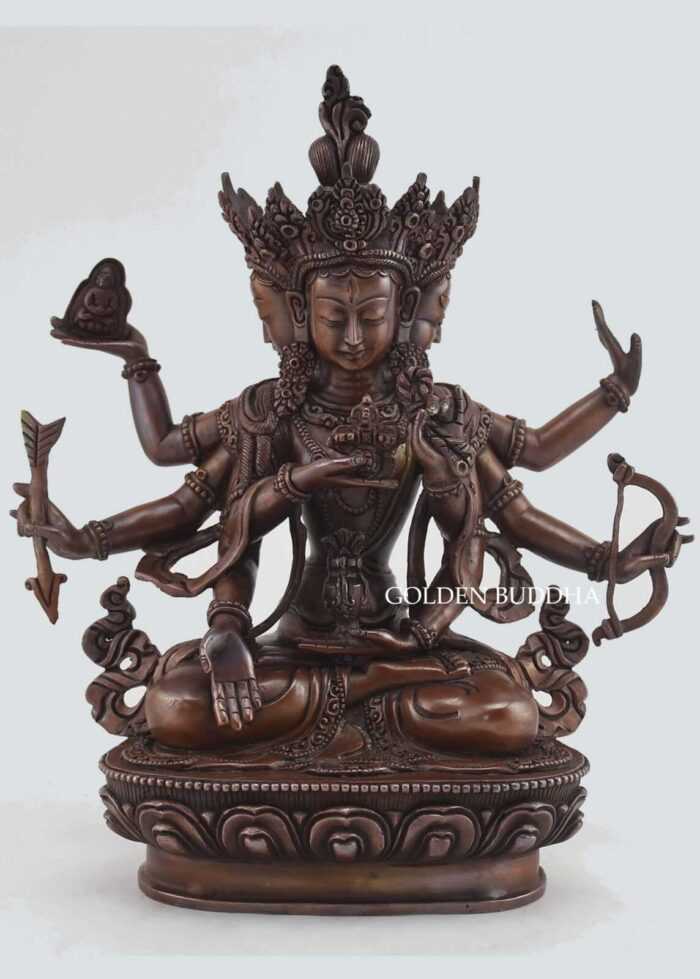
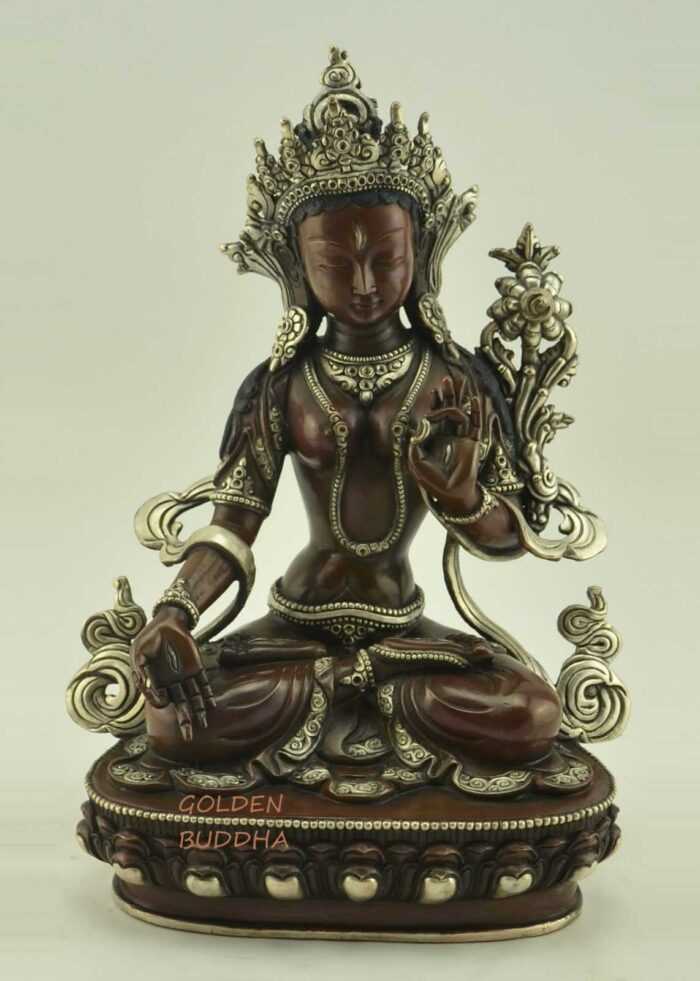
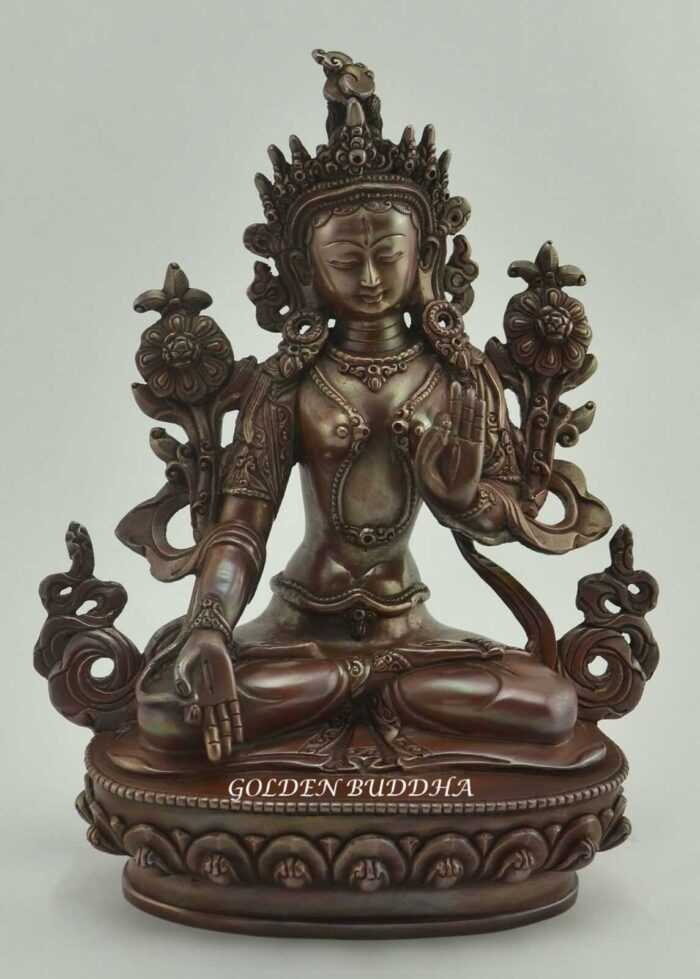
This Oxidized Tsepame statue forms a coordinated Three Long Life Deities altar set with our Oxidized Cintachakra statue, representing White Tara, and our Oxidized Namgyalma statue, representing Ushnishavijaya. All three sculptures were created by the same master artisan and share copper-alloy construction, warm oxidized finishes, unpainted faces, Bodhisattva adornments, traditional lost-wax craftsmanship, and complementary altar proportions. Their common materials and restrained color palette allow the three distinct figures to form a visually unified shrine.
Each deity contributes a complementary dimension to Tibetan longevity practice. Tsepame, or Amitayus, holds the vase of immortal nectar and represents the increase of life, merit, and the favorable conditions required for sustained Dharma activity. Cintachakra, or White Tara, embodies compassionate healing, serenity, fearlessness, and the restoration of depleted life force. Namgyalma, or Ushnishavijaya, is especially associated with purifying negative karma, removing obstacles connected with untimely death, and protecting beings from unfavorable rebirth. Displayed together, White Tara heals and restores life energy, Amitayus increases longevity and merit, and Namgyalma purifies and protects the circumstances sustaining that life. Their doctrinal unity expresses the preservation of a precious human existence so it may be used for awakening and the welfare of others.
Oxidized Tsepame Statue ‒ Filling, Blessing and Consecration
The statue may be filled with sacred texts, printed mantras, incense, medicinal substances, precious materials, and other traditional contents before being blessed according to the buyer’s Buddhist lineage. Proper filling and consecration prepare the sculpture as an object of practice and veneration rather than merely a representation of Amitayus. Our guide to Buddha statue filling, blessing, and consecration explains the customary process and available options.
Custom Made Tsepame and Long-Life Deity Statues
Collectors, practitioners, monasteries, and Dharma centers may commission a custom made Tibetan Buddhist statue based upon this Tsepame design. A custom Amitayus statue may be created in a different size with an oxidized copper finish, another traditional finish, selective 24K fire gilding, or complete 24K fire gilding with a face hand painted in 18K gold and natural pigments. Further options may include personalized garment engraving, turquoise or red coral embellishment, an alternative crown, refined jewelry, a differently styled longevity vase, or a custom lotus throne while preserving the proper iconographic proportions of Amitayus.
A complete custom Three Long Life Deities set may also be commissioned with Tsepame, Cintachakra, and Namgyalma created together so that all three share the same height, finish, facial character, crown and jewelry treatment, engraving style, and lotus-throne proportions. Commissioning the statues as one project allows the artisan to preserve their visual unity while clearly expressing their complementary attributes: Amitayus extending life and merit, White Tara healing and replenishing life force, and Namgyalma purifying karma and protecting against untimely death. Each custom statue is individually cast, chased, engraved, and finished by hand in Nepal according to traditional Himalayan Buddhist iconography.
Authentic, Handmade in Nepal
Every statue is handcrafted in Patan, Nepal, using traditional lost wax casting and comes with a certificate of authenticity issued by Nepal’s Department of Archaeology, verifying its materials, technique, and origin.