
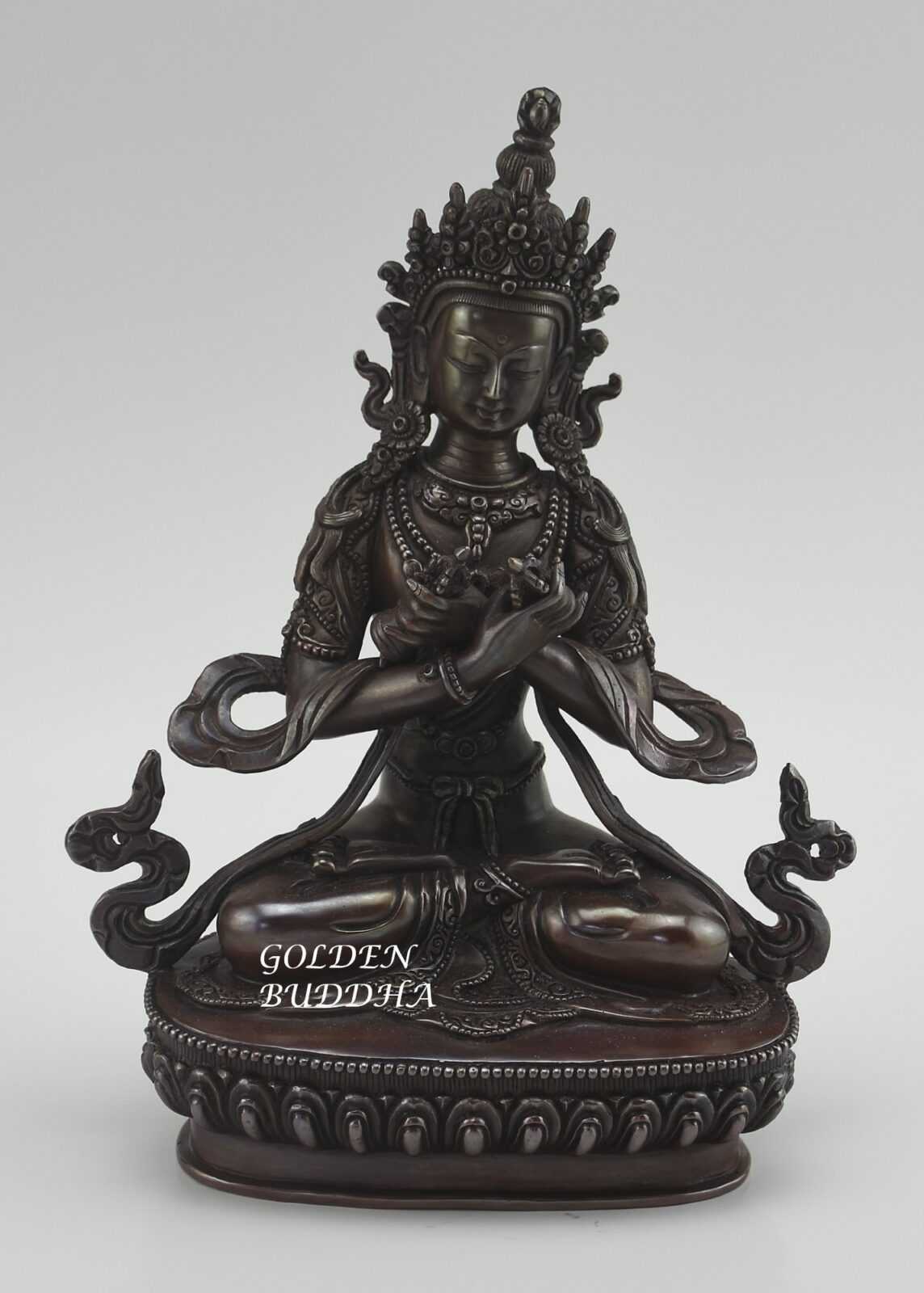
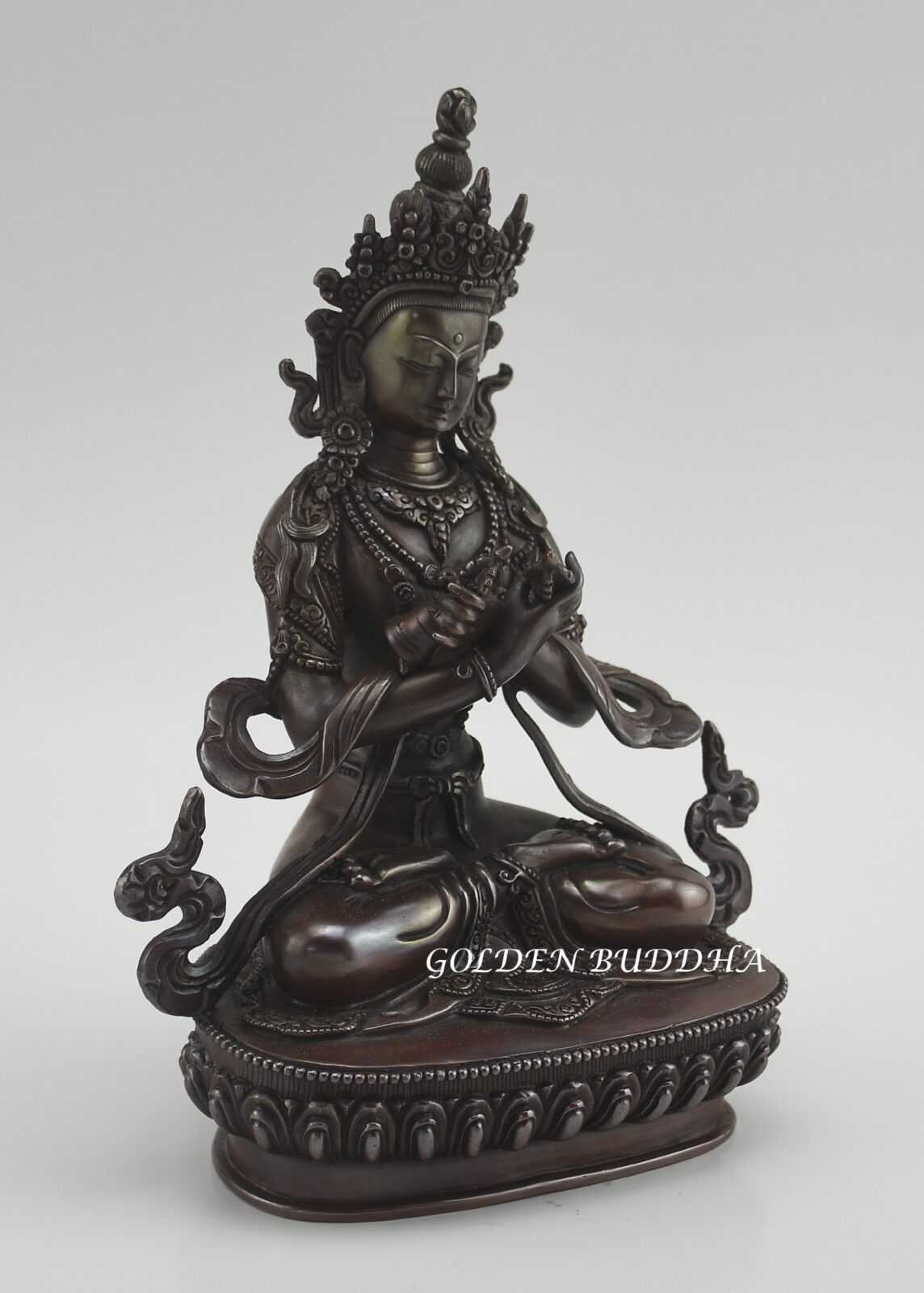
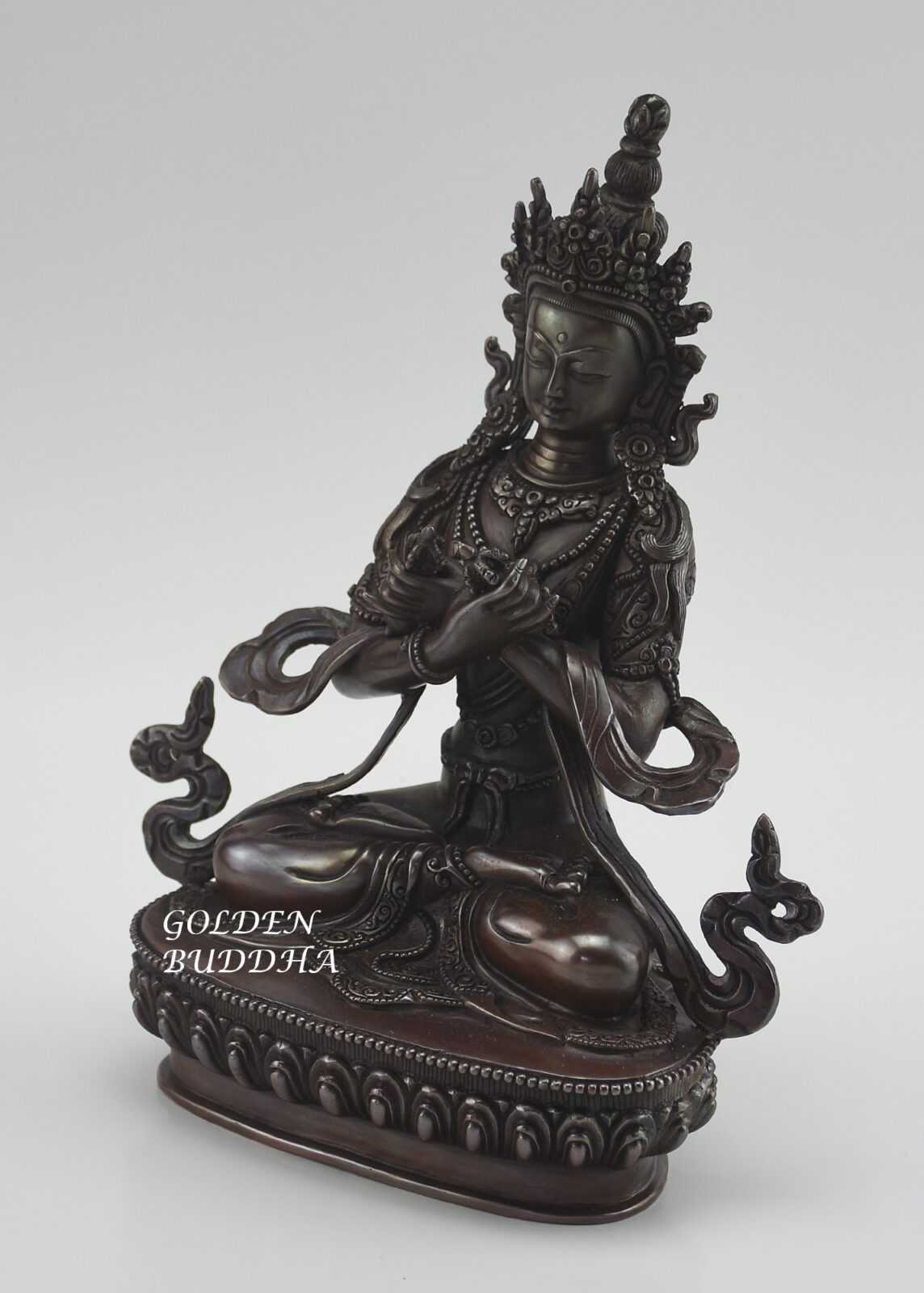
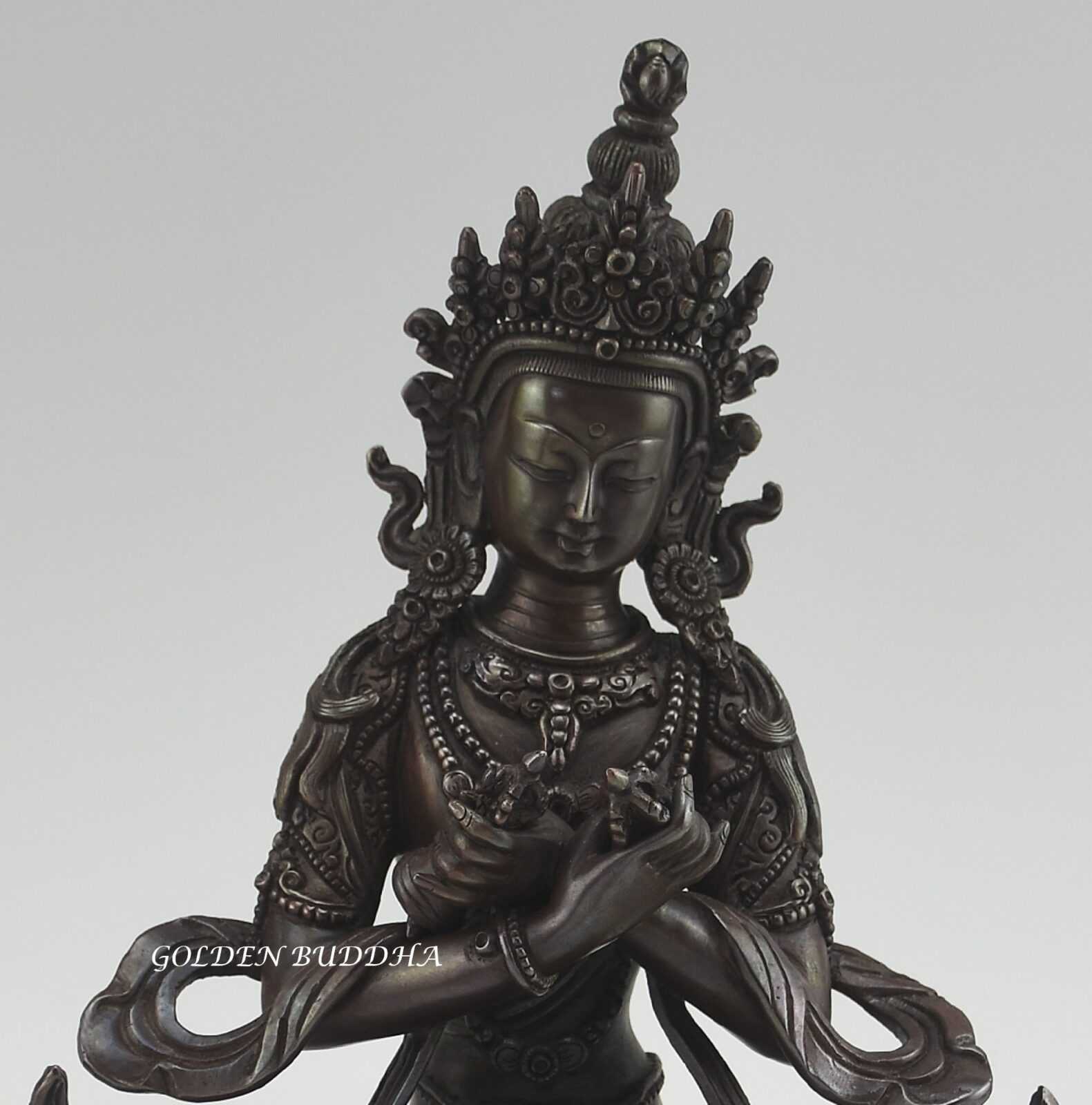
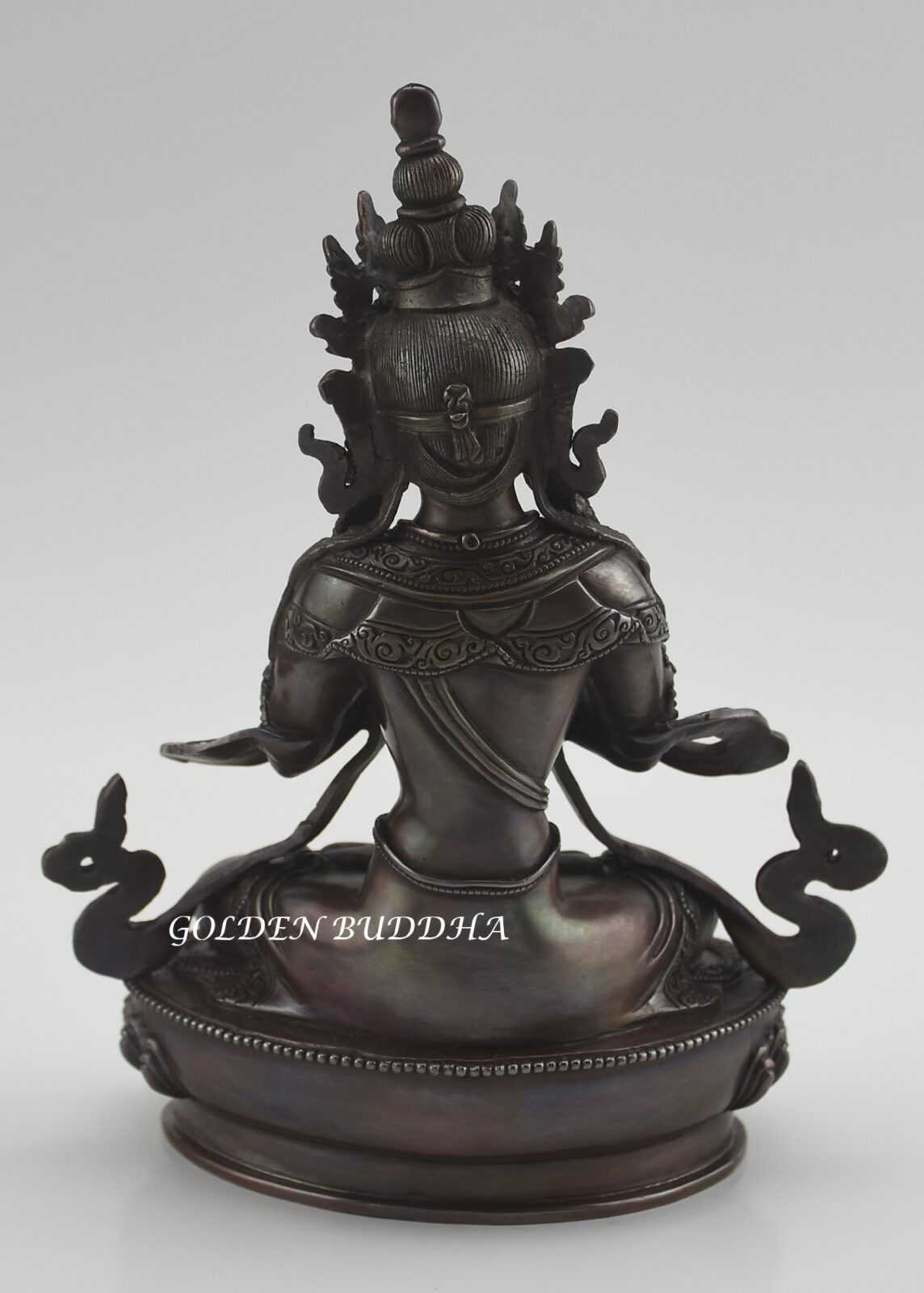
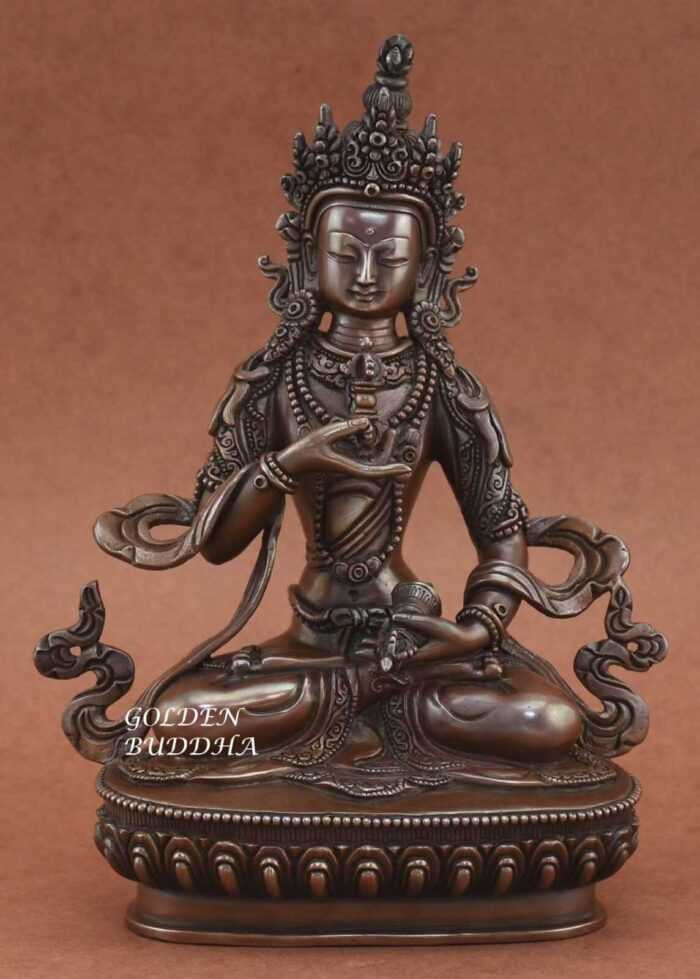
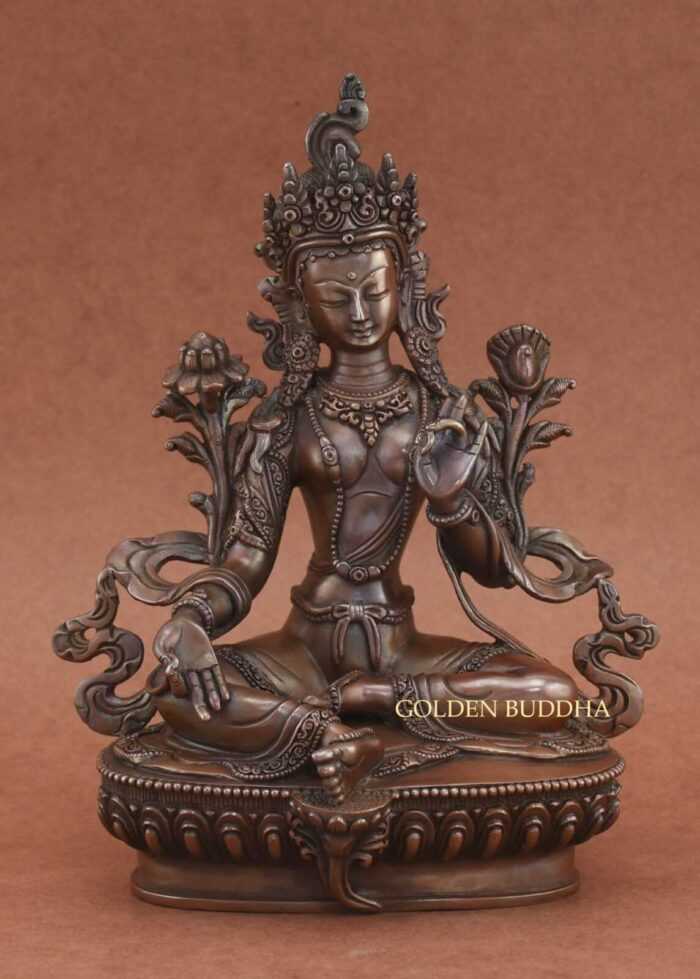
This 8.75-inch Oxidized Copper Vajradhara Statue portrays Dorje Chang, “Holder of the Vajra,” in a compact but exceptionally detailed form suited to a home altar, meditation room, or dedicated Vajrayana practice space. Handmade in Patan, Nepal from copper alloy using the traditional lost-wax casting method, the statue is finished with a deep antiquated oxidized patina rather than gold gilding. The dark brown surface settles naturally into the recesses of the crown, jewelry, garment borders, and lotus petals, while raised surfaces acquire a softer warm-brown sheen that makes the sculptural details especially legible. The photographs reveal a richly adorned Sambhogakaya form with an elaborate multi-point crown, ornamental earrings, layered necklaces, armlets, bracelets, flowing ceremonial scarves, and a tall finial rising above the headdress.
Vajradhara, known in Tibetan as Dorje Chang, is the primordial Buddha associated especially with the Kagyu and Sakya traditions and represents the Dharmakaya — the ultimate truth body of Buddhahood beyond ordinary form and conceptual limitation. Although the Dharmakaya itself is formless, Vajradhara is represented iconographically in an adorned appearance so practitioners may contemplate the inseparable qualities of enlightened wisdom and compassionate activity. His elaborate crown and jewelry therefore signify enlightened Sambhogakaya qualities rather than worldly rank.
Oxidized Copper Vajradhara Statue Craftsmanship and Finish
Close inspection of the photographs shows considerable sculptural depth despite the statue’s relatively compact scale. The crown is constructed from numerous pointed and scrolling elements surrounding the central headdress, while large circular ornaments and curling decorative forms frame the serene, downward-looking face. Beaded necklaces and patterned jewelry cross the chest, with similarly detailed ornaments at the upper arms and wrists. Long scarves emerge around the forearms and form broad curling loops on both sides of the body, adding movement to an otherwise meditative composition. Vajradhara sits in full lotus posture on a single lotus throne, its upper edge defined by fine beading above a continuous row of rounded lotus petals. The restrained oxidized finish gives the sculpture an aged, contemplative character without concealing the precision of the metalwork.
Vajrahumkara Mudra and Tantric Symbolism
The defining iconographic feature is the Vajrahumkara mudra. Vajradhara crosses his arms before the heart, holding the vajra in his right hand and the ghanta, or ritual bell, in his left. The vajra represents indestructible method, compassion, and skillful means, while the bell represents prajna, the wisdom that realizes emptiness. Crossing these implements at the heart expresses their complete inseparability: enlightened activity cannot be separated from wisdom, and wisdom cannot be separated from compassionate means. This union is one of the central visual teachings of Vajrayana Buddhism and makes the image of Dorje Chang immediately recognizable.
Oxidized Copper Vajradhara Statue with Matching Vajrasattva
This sculpture is especially meaningful when displayed with the matching oxidized copper Vajrasattva statue. Both statues were created by the same artisan and share closely related proportions, dark antiquated patinas, lotus pedestals, jeweled Sambhogakaya ornamentation, and understated traditional finishes. Displayed together, they form a visually coordinated altar pair rather than two unrelated sculptures.
Their doctrinal relationship is even more significant. Vajradhara represents the Dharmakaya, the primordial ground of enlightenment, while Vajrasattva is understood as his Sambhogakaya embodiment — the luminous, form-bearing expression particularly associated with purification practice. Pairing the two therefore connects the absolute source of awakened wisdom with its accessible purifying manifestation. Their shared artisan, scale, oxidized finish, elaborate ornamentation, and related Vajrayana symbolism make them exceptionally harmonious both aesthetically and doctrinally.
Filling and Consecration in Kathmandu, Nepal
For practitioners who wish to prepare the statue as a fully consecrated sacred image, traditional filling and blessing can be arranged in Kathmandu, Nepal before shipment. Appropriate mantras, sacred texts, and blessed substances may be placed within the hollow sculpture according to Tibetan Buddhist custom, followed by ritual sealing and consecration. Learn more about our Buddha statue filling, blessing, and consecration service.
Custom Oxidized Copper Vajradhara Statue
Collectors who prefer a different size, finish, or degree of ornamentation may commission a related sculpture through our custom Tibetan Buddhist statue service. This Vajradhara can also be embellished with turquoise and red coral gemstones upon request, particularly around the crown and jewelry, while preserving the antiquated oxidized character of the original design. A matching Vajrasattva can likewise be commissioned in coordinated proportions and finish, allowing both figures to be created as a unified pair for a personal shrine, meditation center, or larger Vajrayana altar.
Authentic, Handmade in Nepal
Every statue is handcrafted in Patan, Nepal, using traditional lost wax casting and comes with a certificate of authenticity issued by Nepal’s Department of Archaeology, verifying its materials, technique, and origin.
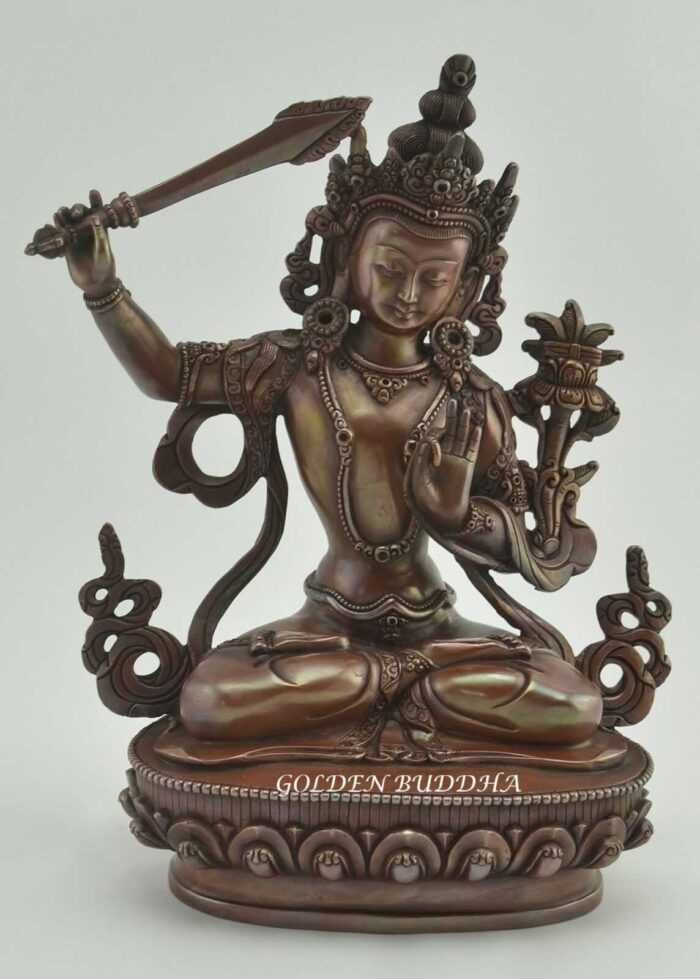
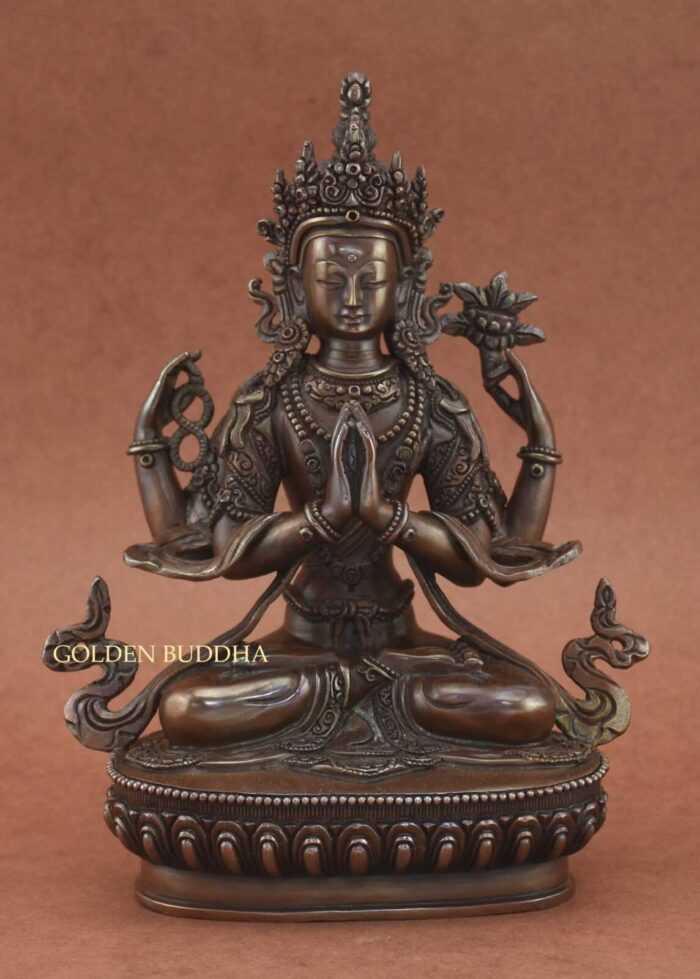
olivier.feijo83 (verified owner) –
Sublime statue of Vajradhara! The shipment was fast and upon receipt in France the quality was perfect. I am very satisfied. She will be a great source of inspiration for Dharma practices.
Sincerely
Olivier
Edwin –
Olivier, thank you very much for your kind review with photo. We hope to see you again soon. -Edwin