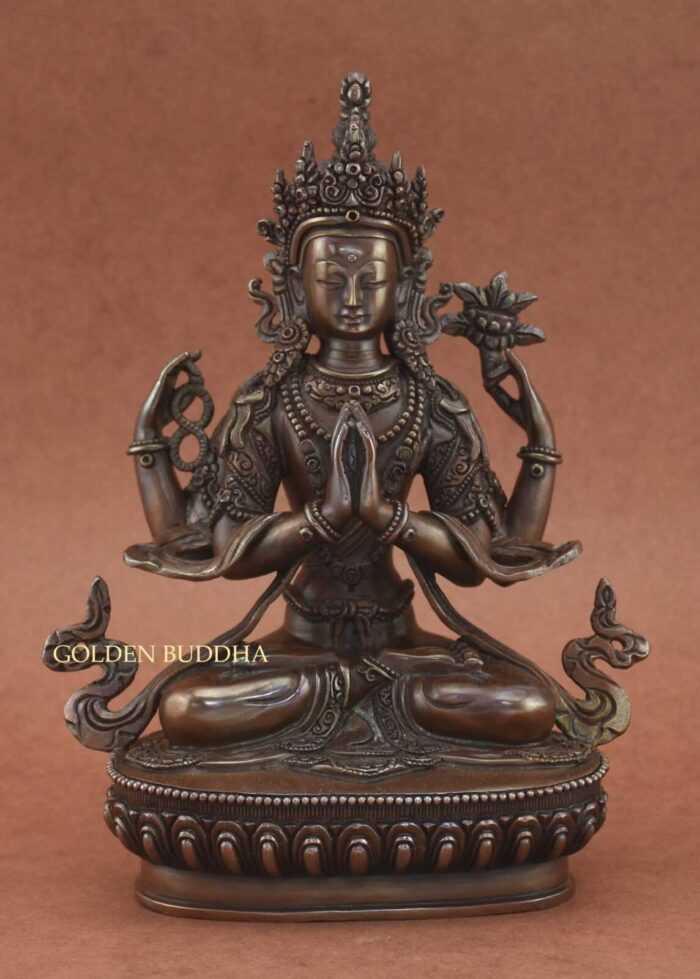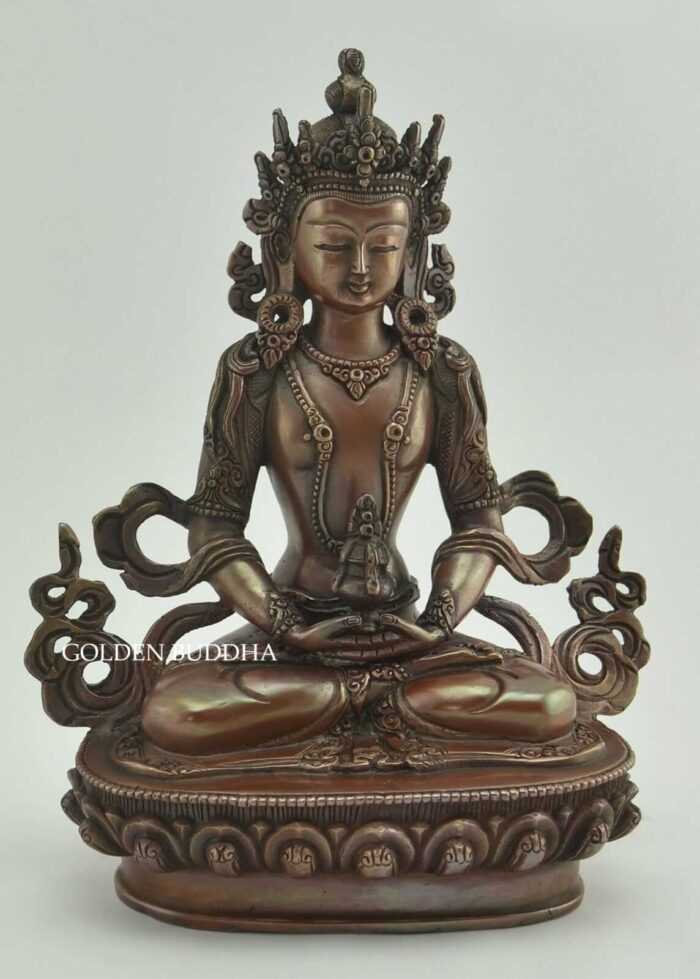


This 9-inch Oxidized Copper Vajrasattva Statue is handmade in Nepal using the traditional lost-wax casting method and finished with a rich antiquated copper patina. The warm reddish-brown surface highlights the contours of Vajrasattva’s peaceful face while darker oxidation settles naturally within the crown, jewelry, garment borders, and lotus petals. This contrast brings remarkable depth to a sculpture that relies upon the character of the copper itself rather than gold gilding. Vajrasattva, known in Tibetan as Dorje Sempa, appears in his traditional peaceful Bodhisattva form, seated in full vajra posture upon a single lotus throne.
The artisan has given particular attention to the sculpture’s ornamental details. Vajrasattva wears an elaborate five-point Bodhisattva crown, large earrings, layered necklaces, bracelets, arm ornaments, and flowing celestial scarves that curve outward on either side of his body. Finely engraved scrollwork follows the borders of his garments and shoulder coverings. The rear view reveals carefully delineated strands of hair beneath the crown, additional ornamental borders across the shoulders, and the graceful continuation of the celestial scarves, demonstrating craftsmanship extending around the entire figure.
Oxidized Copper Vajrasattva Statue Iconography
Vajrasattva’s most important attributes are immediately recognizable. His right hand holds the vajra upright before his heart, while his left hand holds the ghanta, or ritual bell, near his lap. Within Vajrayana symbolism, these complementary ritual implements express the inseparability of skillful means and wisdom. Their union represents qualities essential to the path toward awakening. The peaceful expression, elaborate jewelry, crown, and celestial garments further distinguish Vajrasattva’s Bodhisattva appearance. Explore the symbolism of these attributes in our guide to Vajrasattva iconography.
Vajrasattva and the Purification of Karma
Vajrasattva occupies an especially important place in Tibetan Buddhist purification practices. His meditation and mantra are traditionally used to purify negative karma, obscurations, and breaches of spiritual commitments. Vajrasattva practice is also central to Ngöndro, the preliminary practices undertaken within several Tibetan Buddhist traditions. Learn more about Vajrasattva and his role in Tibetan Buddhism.
The deity is particularly associated with the celebrated one-hundred-syllable Vajrasattva mantra, alongside the much shorter “Om Vajrasattva Hum.” The statue therefore has meaningful application as an altar image and meditation support for practitioners engaged in purification practice, while its detailed traditional craftsmanship also makes it suitable for collectors of Himalayan Buddhist art.
Optional Gemstones for This Oxidized Copper Vajrasattva Statue
The statue may be further embellished with turquoise and red coral gemstones upon request. Suitable settings within the crown and jewelry can be adorned before delivery, introducing traditional jewel tones that contrast beautifully with the dark oxidized copper. Collectors who prefer the understated antiquated appearance may leave the sculpture exactly as photographed, allowing its copper patina and detailed metalwork to remain the visual focus.
Vajrasattva and Green Tara as Companion Statues
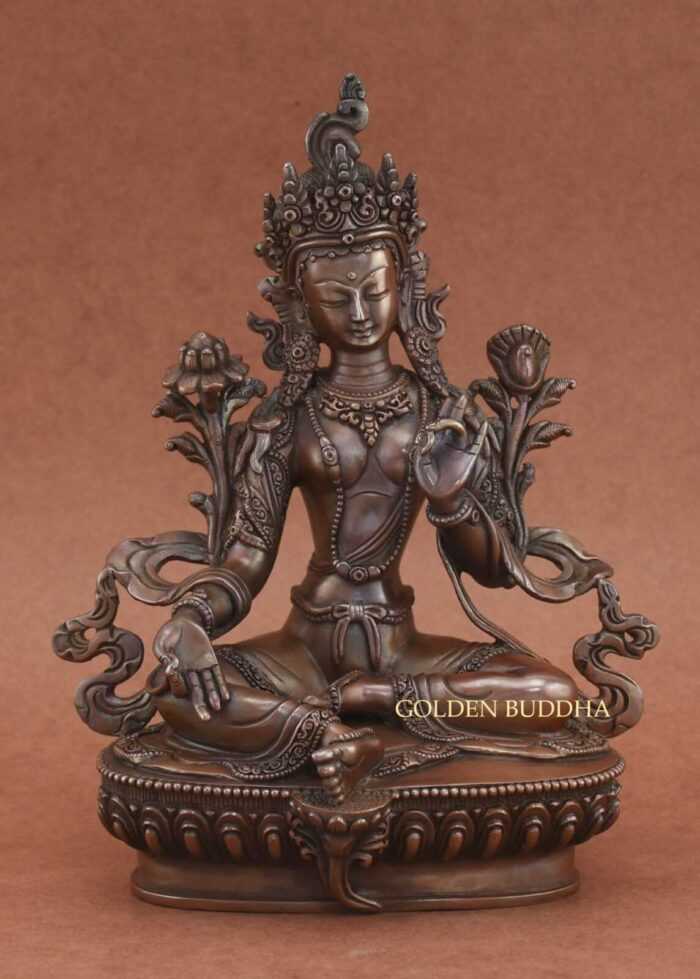
For a coordinated altar, this Vajrasattva pairs especially well with our oxidized Green Tara statue. Their similar antiquated copper finishes create visual harmony, while their iconography offers complementary spiritual meaning. Vajrasattva represents purification of karmic obscurations and the restoration of spiritual clarity. Green Tara embodies swift compassionate activity, protection, and the overcoming of fears and obstacles. Placed together, they can express a natural progression from purification and clearing obstacles within the mind to compassionate action in the world.
Custom Made Vajrasattva and Green Tara Statues
Collectors, practitioners, monasteries, and Dharma centers may also commission a custom made Tibetan Buddhist statue based upon this design. Custom options may include different dimensions, oxidized copper finishes, 24K fire gilding, gemstone embellishment, and additional engraved detailing. Vajrasattva and Green Tara may also be commissioned as a coordinated pair with matching proportions, finishes, and lotus thrones. Their doctrinal relationship makes such a pairing particularly meaningful: Vajrasattva embodies purification and the clearing of karmic obscurations, while Green Tara expresses swift enlightened activity, compassionate protection, and freedom from obstacles. Together they create a balanced altar pairing centered upon purification followed by compassionate action.
Authentic, Handmade in Nepal
Every statue is handcrafted in Patan, Nepal, using traditional lost wax casting and comes with a certificate of authenticity issued by Nepal’s Department of Archaeology, verifying its materials, technique, and origin.