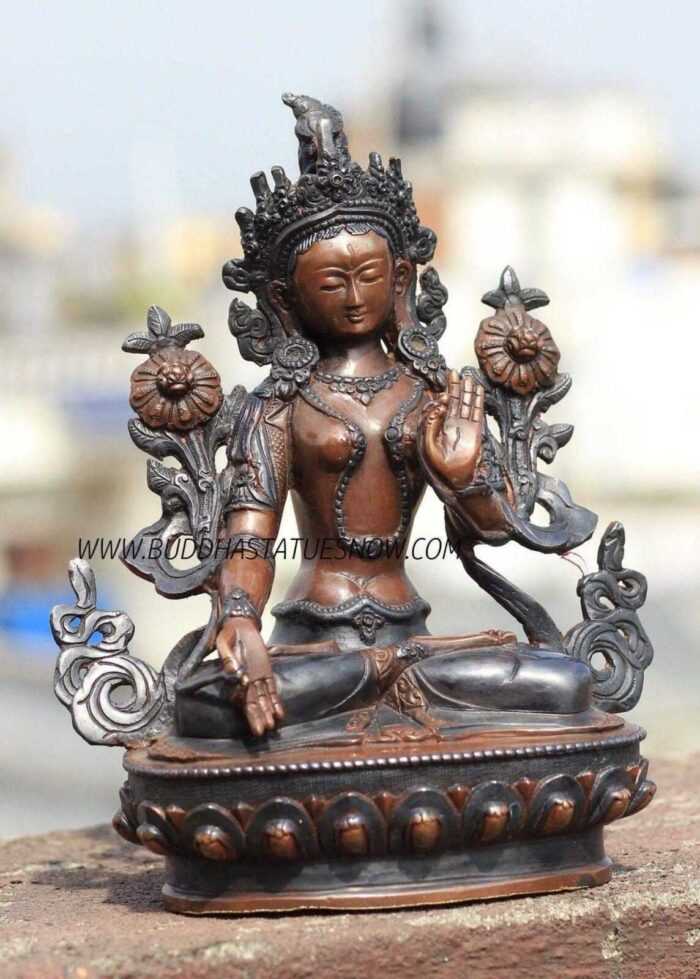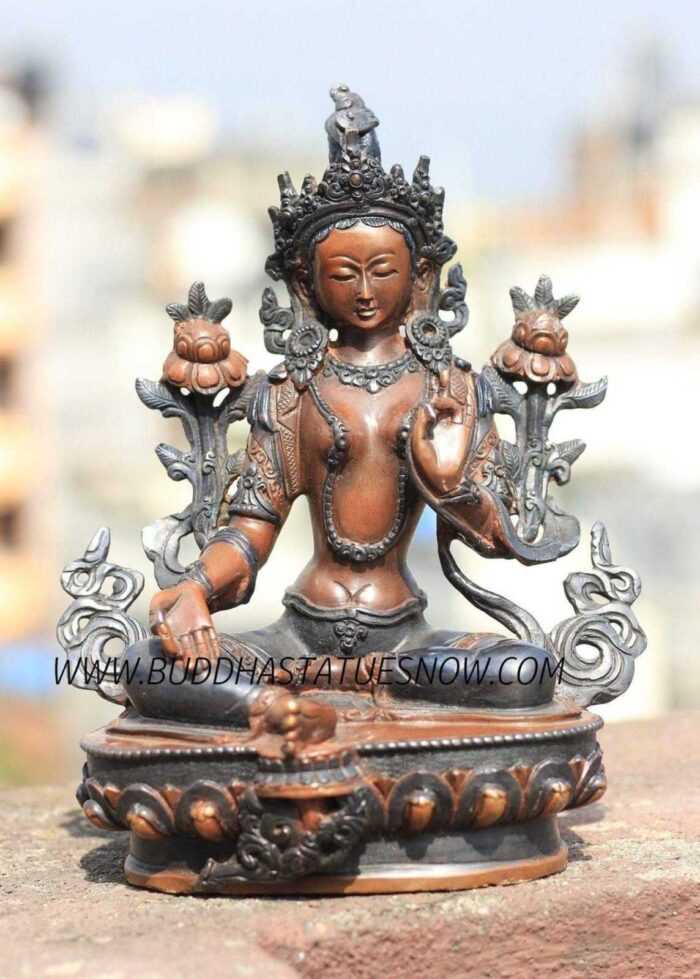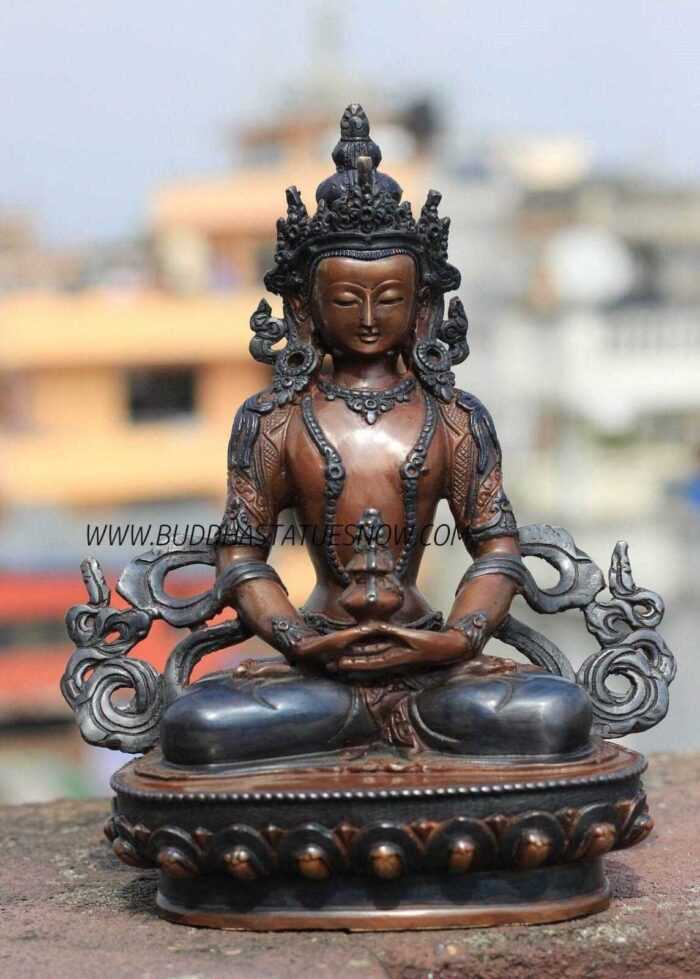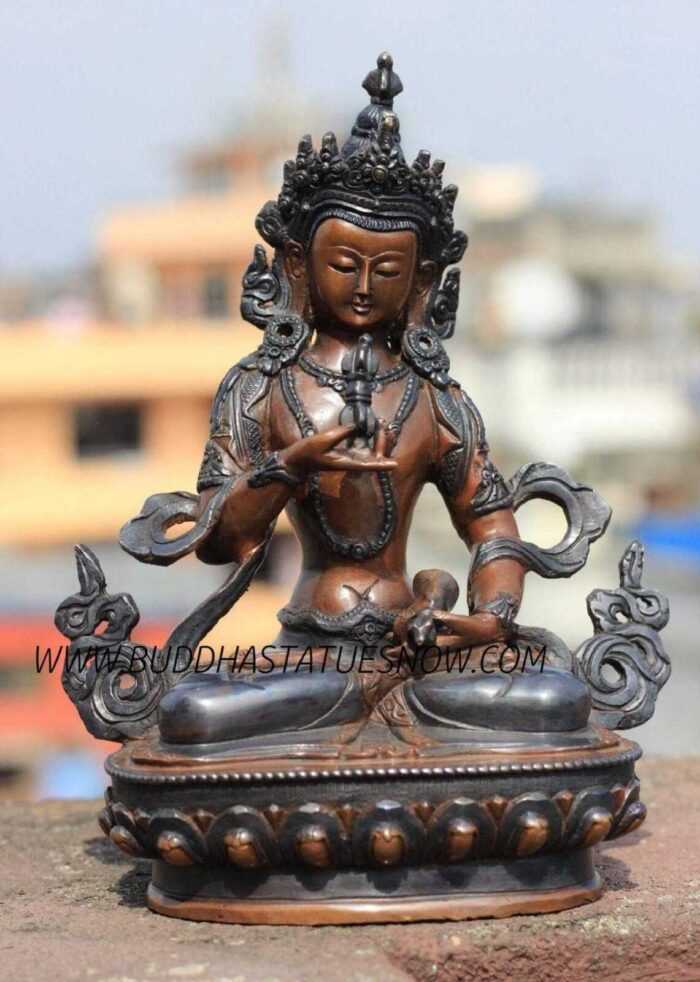
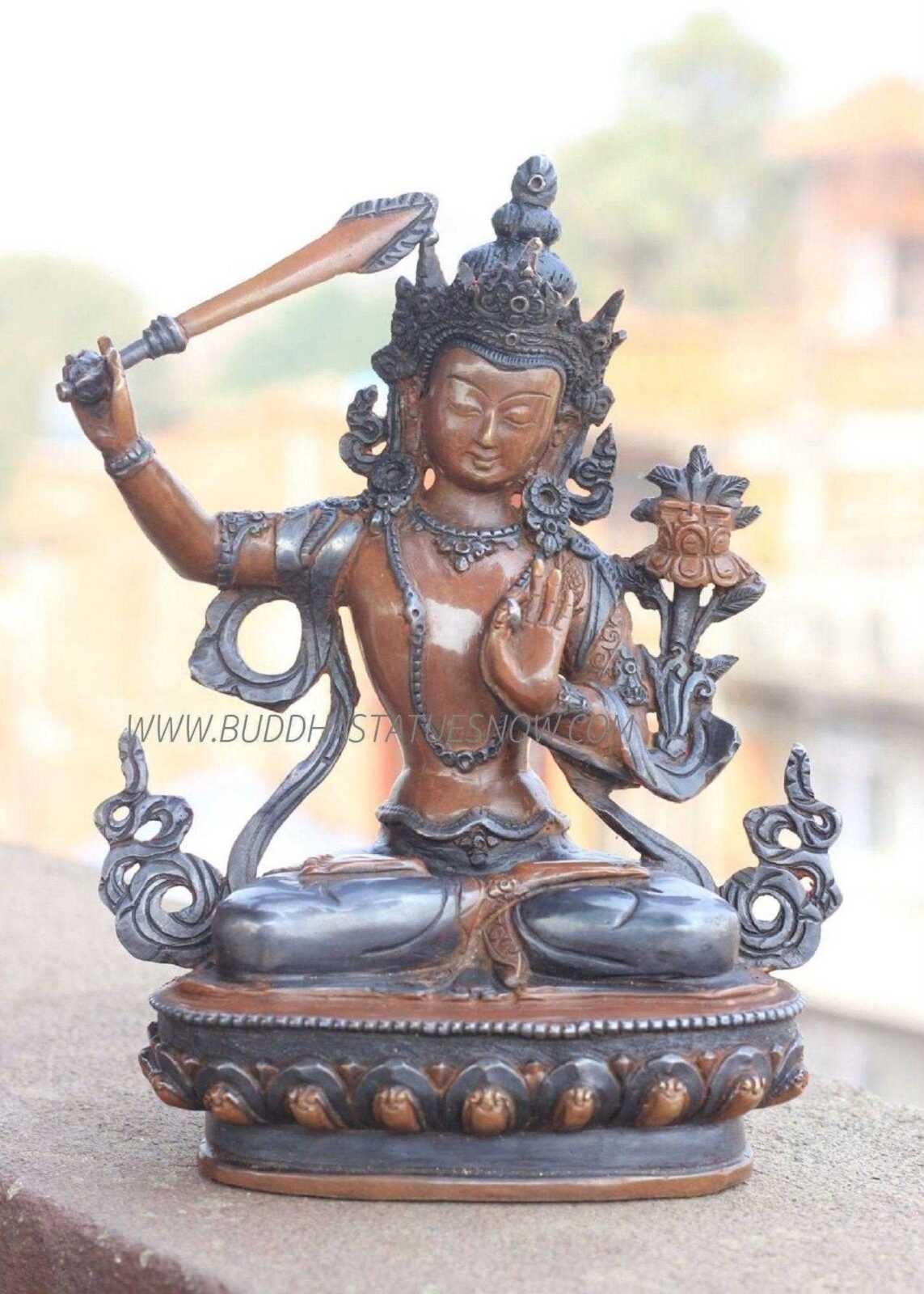
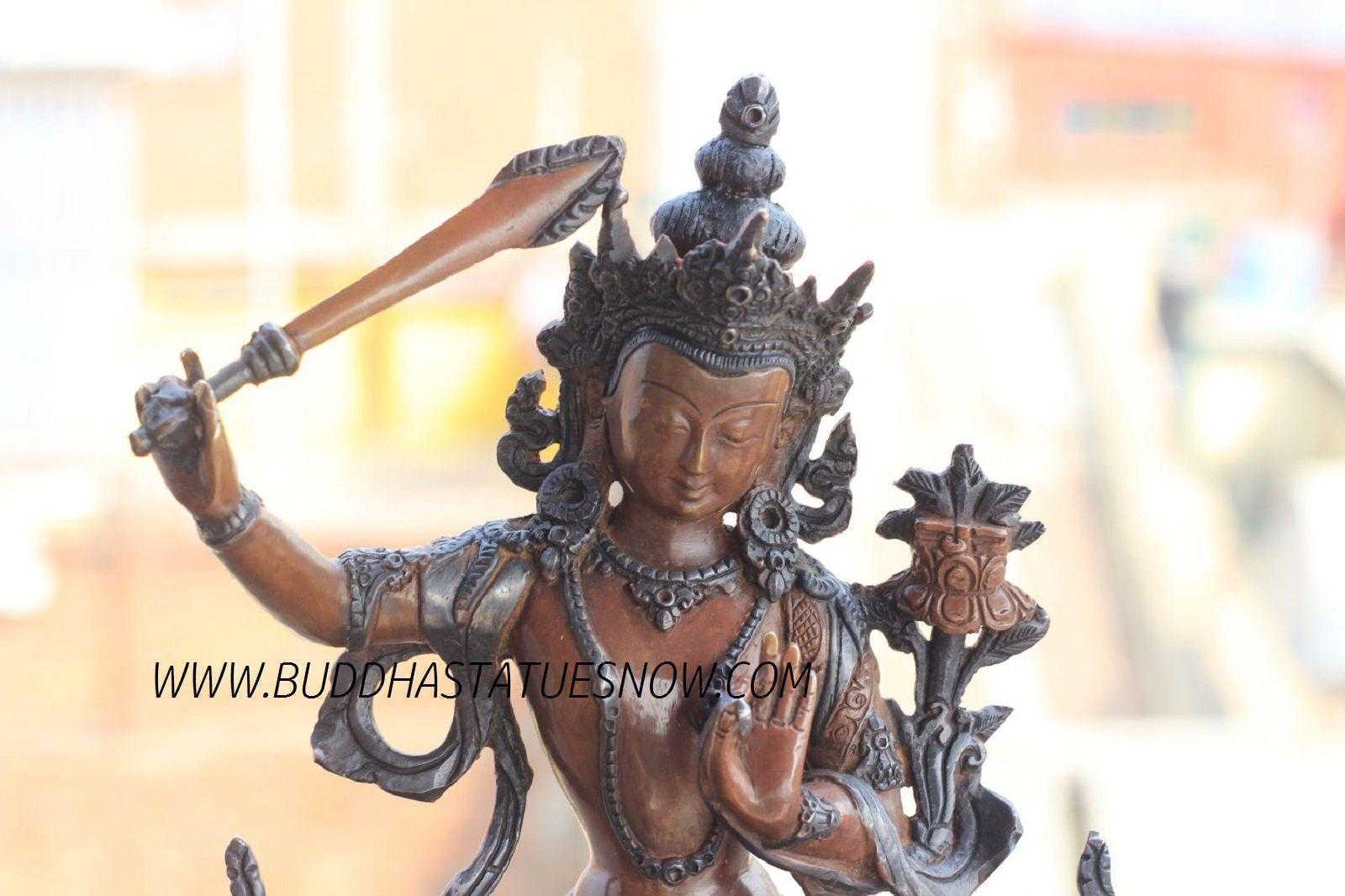
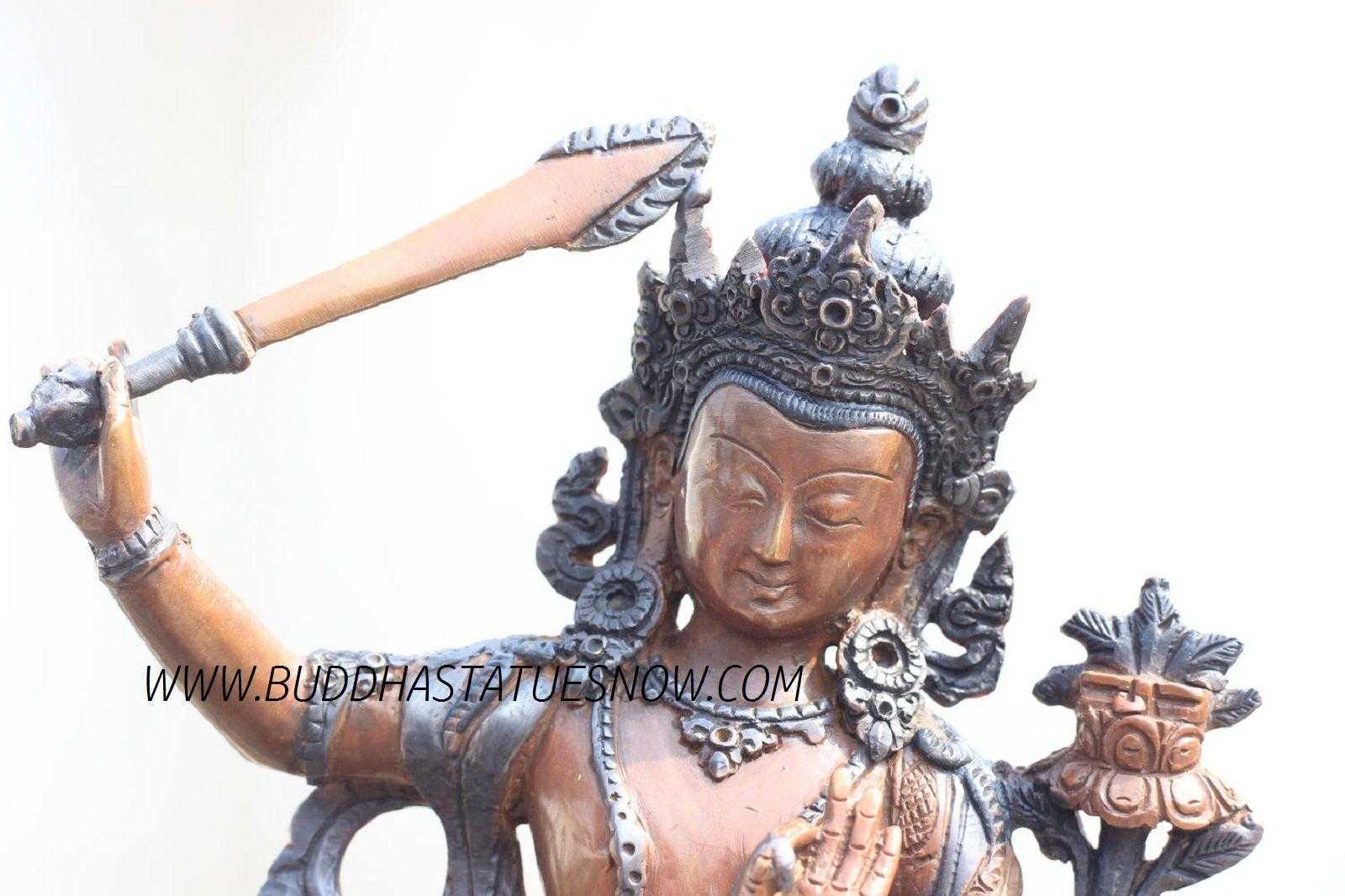
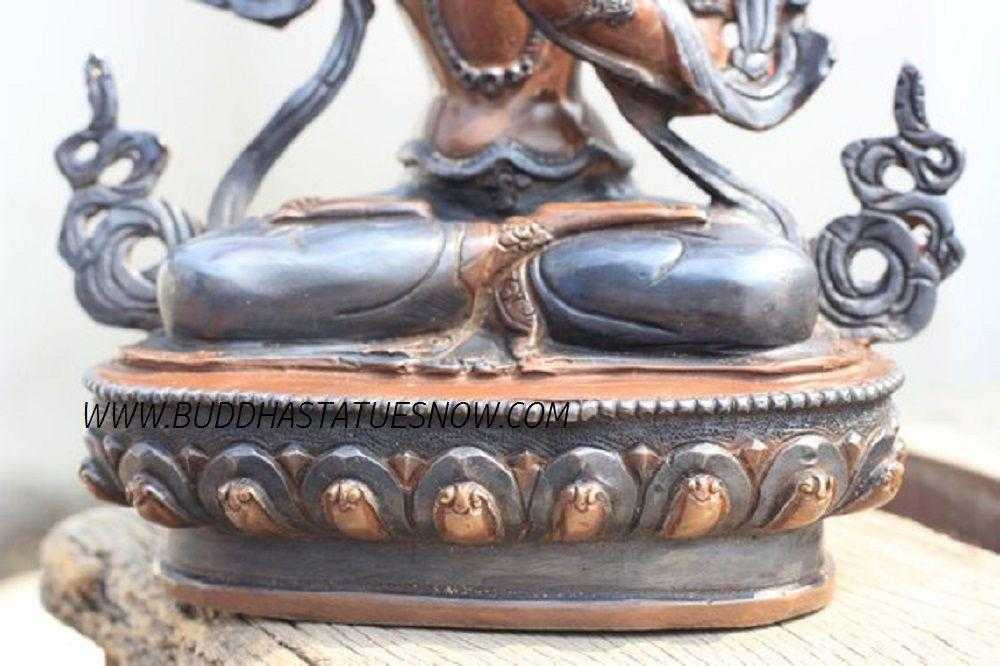
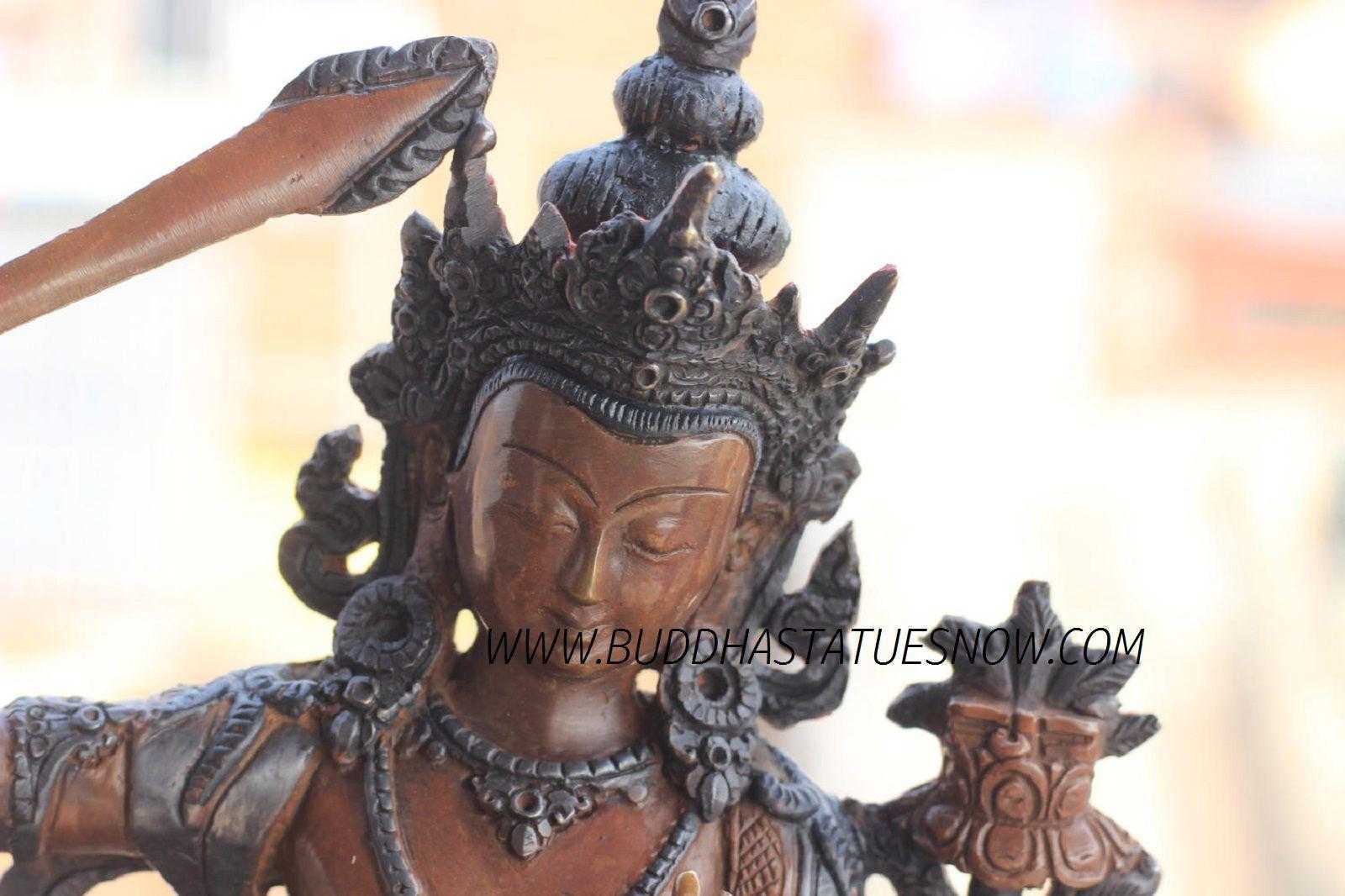
Warm copper emerging through deep charcoal oxidation gives this 8-inch Oxidized Copper Manjushri Statue an especially sculptural character. Rather than relying on a bright gilded surface, the artisan uses contrasting metal tones to define Manjushri’s youthful face, slender torso, raised wisdom sword, flowing scarves, elaborate Bodhisattva ornaments and lotus throne. Handmade in Patan, Nepal from copper alloy using the traditional lost-wax casting method, the statue measures 8 inches high, 6 inches wide and 4 inches deep. The darker antiquated finish settles naturally into the recessed ornamentation and engraved details, while warmer reddish copper remains visible across the face, chest, arms, sword and selected areas of the pedestal. This interplay of light and dark makes the iconography unusually easy to read from a distance while preserving the subdued character of an antiquated Himalayan sculpture.
Oxidized Copper Manjushri Statue | Wisdom Made Visible
Manjushri, known in Tibetan as Jampelyang, is the Bodhisattva who personifies prajna—transcendent wisdom capable of directly understanding the empty and interdependent nature of phenomena. His name is commonly translated as “Gentle Glory,” an important reminder that the wisdom he represents is penetrating without being violent. Mahayana and Vajrayana traditions place him among the great Bodhisattvas, and he is particularly associated with study, contemplation, eloquence, memory and the cultivation of clear insight. Our guide to Manjushri, the Bodhisattva of Perfected Wisdom explores this symbolism and his broader role within Buddhist practice.
Sword, Utpala Lotus and Prajnaparamita Scripture
The most commanding element is the long sword raised above Manjushri’s right shoulder. Known as the sword of wisdom, it symbolizes the insight that cuts through ignorance, mistaken perception and attachment to fixed views rather than an instrument of physical combat. The blade’s broad form and decorated edge are especially prominent in this sculpture. On the opposite side, Manjushri’s left hand forms the Vitarka mudra of teaching and philosophical discussion while supporting the stem of an utpala lotus. The blossom rises beside his shoulder and carries the Prajnaparamita Sutra, linking realized wisdom with the Perfection of Wisdom teachings from which Manjushri’s iconography developed. Learn more about the meaning of Manjushri’s sword of wisdom.
Manjushri sits in full lotus posture on an oval lotus throne with a beaded upper rim and a continuous band of raised lotus-petal carvings. His princely form is adorned with an elaborate multi-point Bodhisattva crown, large circular earrings, necklaces, bracelets and arm ornaments. Long scarves descend from the shoulders and curl outward into open scrolling forms on either side of the body. The oxidized finish accentuates these contours, particularly around the crown, jewelry, lotus stems and pedestal. Upon request, turquoise and red coral gemstones can be embedded into appropriate settings in the crown and jewelry, adding traditional Himalayan color while retaining the statue’s antiquated copper character.
Manjushri and Green Tara | Wisdom and Compassionate Action
This Manjushri is exceptionally well matched with our 8-inch oxidized copper Green Tara statue. The two sculptures share the same 8-inch height, 6-inch width and 4-inch depth, as well as closely related warm-copper and dark-oxidized surface treatments. Visually, they can therefore occupy opposite sides of an altar without either figure overpowering the other. Symbolically, the pairing is equally complementary. Manjushri represents the wisdom that correctly understands reality, while Green Tara embodies compassion expressed through swift enlightened activity. Wisdom determines how suffering and its causes are understood; Tara’s active compassion represents the immediate response to that suffering. Displayed together, they express the union of discerning wisdom and compassionate action—two qualities that Buddhist practice continually develops together.
Filling and Consecration in Kathmandu, Nepal
For practitioners preparing the statue for devotional use, traditional Buddha statue filling and consecration in Kathmandu can be arranged before shipment. Sacred mantra rolls and other appropriate ritual substances may be placed within the hollow copper-alloy sculpture before blessing according to Tibetan Buddhist tradition. This service allows the finished Manjushri to be prepared specifically for shrine or meditation use rather than remaining solely an object of Himalayan art.
Custom Tibetan Buddhist Statues
A different size, finish or coordinated altar group can also be commissioned through our custom Tibetan Buddhist statue service. Nepalese artisans can create Manjushri in oxidized copper, partial gilding or other traditional finishes while preserving his sword, lotus, scripture, mudra and established proportions. Matching figures such as Green Tara can also be commissioned together so that dimensions, pedestal designs and surface treatments are coordinated from the beginning.
Authentic, Handmade in Nepal
Every statue is handcrafted in Patan, Nepal, using traditional lost wax casting and comes with a certificate of authenticity issued by Nepal’s Department of Archaeology, verifying its materials, technique, and origin.