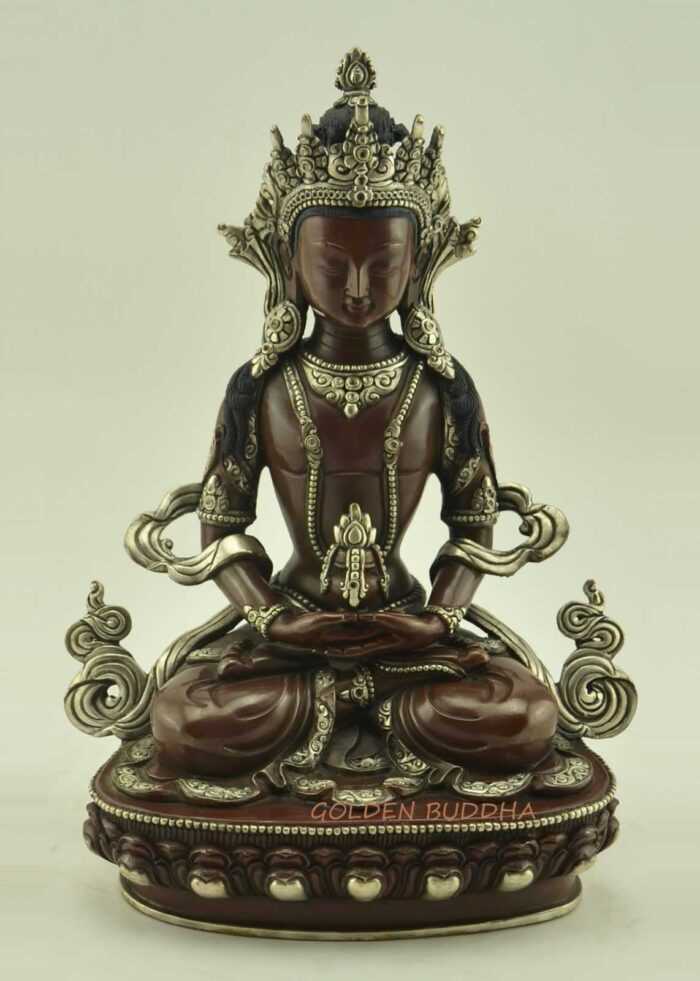
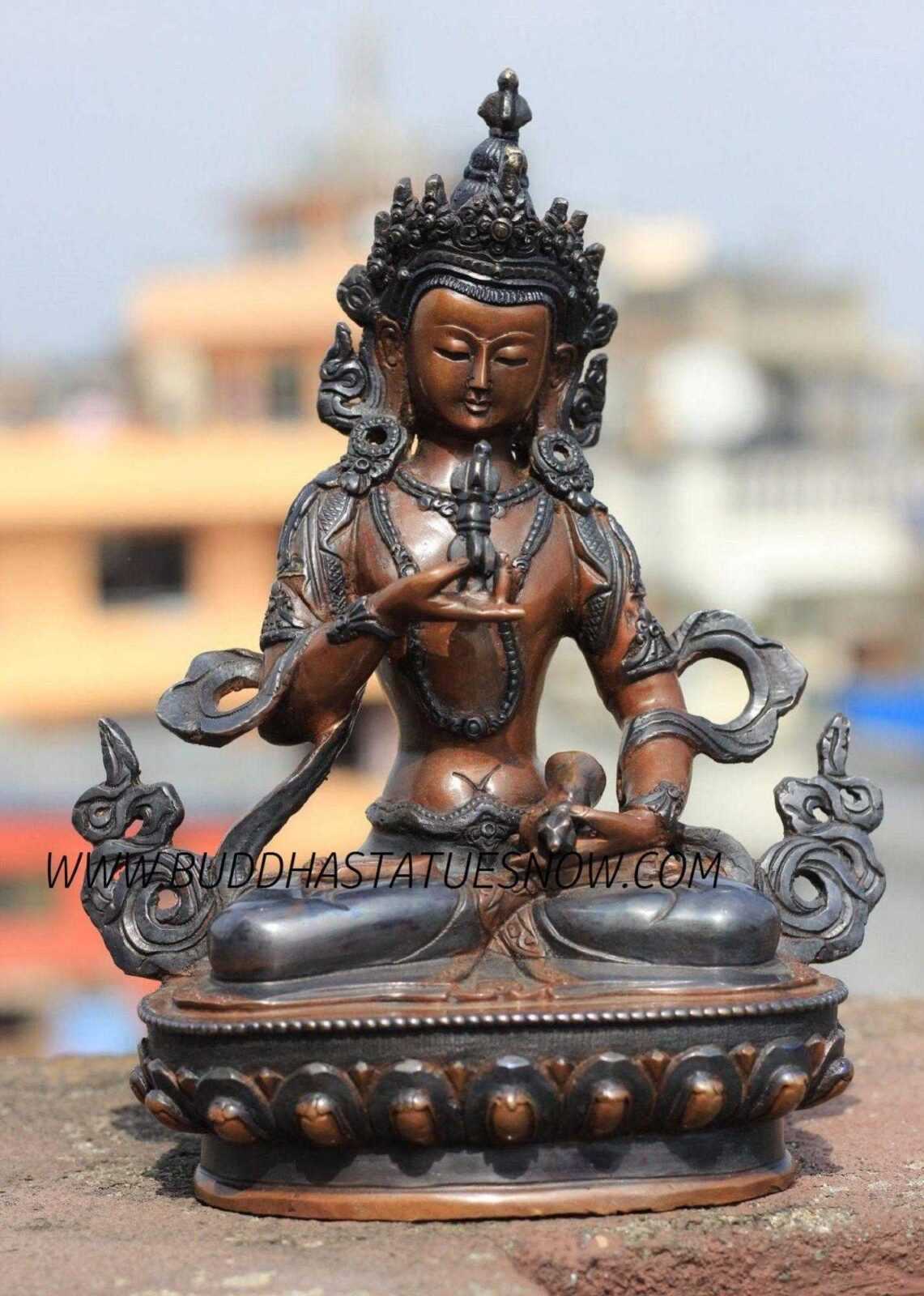
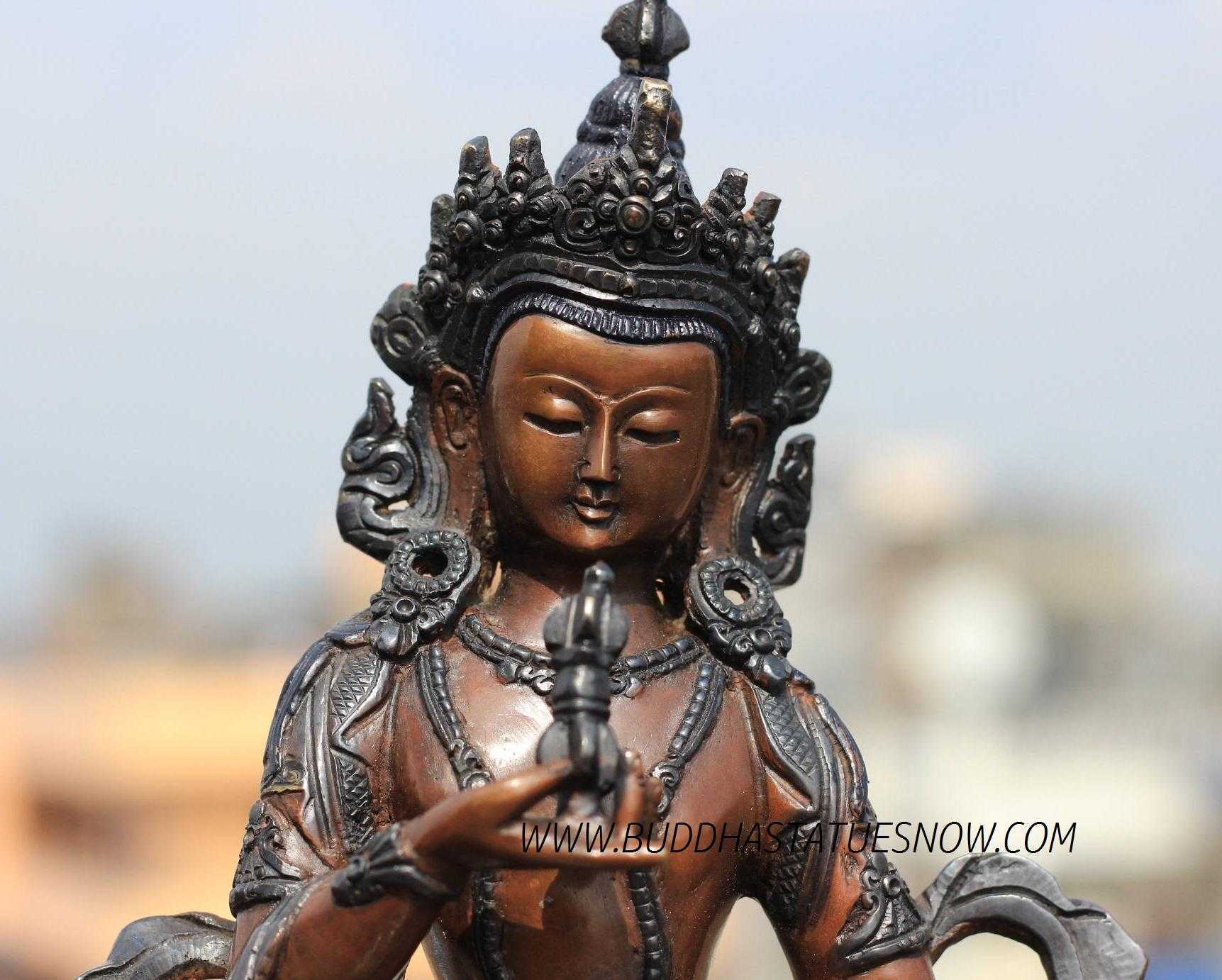
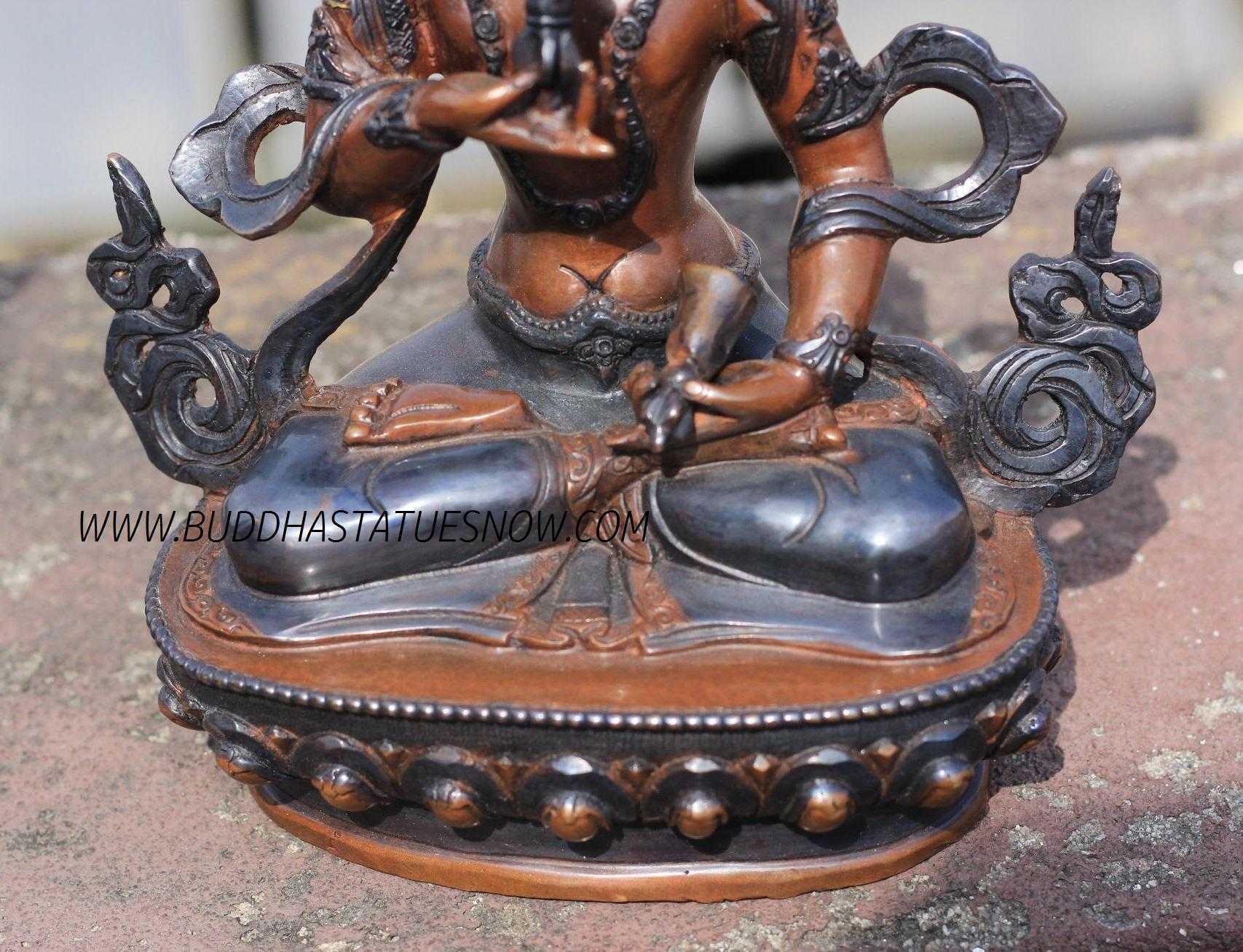
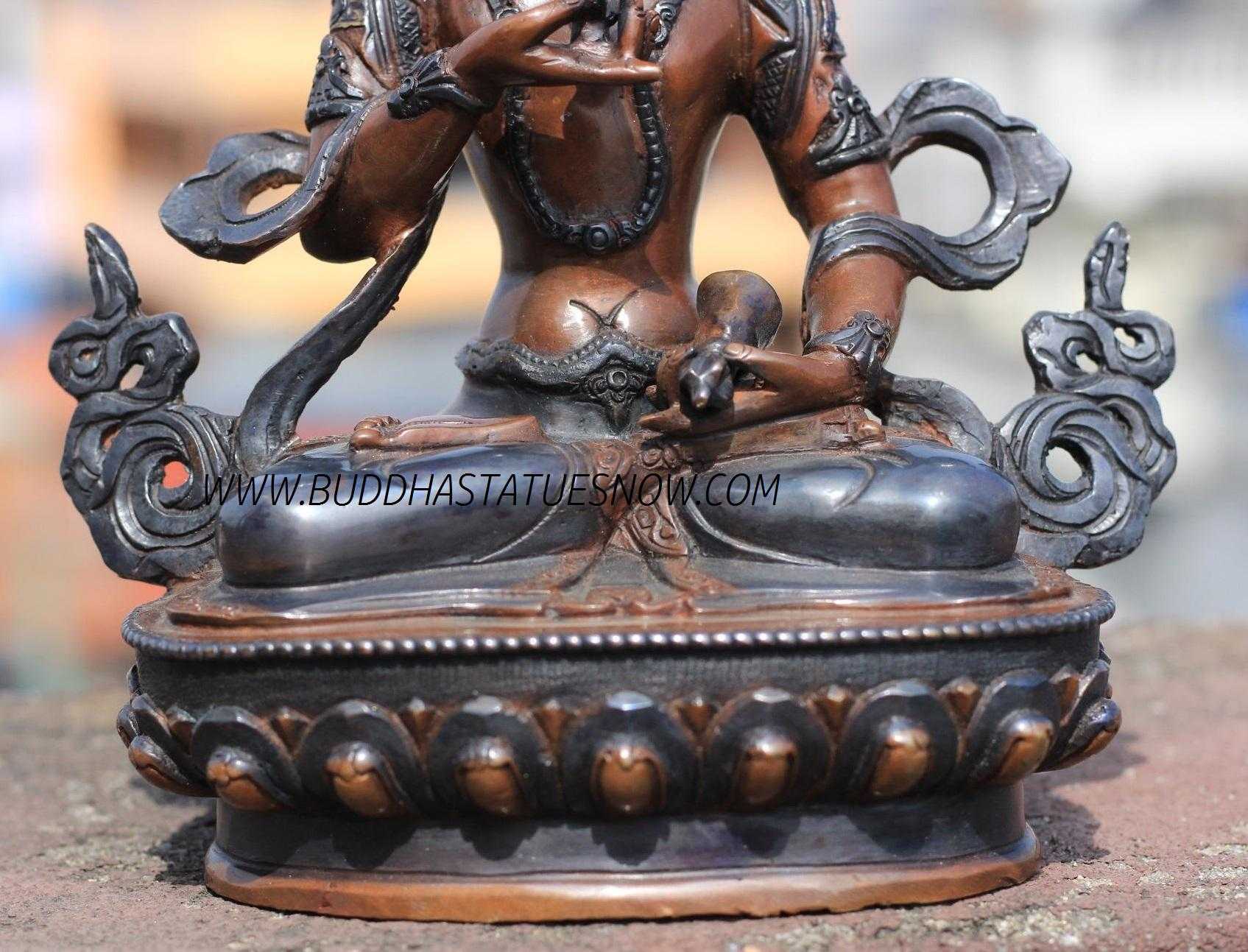
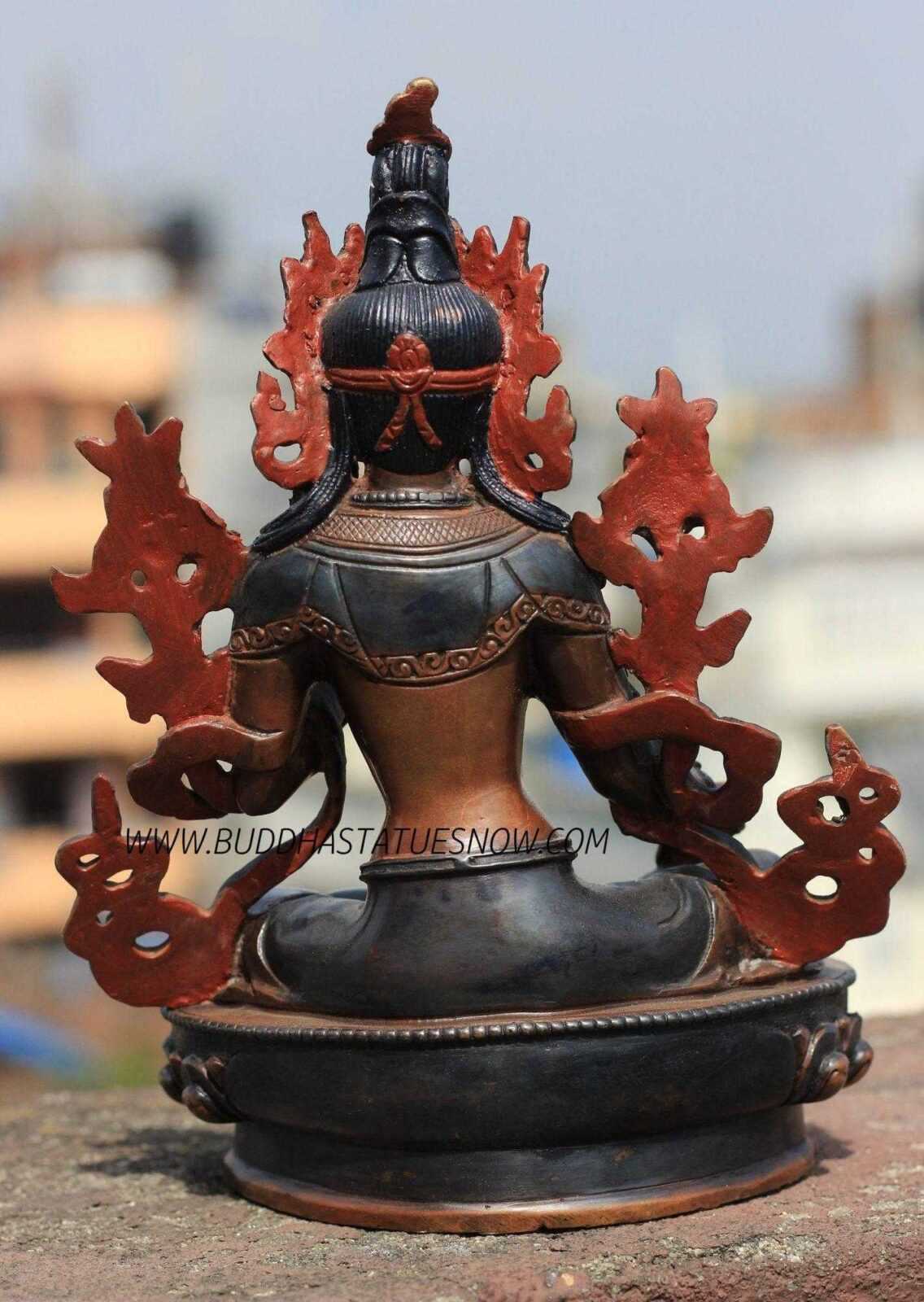
This 8-inch Oxidized Copper Vajrasattva Sculpture is a finely handcrafted representation of Vajrasattva, known in Tibetan as Dorje Sempa. Handmade in Nepal from copper alloy using the traditional lost-wax casting method, the sculpture is distinguished by a rich two-tone antiquated and oxidized finish. Warm copper tones remain visible across Vajrasattva’s serene face, neck, chest, arms, and torso, while deep oxidized tones accentuate his elaborate Bodhisattva crown, jewelry, garments, flowing scarves, crossed legs, and lotus throne. The contrast gives the sculpture considerable visual depth while preserving the natural character of the copper alloy.
The workmanship is particularly evident around the ornate five-pointed crown, large circular earrings, necklaces, arm ornaments, and decorative borders of the garments. Vajrasattva sits upright in the meditative vajra posture upon a substantial lotus throne. Rather than covering every surface with ornamentation, the artisan has balanced detailed jewelry and garment borders against smoother expanses of oxidized copper, allowing the sculpted form and contrasting patina to define the composition.
Oxidized Copper Vajrasattva Sculpture Iconography
The sculpture follows Vajrasattva’s traditional peaceful iconography. His right hand is raised before his heart and holds the vajra upright, while his lowered left hand holds the ghanta, or ritual bell, beside his hip. These complementary ritual implements are fundamental to the meaning of Vajrasattva. The vajra represents indestructibility as well as compassionate skillful means, while the ghanta represents wisdom and the realization of emptiness. Together they express the inseparability of the qualities necessary for awakening. Our illustrated guide provides a more detailed explanation of Vajrasattva’s traditional iconography.
Oxidized Copper Vajrasattva Sculpture and Purification
Vajrasattva is among the most important purification deities of Tibetan Buddhism. His Tibetan name, Dorje Sempa, is commonly understood in relation to the indestructible purity symbolized by the vajra. Vajrasattva practice is traditionally associated with purification of negative karma, obscurations, and broken spiritual commitments. His mantra and visualization also form an essential component of Ngondro preliminary practices. Readers unfamiliar with the deity can explore who Vajrasattva is and his role in Tibetan Buddhism.
Vajrasattva is also understood as the sambhogakaya manifestation of Vajradhara. Sambhogakaya is the subtle or visionary form through which Buddhas communicate profound teachings to highly realized Bodhisattvas. The elaborate crown, necklaces, earrings, armlets, bracelets, silks, and other royal ornaments seen on this sculpture are characteristic of this celestial form. Our Vajrasattva guide explains the relationship between Vajrasattva and the sambhogakaya in greater detail.
A Coordinated Vajrasattva and Tara Altar
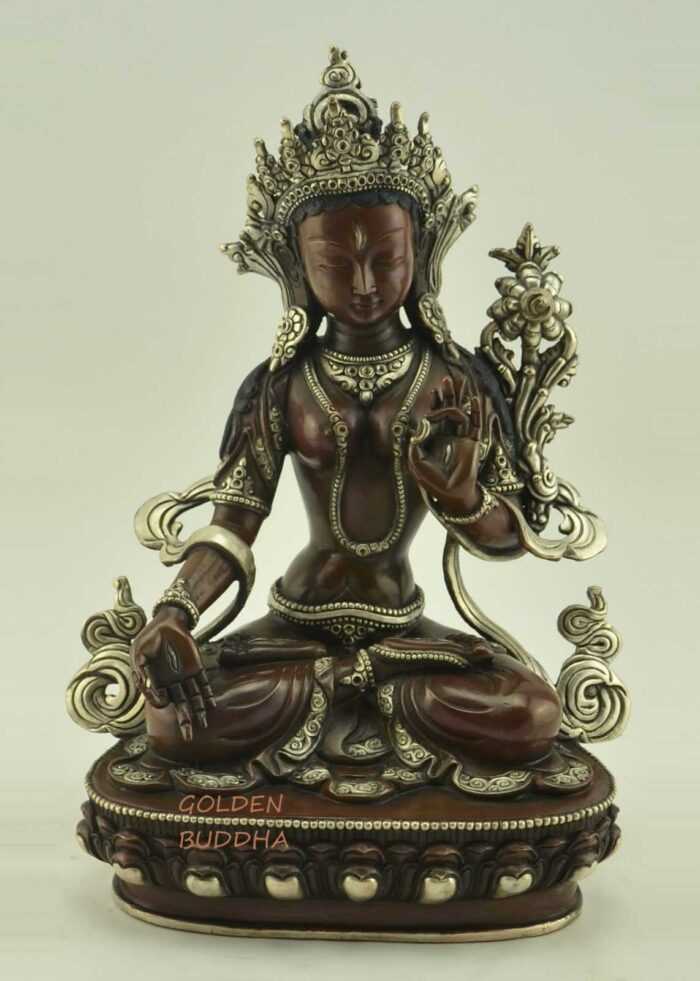
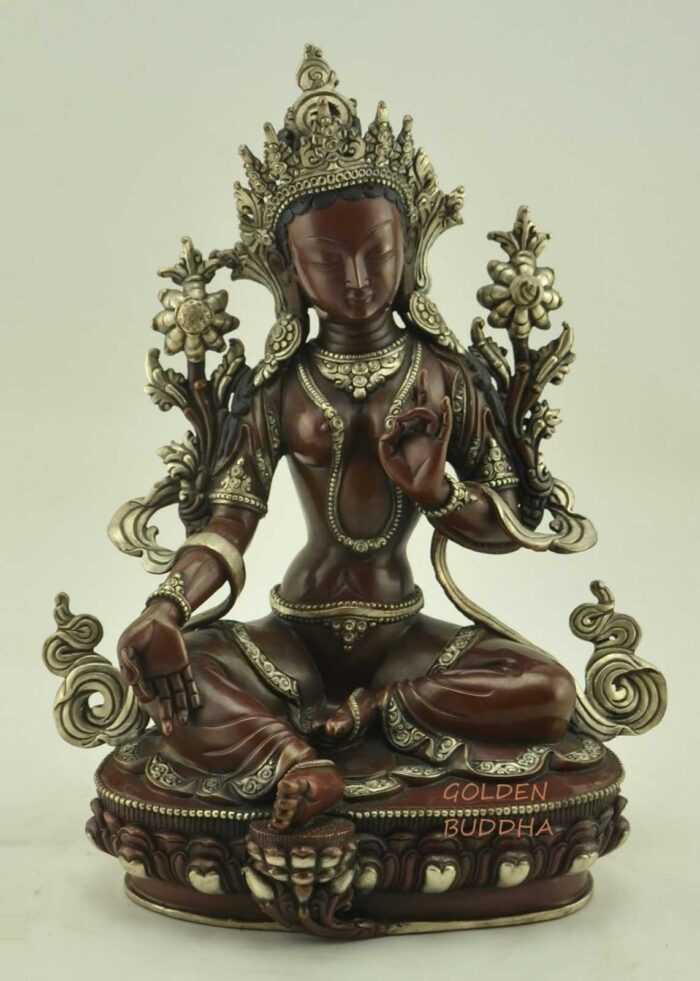
This sculpture can also form the centerpiece of an unusually harmonious three-statue altar. A matching 8-inch oxidized Green Tara and 8-inch oxidized White Tara share closely coordinated proportions, copper tones, dark oxidized surfaces, and artistic styling with Vajrasattva.
Placed centrally, Vajrasattva represents purification and the transformation of obscurations. Green Tara can be positioned to one side as the embodiment of swift, active compassion and protection, with White Tara balancing the arrangement on the opposite side as a deity associated with healing, serenity, and longevity. Their comparable scale creates a visually cohesive arrangement without one of the accompanying Tara figures overwhelming the central sculpture.
Custom Oxidized Copper Vajrasattva Sculpture
For collectors or practitioners seeking different dimensions, finishes, ornamentation, or coordinated altar figures, we can arrange a custom handmade Tibetan Buddhist statue through our artisans in Nepal. A Vajrasattva sculpture may be commissioned according to traditional iconographic requirements while adapting the size and decorative finish to the intended shrine or collection. Turquoise and red coral gemstones can also be embedded into the crown and jewelry of this sculpture upon request before shipment.
Authentic, Handmade in Nepal
Every statue is handcrafted in Patan, Nepal, using traditional lost wax casting and comes with a certificate of authenticity issued by Nepal’s Department of Archaeology, verifying its materials, technique, and origin.