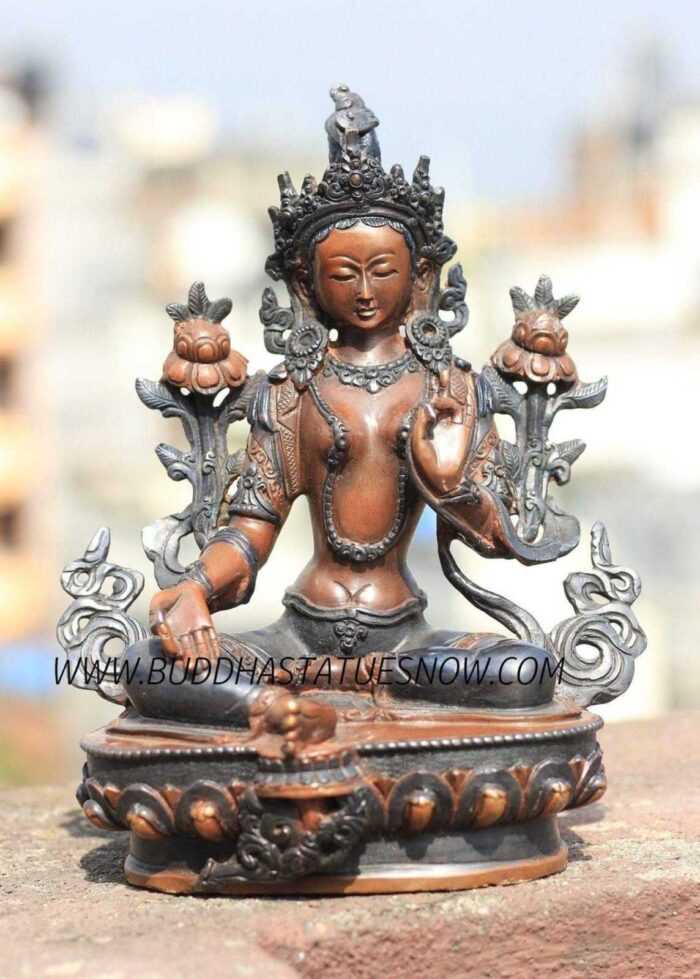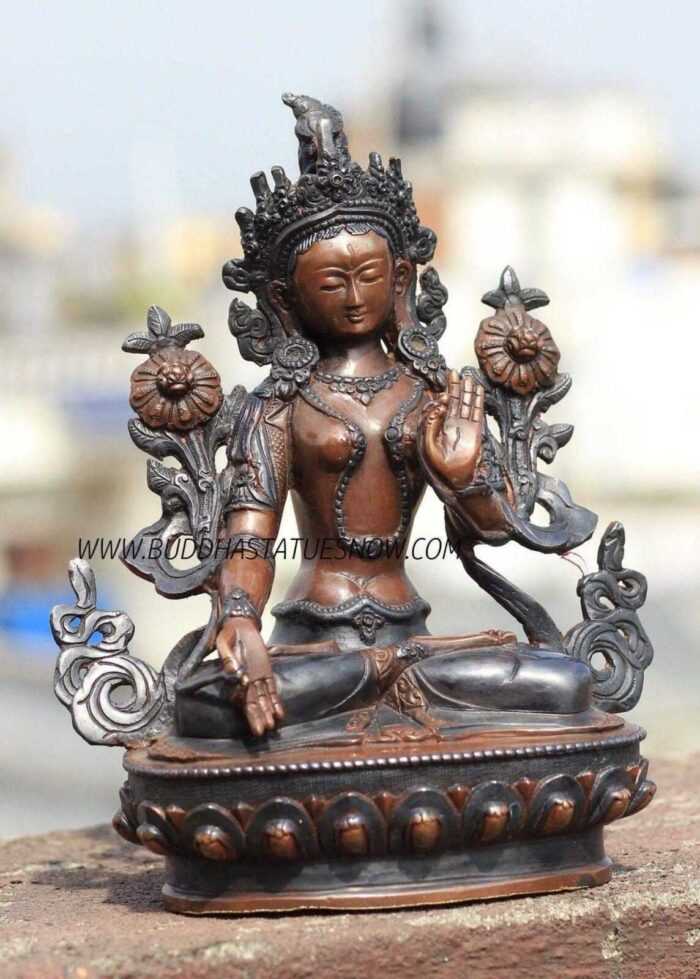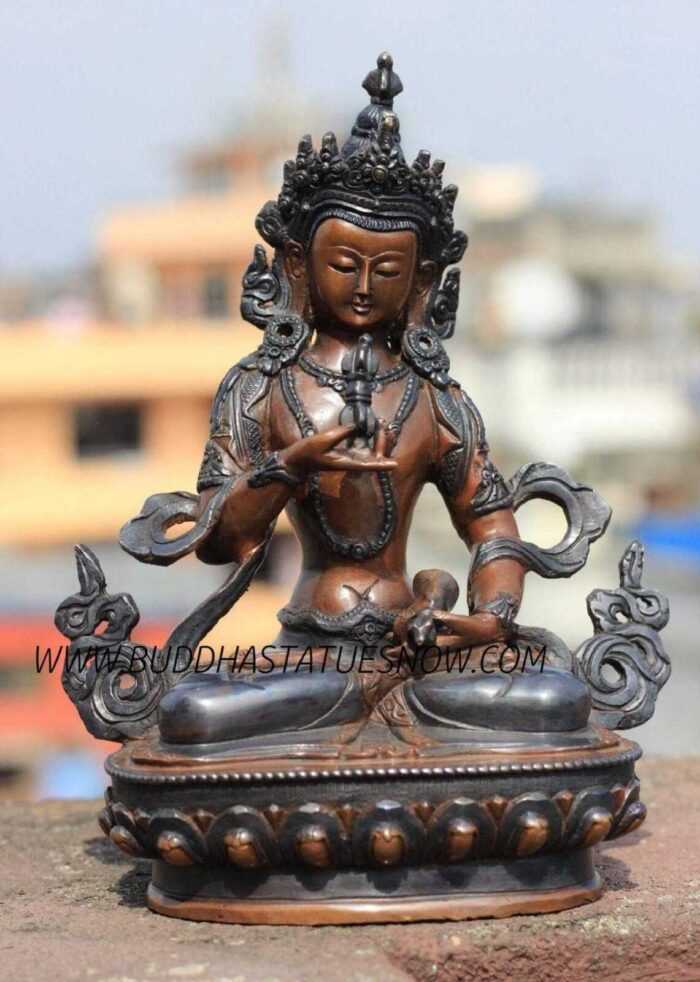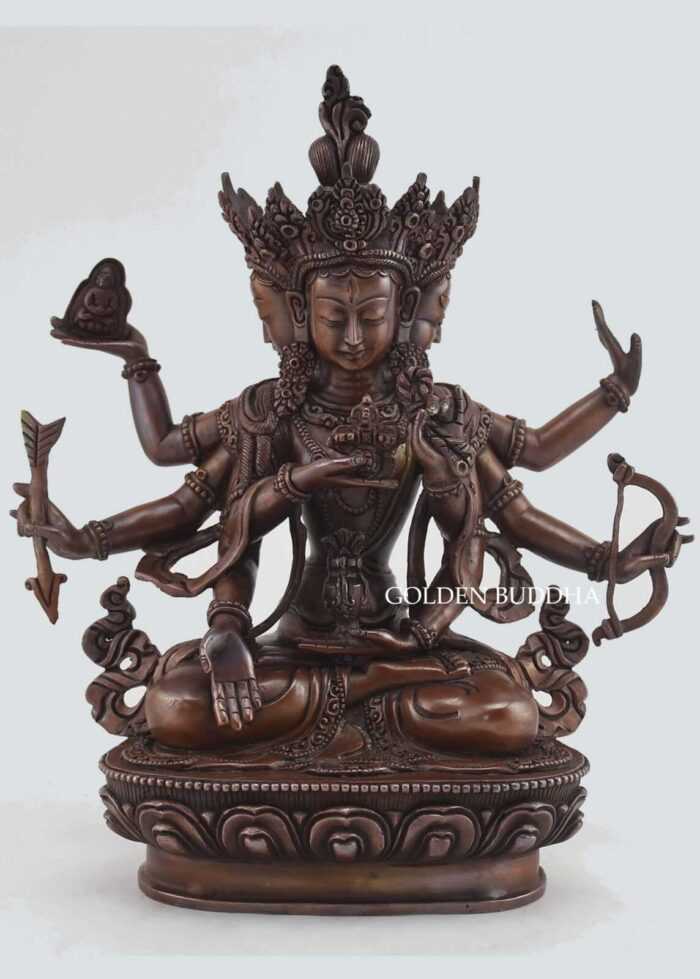
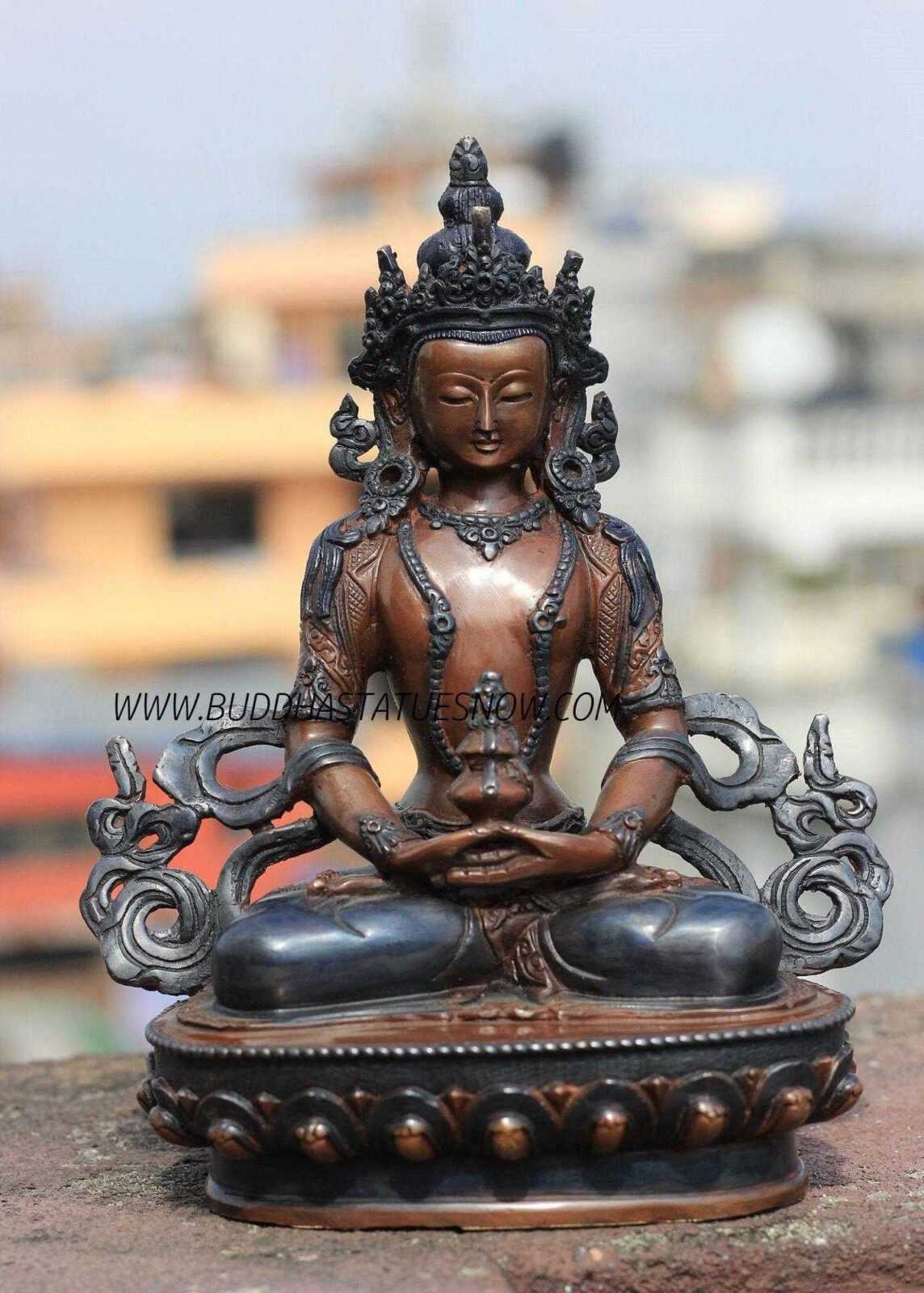
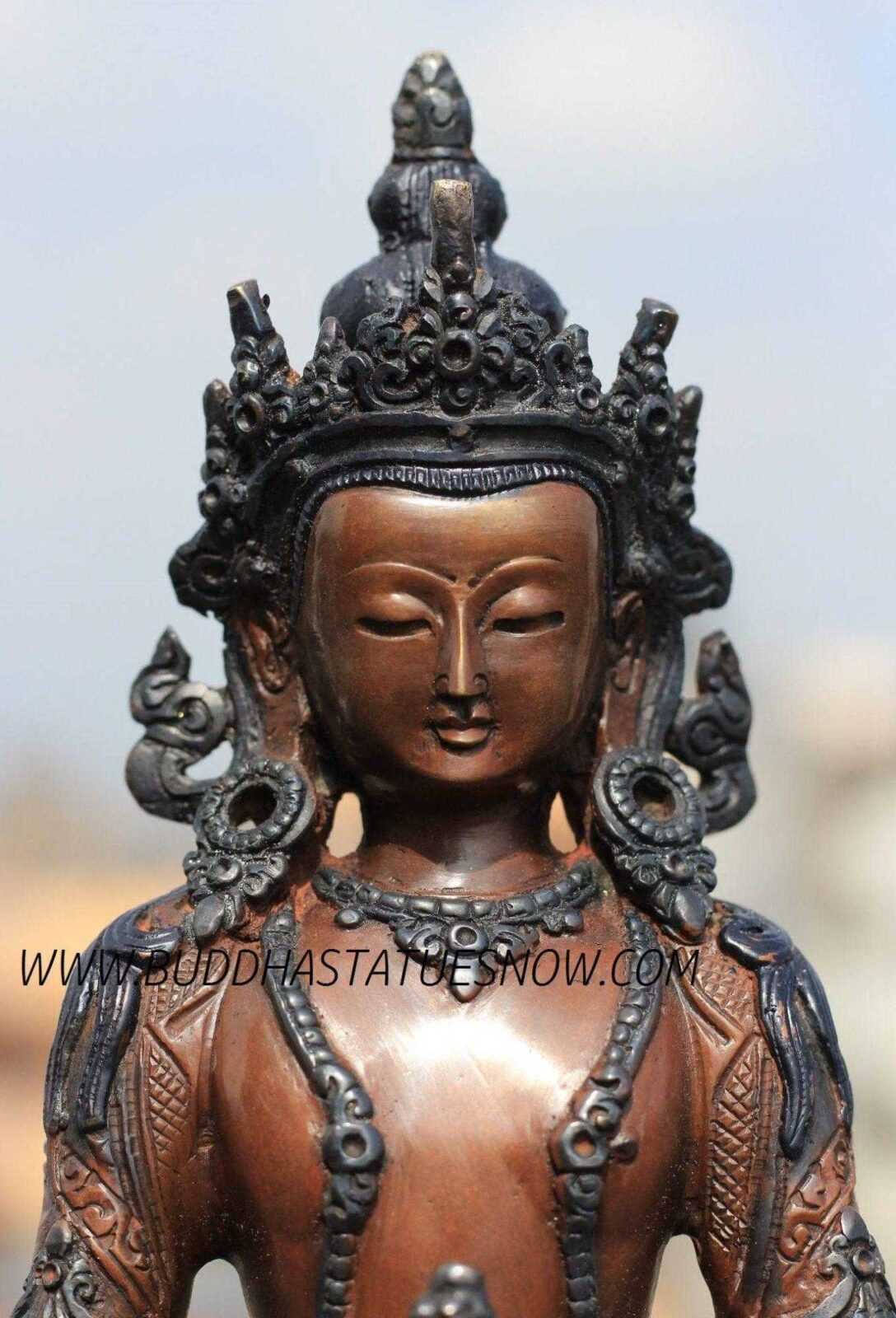
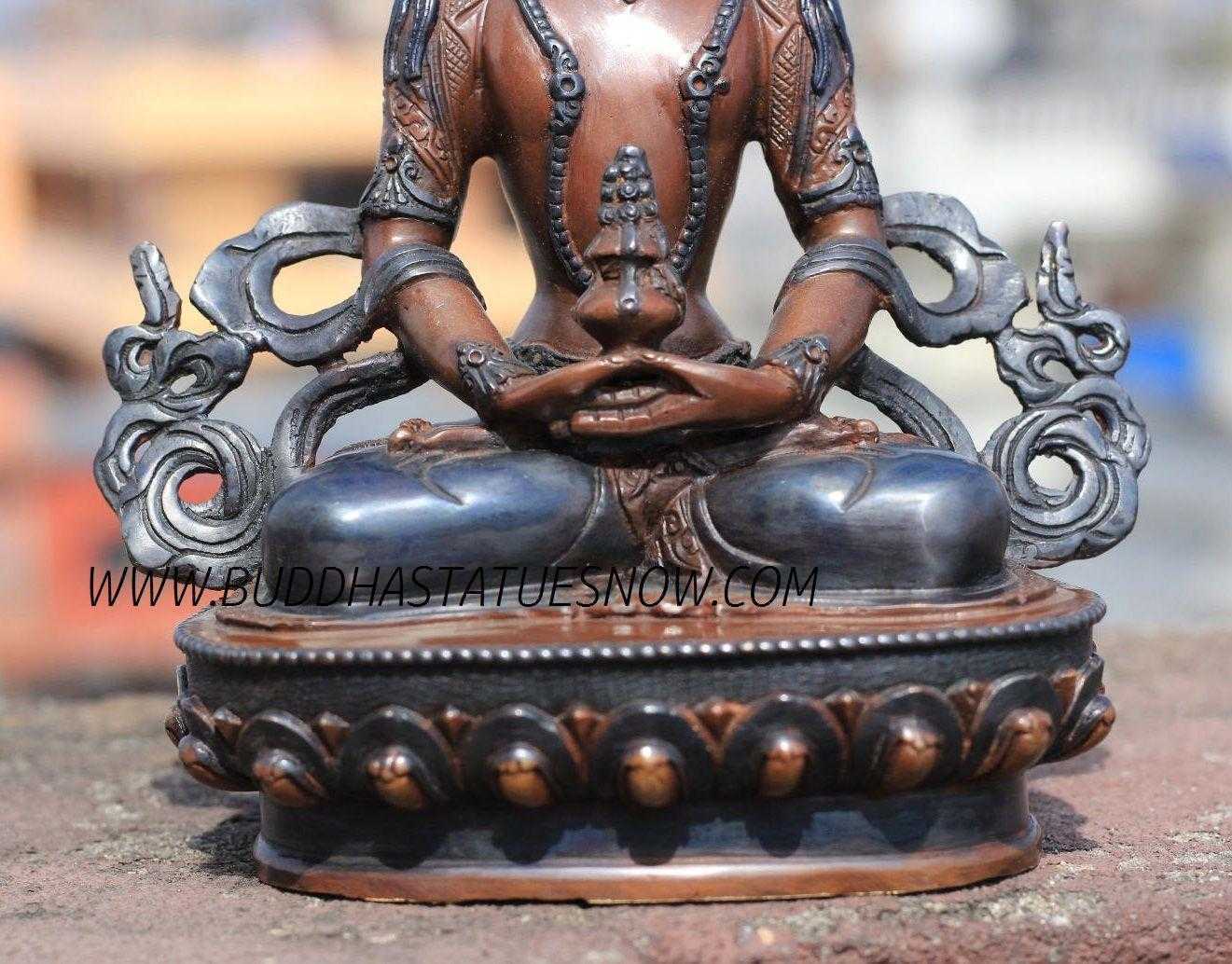
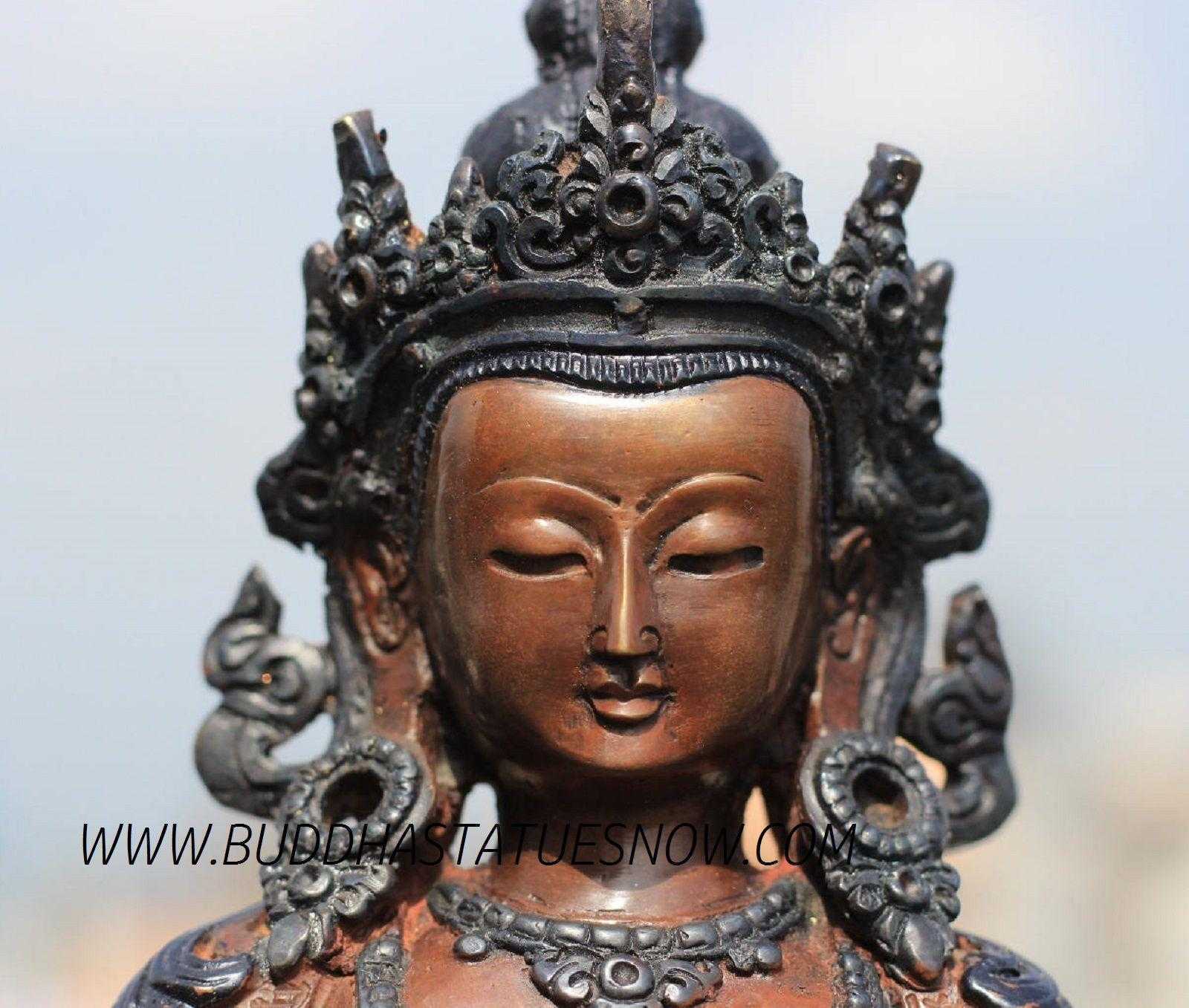
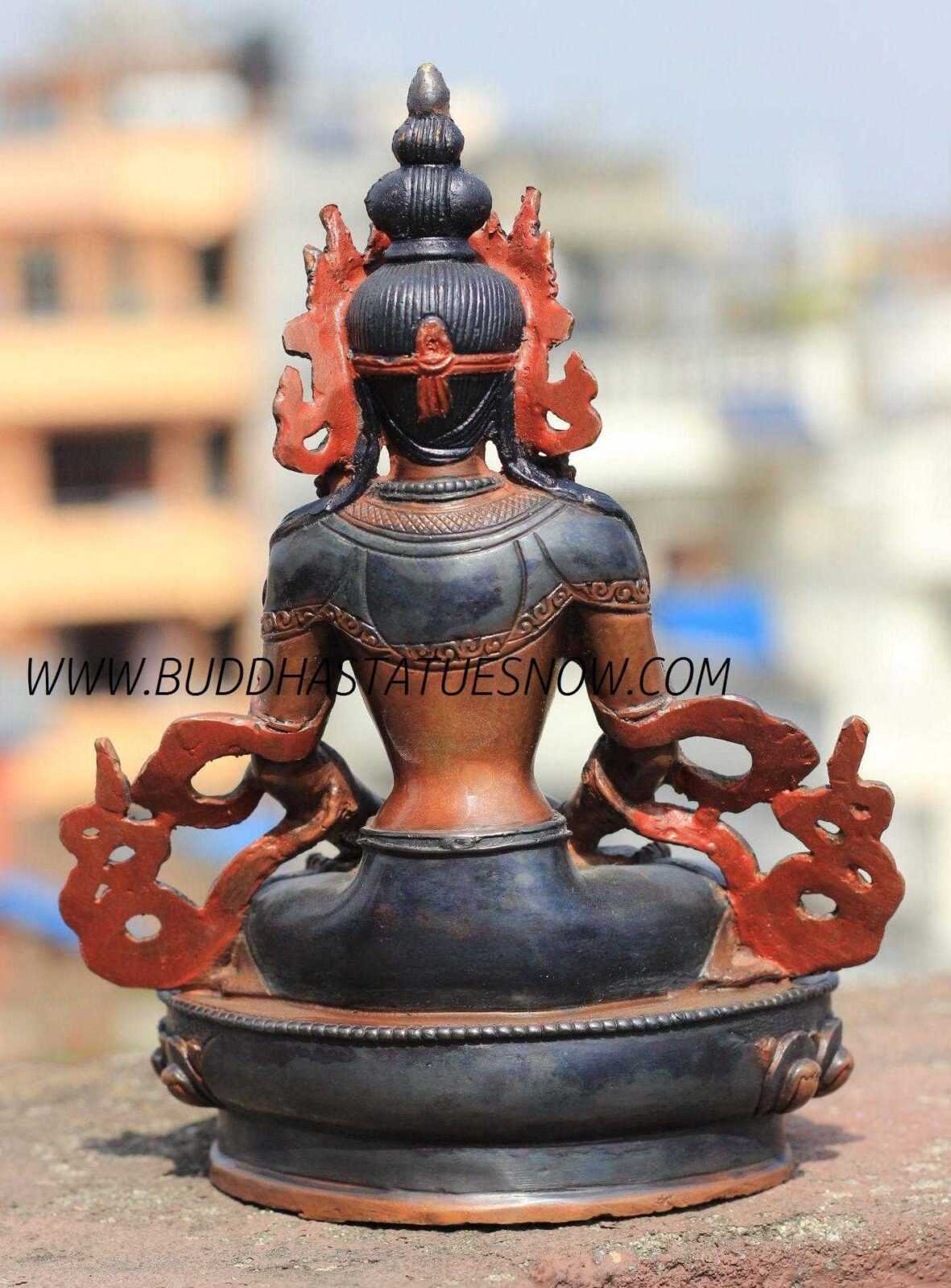
This 8-inch Oxidized Copper Aparmita Statue portrays Amitayus Buddha, known in Tibetan as Tsepame, the “Infinite Life” aspect of Amitabha Buddha. Handmade in Nepal from copper alloy using the traditional lost-wax casting method, the sculpture has been given an antiquated oxidized finish rather than gold gilding. Warm reddish-brown copper remains visible across Aparmita’s serene face, neck, torso, arms and hands, while deep charcoal-black oxidation defines his crown, jewelry, hair, shoulder coverings, lower garments and the recessed details of the lotus throne. The contrasting surfaces accentuate the sculptural depth and give this statue the dignified character of an older Himalayan Buddhist image.
Aparmita Buddha Iconography and the Nectar of Infinite Life
Aparmita sits peacefully in full lotus posture upon a single lotus throne bordered by beaded detailing and raised lotus-petal carvings. Both hands rest within his lap in Dhyana Mudra, the gesture of meditation, supporting his distinctive longevity vessel. This vase contains amrita, the nectar of deathlessness, and immediately distinguishes Amitayus from the familiar monastic representation of Amitabha. The vessel rises from the center of his palms into an ornamental finial, creating a strong visual focus at the heart of the composition. You can explore the symbolism of his sacred vessel and other identifying attributes in our guide to Amitayus iconography and the immortality vase.
Unlike Amitabha’s simpler monastic appearance, Aparmita is represented in the richly adorned Sambhogakaya form. His elaborate crown rises around a tall blue-black topknot, while large earrings, layered necklaces, armlets and bracelets ornament the body. Long celestial scarves curve outward behind both arms before descending into pierced scrolling forms beside his knees. Fine engraved patterns along the shoulder coverings and garment borders become particularly prominent against the alternating copper and dark oxidized surfaces. Upon request, turquoise and red coral gemstones can be embedded within suitable areas of the crown and jewelry at no additional charge, introducing traditional Himalayan color accents while preserving the statue’s antiquated character.
Amitayus Buddha and the Three Long Life Deities
Amitayus is the longevity manifestation of Amitabha Buddha and one of Tibetan Buddhism’s Three Long Life Deities, together with White Tara and Namgyalma. His Sanskrit name means “Infinite Life,” while the Tibetan name Tsepame likewise expresses immeasurable lifespan. Long-life practice is traditionally undertaken not simply to prolong worldly existence, but to preserve the precious human life needed for meditation, Dharma study, accumulation of merit and beneficial activity. Amitayus represents inexhaustible life force and spiritual vitality, while the nectar held within his vase symbolizes the restoration and preservation of that life energy.
Oxidized Copper Aparmita Statue + White Tara + Namgyalma = Long Life Deities Statue Set
This Oxidized Copper Aparmita Statue provides an excellent centerpiece for assembling the traditional three-deity longevity grouping in a visually coordinated antiquated finish. Pair Aparmita with our seven-eyed White Tara sculpture, representing compassionate healing and longevity, and our antiquated Namgyalma sculpture, associated with purification and victory over obstacles to long life. Together, Amitayus, White Tara and Namgyalma form the established Three Long Life Deities invoked in Tibetan longevity practices. Aparmita may occupy the central position, with White Tara and Namgyalma completing a meaningful three-statue altar arrangement.
Add Green Tara for a Four-Statue Altar
For a larger arrangement, an oxidized Green Tara may be added as a complementary fourth statue. Green Tara is not one of the Three Long Life Deities, so this addition preserves the traditional Amitayus, White Tara and Namgyalma triad while adding Tara’s dynamic expression of compassionate activity and swift assistance. The four statues can therefore create a coordinated altar centered upon longevity, purification, healing and active compassion.
Custom Made Oxidized Copper Aparmita Statues and Matching Sets
Collectors seeking a coordinated Three Long Life Deities set, or a four-statue arrangement incorporating Green Tara, may also commission statues through our custom Tibetan Buddhist statue service. Matching statues can be handmade in Nepal using the traditional lost-wax method with coordinated dimensions, iconography and antiquated finishes. This option is especially useful when creating a balanced altar in which Amitayus, White Tara and Namgyalma share complementary proportions and craftsmanship, with Green Tara optionally added as a fourth figure representing swift compassionate activity.
Authentic, Handmade in Nepal
Every statue is handcrafted in Patan, Nepal, using traditional lost wax casting and comes with a certificate of authenticity issued by Nepal’s Department of Archaeology, verifying its materials, technique, and origin.