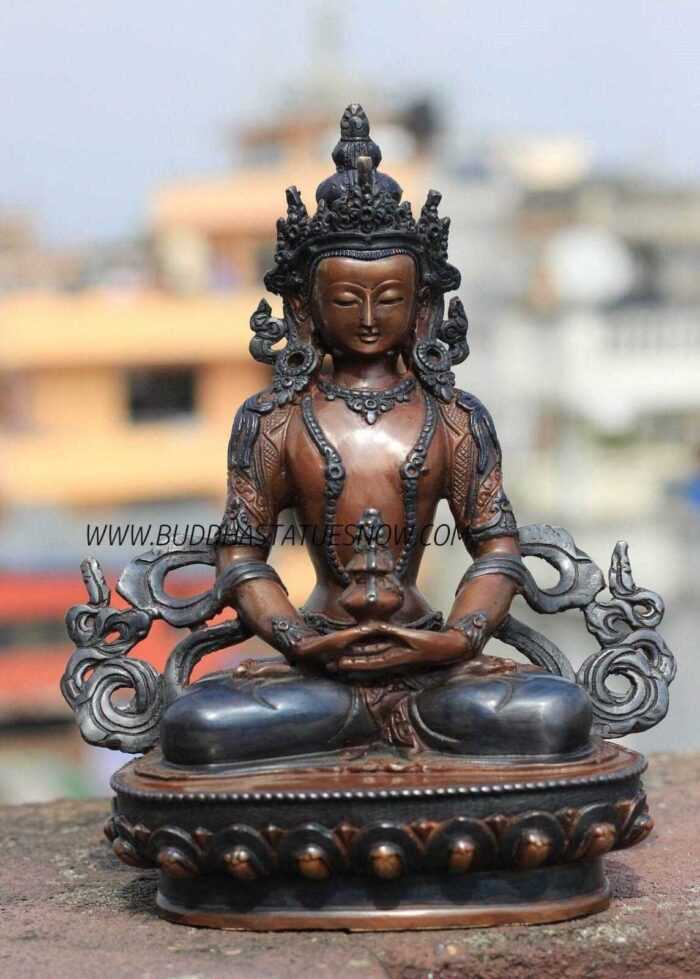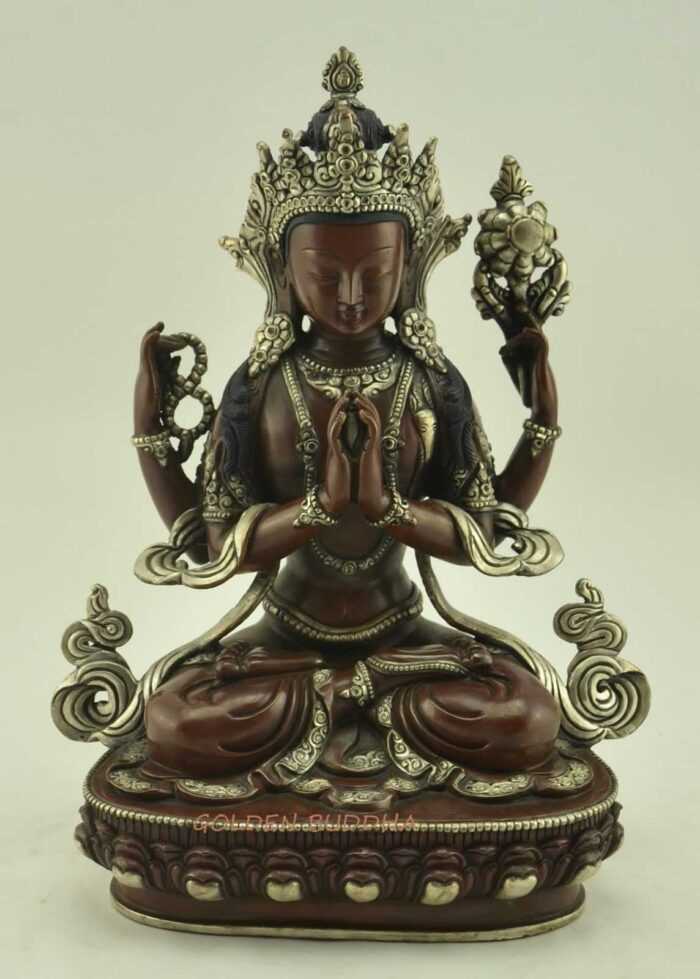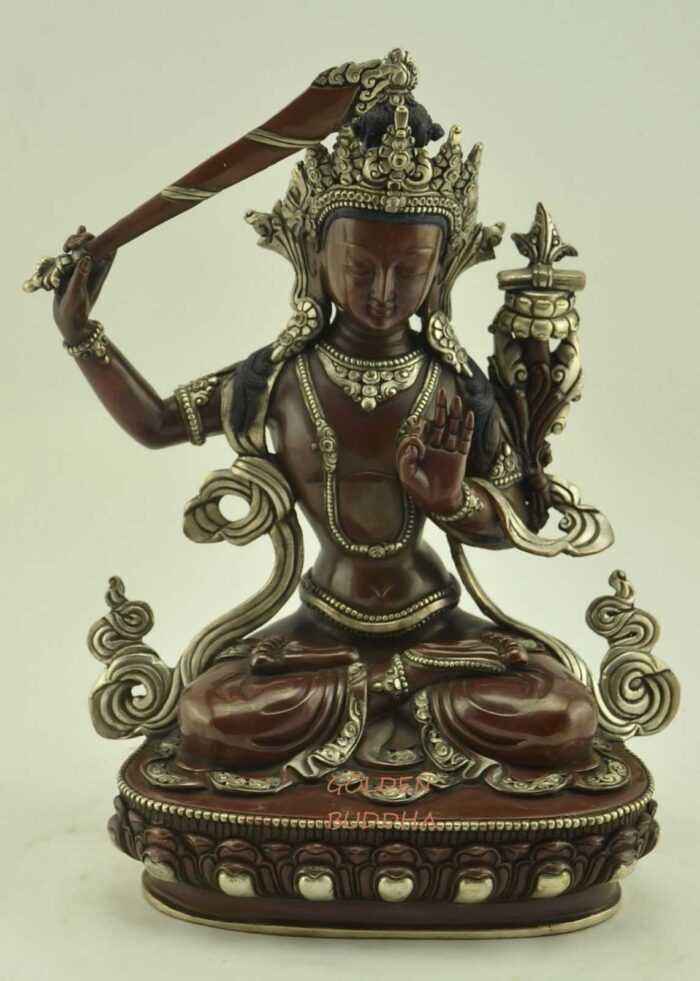
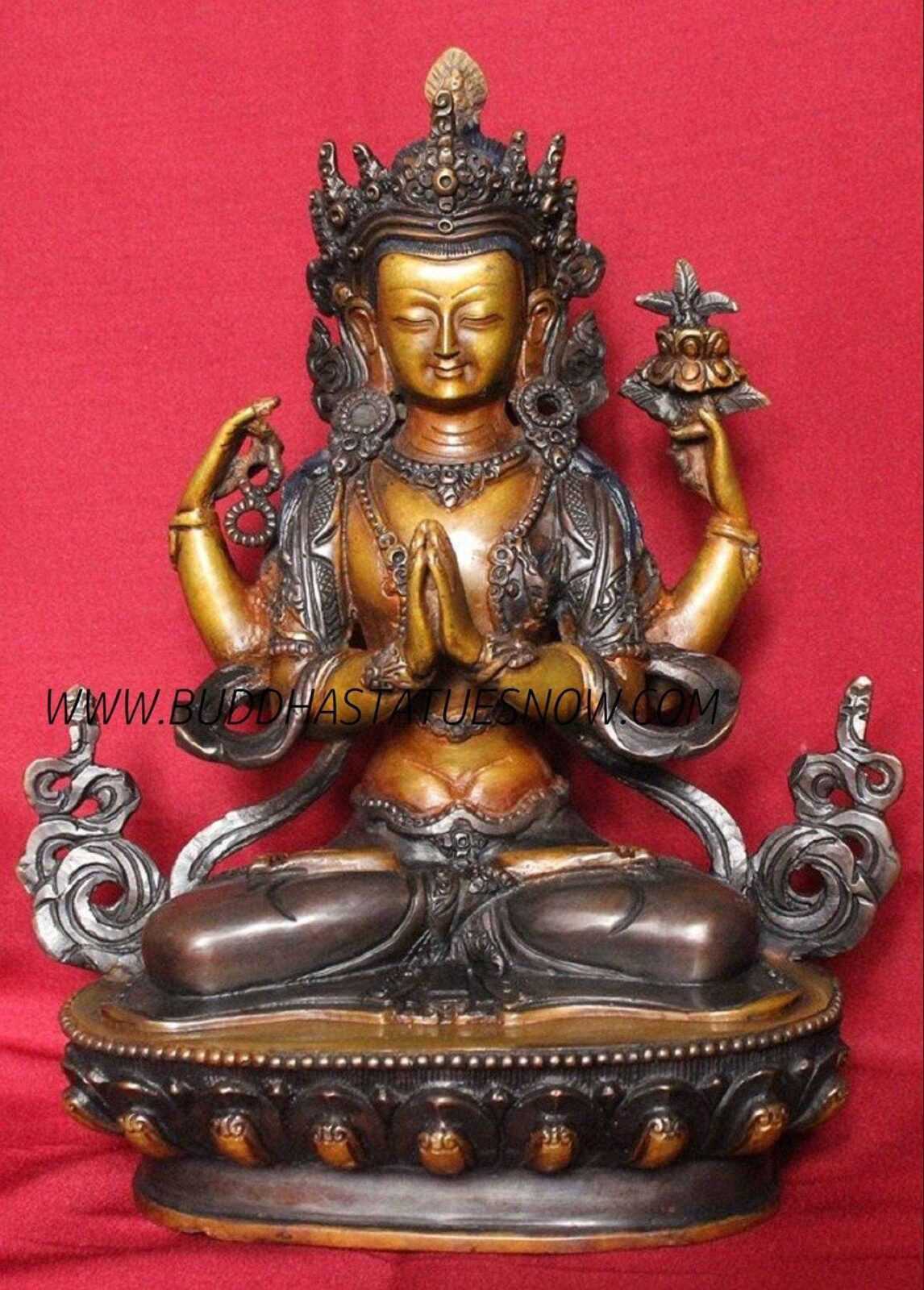
This 8-inch Oxidized Copper Chenrezig Sculpture presents Four-Armed Chenrezig, or Chaturbhuja Avalokiteshvara, in a beautifully antiquated interpretation of one of Tibetan Buddhism’s most important Bodhisattvas. Handmade in Patan, Nepal from copper alloy using the traditional lost-wax casting method, the sculpture combines warm copper-brown surfaces with deeply oxidized recesses and contrasting metallic highlights. The aged finish brings particular definition to the elaborate Bodhisattva crown, necklaces, earrings, arm ornaments, flowing scarves and sculpted lotus pedestal. Chenrezig is revered as the embodiment of the enlightened compassion of all Buddhas, and his four-armed form is among the most recognizable representations of Avalokiteshvara in Tibetan Buddhist art.
Iconography of the Oxidized Copper Chenrezig Sculpture
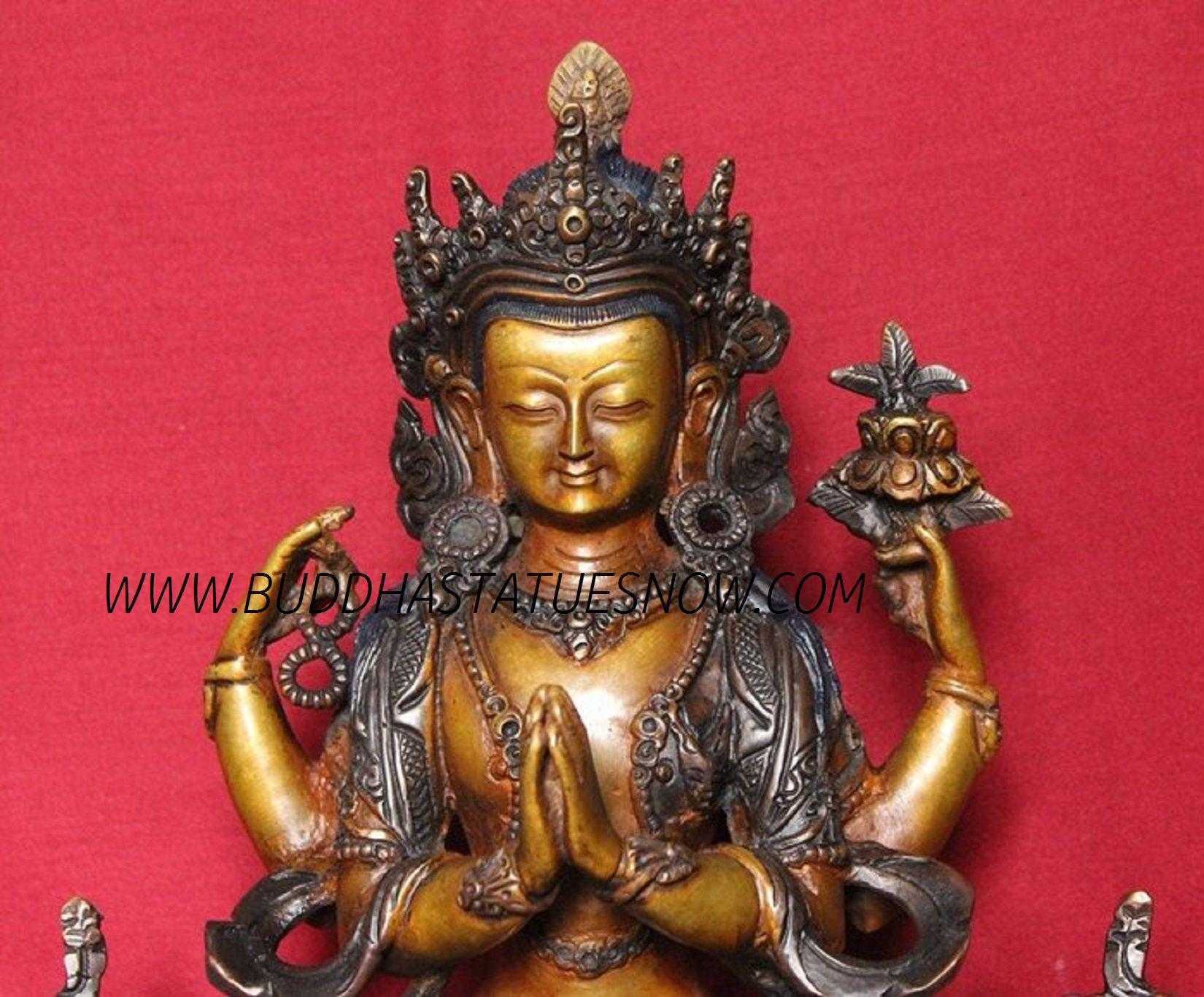
Chenrezig’s four arms are traditionally associated with the four immeasurable qualities of loving-kindness, compassion, sympathetic joy and equanimity. His two primary hands meet reverently before his heart, where close examination of this sculpture reveals the Cintamani wish-fulfilling jewel held between his palms. Rather than representing ordinary material wealth, the jewel symbolizes enlightened qualities and the fulfillment of the profound aspiration to free sentient beings from suffering. His upper right hand holds a mala, traditionally associated with continuous mantra recitation, while his upper left hand supports a blossoming lotus flower, symbolizing purity and awakened wisdom. Learn more about Chenrezig’s iconography in Tibetan Buddhism and the traditions surrounding this compassionate Bodhisattva.
Antiquated Artistry of this Oxidized Copper Chenrezig Sculpture
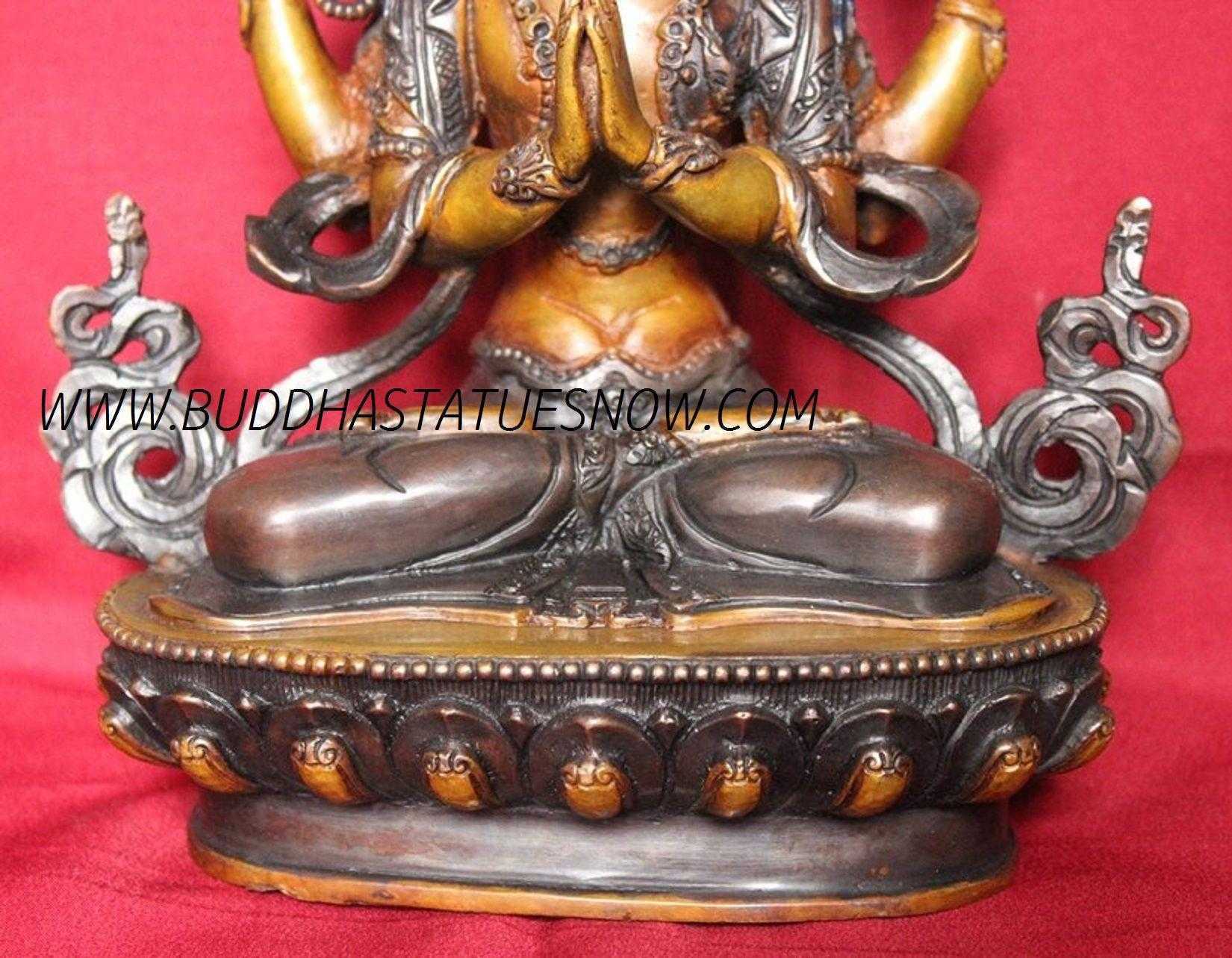
The antiquated oxidized finish gives this sculpture a markedly different character from a brightly gold-gilded representation of Chenrezig. Darkened areas settle naturally into the crown, jewelry, garment borders, lotus petals and other sculpted recesses, while warmer copper tones remain prominent across the face, torso and arms. The resulting contrast emphasizes the depth of the hand-finished ornamentation and gives the statue the appearance of a treasured devotional image that has acquired character with age.
The photographs reveal considerable detail throughout the composition. Chenrezig wears an elaborate multi-pointed Bodhisattva crown accompanied by large circular earrings, layered necklaces, bracelets and decorative garment borders. Graceful scarves descend from his shoulders and curve outward alongside the body, creating a balanced visual frame around the seated figure. His peaceful expression contrasts beautifully with the complex ornamental treatment surrounding him, reinforcing Chenrezig’s compassionate and contemplative character.
Lotus Throne and Meditative Posture
Chenrezig sits in full lotus posture upon a substantial double lotus pedestal. The throne features individually modeled lotus petals, a beaded upper border and contrasting antiquated details that visually anchor the sculpture. Within Buddhist symbolism, the lotus represents purity and awakening because it grows from muddy water yet blossoms cleanly above the surface. It therefore provides an especially appropriate throne for Avalokiteshvara: compassionate activity arises within samsara while remaining unstained by its confusion and suffering. Practitioners may also explore the meaning and practice of Chenrezig’s six-syllable mantra, Om Mani Padme Hum, one of the most widely recited mantras in Tibetan Buddhism.
Four-Armed Chenrezig and 1000-Armed Avalokiteshvara
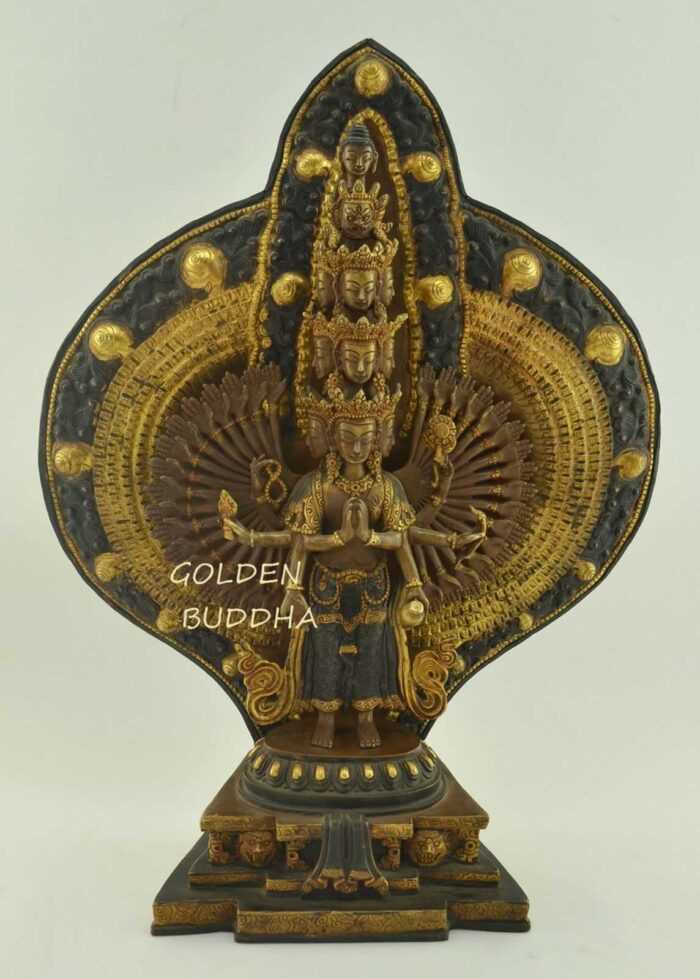
This Oxidized Copper Chenrezig Sculpture makes an especially meaningful companion to our antiquated 1000-Armed Avalokiteshvara statue. Both represent Avalokiteshvara and therefore express the same fundamental ideal of boundless compassion, but they communicate that ideal through dramatically different iconography. Four-Armed Chenrezig offers a concentrated, meditative representation centered upon the Cintamani, mala and lotus. The thousand-armed manifestation expands this compassionate activity outward through innumerable arms reaching toward beings throughout the realms of existence. Their related antiquated finishes make the two forms particularly complementary when displayed together, creating both doctrinal continuity and visual harmony within a Buddhist altar or Himalayan art collection.
Filling and Consecrating Your Chenrezig Statue
For practitioners who intend to use the statue as a sacred support for meditation and devotional practice, it may be traditionally filled with mantras, sacred substances and other appropriate consecration materials before ritual blessing. This transforms the hollow interior into an important component of the completed sacred image. Our guide to Buddhist statue filling, blessing and consecration explains the purpose and traditional process in greater detail.
Custom Made Chenrezig and Tibetan Buddhist Statues
Collectors and practitioners seeking a different size, finish or presentation may commission a custom Tibetan Buddhist statue handmade in Nepal. Chenrezig and other Buddhist figures can be commissioned according to traditional iconographic requirements while allowing choices in dimensions, gilding, antiquated finishes and selected ornamental details. Upon request, this statue may also be enhanced with carefully placed turquoise and red coral gemstones, introducing traditional Himalayan color accents while preserving the distinctive antiquated character of the oxidized copper composition.
Authentic, Handmade in Nepal
Every statue is handcrafted in Patan, Nepal, using traditional lost wax casting and comes with a certificate of authenticity issued by Nepal’s Department of Archaeology, verifying its materials, technique, and origin.