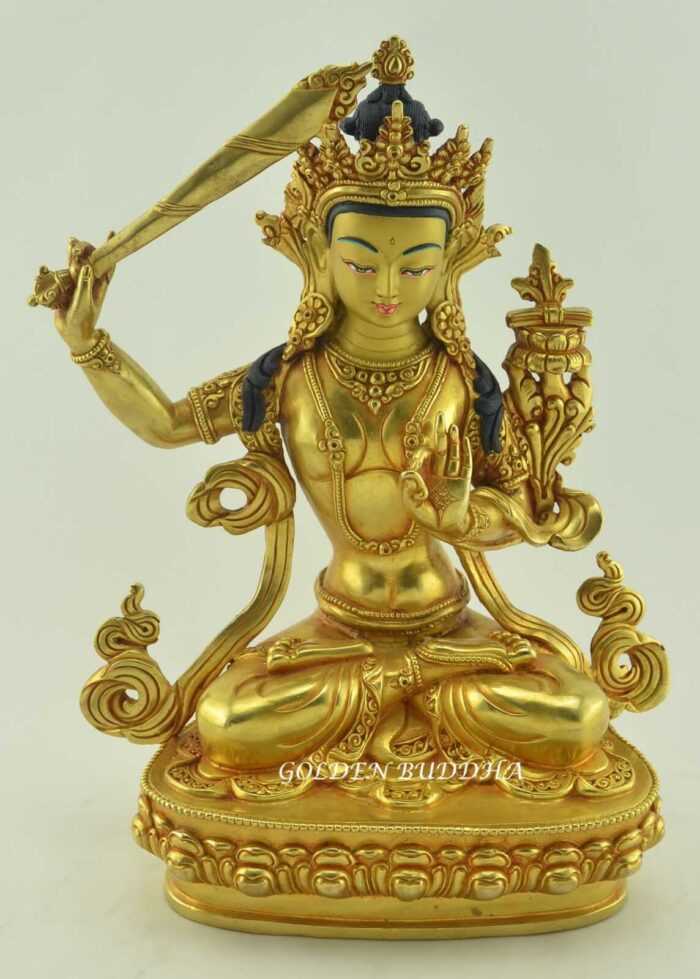
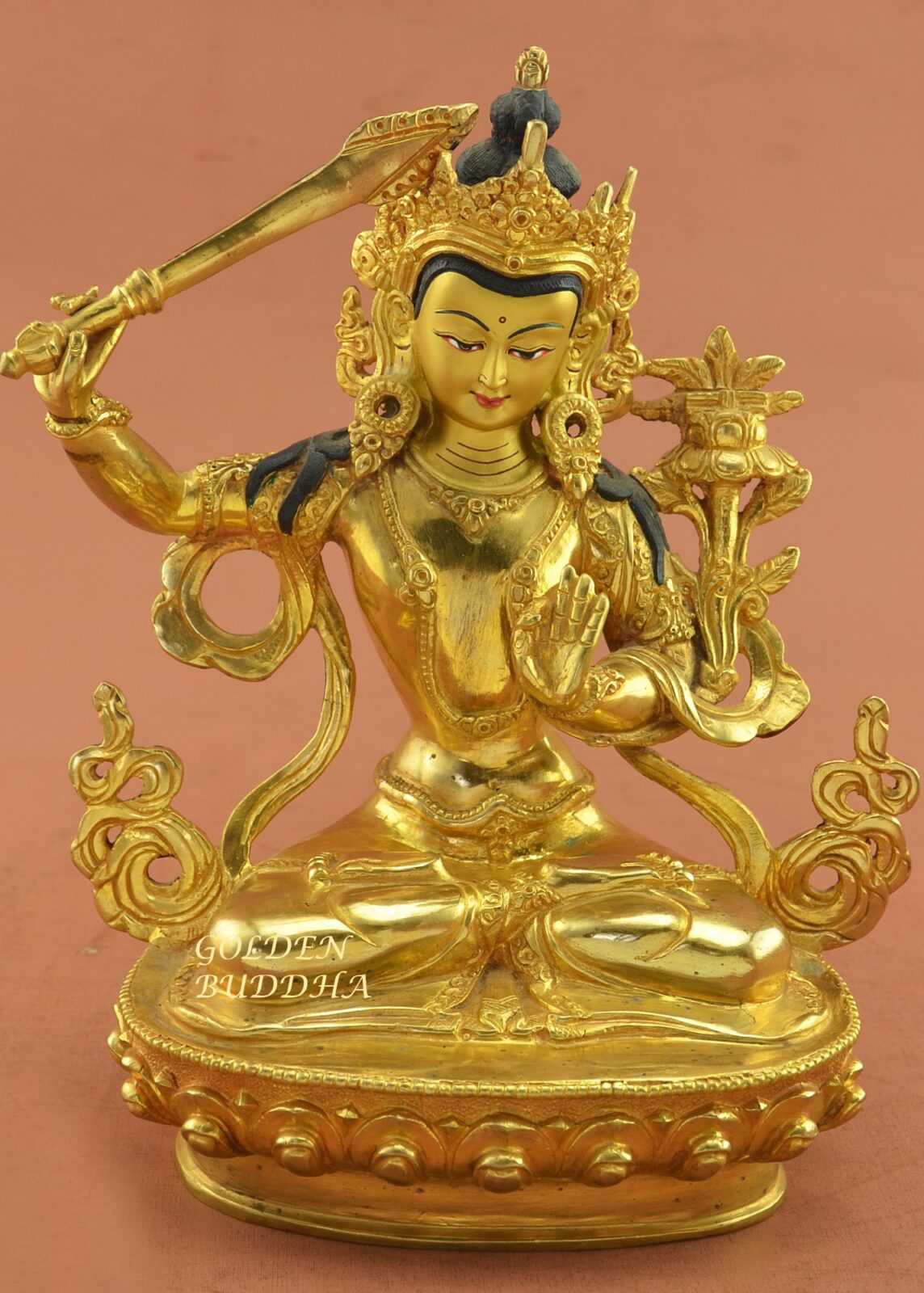
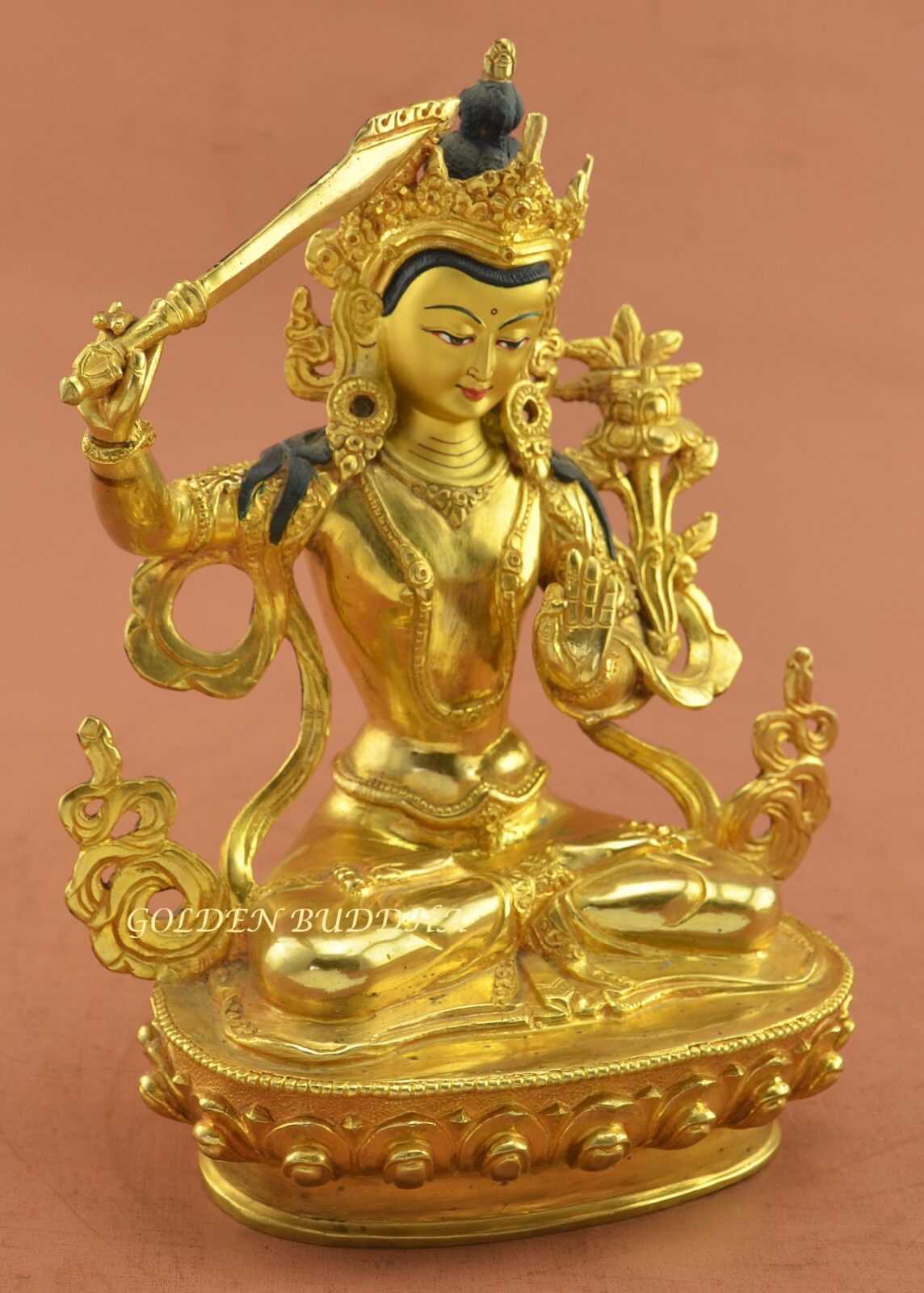
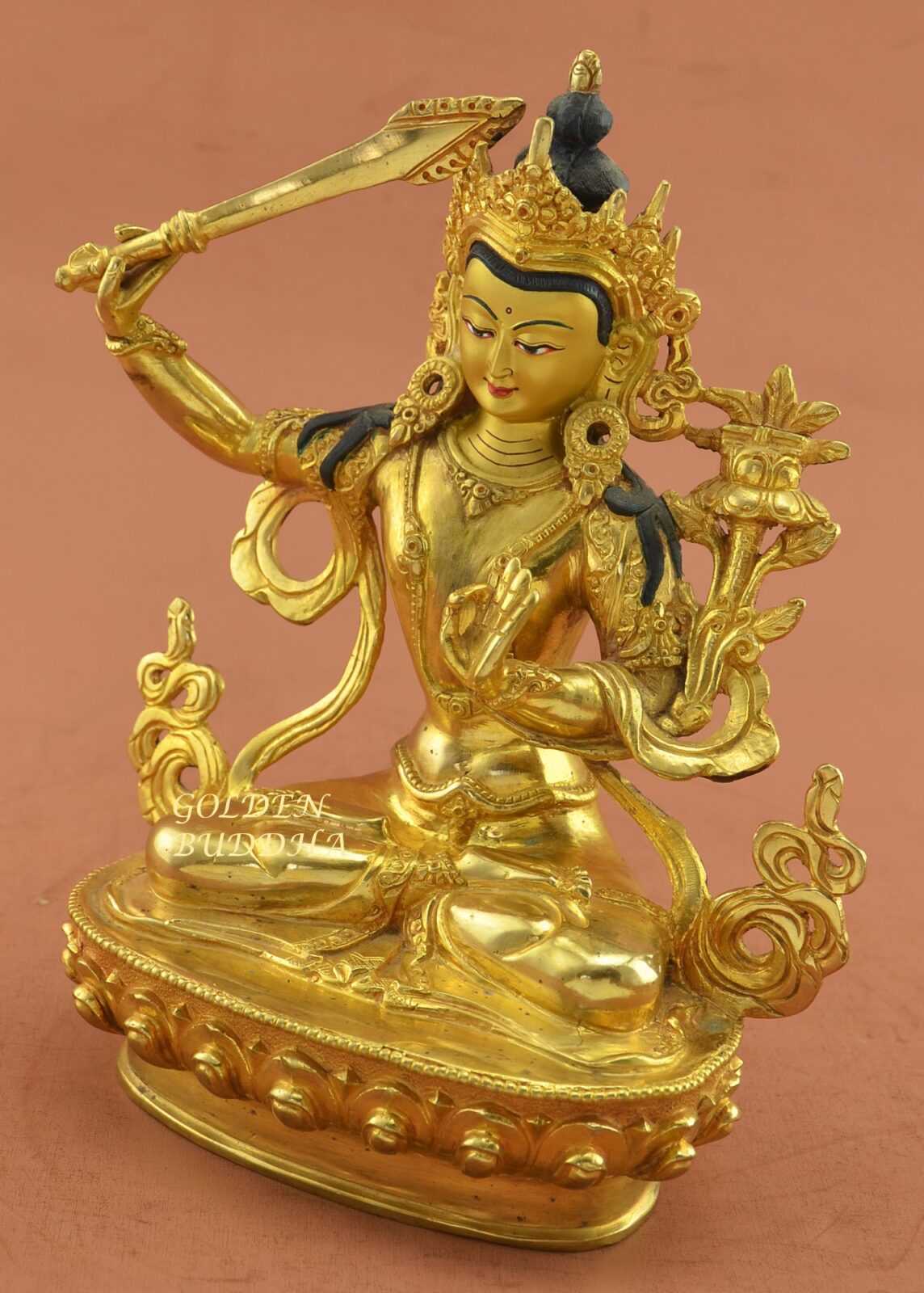
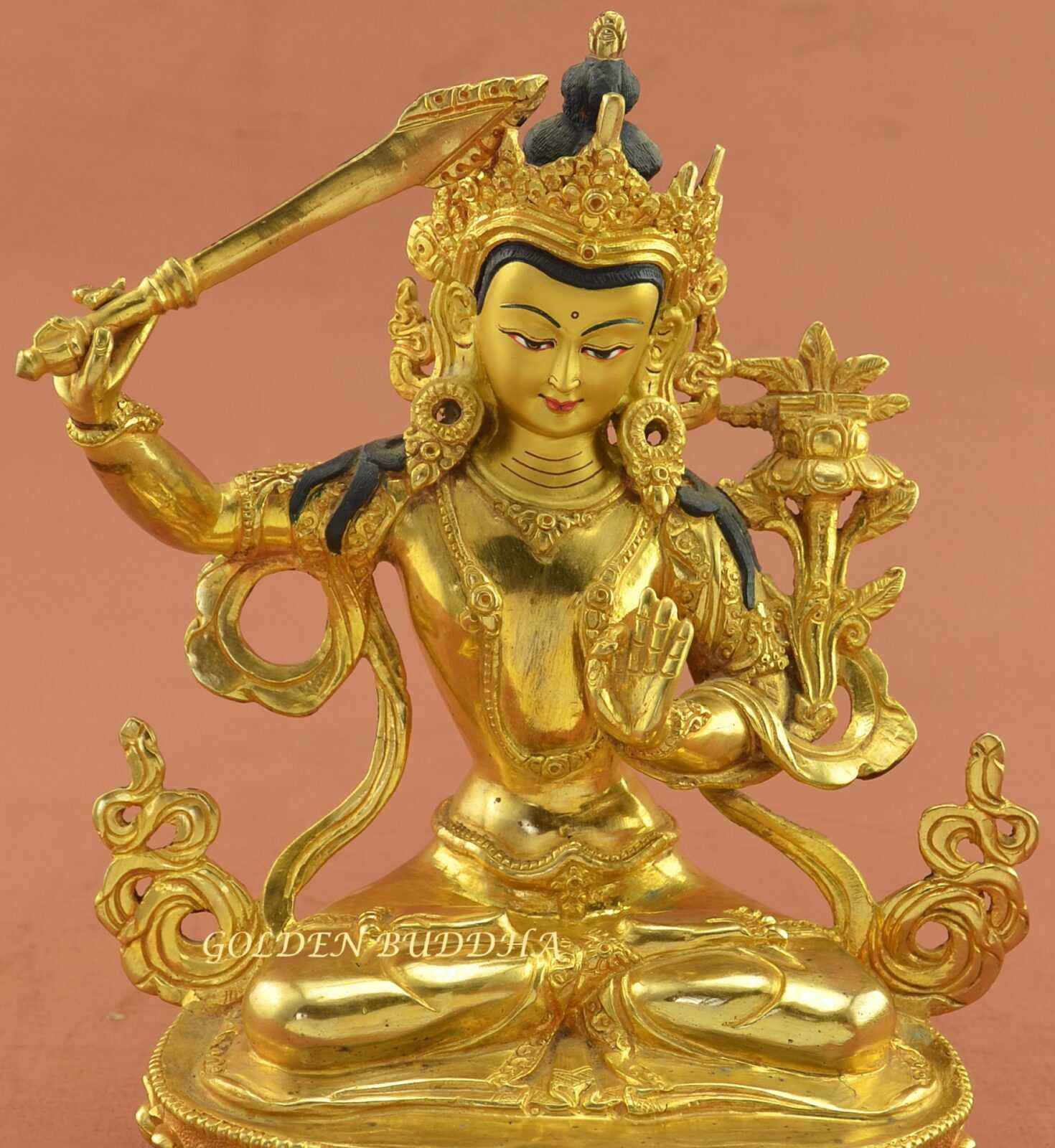
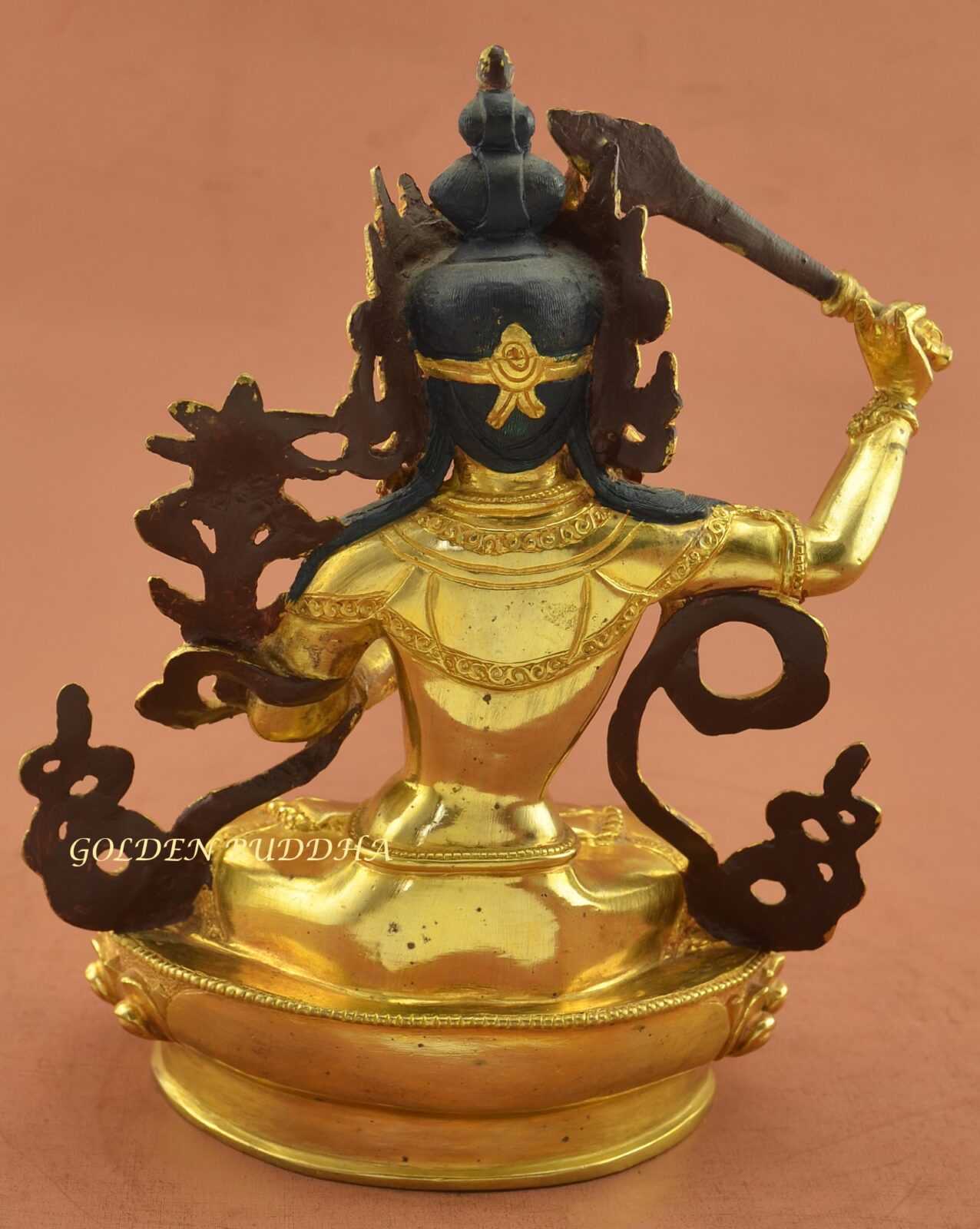
This 8.75-inch Nepali Manjushri Statue portrays Jampelyang, the revered Bodhisattva of transcendent wisdom, in the classical seated form of Himalayan Buddhist art. Handmade in Patan, Nepal, the sculpture is cast in copper alloy using the traditional lost-wax method and fire gilded in 24K gold. Its relatively smooth golden surfaces place particular emphasis on Manjushri’s graceful proportions, sacred attributes and youthful expression. His serene face is carefully hand painted, while blue-black hair rises behind an ornate Bodhisattva crown. Flowing celestial scarves frame the figure and curl upward beside the lotus throne, giving movement to an otherwise composed meditation posture. Upon request, the crown and jewelry may also be embellished with turquoise and red coral gemstones before delivery.
Nepali Manjushri Statue and the Embodiment of Wisdom
Manjushri, known as Jampelyang in Tibetan, embodies prajna—the penetrating wisdom that recognizes the true nature of reality. His characteristically youthful appearance does not simply represent physical age. Rather, it symbolizes the freshness and clarity of awakened perception, unobscured by habitual assumptions and ignorance. This association has made Manjushri especially meaningful to students, scholars, teachers, translators and Buddhist practitioners seeking greater understanding. Our illustrated guide explores the meaning of Manjushri’s eternal youth and its relationship to awakened wisdom.
Sword of Wisdom and Prajnaparamita Sutra
The most immediately recognizable attribute of this Nepali Manjushri Statue is the great sword raised above his right shoulder. Known as the Sword of Wisdom, it symbolizes discriminating insight cutting through ignorance, delusion and mistaken views. Rather than representing physical violence, the blade expresses the decisive power of wisdom to sever the mental obscurations that perpetuate suffering.
Manjushri’s left hand is raised before his chest in a graceful teaching gesture while associated with the lotus stem rising beside his shoulder. Upon the blossom rests the Prajnaparamita Sutra, the scripture of the Perfection of Wisdom. The sword and sacred text form complementary symbols: the scripture represents the teachings through which wisdom is cultivated, while the sword represents their direct realization. Learn more about Manjushri statue meaning and symbolism and the relationship between these traditional attributes.
Traditional Himalayan Form and Manjushri Mantra
Seated in full vajra posture, Manjushri rests upon a single lotus throne that provides a broad, balanced foundation for the composition. His jeweled crown, necklaces, armlets and earrings identify him as a Bodhisattva, while long ribbons and celestial scarves create graceful curves around the seated figure. The smooth 24K gold surfaces contrast with the dark hair and painted facial details, allowing the iconography to remain clear when the statue is viewed upon an altar or shrine.
Manjushri is also inseparably associated with the mantra Om A Ra Pa Tsa Na Dhih, traditionally practiced in connection with wisdom, learning, memory, comprehension and eloquence. The deity’s combination of scripture, sword and teaching gesture makes this statue particularly appropriate as a devotional image for study and meditation. Read more about the Manjushri mantra and its traditional practice.
Rig Sum Gonpo — Compassion, Wisdom and Enlightened Power
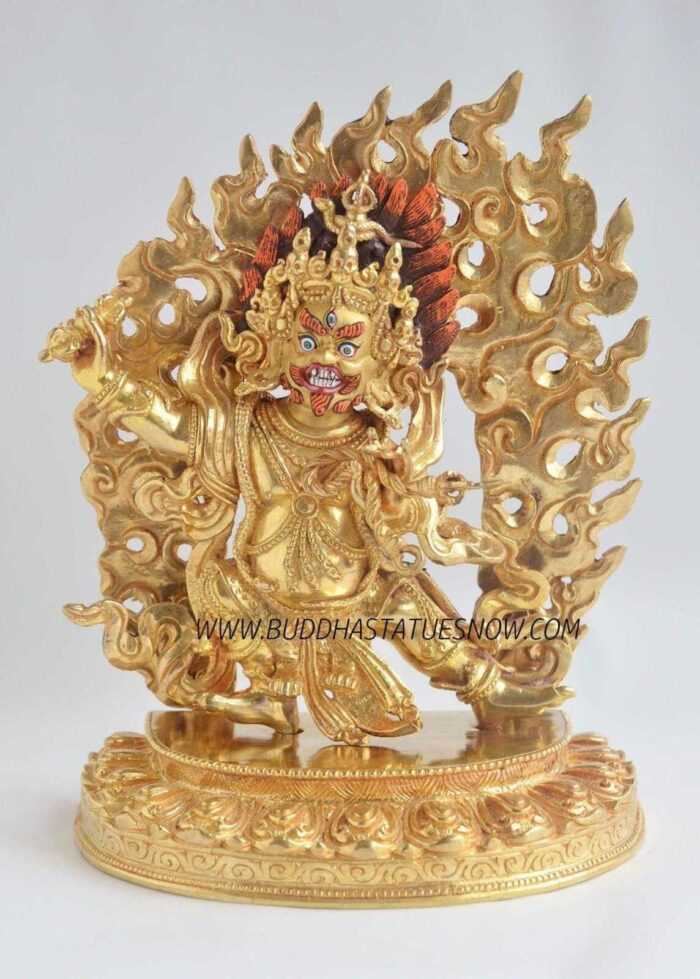
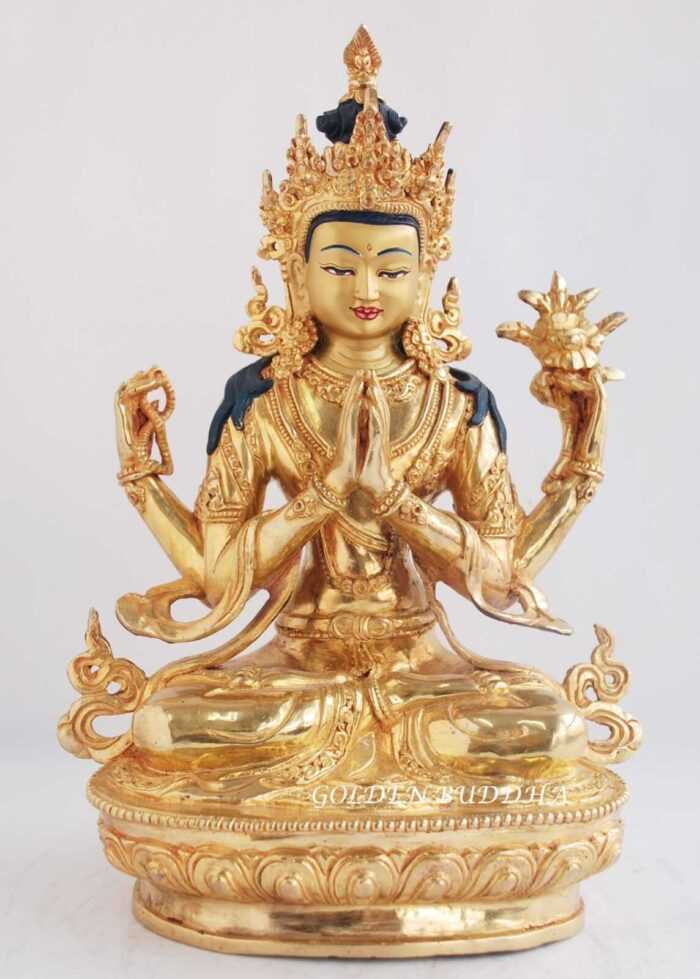
This Nepali Manjushri Statue can form a meaningful three-deity altar together with the Masterpiece Chenrezig Statue and wrathful Chana Dorje statue. Chenrezig, Manjushri and Vajrapani are traditionally grouped as Rig Sum Gonpo, representing three fundamental enlightened qualities. Chenrezig embodies boundless compassion and the aspiration to relieve suffering. Manjushri embodies the transcendent wisdom necessary to understand reality and recognize the causes of suffering. Vajrapani embodies enlightened power—the spiritual strength and energetic activity required to overcome obstacles. Together they unite compassionate motivation, clear wisdom and the power to act.
Custom Made Nepali Manjushri and Rig Sum Gonpo Statues
A custom Tibetan Buddhist statue may be commissioned if you prefer Manjushri in another size, finish or degree of ornamentation. Options can include an antiquated copper finish, partial or full 24K fire gilding, additional garment detailing and turquoise or red coral embellishments. A coordinated Rig Sum Gonpo set can also be commissioned so that Manjushri, Chenrezig and Vajrapani share compatible heights, lotus bases, finishes and artistic proportions. Their doctrinal relationship makes such a set especially significant: Chenrezig establishes the compassionate intention to benefit beings, Manjushri supplies the wisdom that understands how suffering is overcome, and Vajrapani represents the enlightened strength that puts compassionate wisdom into effective action.
Authentic, Handmade in Nepal
Every statue is handcrafted in Patan, Nepal, using traditional lost wax casting and comes with a certificate of authenticity issued by Nepal’s Department of Archaeology, verifying its materials, technique, and origin.