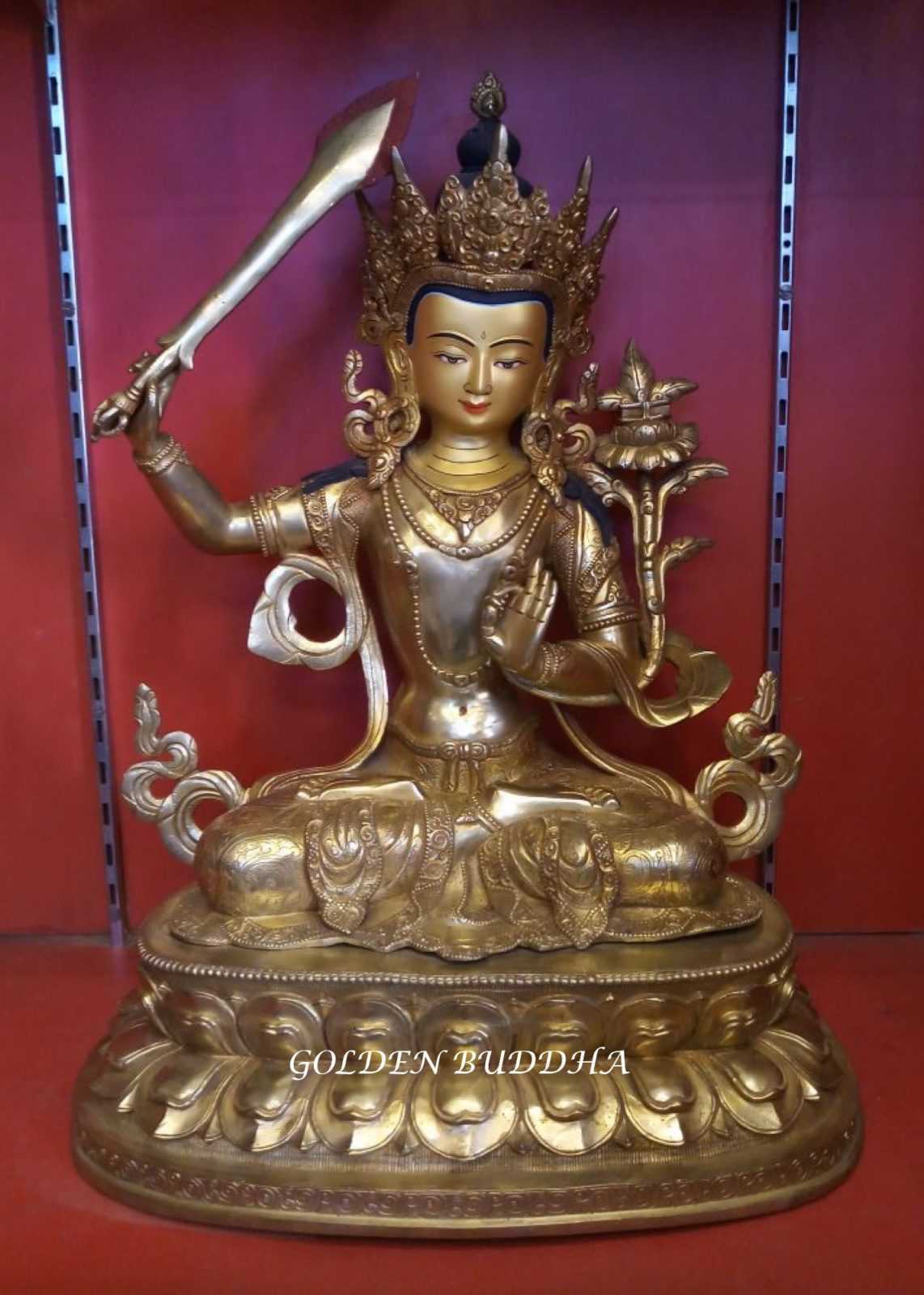


This impressive 17.75-inch Handmade Nepali Manjushri Statue portrays Manjushri, known in Tibetan as Jampelyang, as the radiant Bodhisattva of Transcendent Wisdom. Handmade in Nepal from copper alloy using the traditional lost-wax casting method, the sculpture is fire gilded in 24K gold, while the serene face is individually hand painted with 18K gold and natural pigments. Its commanding proportions, elaborate Bodhisattva crown, richly engraved garments and monumental sword make this an especially powerful representation of Arapacana Manjushri for a home shrine, Dharma center or monastery.
The photographs reveal craftsmanship extending far beyond the frontal composition. Fine scrolling engravings cover the dhoti, shoulder garments and textile borders, while layered necklaces, bracelets and large ornamental earrings distinguish Manjushri as a celestial Bodhisattva. His dark lapis-blue hair rises into a high topknot behind an elaborate five-point crown. Flowing celestial scarves curve outward beside the body before returning toward the broad double lotus throne, giving the sculpture both movement and architectural balance.
Handmade Nepali Manjushri Statue and the Sword of Wisdom
The defining attribute of this Handmade Nepali Manjushri Statue is the extraordinary sword raised high above his right shoulder. Known as the sword of transcendent wisdom, it represents the penetrating insight that cuts through ignorance, delusion and mistaken perception. Its enormous blade gives the composition a distinctive asymmetrical energy, yet its symbolism is not violent. Rather, Manjushri’s sword represents the decisive destruction of ignorance through understanding. His peaceful expression emphasizes that enlightened wisdom acts without hatred or aggression.
Beside his left shoulder rises a lotus supporting the Prajnaparamita, the scripture of the Perfection of Wisdom. Sword and scripture therefore express complementary aspects of the same realization: the sword actively cuts through confusion, while the sacred text represents the wisdom teachings through which emptiness and the true nature of phenomena are understood. His left hand is held gracefully near the chest in a teaching gesture, further associating Manjushri with learning, contemplation and the communication of Dharma. More background on his iconography can be found in our guide to Manjushri, the Bodhisattva of Wisdom.
24K Gold Gilding and Traditional Nepali Craftsmanship
The copper-alloy sculpture was handmade using the lost-wax method and then fire gilded in 24K gold. Rather than fire gilding the facial features, the artisan hand painted the face with 18K gold and natural pigments, allowing the eyebrows, eyes, lips and delicate expression to retain their precision. The contrasting lapis-blue hair visually frames the golden face and emphasizes the elaborate crown above it.
Manjushri sits in the full lotus posture upon a substantial double lotus throne. Two deeply modeled rows of petals give the pedestal considerable visual weight, complementing the breadth of the seated figure and the elevated sword. Detailed engraving continues across the robes covering his folded legs, making the lower portion of the sculpture nearly as intricate as the crown and jewelry above.
Manjushri, Chenrezig and Shakyamuni Buddha on an Altar
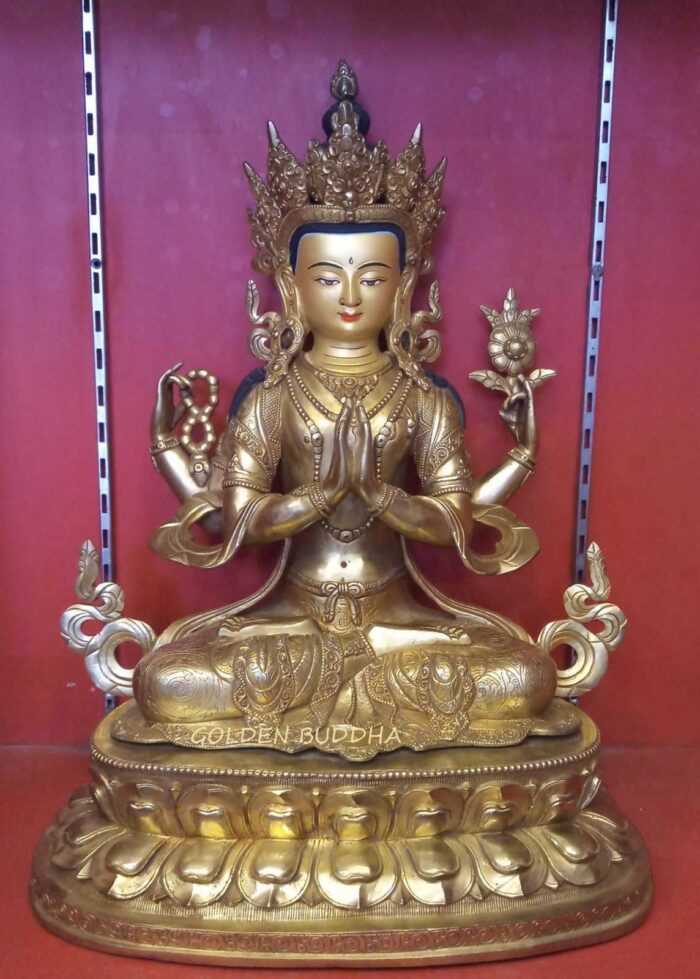
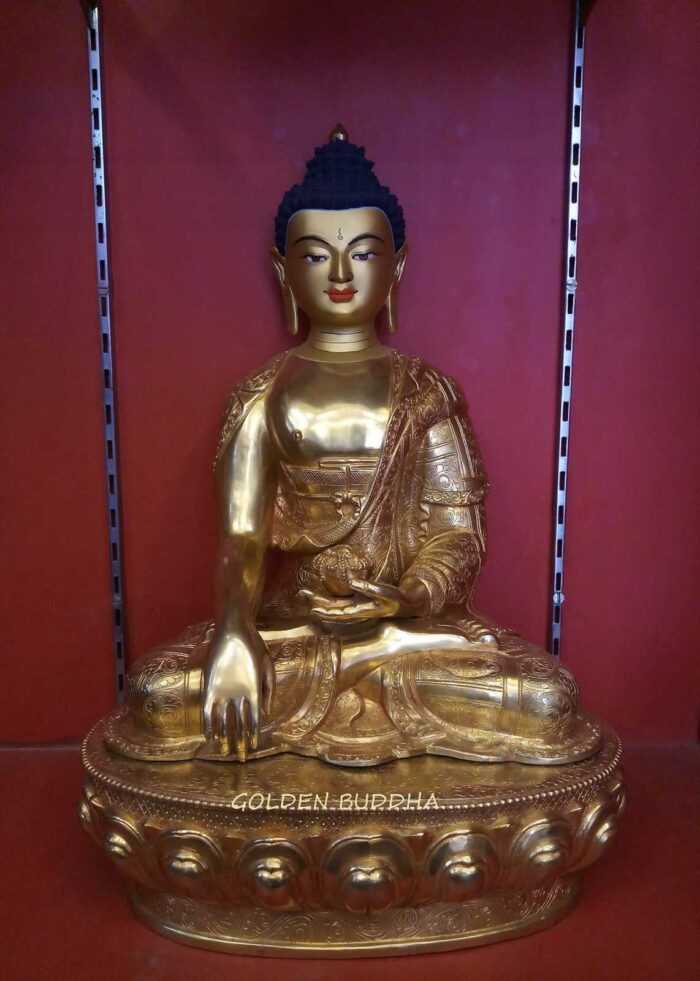
This Manjushri makes a particularly meaningful companion for a four-armed Chenrezig statue and Shakyamuni Buddha. Shakyamuni represents the historical Buddha and the awakened teacher from whom the Buddhist path originates. Manjushri embodies the transcendent wisdom required to understand reality, while Chenrezig embodies the boundless compassion that directs realization toward the welfare of sentient beings.
Together they create an exceptionally coherent three-figure altar: Shakyamuni as the Buddha and teacher, Manjushri as wisdom, and Chenrezig as compassion. Wisdom and compassion are inseparable within the Mahayana path. Wisdom without compassion can become detached, while compassion without wisdom can lack clear direction. Positioned with Shakyamuni centrally or slightly elevated, Manjushri and Chenrezig can therefore serve as complementary expressions of qualities perfected in Buddhahood.
Filling and Consecration of the Handmade Nepali Manjushri Statue
This hollow devotional sculpture can be prepared for traditional Buddhist consecration with sacred mantras, texts and appropriate blessed substances placed within the statue before ritual sealing. Our guide to statue filling, blessing and consecration explains the process for collectors who would like their Manjushri prepared before installation on an altar.
Custom Made Handmade Nepali Manjushri Statues
Collectors who admire this Handmade Nepali Manjushri Statue but require another size, finish or altar proportion may commission a sculpture through our custom Tibetan Buddhist statue service. Manjushri can be created in copper alloy with 24K gold fire gilding, antiquated finishes, specialized engraving, alternative throne proportions and optional turquoise or red coral ornamentation. A custom commission can also be coordinated with matching Shakyamuni and Chenrezig sculptures to create a visually harmonious altar centered upon the Buddha, wisdom and compassion.
Authentic, Handmade in Nepal
Every statue is handcrafted in Patan, Nepal, using traditional lost wax casting and comes with a certificate of authenticity issued by Nepal’s Department of Archaeology, verifying its materials, technique, and origin.