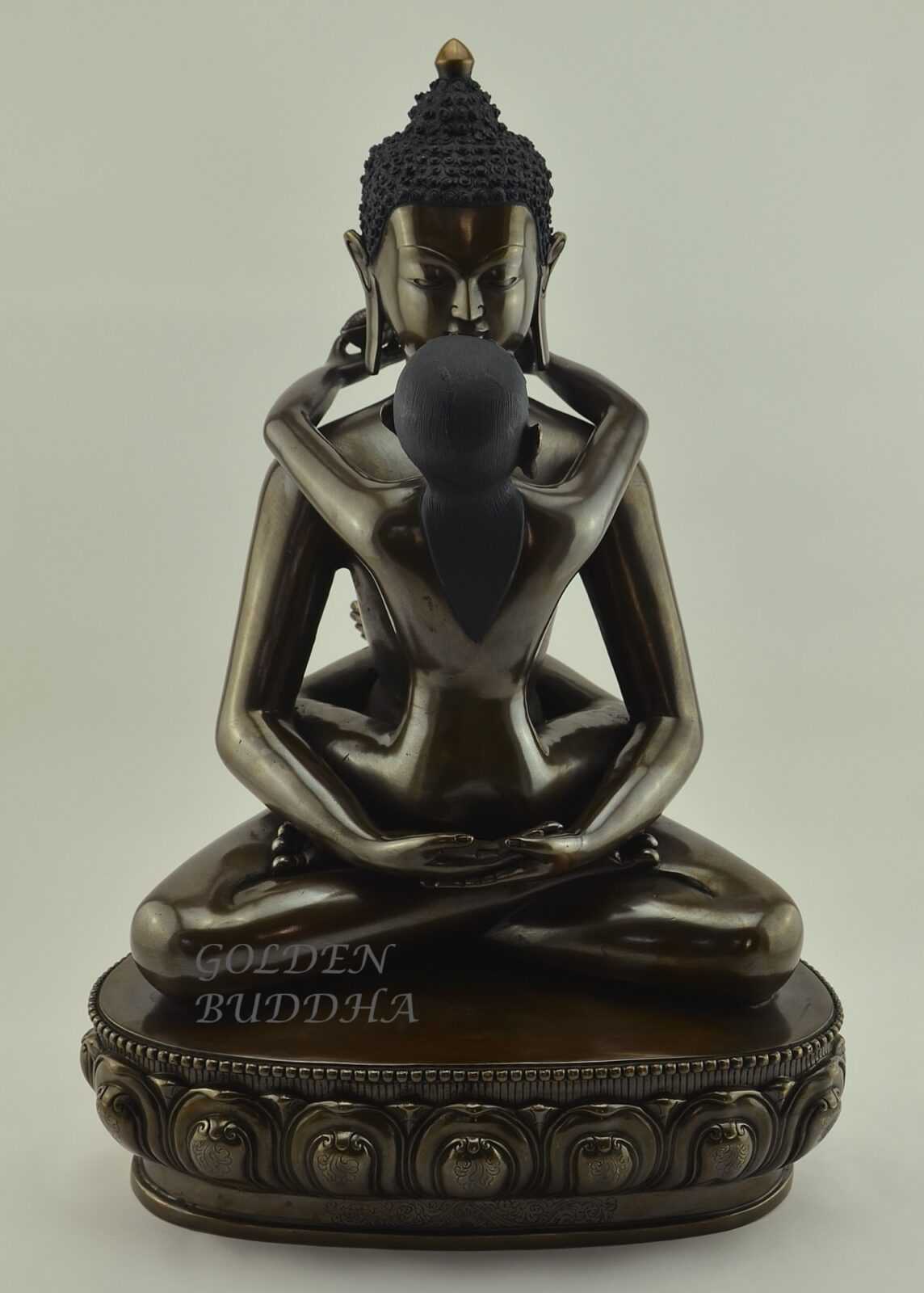
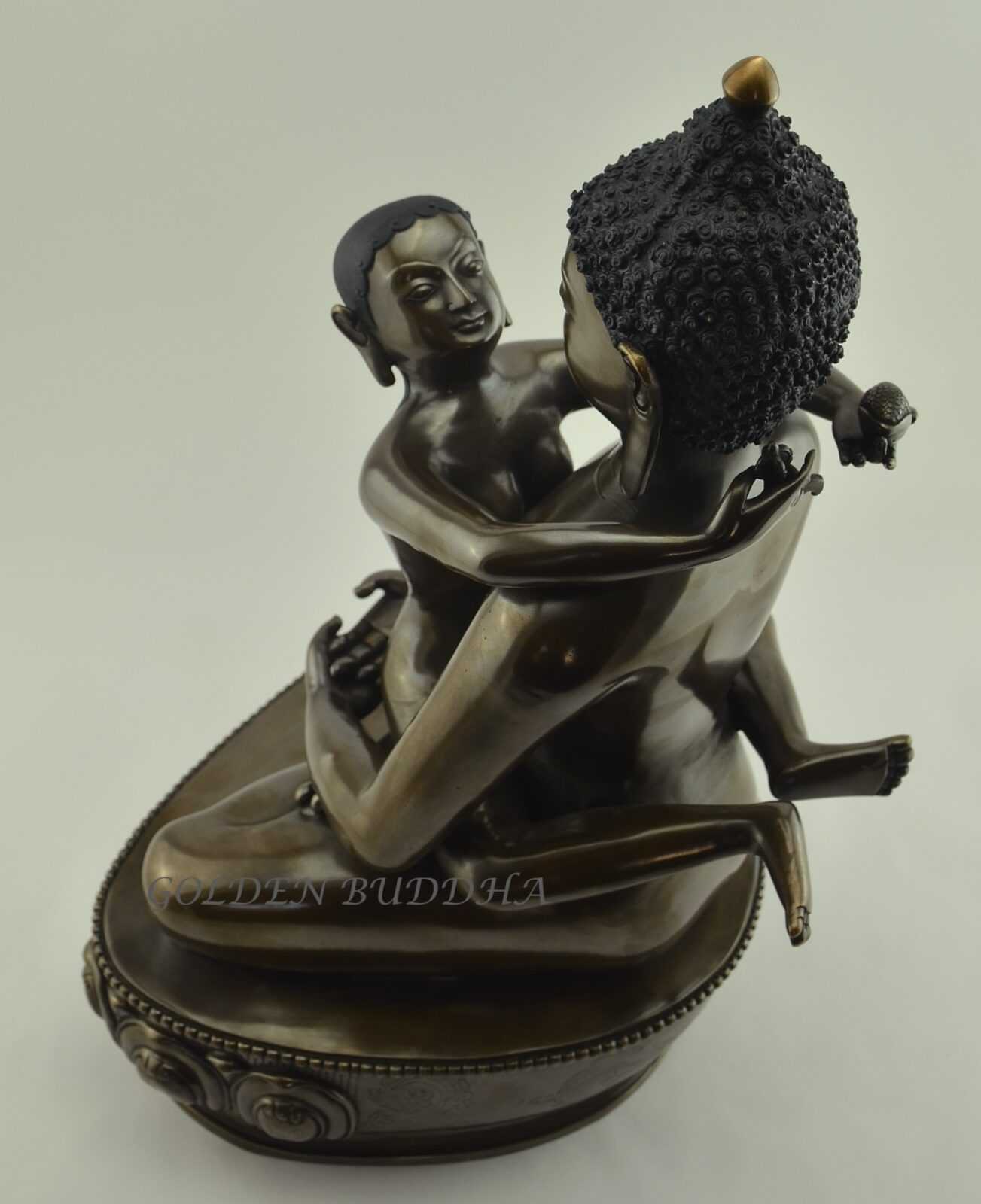
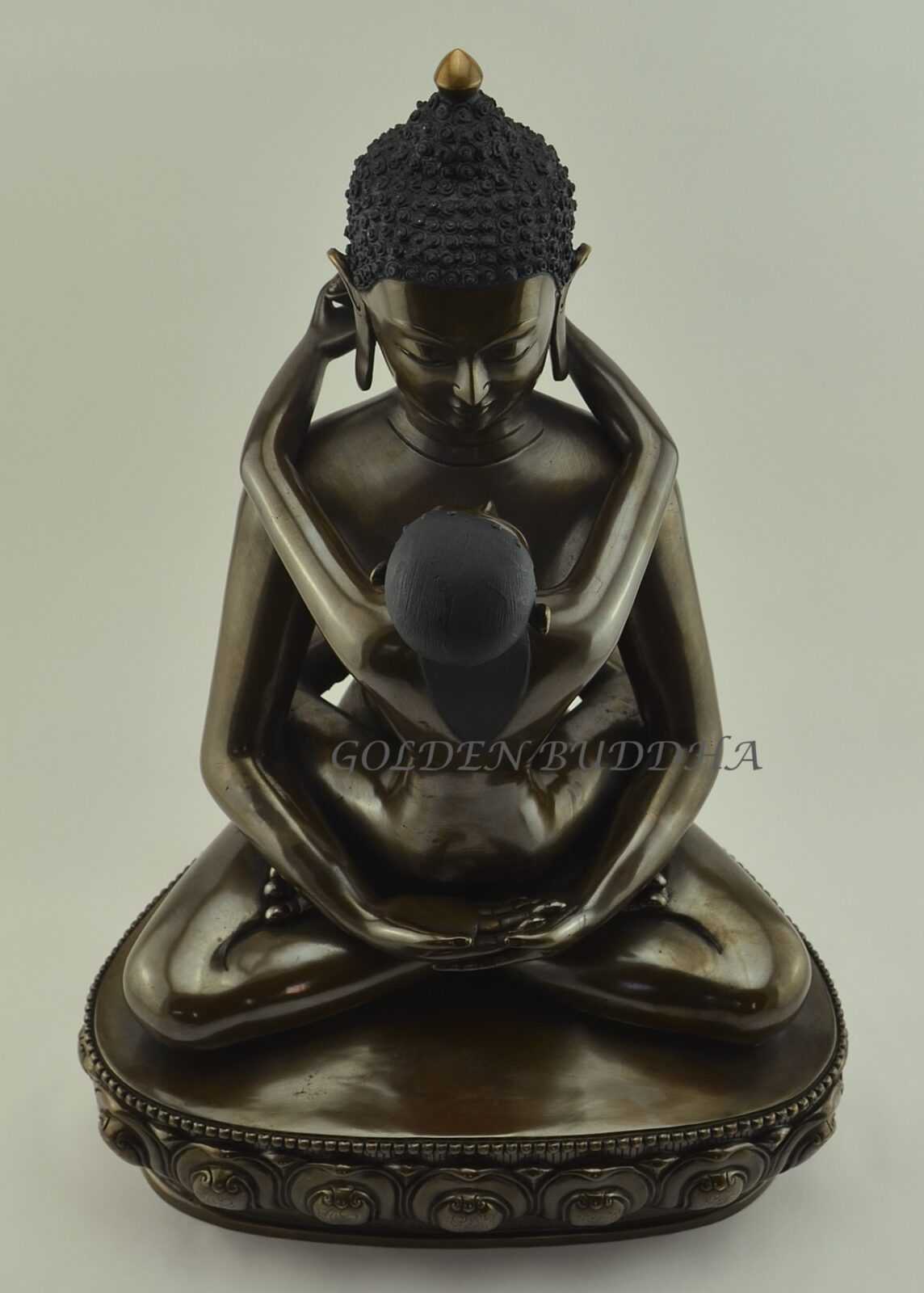
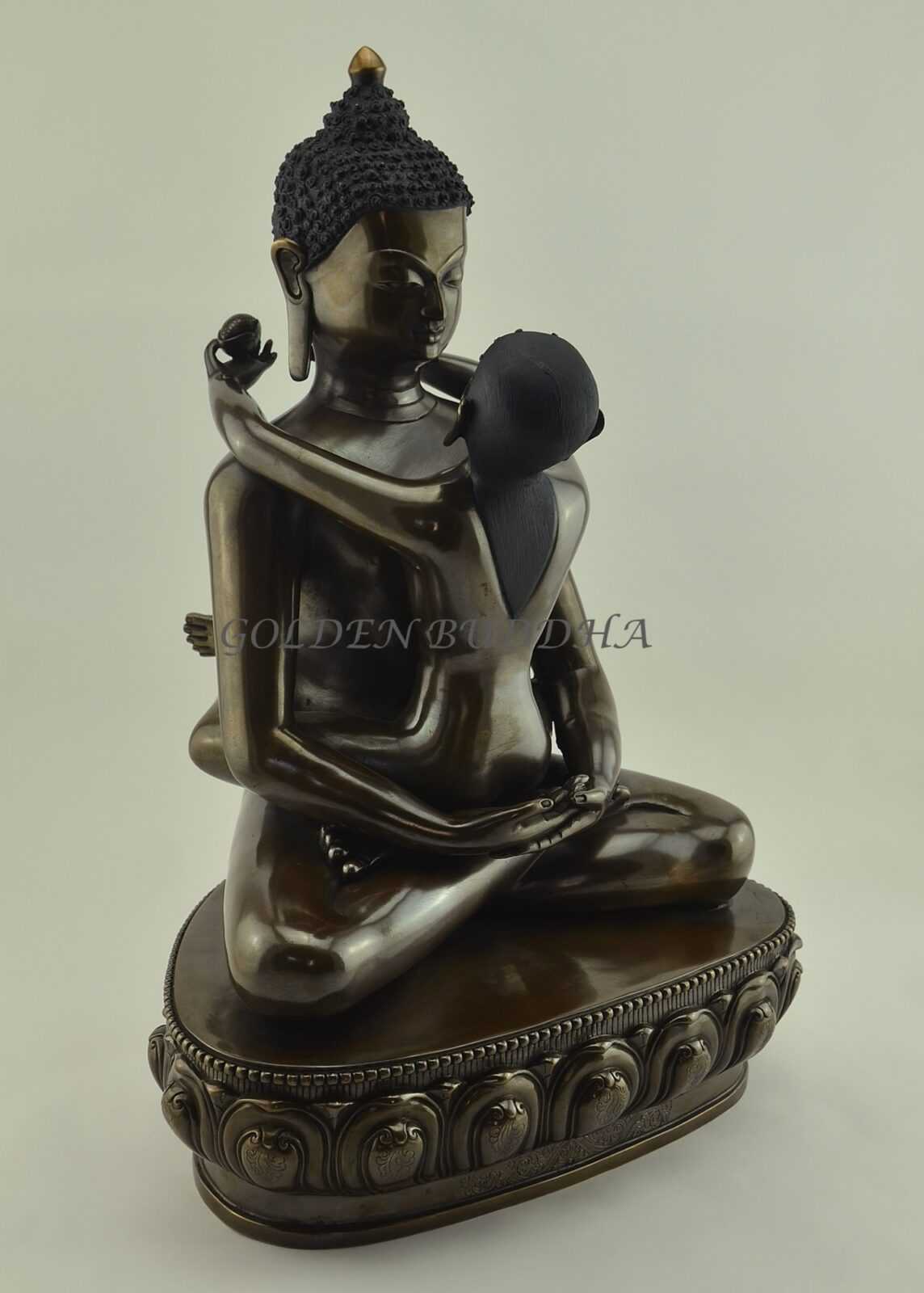
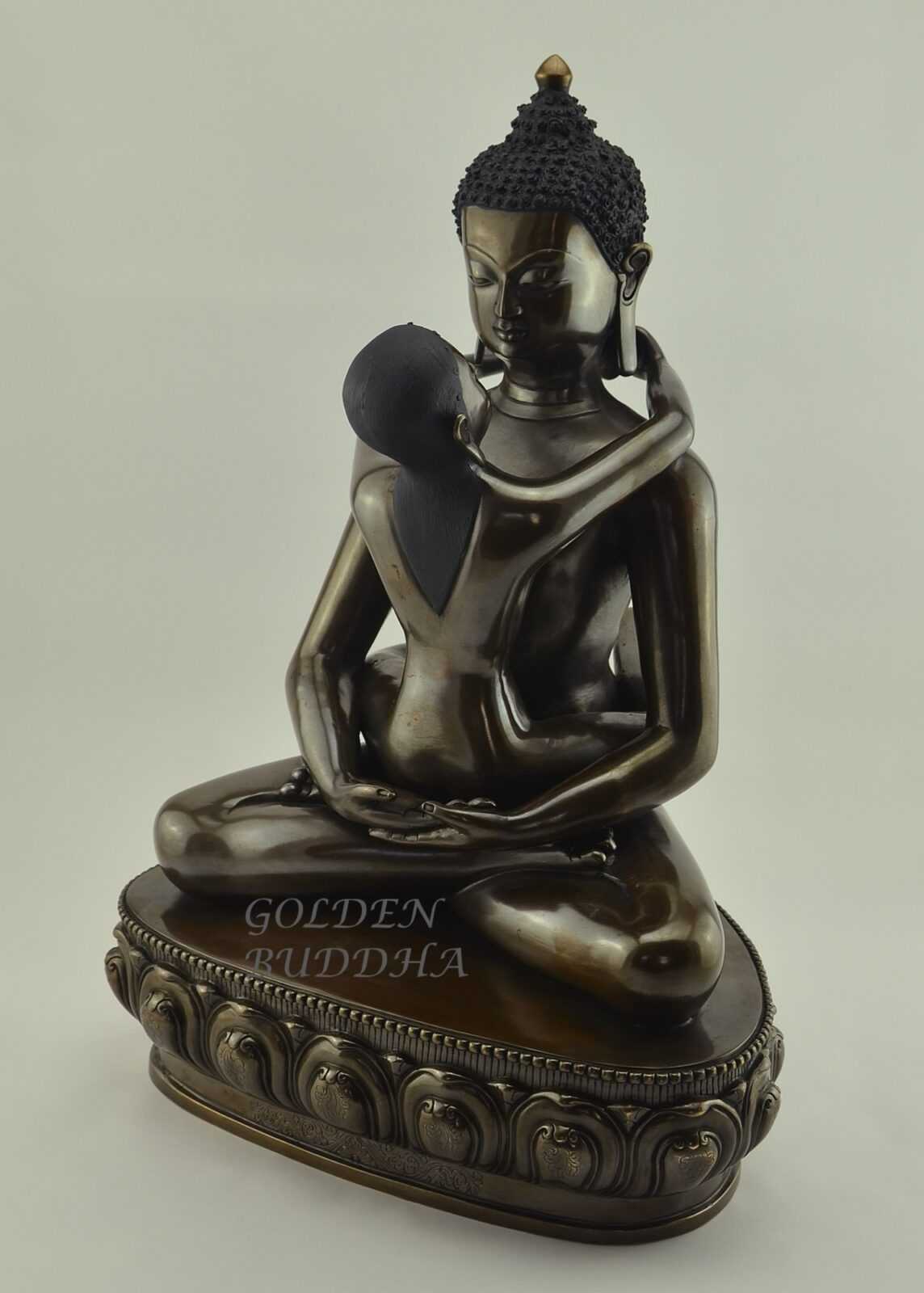
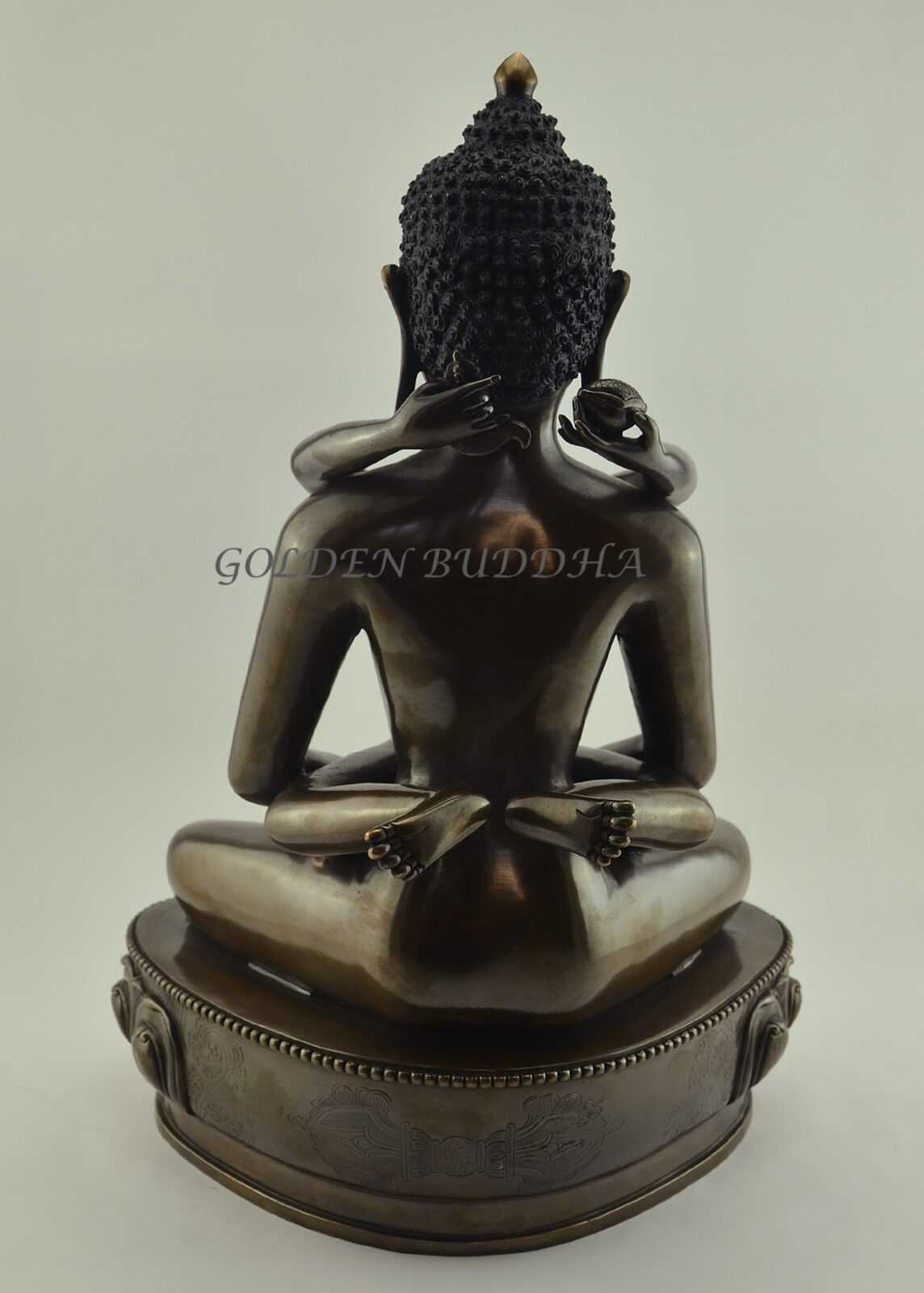
This magnificent 17.5-inch Kuntu Zangpo Yab-Yum Statue depicts the primordial Buddha Samantabhadra, Kuntu Zangpo, in sacred union with his consort Samantabhadri, Kuntu Zangmo. Handmade in Patan, Nepal from copper alloy using the traditional lost-wax casting method, the sculpture is completed with a rich antiquated oxidized finish. Rather than relying on bright gilding, the dark brown-black patina emphasizes the graceful anatomy, serene expressions and intimate interlocking composition of the two figures. At 17.5 inches high and weighing approximately 13 kg, this is a substantial shrine-size sculpture with the physical presence to serve as the principal image of a Dzogchen altar or meditation room.
Kuntu Zangpo Yab-Yum Statue | Primordial Buddha of Dzogchen
In the Nyingma tradition, Samantabhadra is the primordial Buddha associated with the dharmakaya and the originally pure nature of awareness. His Tibetan name, Kuntu Zangpo, is commonly translated as “All-Good.” Here he appears without crown, jewelry or elaborate clothing, an iconographic simplicity appropriate to a figure representing primordial awareness free from conceptual elaboration. His tightly curled hair rises into a pronounced ushnisha crowned by a small finial, while elongated earlobes, a composed expression and balanced proportions communicate the qualities of awakened buddhahood.
Samantabhadra sits in full lotus posture with his hands joined in the Dhyana mudra at his lap. The photographs clearly show the sculptor’s attention to the hands, fingers, feet and smooth anatomical transitions. The almost undecorated bodies allow the oxidized copper surface itself to become part of the artistic expression, shifting between deep brown, charcoal and subtle metallic highlights as light moves across the sculpture.
Sacred Union of Awareness and Emptiness
Samantabhadri faces Samantabhadra directly in the traditional yab-yum embrace. Her arms encircle his shoulders and her legs wrap around his body, while her long dark hair descends prominently down her back. Yab-yum, or yuganaddha, expresses inseparability rather than ordinary romantic union. In Dzogchen symbolism, Samantabhadra and Samantabhadri communicate the indivisibility of primordial awareness and emptiness, conventionally expressed through complementary masculine and feminine principles. Their union therefore presents enlightened reality as non-dual and complete rather than as two independent qualities that must eventually be joined.
Kuntu Zangpo Yab-Yum Statue | Lotus Throne and Oxidized Finish
The unified composition rests upon a broad single lotus throne. Its front register displays large raised lotus-petal carvings beneath a precisely formed beaded upper border, giving the otherwise restrained sculpture an ornamental architectural foundation. The rear of the throne is intentionally more subdued but includes an engraved vajra motif centered within the back register, a meaningful detail visible only when the sculpture is viewed from behind. A narrow engraved decorative band completes the lower edge of the pedestal. Together these details demonstrate that the sculpture was designed to be appreciated from every direction rather than only from the front.
A Dzogchen Lineage Altar with Vajrasattva and Guru Rinpoche
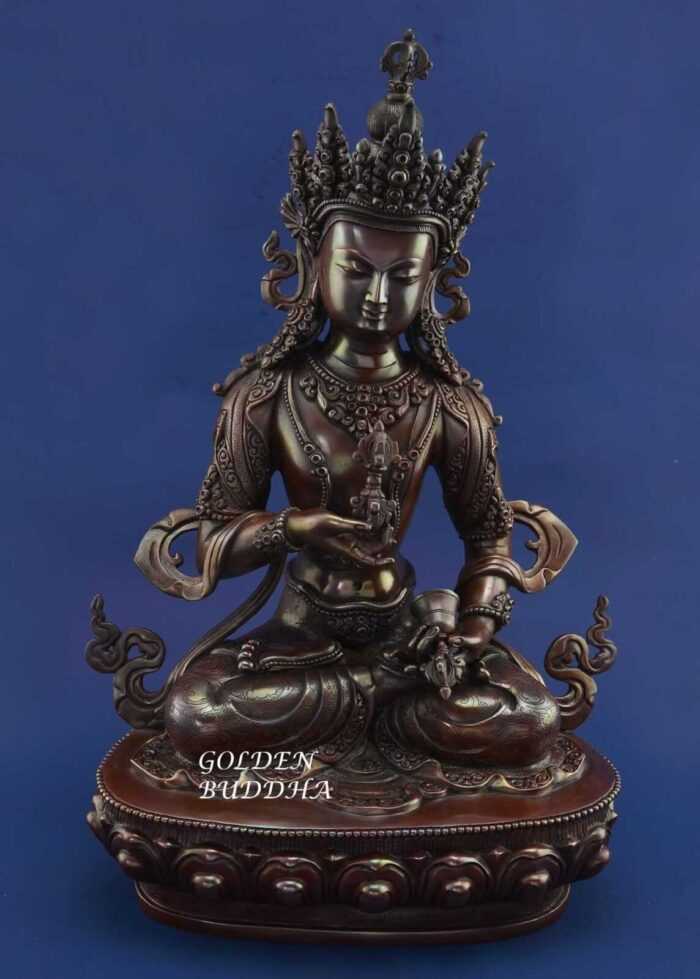
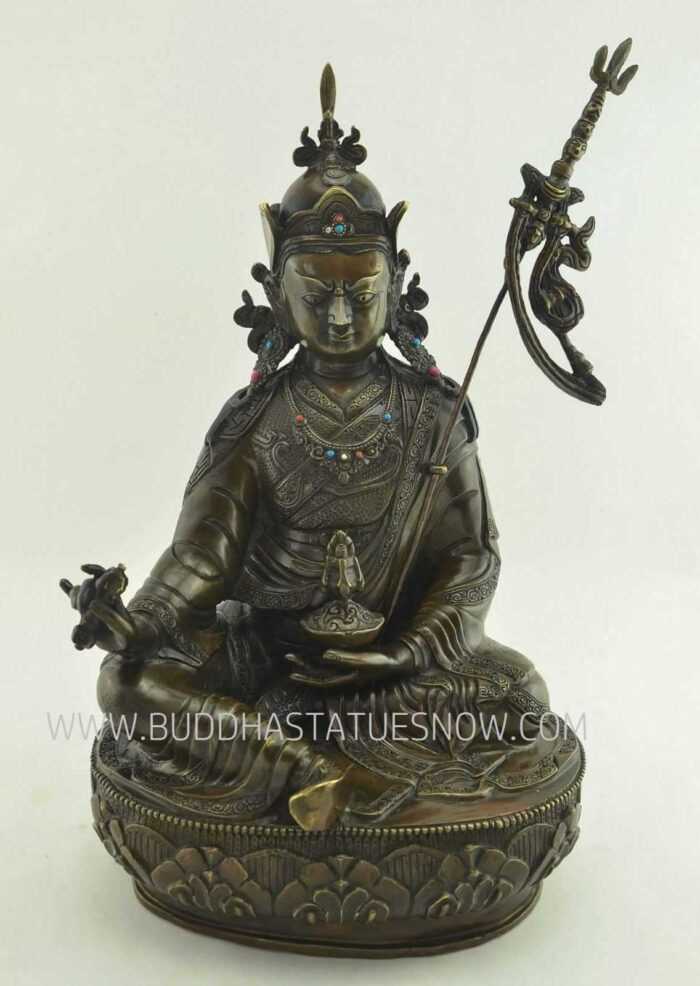
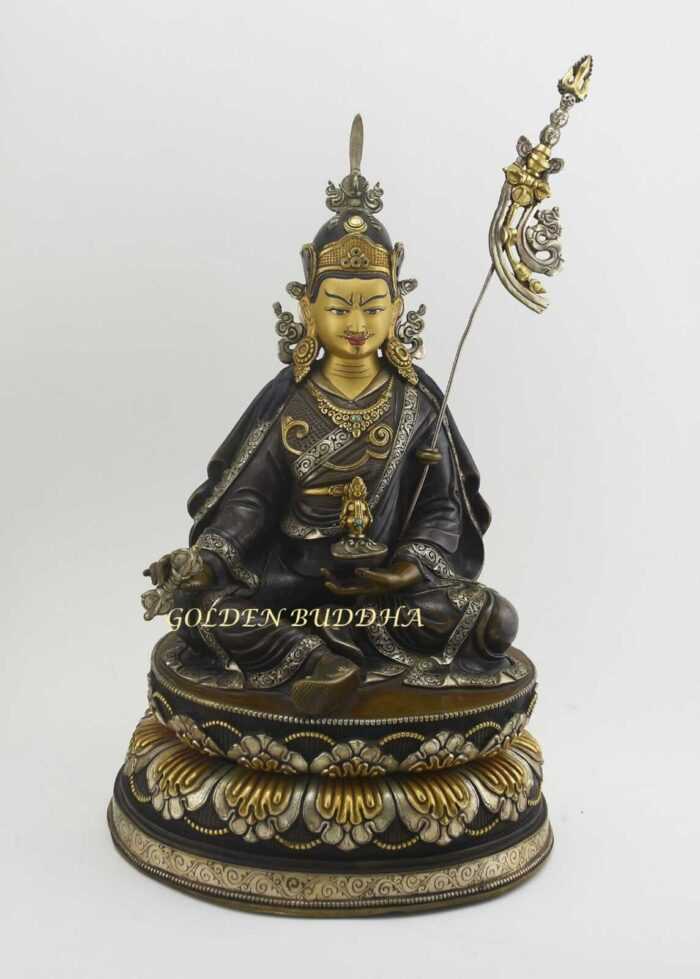
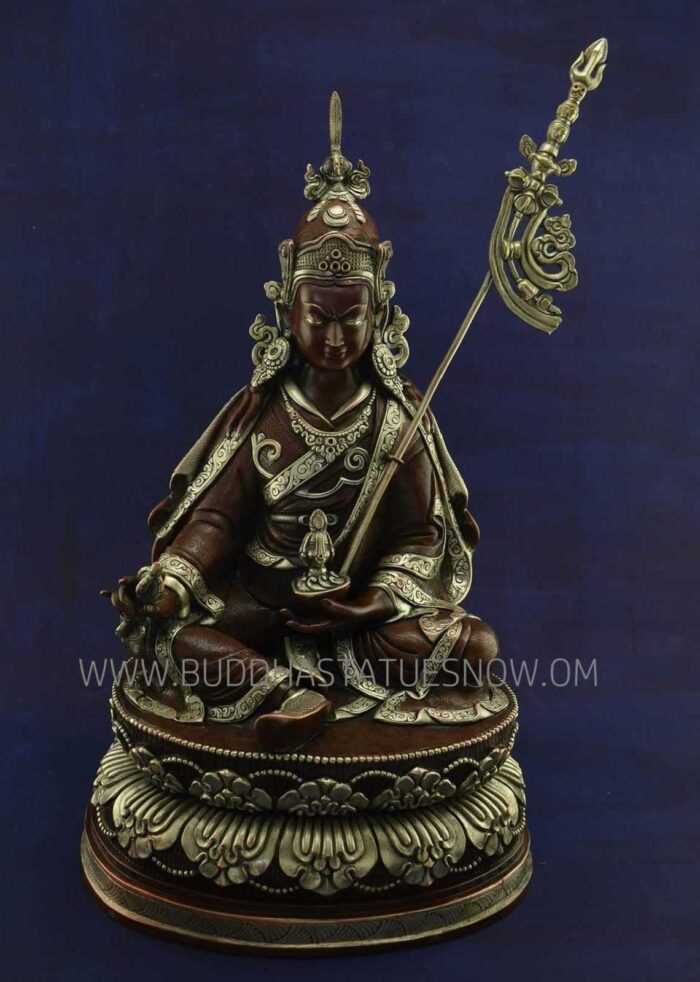
For a coordinated three-statue shrine, this sculpture pairs especially well with our oxidized copper Vajrasattva statue and silver plated Guru Rinpoche statue. All three share the subdued antiquated copper treatment, creating strong visual harmony. Their doctrinal relationship is equally meaningful. Traditional Dzogchen lineage accounts begin with dharmakaya Samantabhadra, transmit through sambhogakaya Vajrasattva and continue through the human lineage that includes Padmasambhava. A shrine with Kuntu Zangpo at the center, Vajrasattva and Guru Rinpoche to either side therefore creates a compelling lineage-based arrangement. It is best understood as a Dzogchen-inspired lineage grouping rather than a fixed canonical trikaya set.
Filling and Consecration in Kathmandu, Nepal
For practitioners who intend to place this sculpture on an active Buddhist shrine, arrangements can be made for traditional statue filling, blessing and consecration in Kathmandu, Nepal. These practices traditionally prepare a sacred image for devotional use by placing appropriate substances, mantras and other consecration materials within the statue before ritual blessing by qualified Buddhist practitioners.
Custom Tibetan Buddhist Statues
Collectors, Dharma centers and practitioners seeking a particular scale or altar configuration may also commission custom Tibetan Buddhist statues handmade in Nepal. Samantabhadra and Samantabhadri can be commissioned in different dimensions and traditional finishes, while coordinated Vajrasattva, Guru Rinpoche or other lineage figures can be planned with complementary proportions, pedestal designs and surface treatments to create a unified shrine ensemble.
Authentic, Handmade in Nepal
Every statue is handcrafted in Patan, Nepal, using traditional lost wax casting and comes with a certificate of authenticity issued by Nepal’s Department of Archaeology, verifying its materials, technique, and origin.