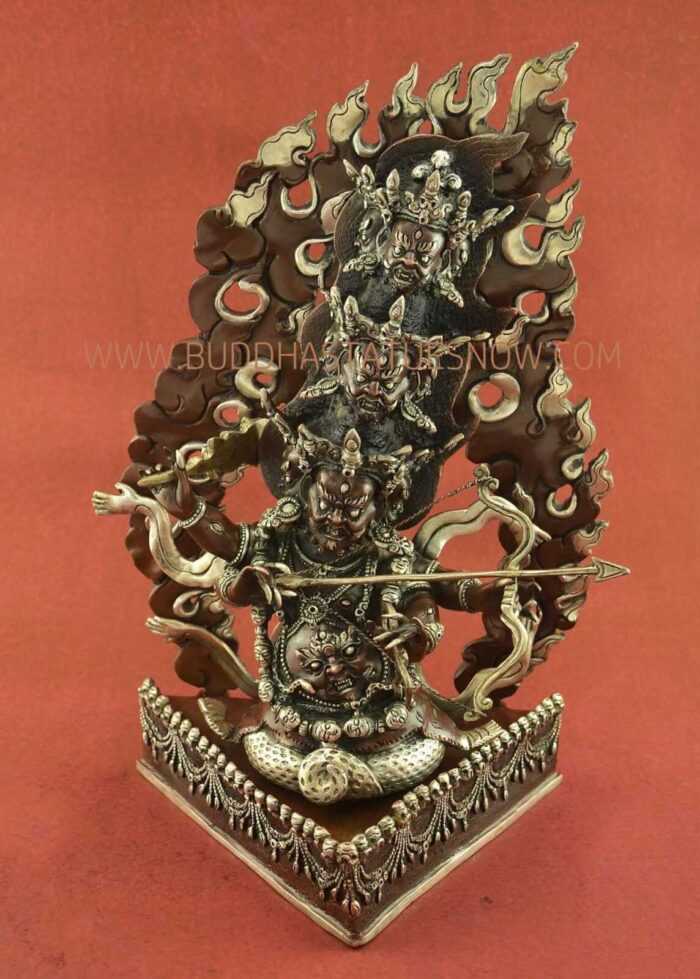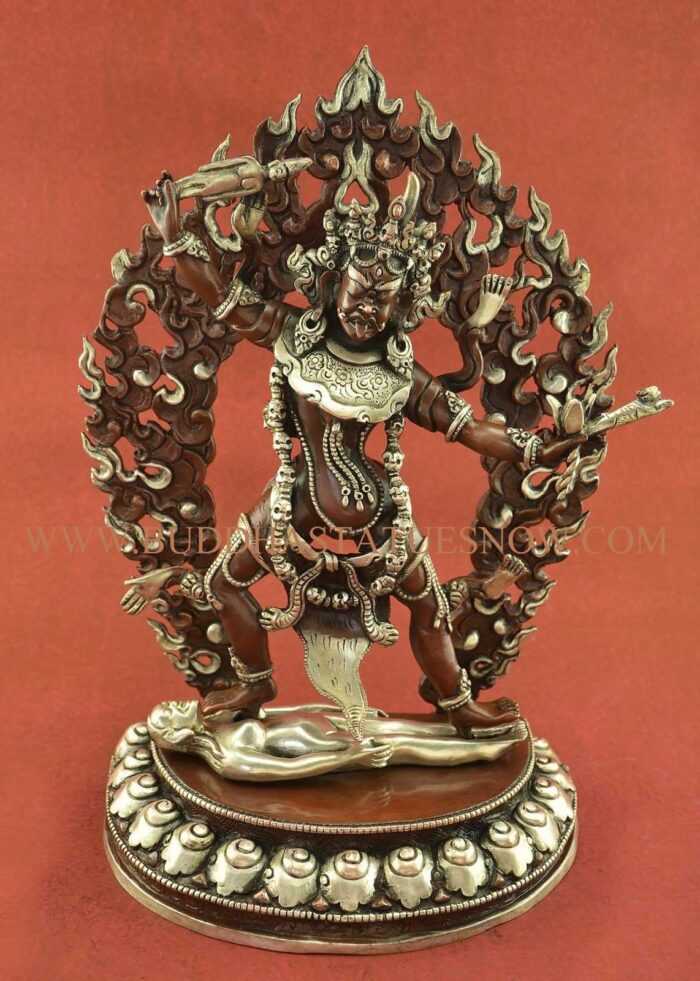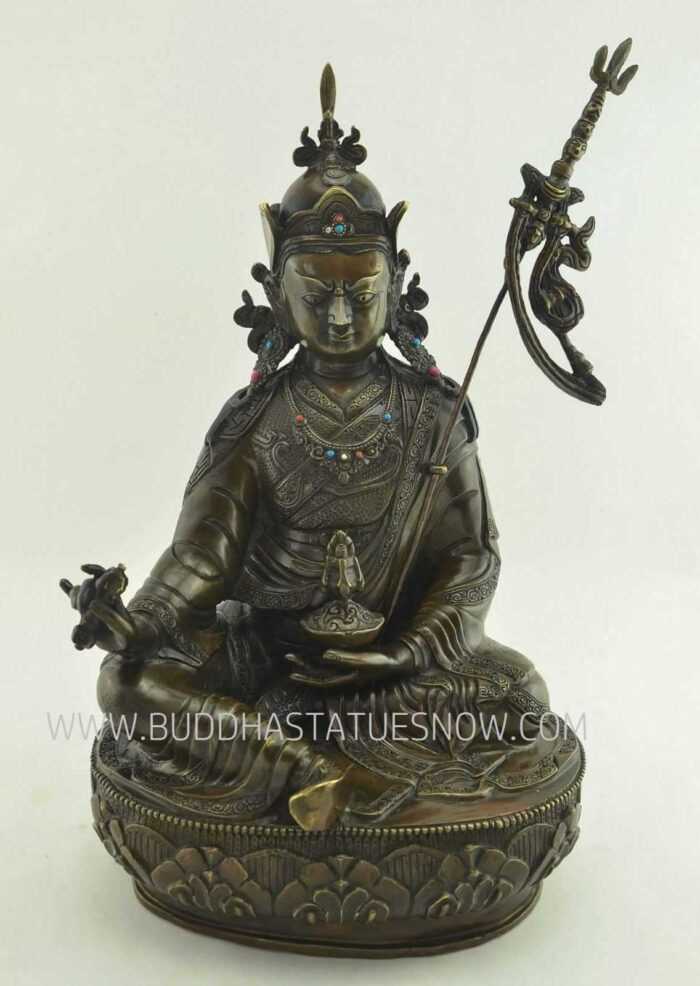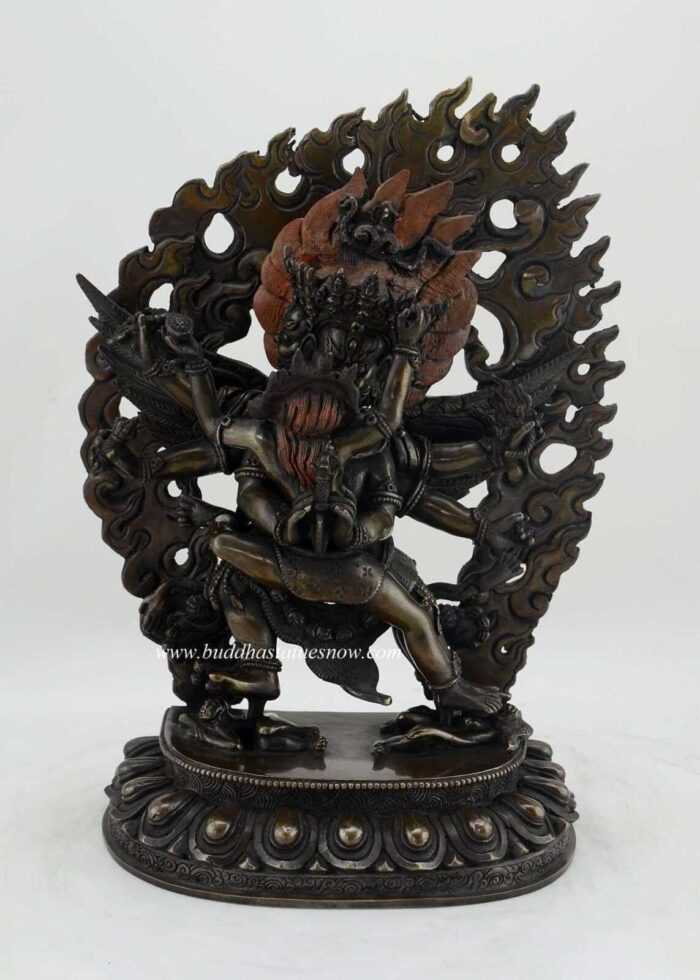


This handcrafted antiquated Guru Rinpoche sculpture measures 16.75 inches high without the removable khatvanga (18 inches with the khatvanga) and is created in Patan, Nepal by master Newar artisans using the traditional lost wax casting method. Cast from copper alloy with a rich antiquated oxidized finish and contrasting silver-plated details, the sculpture faithfully portrays Padmasambhava, “The Lotus Born.” The face and garments are enhanced by the striking contrast between the oxidized copper and silver plating, while the double lotus throne displays finely executed repoussé lotus petal carvings across the front and engraved decoration around the base rim. To learn more about his symbolism, visit our Guru Rinpoche statue meaning guide.
Antiquated Guru Rinpoche Sculpture Features
The photographs reveal elegant scrollwork hemlines flowing across the robes together with intricate engraved borders that accentuate the silver-plated trim. Guru Rinpoche holds the vajra in his right hand, symbolizing indestructible wisdom and compassionate activity, while his left hand cradles the kapala containing the vase of longevity. Resting against his shoulder is the removable khatvanga topped with three impaled heads representing the transformation of desire, form, and formless existence. His distinctive lotus hat is crowned by the traditional vulture feather, signifying realization of the highest view, while the layered lotus throne provides a commanding foundation worthy of one revered as the Second Buddha.
The Legacy of Guru Rinpoche
Padmasambhava occupies a unique place within Tibetan Buddhism. Invited to Tibet during the eighth century by Śāntarakṣita and King Trisong Detsen, he is traditionally credited with overcoming the obstacles that prevented completion of Samye Monastery, the first Buddhist monastery in Tibet. Through his mastery of Vajrayana practices he subdued obstructive forces and established conditions for the Dharma to flourish. Tibetan Buddhists therefore honor him as the founder of the Nyingma tradition and the Second Buddha, whose teachings transformed the spiritual landscape of Tibet. Discover more in our Guru Rinpoche statue collection.
Authentic Himalayan Craftsmanship
Every detail of this antiquated Guru Rinpoche sculpture demonstrates the remarkable skill of Nepal’s Newar craftsmen. The traditional lost wax casting process captures crisp robe folds, engraved jewelry, and finely sculpted facial features before the oxidized antiquated finish and silver plating are painstakingly applied by hand. The harmonious contrast between the warm oxidized copper and luminous silver highlights produces a timeless appearance reminiscent of treasured monastery sculptures that have inspired practitioners for generations.
Doctrinal Pairing of Guru Rinpoche Sculpture with Ekajati
This sculpture pairs beautifully with our silver detailed Ekajati statue. According to the Nyingma tradition, Guru Rinpoche subdued the fierce protector Ekajati and bound her by sacred oath to safeguard the Dharma and protect Vajrayana practitioners. Her unwavering devotion to Padmasambhava makes these two figures an exceptionally meaningful altar combination. Displaying Guru Rinpoche alongside Ekajati symbolizes the inseparable relationship between the enlightened master who revealed profound tantric teachings and the fierce protector who preserves them for future generations.
Commission a Custom Guru Rinpoche Sculpture
If you would like this antiquated Guru Rinpoche sculpture created in a different size, finish, or with personalized artistic details, our master artisans in Nepal can produce a custom commission using traditional Himalayan methods. We offer custom oxidized, silver-plated, fire gilded, and museum-quality sculptures for collectors, meditation centers, and monasteries while preserving authentic Buddhist proportions and iconography. Learn more about our custom commissions by visiting our Custom Tibetan Buddhist Statues page.
Authentic, Handmade in Nepal
Every statue is handcrafted in Patan, Nepal, using traditional lost wax casting and comes with a certificate of authenticity issued by Nepal’s Department of Archaeology, verifying its materials, technique, and origin.