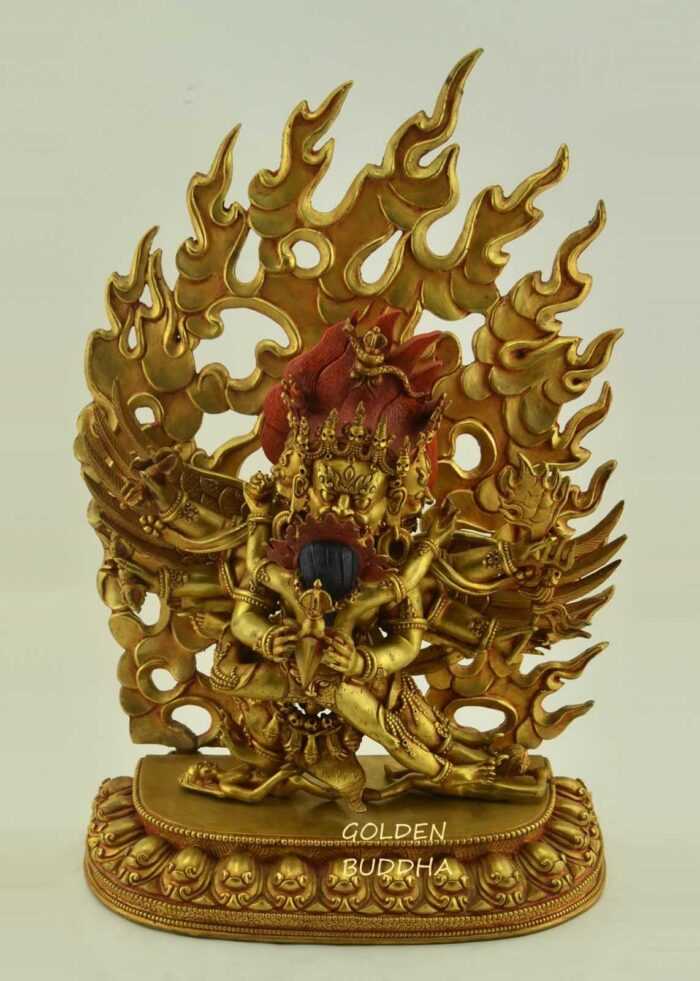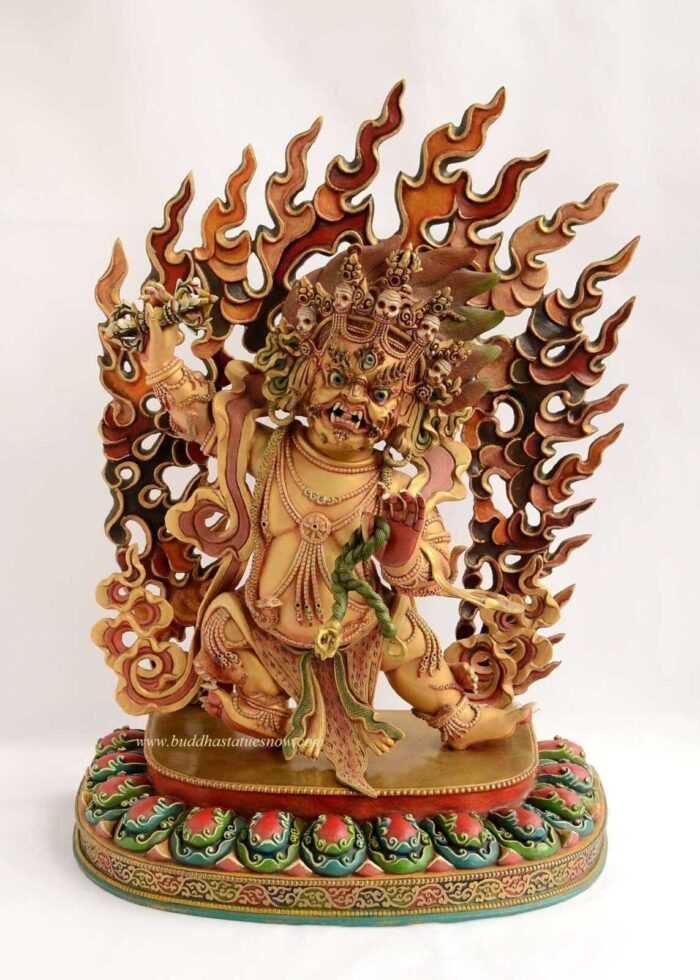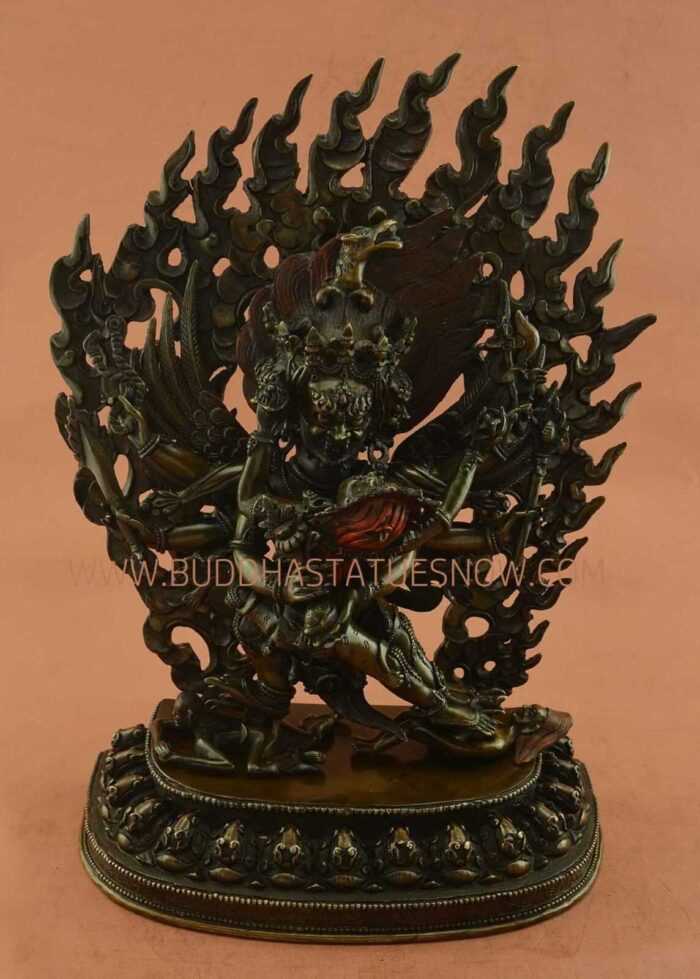
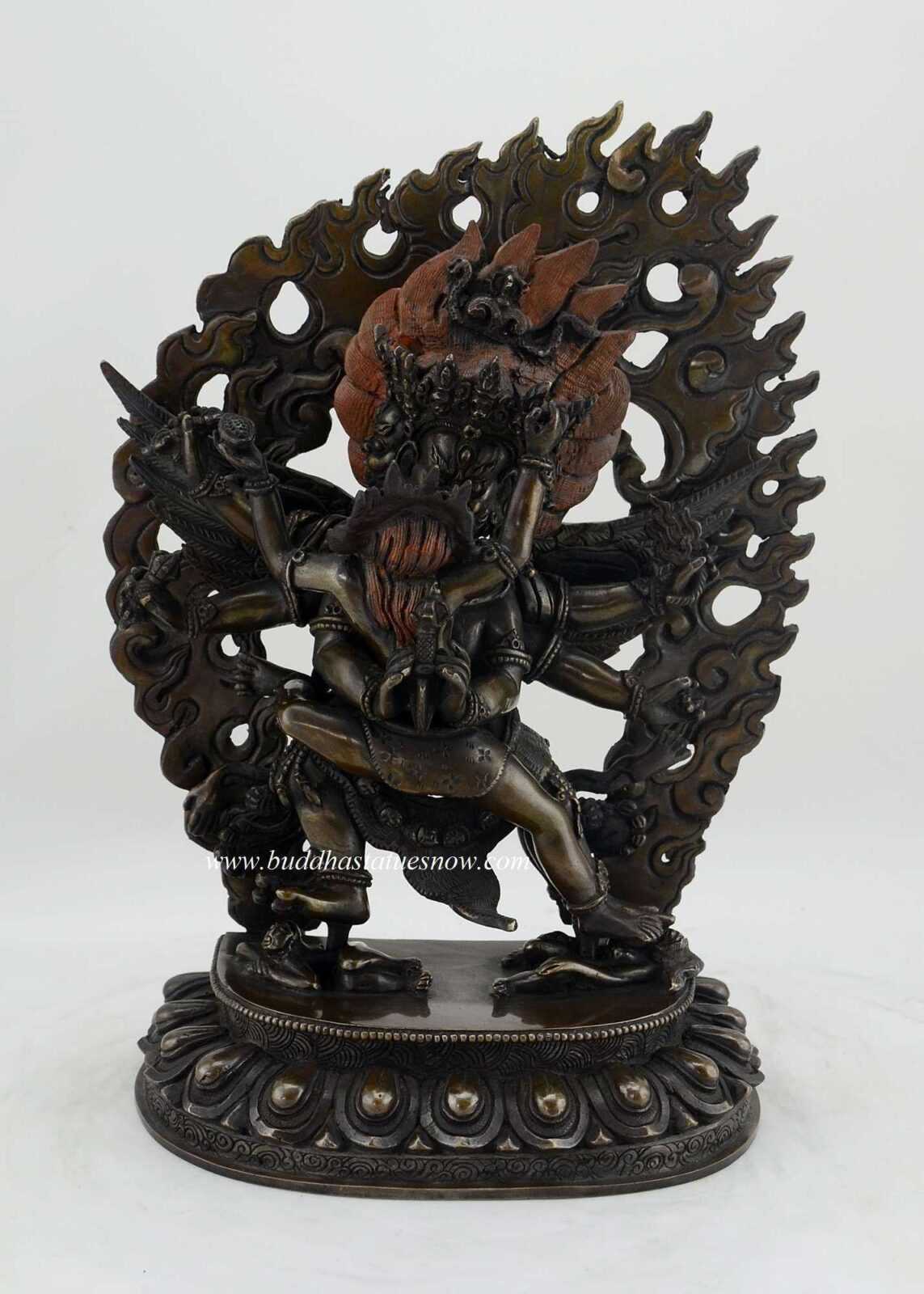

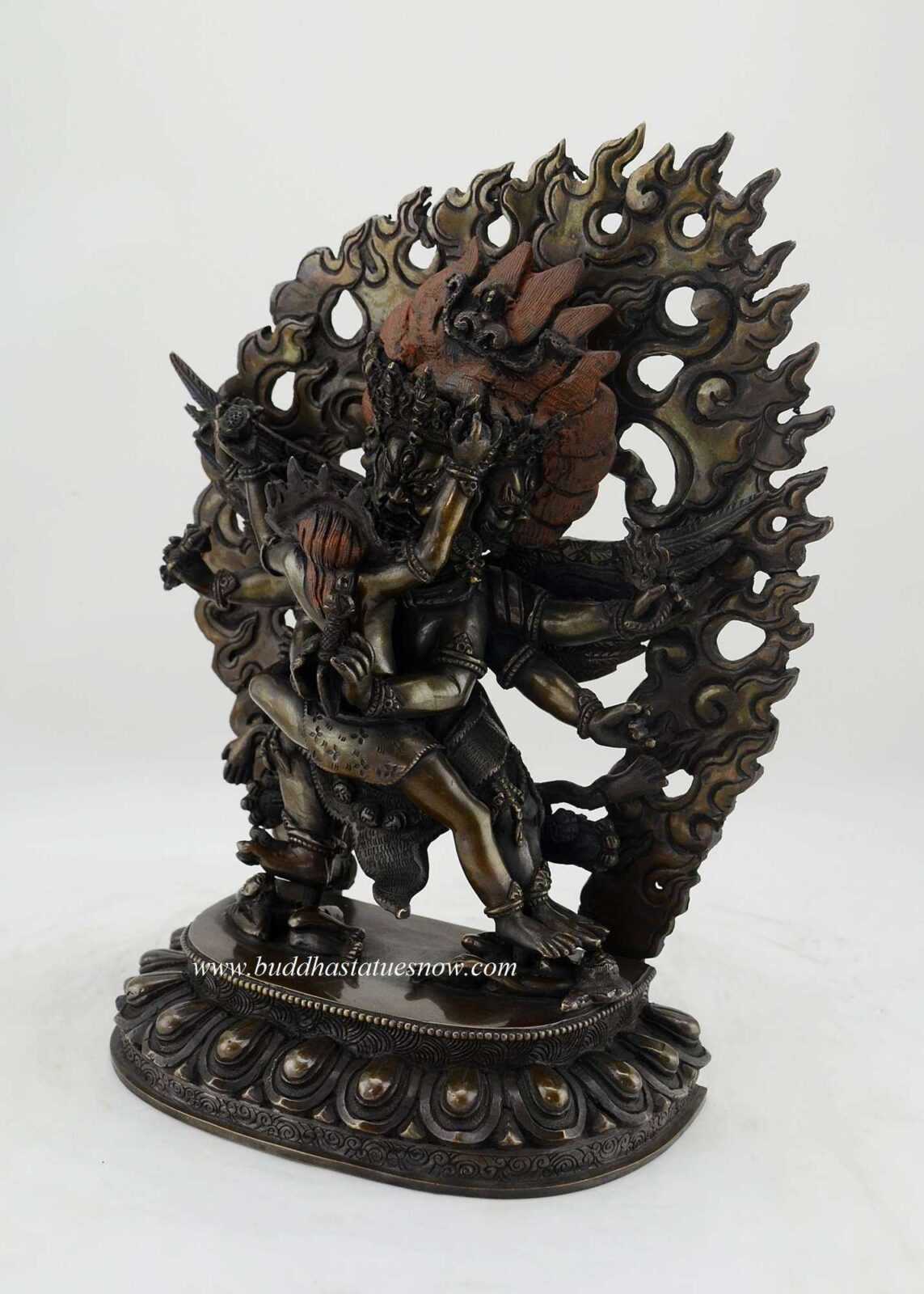
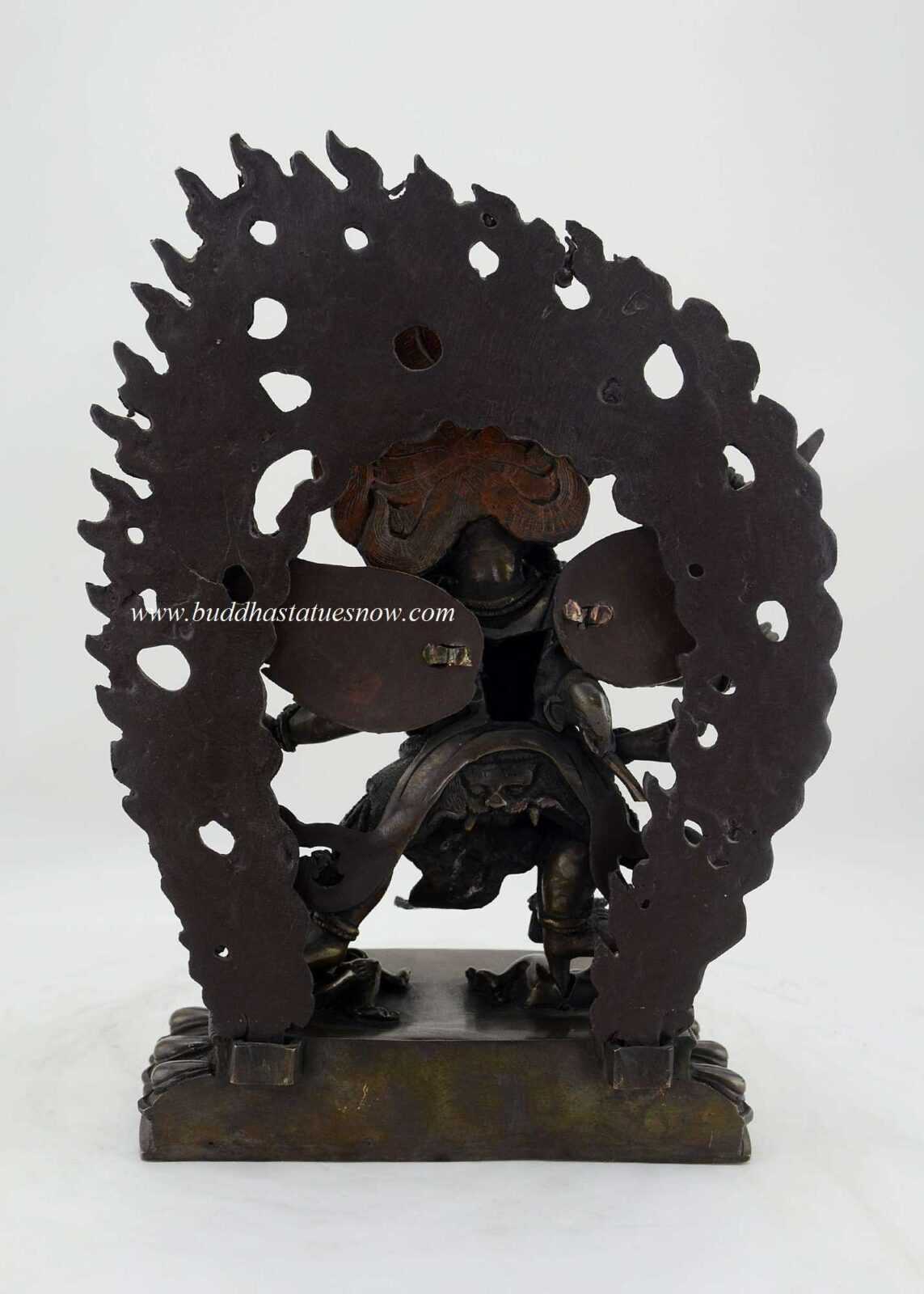
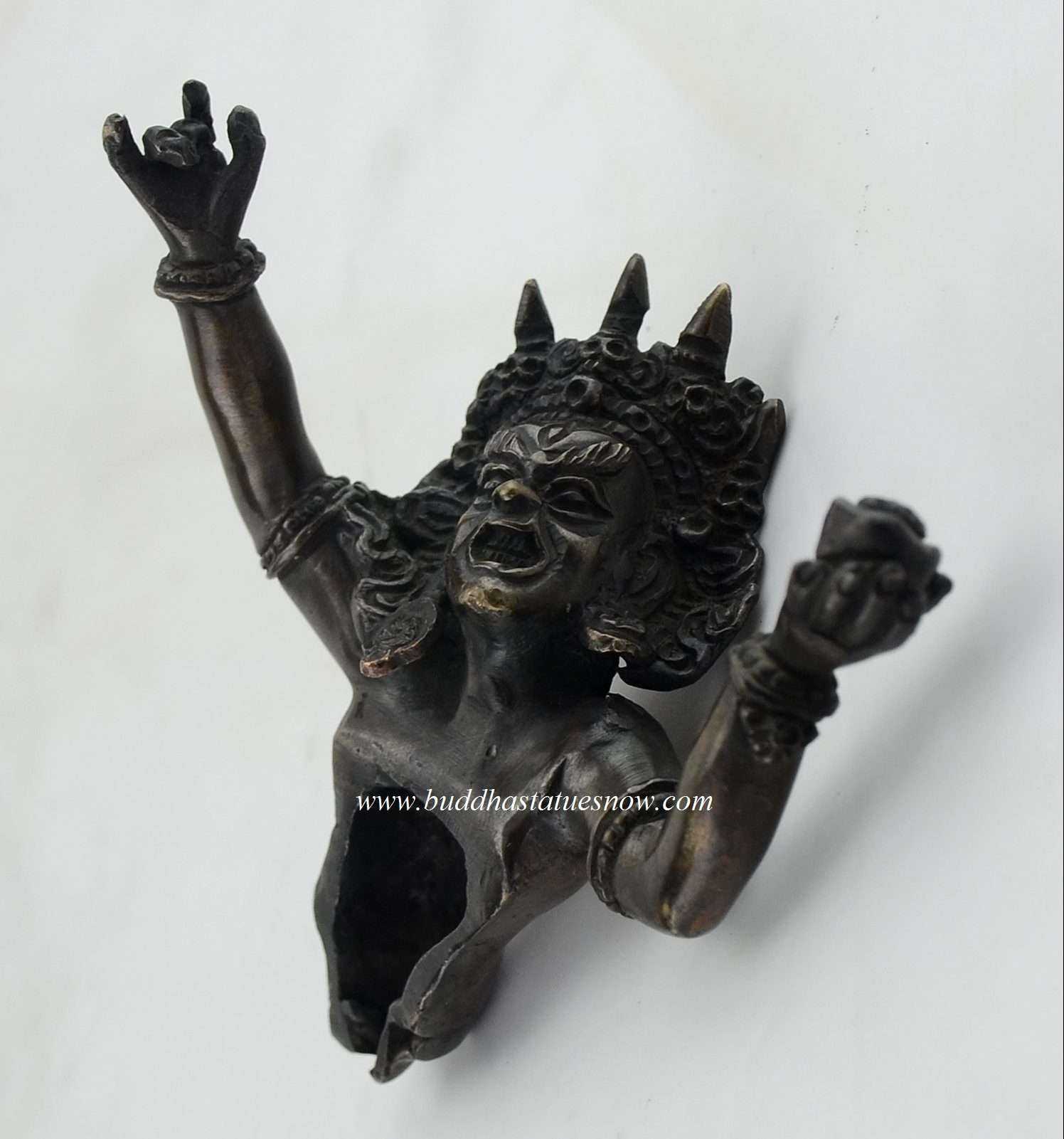
This 10.5″ Vajrakilaya (Dorje Phurba) statue is finished in a fully antiquated oxidized copper treatment — the figures, flame mandorla, and oval lotus throne in a single dark patina with no gilding — depicting Vajrakilaya in yab-yum union with his consort Khorlo Gyedunma in his complete three-headed, six-armed, four-legged form. Both the flame mandorla frame and the consort figure are removable, giving the buyer the flexibility to display the statue in three configurations: the complete yab-yum assembly, Vajrakilaya with frame alone, or Vajrakilaya as the solitary figure. The statue was handcrafted in Patan, Nepal by master Newar artisans using the traditional lost wax sculpting method with fine detail throughout.
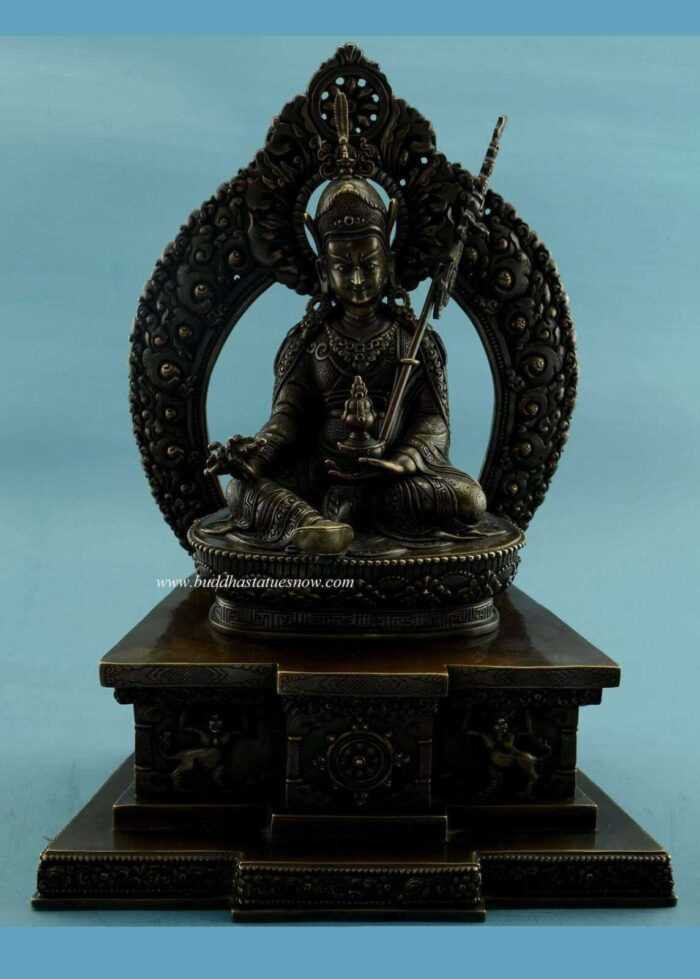
Vajrakilaya was the personal yidam of Guru Rinpoche (Padmasambhava) — the eighth-century Indian tantric master who brought the Vajrayana teachings to Tibet and is considered the founder of the Nyingma school. Guru Rinpoche used Vajrakilaya practice to subdue the hostile forces — both natural and demonic in the Tibetan understanding — that were obstructing the establishment of Buddhism in Tibet, and he transmitted the practice to his closest disciples as one of the most direct and powerful methods for removing obstacles at every level: external circumstances, internal resistances, and the subtle karmic obstructions that prevent the ripening of realization. The Vajrakilaya practice lineage has been transmitted continuously in the Nyingma tradition from that original transmission to the present day, making it one of the oldest unbroken Vajrayana practice lineages in existence. Explore the wrathful deity statues in our collection.
Vajrakilaya Statue Features
Vajrakilaya’s two principal hands hold the phurba dagger between them — three blades, each cutting through one of the three root poisons (hatred, desire, and ignorance) at their source — with the three-pointed tip representing the singular point of unhindered awareness that penetrates the great emptiness of all phenomena. His four legs symbolize the four immeasurables (loving-kindness, compassion, empathetic joy, and equanimity) — the foundation of the Mahayana motivation on which all higher practice rests. His consort Khorlo Gyedunma holds the kapala skull cup filled with the blood of the four maras — the mara of afflictive emotions, the mara of the five aggregates, the mara of death, and the mara of the divine son (distraction) — representing their complete subjugation. Both figures wear the crown of five skulls representing the transmutation of the five poisons into the five transcendent wisdoms, standing within the flame mandorla of pristine awareness that consumes all obscurations without remainder.
Authentic, Handmade in Nepal
Every statue is handcrafted in Patan, Nepal, using traditional lost wax casting and comes with a certificate of authenticity issued by Nepal’s Department of Archaeology, verifying its materials, technique, and origin.