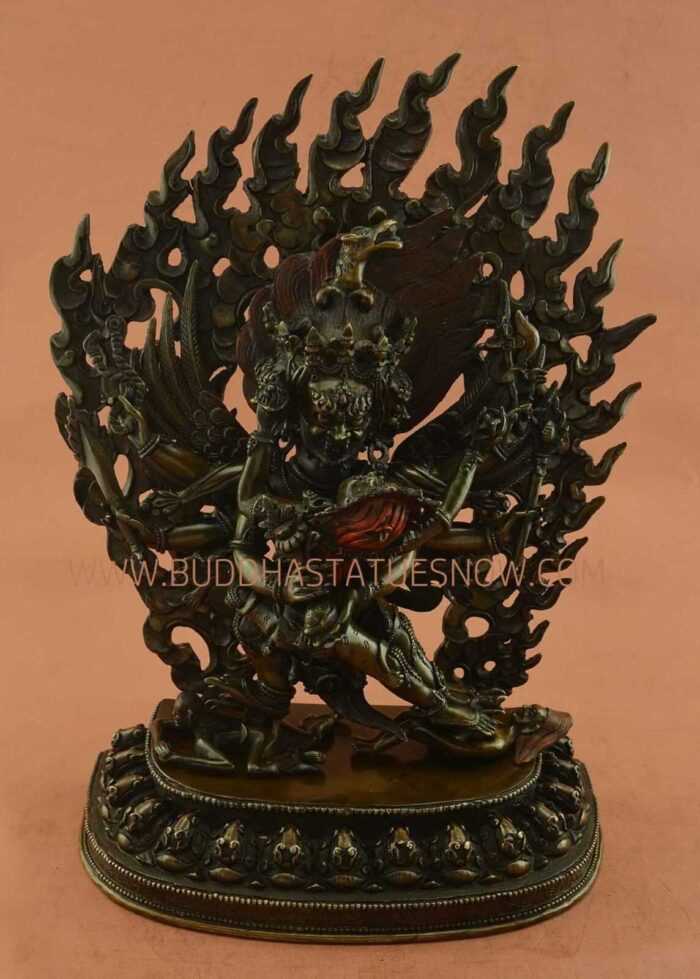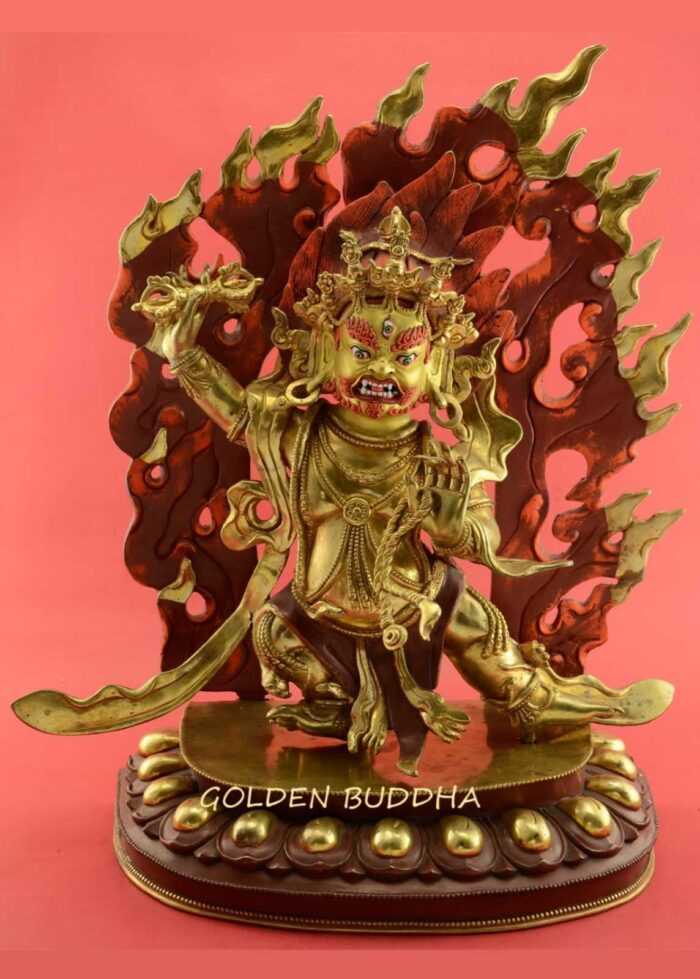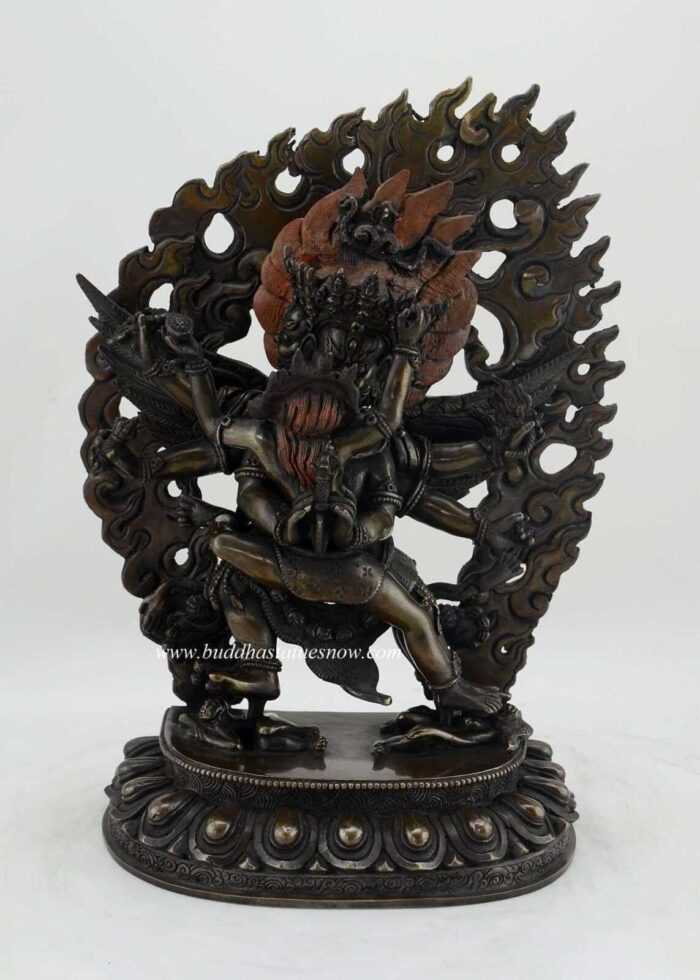

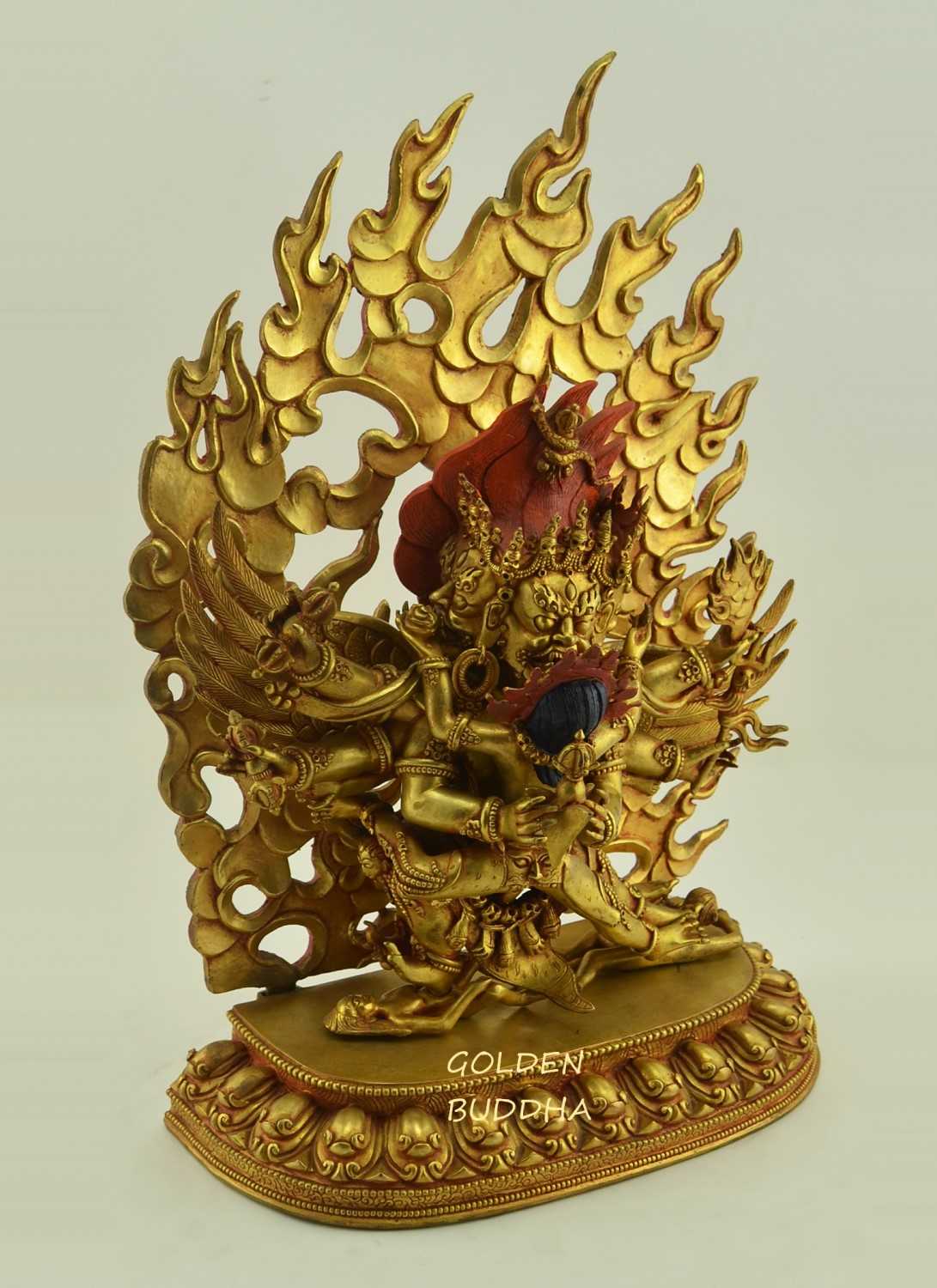
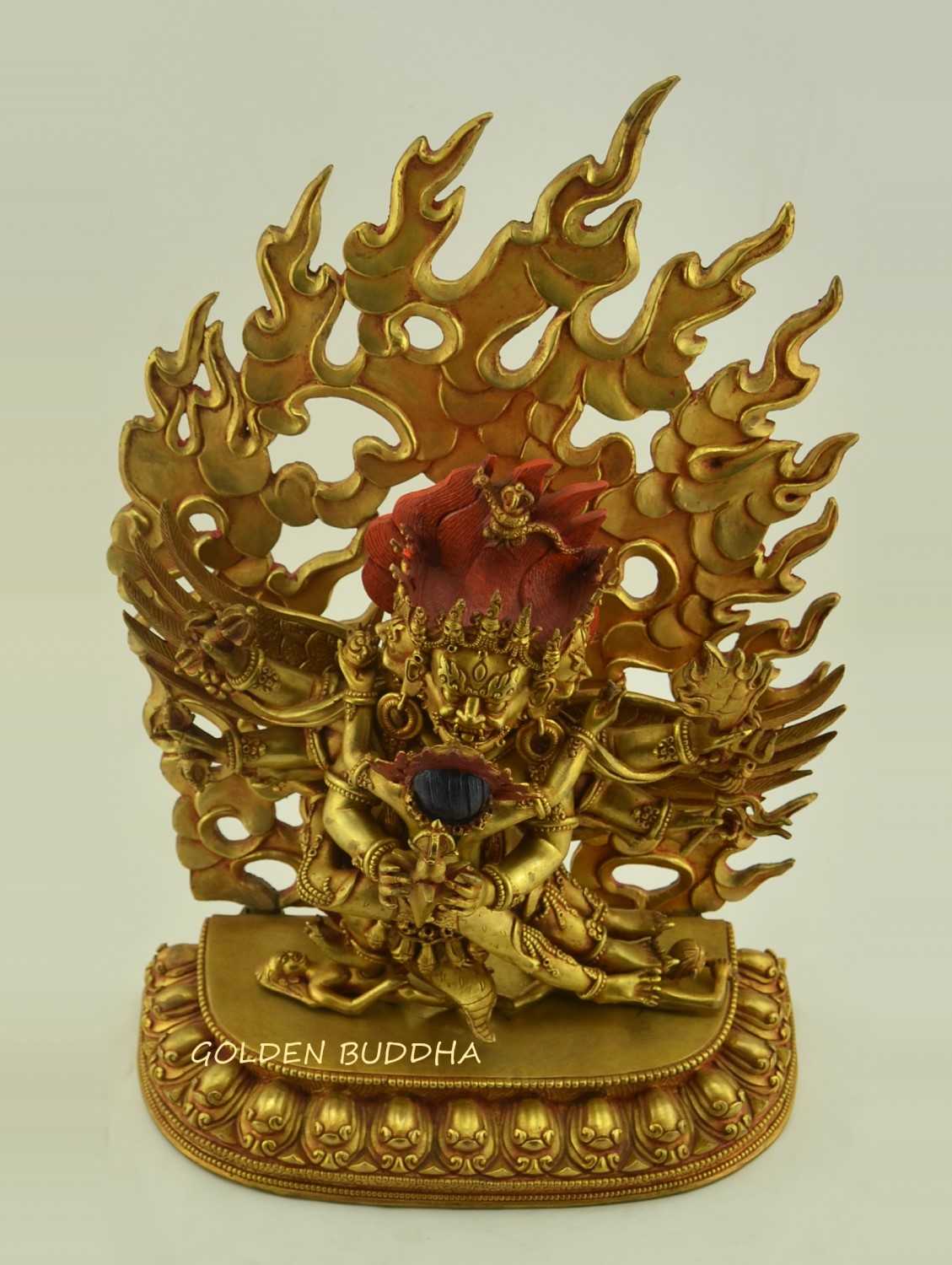
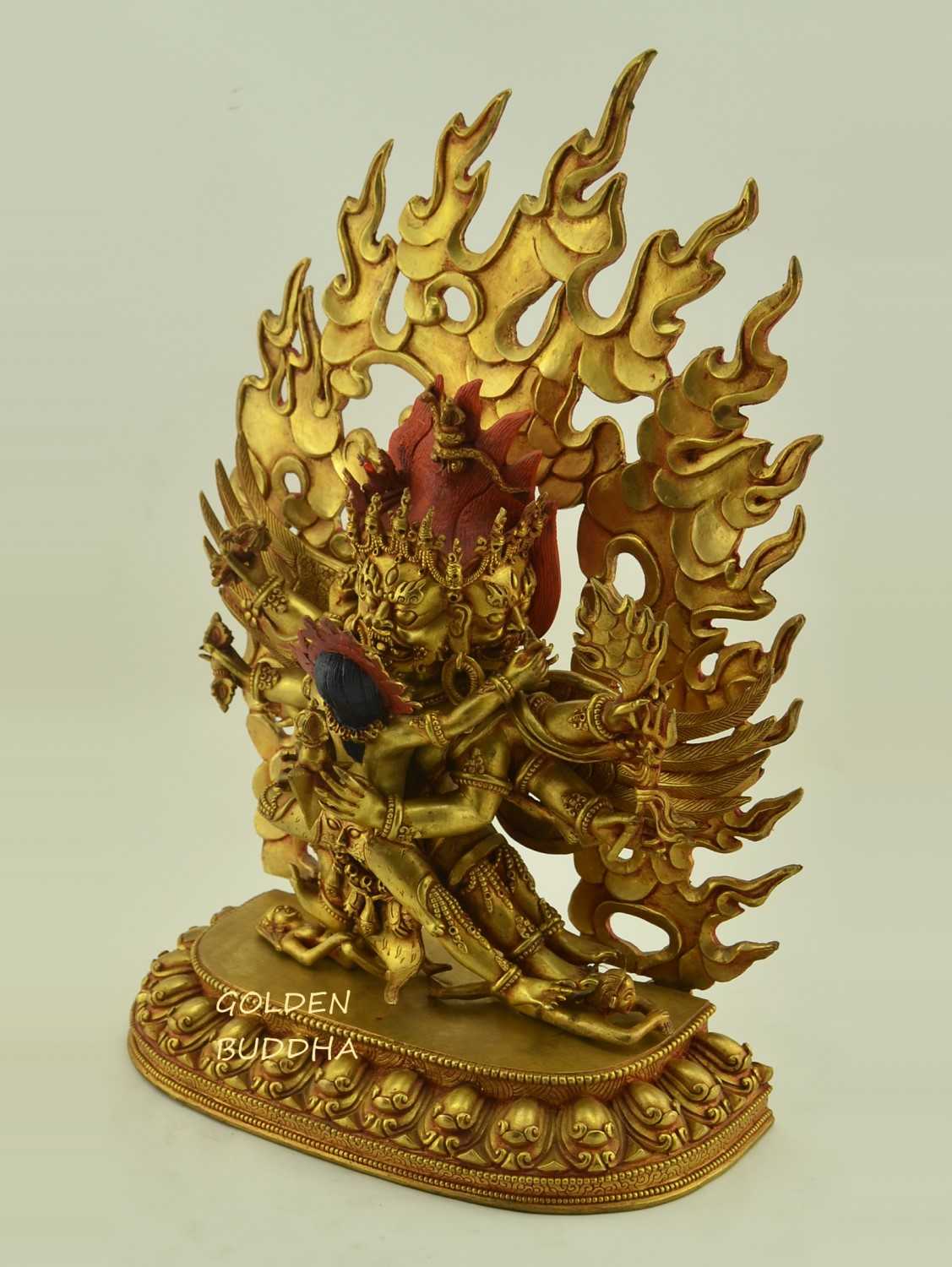
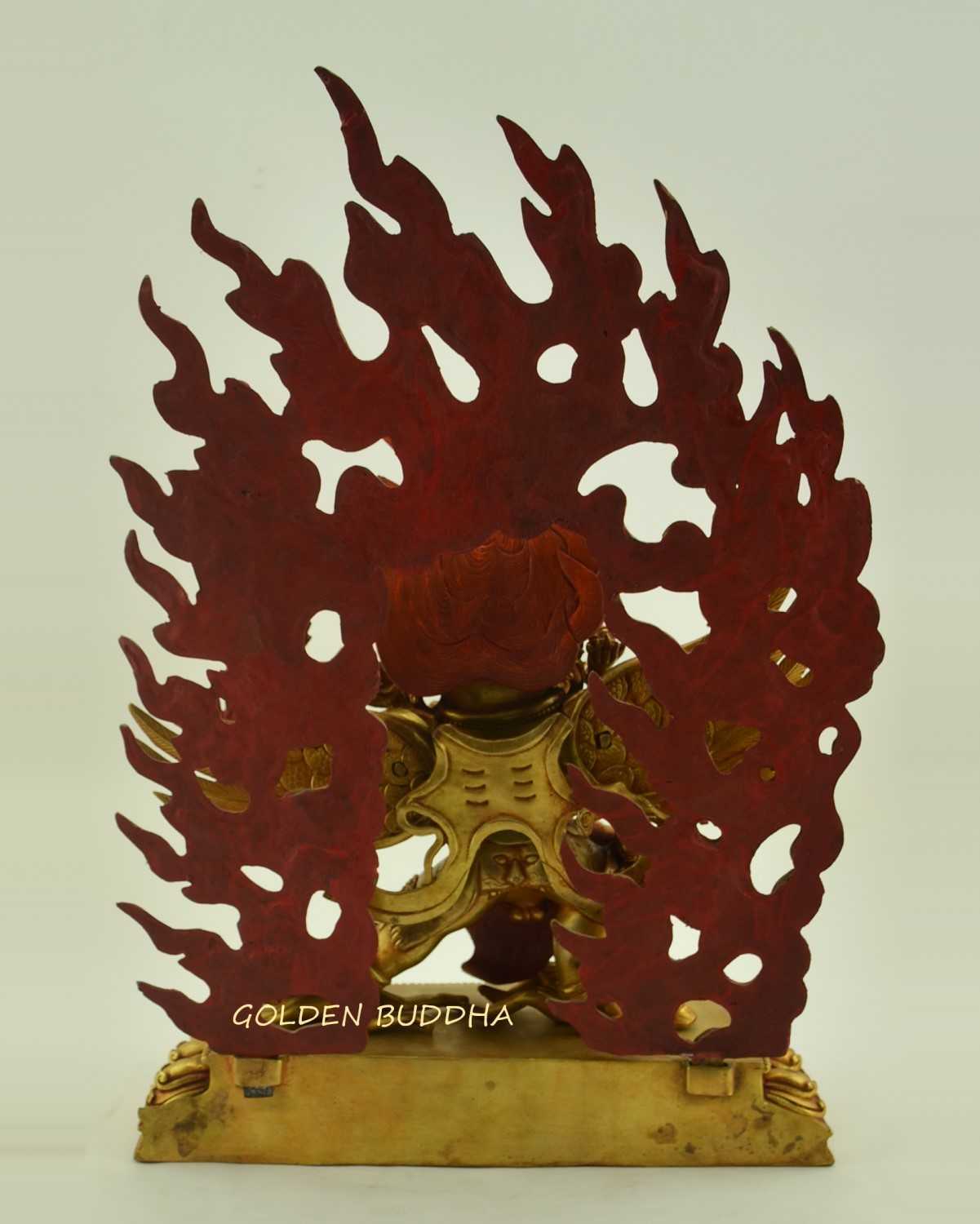
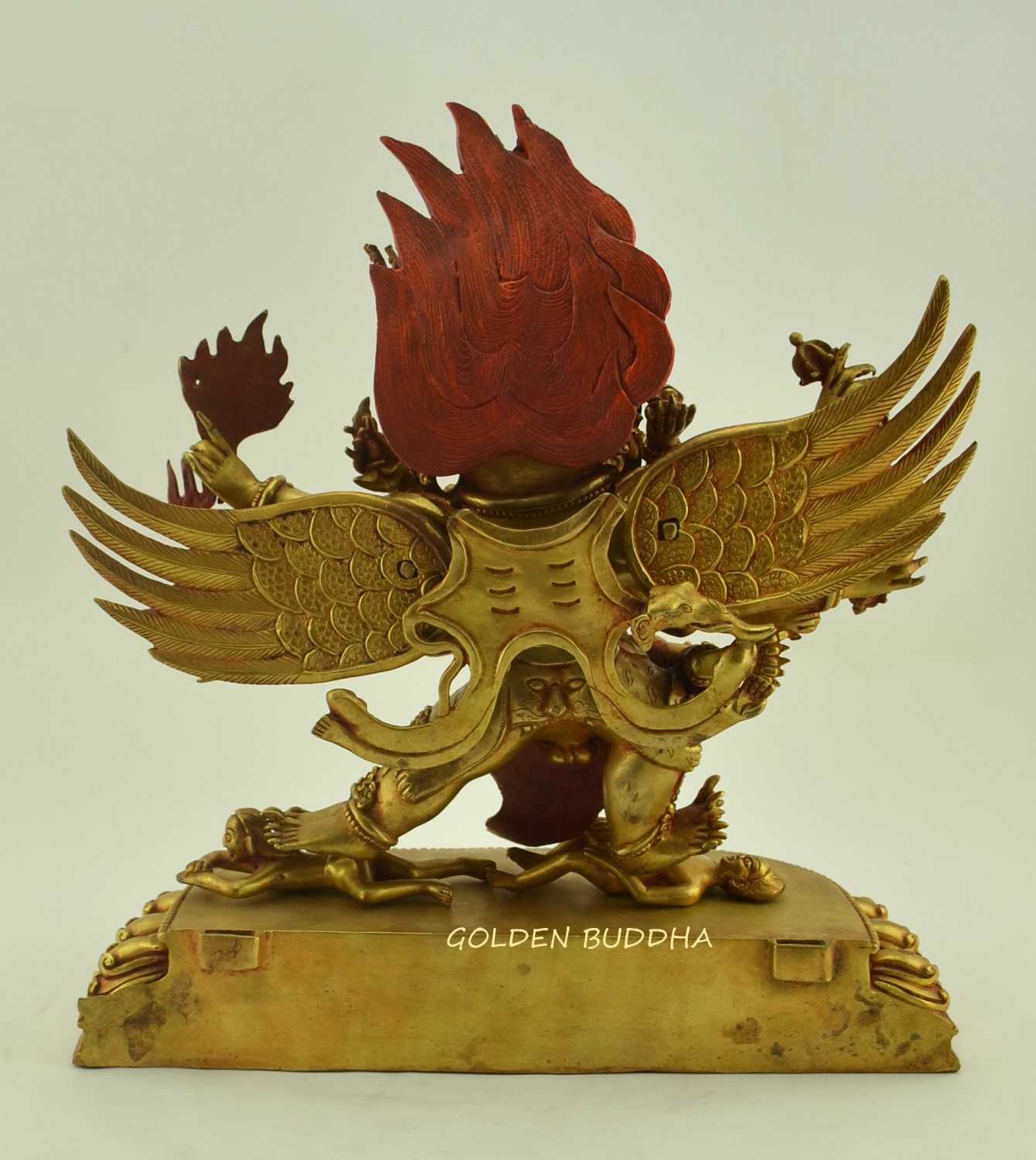
This 16″ Vajrakilaya (Dorje Phurba) statue is fully fire gilded in 24K gold with hand and face painted detail, depicting Vajrakilaya in yab-yum embrace with his consort Diptachakra (Tib: Barwa Drolma — “She of the Radiant Wheel”), enclosed within an elaborate gold and red painted flame mandorla. The mandorla frame is removable, allowing the statue to be displayed with or without the flame halo depending on the altar space available. The statue was handcrafted in Patan, Nepal by master Newar artisans using the traditional lost wax sculpting method with fine detail throughout the multi-armed figures, crown, and lotus throne base. At 16″ this is a substantial ceremonial piece suited to a dedicated Nyingma or Kagyu practice shrine.
Vajrakilaya’s two principal hands are wrapped around his consort’s waist, holding the phurba dagger — the three-bladed ritual spike that is both the deity’s primary attribute and the form his lower body takes, merging seamlessly into the triangular blade. The three blades of the phurba are understood to cut simultaneously through the three principal hindrances to spiritual realization: the obscurations of afflictive emotions, the obscurations of habitual karmic patterns, and the cognitive obscurations of conceptual grasping at the nature of phenomena. The three-pointed tip of the blade represents the singular point of unhindered concentration — the one-pointed awareness that penetrates directly into the great emptiness of all phenomena without deflection or distraction. Together the three blades and the single point express the complete movement from the three sources of obstruction to the one ground of realization: not three different practices reaching three different conclusions but a single thrust of awakened awareness that cuts through all three simultaneously and arrives at emptiness as the common ground of all of them.
Vajrakilaya Statue Features
Vajrakilaya and Diptachakra stand in dynamic warrior posture on the corpses of negativity — the subdued forms of harmful forces and karmic obstacles that his practice specifically eliminates — within the flame mandorla of pristine awareness. The crown of five skulls worn by both figures represents the five aggregates of ordinary existence dissolved into their true empty nature, and simultaneously the five poisons — ignorance, desire, aversion, pride, and jealousy — transmuted into the five transcendent wisdoms of enlightened awareness. The fully gilded surface with painted face details gives the composition the luminous, formally adorned quality of a deity whose practice generates the specific karmic conditions in which all obstacles to realization are cleared.
Authentic, Handmade in Nepal
Every statue is handcrafted in Patan, Nepal, using traditional lost wax casting and comes with a certificate of authenticity issued by Nepal’s Department of Archaeology, verifying its materials, technique, and origin.