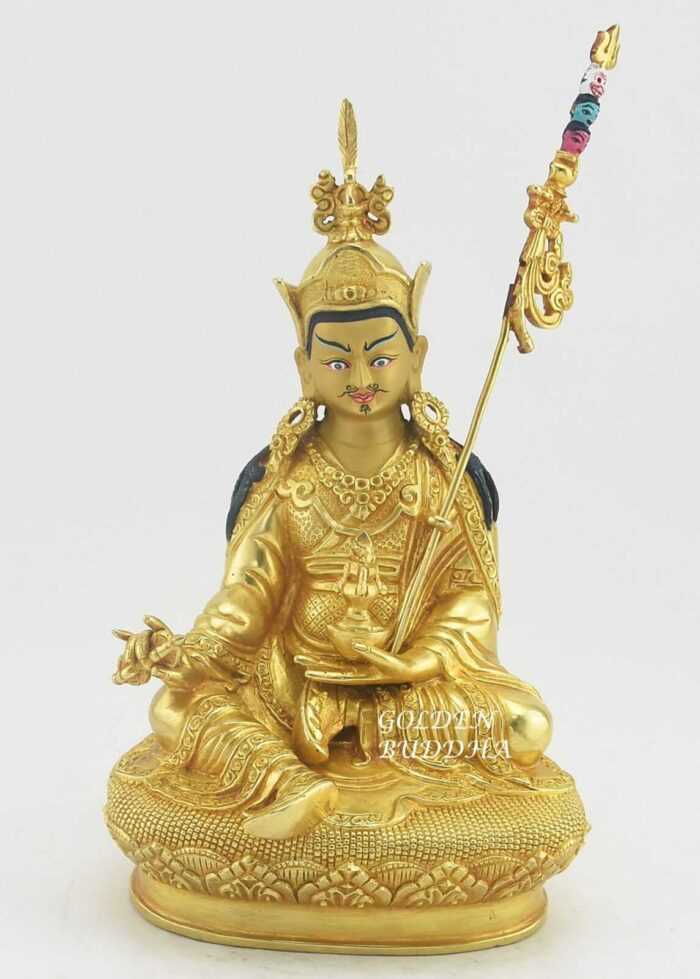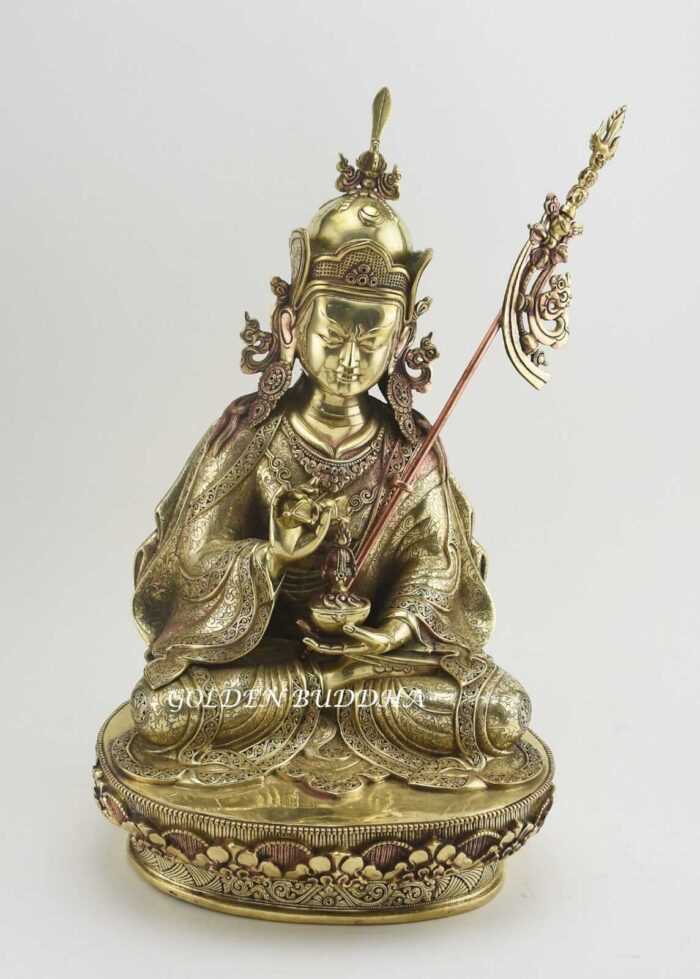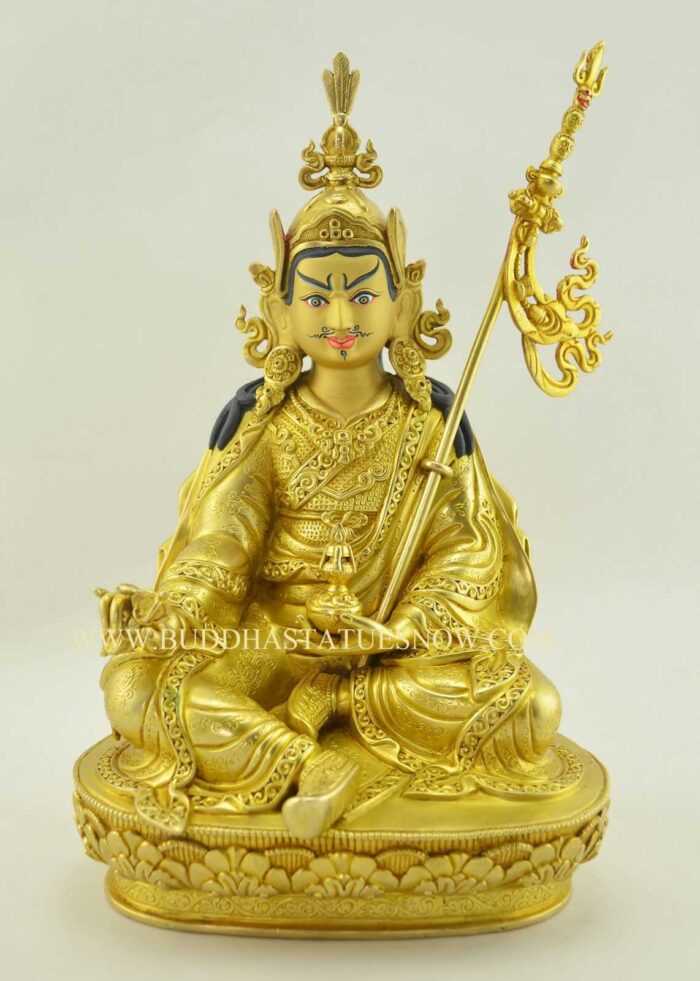
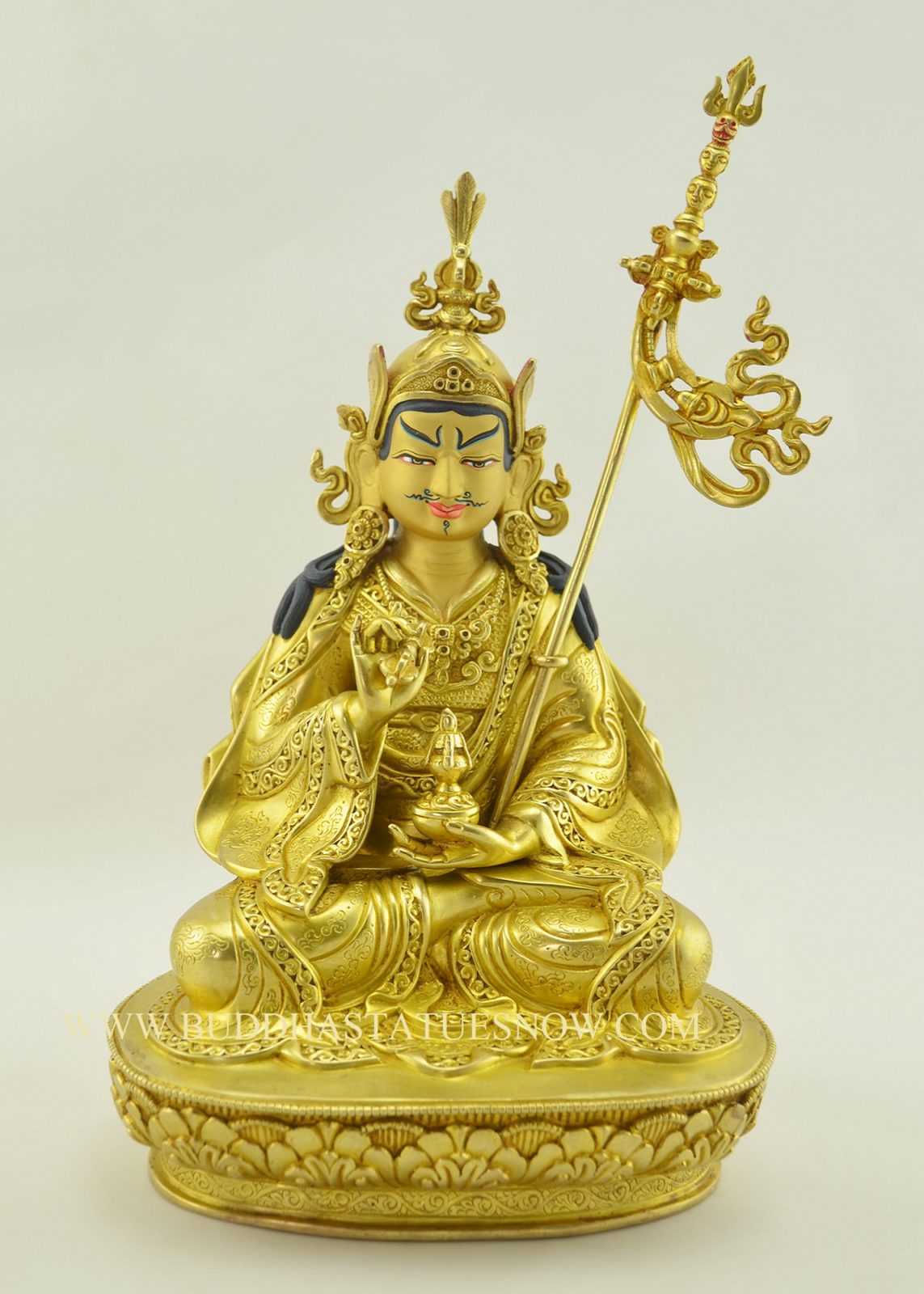
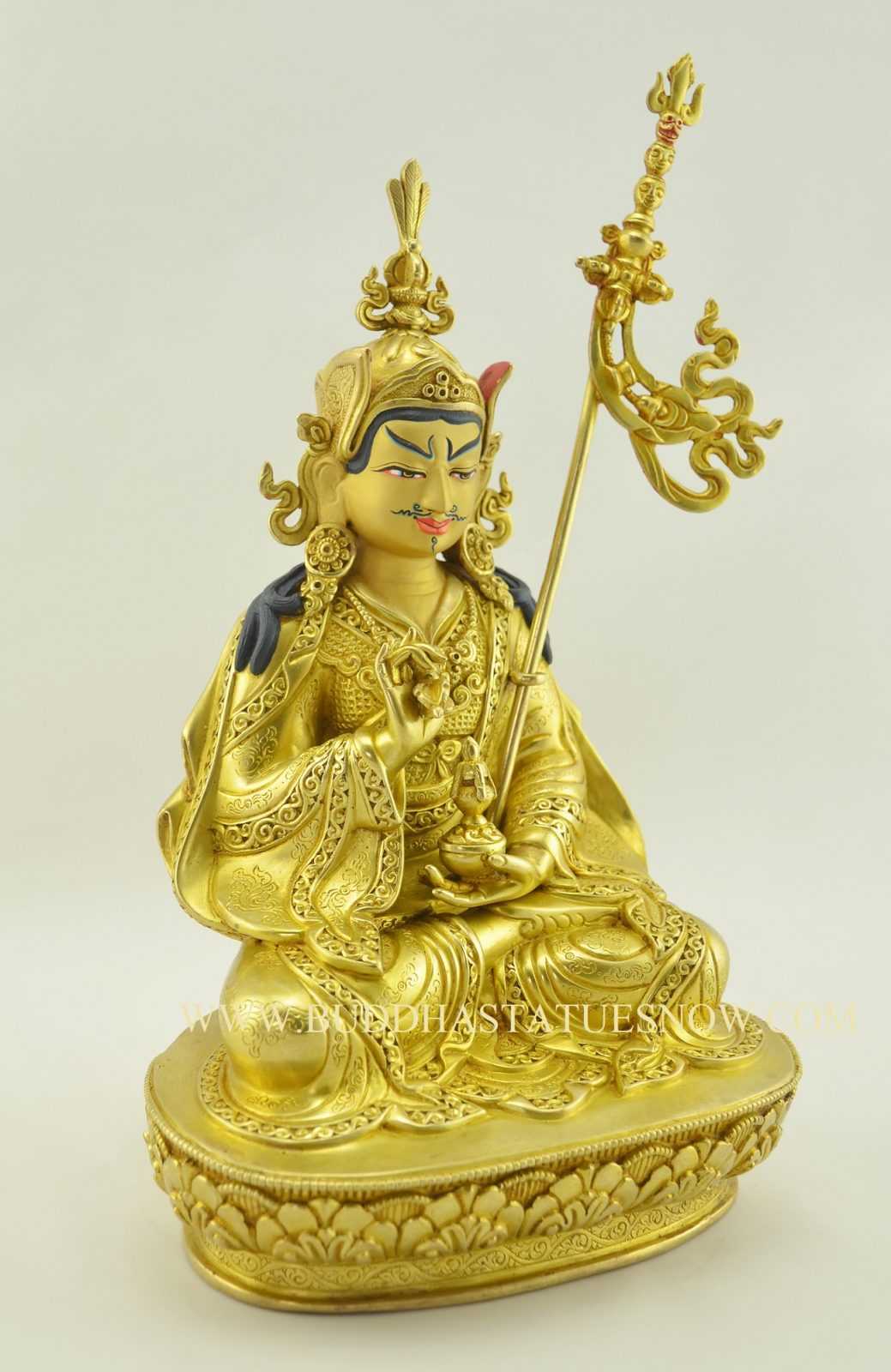
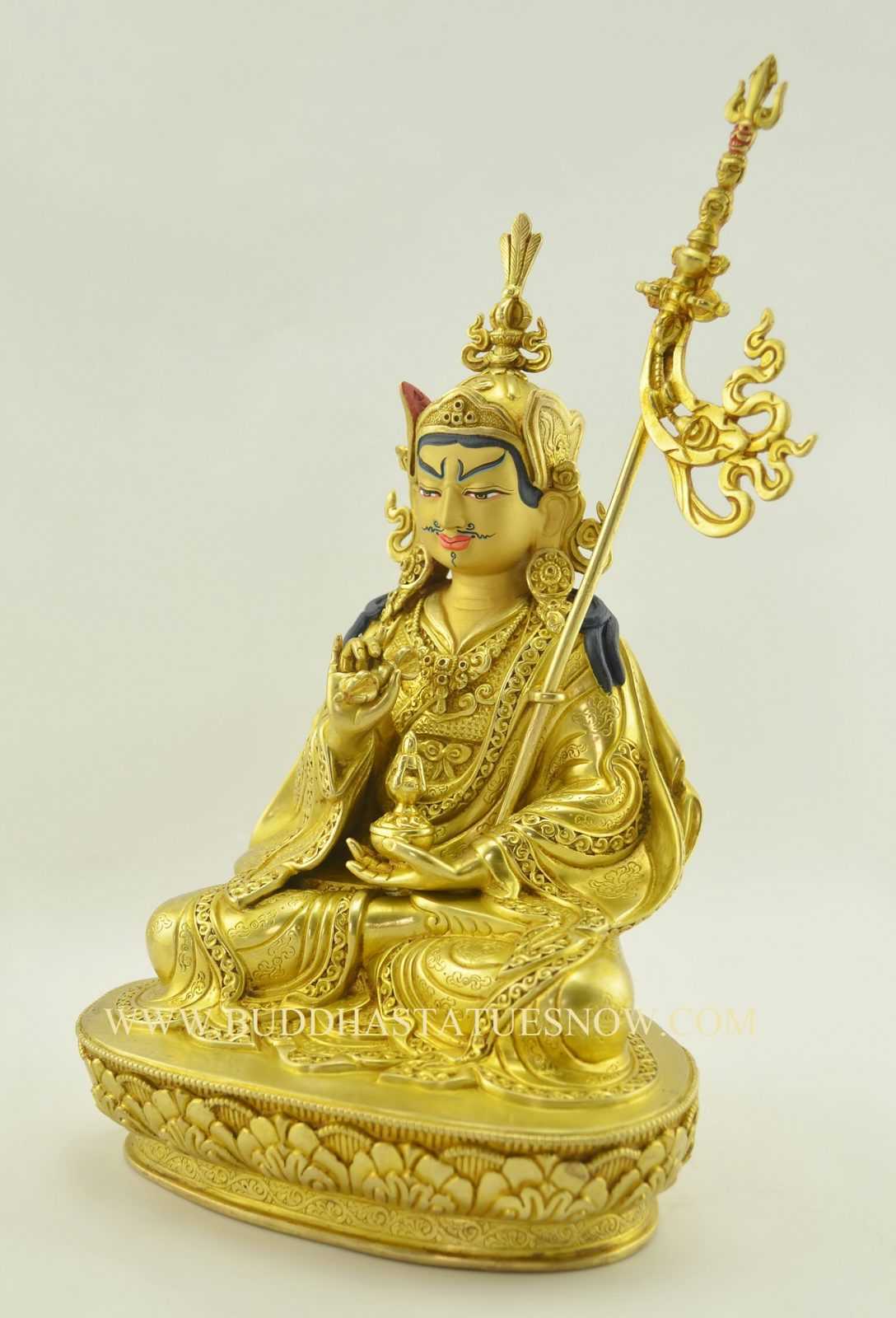
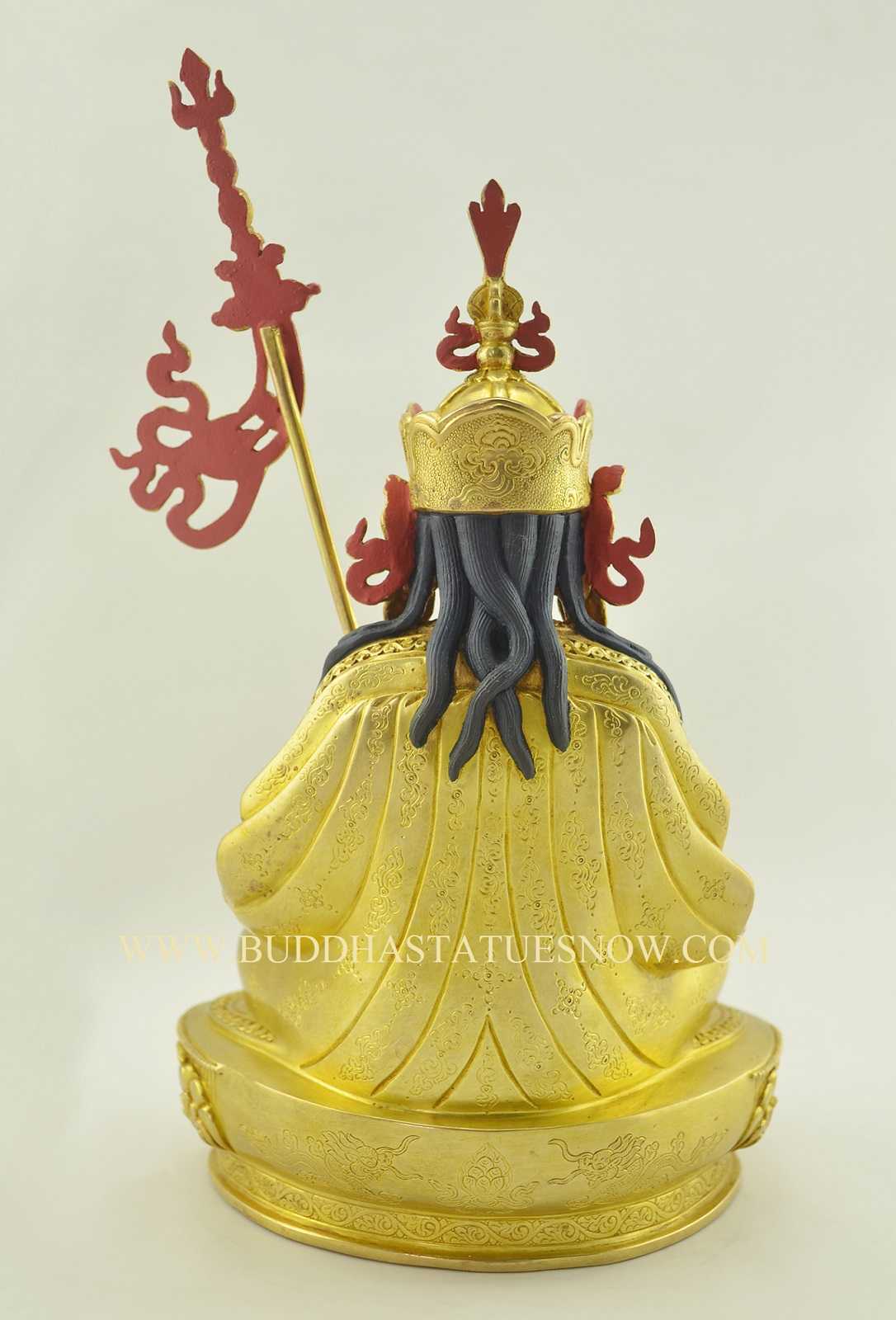
Standing 10 inches high without the khatvanga and 11 inches high including the khatvanga, this handcrafted Konchog-Chindu Padmasambhava statue (Guru Rinpoche) was created in Patan, Nepal by master Newar artisans using the traditional lost wax casting method. Cast entirely from copper alloy, the sculpture is fire gilded in 24K gold, while the face is hand painted with 18K gold and natural pigments. Unlike the traditional Guru Rinpoche form that rests the vajra upon the right knee, this rare Konchog-Chindu manifestation raises the vajra before the heart while displaying the Vitarka mudra, symbolizing the direct transmission of enlightened wisdom. Scrollwork engravings along the robe hemlines, repoussé carvings across the front of the lotus throne, and decorative engraving around the lower base rim demonstrate the exceptional craftsmanship of the Kathmandu Valley. At the buyer’s request, genuine turquoise and red coral can be embedded into the crown and jewelry at no additional cost before shipping, creating a truly personalized work of authentic Himalayan Buddhist art.
Konchog-Chindu Padmasambhava Statue
The defining characteristic of this Konchog-Chindu Padmasambhava statue is the unique position of the vajra. Rather than resting naturally upon Guru Rinpoche’s right knee, the vajra is held directly before the heart while the right hand forms the Vitarka mudra, emphasizing the transmission of enlightened realization through teaching. The name Konchog Chindu, often translated as “Embodiment of the Three Jewels,” reflects Guru Rinpoche as the inseparable union of Buddha, Dharma and Sangha. This distinctive iconography is revered within the Nyingma tradition and is immediately recognizable to practitioners familiar with Guru Yoga.
Leaning gracefully against Guru Rinpoche’s shoulder is the traditional khatvanga surmounted by three impaled heads representing complete liberation from the realms of desire, form and formlessness. Resting within the left hand is the kapala supporting the long life vase, symbolizing inexhaustible realization and the nectar of immortality. Completing the image are the lotus hat crowned with the traditional vulture feather, representing the highest realization and the perfected view. Every sacred attribute has been faithfully preserved according to traditional Himalayan Buddhist iconography. Learn more about Guru Rinpoche statue meaning and symbolism.
The Lotus Born Master
Padmasambhava, whose name means “Lotus Born,” is revered throughout Tibetan Buddhism as the Second Buddha. According to Buddhist tradition, he miraculously appeared upon a lotus blossom in the mystical land of Oḍḍiyāna before journeying to Tibet during the eighth century. Invited by King Trisong Detsen and the great Indian scholar Śāntarakṣita, Guru Rinpoche overcame the spiritual obstacles preventing the successful completion of Samye Monastery, Tibet’s first Buddhist monastery. Through his profound tantric realization he established the foundations of the Nyingma tradition, preserving teachings that continue to guide practitioners more than twelve centuries later.
Guru Rinpoche also concealed numerous sacred treasure teachings, known as terma, throughout Tibet and the Himalayan regions so they could later be revealed by realized masters when conditions became favorable for sentient beings. This extraordinary tradition ensured that Vajrayana teachings would continue to flourish through successive generations. Discover more about Guru Rinpoche, Padmasambhava and the Nyingma tradition.
A Perfect Companion to Amitabha Buddha
This Konchog-Chindu Padmasambhava statue pairs beautifully with our Fully Gold Gilded Amitabha Buddha Statue. Within Tibetan Buddhist tradition, Guru Rinpoche is understood to be the enlightened speech emanation of Amitabha Buddha, the Buddha of Infinite Light. Together they represent both the timeless source of enlightenment and its compassionate activity within the world. Amitabha embodies boundless wisdom and compassion, while Guru Rinpoche manifests those enlightened qualities through tantric realization, spiritual transformation and the preservation of the Dharma. Their matching 24K fire gilded finish, traditionally hand-painted faces and harmonious lotus thrones create a shrine that is both visually balanced and doctrinally meaningful.
Handcrafted in Nepal
Every Konchog-Chindu Padmasambhava statue is individually handcrafted by skilled Newar artisans in Patan using the traditional lost wax casting method that has been preserved for centuries. After casting in copper alloy, each sculpture is carefully refined by hand before being fire gilded in 24K gold. The face is then hand painted with 18K gold and natural pigments, completing the traditional Himalayan finishing process. Because every stage of production is performed by hand, each statue possesses subtle individual characteristics while maintaining authentic Buddhist proportions and iconography.
Custom-Made Konchog-Chindu Padmasambhava Statues
If you would like this Konchog-Chindu Padmasambhava statue commissioned in a different size or finish, our master artisans can create a custom sculpture specifically for your shrine or meditation room. Learn more about our custom Tibetan Buddhist statues. Customers may also request genuine turquoise and red coral to be embedded into the crown and jewelry at no additional cost before shipment. A custom commission can also be paired with Amitabha Buddha to create one of the most meaningful shrine arrangements in Vajrayana Buddhism, uniting the Buddha of Infinite Light with Guru Rinpoche, whose enlightened speech and compassionate activity established the Vajrayana tradition throughout Tibet.
Authentic, Handmade in Nepal
Every statue is handcrafted in Patan, Nepal, using traditional lost wax casting and comes with a certificate of authenticity issued by Nepal’s Department of Archaeology, verifying its materials, technique, and origin.