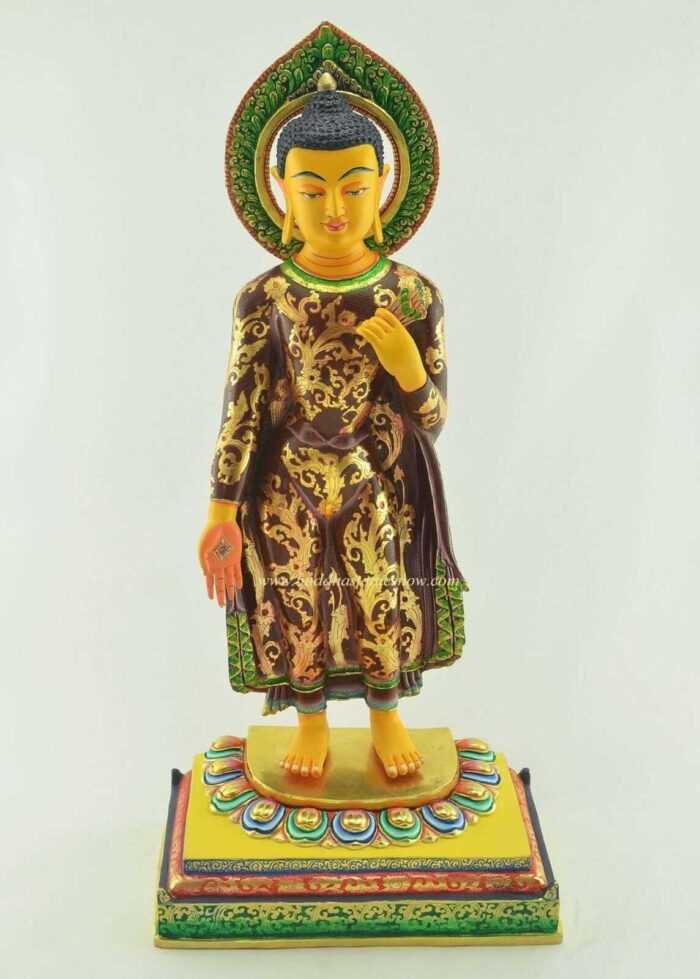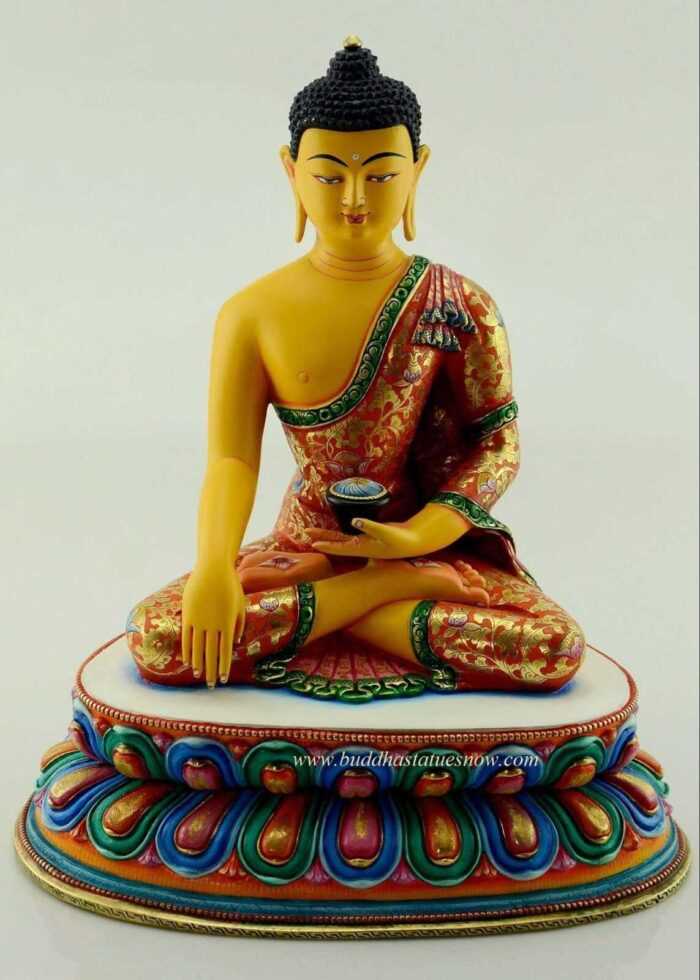

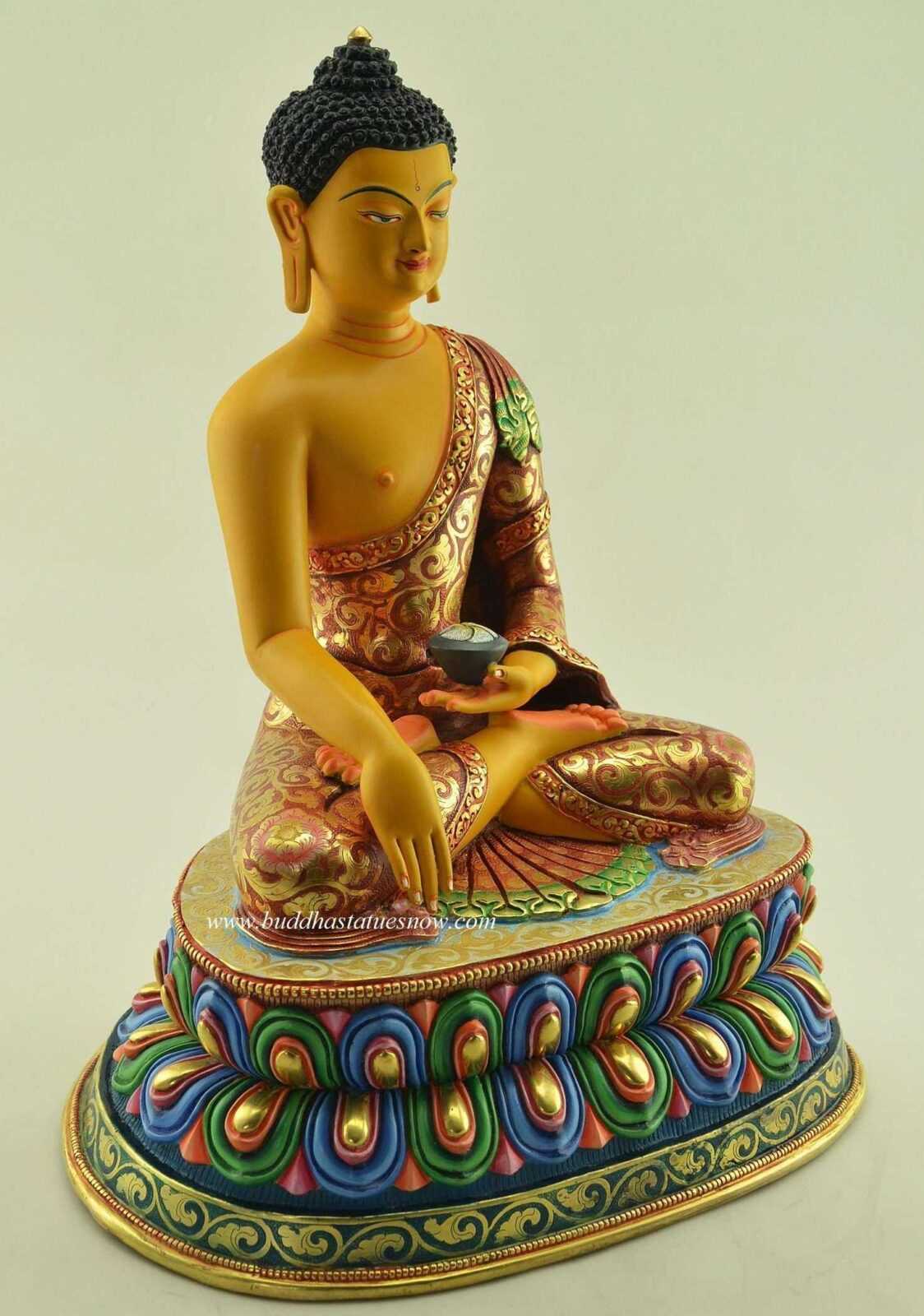
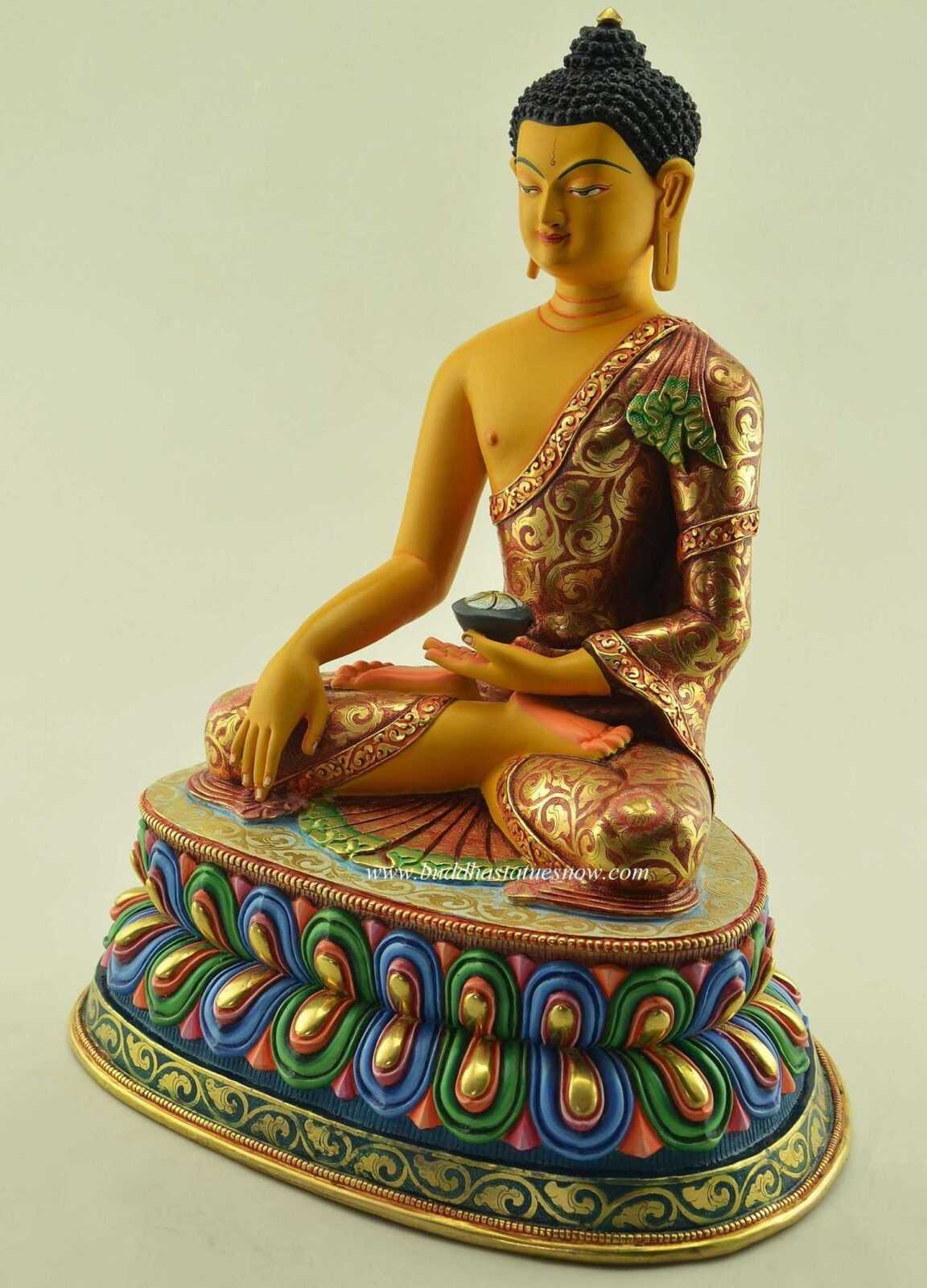
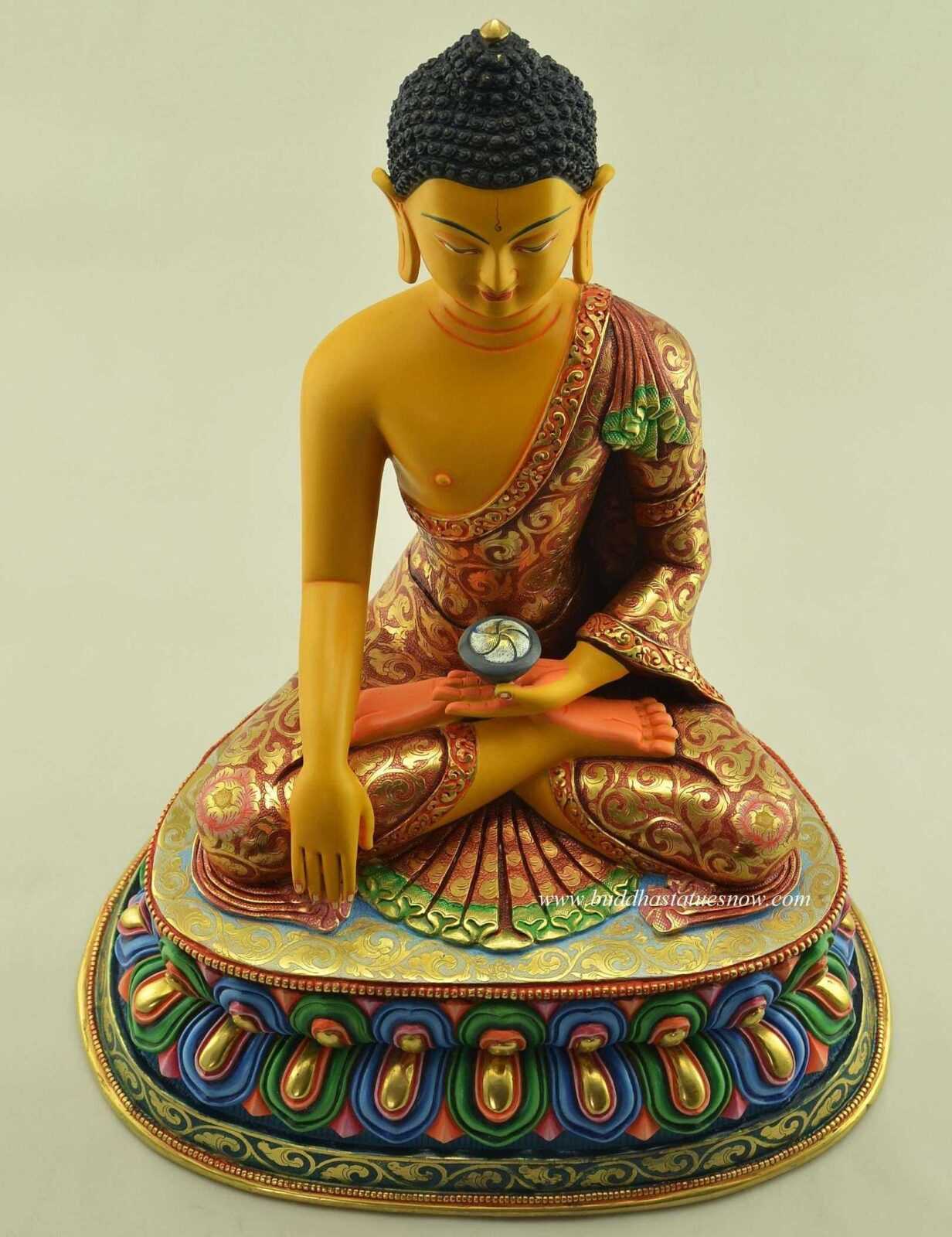
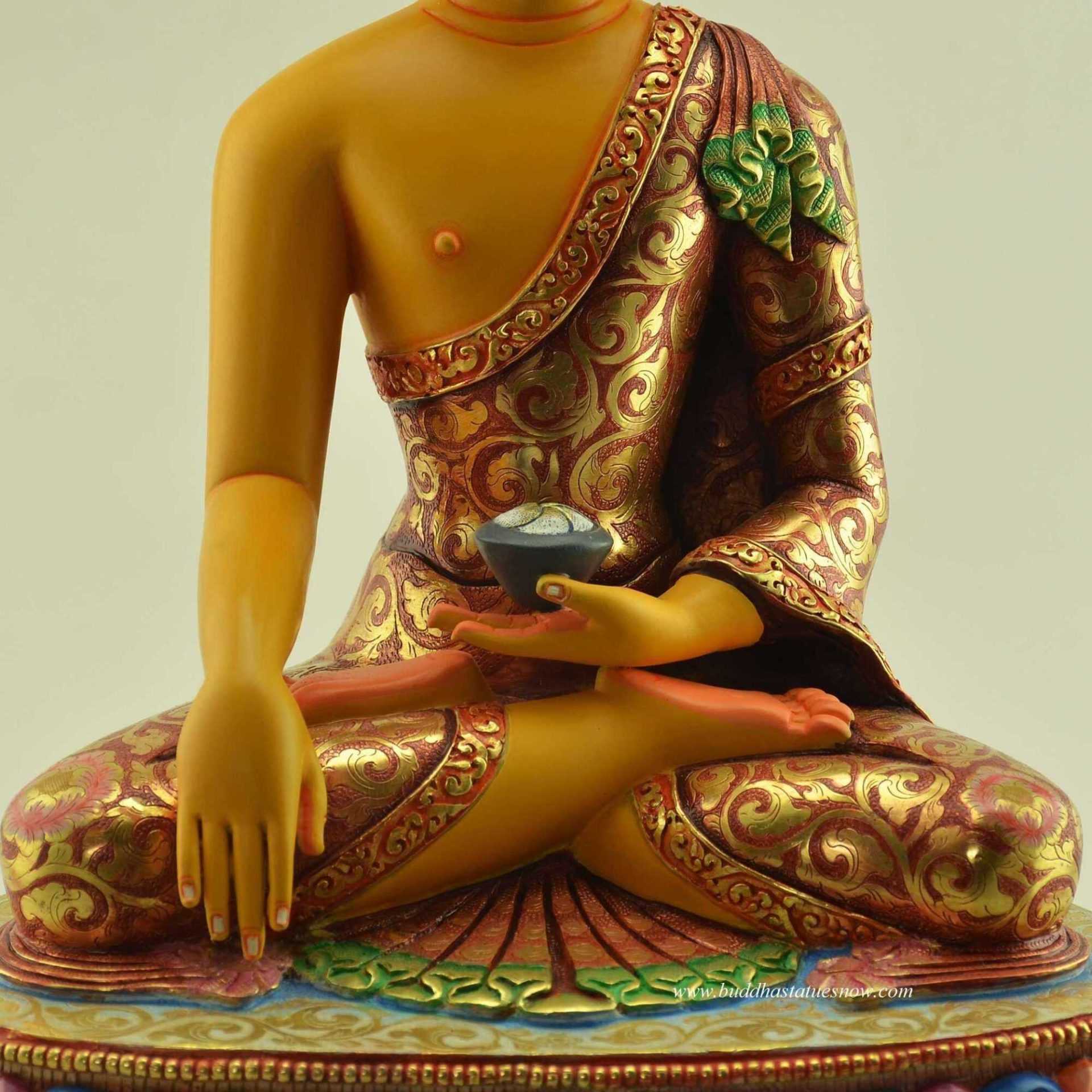
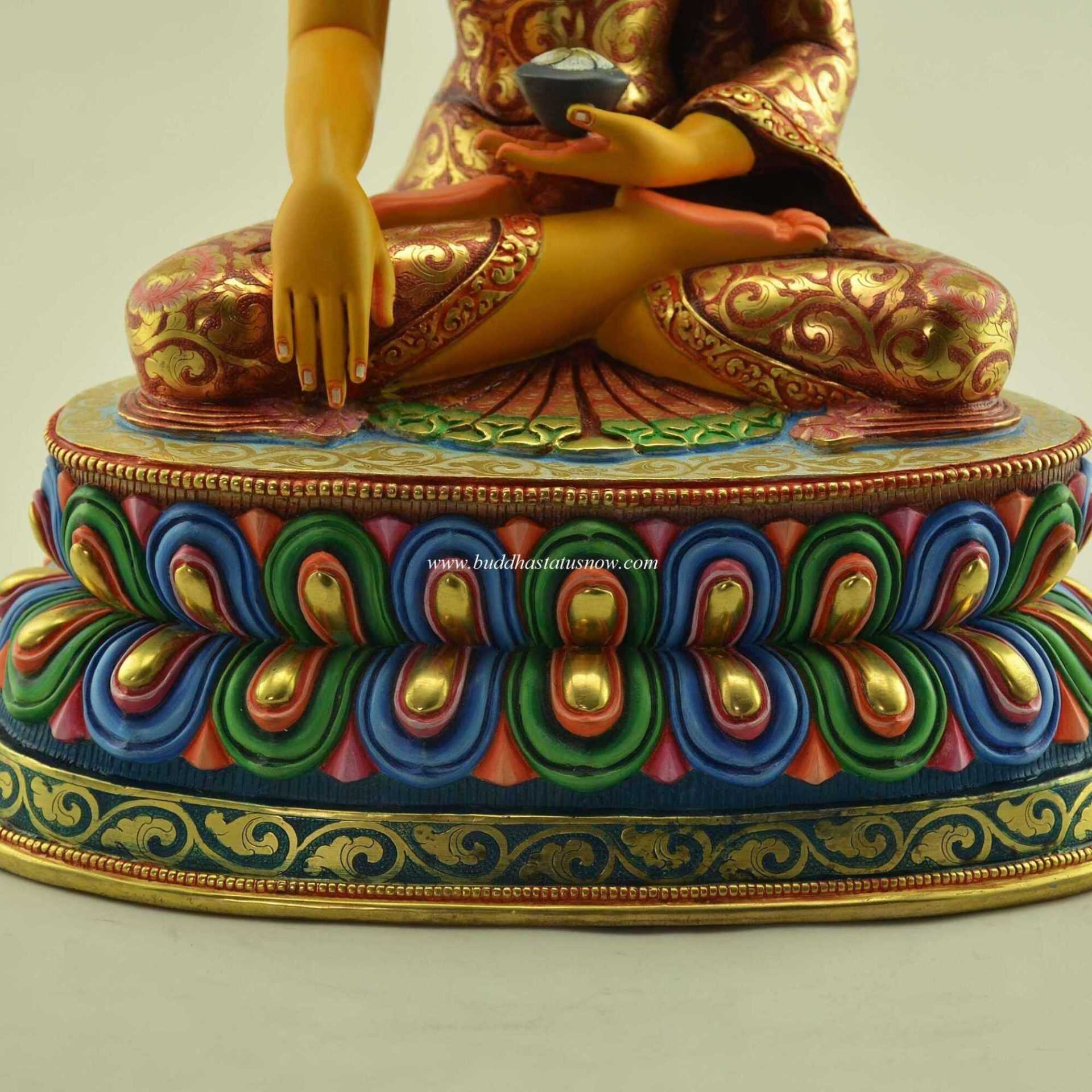
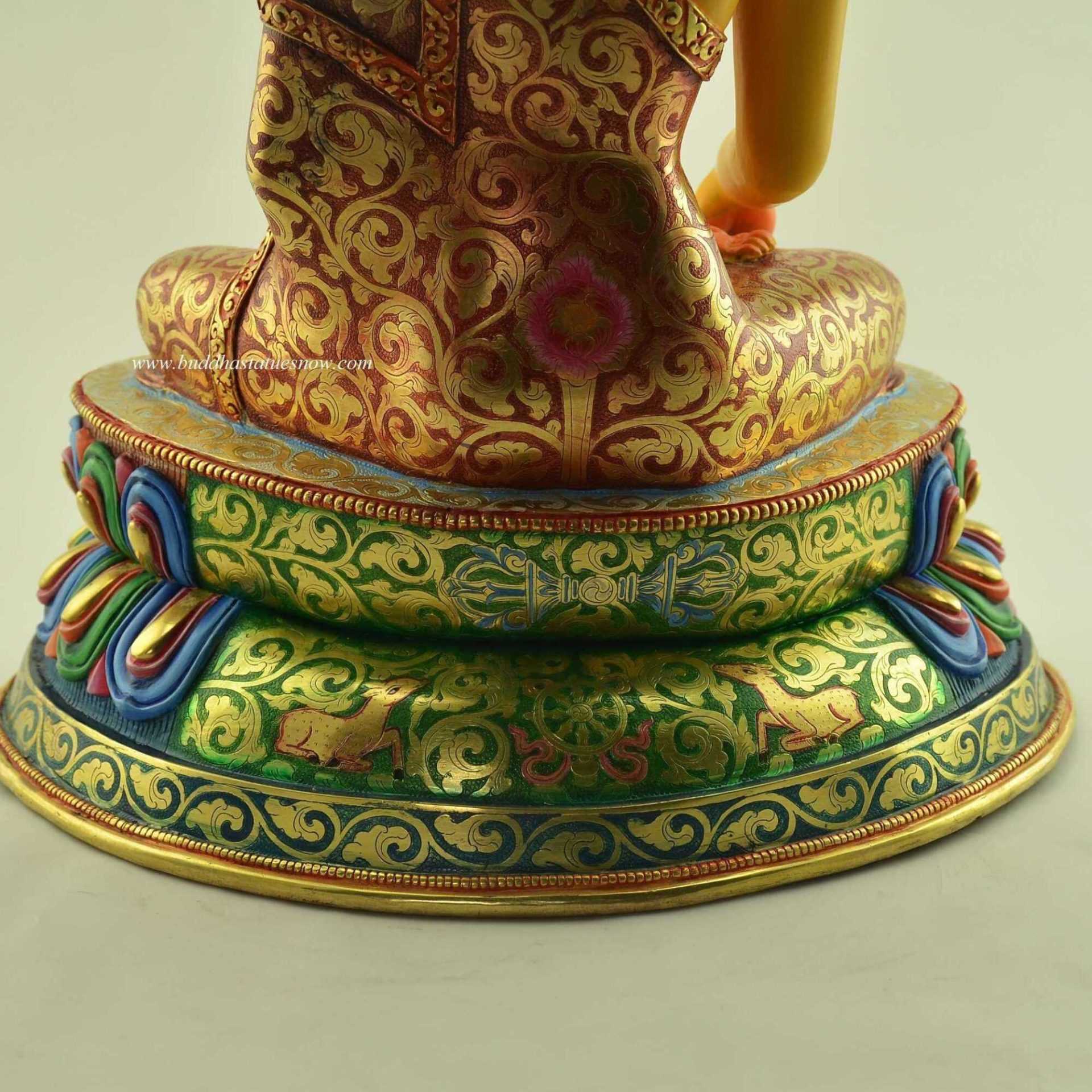
This exceptional 14-inch Multicolored Shakyamuni Buddha Statue is distinguished by its vibrant polychrome finish, richly painted robes, and carefully applied 24K gold details. Handmade from copper alloy in Patan, Nepal using the traditional lost-wax casting method, the sculpture combines saturated green, blue, coral, red, ochre, and gold tones across the figure and elaborate double lotus throne. Rather than presenting Shakyamuni in a conventional single-metal finish, the artisan has treated the entire sculpture as a coordinated work of color, using gilded accents to illuminate the painted ornamentation and emphasize important sculptural details.
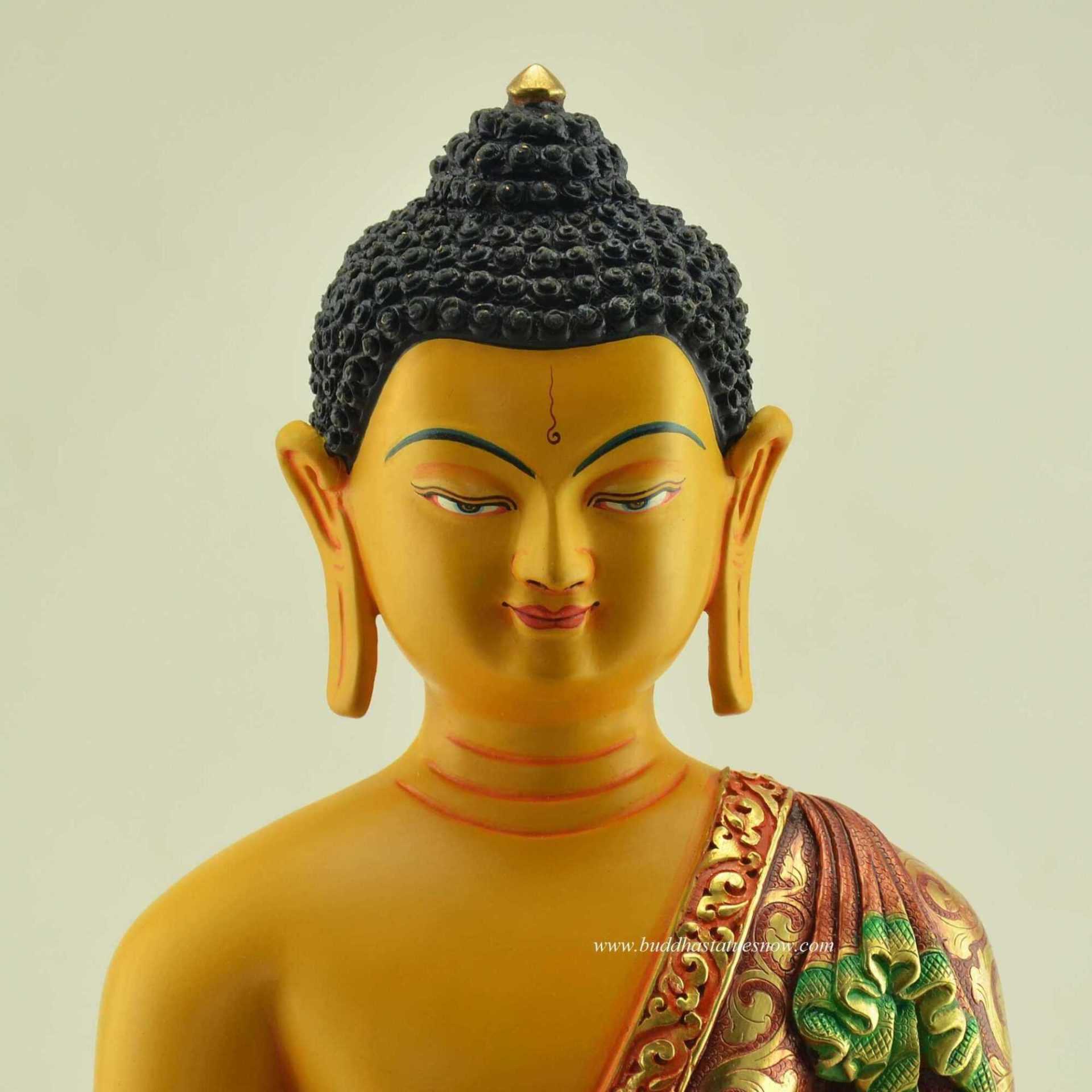
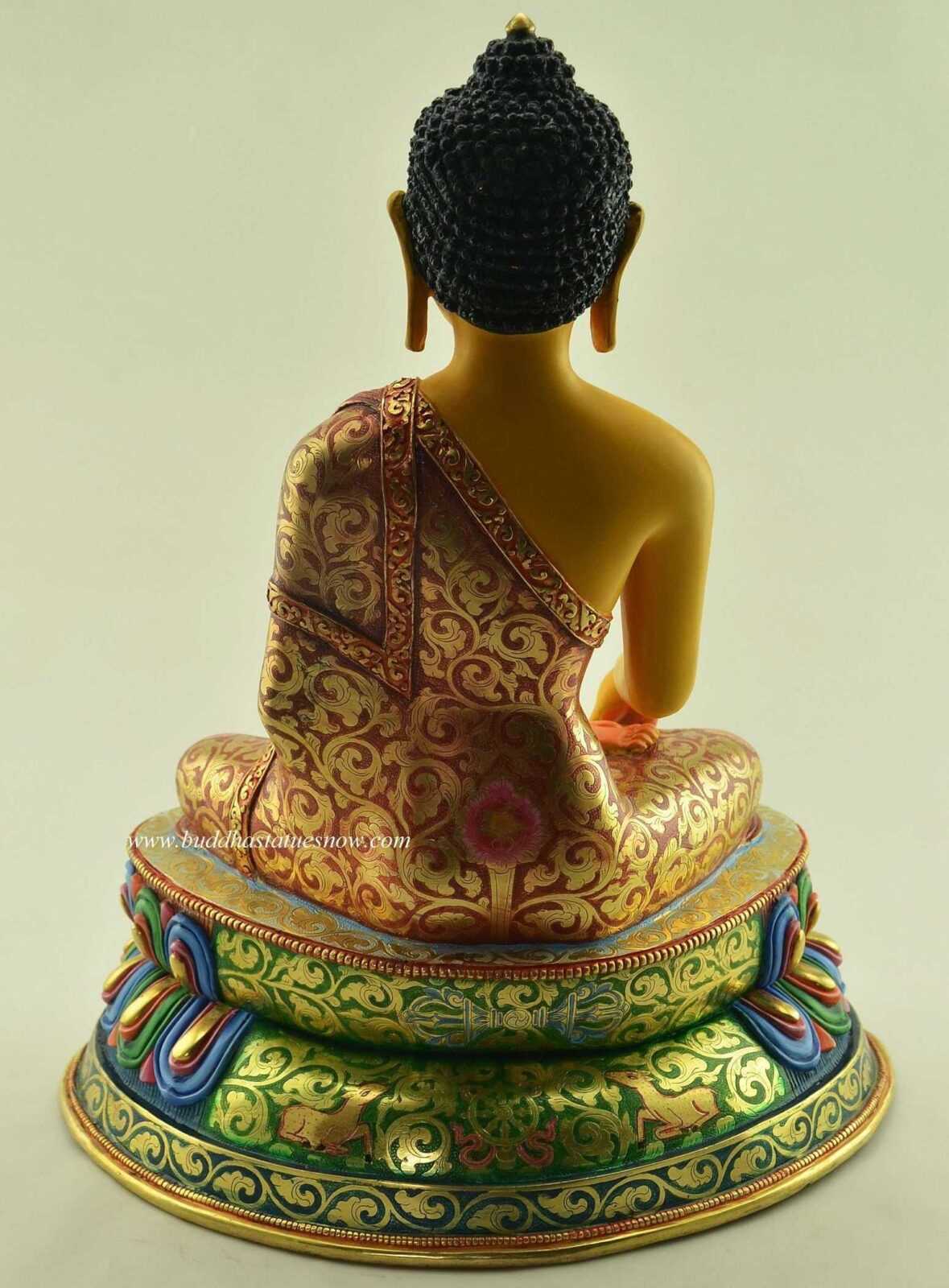
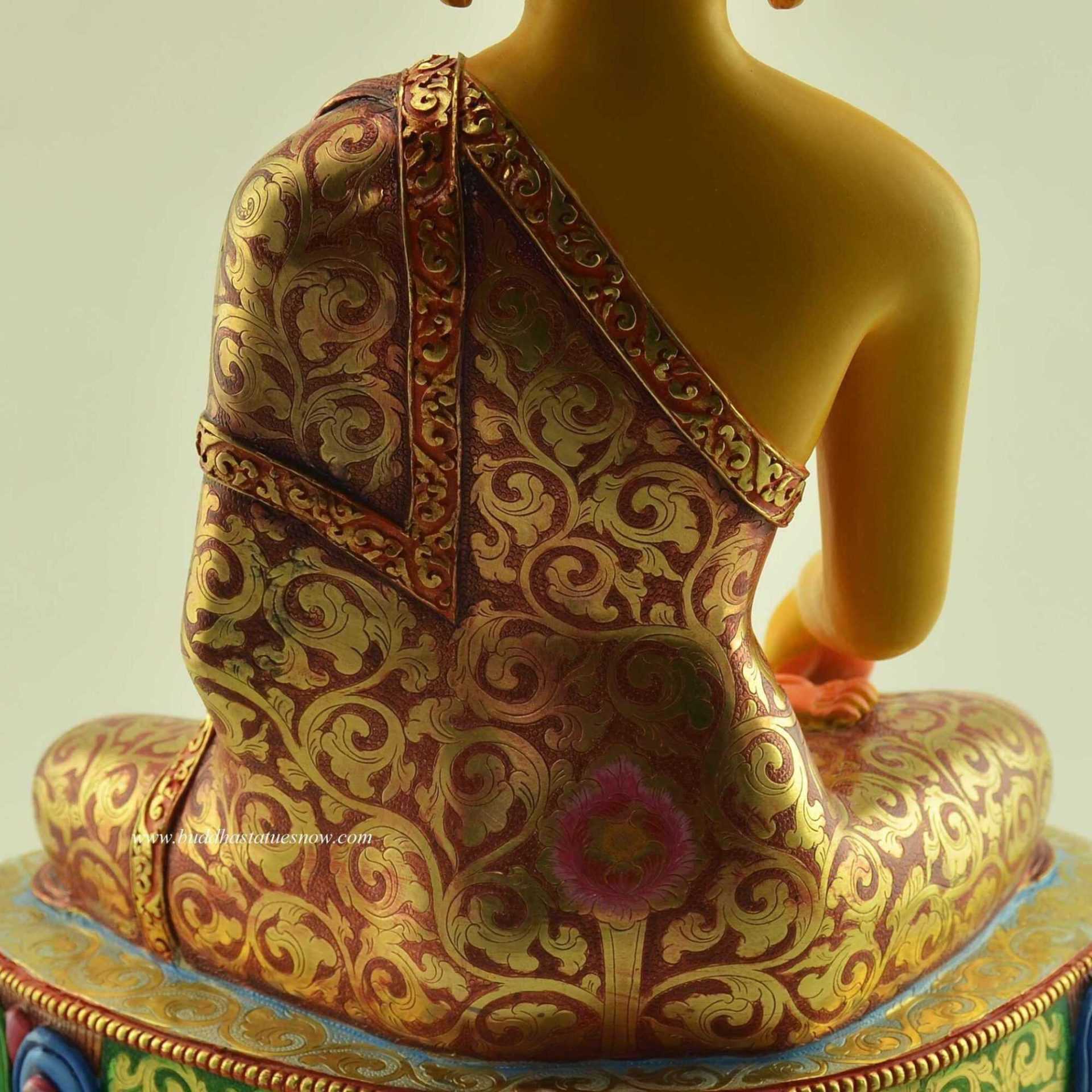
Shakyamuni’s skin is painted in a warm golden-ochre tone, complemented by delicately painted eyes, brows, lips, and urna. His tightly curled blue-black hair rises into the traditional ushnisha and is finished with a small golden finial. The robe provides the strongest contrast: a deep reddish-brown ground is covered with extensive 24K gold scrolling floral patterns, while red, green, and gold borders define the robe edges and shoulder treatment. This vibrant polychrome decoration continues across the legs and around the back of the robe, creating a visually complete sculpture from every viewing angle.
Multicolored Shakyamuni Buddha Statue Iconography
Shakyamuni sits in the full lotus posture, representing the stability and meditative concentration through which Siddhartha Gautama attained enlightenment. His right arm descends naturally over the knee and the fingertips reach toward the earth in Bhumisparsha mudra, the earth-touching gesture. According to Buddhist tradition, Shakyamuni made this gesture beneath the Bodhi tree when Mara challenged his realization, calling the earth itself to witness the accumulated merit that had brought him to Buddhahood. Learn more about the meaning of Shakyamuni Buddha’s mudras and their role in Himalayan Buddhist sculpture.
His left hand rests open in his lap in Dhyana mudra and supports a contrasting dark alms bowl containing a visible offering. The bowl recalls Shakyamuni’s renunciation of princely life and acceptance of the mendicant path. Together, the meditation gesture and earth-touching hand connect the contemplative discipline of the Buddha with the decisive moment of his awakening.
Vibrant Polychrome Double Lotus Throne
The double lotus throne reinforces the statue’s unusually vivid character. Its large raised petals alternate between saturated green and deep blue, with coral-red inner borders and gleaming 24K gold centers. Above the lotus petals, the seat is painted with additional floral and scrolling motifs, while the lower pedestal carries gold ornament over a dark green ground. The combination of strong polychrome color and selective gilding creates substantial depth, allowing each tier of the throne to remain visually distinct while supporting the richly decorated figure above.
The rear of the pedestal contains additional Buddhist symbolism. Two deer flank a Dharma Wheel, recalling Shakyamuni’s first teaching at Deer Park in Sarnath, where he first turned the Wheel of Dharma. These details make the sculpture rewarding to view from the back as well as the front and demonstrate the attention given to areas often simplified on lesser statues.
Pairing Shakyamuni with Amitabha and Medicine Buddha
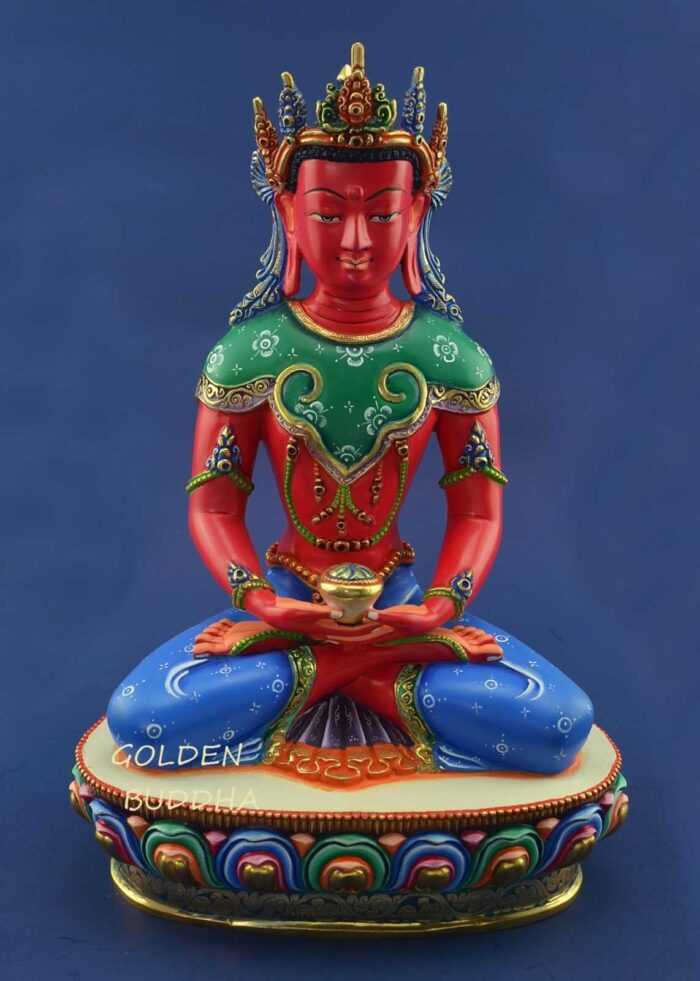
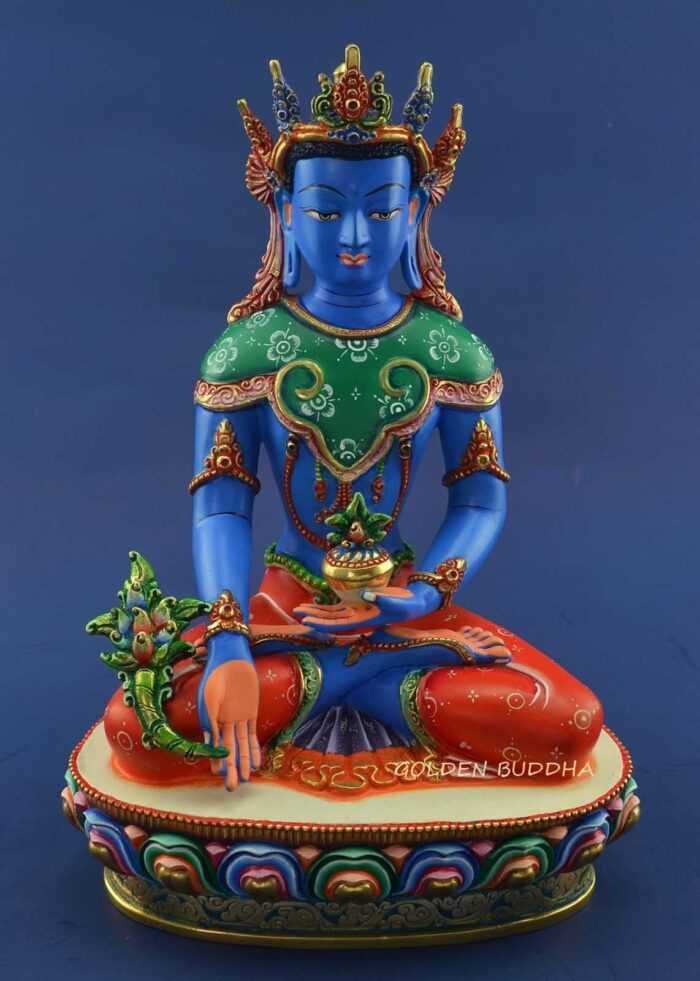
This sculpture can form the center of a coordinated three-Buddha altar with a similarly finished Amitabha Buddha statue and Medicine Buddha sculpture. Shakyamuni represents the historical source of the Dharma in our present age; Amitabha embodies immeasurable light and the Pure Land aspiration; and Medicine Buddha represents the healing of physical and spiritual suffering. Displayed together, their distinct practices remain visually and doctrinally complementary while creating a broader representation of enlightened teaching, compassion, aspiration, and healing.
Custom Multicolored Shakyamuni Buddha Statues
For collectors seeking a different scale, palette, ornamentation, or gilding treatment, we can commission a related sculpture directly from experienced Newar artisans in Nepal. A custom order may specify dimensions, robe colors, gilded areas, pedestal treatment, gemstone embellishments, or other traditional details while maintaining correct Buddhist iconography. Visit our custom Tibetan Buddhist statues page to learn about the commissioning process and the possibilities available for creating a unique altar or shrine-room centerpiece.
Authentic, Handmade in Nepal
Every statue is handcrafted in Patan, Nepal, using traditional lost wax casting and comes with a certificate of authenticity issued by Nepal’s Department of Archaeology, verifying its materials, technique, and origin.