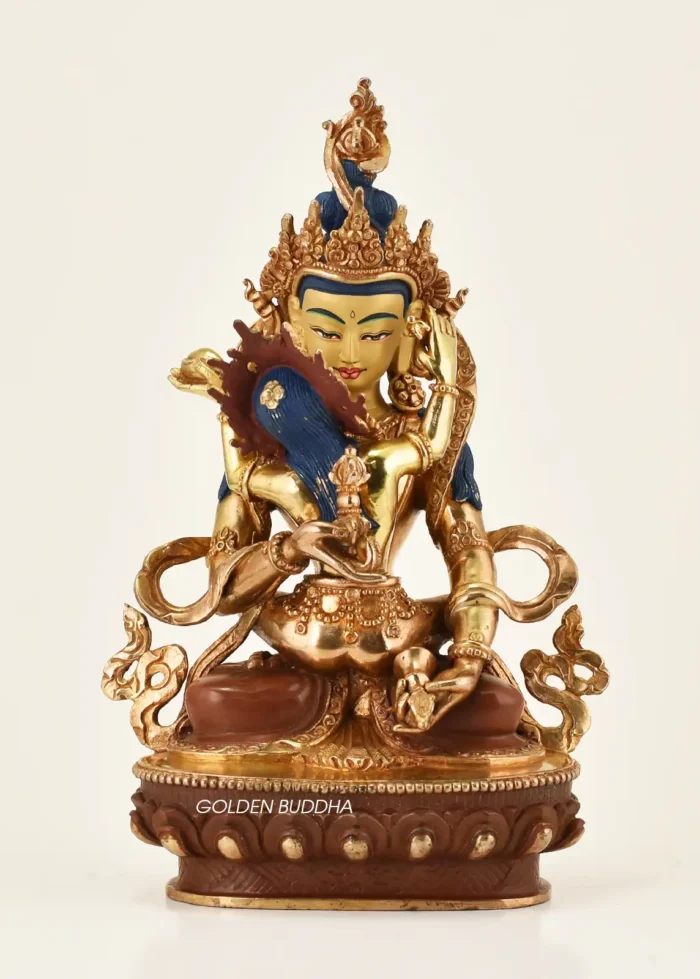
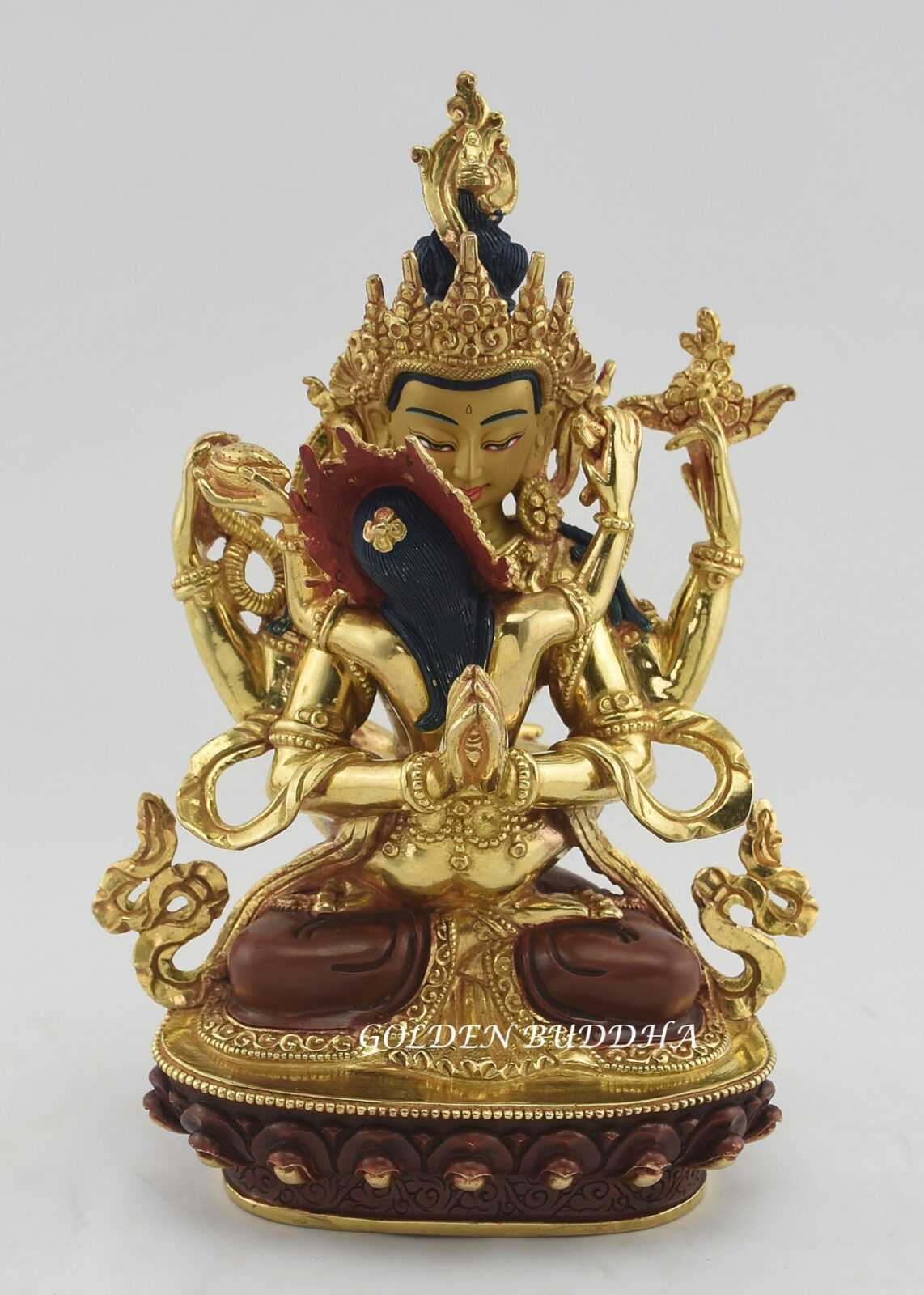
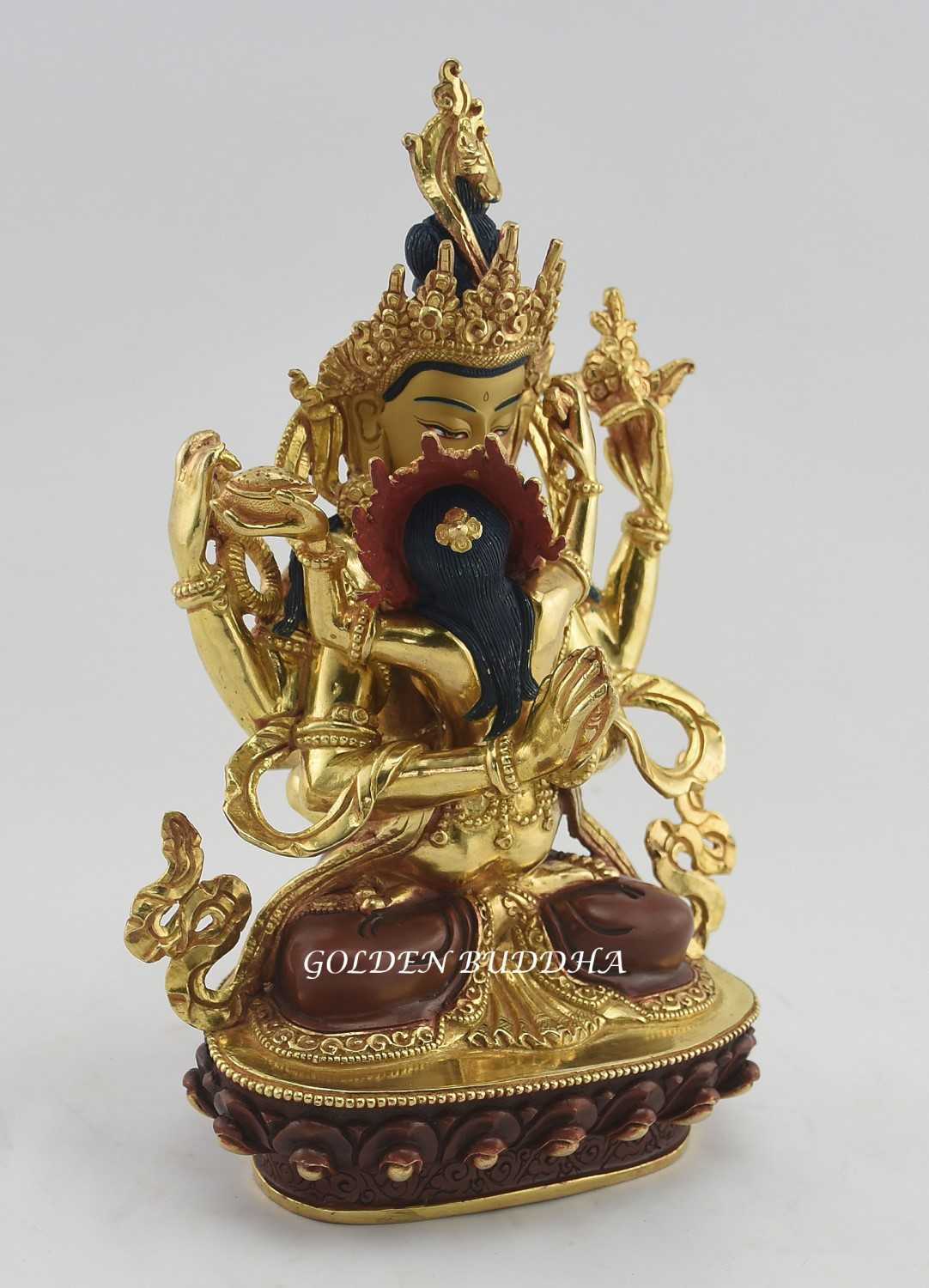
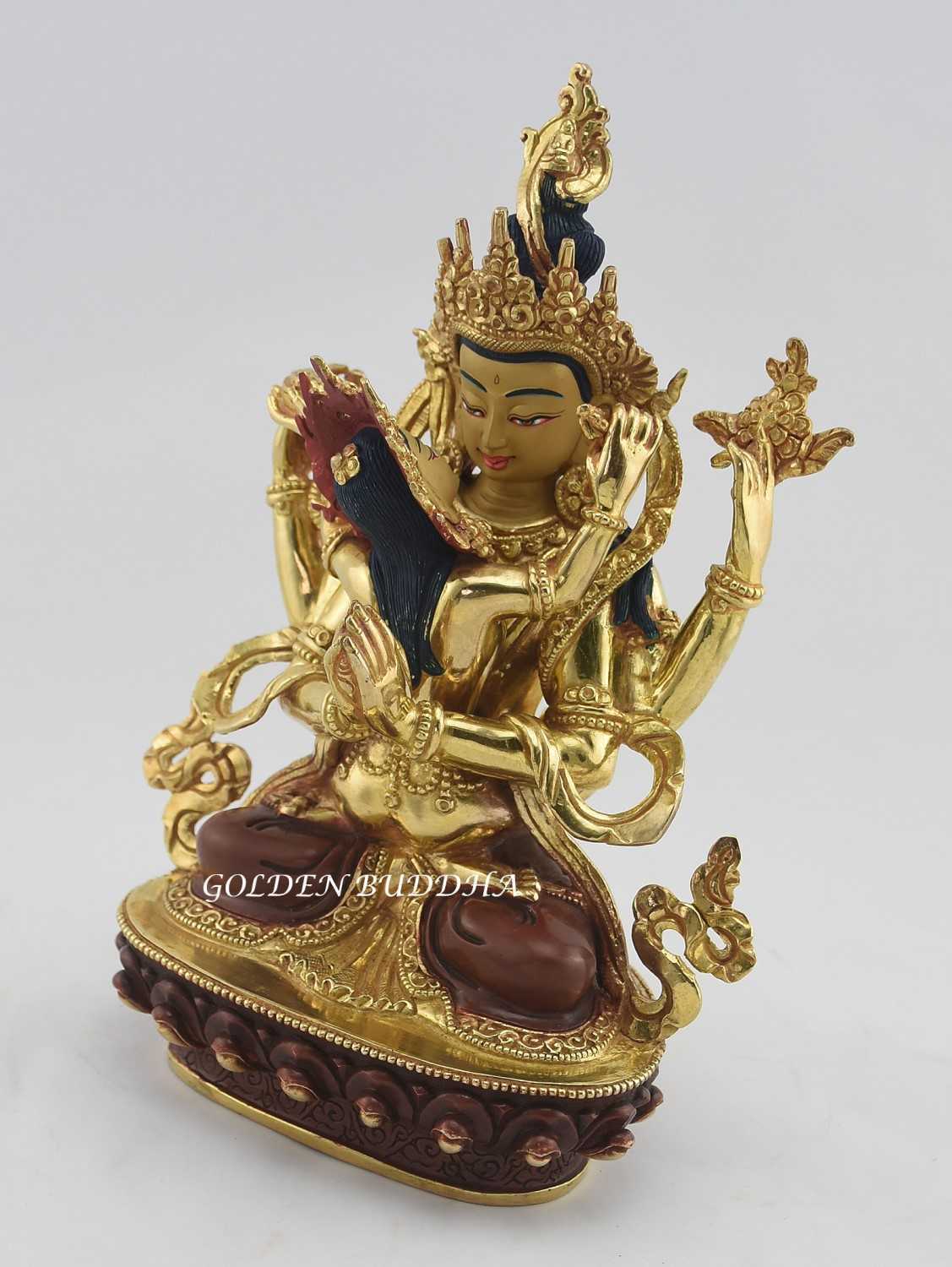
This rare Chenrezig Shakti statue portrays four-armed Avalokiteshvara in sacred Yab Yum union with his removable wisdom consort, identified in this composition as Samantabhadri. The intimate embrace is not a representation of ordinary desire. In Vajrayana Buddhism, Yab Yum imagery communicates the inseparability of compassionate method and the wisdom that realizes emptiness. Chenrezig embodies the boundless compassion of all Buddhas, while his consort personifies the transcendent insight through which compassionate activity becomes fully enlightened.
Handcrafted in Patan, Nepal, the entire sculpture—including Chenrezig, the removable consort, lotus pedestal, ritual implements, ornamental supports, and removable frame—is cast from a base of copper alloy using the traditional lost wax method. The figures and important decorative details are fire gilded in 24K gold, while deep reddish-brown painted and oxidized surfaces create contrast across the garments, lotus throne, flame-like ornaments, and fitted components. Both faces are carefully hand painted with 18K gold and natural pigments, bringing clarity to their peaceful eyes, finely drawn brows, urna markings, and serene expressions.
Chenrezig Shakti Statue in Sacred Yab Yum
Avalokiteshvara is known as Chenrezig in Tibet and is revered as the Bodhisattva who continually responds to the suffering of sentient beings. His Sanskrit name is often interpreted as “the Lord Who Looks Down with Compassion,” referring to the compassionate awareness with which he beholds the world. Although Chenrezig appears in many peaceful and multi-armed manifestations, this tantric form gives visual expression to a particularly profound teaching: compassion and wisdom must arise together and cannot be separated within the awakened mind.
The embrace therefore represents non-dual realization. Chenrezig’s compassionate intention is united with the consort’s direct insight into emptiness, revealing an enlightened state beyond the ordinary distinction between subject and object. This makes the Chenrezig Shakti statue especially meaningful for a shrine devoted to Avalokiteshvara, advanced Vajrayana symbolism, or the cultivation of compassion guided by wisdom.
Chenrezig’s Four Hands and Sacred Attributes
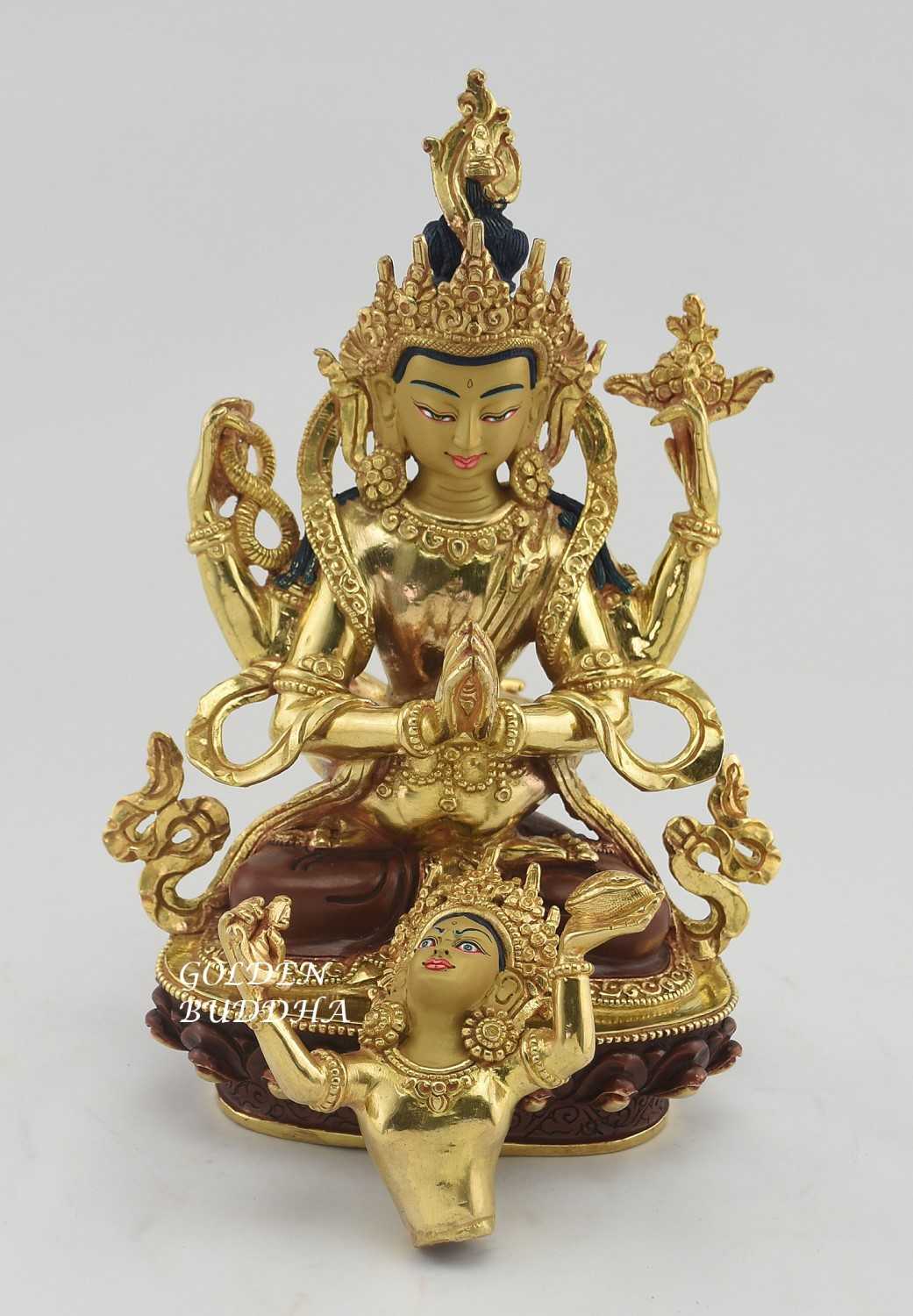
Chenrezig’s primary hands meet before his heart around the precious Cintamani jewel. The wish-fulfilling jewel symbolizes the enlightened intention to relieve suffering and provide beings with the conditions needed to progress toward awakening. The gesture also places compassionate motivation at the spiritual center of the composition.
His upper right hand holds a mala, representing continuous mantra recitation and Chenrezig’s tireless compassionate activity. The beads are closely associated with Om Mani Padme Hum, the six-syllable mantra recited throughout Tibetan Buddhism. His upper left hand supports a blossoming lotus flower, symbolizing purity that arises within samsara without becoming stained by it.
The removable consort raises a curved kartika flaying knife in her right hand and holds a kapala skull cup in her left. The kartika represents the cutting of ego-clinging and delusion, while the kapala symbolizes the transformation of ordinary experience into wisdom. These attributes complement Chenrezig’s peaceful implements by showing that limitless compassion must be accompanied by insight capable of overcoming the causes of suffering.
Amitabha Above the Bodhisattva Crown
A small image of Amitabha Buddha rises prominently above Chenrezig’s crown. This is not merely ornamental. Amitabha is the head of the Lotus Family and is traditionally regarded as Chenrezig’s spiritual source. His position above Avalokiteshvara identifies the lineage of the deity and reinforces the close relationship between Amitabha’s infinite light and Chenrezig’s boundless compassion.
Chenrezig is further adorned with a jeweled Bodhisattva crown, large earrings, layered necklaces, bracelets, armlets, flowing scarves, and intricately modeled garments. Blue-black hair rises into a high topknot beneath the Amitabha image, while the urna and three auspicious neck lines complete the peaceful iconography. Genuine turquoise and red coral may be added to suitable crown and jewelry settings before shipment upon request.
Removable Consort and Copper-Alloy Construction
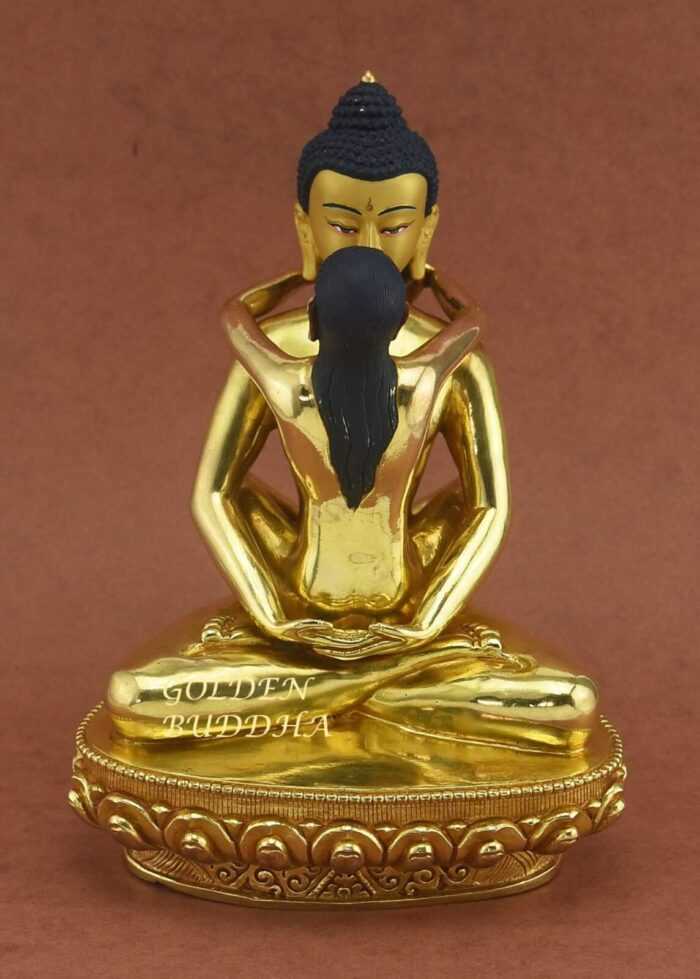
The removable consort is one of the most distinctive features of this Chenrezig Shakti statue. When detached, Chenrezig’s complete four-armed form becomes visible, including the joined primary hands, crossed legs, sacred implements, jewelry, and seated posture. The separate component also reveals the consort’s crown, raised ritual attributes, ornaments, and individually painted face.
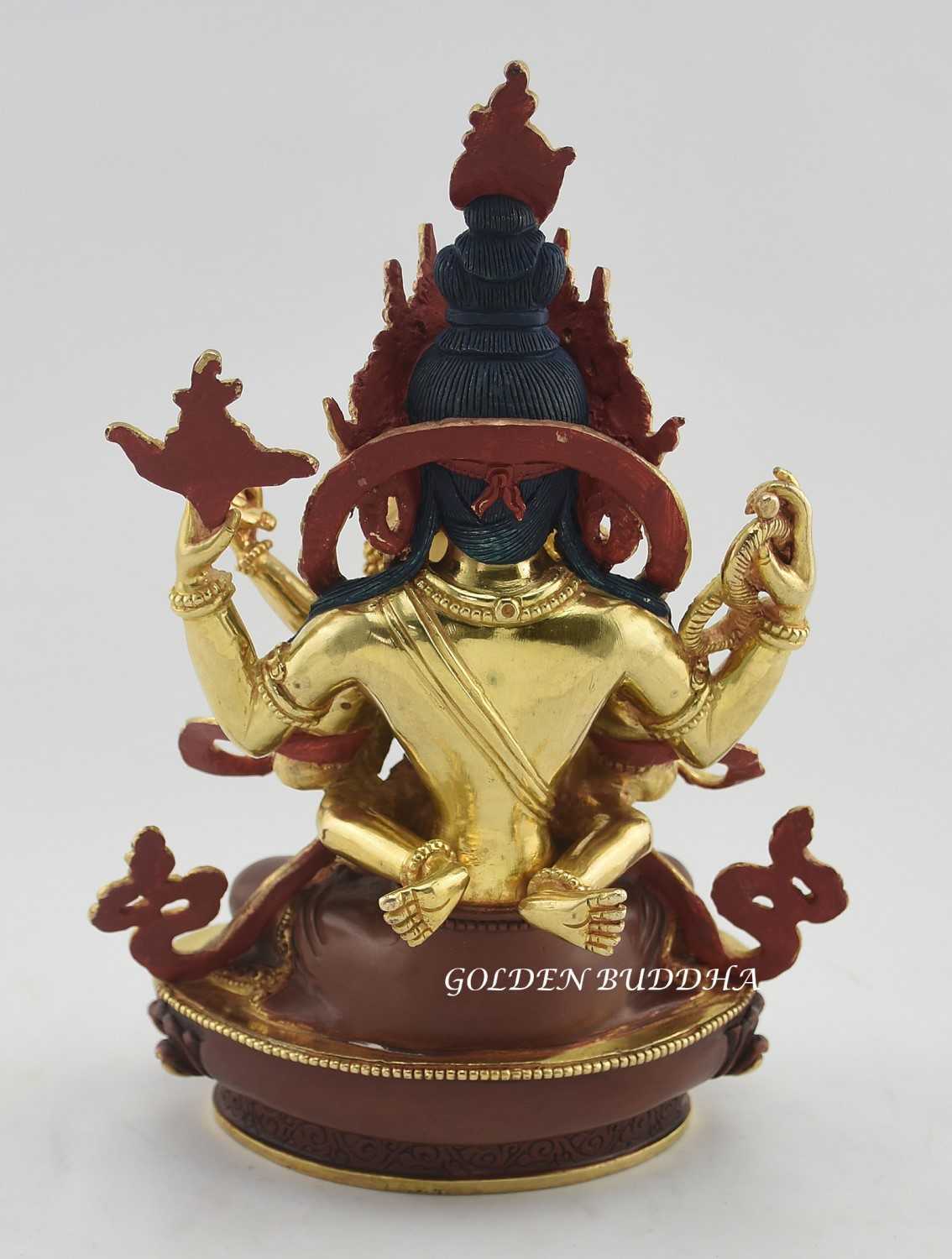
The rear view demonstrates that the sculpture was finished as a complete three-dimensional work. Chenrezig’s crossed feet, gilded back, fitted arms, dark hair, painted frame, and curved ornamental elements remain carefully resolved beyond the frontal presentation. Every fitted and removable component is made from a base of copper alloy, preserving consistent materials throughout the entire assembly.
Traditional Lost Wax Craftsmanship
Newar artisans in the Kathmandu Valley have created sacred metal sculpture for Himalayan monasteries and practitioners for centuries. This composition is produced through lost wax casting, followed by extensive hand chasing to sharpen the crowns, jewelry, lotus petals, ritual objects, scarves, and facial details. Selected surfaces are then fire gilded in 24K gold, and the remaining areas are painted or oxidized to produce the warm gold and reddish-brown contrast visible throughout the statue.
The single lotus pedestal anchors the complex arrangement with rows of rounded petals, beaded borders, engraved scrollwork, and a warm antiquated finish. Its broad form provides visual stability beneath the multiple arms and removable consort while symbolizing purity arising from the conditions of ordinary existence. Learn more about the deity and his mantra in our Guide to Chenrezig and Avalokiteshvara, or browse our complete collection of Chenrezig and Avalokiteshvara statues.
Amitabha, Chenrezig and Guru Rinpoche Statue Set
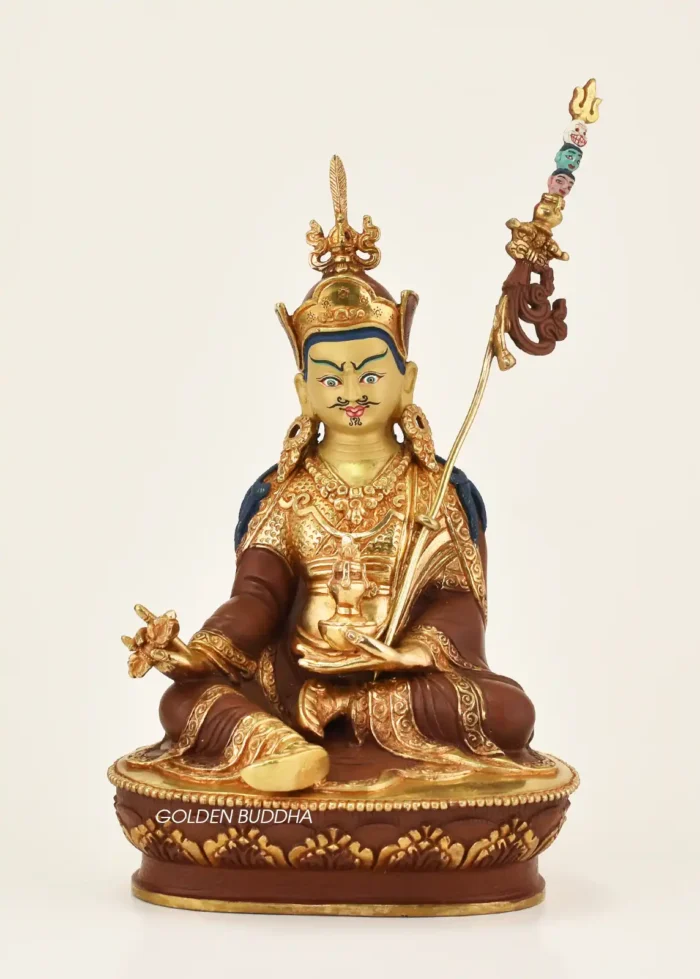
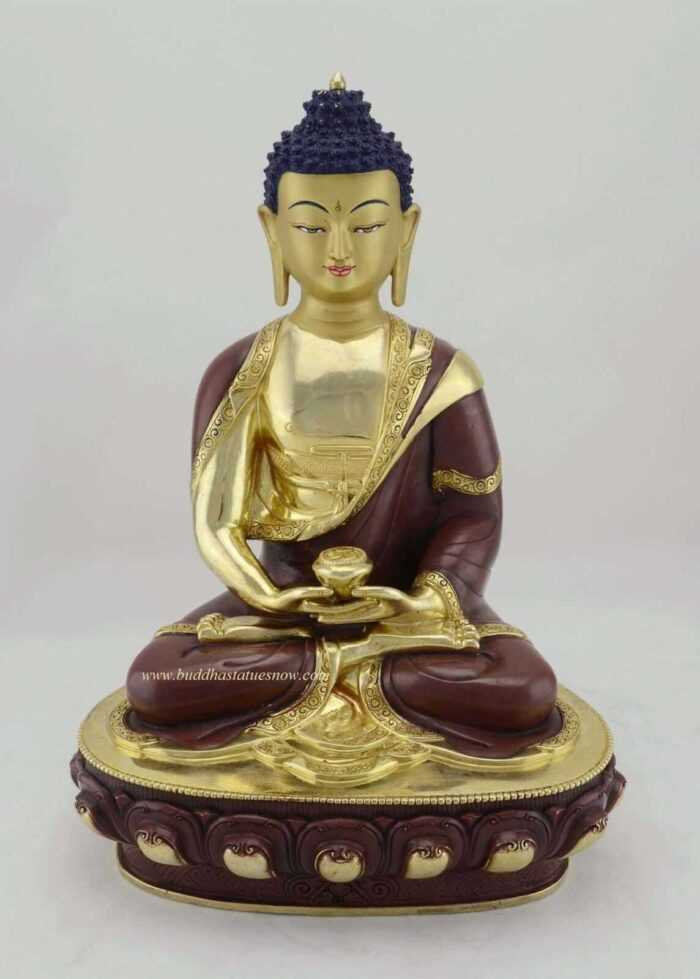
This sculpture can form a meaningful three-piece shrine arrangement with the Amitabha Buddha sculpture and the Guru Rinpoche statue. Amitabha may be placed at the center or directly behind Chenrezig to reflect his position as the Lord of the Lotus Family and the spiritual source represented above Avalokiteshvara’s crown. Chenrezig may then be placed forward as the active embodiment of compassion, with Guru Rinpoche positioned to one side as the great tantric master associated with the establishment and transmission of Vajrayana Buddhism in Tibet.
Each figure contributes a distinct meaning. Amitabha sits in meditative composure and embodies infinite light, Pure Land aspiration, and the awakened source of the Lotus Family. Chenrezig holds the Cintamani jewel, mala, and lotus as the compassionate Bodhisattva who responds to suffering. Guru Rinpoche carries the vajra, kapala with the vase of immortality, and khatvanga staff, identifying him as the Lotus-Born master who helped establish tantric Buddhism in Tibet. Together, the three statues represent enlightened source, compassionate manifestation, and historical transmission without confusing their individual roles.
Custom Made Chenrezig Shakti Statues
Golden Buddha can arrange a custom-made Chenrezig Shakti statue in a preferred size, finish, or level of decorative detail. A commission may include 24K fire gilding, antiquated oxidized accents, additional hand engraving, a removable consort, a removable copper-alloy frame, and traditional turquoise or red coral settings. The artisans preserve Chenrezig’s four arms, Cintamani jewel, mala, lotus, Amitabha image, and the consort’s kartika and kapala so the completed work remains faithful to the intended iconography.
Amitabha, Chenrezig, and Guru Rinpoche may also be commissioned as a coordinated three-statue set with complementary dimensions, lotus pedestals, gilding tones, facial painting, and decorative treatment. The arrangement is doctrinally coherent because Amitabha represents the Lotus Family’s enlightened source, Chenrezig embodies compassionate activity, and Guru Rinpoche represents the transmission of Vajrayana teachings in Tibet. Matching craftsmanship unifies the shrine visually while allowing each deity’s individual mudras, implements, and spiritual meaning to remain distinct.
With its removable consort, intricate four-armed iconography, 24K fire gilding, copper-alloy construction, and carefully balanced painted contrast, this Chenrezig Shakti statue is an uncommon example of traditional Himalayan Buddhist art. It is suitable as the central image of an Avalokiteshvara shrine, as part of the Amitabha and Guru Rinpoche arrangement, or as a finely crafted representation of compassion inseparably united with wisdom.
Authentic, Handmade in Nepal
Every statue is handcrafted in Patan, Nepal, using traditional lost wax casting and comes with a certificate of authenticity issued by Nepal’s Department of Archaeology, verifying its materials, technique, and origin.