
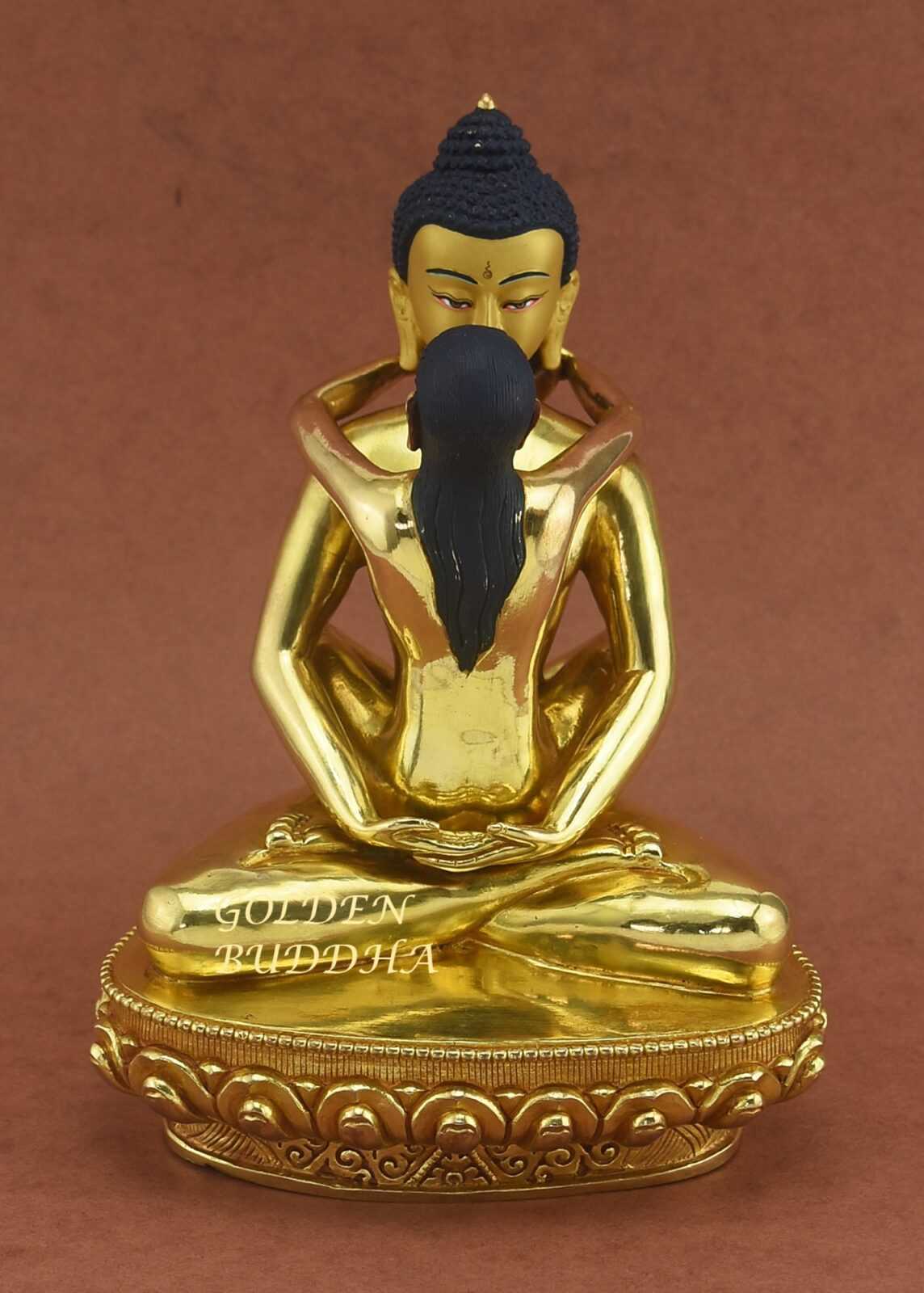


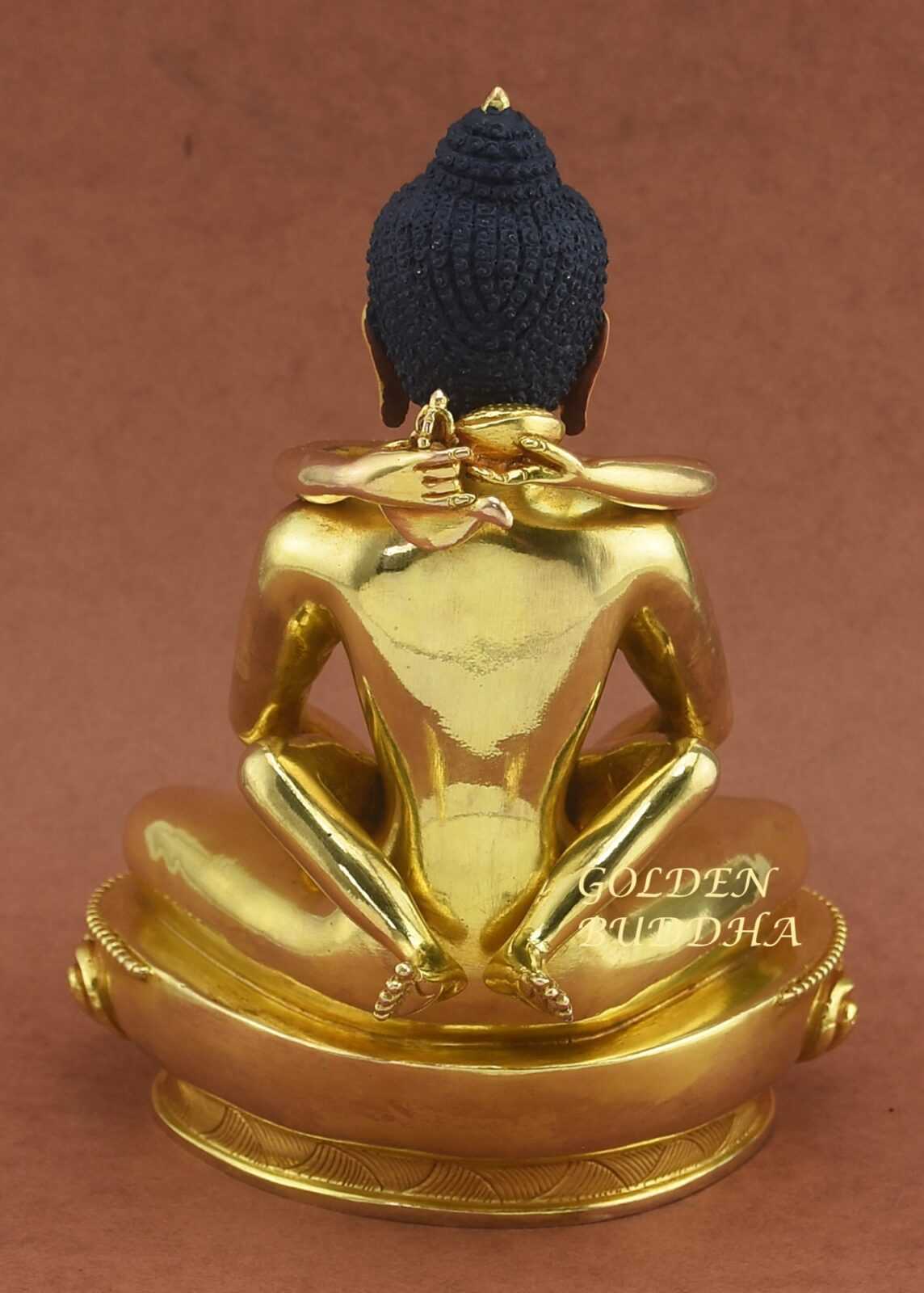
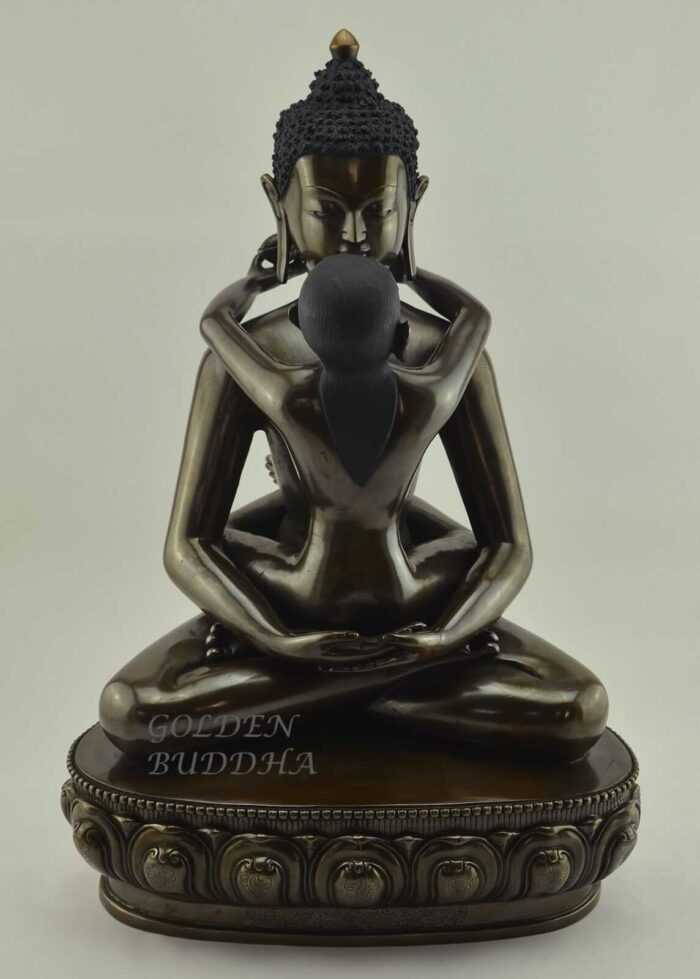
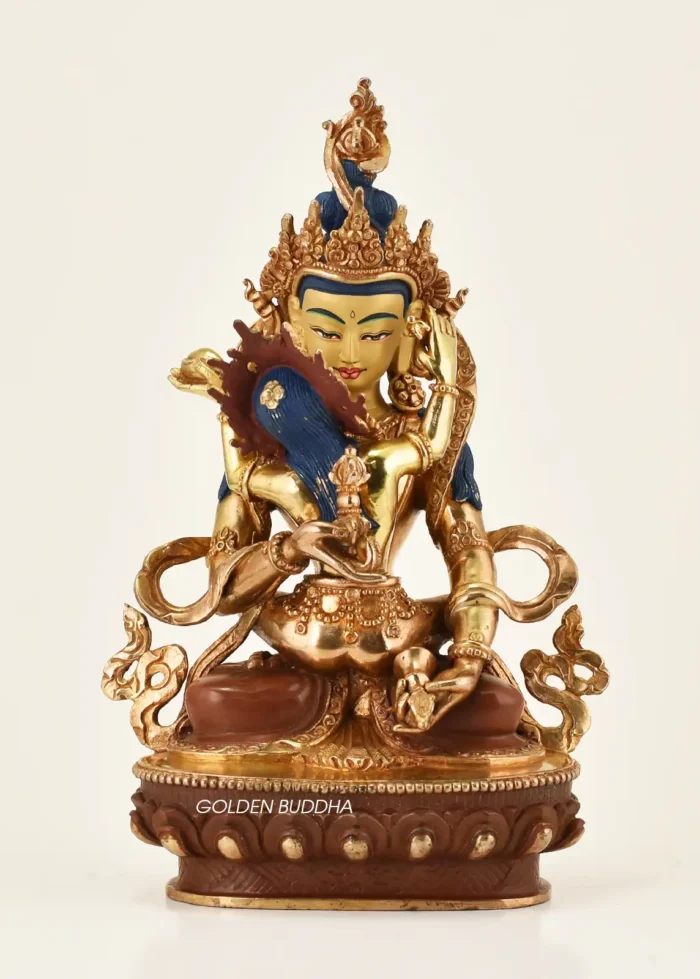
This Samantabhadra statue with consort is fully fire gilded in pure 24K gold — crown to lotus throne, the entire figure bonded in real gold using the traditional mercury gilding method for a finish that holds its luminous depth indefinitely without tarnishing. The statue was handcrafted in Patan, Nepal by a Newar master artisan using the traditional lost wax sculpting method. The full gilding is particularly significant for this subject: Samantabhadra is the primordial Adibuddha of the Nyingma school of Tibetan Buddhism, and the blazing golden surface reflects the primordial luminosity — the self-radiant awareness that he embodies — in a way no other finish does.
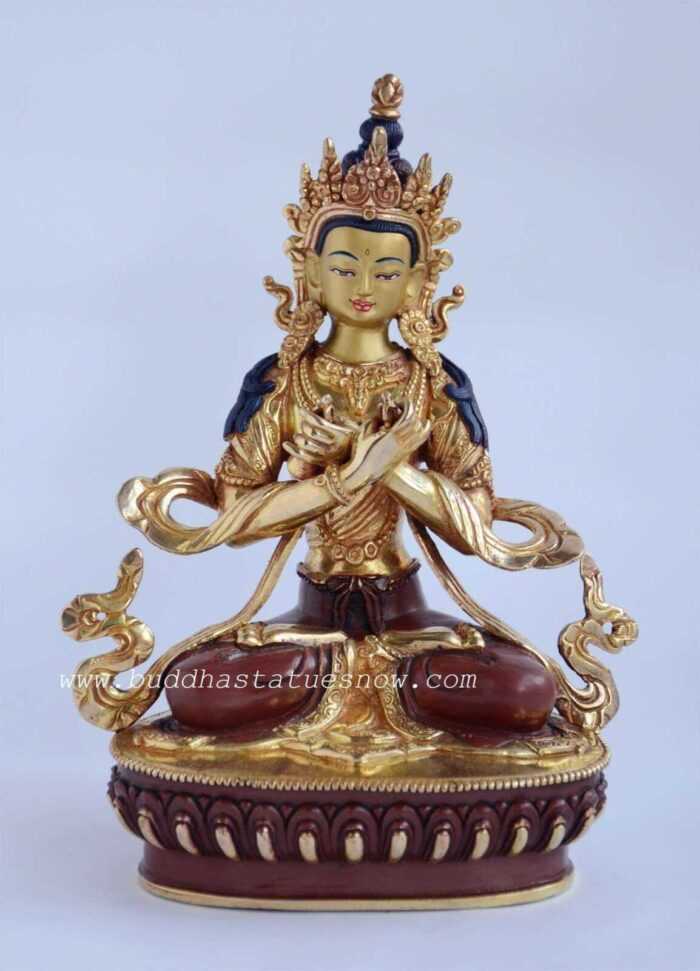
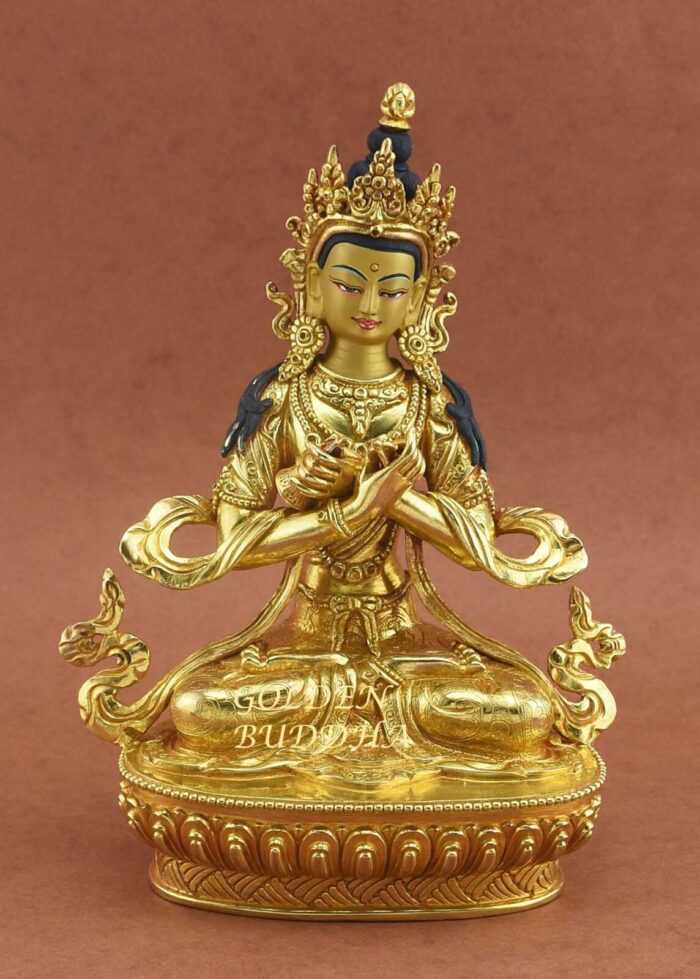
Samantabhadra is depicted in yab-yum — sacred union — with his consort Samantabhadri. He embodies the masculine principle of compassion and skillful means; she embodies the feminine principle of wisdom. Their inseparable embrace represents the non-dual union of awareness and emptiness that is the ground of Dzogchen realization — what the Nyingma school understands as enlightenment itself, and the reason Samantabhadra in yab-yum is the supreme image of that tradition. See also our Vajradhara statues — the primordial Adibuddha of the Kagyu and Sakya traditions, and Samantabhadra’s doctrinal counterpart.
Samantabhadra Statue with Consort — Features
Samantabhadra sits in full lotus posture on a single lotus pedestal, his hands resting in the Dhyana mudra — the meditation gesture of deep absorption, palms open in the lap — while Samantabhadri sits in his embrace with both arms wrapped around his neck. In her right hand she holds the kartika (curved flaying knife) and in her left hand the kapala (skull cup) — the two primary Tantric instruments of the Dakini tradition, signifying the cutting through of ego and the transmutation of ordinary experience into wisdom. The presence of these implements identifies Samantabhadri not merely as a passive consort but as a fully active Tantric principle in her own right.
Samantabhadra bears the traditional physical markings of a fully enlightened being: the ushnisha (crown protuberance), elongated earlobes, third eye of wisdom, and three neck folds — attributes inherited from ancient Indian royal and ascetic iconography that were associated with the historical Buddha Shakyamuni, who was born a prince of the Shakya Kingdom in present-day Nepal, and have been standard features of both Buddha and Bodhisattva sculpture throughout Himalayan Buddhist art. The Newar artisans of Patan have produced sacred sculpture of this quality for Tibetan monasteries for over a thousand years — and this statue reflects that unbroken tradition in every carved detail.
Authentic, Handmade in Nepal
Every statue is handcrafted in Patan, Nepal, using traditional lost wax casting and comes with a certificate of authenticity issued by Nepal’s Department of Archaeology, verifying its materials, technique, and origin.
Reviews
There are no reviews yet.