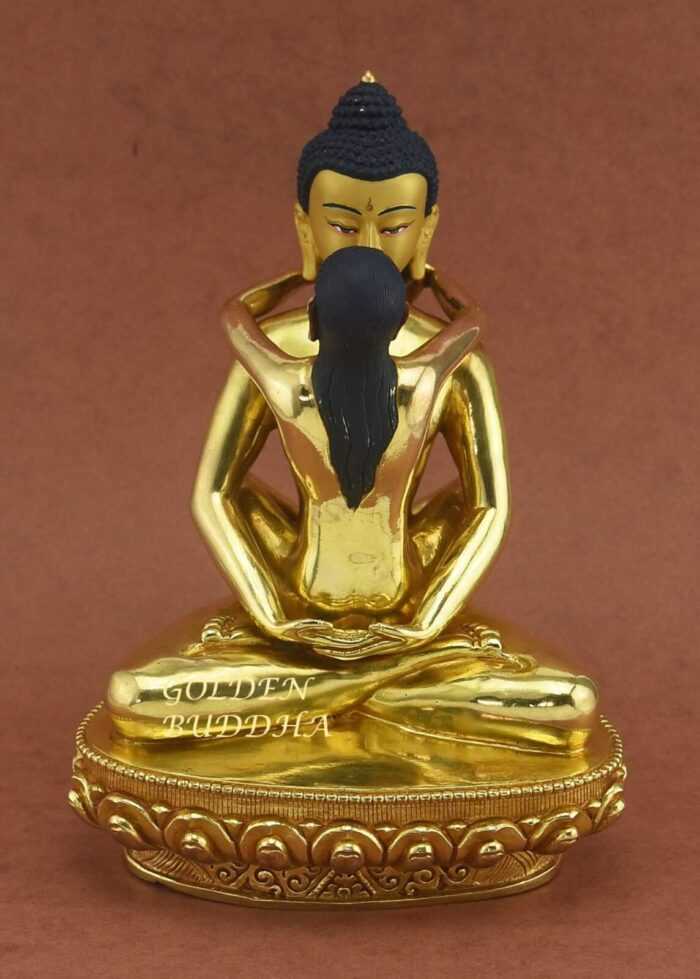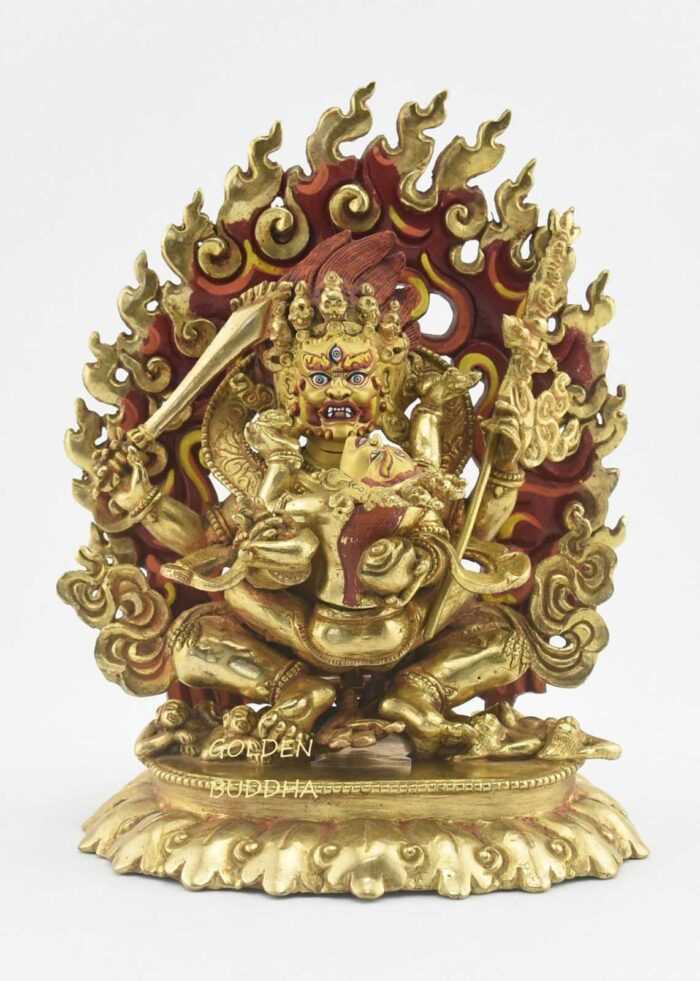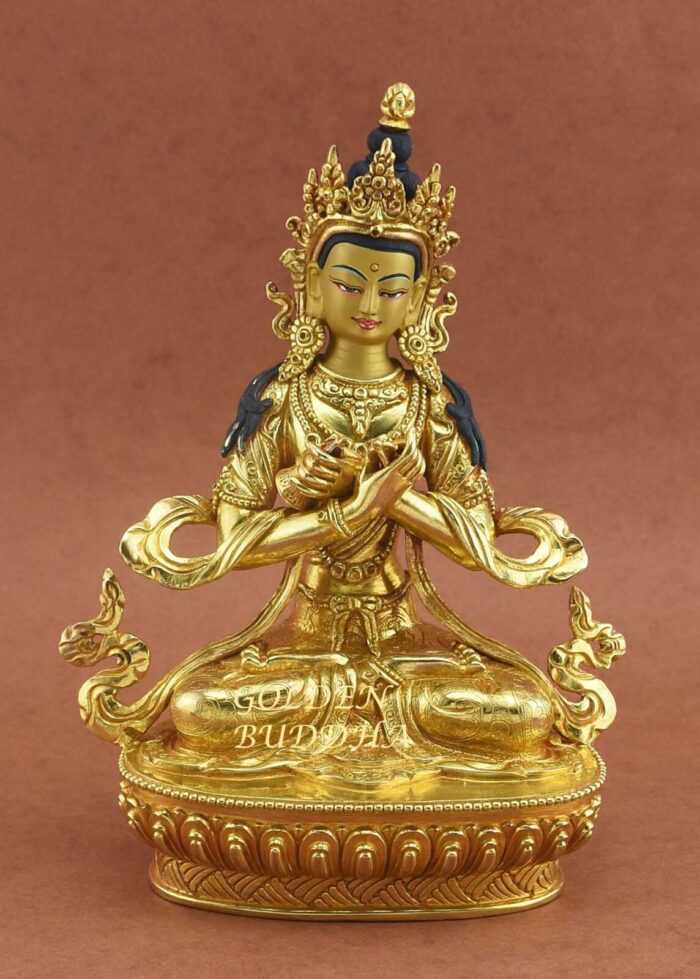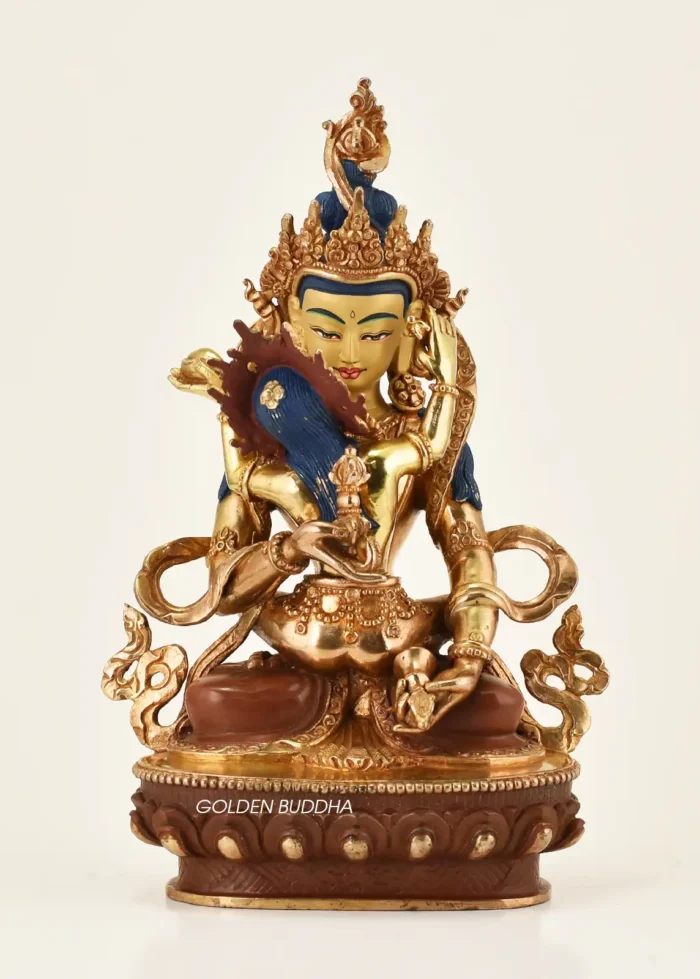
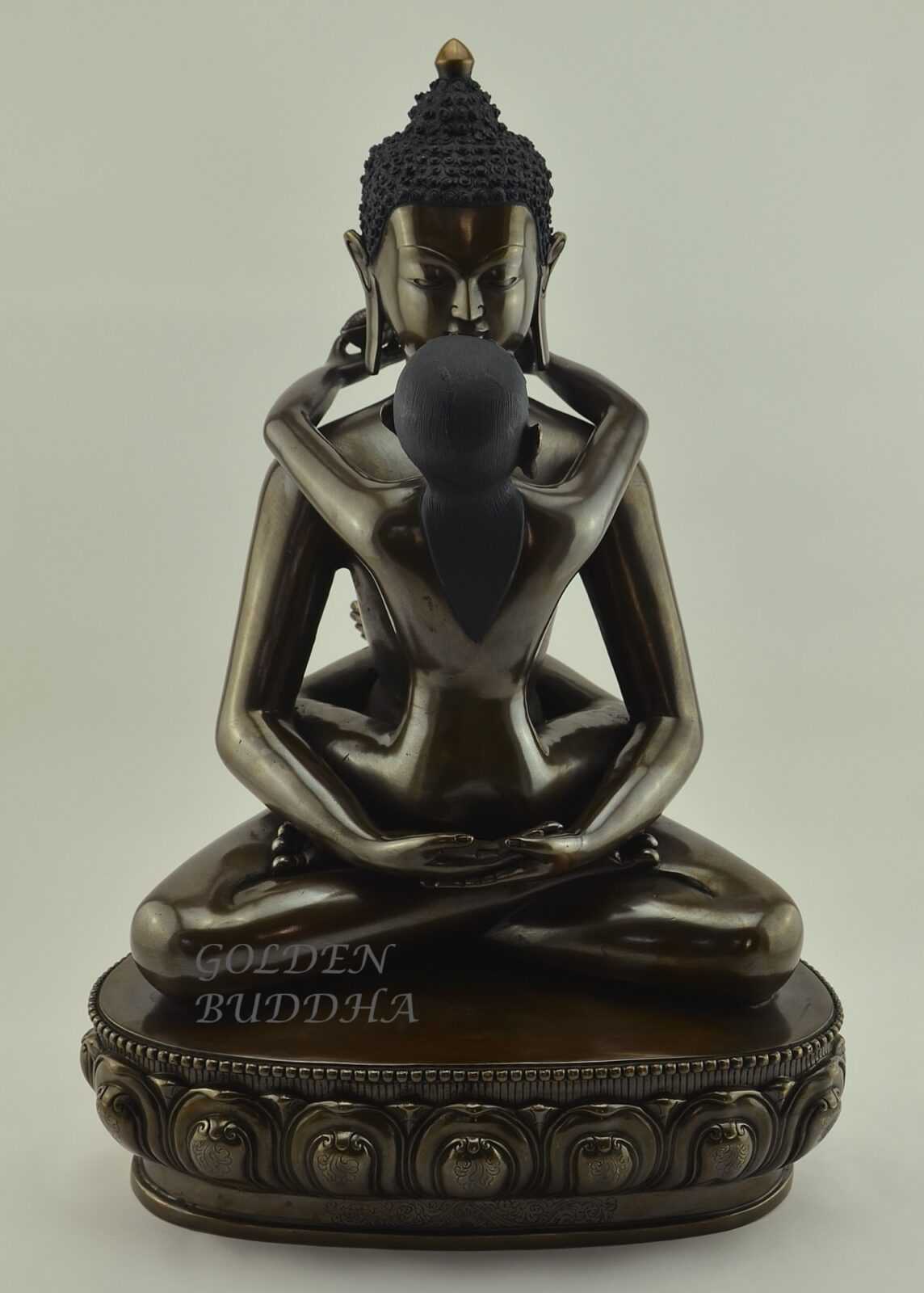
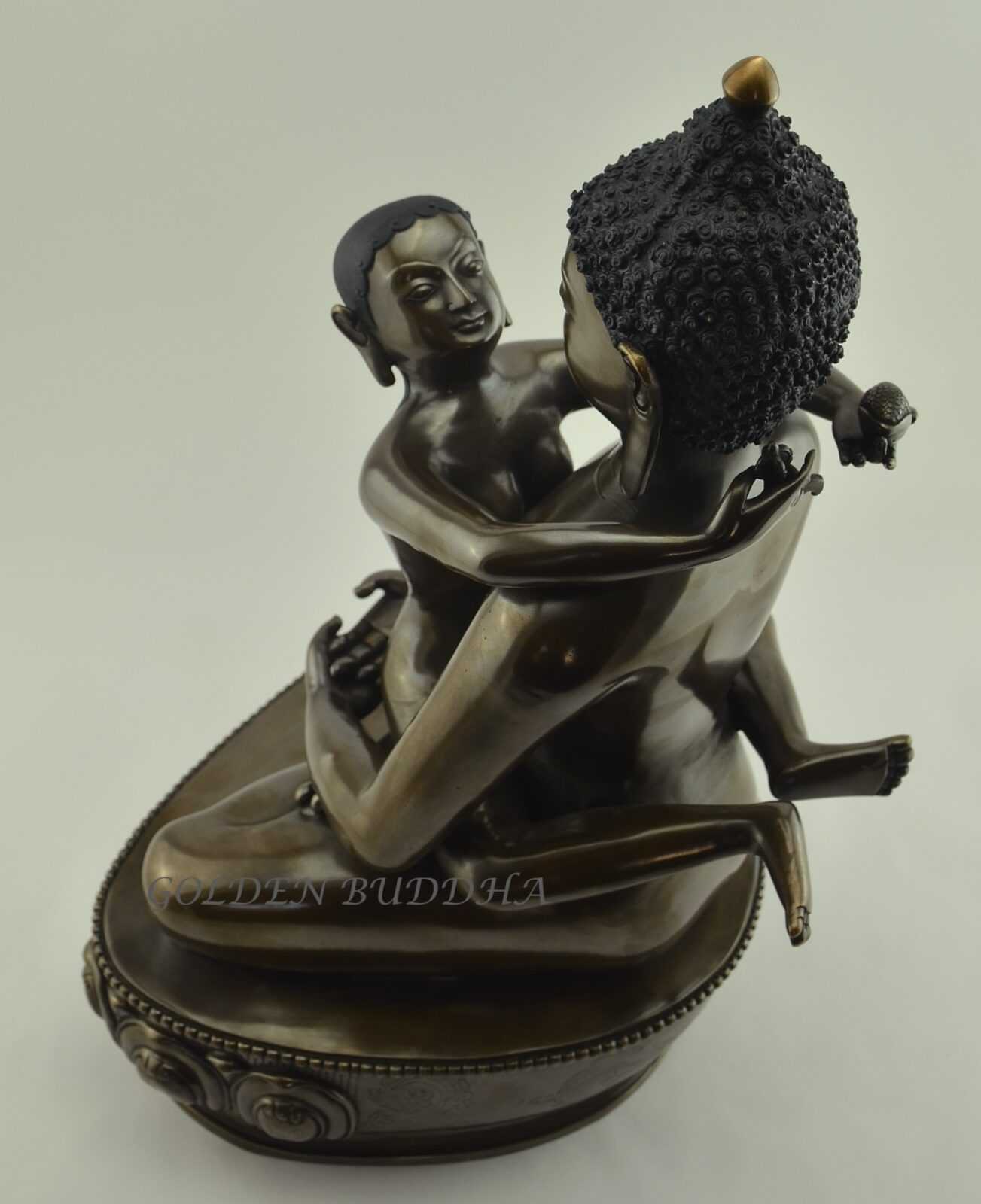
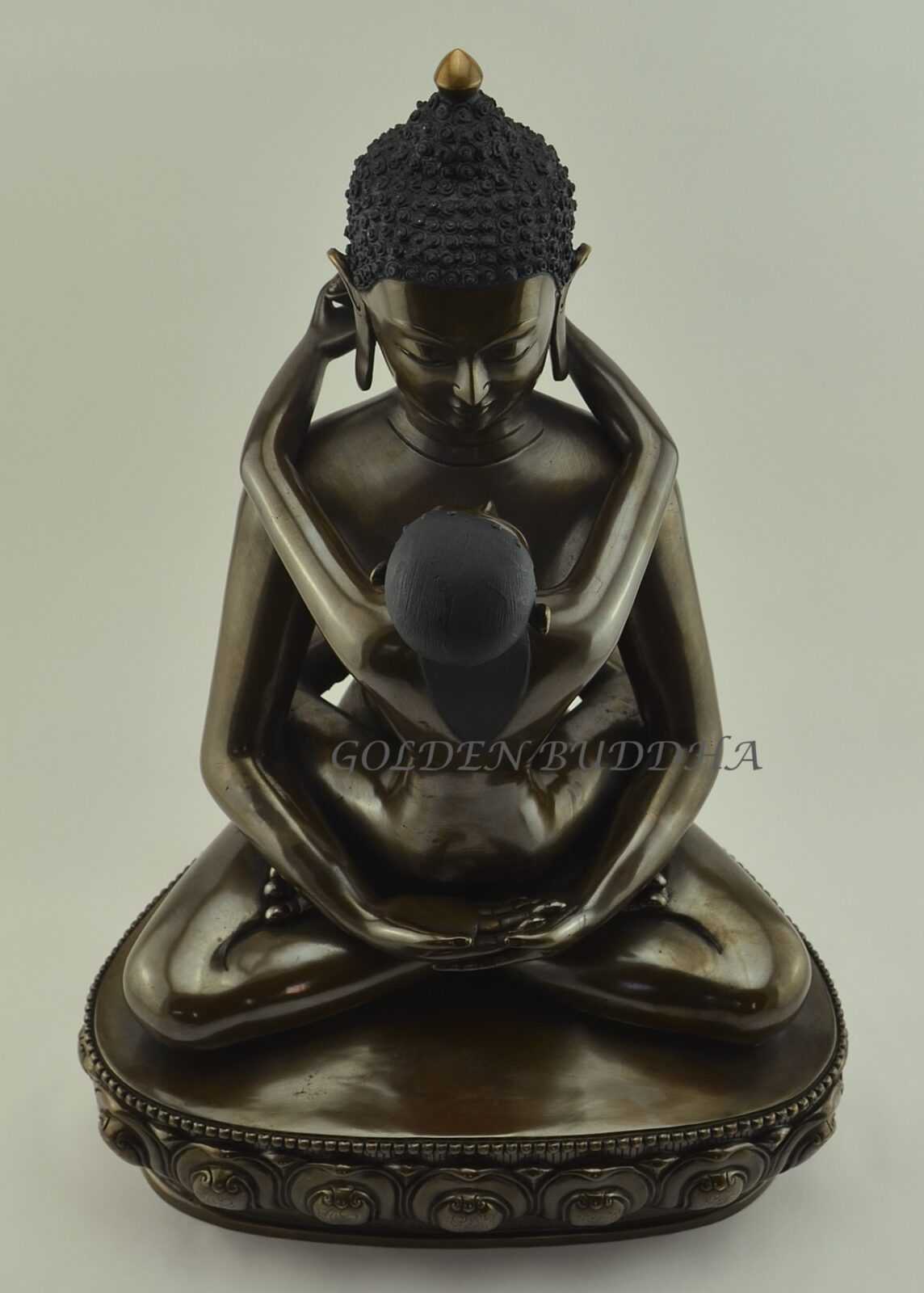
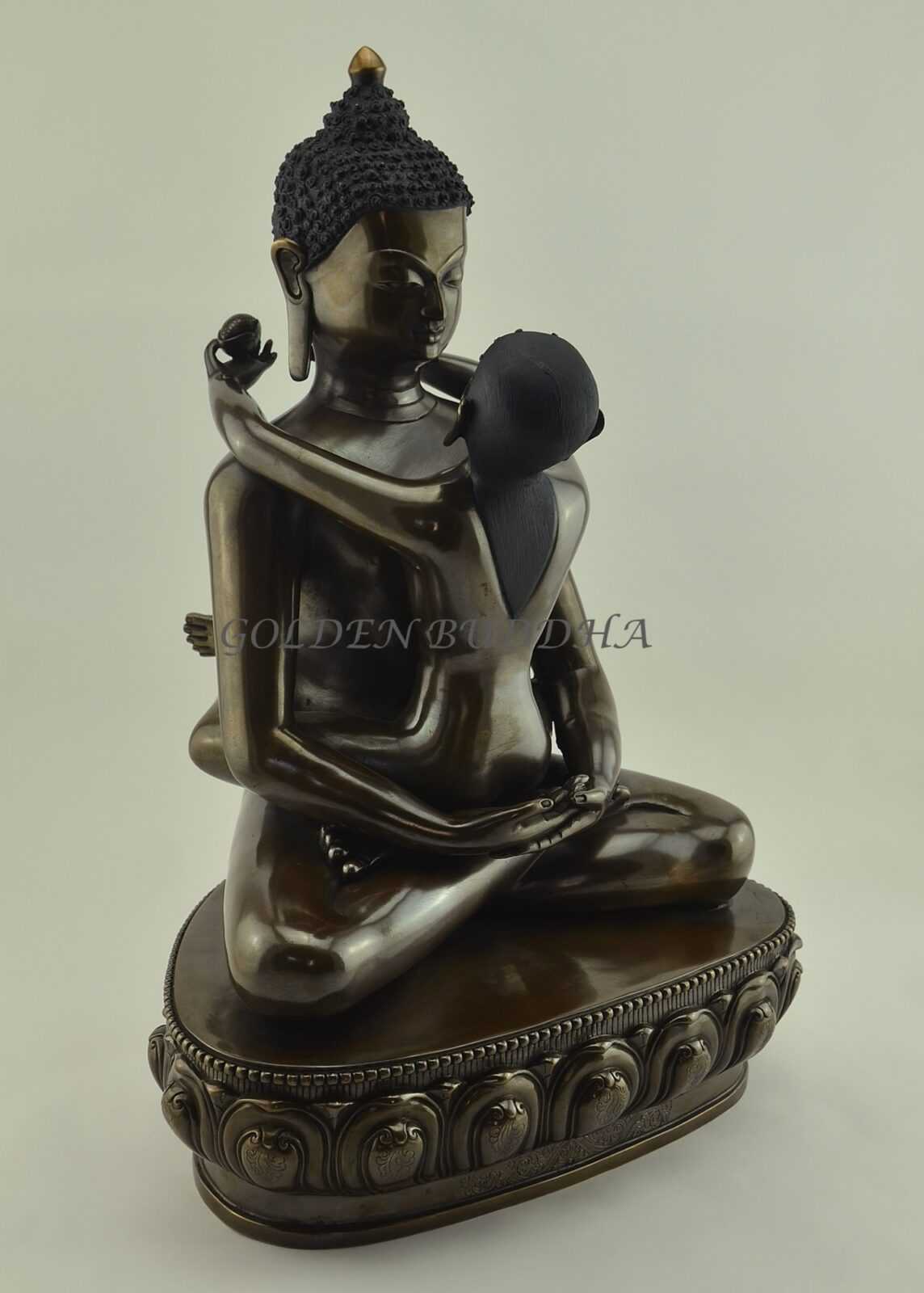
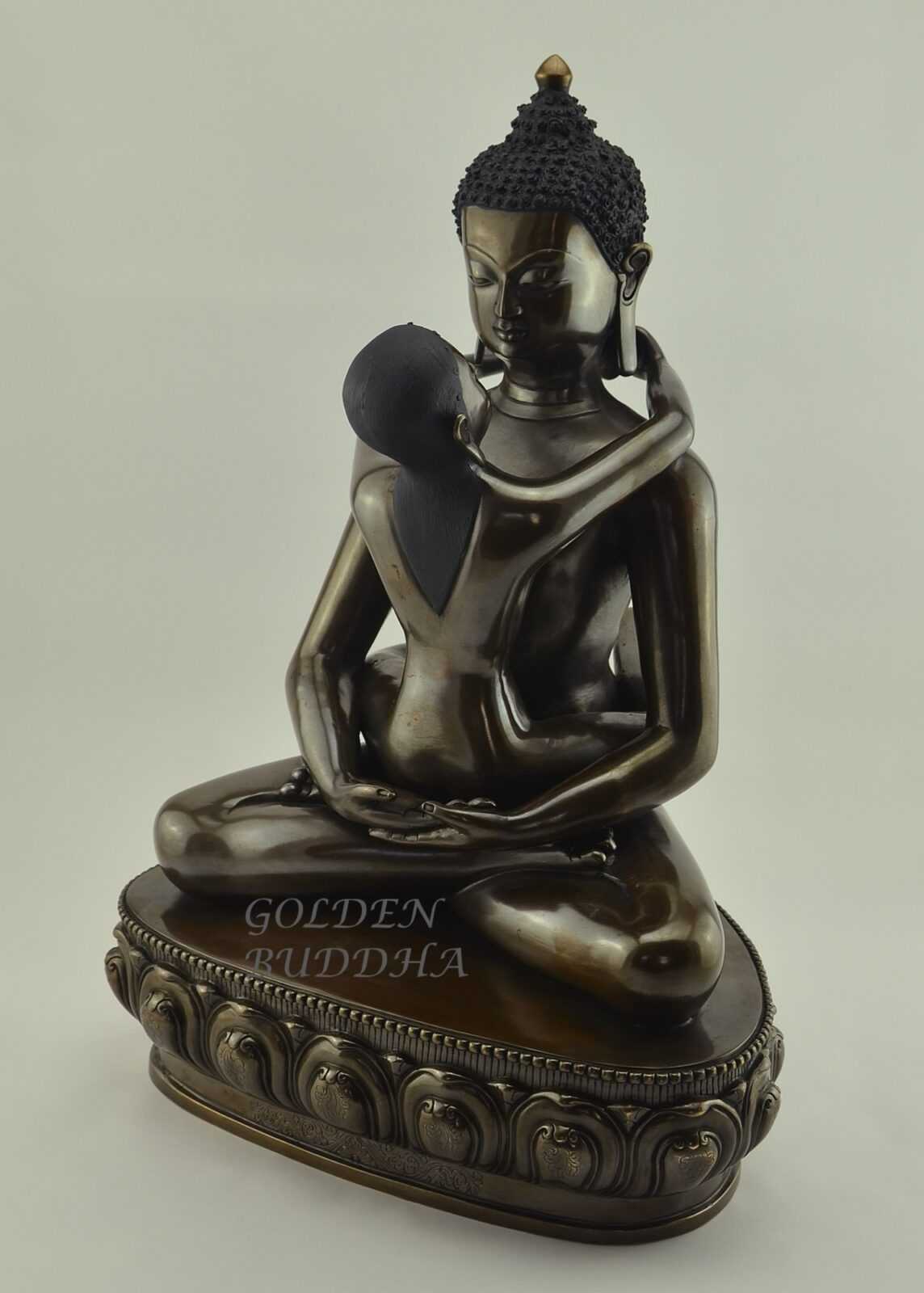
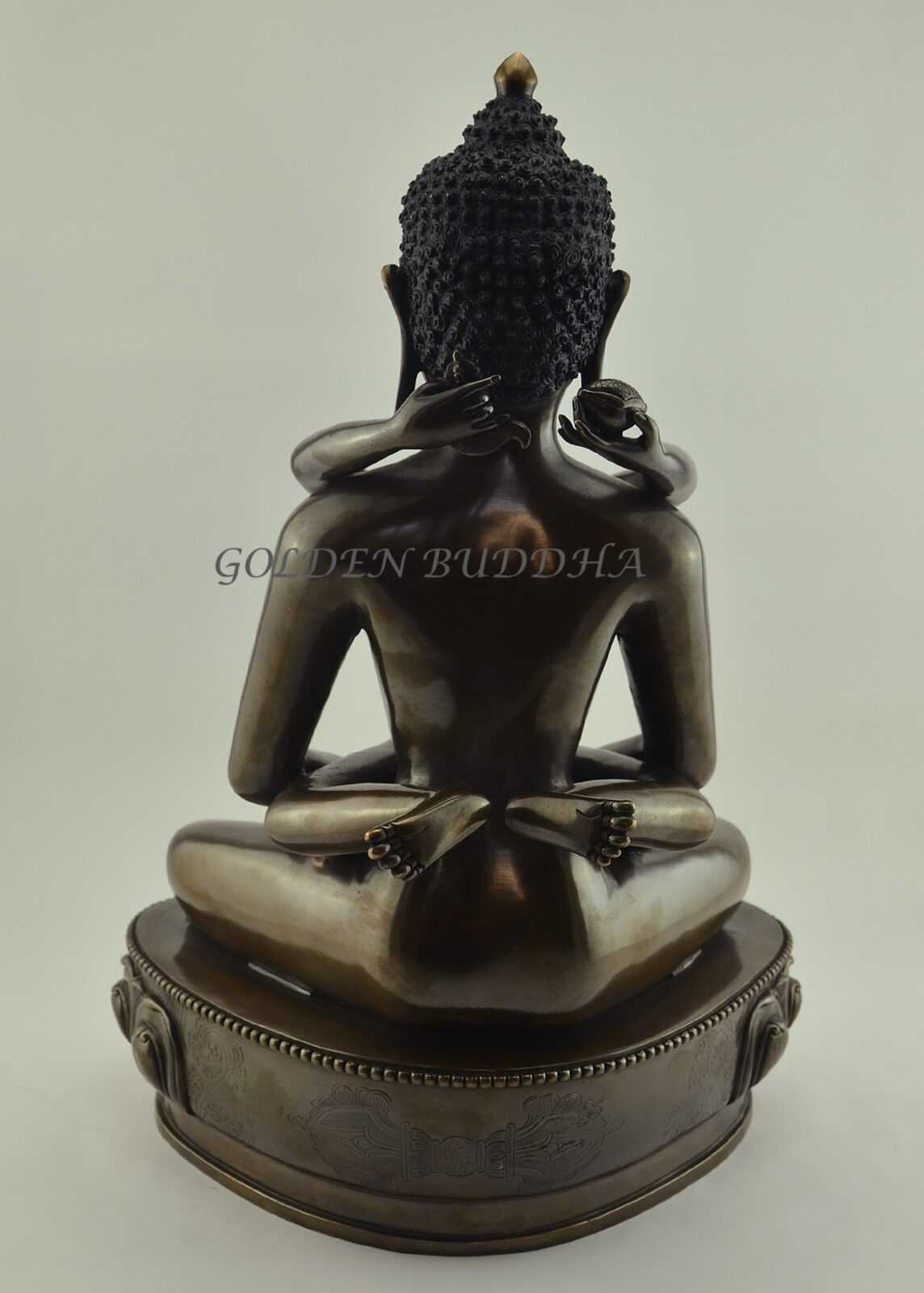
This Samantabhadra statue with consort is handcrafted in Patan, Nepal by a Newar master artisan using the traditional lost wax sculpting method, finished in oxidized copper — a subdued, warm patina that gives the two figures a lifelike depth and presence that full gilding does not produce. The oxidized finish is particularly well suited to this subject: Samantabhadra is traditionally depicted without ornamentation, his unadorned appearance signifying the utter absence of conceptual covering, and the natural copper tone reinforces that quality of bare, unembellished luminosity. The fine detail of the face, fingers, and toes characteristic of Newar lost wax carving is especially visible in this finish, undistracted by surface gilding.
Samantabhadra (Tibetan: Kuntuzangpo — “All-Good”) is the primordial Adibuddha of the Nyingma school of Tibetan Buddhism — the ground of primordial awareness that has never been obscured and never requires purification. He is depicted in yab-yum (sacred union) with his consort Samantabhadri, who appears in white against his deep blue body. He embodies compassion and skillful means — the masculine principle; she embodies wisdom — the feminine principle. Their inseparable union represents the non-dual nature of awareness and emptiness that is the view of Dzogchen, the Great Perfection — the highest teaching of the Nyingma tradition. This eternal union of compassion and wisdom is what the Nyingma school understands as enlightenment itself.
The statue depicts Samantabhadri seated on his lap while Samantabhadra sits in full lotus posture displaying the Dhyana mudra — the meditation gesture — hands resting open in the lap, symbolizing the deep absorption of primordial awareness resting in its own nature. Samantabhadra bears the ushnisha (crown protuberance) and elongated earlobes of a fully enlightened Buddha, affirming his supreme status even without the ornamental crown and jewels that distinguish figures like Vajradhara and the Bodhisattvas.
Samantabhadra Statue with Consort — Features
The statue sits on a single lotus pedestal, the two figures carved as a unified composition in the traditional yab-yum arrangement. The Newar artisans of Patan have refined the lost wax sculpting method over more than a thousand years — producing the level of anatomical and iconographic precision that has made them the preferred source of sacred sculpture for Tibetan monasteries across the Himalayan region for centuries. Each statue ships directly from Kathmandu with a certificate of authenticity issued by Nepal’s Department of Archaeology, verifying its materials, technique, and origin. See also our Vajradhara statues — the primordial Adibuddha of the Kagyu and Sakya traditions.
Authentic, Handmade in Nepal
Every statue is handcrafted in Patan, Nepal, using traditional lost wax casting and comes with a certificate of authenticity issued by Nepal’s Department of Archaeology, verifying its materials, technique, and origin.