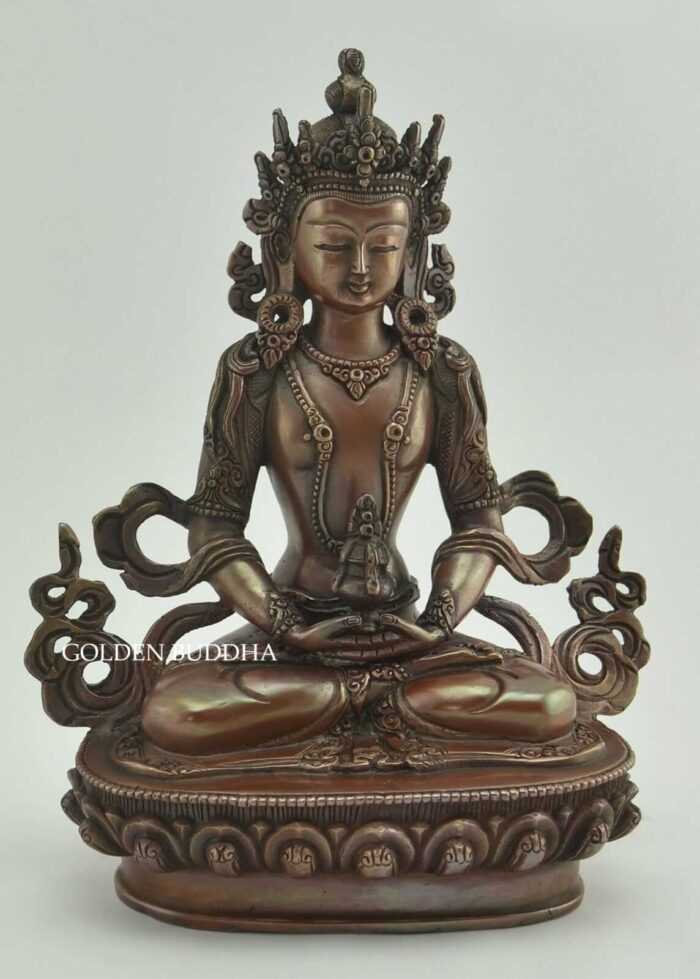
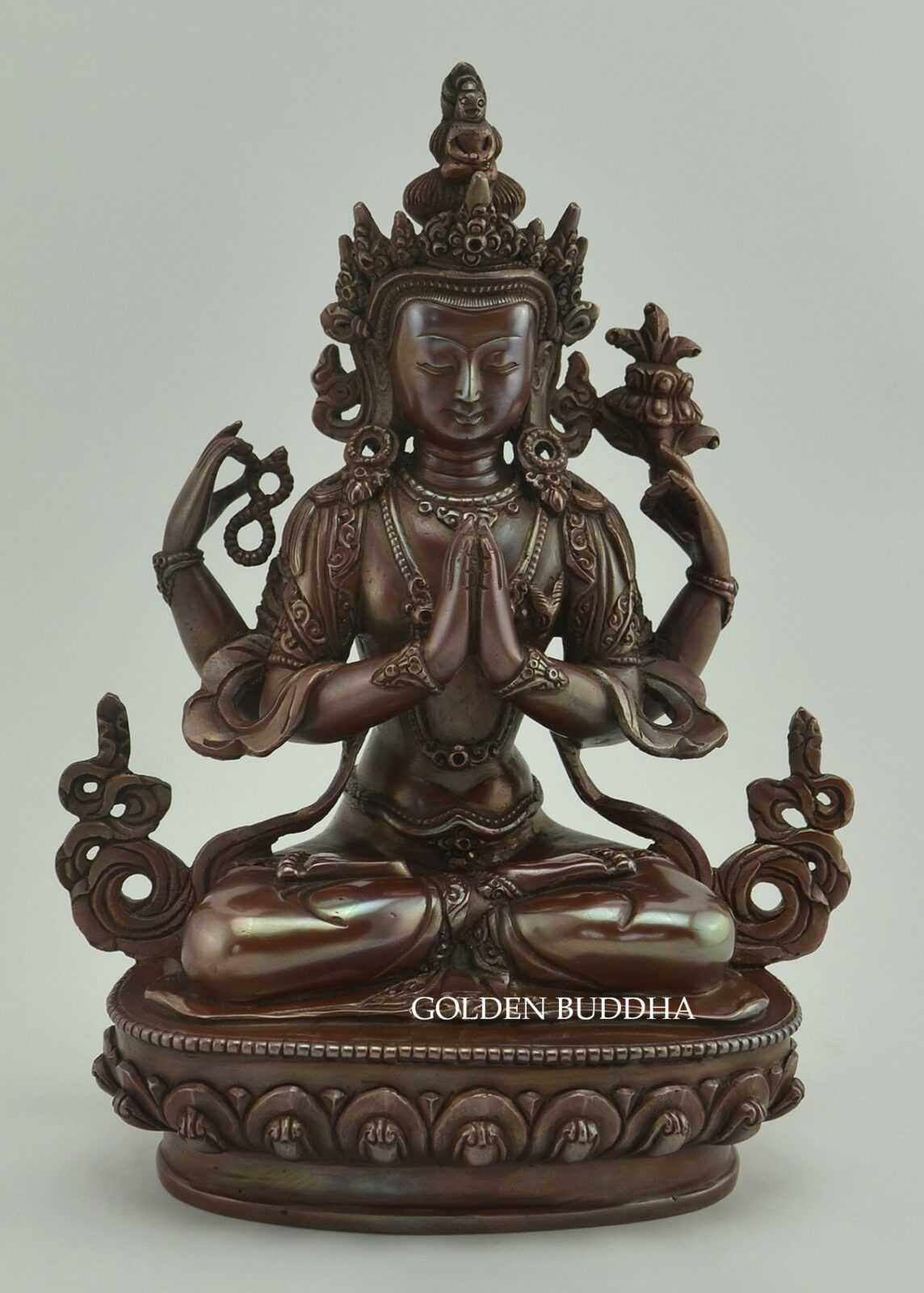
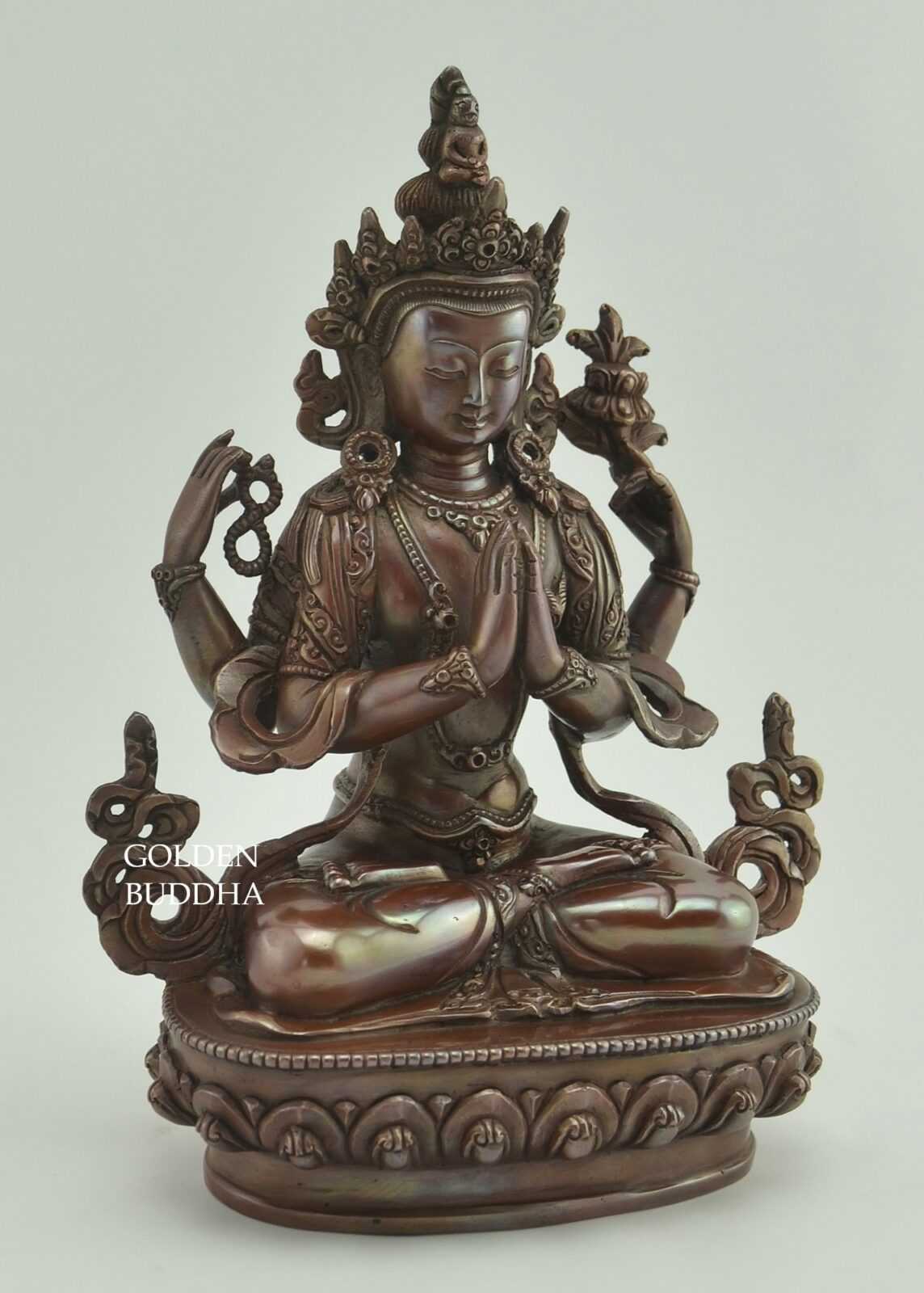
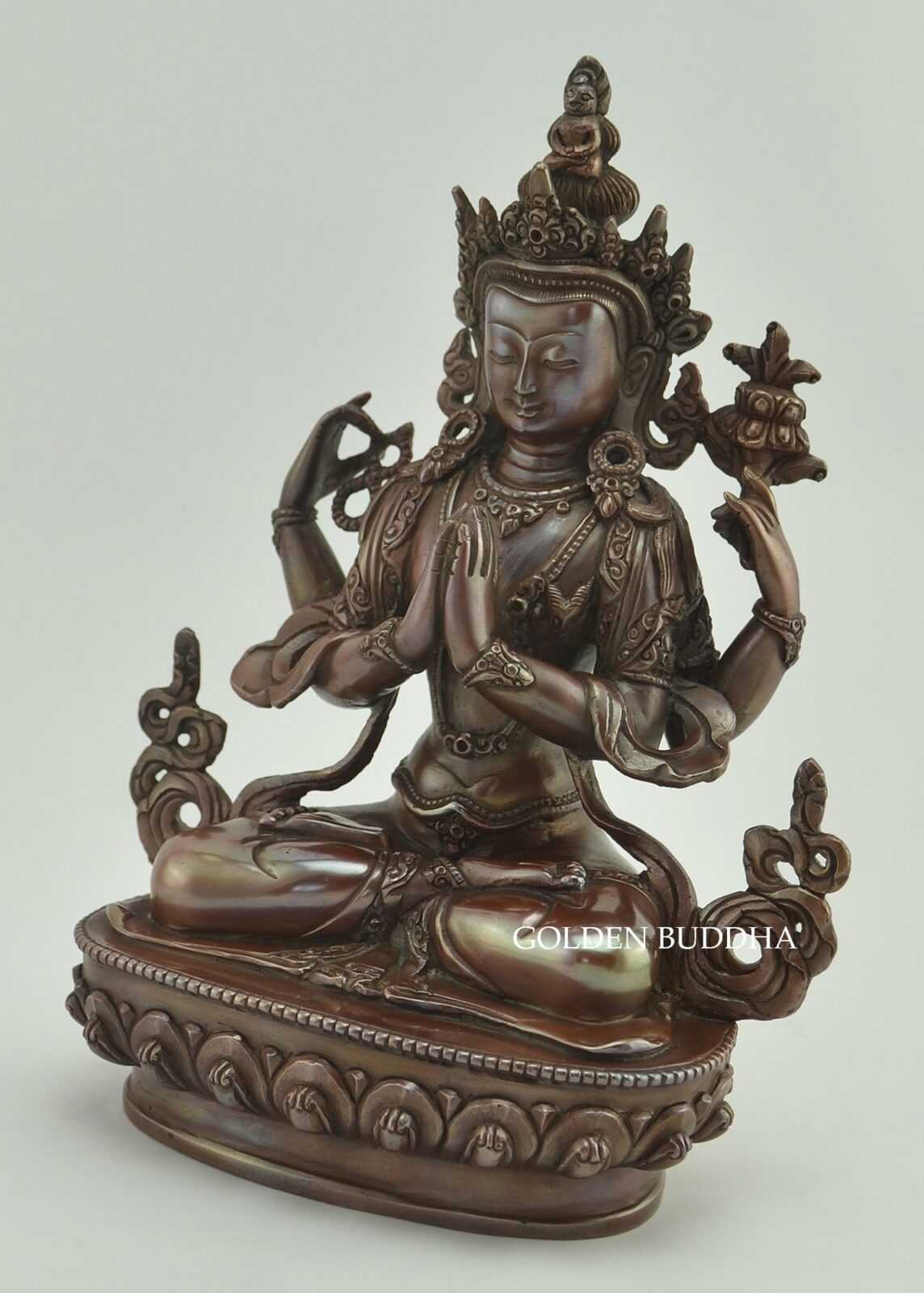
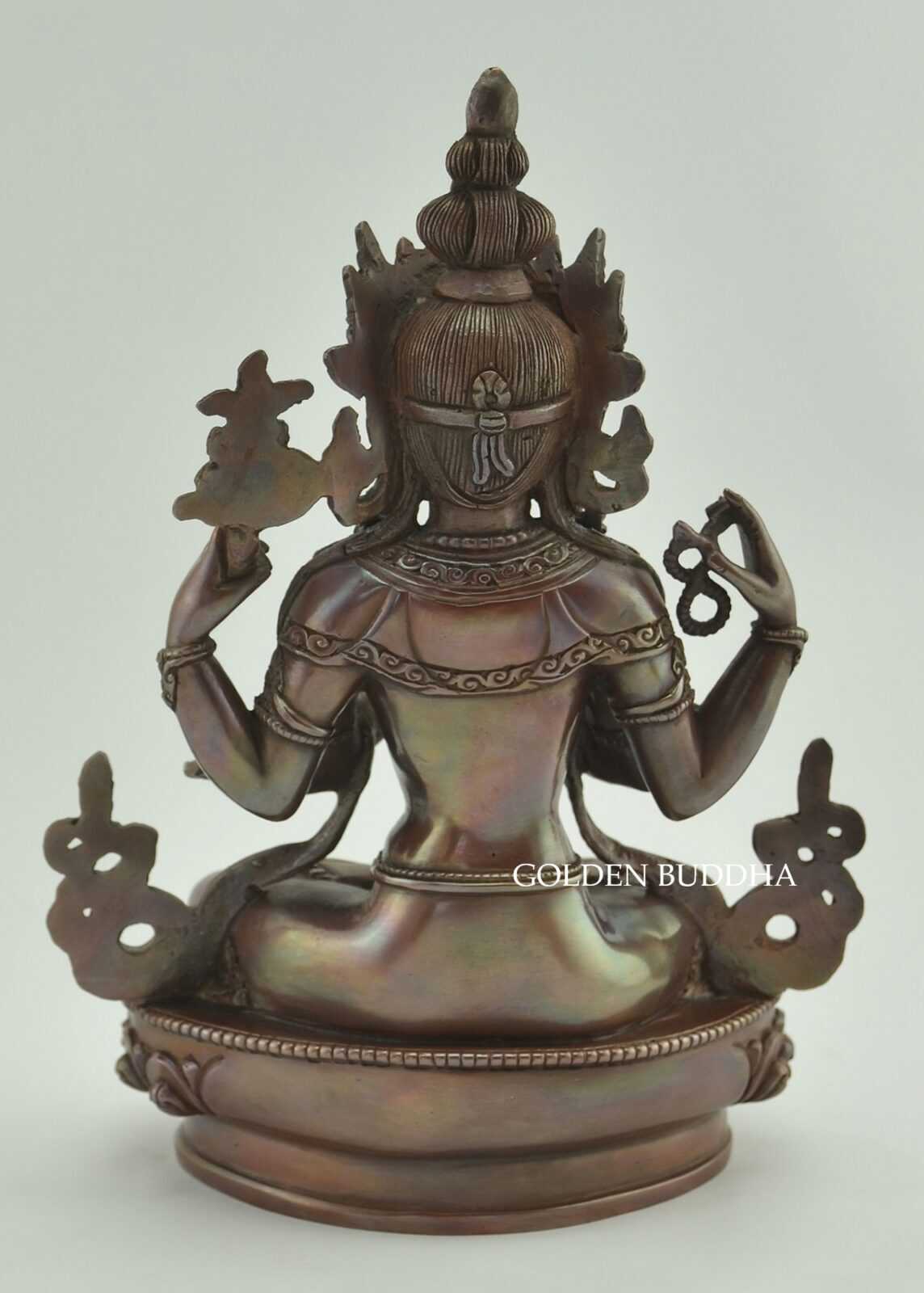
This 9″ Oxidized Chenrezig statue was handcrafted from copper alloy in Patan, Nepal, by a master Newar artisan using the traditional lost wax casting method. Finished in warm oxidized copper, the sculpture displays subtle reddish-brown, umber, and softly iridescent tones that vary naturally across its surface. The restrained finish emphasizes the figure’s graceful proportions, four-arm composition, Bodhisattva crown, hand-carved jewelry, celestial scarves, and peaceful expression without relying upon gold gilding or painted decoration.
Chenrezig is depicted wearing the crown and ornaments of a celestial Bodhisattva. The crown rises around a carefully modeled topknot surmounted by a small image of Amitabha Buddha, Chenrezig’s spiritual father and the head of the lotus family. Large circular earrings frame the face, while necklaces, bracelets, armbands, garment borders, and curling scarf ends enrich the composition. Fine raised scrollwork follows the edges of the shoulder covering, sleeves, waist ornament, and jewelry. At the buyer’s request, suitable areas of the crown and ornaments may be embellished with turquoise or red coral stones at no additional charge before delivery.
Turquoise and red coral are traditional decorative materials in Himalayan Buddhist art. Turquoise combines blue and green, colors associated respectively with enlightened purity and active compassionate response. Red coral is especially appropriate for Chenrezig because it recalls his connection with Amitabha Buddha and the lotus family. Against the darker oxidized copper finish, these stones can introduce a vivid but harmonious accent while preserving the statue’s antiquated character.
Oxidized Chenrezig Statue Iconography
Chenrezig is the Tibetan form of Avalokiteshvara, the Bodhisattva who embodies the limitless compassion of all Buddhas. His Tibetan name is often interpreted as “the one who looks upon beings with compassionate eyes.” Rather than remaining removed from the suffering of samsara, Chenrezig continually observes the needs of sentient beings and responds through whatever forms, teachings, or circumstances may help guide them toward liberation. Learn more about Chenrezig’s meaning and iconography in Tibetan Buddhism.
The four arms of this Oxidized Chenrezig statue are traditionally associated with the four immeasurables: loving-kindness, compassion, sympathetic joy, and equanimity. These qualities expand the practitioner’s concern beyond a limited circle of family and friends until it embraces all beings without partiality. The four arms may also be understood as expressing Chenrezig’s ability to perform many compassionate activities simultaneously while remaining centered in meditative awareness.
Chenrezig’s two principal hands are joined before the heart in the gesture of devotion and prayer. Nestled between them is the cintamani, or wish-fulfilling jewel. The jewel does not represent the granting of ordinary material desires alone. At a deeper level, it symbolizes bodhicitta—the awakened intention to attain enlightenment for the benefit of all beings—and the precious Dharma that fulfills the most profound wish for freedom from suffering.
His upper right hand holds a mala, the string of prayer beads used for counting mantra recitations. The mala recalls Chenrezig’s continuous recitation of Om Mani Padme Hum, among the best-known mantras in Tibetan Buddhism. Each bead suggests an uninterrupted cycle of compassionate activity: recognizing suffering, generating the wish to relieve it, and translating that wish into beneficial action.
The upper left hand supports the stem of an utpala lotus rising beside the shoulder. The lotus emerges from muddy water while remaining unstained, making it an enduring symbol of purity and enlightenment. Within Chenrezig’s iconography, it shows that genuine compassion can operate within the difficulties of samsara without becoming overwhelmed or corrupted by them. Compassion does not require withdrawing from suffering; it develops through direct engagement with suffering guided by wisdom.
Amitabha Buddha and Chenrezig’s Compassionate Lineage
The miniature Amitabha figure positioned above Chenrezig’s crown is an important identifying feature. Amitabha is the Buddha of Infinite Light and the presiding Buddha of the lotus family, whose enlightened quality is discriminating wisdom. Chenrezig is understood as the compassionate activity arising from that family. The small Buddha therefore establishes Chenrezig’s spiritual lineage while visually connecting infinite light, discerning awareness, and universal compassion.
Chenrezig’s serene face is carved directly into the copper alloy. His lowered eyes suggest meditative composure while remaining attentive to the world. The urna between the brows represents transcendent wisdom, and the carefully arranged hair and crown reinforce his identity as an enlightened Bodhisattva rather than a monastic Buddha. His calm expression balances the movement created by the four arms and flowing celestial scarves, communicating compassionate activity arising from inner stillness.
Single Lotus Throne and Newar Craftsmanship
The figure sits in the full lotus posture upon a single lotus throne. A broad row of rounded lotus petals surrounds the pedestal beneath a finely beaded upper rim. Recessed areas between the petals retain deeper tones from the oxidized finish, giving the pedestal greater visual depth. The smooth lower foundation provides a stable base for the more elaborate crown, arms, attributes, jewelry, and curling scarves above.
Viewed from behind, the sculpture reveals the carefully modeled topknot, crown, Amitabha figure, shoulder covering, arm ornaments, and ribbon-like scarves. Raised scrolling borders continue around the neckline and garment, while broader areas of the back remain comparatively smooth. This balance allows the natural variations of the copper finish to remain visible instead of covering every surface with decoration. The statue was conceived as a complete three-dimensional devotional sculpture and may be appreciated from several directions rather than only from the front.
The lost wax casting method used to create the statue begins with an individually modeled wax figure. After the wax is enclosed within a heat-resistant mould and melted away, molten copper alloy is poured into the empty form. The rough casting is then refined, chased, engraved, assembled, and finished by hand. This labor-intensive process preserves the subtle contours of the face, hands, jewelry, crown, and attributes while ensuring that each completed statue possesses individual variations.
Chenrezig, Manjushri and Green Tara Statue Set
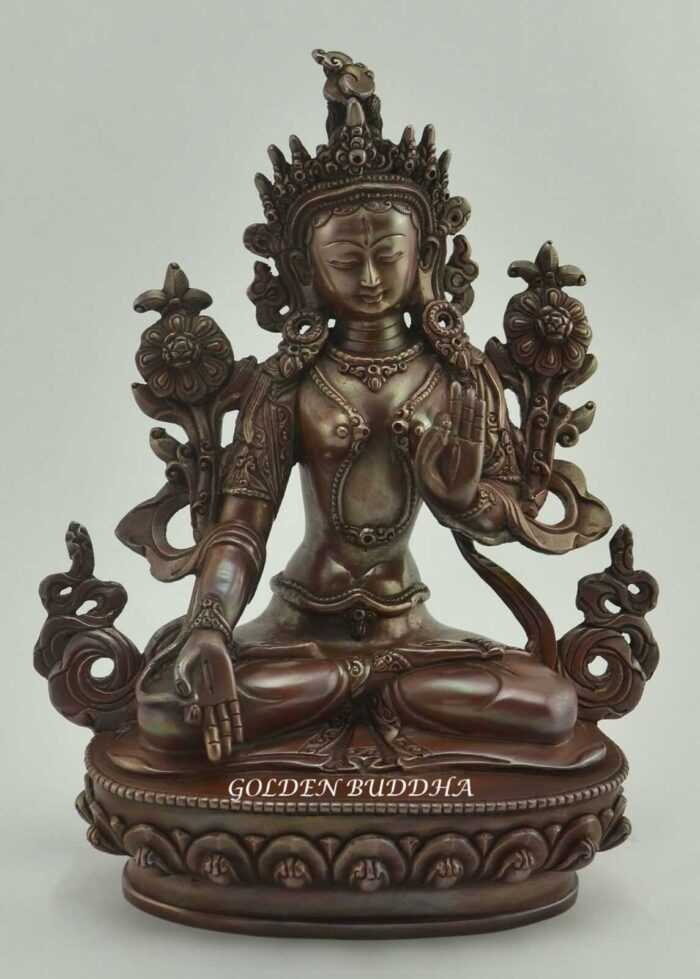
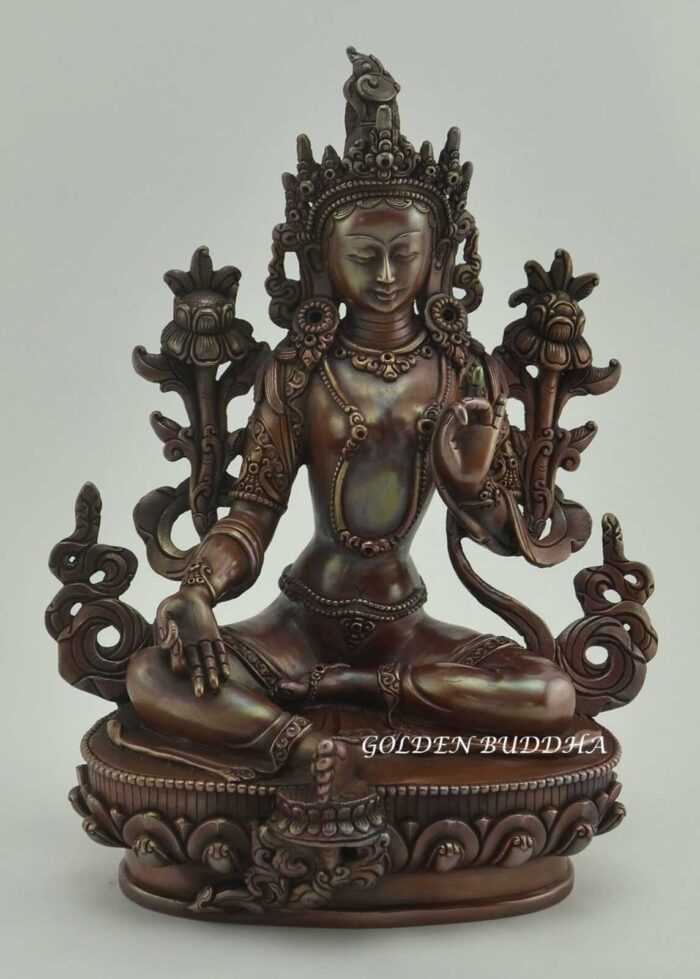
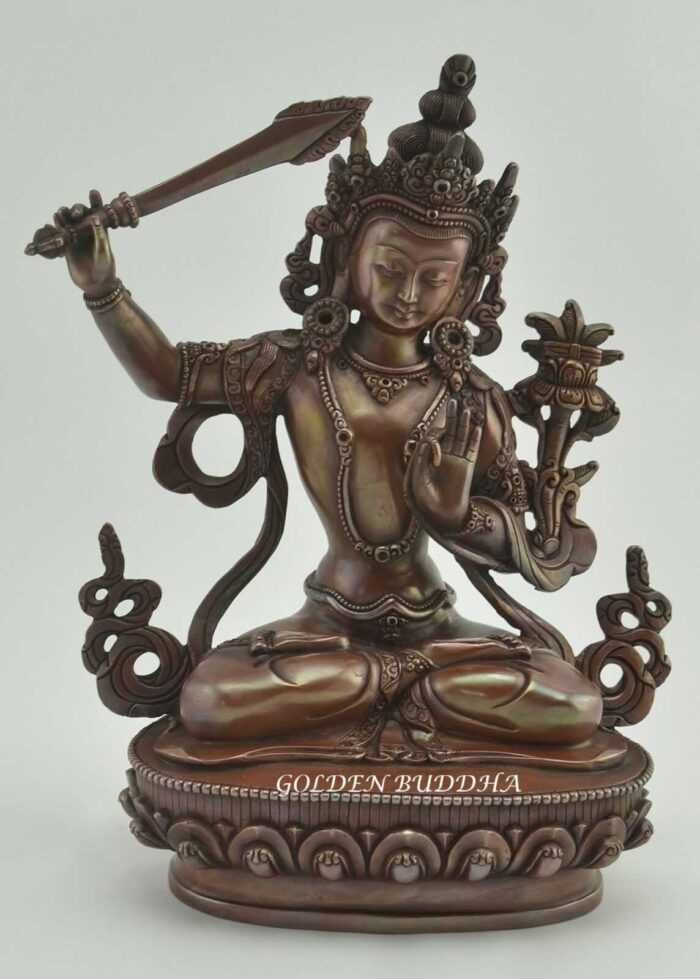
This Oxidized Chenrezig statue may be displayed as part of a coordinated three-piece altar with the matching Oxidized Manjushri statue and Oxidized Green Tara statue. All three were created by the same Nepali master artisan and share complementary copper-alloy finishes, Bodhisattva ornaments, engraved garment borders, carefully modeled attributes, curling celestial scarves, and similarly formed single lotus thrones. Their related proportions and workmanship allow the statues to form a balanced visual grouping.
The three deities also create a meaningful doctrinal arrangement. Chenrezig embodies the Buddha’s boundless compassion and the aspiration to relieve the suffering of every being. Manjushri represents transcendent wisdom, which correctly understands emptiness, dependent origination, and the methods most likely to be genuinely beneficial. Green Tara personifies swift compassionate activity, fearlessly removing obstacles and responding without delay. Together, the grouping expresses a complete progression: Chenrezig supplies the compassionate motivation, Manjushri provides the wisdom that guides it, and Green Tara transforms wisdom and compassion into effective enlightened action.
Custom Made Chenrezig and Matching Bodhisattva Statues
Practitioners, collectors, monasteries, and Dharma centers may commission a custom made Tibetan Buddhist statue based upon this four-armed Chenrezig design. Options may include a different height, oxidized or antiquated finish, partial or full 24K fire gilding, hand-painted facial details, more extensive garment engraving, turquoise or coral embellishment, and individually designed lotus-throne proportions. Each commissioned statue is cast from copper alloy and completed by experienced artisans in Nepal according to traditional Himalayan Buddhist iconography.
A complete Chenrezig, Manjushri, and Green Tara set may also be commissioned so that all three sculptures share the same height, finish, throne measurements, crown detailing, ornamentation, and visual weight. Creating the figures together allows the artisan to coordinate the entire shrine arrangement from the beginning. The resulting set unites Chenrezig’s universal compassion, Manjushri’s enlightened wisdom, and Green Tara’s swift beneficial activity in a visually harmonious expression of three indispensable qualities of the Buddhist path.
Authentic, Handmade in Nepal
Every statue is handcrafted in Patan, Nepal, using traditional lost wax casting and comes with a certificate of authenticity issued by Nepal’s Department of Archaeology, verifying its materials, technique, and origin.