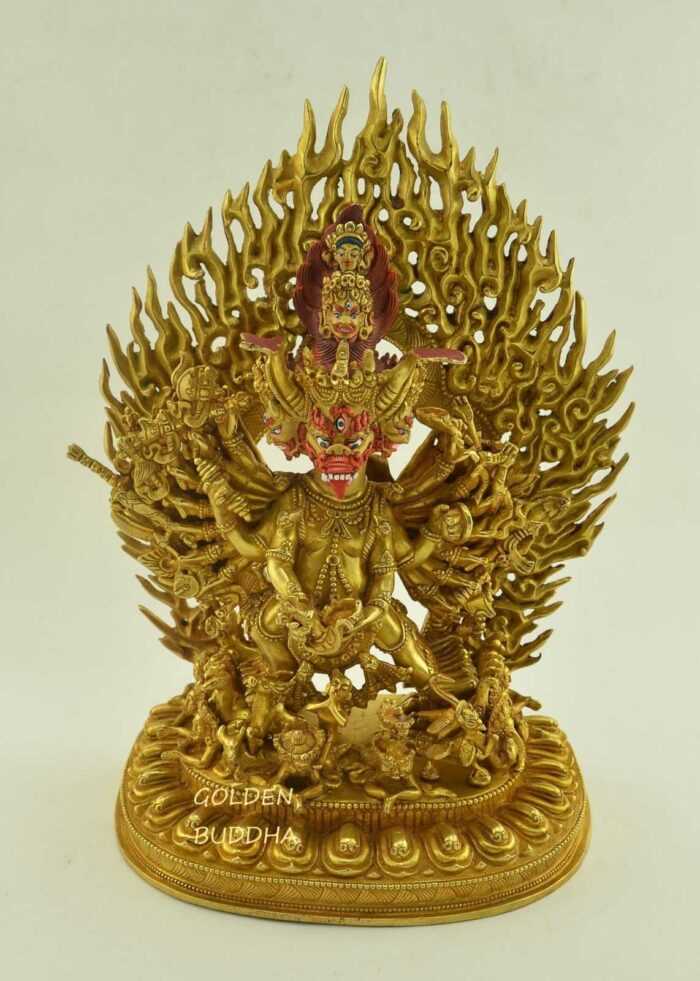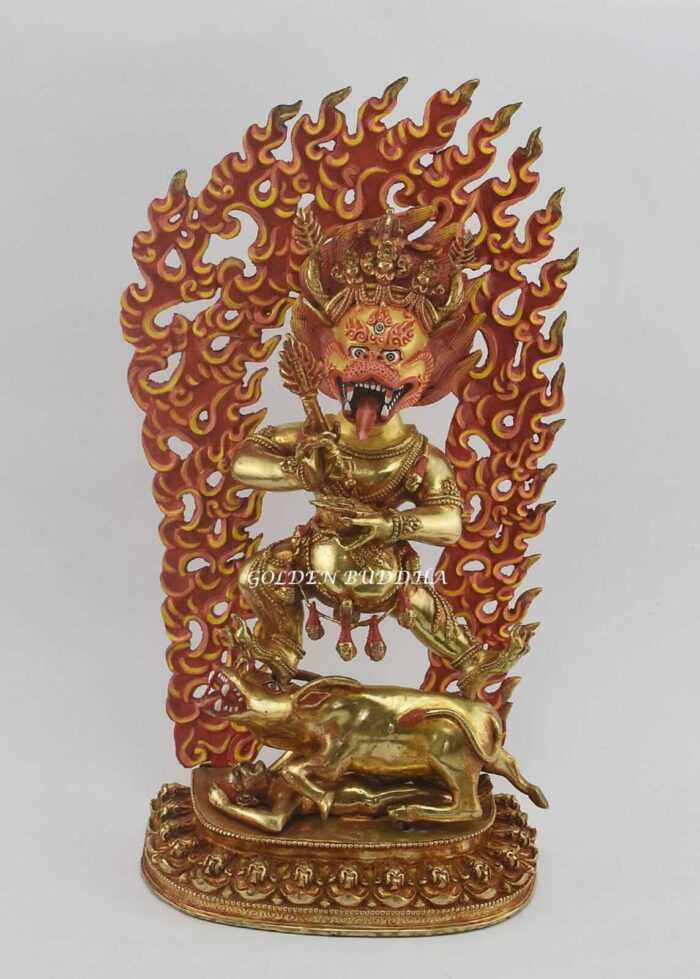
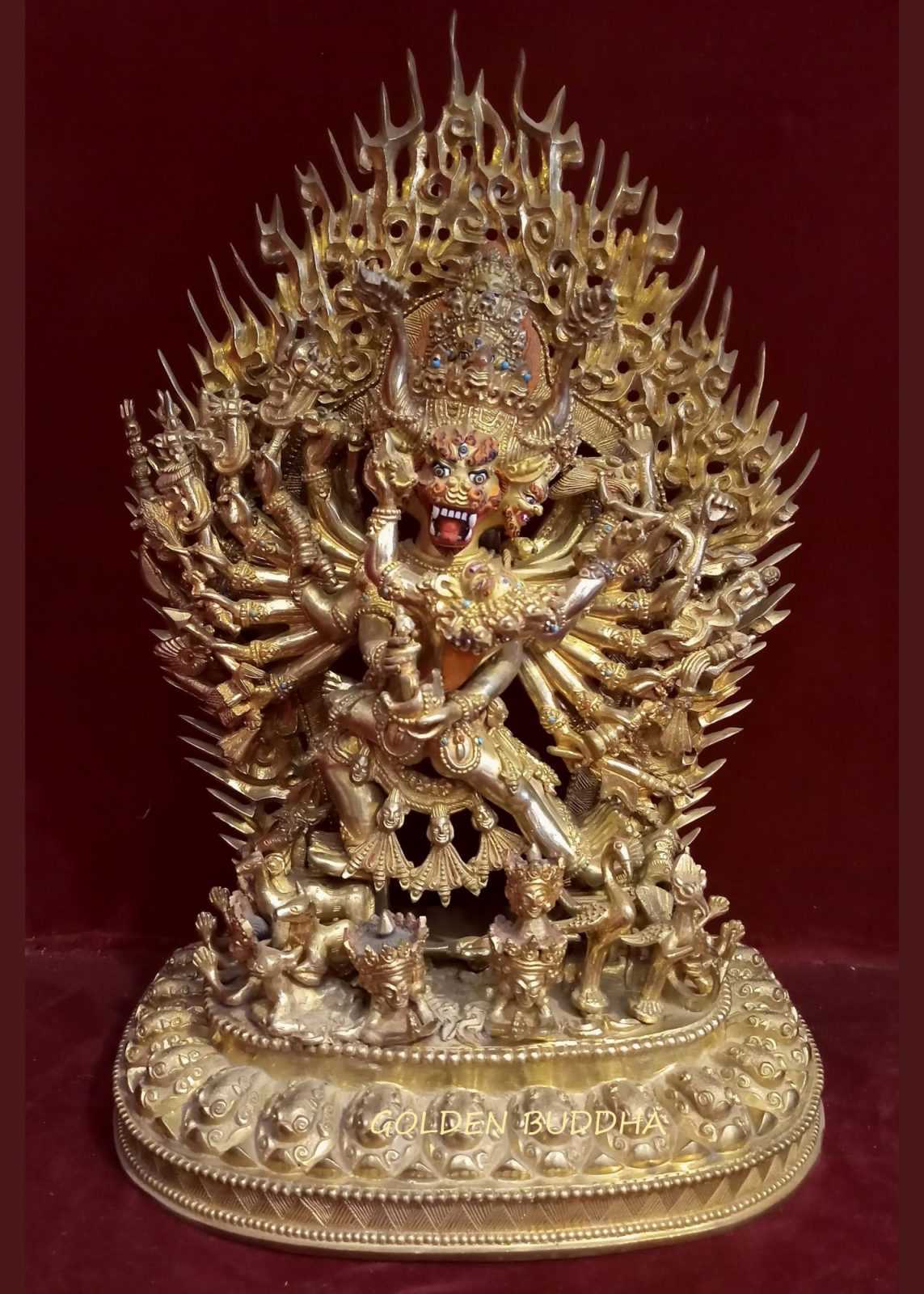
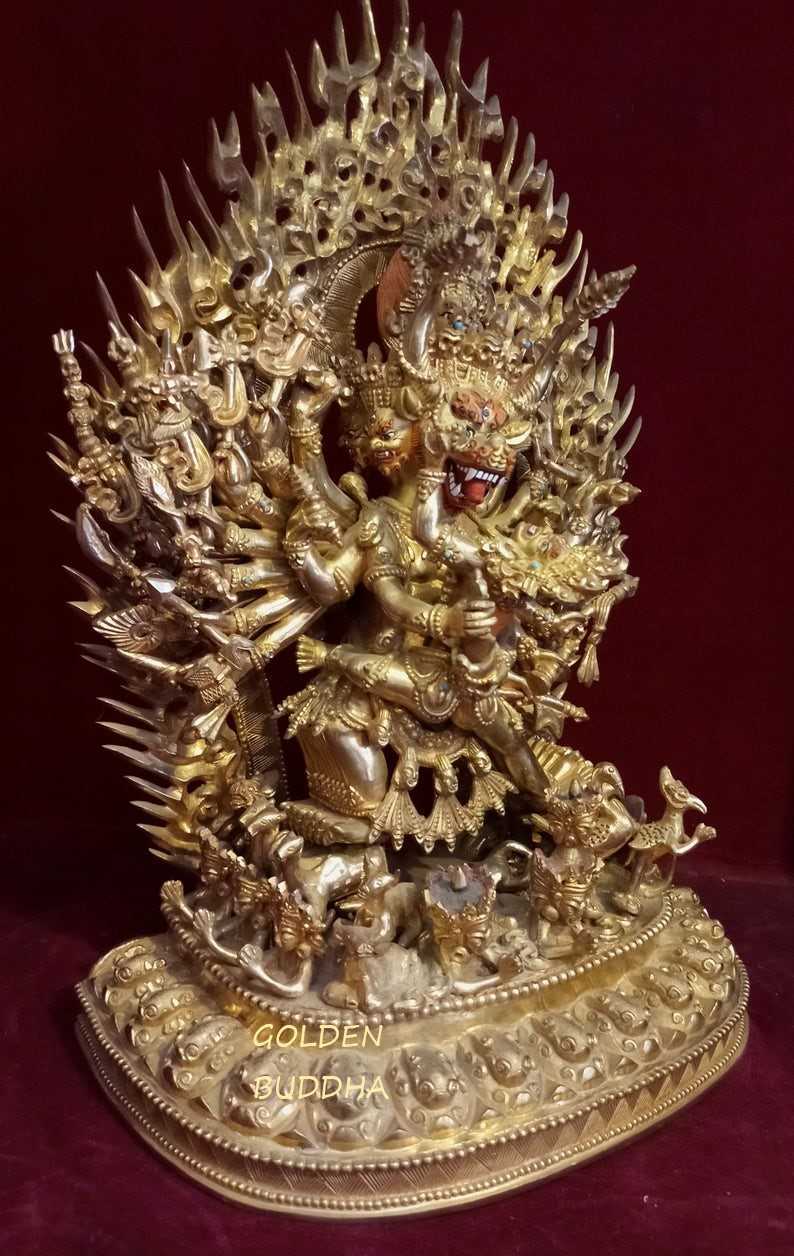
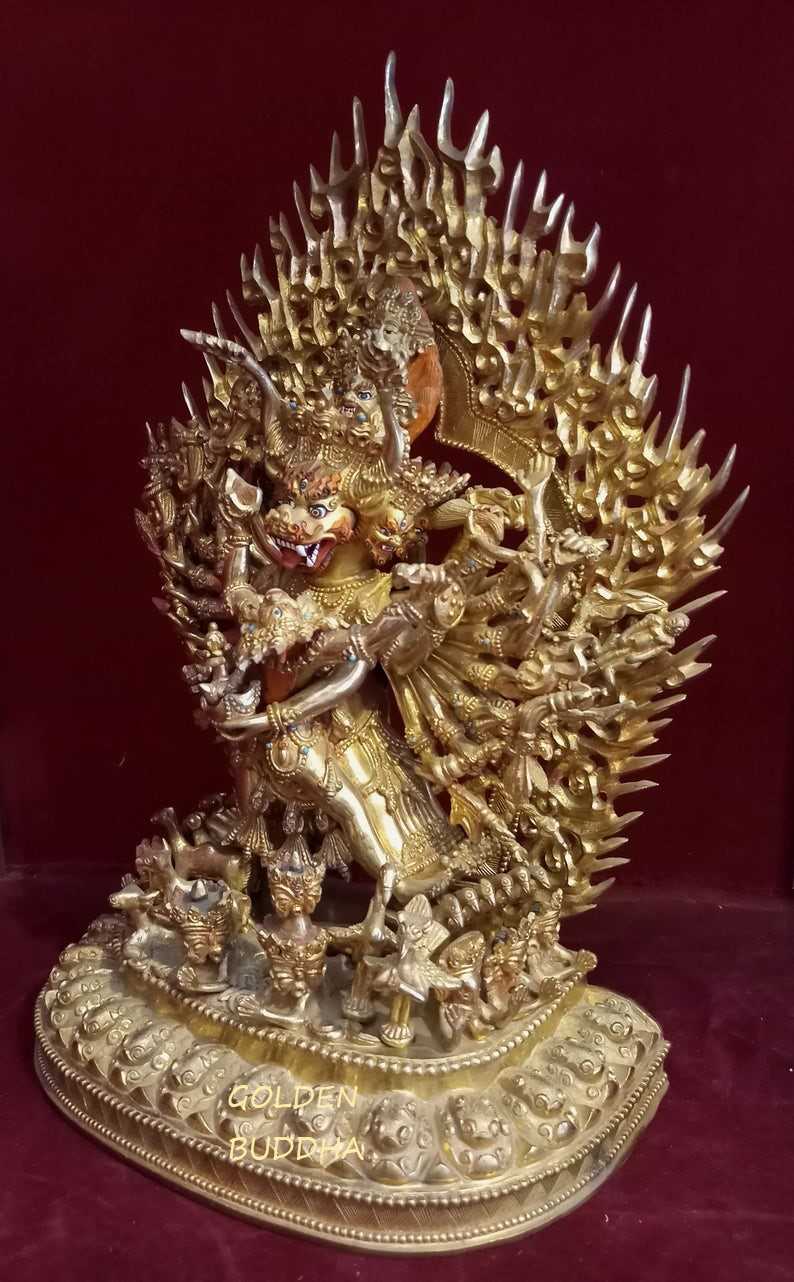
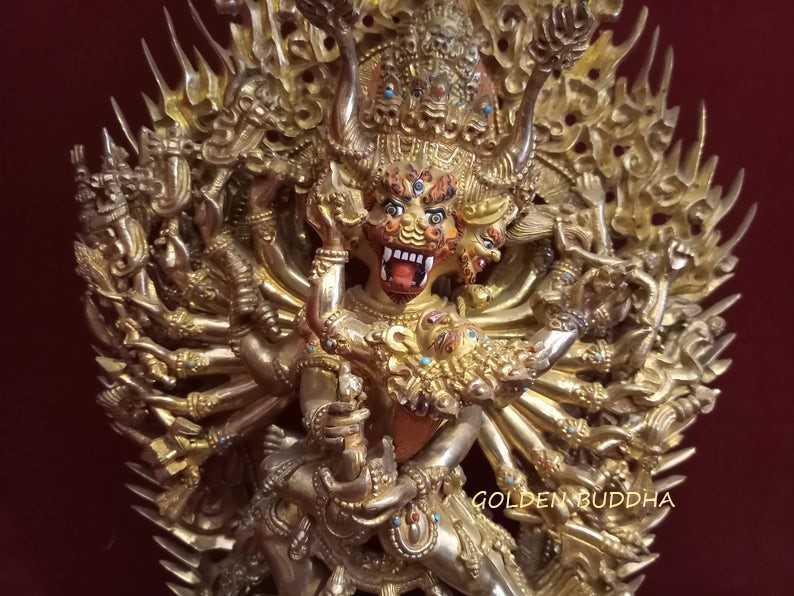
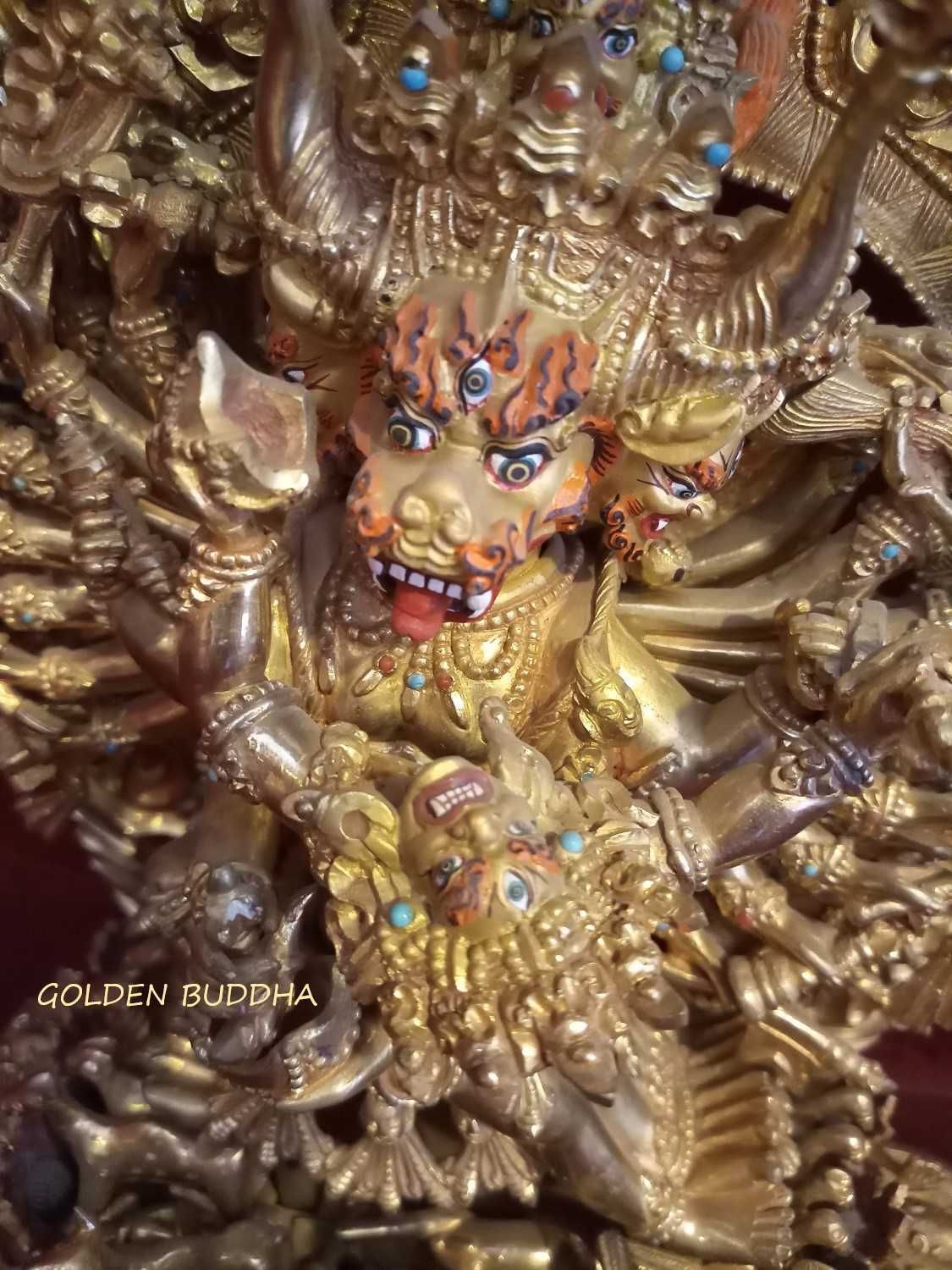
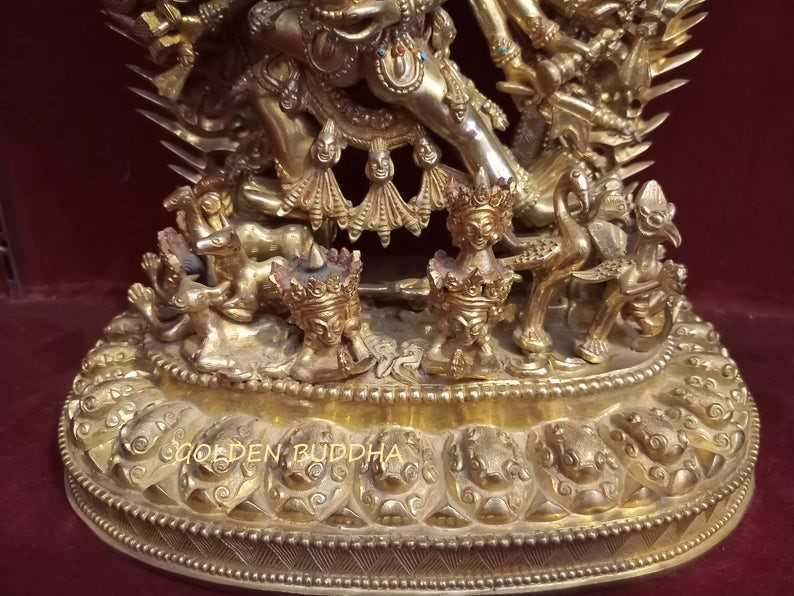
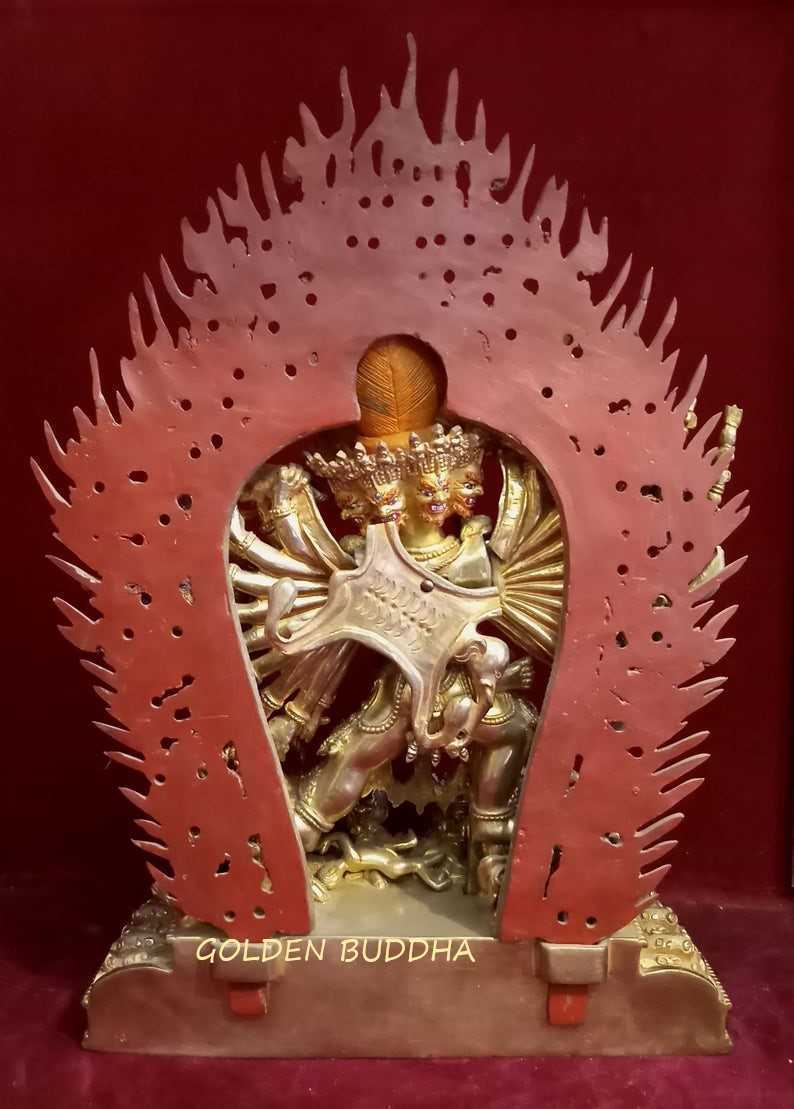
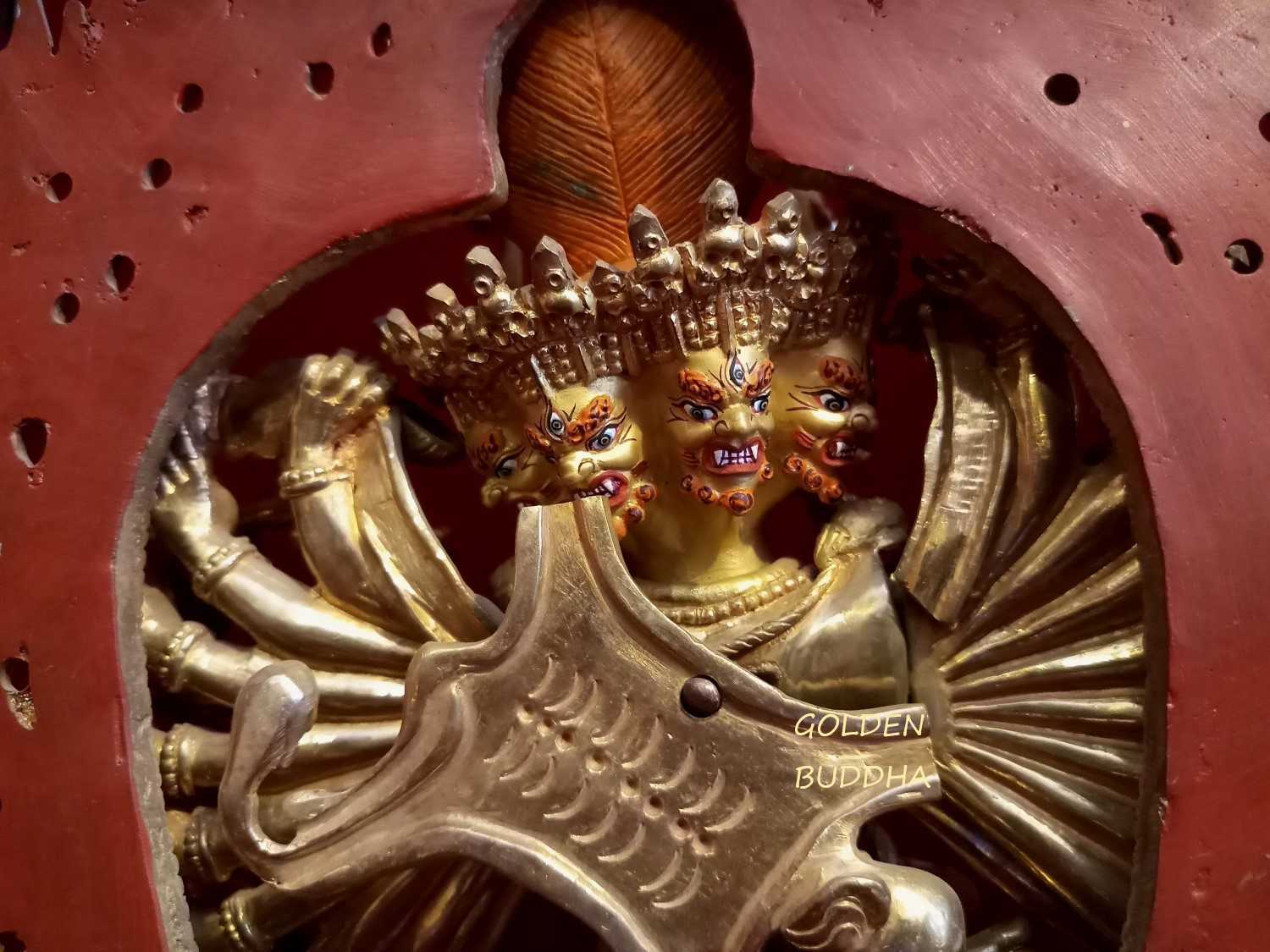
This 14.5-inch Vajrabhairava Yamantaka Statue portrays Yamantaka in sacred union with his consort Vajravetali, presenting one of the most elaborate wrathful forms in Tibetan Vajrayana Buddhism. Handmade in Patan, Nepal from copper alloy using the traditional lost-wax casting method, the sculpture is fire gilded in 24K gold and enriched with individually painted facial details, natural pigments, and embedded turquoise and red coral gemstones. The photographs confirm a dense composition of nine faces, thirty-four arms, sixteen legs, ritual implements, subdued figures and animals, an ornate lotus throne, and a large removable flame aureole that surrounds the assembly with a broad field of curling flames.
Vajrabhairava Yamantaka Statue | Nine-Faced Wrathful Manjushri
Yamantaka, Sanskrit Yamāntaka, means “Destroyer of Yama” or “Destroyer of Death,” while Vajrabhairava may be translated as “Vajra Terrifier.” In Tibetan he is known as Dorje Jigje and Shinje Shed. Vajrabhairava is the intensely wrathful manifestation of Manjushri, the Bodhisattva of Transcendent Wisdom. His terrifying appearance therefore represents enlightened wisdom assuming the force necessary to overcome ignorance, fear, karmic obstruction, and attachment to conditioned existence. The principal buffalo face deliberately establishes his relationship with Yama, the Lord of Death, while the uppermost Manjushri face reveals the peaceful wisdom from which the entire wrathful manifestation arises. Learn more in our guide to Yamantaka iconography and the Conqueror of Death.
Yab-Yum Union with Vajravetali
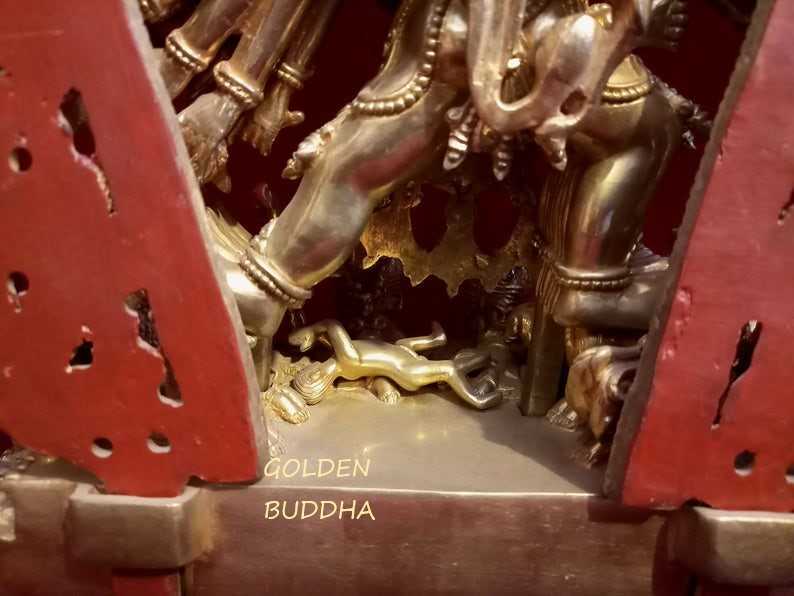
At the center of the many arms and faces, Vajravetali embraces Vajrabhairava in yab-yum. This highest-yoga-tantra imagery represents the inseparability of method and wisdom rather than ordinary passion. The principal hands hold the characteristic curved knife and skull cup while embracing the consort, and the surrounding hands carry an extensive array of tantric implements. From the rear, the sculpture also reveals the stretched elephant-hide imagery and the extraordinary layering required to construct the numerous arms, faces, and attributes without losing the powerful central silhouette.
Vajrabhairava Yamantaka Statue | Nine Faces, 34 Arms and 16 Legs
The nine faces of this Vajrabhairava Yamantaka Statue are arranged in three distinct tiers. The lower tier contains seven faces in total, with the horned buffalo head at the center and six additional wrathful faces surrounding it. Directly above this lower group is one separate intensely wrathful face forming the second tier. At the summit is the ninth and uppermost face, that of Manjushri, whose comparatively peaceful expression reveals transcendent wisdom as the source of Vajrabhairava’s terrifying manifestation. The thirty-four arms radiate around the central body carrying an extensive array of tantric implements and symbolic weapons, while the sixteen legs extend across subdued deities, human figures, animals, and birds representing obstructive forces brought under enlightened control.
Manjushri and Yama | Doctrinal Statue Pairing
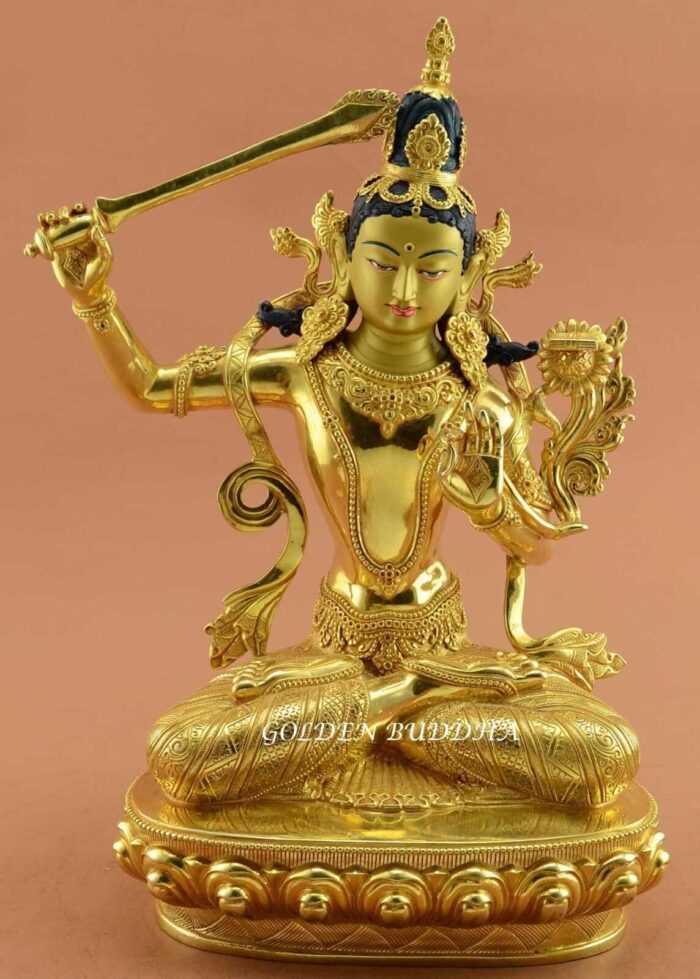
This sculpture makes an unusually strong three-statue grouping with our masterpiece Manjushri sculpture and handmade Yama statue. Manjushri is the direct peaceful source of Vajrabhairava: the serene Bodhisattva embodies transcendent wisdom, while Yamantaka presents that same wisdom in a wrathful form capable of confronting the deepest obstacles to liberation. Yama provides the complementary narrative and iconographic relationship. Yamantaka’s buffalo-headed appearance mirrors the Lord of Death, and his name itself declares the defeat or ending of Yama’s power over involuntary rebirth. The three statues therefore present peaceful wisdom, wrathful wisdom, and the power of death overcome by realization. Their substantial scale, elaborate metalwork, and fire-gilded surfaces also create a visually coherent Himalayan Buddhist statue set.
Filling and Consecration for the Vajrabhairava Yamantaka Statue
For practitioners intending to install the sculpture on a shrine, traditional filling and consecration can be arranged in Kathmandu, Nepal before international shipment. Appropriate sacred contents may be placed within the hollow statue and the completed image prepared for blessing according to Tibetan Buddhist custom. Because Vajrabhairava belongs to advanced tantric practice, formal meditation on the deity traditionally depends upon empowerment and instruction from a qualified lineage teacher; ownership or appreciation of the sculpture itself does not require such initiation.
Custom Vajrabhairava Yamantaka Statue | Handmade in Nepal
Golden Buddha can arrange a custom Tibetan Buddhist statue for collectors, practitioners, monasteries, and Dharma centers seeking another size or finish. A custom Vajrabhairava commission can be created in copper alloy with 24K gold fire gilding, antiquated contrast, individually painted faces, embedded turquoise and red coral, and a removable flame aureole while preserving the established nine faces, thirty-four arms, sixteen legs, Vajravetali consort, and ritual attributes. Manjushri, Vajrabhairava, and Yama may also be commissioned as a coordinated set with complementary dimensions, gilding tones, pedestal proportions, and painted details.
Authentic, Handmade in Nepal
Every statue is handcrafted in Patan, Nepal, using traditional lost wax casting and comes with a certificate of authenticity issued by Nepal’s Department of Archaeology, verifying its materials, technique, and origin.