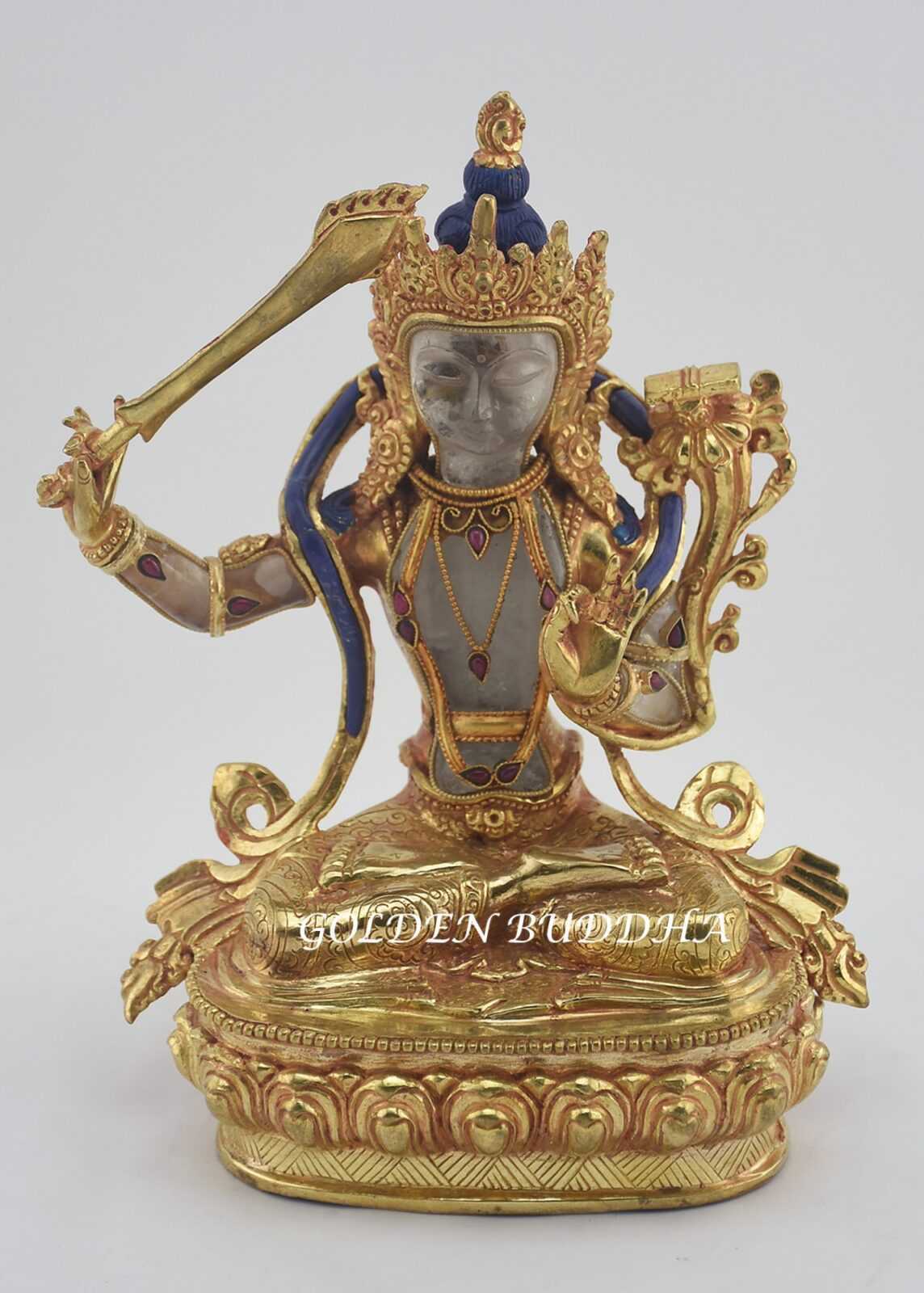
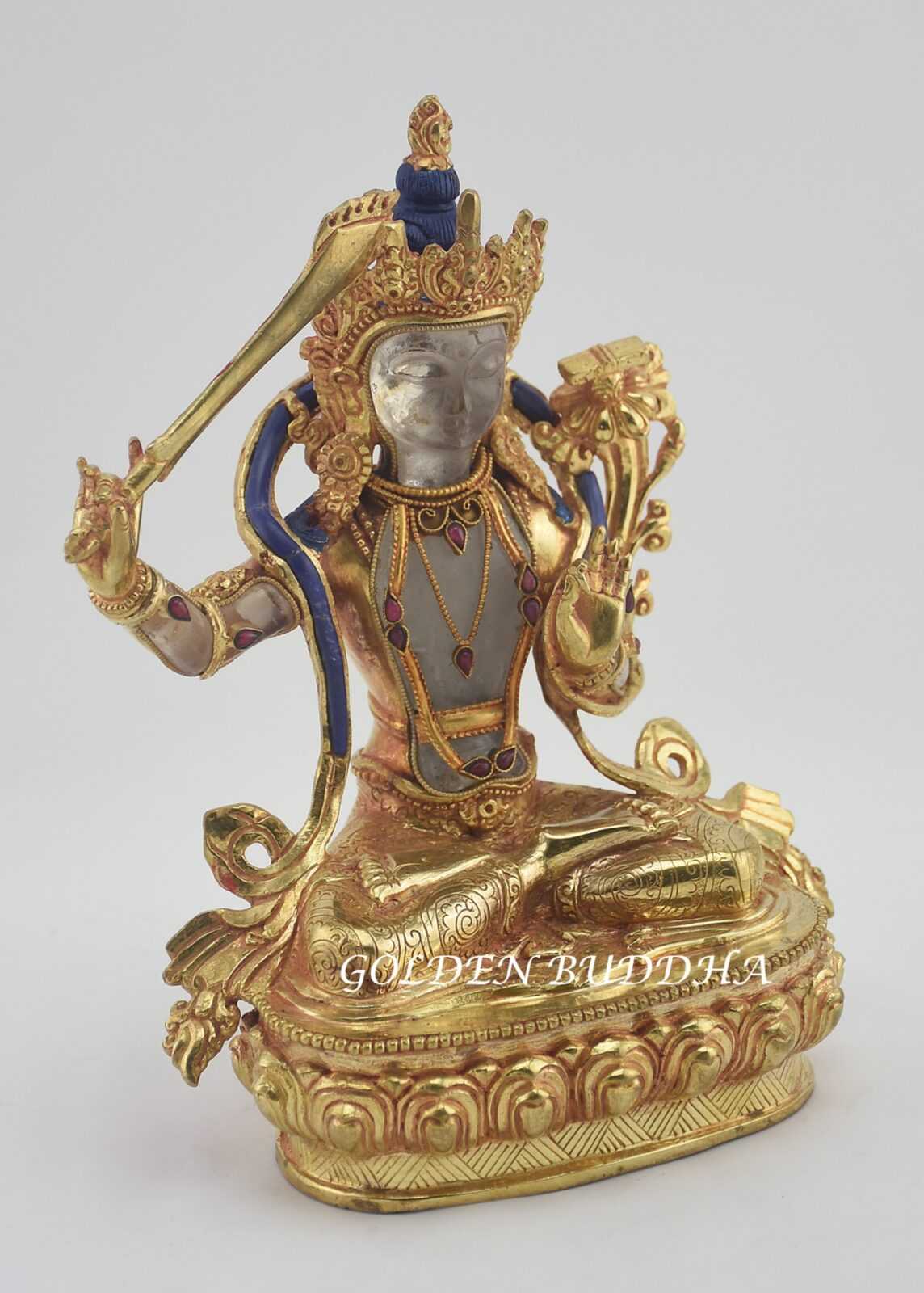
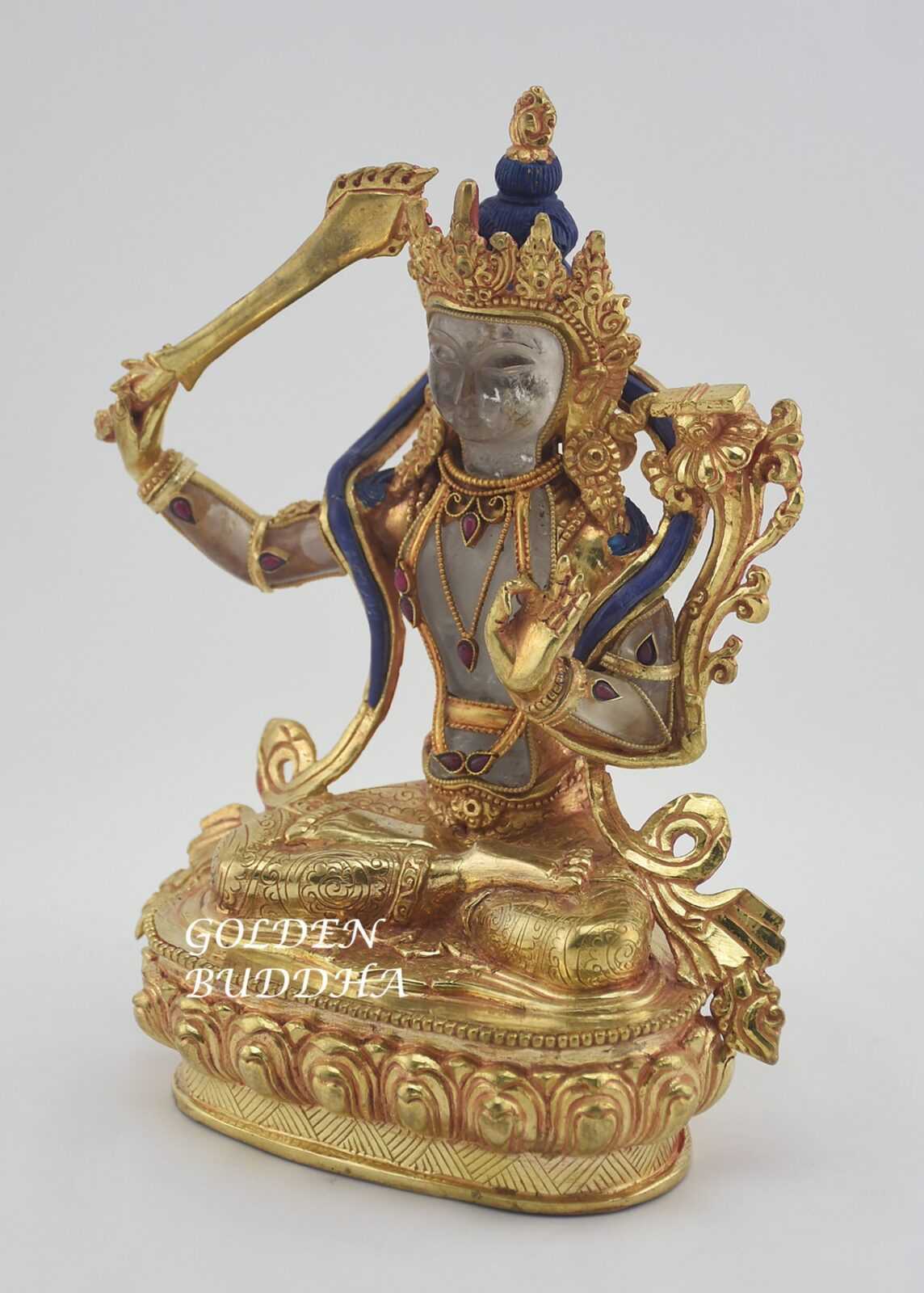

This 8.75″ Tibetan Manjushri sculpture combines a hand-carved crystal face, torso, and arms with a copper alloy framework fire gilded in 24K pure gold. The translucent crystal body is surrounded by an ornate Bodhisattva crown, earrings, necklaces, armlets, garments, and lotus pedestal, creating a luminous contrast between clear stone and warm gilded metal. Red and pink semi-precious stones are already set into the jewelry and arm ornaments, while dark blue painted hair rises into a high topknot behind the crown. The statue was created in Patan, Nepal using traditional crystal carving, lost-wax casting, stone setting, engraving, and fire-gilding techniques.
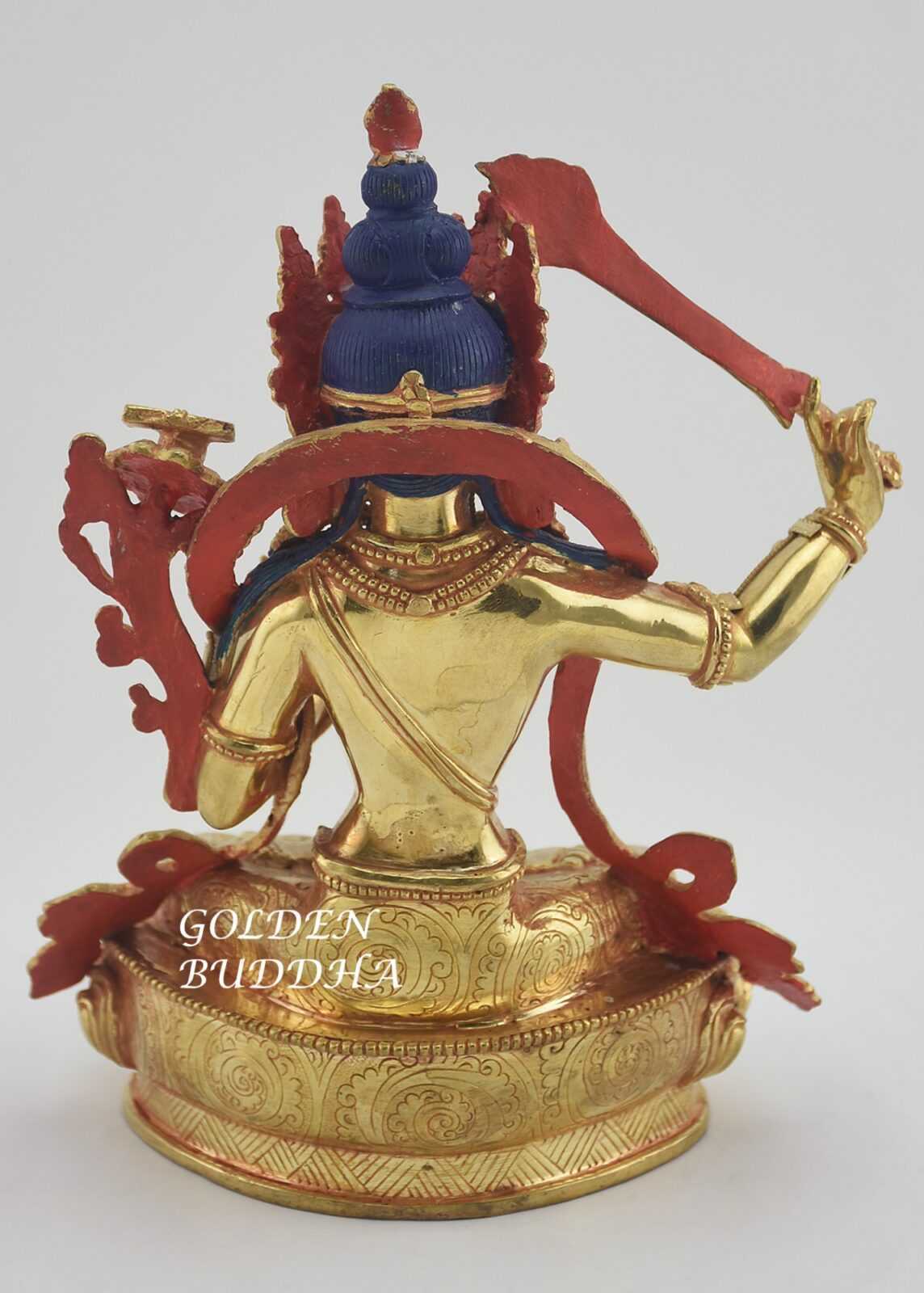
The photographs reveal careful workmanship across both the front and reverse of the sculpture. Fine scrolling patterns decorate Manjushri’s gilded dhoti, crossed legs, crown, and single lotus pedestal. Celestial scarves curve behind the shoulders and arms, while the reverse displays an engraved lower garment and a broad halo-like scarf crossing behind the head. Because the crystal sections must be individually carved and precisely fitted within the surrounding metalwork, this type of sculpture requires a particularly demanding combination of lapidary and metalworking skill.
Manjushri is the Bodhisattva of transcendent wisdom and is known in Tibet as Jampelyang. He represents the discerning insight that recognizes the true nature of phenomena and cuts through ignorance, confusion, and mistaken perception. His youthful appearance does not suggest inexperience; rather, it symbolizes the renewed clarity that arises when wisdom frees the mind from habitual assumptions. Learn more about his role, attributes, and sacred imagery in our guide to Manjushri statues and the Bodhisattva of Wisdom.
Tibetan Manjushri Sculpture Features
The most prominent attribute of this Tibetan Manjushri sculpture is the sword raised above his right shoulder. This is not a weapon of physical violence. It is the flaming sword of perfected wisdom, symbolically cutting through ignorance, delusion, and the false distinction between appearances and their ultimate nature. The extended blade gives the composition an energetic upward movement, while Manjushri’s composed seated posture shows that genuine wisdom acts from clarity rather than aggression.
His left hand is raised near the heart in a teaching gesture while holding the stem of a lotus. The flower rises beside his left shoulder and supports the Prajnaparamita Sutra, the scripture of transcendent wisdom. The sword and sacred text express complementary aspects of Manjushri’s activity: the sword cuts through confusion, while the scripture reveals the insight through which confusion is overcome. A more detailed explanation of these attributes is available in our Manjushri statue meaning and symbolism FAQ.
Manjushri sits in full lotus posture on a single lotus pedestal with a beaded upper rim and deeply modeled petals. His crystal torso is framed by multiple strands of gilded jewelry and inset stones, while an elaborate five-pointed crown surrounds the crystal face. The face remains naturally translucent, allowing variations within the hand-carved stone to remain visible rather than concealing them beneath paint or gilding. At the buyer’s request, additional turquoise or red coral stones may be placed into suitable crown and jewelry settings before shipping at no extra charge.
Wisdom Symbolism of the Tibetan Manjushri Sculpture
In Buddhist teaching, wisdom is more than accumulated knowledge or intellectual ability. Manjushri embodies prajna: direct insight into impermanence, dependent origination, emptiness, and the absence of an independent permanent self. The crystal body is especially appropriate for this iconography because its transparency suggests unobstructed perception. Light passes through the material rather than being completely reflected from its surface, visually echoing the clarity of mind cultivated through the practice of wisdom.
Manjushri is also one of the three principal protective Bodhisattvas, together with Avalokiteshvara and Vajrapani. Manjushri represents wisdom, Avalokiteshvara embodies compassion, and Vajrapani expresses enlightened power. Together, these qualities illustrate that Buddhist realization is not based on wisdom alone: insight must be joined with compassionate intention and the ability to act effectively for the welfare of others.
Manjushri Mantra and Practice
The Manjushri mantra is traditionally recited as Om A Ra Pa Tsa Na Dhih. Practitioners use the mantra to cultivate memory, concentration, articulate speech, discernment, and the capacity to understand Buddhist teachings. For this reason, a Tibetan Manjushri sculpture is especially meaningful for students, teachers, writers, translators, scholars, and meditators seeking to develop greater intellectual clarity and insight.
The final syllable, Dhih, is frequently emphasized or repeated because it is regarded as the seed syllable of Manjushri’s wisdom. A statue may serve as the visual support for mantra recitation, study, contemplation, and offerings, helping the practitioner connect the act of learning with the broader Buddhist goal of wisdom used compassionately for the benefit of sentient beings.
Crystal and 24K Gold Gilded Buddhist Statue Set
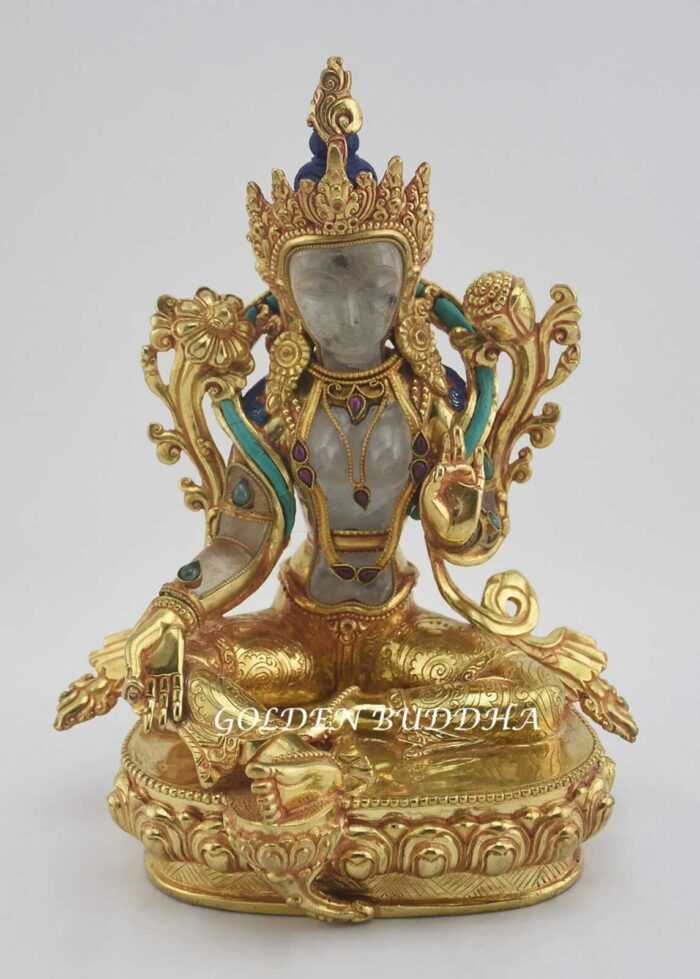
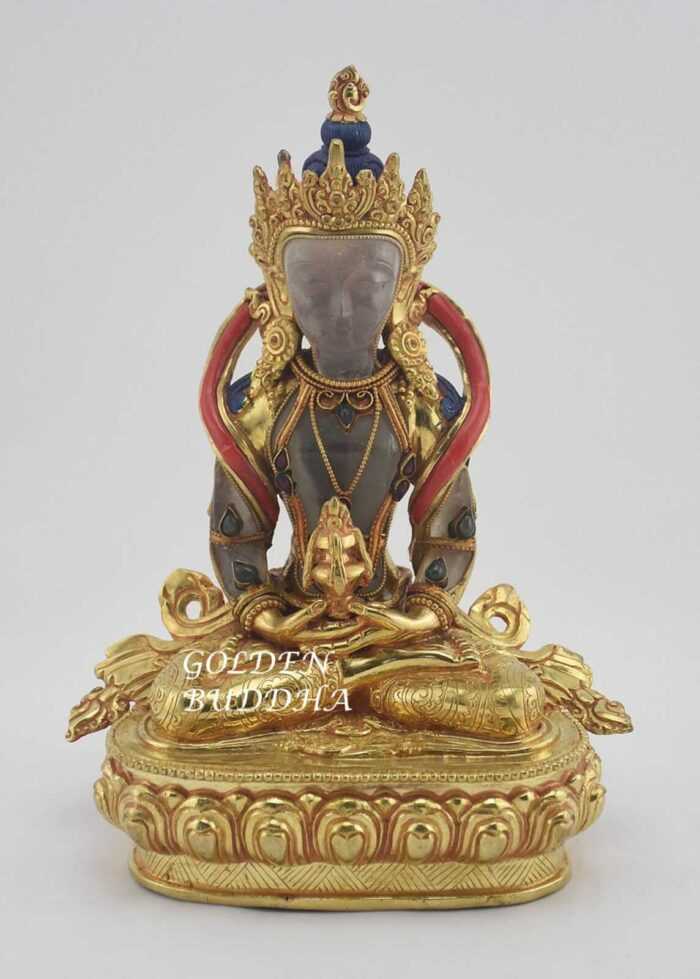
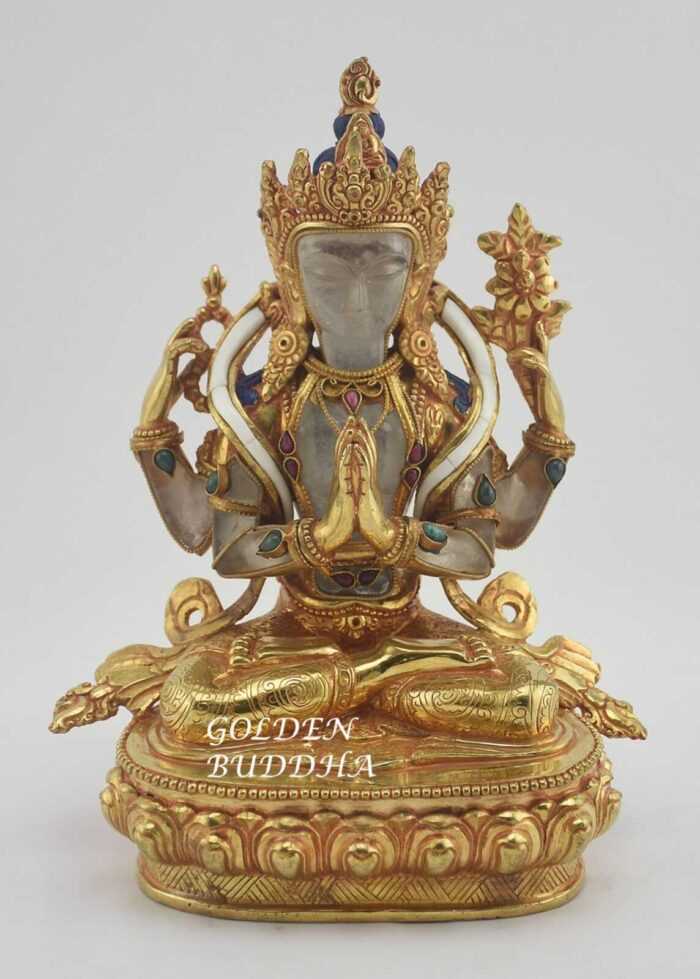
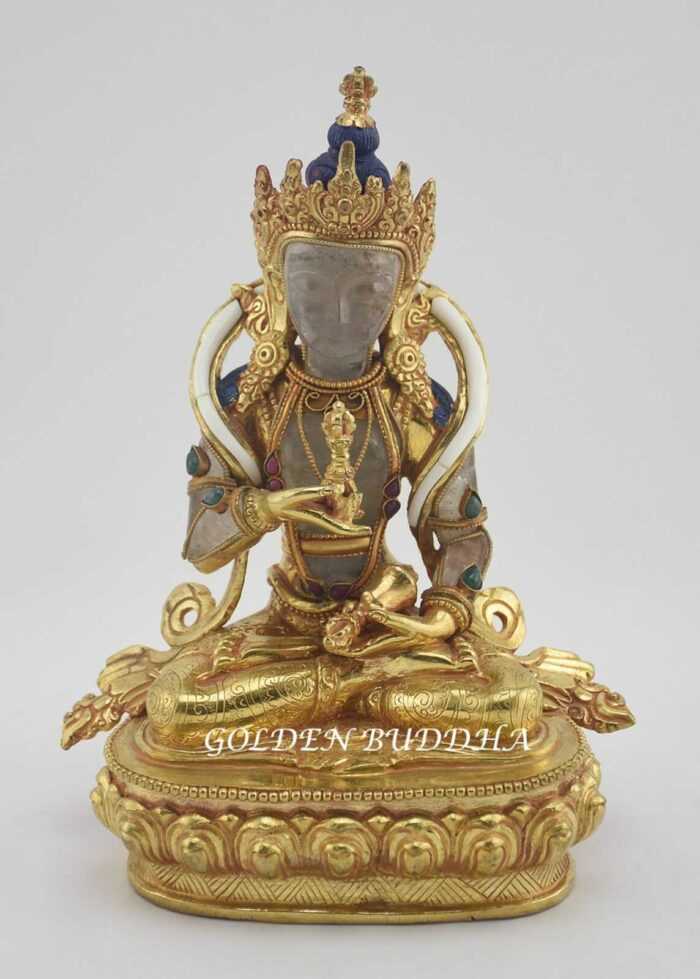
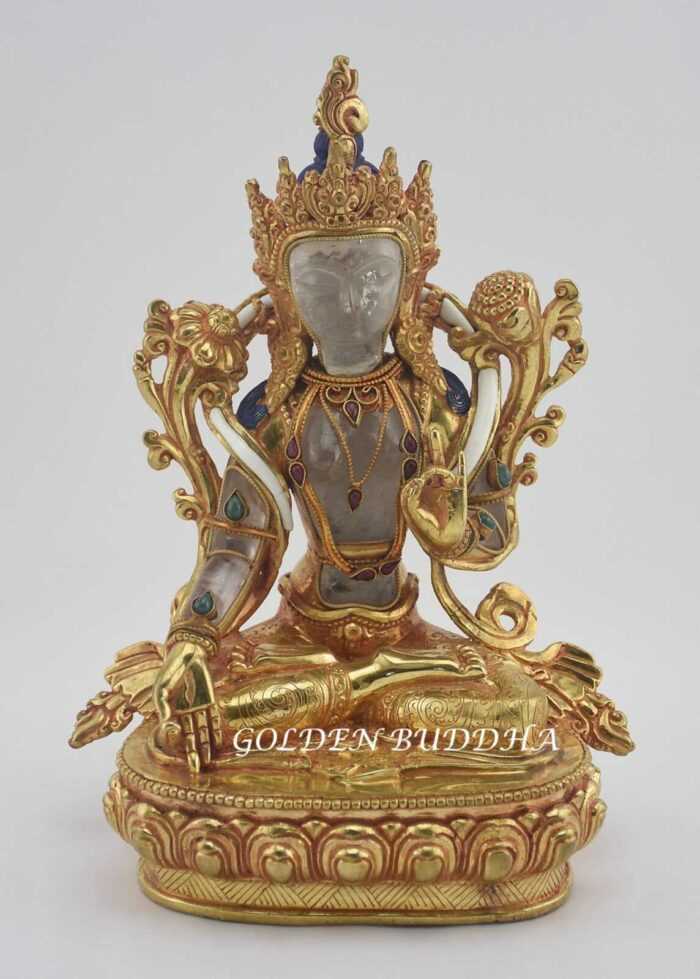
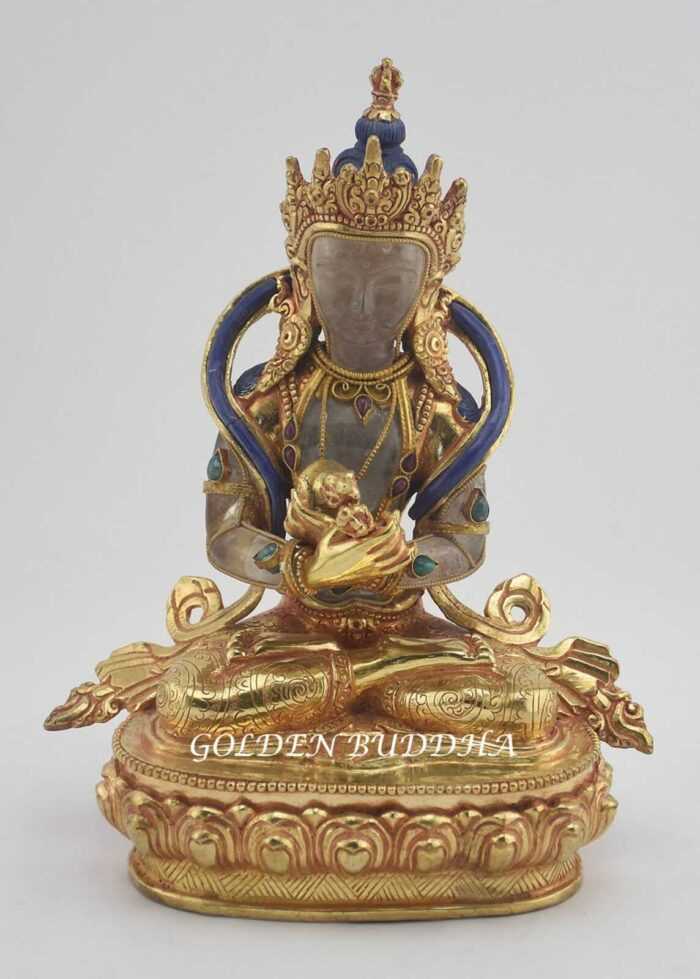
This Tibetan Manjushri sculpture belongs to a coordinated collection of crystal and 24K gold gilded statues created by the same master artisan. The figures share similar dimensions, materials, crystal carving, embedded stones, pedestal proportions, gilding, and overall quality, allowing two or three statues to be displayed together as a visually balanced shrine set. Available companion pieces include the Nepali Cintachakra statue, Vajradhara statue, Tibetan Avalokiteshvara sculpture, Amitayus statue, Green Tara statue, and Nepali Vajrasattva statue.
Manjushri may be paired with Avalokiteshvara to unite wisdom and compassion, or with Vajrasattva to create a shrine centered on wisdom and purification. A three-piece grouping of Manjushri, Avalokiteshvara, and Vajradhara would combine transcendent wisdom, universal compassion, and primordial Buddhahood. Alternatively, Manjushri, Green Tara, and Cintachakra would form a balanced arrangement devoted to wisdom, active compassionate protection, healing, and longevity.
Shakya Artisans and Traditional Craftsmanship
The metal portions of this sculpture were created by master Shakya artisans of Patan using the traditional lost-wax method. A detailed wax model is prepared, enclosed within a clay mould, and heated so the wax flows out. Molten copper alloy is then poured into the resulting cavity. After the clay mould is broken away, the casting is refined, chased, engraved, polished, fitted around the separately carved crystal sections, and fire gilded in 24K pure gold.
This process produces an individually made sculpture rather than a mass-produced object. The crystal naturally contains subtle internal variations, and each wax model, engraving pattern, gemstone placement, and hand-finished surface differs slightly. The completed statue can also be prepared for filling, blessing, and consecration according to the buyer’s Buddhist tradition.
Custom Made Tibetan Manjushri Sculptures
Our artisans can also create custom made Tibetan Buddhist statues for private collectors, meditation centers, and monasteries. A custom Tibetan Manjushri sculpture may be commissioned in a preferred height, posture, pedestal style, gemstone arrangement, engraving pattern, and finish. Available options include oxidized copper, partial gilding, crystal-and-gold construction, or fire gilding in 24K pure gold.
Matching statues may also be commissioned as a complete set so that their dimensions, crystal tone, pedestal diameter, crown design, gemstone colors, and gilding remain consistent. This is especially useful when creating a coordinated arrangement of Manjushri with Avalokiteshvara and Vajrapani, or when assembling a larger altar around complementary practices of wisdom, compassion, purification, protection, and longevity.
Authentic, Handmade in Nepal
Every statue is handcrafted in Patan, Nepal, using traditional lost wax casting and comes with a certificate of authenticity issued by Nepal’s Department of Archaeology, verifying its materials, technique, and origin.