
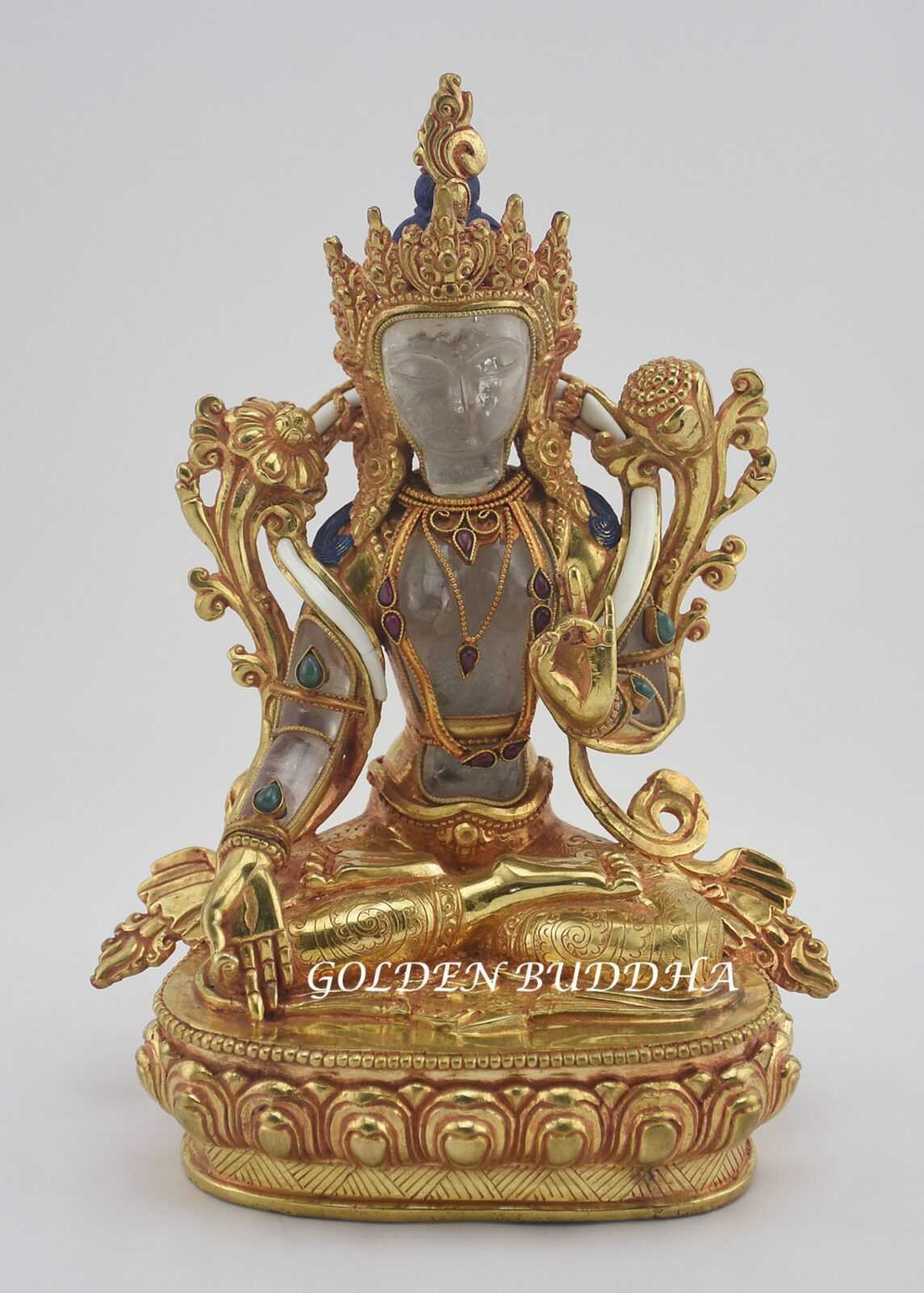

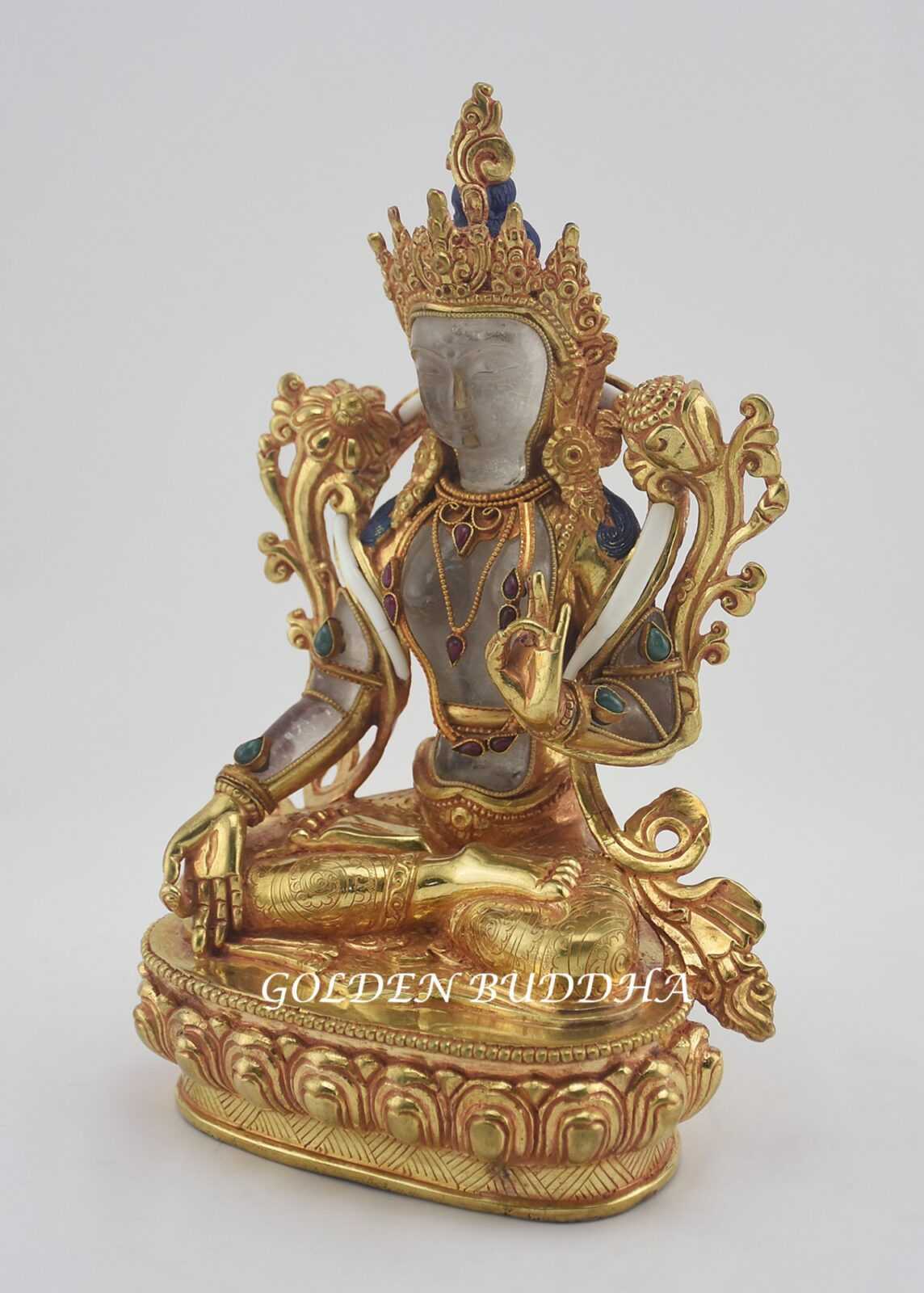
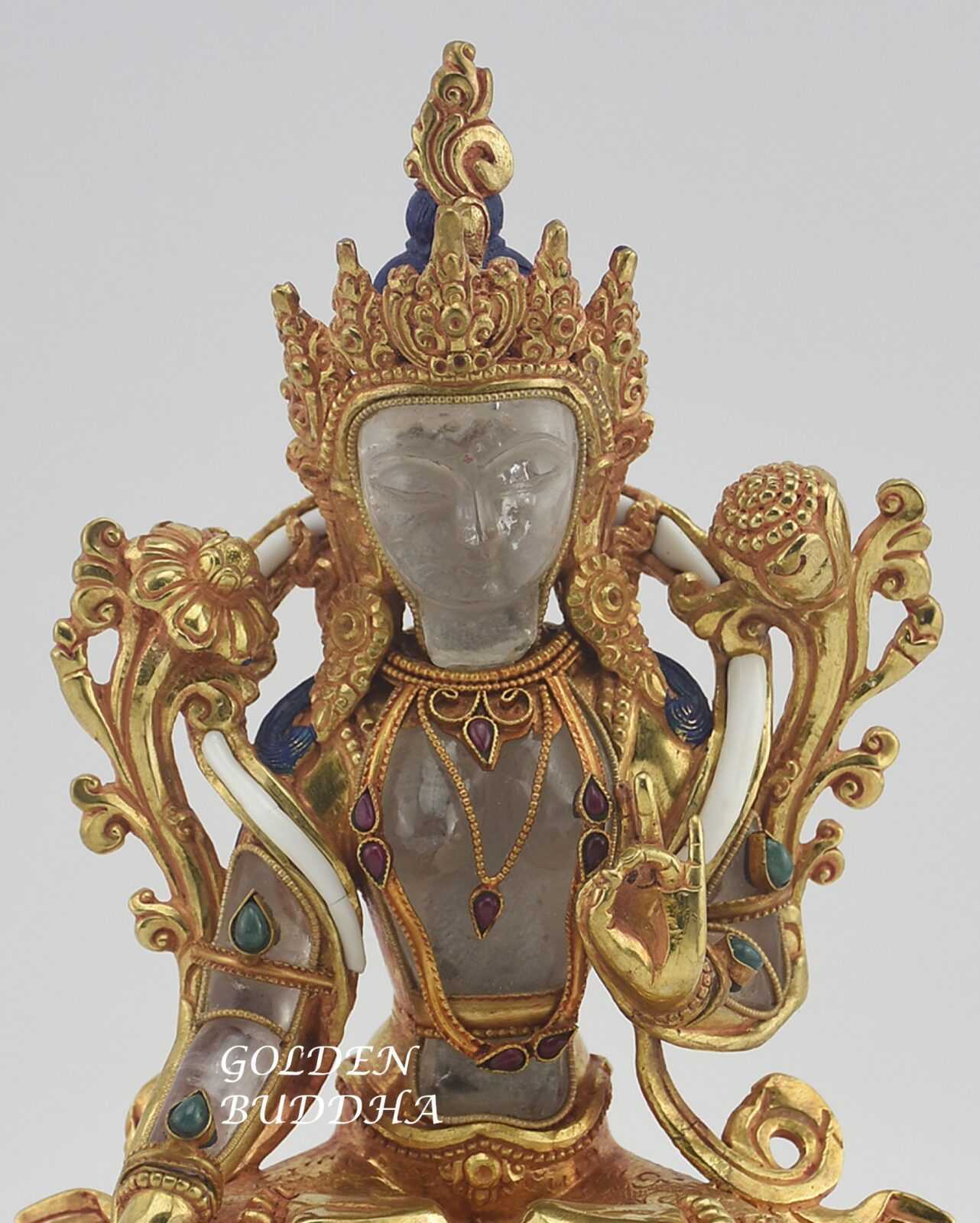
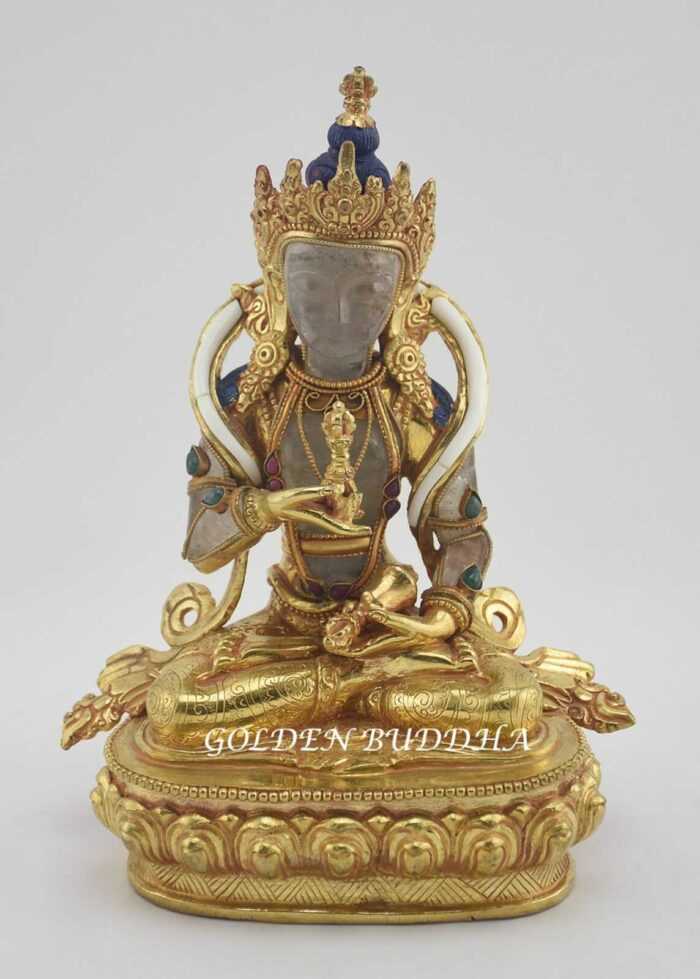
This extraordinary 9″ Nepali Cintachakra statue combines translucent hand-carved crystal with the refined metalworking traditions of Patan, Nepal. The artisan carved White Tara’s serene face and much of her body directly from crystal, then framed the stone with a copper alloy crown, jewelry, arms, robes, and lotus throne. These surrounding elements are fire gilded in 24K pure gold, creating a luminous contrast between the natural clarity of the crystal and the warm brilliance of the gilded metal. Deep red and green semi-precious stones are already embedded throughout the necklaces, armbands, crown, and ornaments, while white inlay ribbons curve gracefully behind the shoulders.
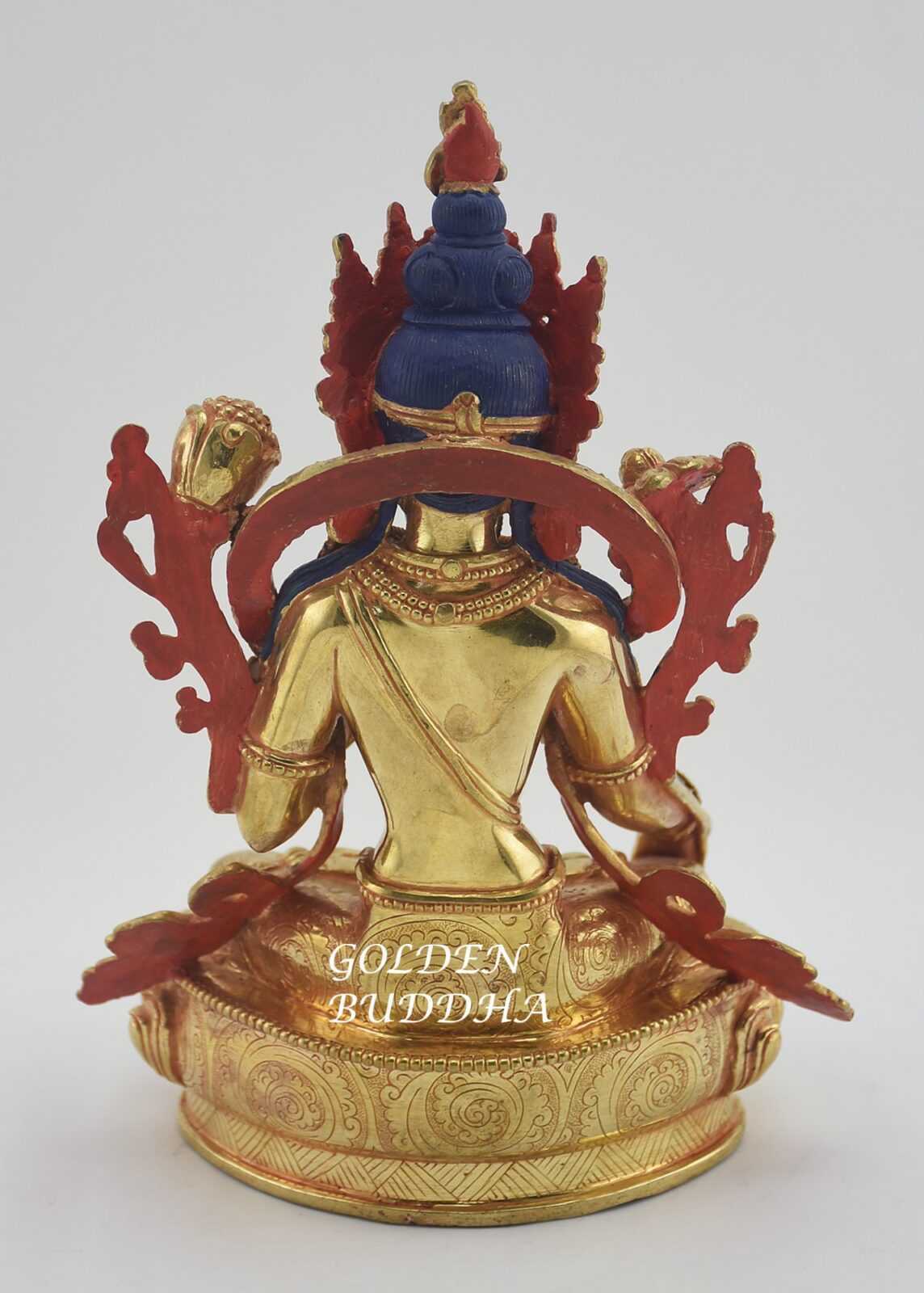
The sculptor has given equal attention to the larger architectural details of the piece. A tall Bodhisattva crown rises above her blue-painted hair, elaborate earrings frame the crystal face, and two flowering lotus stems grow upward beside the shoulders. Fine scrolling engravings decorate her gilded lower garments, the upper surface of the throne, and the broad lotus pedestal. The reverse is also carefully finished, with engraved floral medallions extending across the back of her dhoti and pedestal rather than leaving the sculpture plain where it faces the shrine wall.
Cintachakra is a form of White Tara, also known as Dolkar or Sita Tara, whose name is commonly interpreted as the “Wish-Fulfilling Wheel.” She is revered for her compassionate activity, healing presence, and close association with longevity practice. Together with Amitayus and Namgyalma, White Tara belongs to the three long life deities of Tibetan Buddhism, each representing a complementary aspect of spiritual vitality, protection, and the removal of obstacles that shorten life or interrupt Dharma practice.
Nepali Cintachakra Statue Features
This Nepali Cintachakra statue is seated in the full lotus posture upon a single lotus pedestal with a beaded upper rim and a lower band of deeply carved petals. Her right hand extends across the knee in the Varada mudra, the gesture of generosity, blessings, and the granting of aspirations. The open palm is directed toward devotees, expressing White Tara’s willingness to offer compassionate assistance without hesitation.
Her left hand is raised near the heart while holding the stem of an utpala lotus between the fingers. The two floral stems rise behind her shoulders within curling leaves and vines, visually surrounding the crystal body with symbols of purity. The lotus represents enlightenment emerging unstained from the suffering and confusion of samsara, just as the flower rises from muddy water without being marked by it.
Seven Eyes of the Nepali Cintachakra Statue
The seven eyes are the defining characteristic of Cintachakra and other traditional White Tara forms. In addition to her two ordinary eyes, she possesses a third eye of wisdom upon the forehead, an eye in each palm, and an eye on the sole of each foot. These seven eyes signify an awareness that extends beyond ordinary perception. She sees suffering wherever it arises and responds with wisdom rather than with partiality, attachment, or confusion.
The third eye represents direct perception of ultimate reality, while the eyes of the hands and feet indicate that every compassionate action and every movement is guided by enlightened awareness. Her crystal complexion reinforces this symbolism: the transparent material suggests clarity, purity, and an unobstructed vision capable of perceiving the needs of sentient beings in every direction. Learn more about her history, mudras, and female enlightened identity in our guide to Tara’s origins and meaning, or compare other interpretations in our collection of White Tara statues.
A Coordinated Crystal Buddhist Statue Set
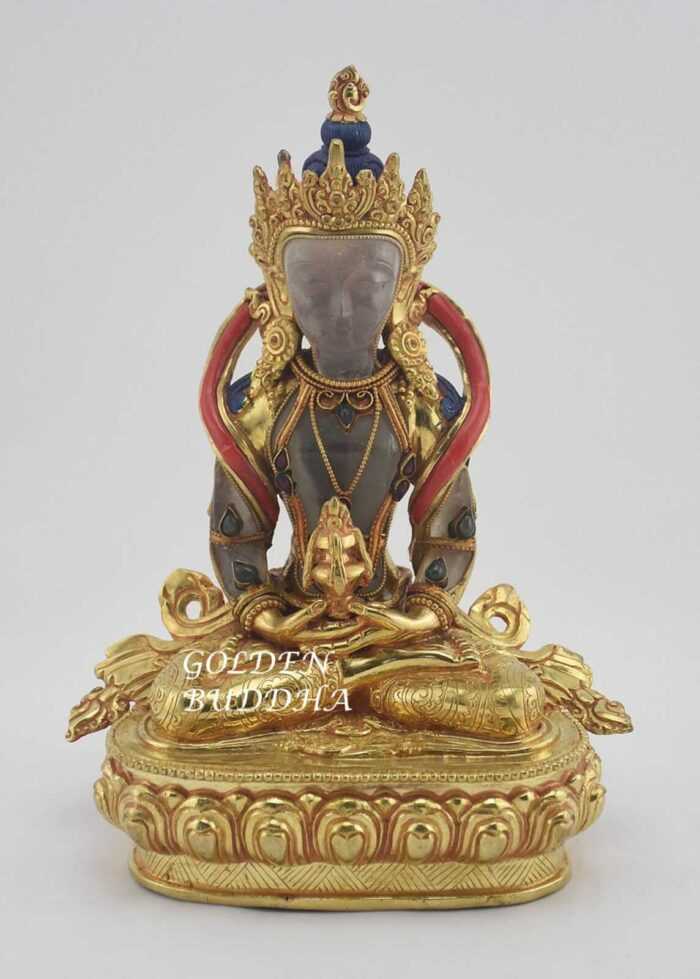
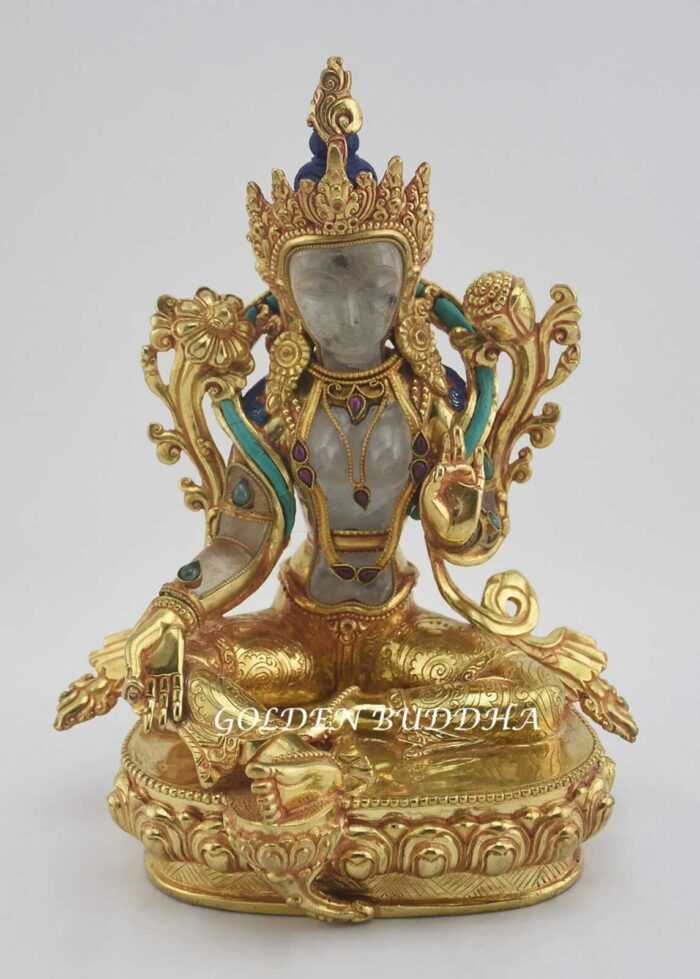
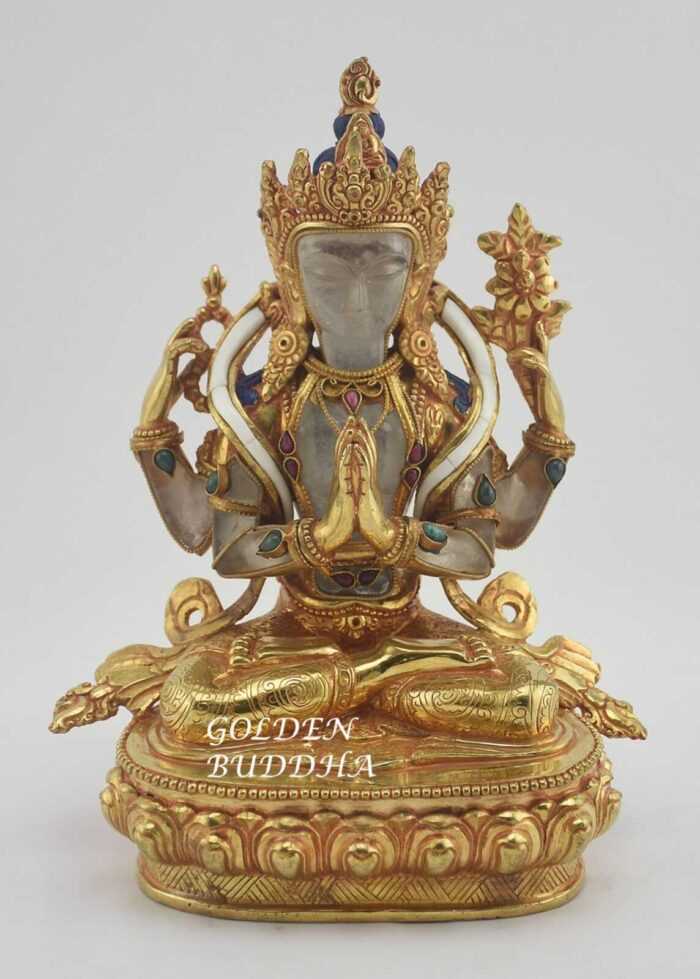
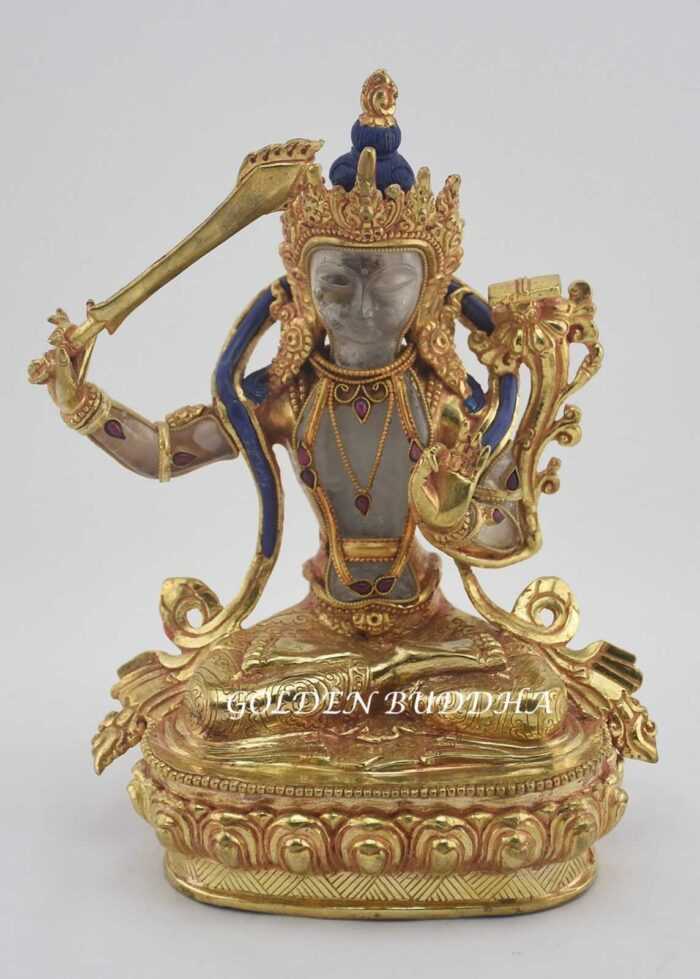
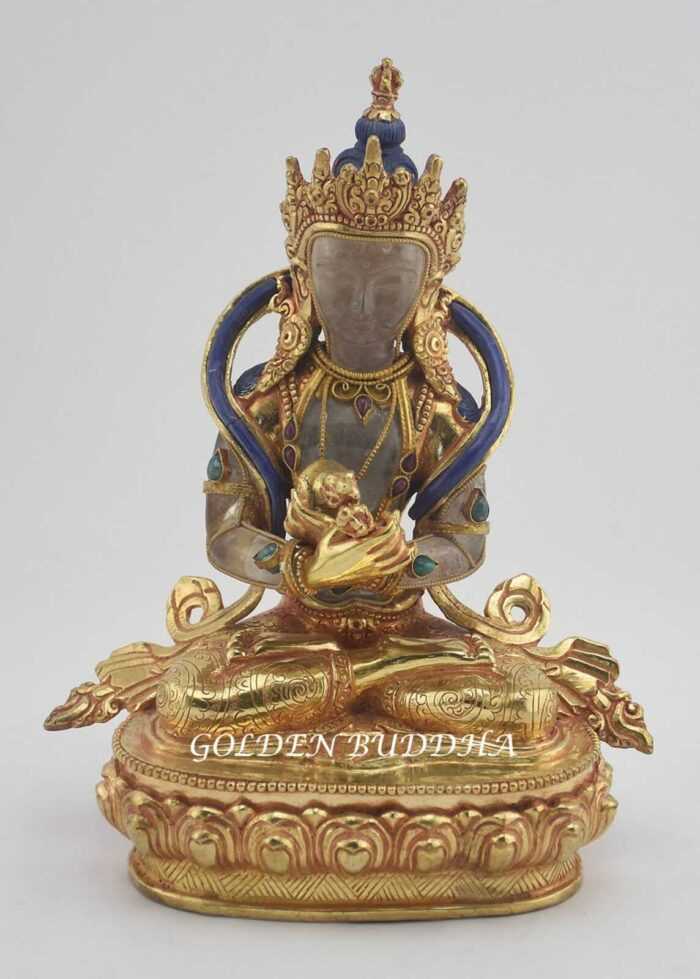
This Nepali Cintachakra statue belongs to a coordinated series of crystal and 24K gold gilded sculptures created by the same master artisan. Each statue shares closely matched dimensions, materials, gemstone accents, crystal carving, lotus pedestal proportions, and gilded finish. Two or three figures may therefore be arranged together as a balanced shrine set without the differences in scale or workmanship that can occur when statues are selected from unrelated workshops.
Available companion sculptures include the Tibetan Manjushri statue, Vajradhara statue, Tibetan Avalokiteshvara sculpture, Amitayus statue, Green Tara statue, and Nepali Vajrasattva statue. A Cintachakra, Amitayus, and Vajrasattva grouping would unite longevity and purification practices, while White Tara, Green Tara, and Avalokiteshvara would create a harmonious shrine centered on compassionate activity. Vajradhara, Manjushri, and Vajrasattva may be combined for an altar emphasizing primordial enlightenment, wisdom, and purification.
Custom Made Nepali Cintachakra Statues
Collectors, meditation centers, and monasteries may also commission custom made Tibetan Buddhist statues from our master artisans in Patan. A custom Nepali Cintachakra statue may be created in a preferred size with personalized crystal selection, gemstone placement, engraving patterns, crown design, lotus pedestal proportions, and facial detailing. The sculpture may be completed with an oxidized copper treatment, partial gilding, or fire gilding in 24K pure gold, depending on the intended shrine and aesthetic.
Matching statues may be commissioned together so that their height, pedestal diameter, crystal tone, gilding, and ornamental details remain consistent across the entire altar. After completion, the statue can be prepared for filling, blessing, and consecration according to the buyer’s Buddhist lineage, transforming a finely crafted Himalayan sculpture into a deeply personal object of devotional practice.
Authentic, Handmade in Nepal
Every statue is handcrafted in Patan, Nepal, using traditional lost wax casting and comes with a certificate of authenticity issued by Nepal’s Department of Archaeology, verifying its materials, technique, and origin.
Reviews
There are no reviews yet.