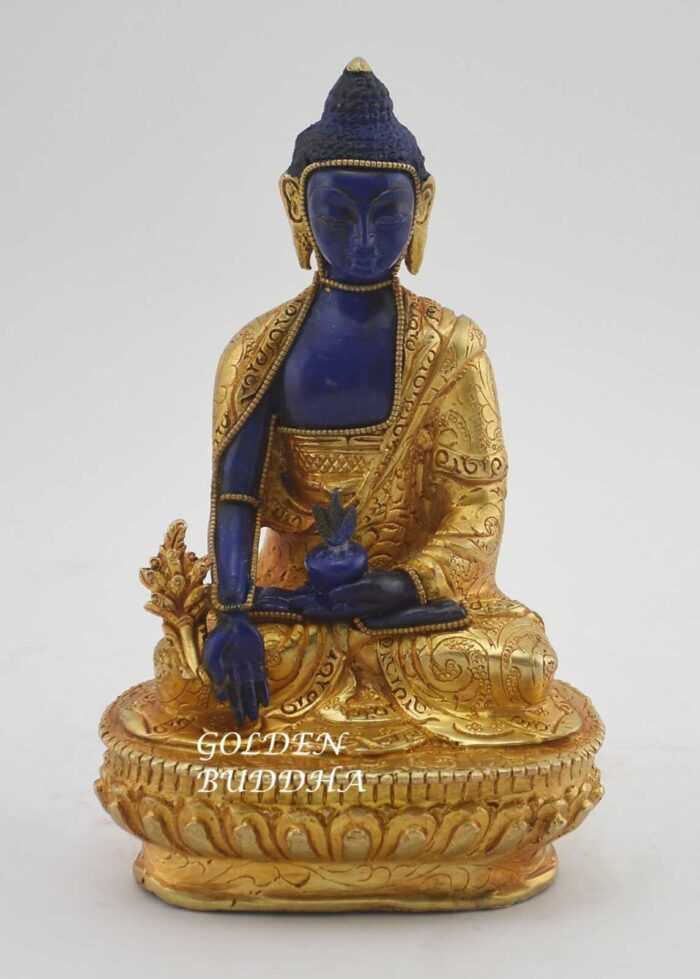

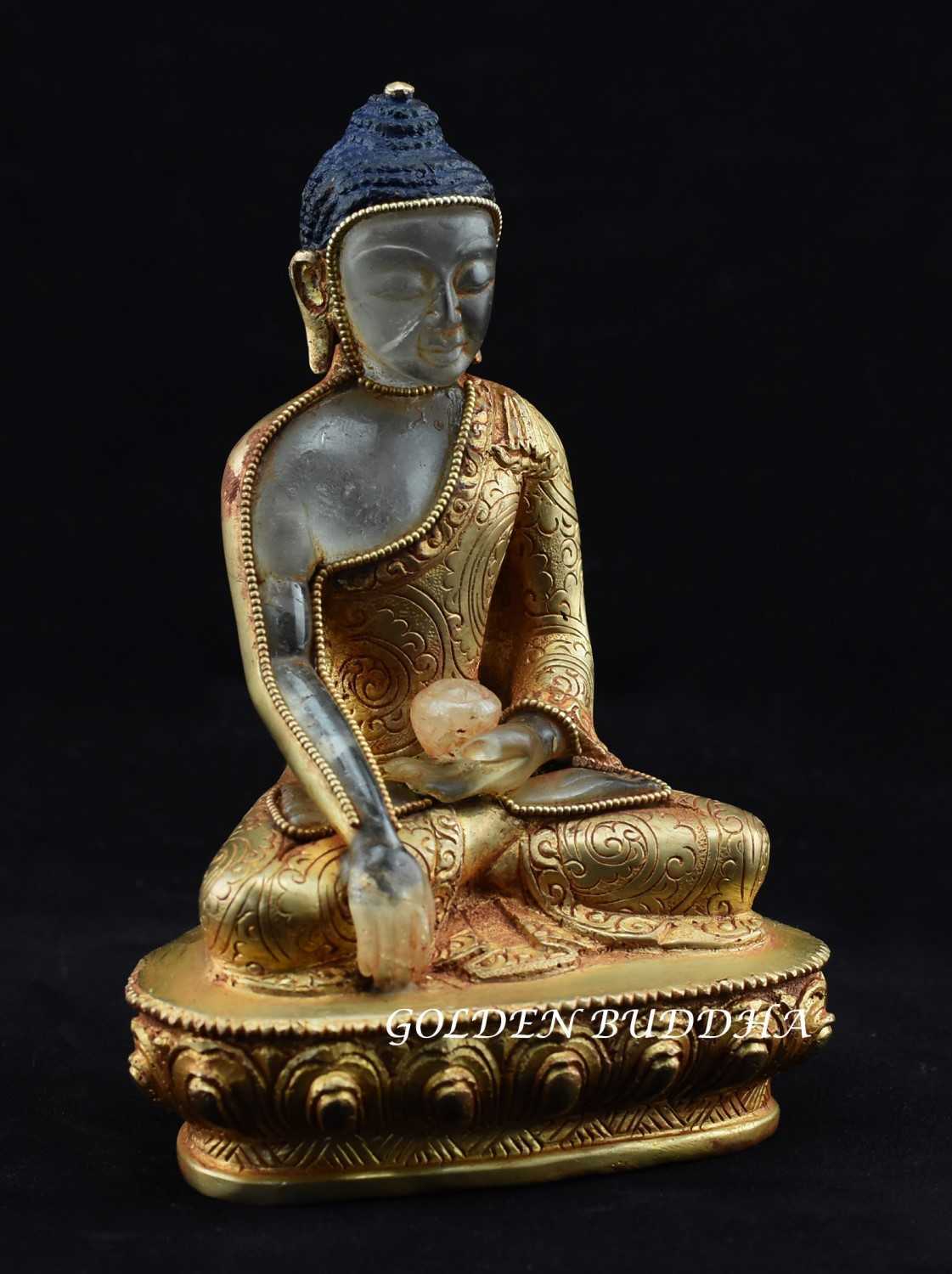
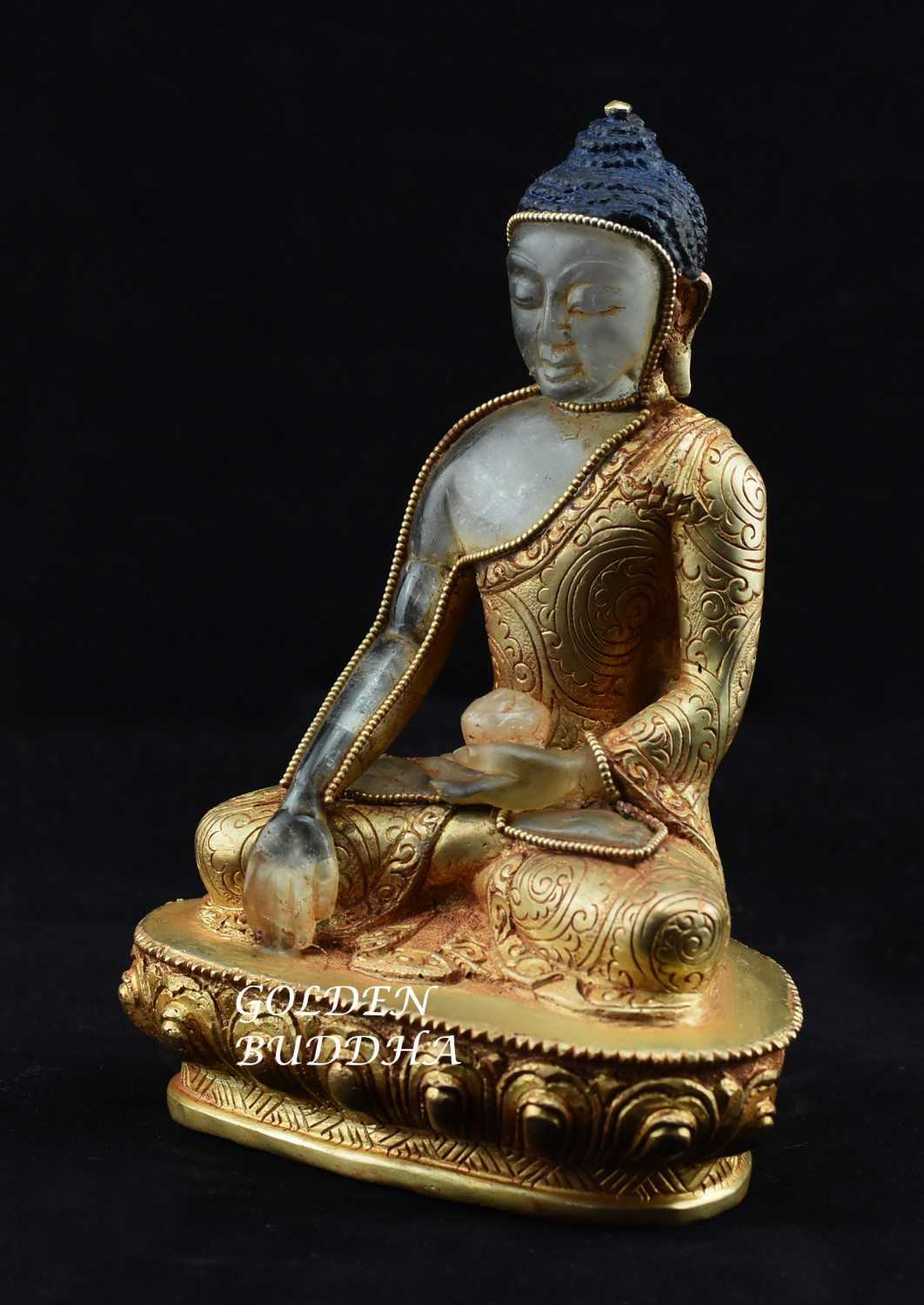
This distinctive 5.75-inch Shakyamuni Buddha Tomba Sculpture combines traditional Nepali metalwork with hand-carved natural crystal to create an unusually luminous interpretation of the Historical Buddha. The face, exposed torso, right arm and hands are formed from translucent crystal, while the monastic robe and broad lotus pedestal are handmade from copper alloy using the traditional lost-wax casting method and completed with an 18K gold electroplated finish. A crystal alms bowl rests within the left palm. Measuring 5.75 inches high, 4 inches wide and 2.5 inches deep, the sculpture is compact enough for a personal altar while displaying craftsmanship normally associated with substantially larger Buddhist statues.
Shakyamuni Buddha Tomba Sculpture Iconography
Shakyamuni, the “Sage of the Shakya Clan,” is the Historical Buddha who attained enlightenment as Siddhartha Gautama and taught the Dharma for the benefit of sentient beings. In Tibetan tradition he is also known as Shakya Thubpa, “Able One of the Shakyas,” and Sangye Tomba, “The Teacher Buddha.” He is portrayed here seated in the full lotus posture with elongated earlobes, a peaceful contemplative expression and tightly textured blue-black hair rising into the ushnisha. Learn more about the life, meaning and symbolism of Shakyamuni Buddha in our complete guide.
Earth-Touching Mudra and Crystal Alms Bowl
His right hand extends across the knee in Bhumisparsha mudra, the Earth-Touching Gesture associated with the defining moment of Shakyamuni’s enlightenment beneath the Bodhi tree. When Mara challenged Siddhartha’s attainment, he touched the earth and called it to witness the merit accumulated through his countless previous lives. The gesture consequently represents unwavering determination, the defeat of delusion and the realization of awakening. Our guide explains the Bhumisparsha mudra and Shakyamuni Buddha iconography in greater detail.
The left hand rests palm upward in the lap in Dhyana mudra and supports a rounded alms bowl carved from translucent crystal. The bowl recalls the Buddha’s renunciation of princely privilege and his adoption of the mendicant life. Here its pale natural translucency visually connects it with the crystal body, producing a striking contrast against the warm gold of the surrounding robe.
Crystal and Gold Shakyamuni Buddha Tomba Sculpture
The juxtaposition of materials is the sculpture’s defining artistic feature. Natural variations and cloudy inclusions remain visible within the crystal, particularly across the face, chest and extended hand, emphasizing that these components were carved from natural stone rather than reproduced in glass. Delicate gold-colored beaded borders frame the crystal face and exposed torso, visually joining the stone elements to the metal garment.
Hand-Engraved Monastic Robes and Lotus Throne
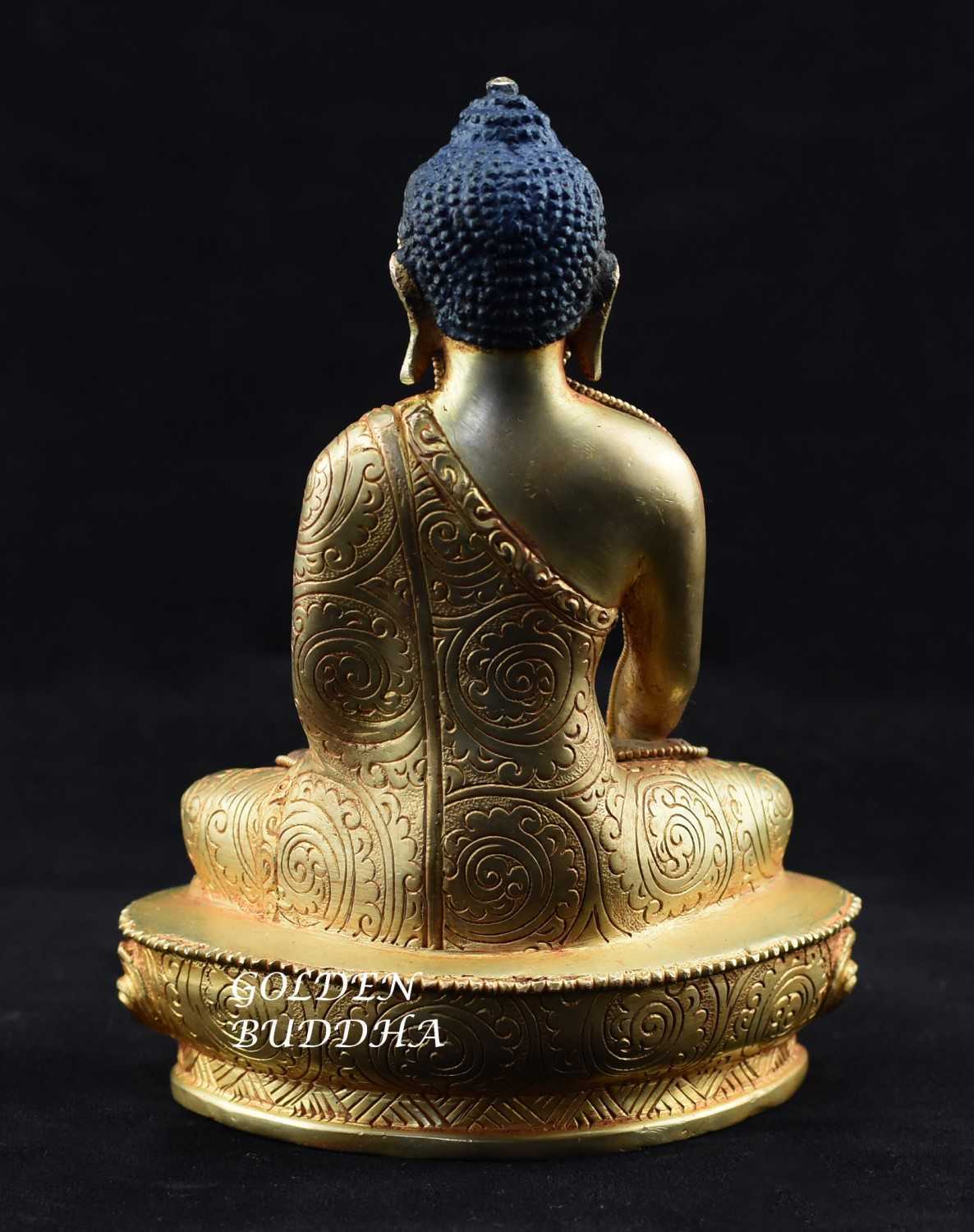
Extensive hand engraving covers the gold-finished monastic robe. Large curling foliate and cloud-like patterns follow the shoulder, sleeve, torso and folded legs, while raised beaded borders clearly define the garment edges. The reverse photograph reveals that this workmanship continues across the back, where large spiraling motifs fill nearly the entire robe. Shakyamuni sits upon a broad single lotus pedestal with deeply modeled petals, a beaded upper border and a geometric lower course, creating a substantial foundation beneath the compact figure.
Shakyamuni Buddha and Red Coral Amitabha
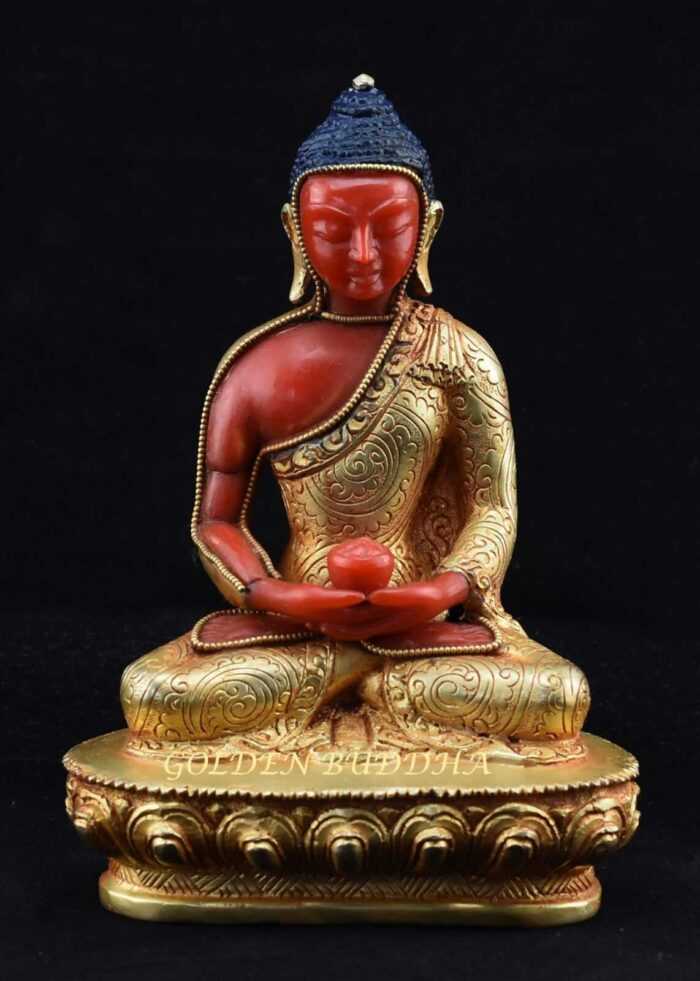
This sculpture would form an exceptional pair with our Red Coral Amitabha Buddha Statue. Both measure 5.75 inches high, 4 inches wide and 2.5 inches deep and combine unusual natural-material treatments with richly engraved gold-finished robes. Shakyamuni represents the Historical Buddha who rediscovered and taught the Dharma in our present age, while Amitabha embodies Infinite Light and the compassionate vows associated with Sukhavati, the Western Pure Land. Together they connect the historical foundation of Buddhist teaching with the Mahayana aspiration for favorable conditions in which beings may continue their progress toward awakening. Their crystal and deep-red surfaces also provide a dramatic complementary contrast while their gold robes and matching dimensions create visual continuity.
Consecrating a Shakyamuni Buddha Tomba Sculpture
A Buddhist statue intended for devotional practice may traditionally be filled with sacred mantras, texts and other appropriate substances before ritual consecration. This preparation distinguishes the spiritual function of a sacred image from its artistic value alone. Our guide to Buddha statue filling, blessing and consecration explains the traditional process and the role of a qualified Buddhist teacher in consecrating the completed image.
Custom Tibetan Buddhist Statues
Collectors, practitioners, monasteries and Dharma centers seeking a different size or interpretation may commission a sculpture through our custom Tibetan Buddhist statues service. Our Nepali artisans can create Shakyamuni statues in preferred dimensions with traditional 24K gold fire gilding, antiquated oxidized surfaces, partial gilding or other appropriate finishes. Robe engraving, lotus pedestal designs and complementary statues may also be coordinated to create a unified altar arrangement while preserving the traditional iconography and proportions of Shakyamuni Buddha.
Authentic, Handmade in Nepal
Every statue is handcrafted in Patan, Nepal, using traditional lost wax casting and comes with a certificate of authenticity issued by Nepal’s Department of Archaeology, verifying its materials, technique, and origin.