
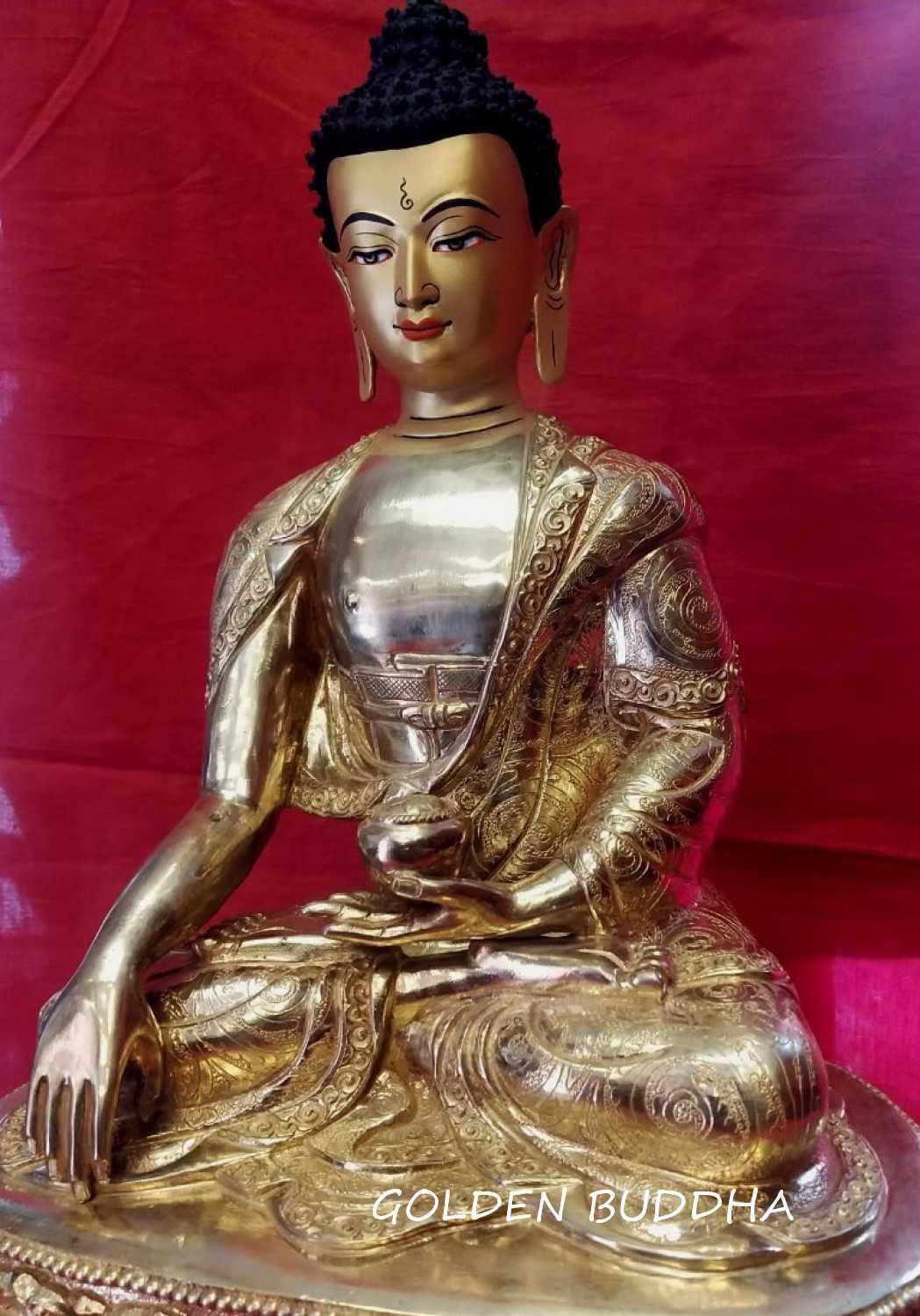


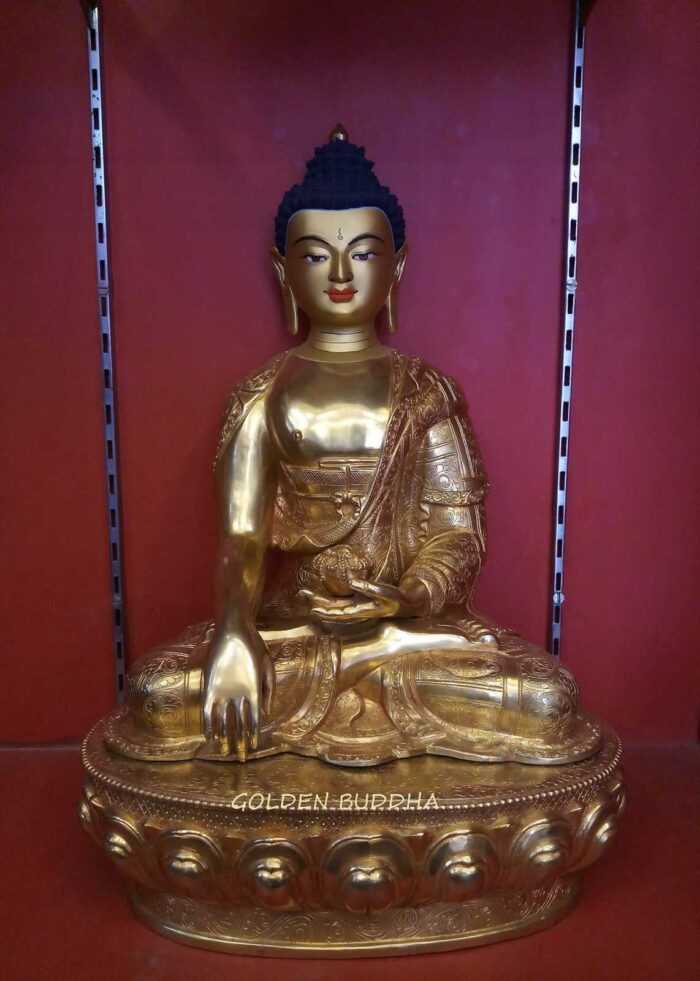
This 12-inch Nepali Shakyamuni Buddha Statue portrays Siddhartha Gautama at the moment associated with his awakening beneath the Bodhi tree. Handmade in Nepal from copper alloy using the traditional lost-wax casting method, the sculpture is fire gilded in 24K gold and distinguished by exceptionally elaborate engraving across the Buddha’s monastic robes. His composed expression, dark curled hair, elongated earlobes and finely painted face create a serene focal point for a Buddhist altar, meditation room or collection of Himalayan sacred art.
Nepali Shakyamuni Buddha Statue and the Earth-Touching Mudra
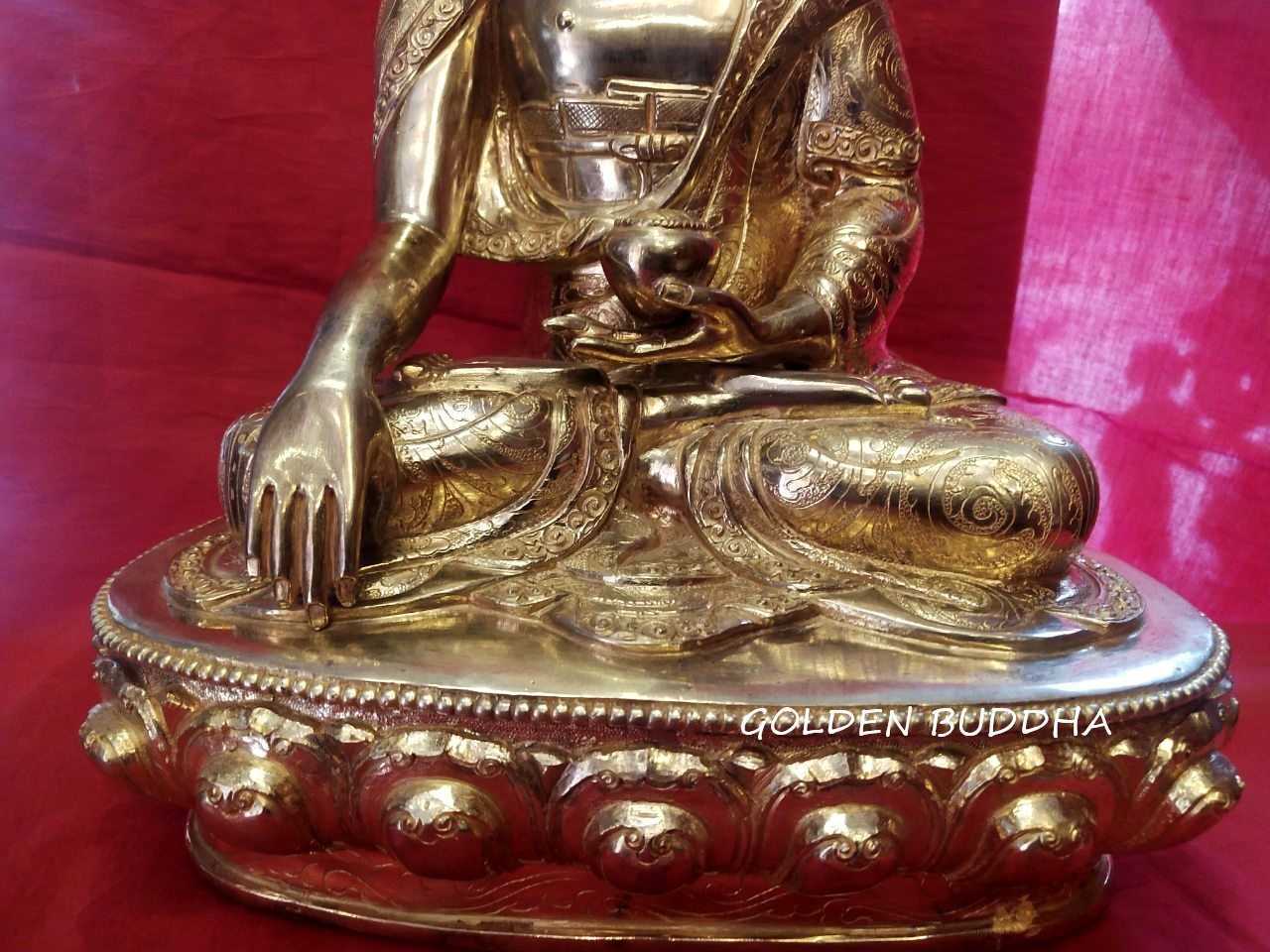
Shakyamuni’s right arm extends naturally across his knee with the fingertips directed toward the earth in Bhumisparsha mudra. This earth-touching gesture recalls the culmination of Siddhartha Gautama’s meditation at Bodh Gaya, when he called the earth to witness his realization in response to Mara’s challenge. It consequently became one of the defining visual attributes of the historical Buddha. Our illustrated guide explores the meaning of Shakyamuni Buddha’s mudras and their relationship to his enlightenment.
The left hand rests palm-up in the lap in Dhyana mudra, supporting a beautifully detailed lidded alms bowl. Together these attributes unite meditation with the renunciant life adopted by Siddhartha after leaving his royal household. Shakyamuni sits in the full lotus posture, establishing the balanced triangular composition traditionally associated with meditative stability.
Elaborately Engraved Monastic Robes
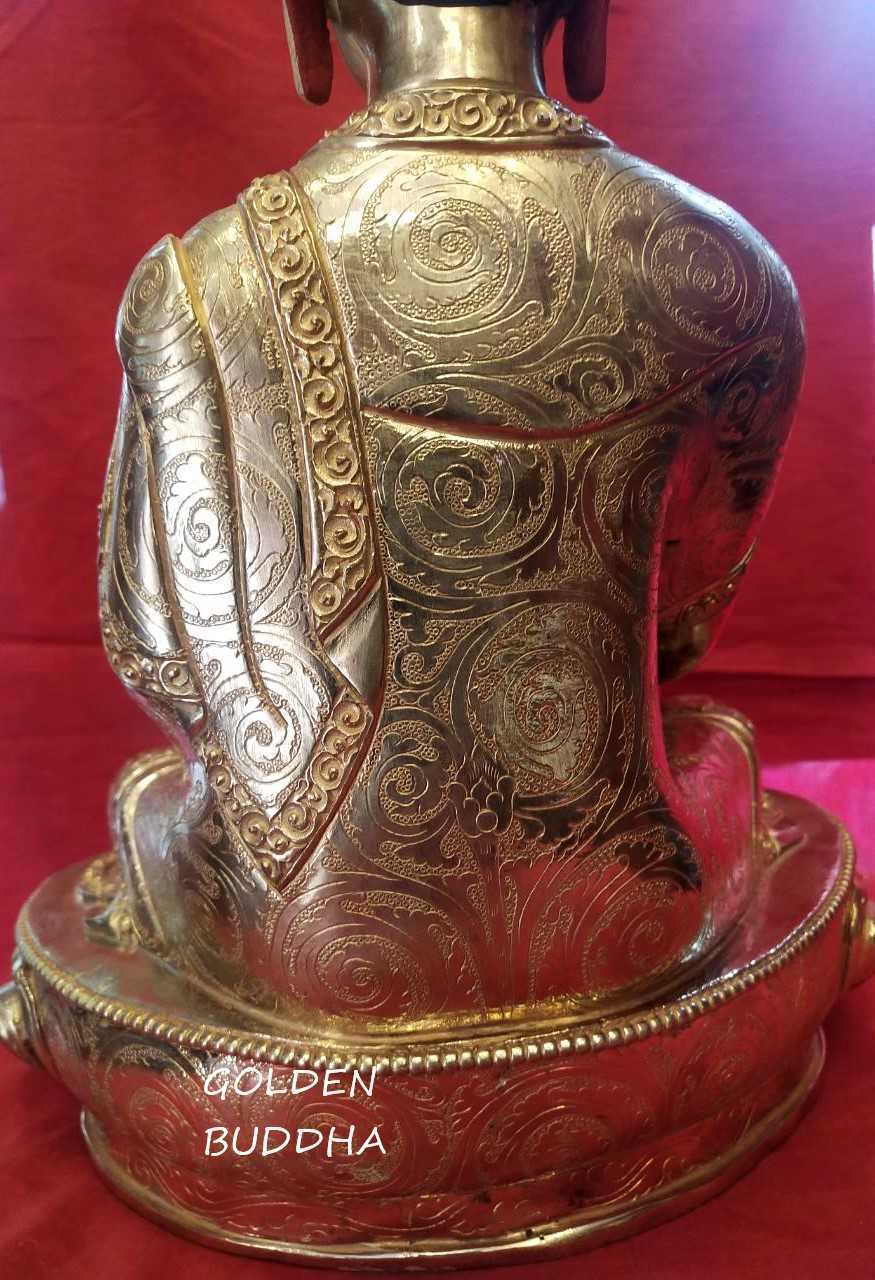
One of the most impressive characteristics of this sculpture is the extraordinary treatment of the robes. Rather than leaving large surfaces undecorated, the artisan covered the garments with dense hand-engraved scrolling botanical patterns. Decorative borders follow the robe edges, sleeves, waist and folds cascading over the crossed legs. The rear view is equally accomplished: elaborate scrolling designs cover almost the entire back of the robe, framed by raised ornamental borders. This extensive workmanship makes the statue visually finished from every viewing angle rather than treating the rear as a secondary surface.
Below Shakyamuni is a broad single-lotus pedestal with rounded petals and a beaded upper border. The pedestal and surrounding surfaces carry additional engraved ornamentation that complements the robe without distracting from the calm simplicity of the Buddha’s posture.
24K Gold Gilding and Traditional Buddha Iconography
The copper-alloy sculpture is fire gilded in 24K gold, while the face is separately hand painted with 18K gold and natural pigments to produce the delicate eyes, brows and softly colored lips visible in the photographs. Dark blue-black hair emphasizes the tightly arranged curls and prominent ushnisha. The elongated earlobes recall Siddhartha’s former princely life, while the urna centered above the brows represents awakened perception. Learn more about these characteristics in our guide to Shakyamuni Buddha and the historical Buddha’s iconography.
Filling and Consecrating a Nepali Shakyamuni Buddha Statue
A traditional Buddhist statue may be spiritually prepared by filling its hollow interior with sacred substances, mantras and other appropriate materials before ritual consecration. This transforms the sculpture from an artistic representation into a properly prepared object of Buddhist practice according to Tibetan tradition. Buyers wishing to prepare this statue for an altar can learn about the process in our guide to Buddha statue filling, blessing and consecration.
Custom Made Shakyamuni Buddha Statues
For collectors, Dharma centers and practitioners seeking different dimensions or artistic specifications, we can commission a Shakyamuni directly from our Nepali artisans. Size, surface finish, gilding and selected decorative details can be discussed before production begins. Our custom Tibetan Buddhist statues service provides additional information about commissioning an individually made sacred sculpture in Nepal.
Authentic, Handmade in Nepal
Every statue is handcrafted in Patan, Nepal, using traditional lost wax casting and comes with a certificate of authenticity issued by Nepal’s Department of Archaeology, verifying its materials, technique, and origin.
Reviews
There are no reviews yet.