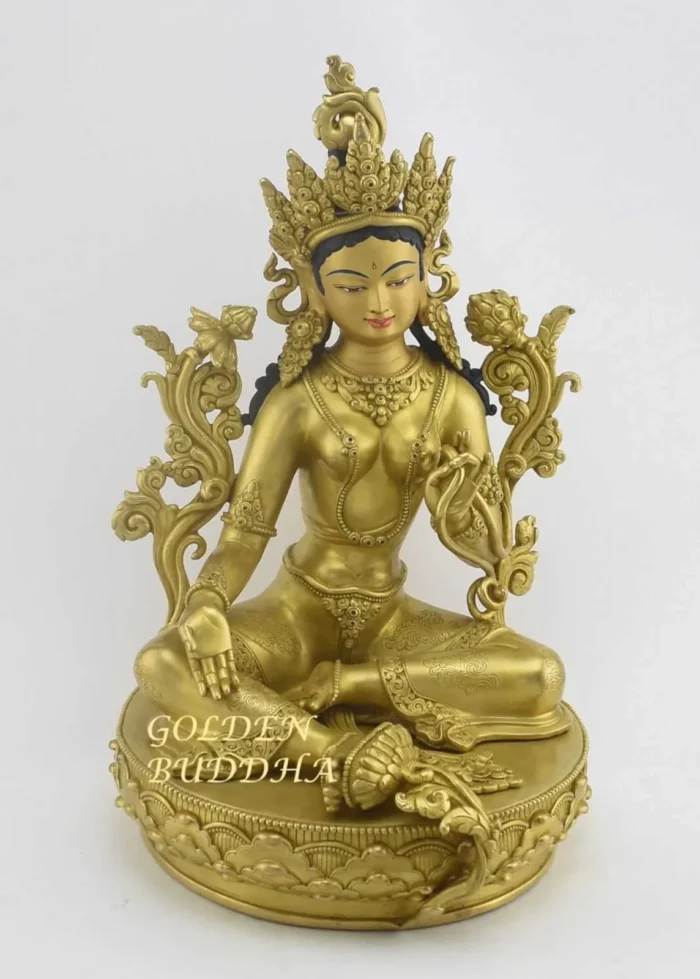
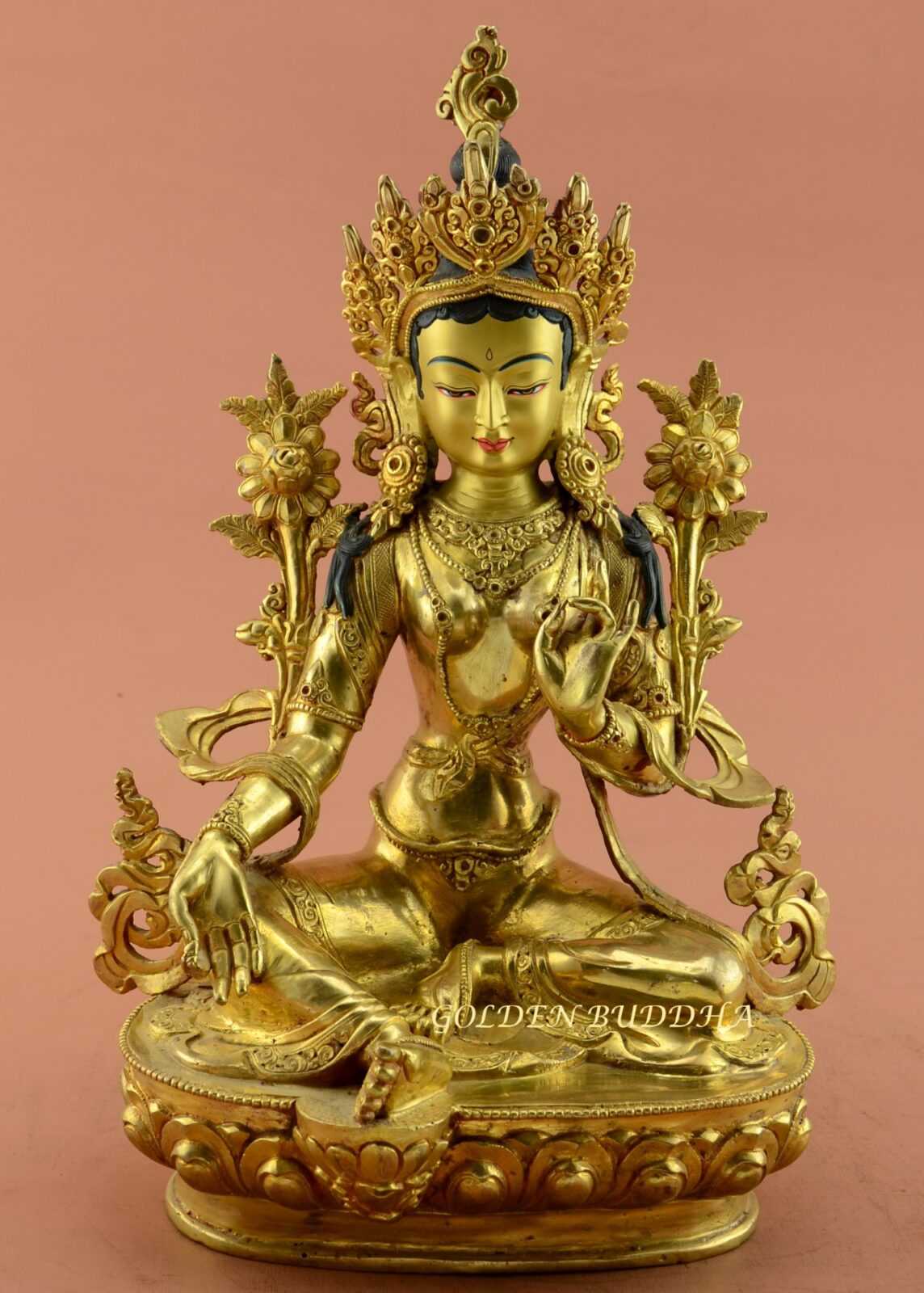
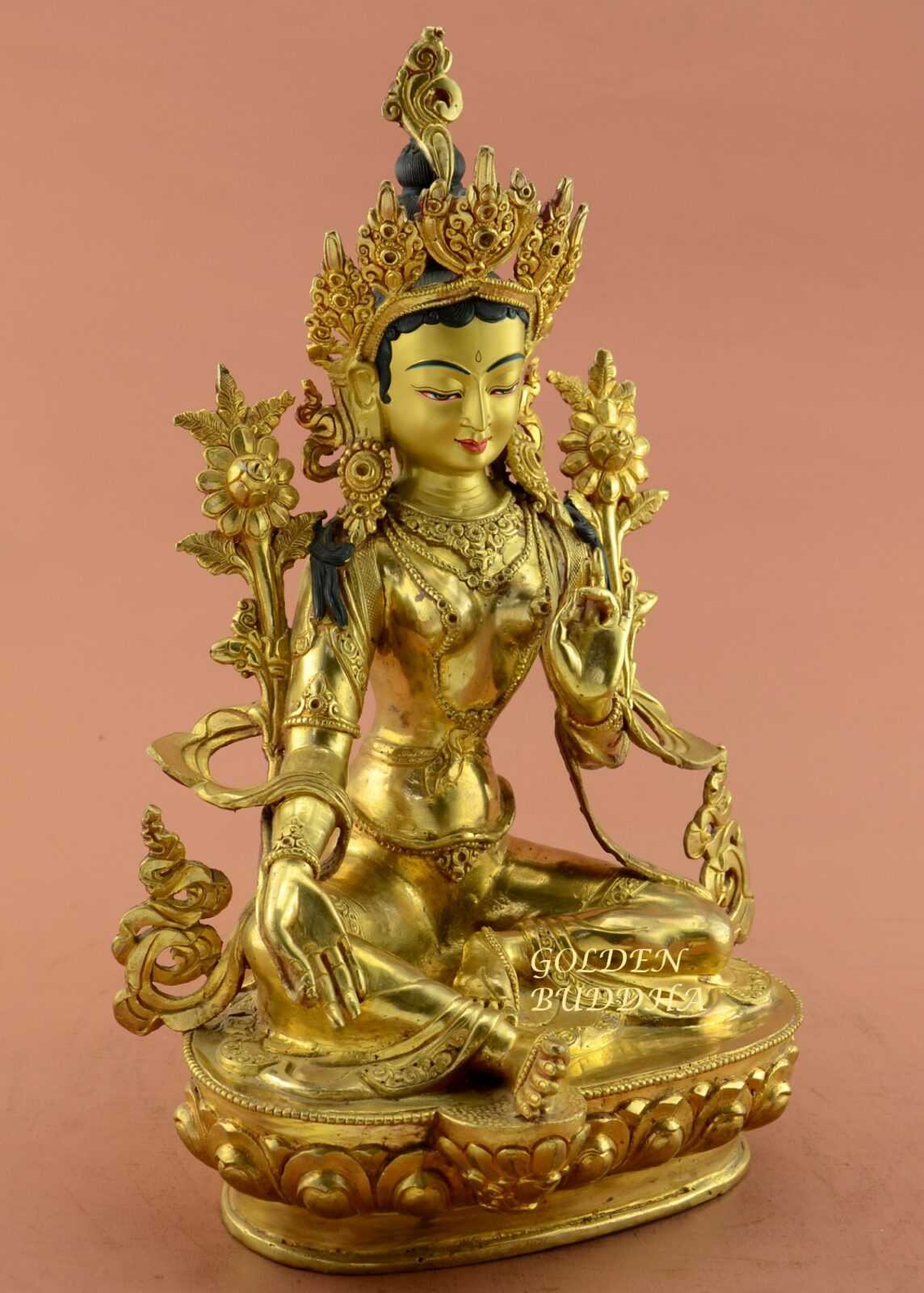
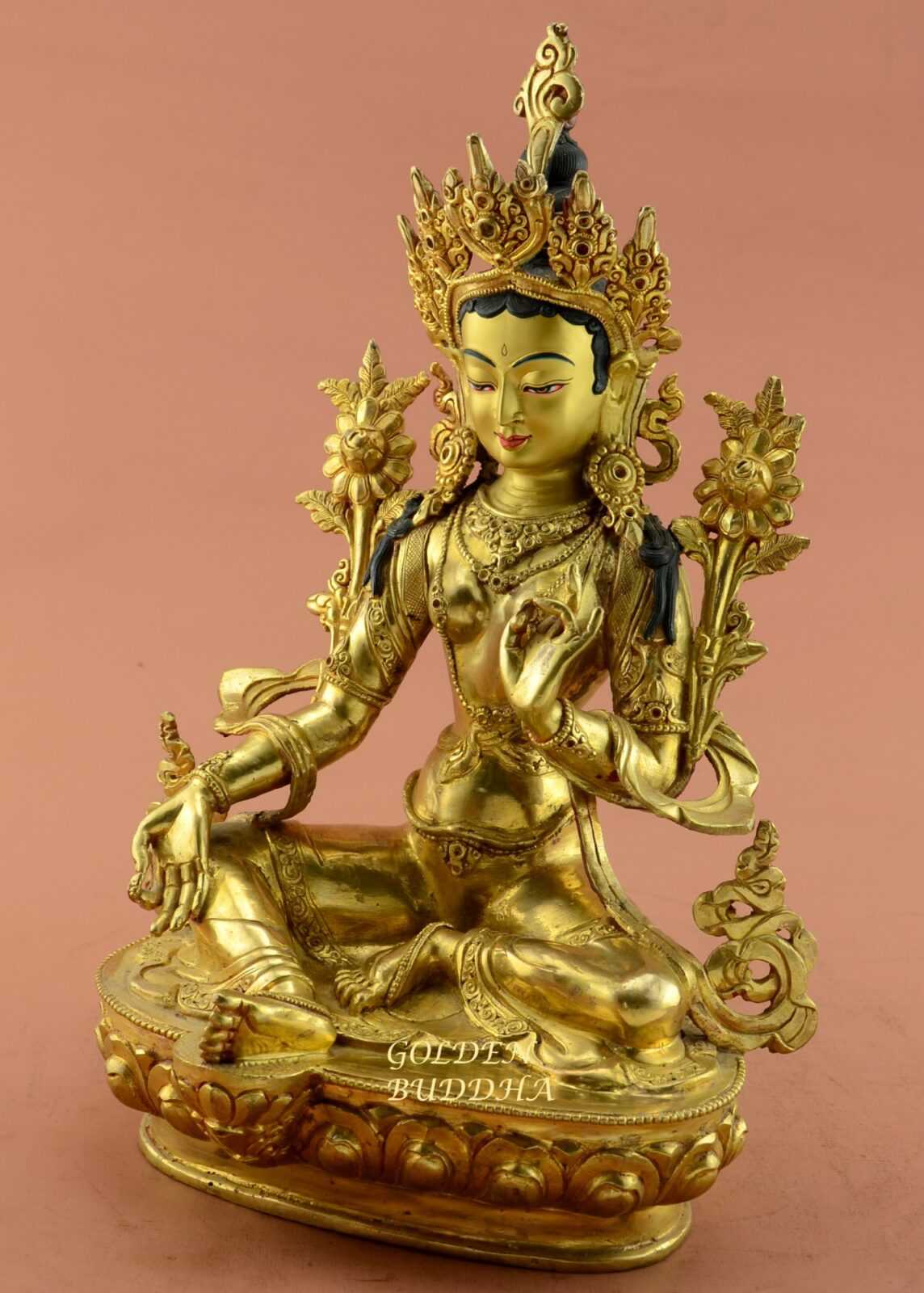
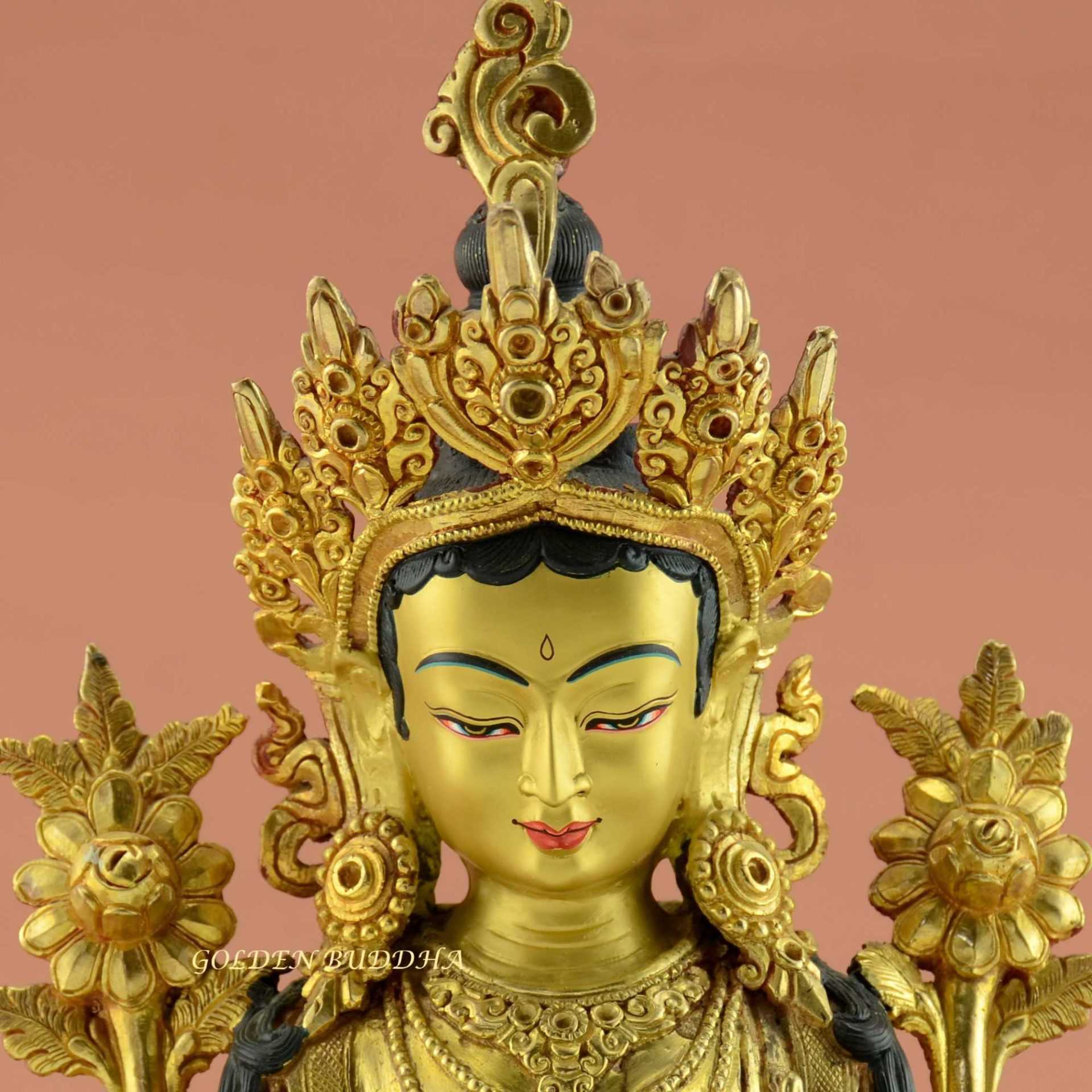
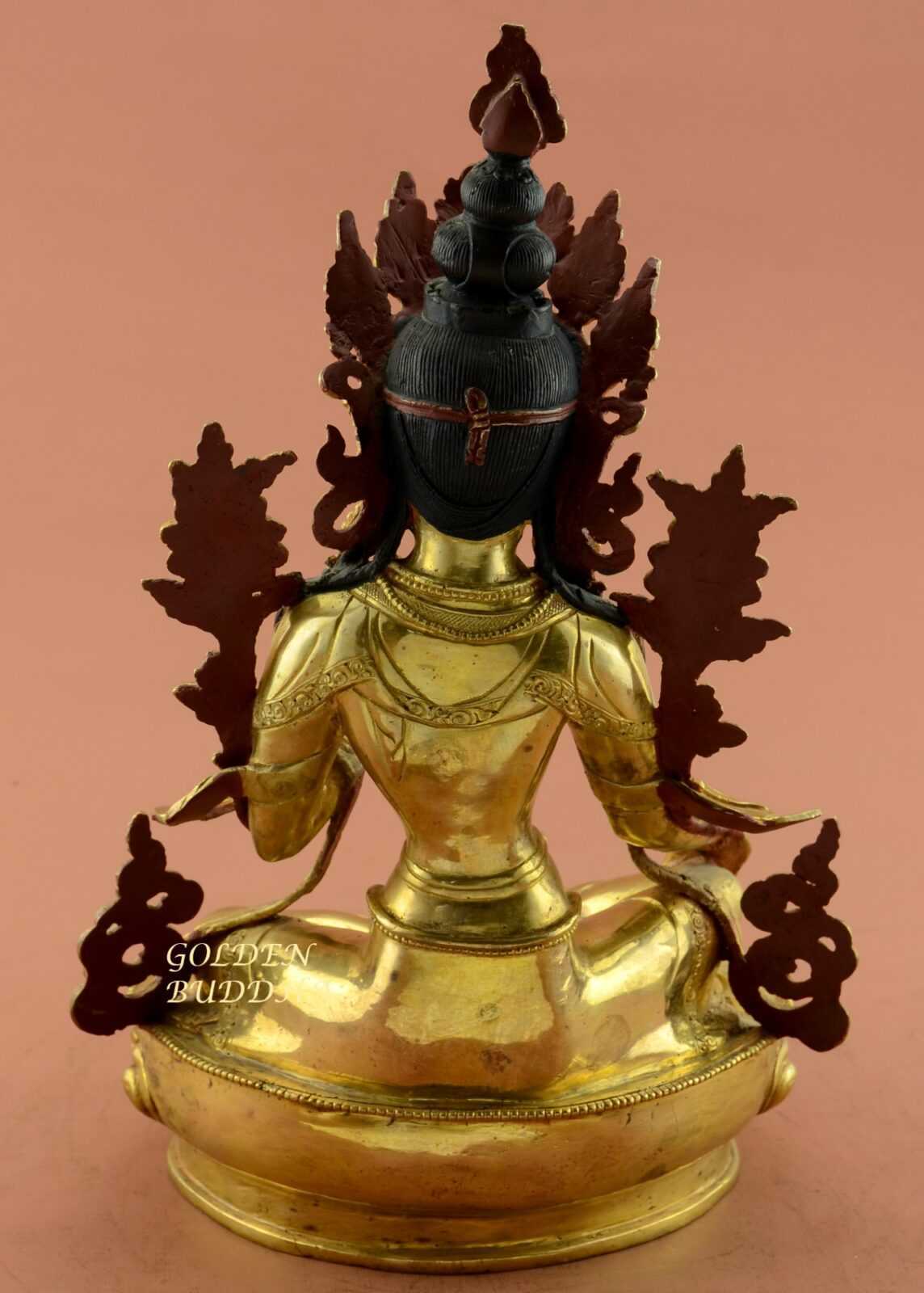
This beautiful 13.25-inch Nepali Arya Tara statue portrays Green Tara, known to Tibetan practitioners as Jetsun Dolma, in her immediately recognizable posture of compassionate readiness. Handmade in Patan, Nepal from copper alloy using the traditional lost wax casting method, the statue is fire gilded in 24K gold and finished with a serene face hand painted with 18K gold and natural pigments. Her elaborate Bodhisattva crown, layered necklaces, large earrings, armlets and bracelets surround the graceful figure with finely modeled ornamentation, while dark-painted hair and shoulder accents provide contrast against the warm gold surface.
Two flowering lotus stems rise symmetrically beside Tara’s shoulders, creating an elegant frame around her crown and upper body. Flowing celestial scarves curl outward at either side and descend toward the lotus throne, giving the sculpture a sense of movement appropriate to a deity associated with swift enlightened activity. The crown and jewelry contain settings that may be embellished with turquoise and red coral gemstones at the buyer’s request before shipping. Learn more about Green Tara and her meaning in Tibetan Buddhist practice.
Iconography of the Nepali Arya Tara Statue
Green Tara is portrayed in lalitasana, or royal ease posture. Her left leg remains drawn inward in contemplative repose while her right leg extends downward, expressing her readiness to rise immediately in response to suffering. This combination of meditative composure and physical readiness is central to Green Tara’s traditional iconography. Rather than compassion remaining an inward intention, Tara represents compassion transformed into immediate enlightened action.
Her lowered right hand displays Varada mudra, the open-handed gesture of generosity and the granting of blessings. Her left hand is raised near the heart while holding the stem of a lotus. A second lotus rises beside her opposite shoulder. The flowers, graceful hand gestures and poised posture combine with her peaceful expression to communicate both gentleness and readiness. Her youthful appearance represents an awakened activity that is perpetually fresh and responsive rather than passive.
Arya Tara — Swift Compassion and Liberation
Arya Tara may be translated as the “Noble Tara,” a devotional Sanskrit name expressing Tara’s role in freeing beings from fear and suffering. Green Tara is particularly associated with swift protection, overcoming obstacles and responding to those in distress. Her celebrated mantra, Om Tare Tuttare Ture Svaha, is among the most widely practiced mantras in Tibetan Buddhism. Our guide explores the Green Tara mantra and its meaning in greater detail.
Nepali Arya Tara Statue and Chenrezig — Compassion in Action
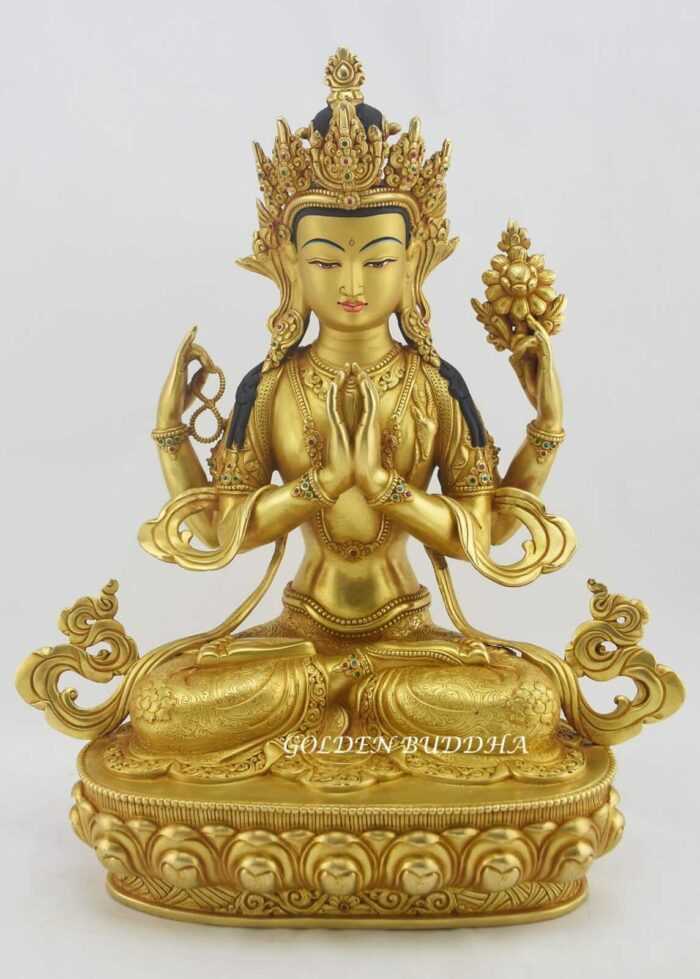
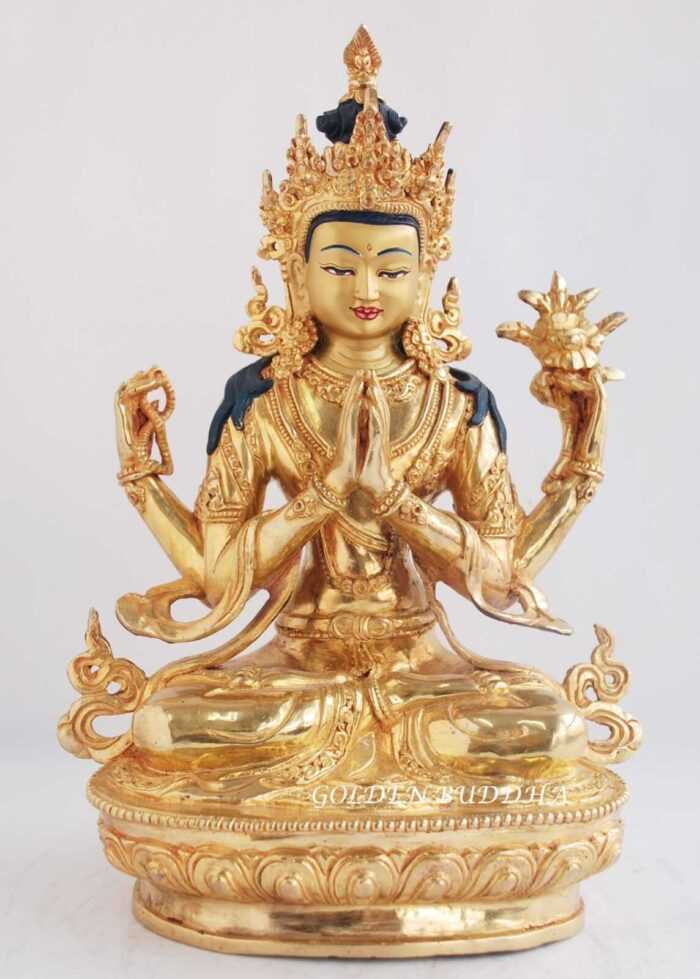
Green Tara and Chenrezig form an especially meaningful doctrinal pairing. According to a beloved Tibetan Buddhist tradition, Tara arose from a tear shed by Avalokiteshvara as he contemplated the suffering of sentient beings. Chenrezig therefore represents the immeasurable compassionate awareness that perceives suffering, while Tara expresses compassion moving swiftly into action. Their relationship makes this Arya Tara particularly suitable for pairing with our Masterpiece Chenrezig Statue. Displayed together, the two figures create a harmonious devotional arrangement centered upon compassionate awareness and compassionate activity.
Custom Made Green Tara and Chenrezig Statues
For practitioners, monasteries and collectors seeking a coordinated altar arrangement, we can also arrange custom made Tibetan Buddhist statues handcrafted in Nepal. Green Tara and Chenrezig are particularly well suited to commissioning as a matched pair because their relationship is not merely visual: it expresses two complementary dimensions of the same enlightened compassion. Chenrezig embodies the boundless awareness that hears the suffering of beings, while Green Tara embodies the fearless energy that responds without delay. Matching dimensions, gilding, lotus bases and artistic treatment can create a unified shrine set while preserving the traditional iconography and individual attributes of each deity.
Authentic, Handmade in Nepal
Every statue is handcrafted in Patan, Nepal, using traditional lost wax casting and comes with a certificate of authenticity issued by Nepal’s Department of Archaeology, verifying its materials, technique, and origin.