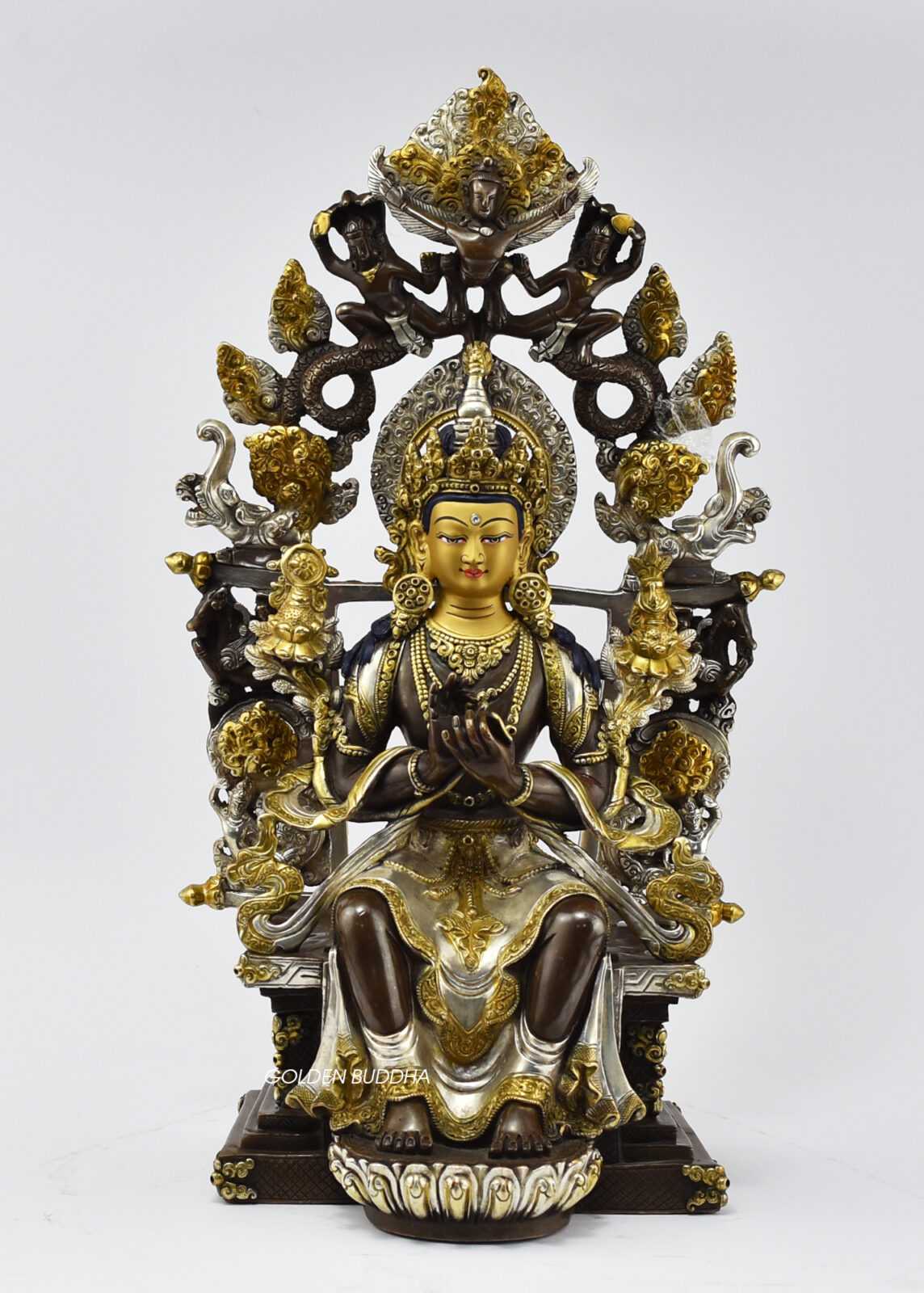
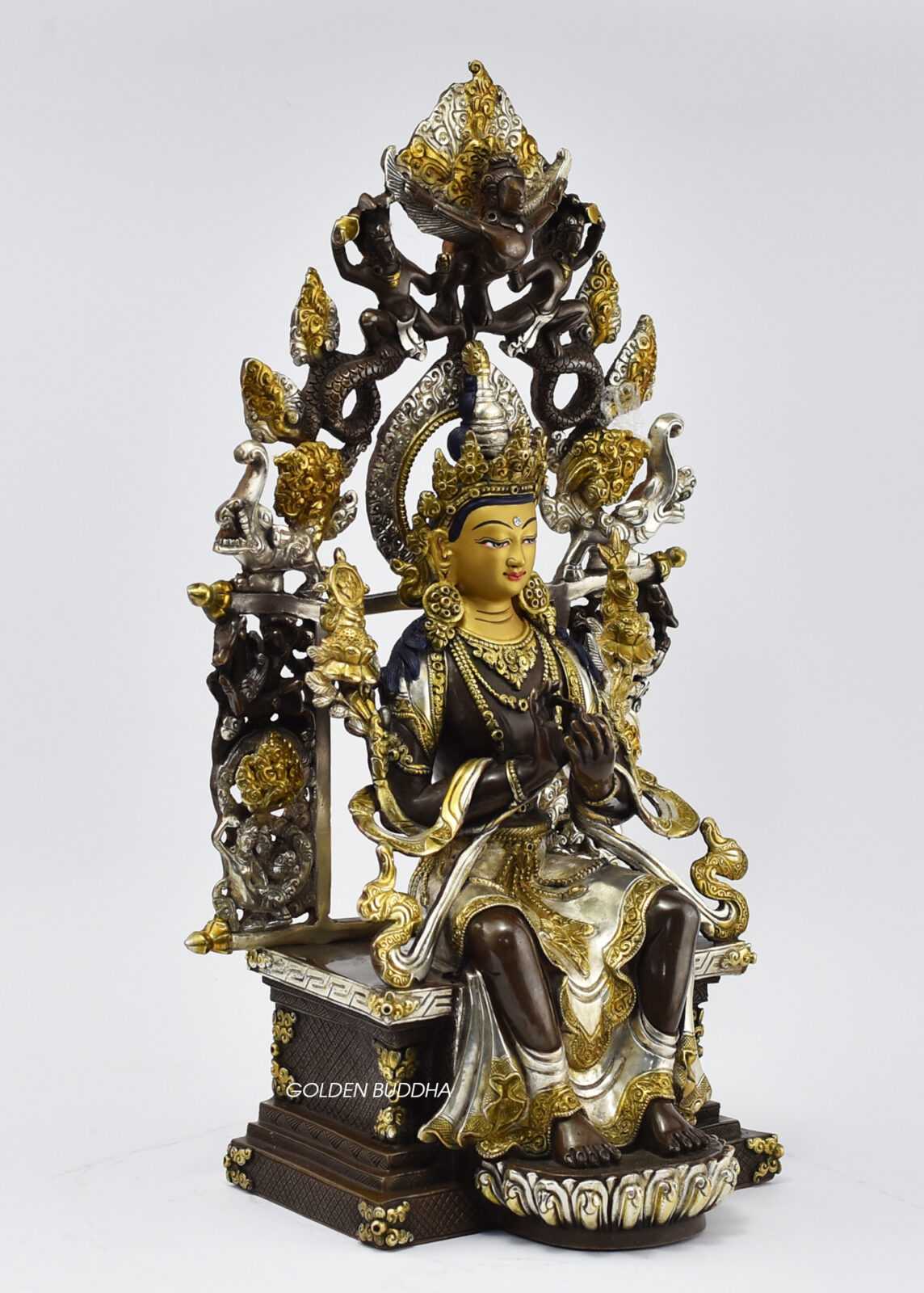
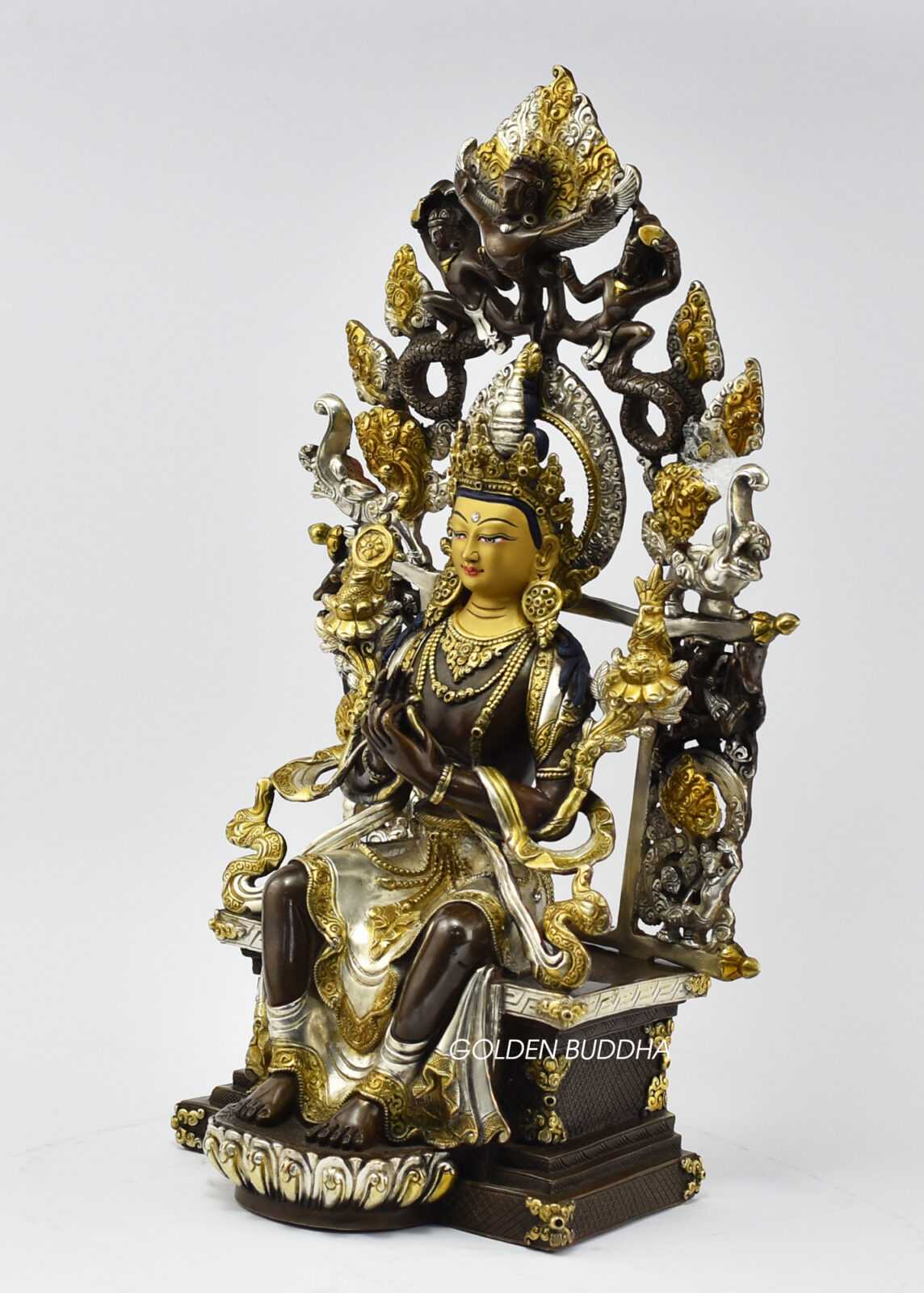
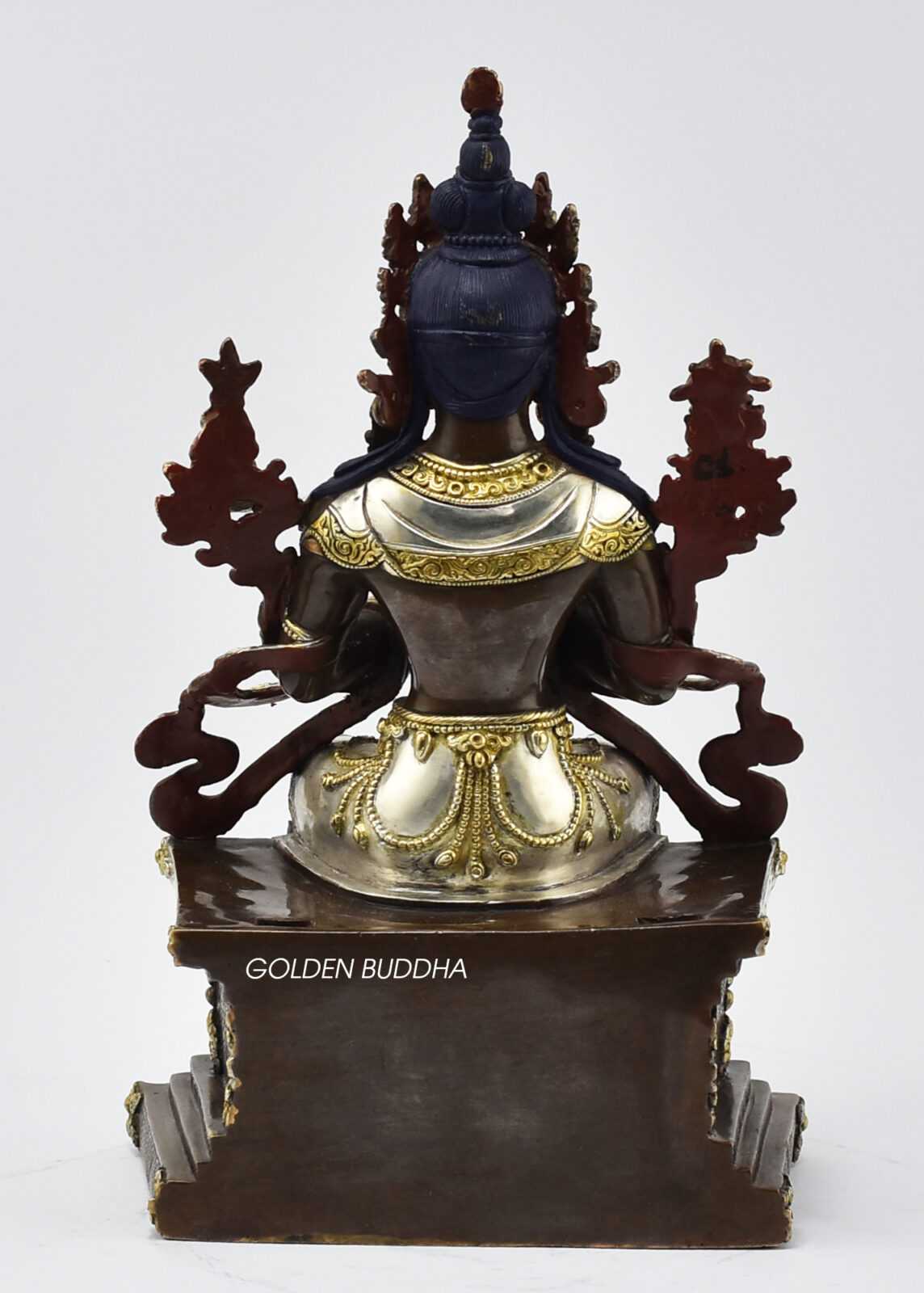
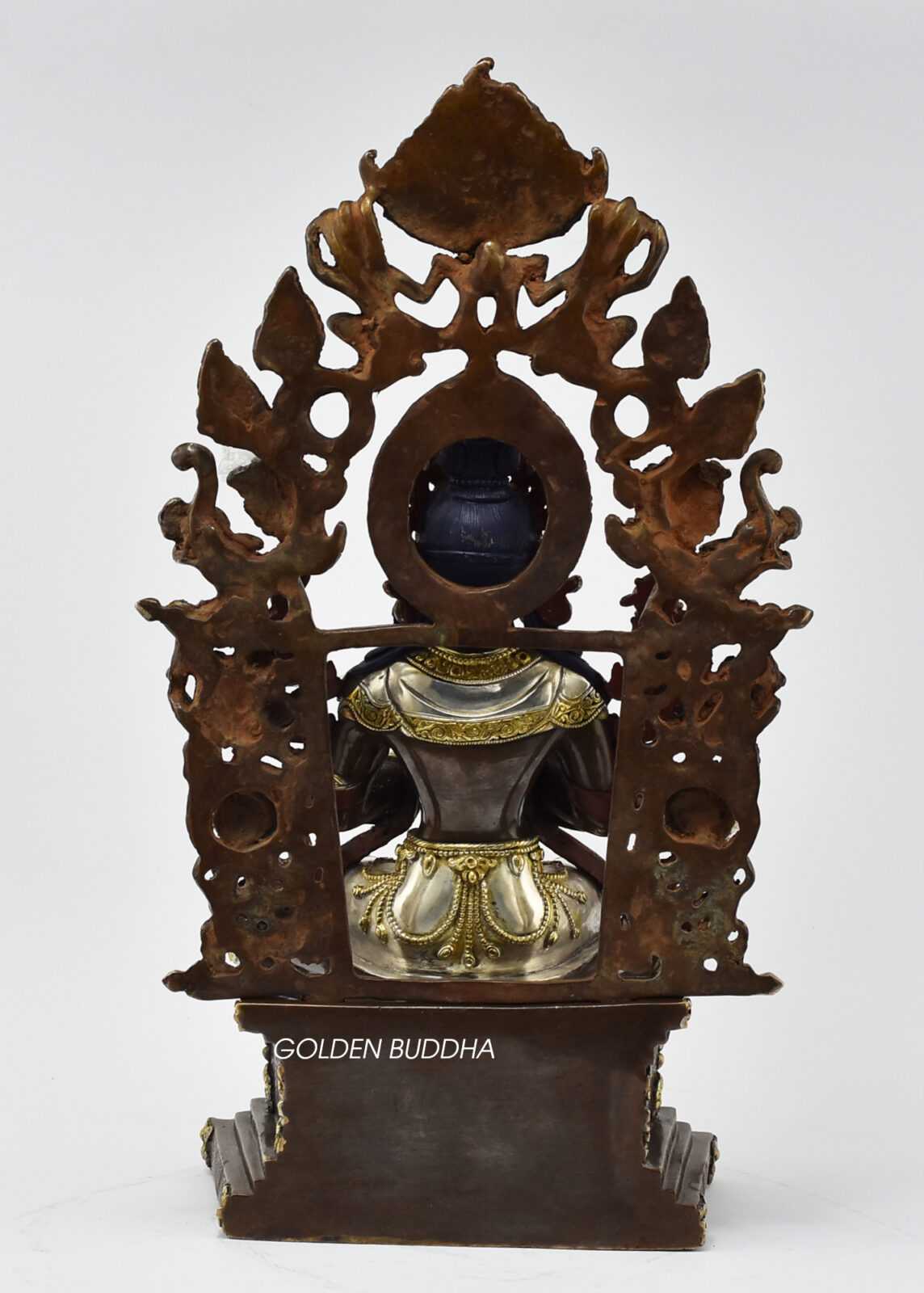
This remarkable 13.5-inch Handmade Maitreya Buddha Statue combines oxidized copper alloy, silver plating, and selective gold-plated ornamentation to create one of the most visually distinctive interpretations of the Future Buddha in our collection. Handmade in Patan, Nepal using the traditional lost-wax casting method, the sculpture measures 13.5 inches with its elaborate removable frame and 10 inches as the central Maitreya figure alone. The contrast between the dark copper-alloy body, pale silver robes, and warm gold crown, jewelry, lotus attributes, and decorative accents creates exceptional depth while directing attention toward the most important iconographic features.
Known in Sanskrit as Maitreya, “The Friendly One,” and in Tibetan as Jampa or Pakpa Jampa, “Noble Loving One,” Maitreya is revered as the Buddha of the future. Buddhist tradition teaches that he presently resides in Tusita Heaven, awaiting the distant age when the Dharma of Shakyamuni Buddha has disappeared from the world. At that time, Maitreya will descend, attain complete enlightenment, and once again turn the Wheel of Dharma for sentient beings. Our guide to the Maitreya prophecy and the Future Buddha explores this tradition in greater depth.
Handmade Maitreya Buddha Statue Iconography
Maitreya is immediately identifiable by his unusual seated posture. Rather than resting in a lotus meditation pose, he sits upright upon a throne with both feet lowered onto a small lotus footrest. This posture represents readiness: Maitreya is waiting to rise from Tusita Heaven and enter the human world when the proper time arrives. His hands are held before the heart in the Dharmachakra mudra, the gesture of turning the Wheel of Dharma and one of the most appropriate symbols for the Buddha whose future mission will be to restore the Buddhist teachings.
Lotus stems rise beside both shoulders. A Dharmachakra, or Wheel of Dharma, rests upon the blossom at his right, while the opposite blossom supports the kundika, the ritual water vessel traditionally associated with Maitreya. The photographed figure also displays the elaborate crown, earrings, necklaces, arm ornaments, waist jewelry, and flowing celestial scarves of a Bodhisattva. These ornaments indicate his present state before his future appearance as a fully manifested Buddha.
Three-Metal Finish and Architectural Throne
The sculpture’s three-metal appearance is especially effective from the front. The body retains a deep antiquated copper tone, while silver plating defines the robes, throne seat, decorative collar, selected leaves, and architectural accents. Gold plating highlights the crown, necklaces, lotus flowers, garment borders, and sacred ornaments. This layered treatment allows the details to remain clearly separated even within the highly elaborate composition.
The detachable frame is far more than a simple backdrop. Rising around Maitreya is an intricate openwork shrine populated with Himalayan protective imagery. Makaras project outward near shoulder level, powerful lions and scrolling foliage fill the sides, and intertwined mythical creatures rise toward the upper register. At the summit, Garuda appears with outstretched wings above attendant figures, visually crowning the entire arrangement. The combination of dark oxidized surfaces, silver highlights, and selective gold creates striking visual separation among these sculptural elements.
Maitreya Buddha and Shakyamuni Buddha Statue Pair
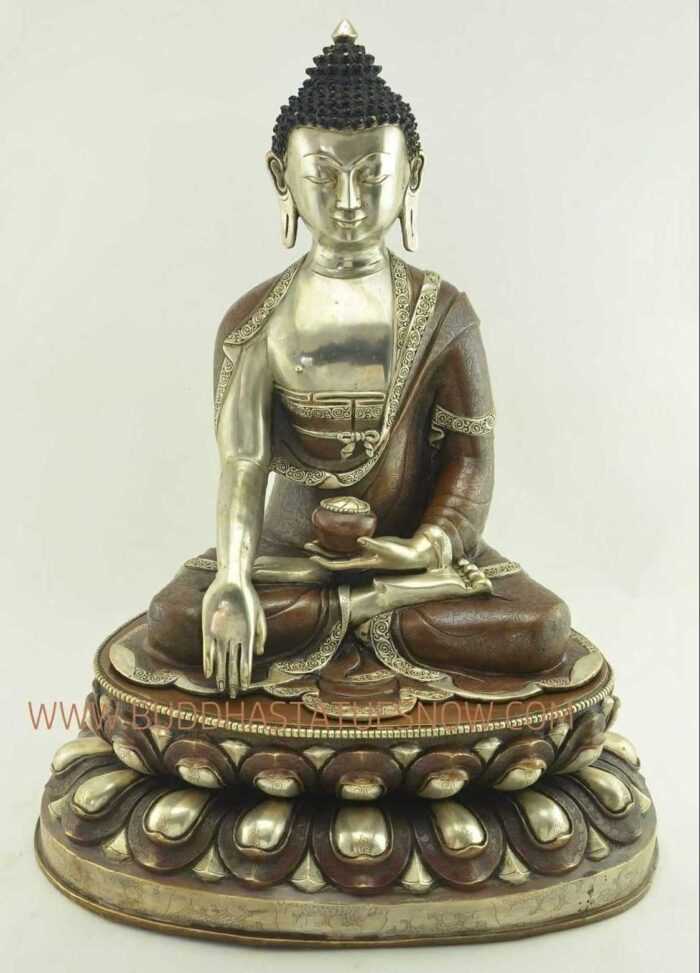
This Maitreya makes an especially meaningful companion to our Silver Shakyamuni Buddha statue. Shakyamuni represents the Buddha and Dharma of the present age, while Maitreya represents the future Buddha who will renew those teachings after they have disappeared. Their visual finishes also complement one another: both use antiquated copper tones and silver surfaces rather than a uniformly gilded presentation, while Maitreya adds selective gold highlights for contrast. Displayed together, the two figures create a symbolic progression from the historical Buddha of our present era to the Buddha who is still to come.
Filling and Consecration in Kathmandu, Nepal
For devotional use, arrangements can be made for traditional Buddha statue filling and consecration in Nepal before shipment. Traditional filling materials may include rolled mantras, fragrant woods, incense powders, and sacred substances placed inside the sculpture before it is resealed and presented to a qualified Buddhist guru for consecration. This service is especially appropriate for a substantial altar image such as this Handmade Maitreya Buddha Statue.
Custom Tibetan Buddhist Statues
Collectors, temples, and Dharma centers may also commission custom Tibetan Buddhist statues directly from our artisans in Patan. Maitreya can be commissioned in alternative sizes, oxidized copper, silver-plated, partially gilded, or 24K gold fire-gilded finishes, with adjustments to the throne and ornamental treatment. Genuine turquoise and red coral can also be embedded into suitable areas of this existing statue upon request before shipment, providing additional color while preserving its traditional Himalayan character.
Authentic, Handmade in Nepal
Every statue is handcrafted in Patan, Nepal, using traditional lost wax casting and comes with a certificate of authenticity issued by Nepal’s Department of Archaeology, verifying its materials, technique, and origin.