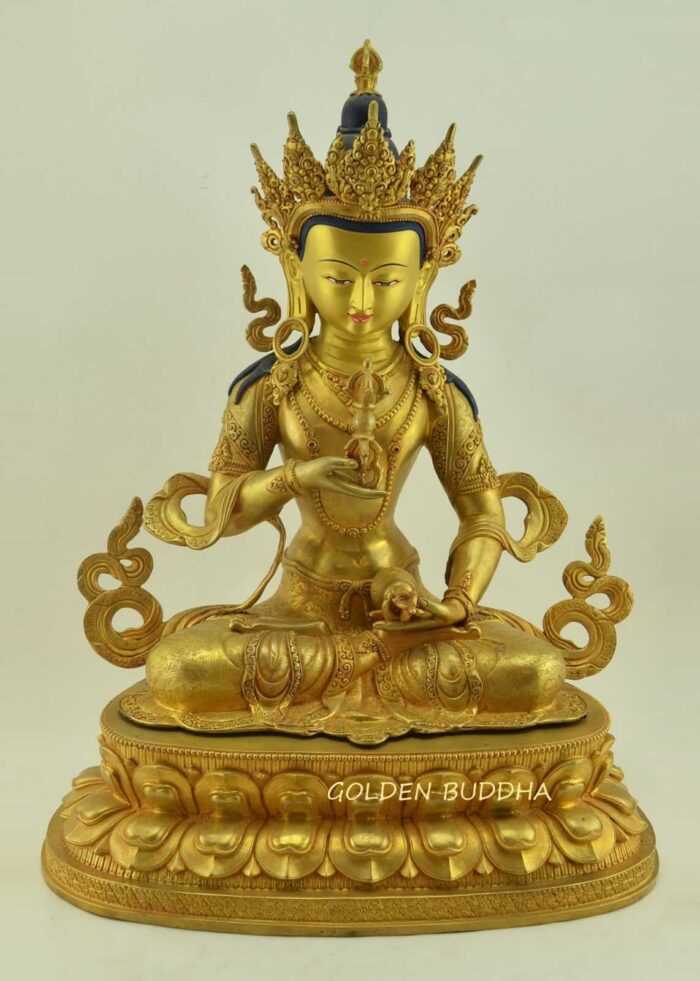
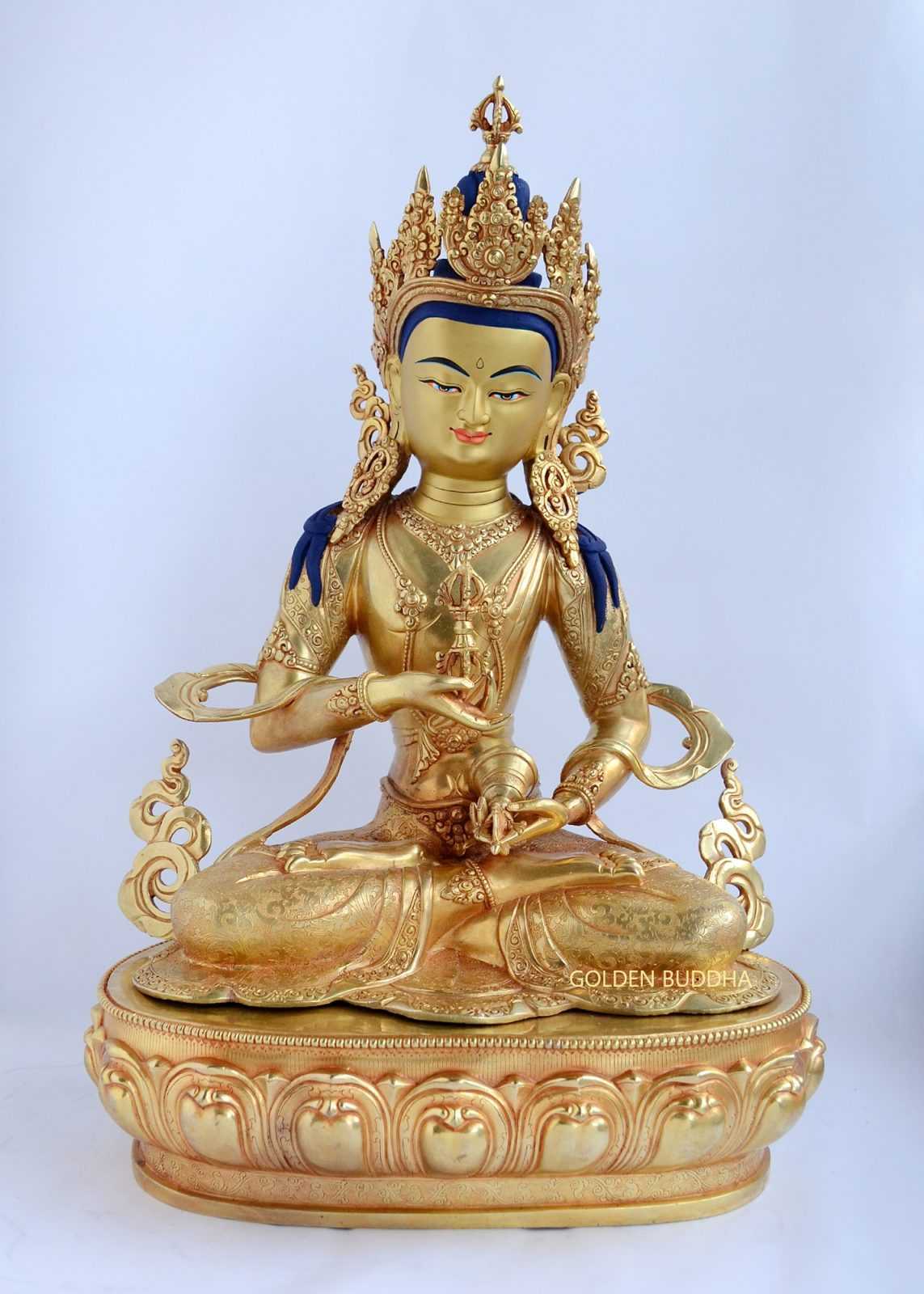
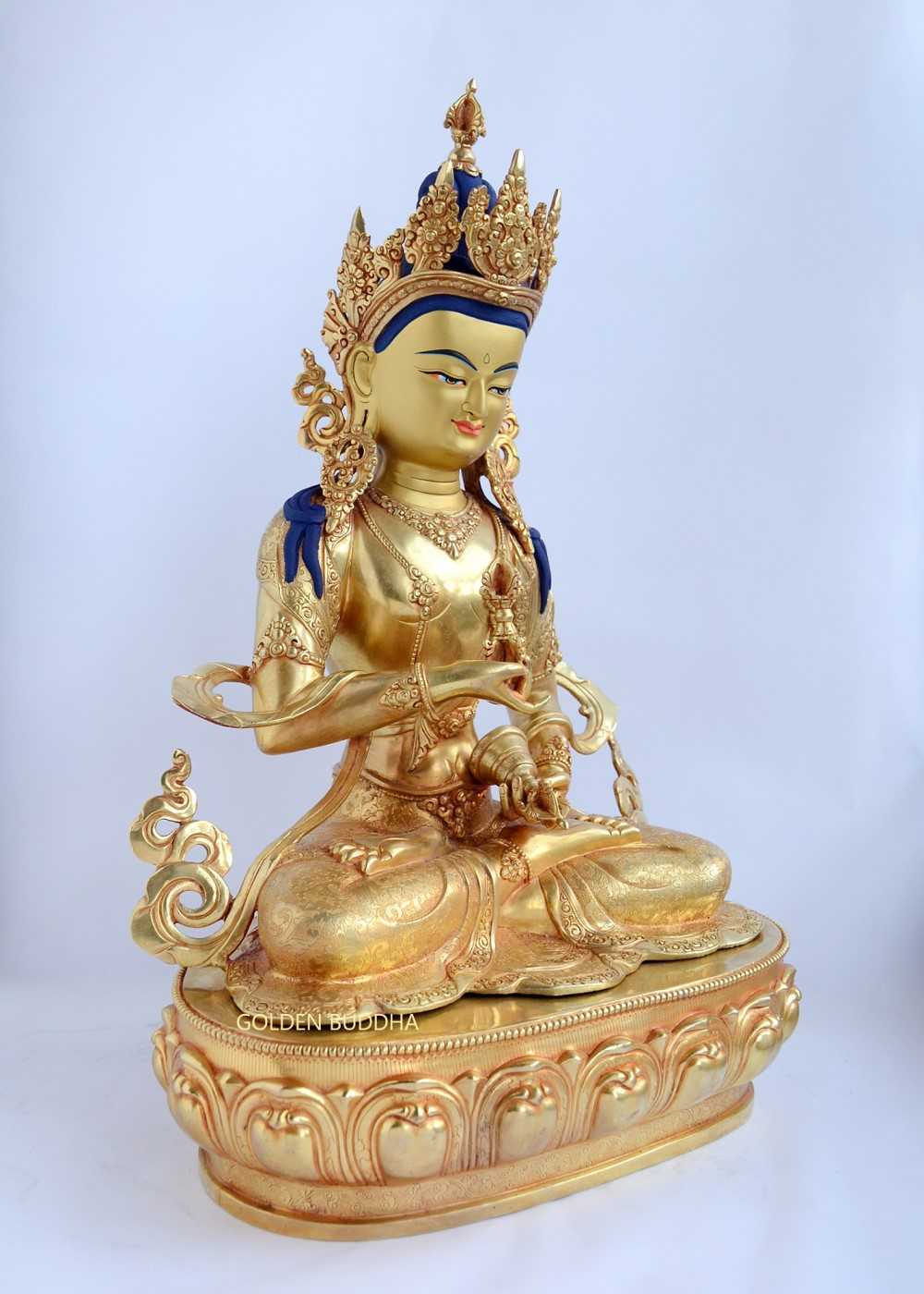
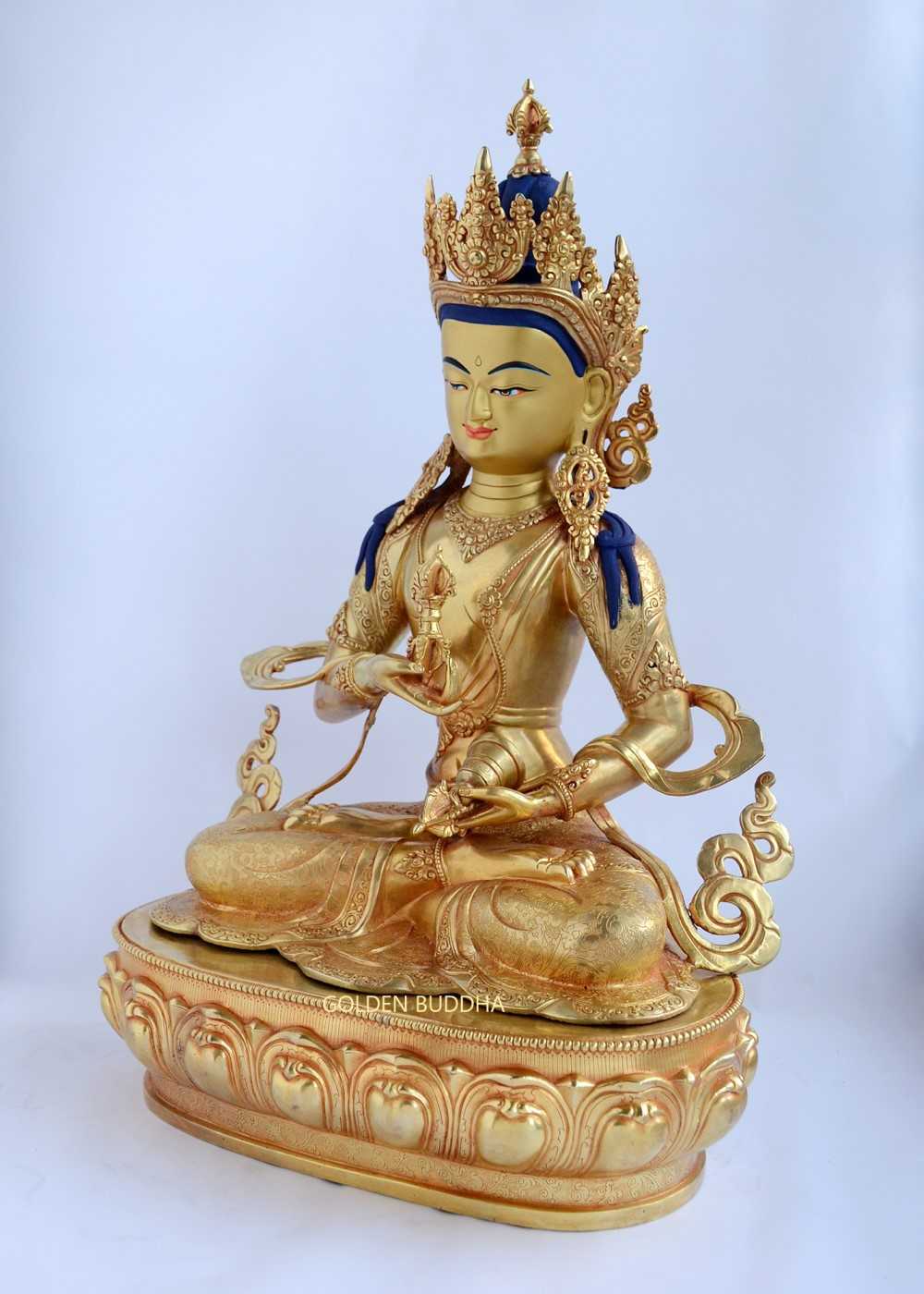
At 19.25 inches in height, this Large Vajrasattva Statue has the scale and visual authority of a principal shrine sculpture. Rather than relying on size alone, the artisan has given the figure an elegant vertical composition: a tall jeweled crown rises above the serene face, the torso remains slender and balanced, and broad celestial scarves extend outward before curling back toward the throne. Vajrasattva, known in Tibetan as Dorje Sempa, is seated in full lotus posture with the vajra presented upright at his heart and the ghanta bell resting in his left hand near the lap. The sculpture is handmade from copper alloy using the traditional lost-wax casting method and fire gilded in 24K gold, while the face is separately hand painted with 18K gold and natural pigments.
Large Vajrasattva Statue | Traditional Iconography
The vajra and ghanta immediately identify the figure as Vajrasattva. The vajra held before the heart is associated with indestructible awakened method, while the bell represents wisdom and the realization of emptiness. Together they express the inseparability of method and wisdom that lies at the heart of Vajrayana practice. Vajrasattva is particularly important in purification traditions, where his mantra and visualization are used to purify obscurations, negative karma and breaches of samaya. Those wishing to explore the symbolism in greater depth can read our guide to Vajrasattva iconography and ritual attributes.
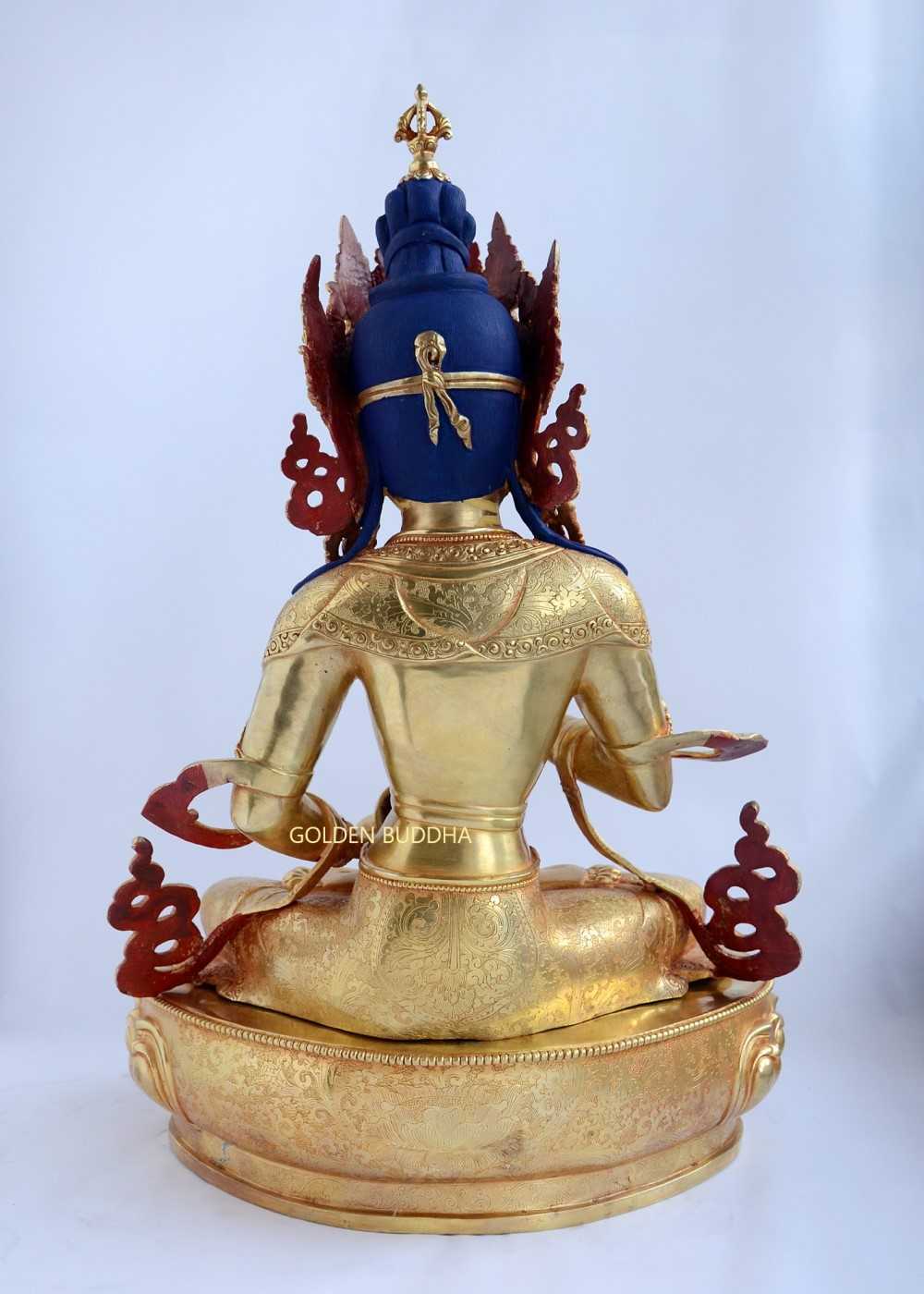
The photographs show considerable attention to the ornamental treatment of this sculpture. Vajrasattva wears an elaborate multi-point crown surrounding his blue-black hair and high topknot, finished above with a vajra-shaped finial. Large pendant earrings frame the face, while layered necklaces, armlets and bracelets emphasize his sambhogakaya appearance. The short sleeves and lower garments carry finely engraved floral and scrolling patterns, with decorated borders following the folds around the crossed legs. Long scarves emerge from the arms and shoulders in broad open curves, adding movement to an otherwise composed meditation posture. The lotus throne is proportionately wide and substantial, with a beaded upper rim and a continuous row of large raised lotus petals.
Purification, Merit and Vajrasattva Practice
Vajrasattva practice is especially associated with purification before and throughout advanced Vajrayana practice. Recitation of the Hundred-Syllable Mantra, together with confession, resolve and visualization, is traditionally employed to purify karmic obscurations and create more favorable conditions for Dharma practice. For this reason, Vajrasattva is not merely an ornamental Bodhisattva figure: his presence on an altar can represent the continuing work of clearing obstacles while strengthening the foundation for the accumulation of merit and wisdom.
Large Vajrasattva Statue with Amitayus Buddha
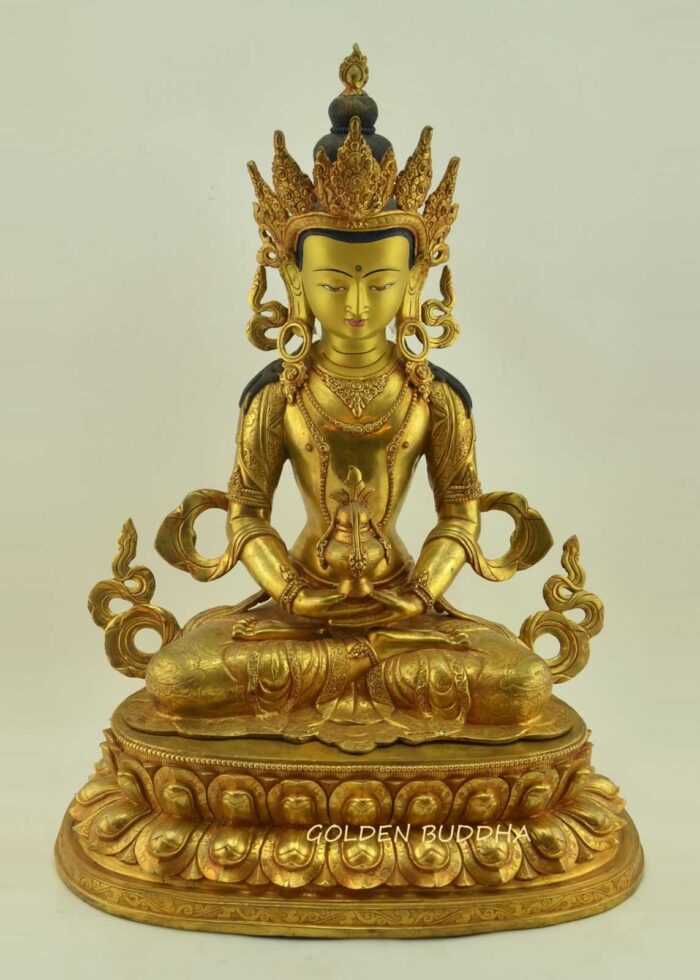
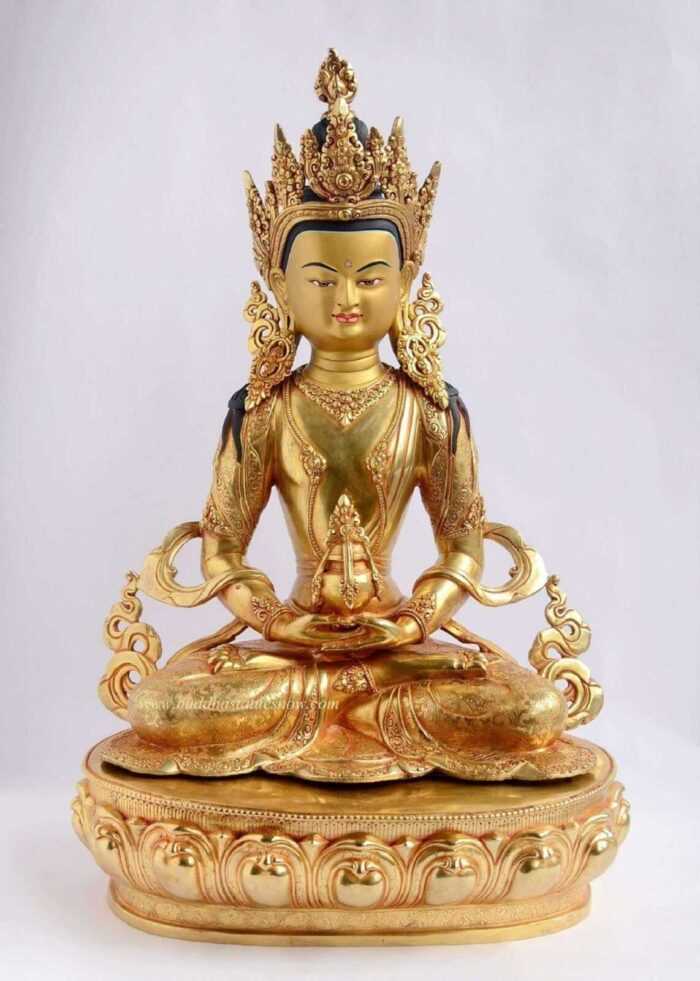
This sculpture makes an especially meaningful companion to our fully gilded Amitayus Buddha statue. Amitayus, the Buddha of Infinite Life, is associated with longevity, life-force, merit and wisdom, while Vajrasattva practice focuses on purification of karma and obscurations. Together they form a complementary altar pairing: Vajrasattva represents purification of conditions that obstruct practice, while Amitayus represents the aspiration for a long and meaningful life in which merit and realization can continue to develop. The visual relationship is equally strong. The Amitayus statue measures approximately 20 inches, placing it very close to the 19.25-inch Vajrasattva, and both employ traditional Bodhisattva ornamentation and extensive 24K gold gilding.
For collectors also seeking a coordinated altar presentation, this Vajrasattva statue pairs especially well with our matching Amitayus Buddha statue. Both sculptures were created by the same artisan and were conceived in closely related proportions, with comparable scale, fully 24K gold-gilded finishes, detailed engraving, and similarly refined Himalayan styling. Displayed together, the two figures have the visual harmony of a deliberately matched set rather than two unrelated statues. The pairing is also meaningful in practice: Vajrasattva is closely associated with purification of karma and obscurations, while Amitayus embodies long life, merit, and wisdom. Together they form a balanced altar arrangement centered on purification, the accumulation of merit, and the aspiration for a long life devoted to Dharma practice.
Filling and Consecration in Kathmandu
For buyers preparing the statue for an active Buddhist altar, traditional filling and consecration in Kathmandu, Nepal can be arranged before shipment. Appropriate mantra rolls, fragrant substances and other sacred materials may be placed within the hollow sculpture before it is sealed and blessed by a qualified Buddhist guru. Optional turquoise and red coral gemstones may also be embedded into suitable settings in the crown and jewelry upon request.
Custom Tibetan Buddhist Statues
For temples, Dharma centers or private collectors requiring different proportions or finishes, we can arrange custom Tibetan Buddhist statues handmade in Nepal. Vajrasattva may be commissioned in alternative dimensions, different gilding treatments or as part of a coordinated altar set with Amitayus or another deity. Working directly with traditional artisans also allows related statues to be planned together so their scale, throne proportions, ornamentation and overall visual character remain harmonious.
Authentic, Handmade in Nepal
Every statue is handcrafted in Patan, Nepal, using traditional lost wax casting and comes with a certificate of authenticity issued by Nepal’s Department of Archaeology, verifying its materials, technique, and origin.