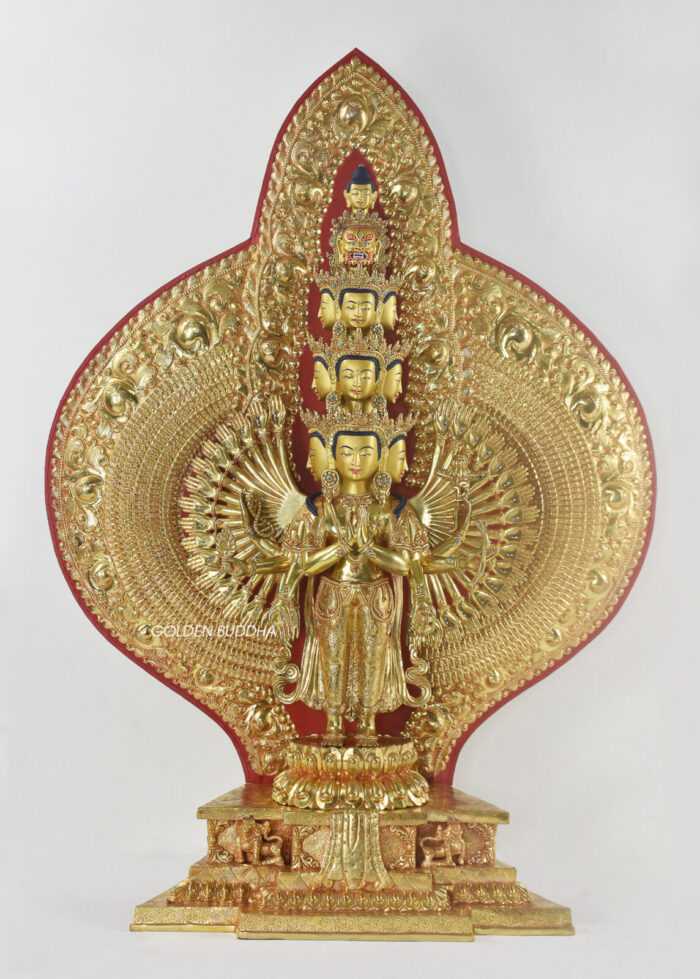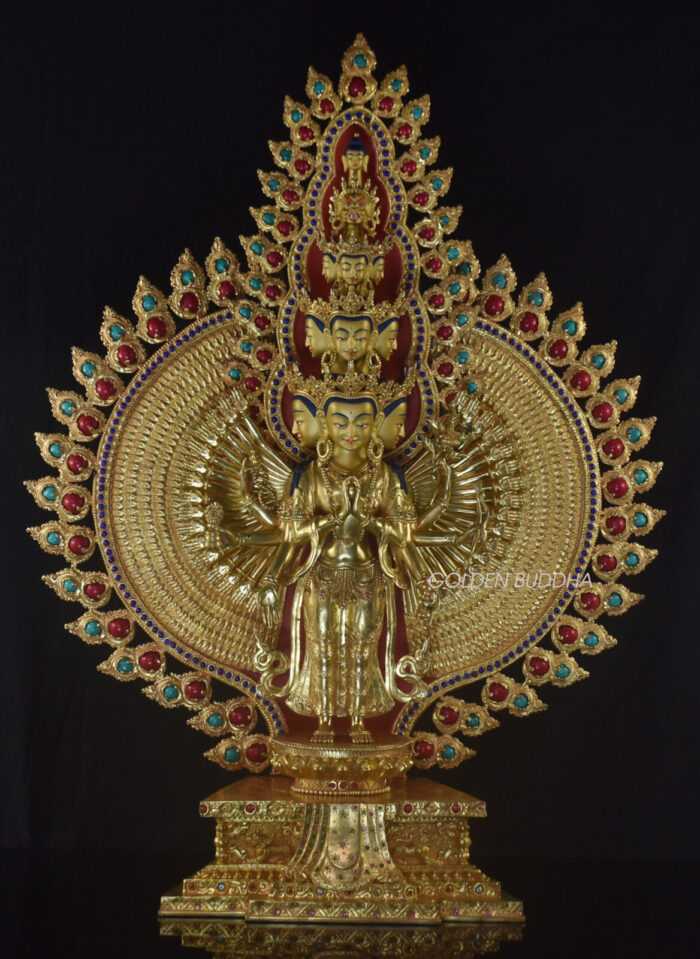
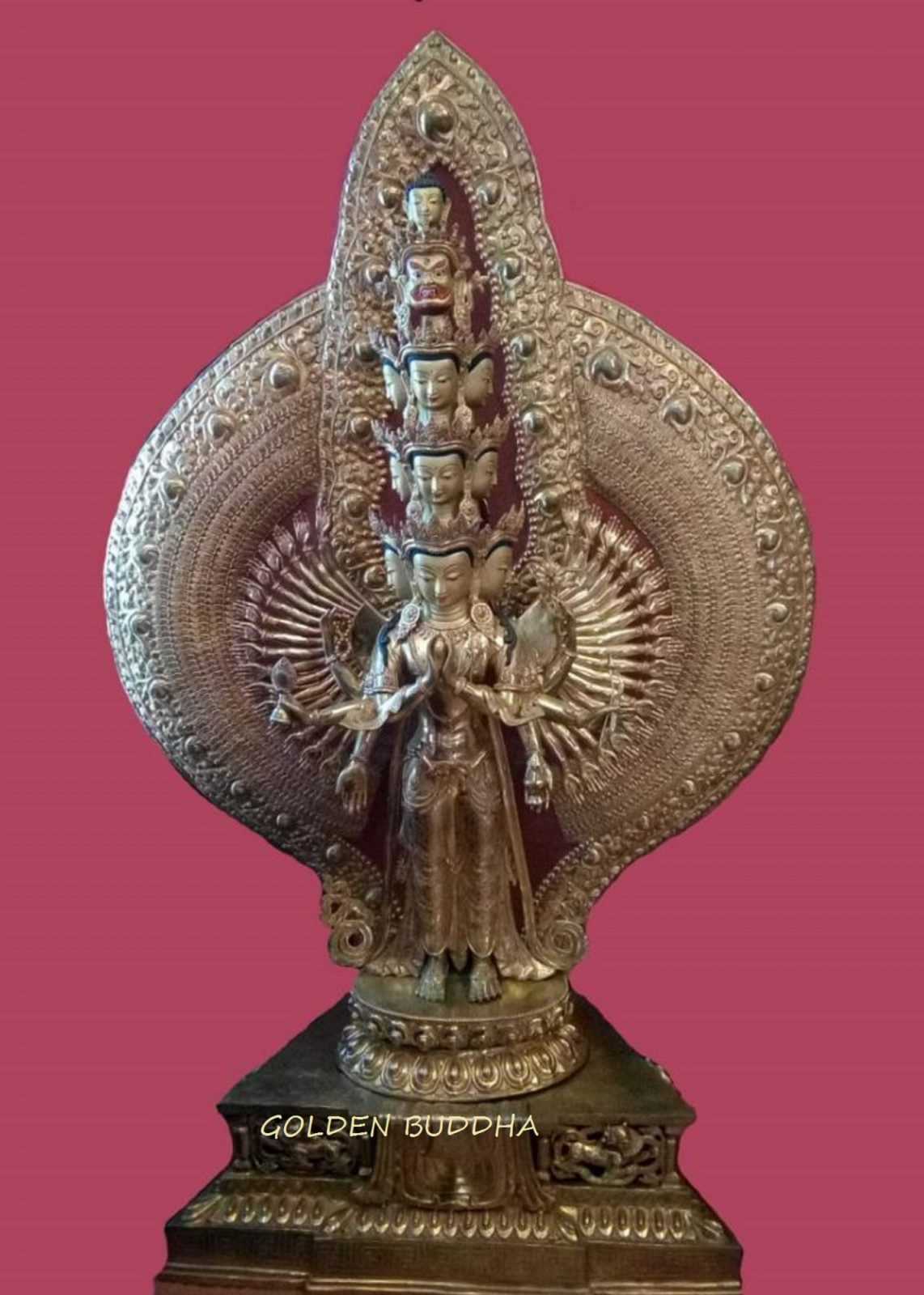
At an extraordinary 66 inches with its removable frame, this Large 1000 Armed Avalokiteshvara statue is a monumental representation of Chenrezig Chagstong Chentong, “Thousand-Armed, Thousand-Eyed Chenrezig.” Known in Sanskrit as Sahasrabhuja Lokeshvara, “The Thousand-Armed Lord of the World,” this eleven-headed manifestation expresses the limitless reach of Avalokiteshvara’s compassion. Handmade in Nepal from copper alloy using the traditional lost-wax casting method, the sculpture is fire gilded in 24K gold and distinguished by an immense radiating field of arms, eleven individually modeled heads and an exceptionally elaborate removable aureole. At 5.5 feet tall, it is conceived on the scale of a major monastery, Dharma center or dedicated Buddhist shrine.
Large 1000 Armed Avalokiteshvara Statue and the Eleven Heads
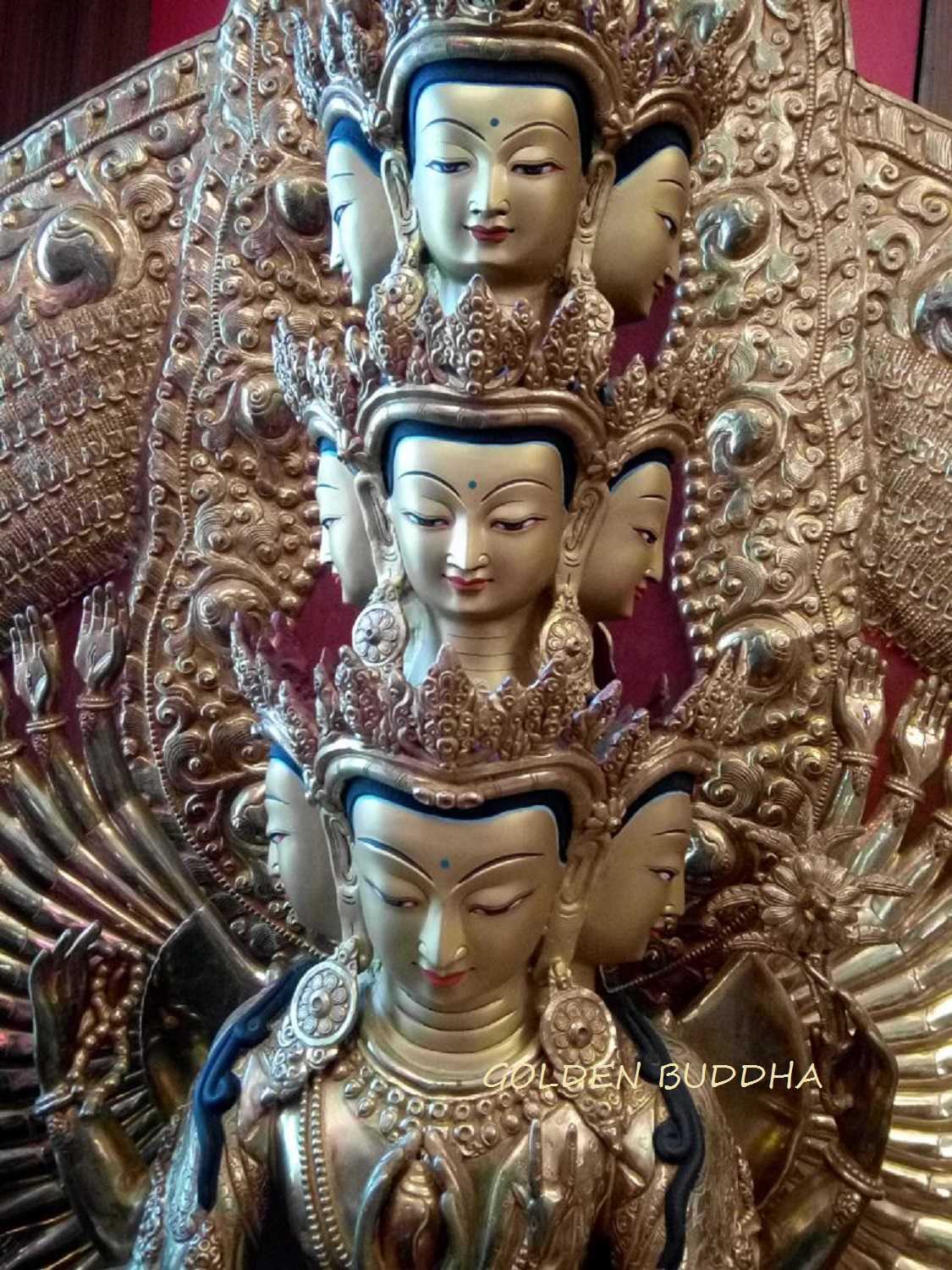
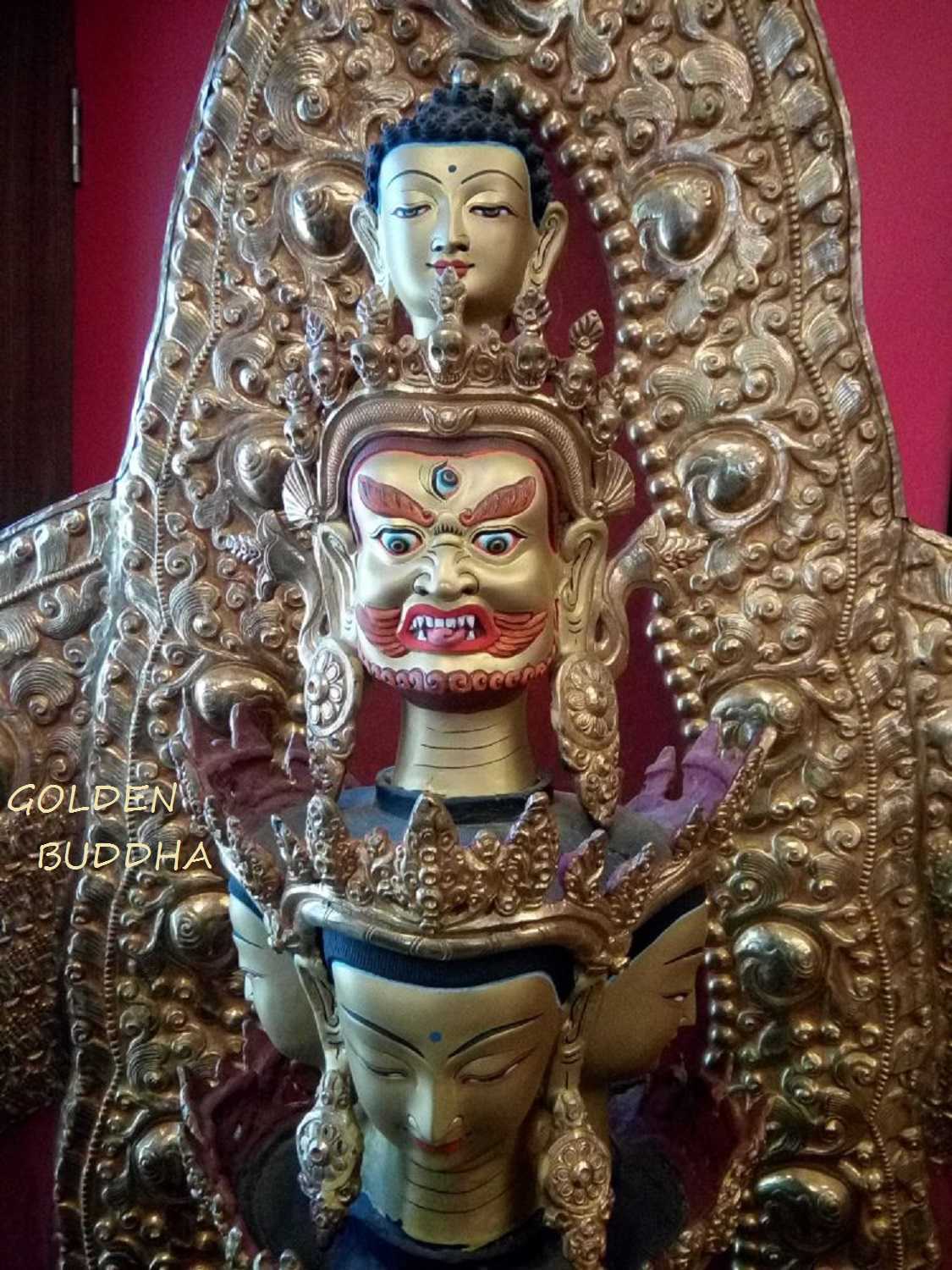
The eleven heads create the commanding vertical axis of the composition. Tiers of peaceful faces look outward in different directions, symbolizing Avalokiteshvara’s awareness of suffering throughout the realms of existence. Each serene face is carefully finished with painted eyes, eyebrows, lips and a blue urna. Elaborately sculpted bodhisattva crowns and large ornamental earrings separate the successive tiers. Above the peaceful manifestations appears a dramatically different wrathful head, with a third eye, wide gaze, bared fangs and vivid red facial details. At the very summit sits Amitabha Buddha, immediately recognizable by his peaceful Buddha face and dark curled hair.
This arrangement reflects the traditional relationship between Avalokiteshvara and Amitabha. According to the account associated with the thousand-armed manifestation, Avalokiteshvara’s tremendous vow to liberate suffering beings became overwhelming. Amitabha restored him in a vastly expanded form, providing additional heads to perceive suffering and innumerable arms to respond to it. Explore the iconography and history in our guide to 1000-Armed Avalokiteshvara.
Large 1000 Armed Avalokiteshvara Statue and the Thousand Arms
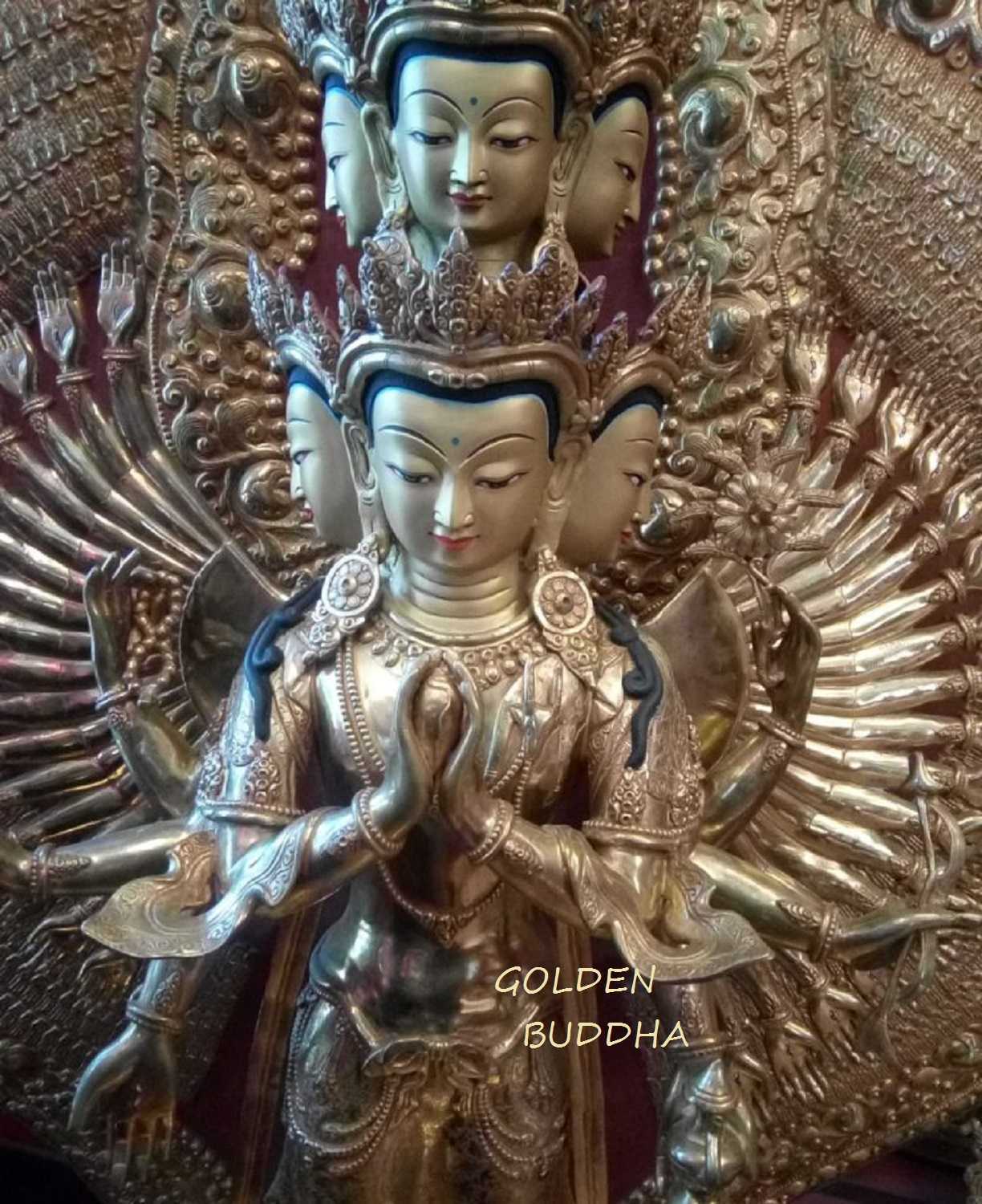
Avalokiteshvara’s principal hands emerge before the vast semicircular array of smaller arms. The foremost pair joins palm to palm at the heart in a gesture of devotion and reverence, while additional principal hands extend around the body with ritual attributes and compassionate gestures. Behind them, tightly arranged rows of arms radiate outward in an extraordinary fan-like formation. In the iconography of Chagstong Chentong, the thousand hands represent compassionate activity reaching toward beings everywhere, while the thousand eyes represent the wisdom necessary to recognize where assistance is needed.
The central figure wears elaborate bodhisattva jewelry and finely decorated garments, with long scarves flowing around the arms and body. The immense removable aureole amplifies the radiating composition. Its surface is densely covered with raised scrolling foliage, cloud-like forms, rounded ornamental motifs and concentric decorative bands. The upper section rises around the eleven heads before terminating in a pointed arch surrounding Amitabha. Below, Avalokiteshvara stands upon a circular lotus pedestal supported by a substantial stepped architectural throne decorated with lotus petals, ornamental panels and sculpted relief details.
Meaning of the Thousand Armed Avalokiteshvara Form
Despite its extraordinary scale and complexity, the meaning of this form remains centered upon compassion. Avalokiteshvara, known as Chenrezig in Tibet, embodies the compassionate intention to work continuously for the liberation of sentient beings. His multiple heads symbolize an awareness unrestricted to a single direction, while the multitude of arms transforms that awareness into compassionate action. The wrathful face demonstrates that compassion can also assume a powerful protective expression when circumstances demand it, while Amitabha at the summit recalls Avalokiteshvara’s spiritual lineage.
The practice of Avalokiteshvara is closely associated with Om Mani Padme Hum and the Chenrezig mantra tradition. This monumental sculpture consequently offers far more than visual impact: its eleven heads and expansive field of arms provide a powerful three-dimensional expression of compassionate wisdom and activity.
Filling and Consecration in Kathmandu, Nepal
For a sculpture intended for a monastery, Dharma center or private shrine, traditional statue filling, blessing and consecration can be arranged in Nepal before shipment. Sacred texts, mantras and appropriate substances can be placed within the hollow copper-alloy statue according to traditional practice. Please contact us before ordering if you would like filling and consecration arranged for this important devotional sculpture.
Custom Made Avalokiteshvara Statues
For monasteries, Buddhist centers and collectors requiring another scale or artistic treatment, we can arrange a related commission through our custom Tibetan Buddhist statue service. Custom Avalokiteshvara statues can be handmade in Nepal from copper alloy using traditional lost-wax casting, with choices of dimensions, gilding, antiquated finishes, engraving and pedestal design. Turquoise and red coral gemstones can also be embedded into appropriate crowns and jewelry upon request, including this 66-inch statue. These options make it possible to coordinate the sculpture with an existing shrine, temple interior or complementary Avalokiteshvara image while preserving the traditional iconography of Chagstong Chentong.
Authentic, Handmade in Nepal
Every statue is handcrafted in Patan, Nepal, using traditional lost wax casting and comes with a certificate of authenticity issued by Nepal’s Department of Archaeology, verifying its materials, technique, and origin.