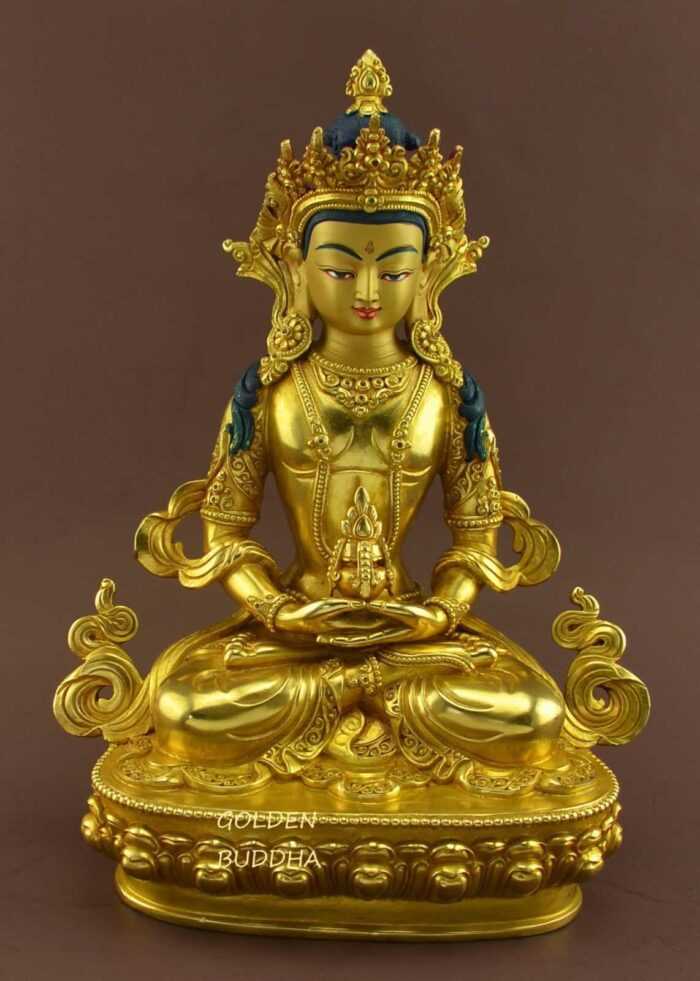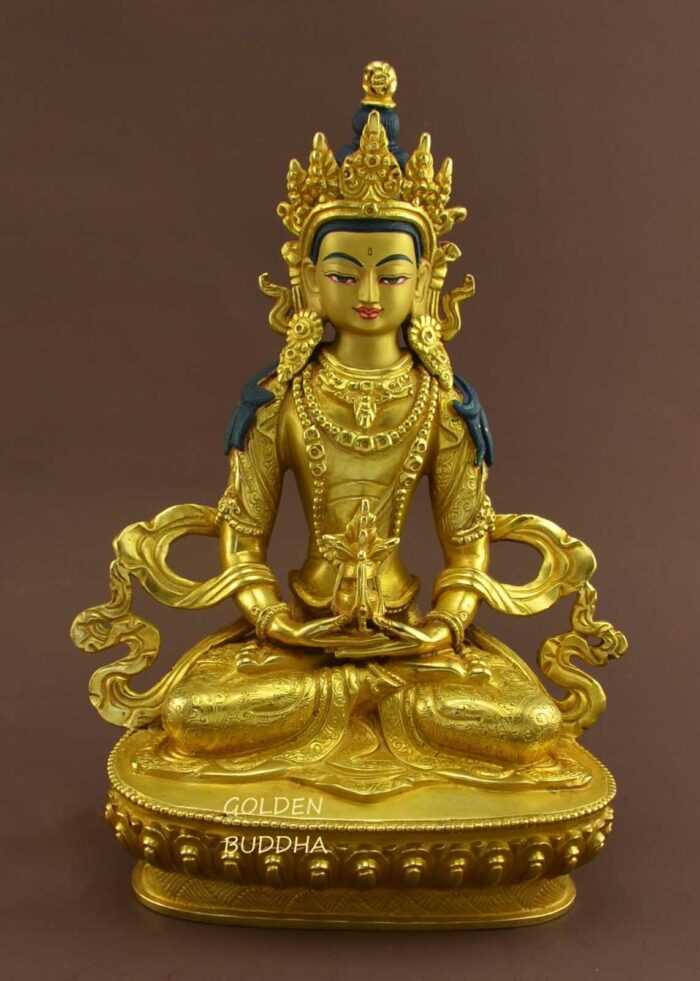


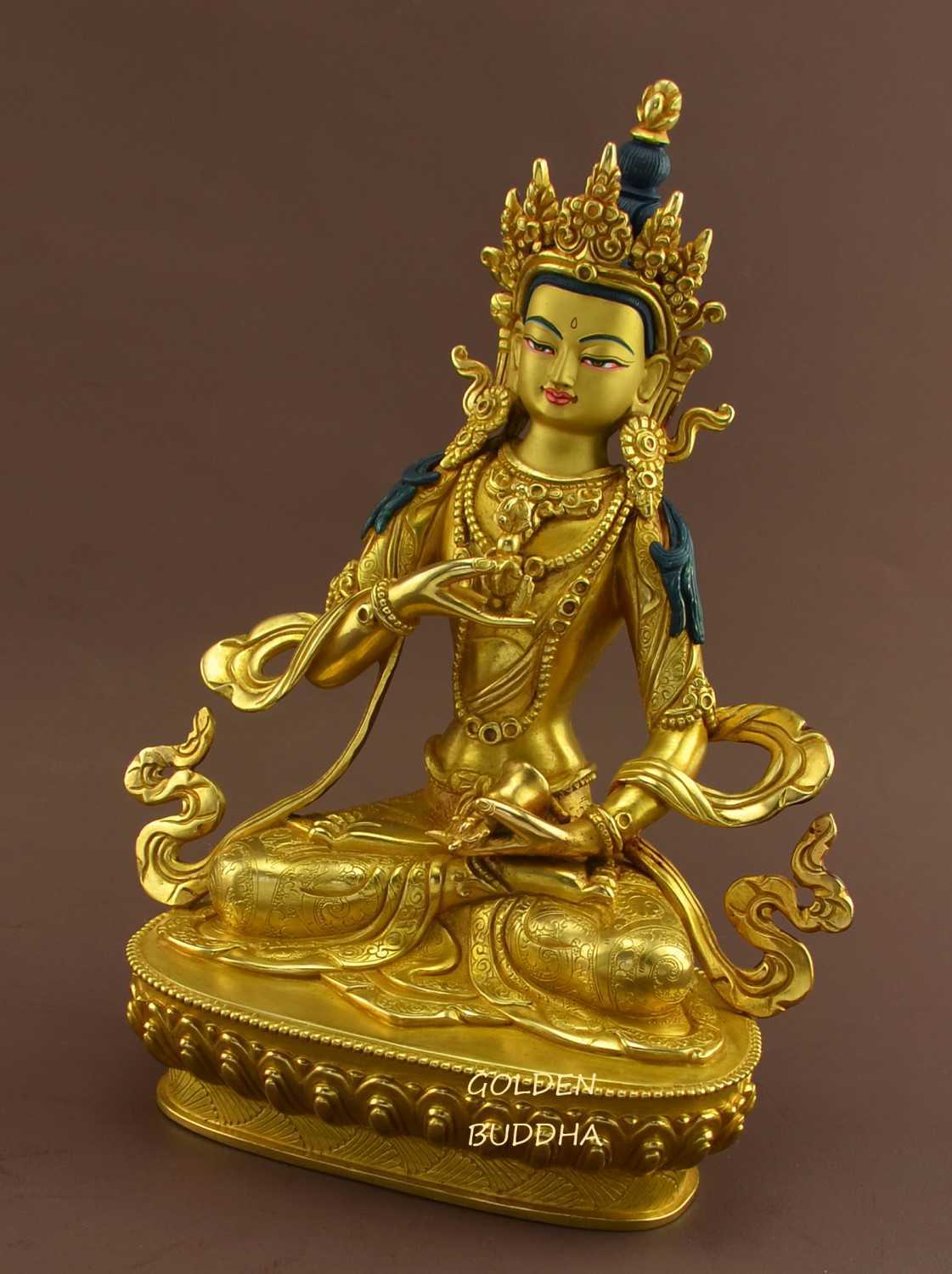
This magnificent 9-inch Gold Gilded Vajrasattva Sculpture was handmade from copper alloy in Patan, Nepal, using the traditional lost-wax casting method and fire gilded in 24K gold. Vajrasattva, known in Tibetan as Dorje Sempa, appears in his peaceful Bodhisattva form, seated in full vajra posture upon a single lotus throne. The radiant gold surface is complemented by blue-black hair and a separately hand-painted face, creating a striking contrast that emphasizes Vajrasattva’s serene expression. With its refined proportions, elaborate ornamentation, and traditional Himalayan craftsmanship, this sculpture is well suited for a Buddhist altar, meditation space, Dharma center, or collection of fine Tibetan Buddhist art.
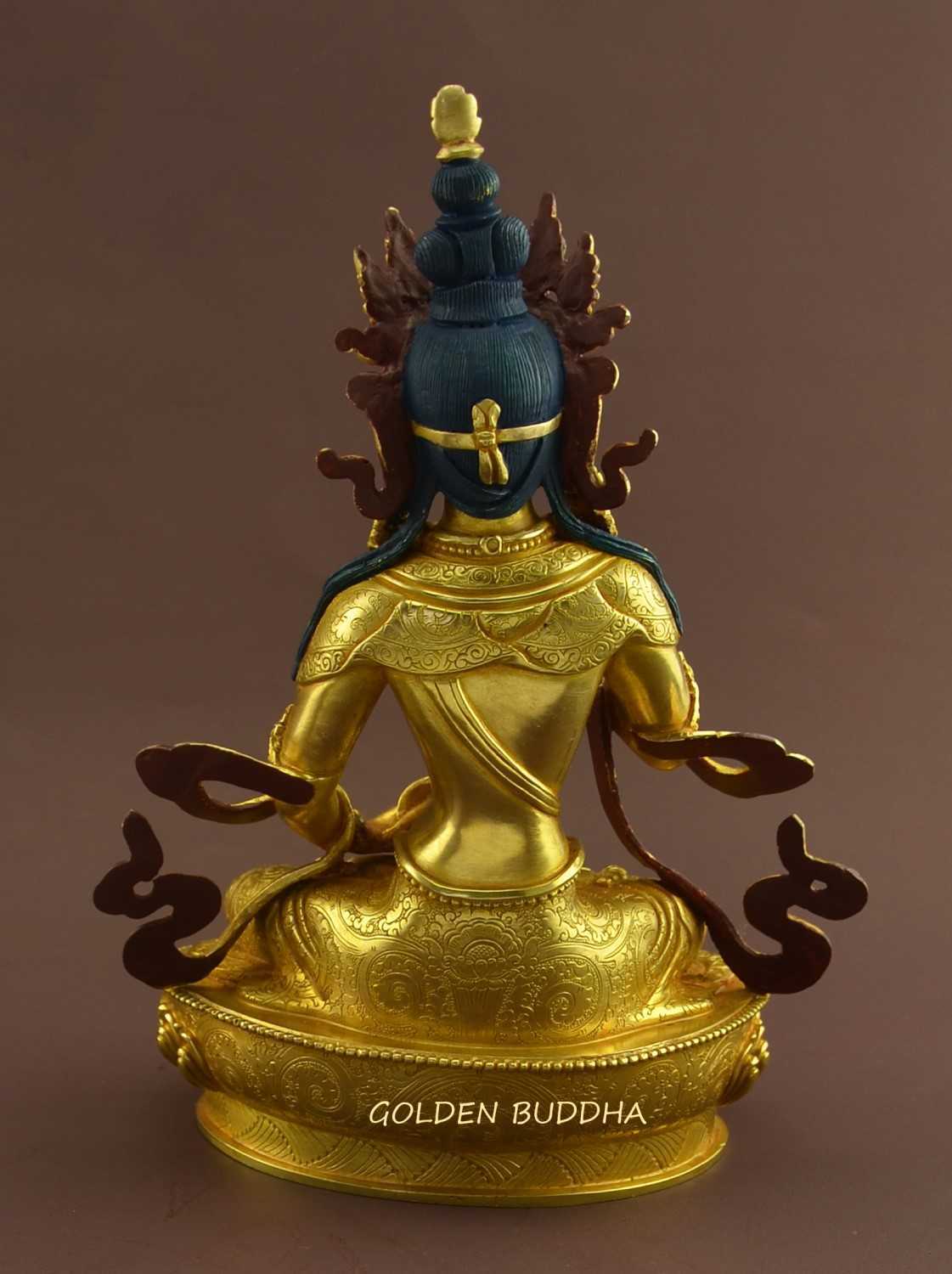
Exceptional hand engraving distinguishes this sculpture. Intricate scrolling and decorative patterns extend across the dhoti covering both legs, the central folds of the garment, shoulder coverings, and ornamental borders. The workmanship continues around the sculpture rather than being concentrated only on the front. Viewed from behind, detailed engravings decorate the garments, waist, and rear of the lotus throne, demonstrating the artisan’s attention to areas that are often less visible when displayed. Vajrasattva wears an elaborate Bodhisattva crown, large circular earrings, layered necklaces, armlets, bracelets, and flowing celestial scarves. Suitable settings within the crown and jewelry may also be embellished with turquoise and red coral gemstones upon request.
Gold Gilded Vajrasattva Sculpture Iconography
Vajrasattva’s defining ritual implements are prominently represented. His right hand holds the vajra upright before his heart, while his left hand holds the ghanta, or ritual bell, near his lap. In Vajrayana symbolism, these complementary implements express the inseparable union of skillful means and wisdom. The vajra represents the indestructible nature of awakened realization and compassionate method, while the bell represents transcendent wisdom and insight into the true nature of phenomena. Their union is fundamental to the Vajrayana path and makes the two implements immediately recognizable attributes of Vajrasattva. Our guide to Vajrasattva iconography explores these attributes and their symbolism in greater detail.
The crown, jewelry, silken garments, and celestial scarves reflect Vajrasattva’s Sambhogakaya appearance rather than the simple monastic robes associated with Shakyamuni Buddha. This richly adorned form represents an enlightened manifestation accessible to highly realized practitioners. Learn more about Vajrasattva and the Sambhogakaya and how this form relates to his place within Tibetan Buddhist tradition.
Vajrasattva and Purification Practice
Vajrasattva holds a particularly important place in Tibetan Buddhism as a deity associated with purification. His practice is traditionally used for purifying negative karma, obscurations, and damaged spiritual commitments while restoring clarity and favorable conditions for Dharma practice. Vajrasattva meditation and recitation of his celebrated one-hundred-syllable mantra consequently form an important part of Ngöndro preliminary practices in several Tibetan Buddhist traditions. A shorter mantra, commonly rendered as Om Vajrasattva Hum, is also widely used. Learn more about Vajrasattva and Dorje Sempa and his importance as an embodiment of purification.
Vajrasattva, White Tara and Namgyalma Altar Grouping
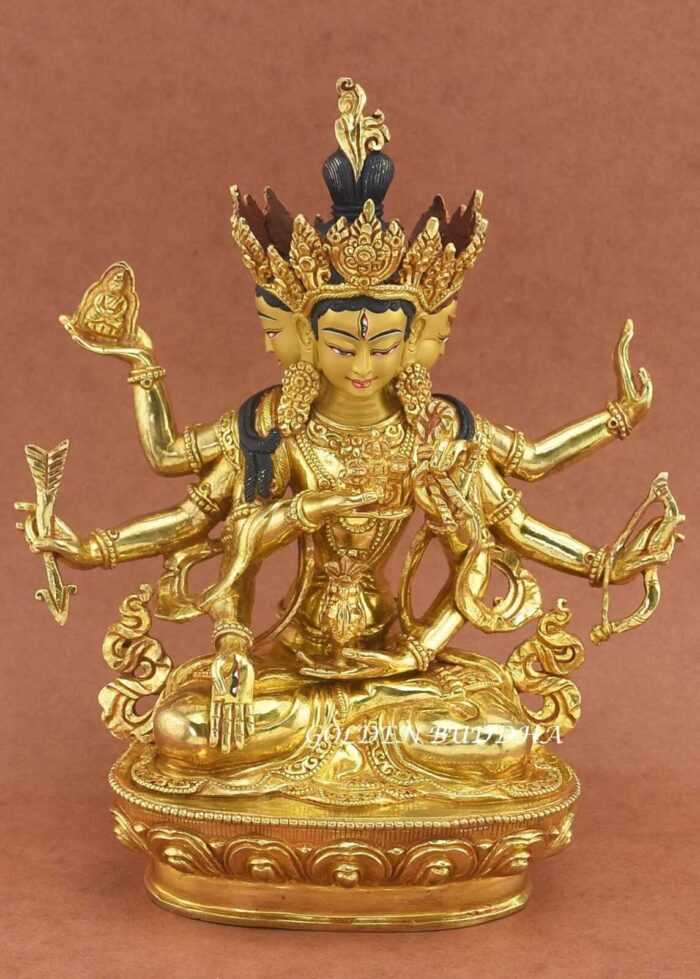
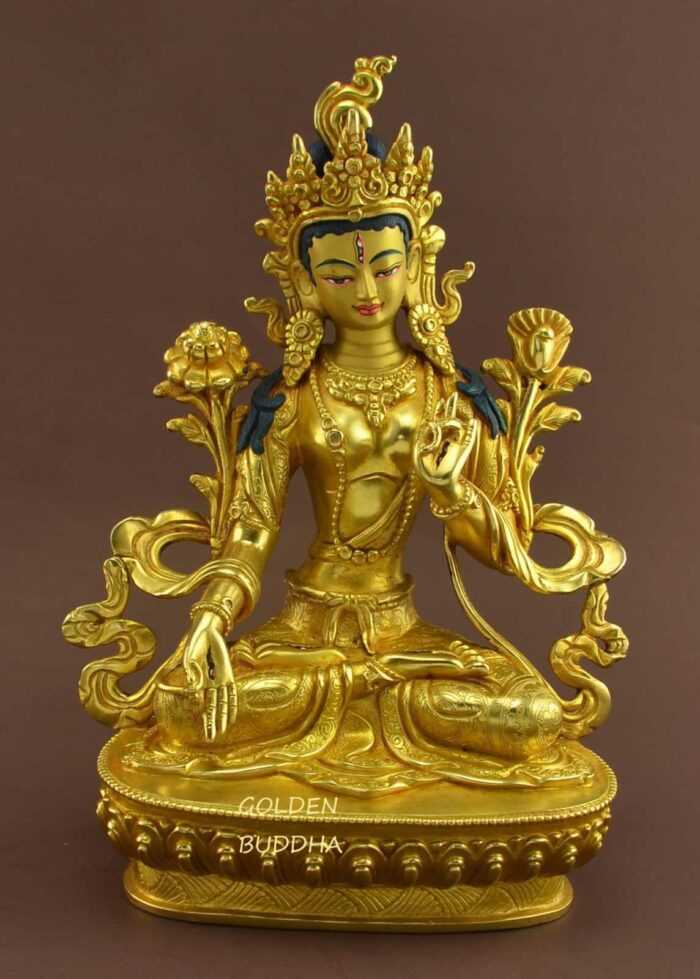
This sculpture can form an especially harmonious altar grouping with our 24K gold fire-gilded White Tara statue and 24K gold fire-gilded Namgyalma statue. Their radiant gilded surfaces, traditional Newar craftsmanship, ornate Bodhisattva adornments, and carefully finished details create strong visual continuity when the statues are displayed together.
More importantly, the three figures possess complementary spiritual associations. Vajrasattva represents purification and the clearing of karmic obscurations. White Tara, or Dolkar, embodies compassionate healing, serenity, and longevity, with her seven eyes symbolizing an awareness that perceives suffering in every direction. Namgyalma, also known as Ushnishavijaya, is strongly associated with longevity, purification, protection from untimely death, and overcoming conditions that impede spiritual practice. Together they can create a meaningful altar arrangement centered upon purification, long life, compassionate activity, and the preservation of favorable circumstances for Dharma practice.
Custom Made Gold Gilded Vajrasattva Statues and Matching Deities
Collectors, practitioners, monasteries, and Dharma centers may commission a custom made Tibetan Buddhist statue inspired by this Vajrasattva design. Custom commissions can incorporate different dimensions, 24K gold fire gilding, detailed hand engraving, gemstone embellishment, and other carefully specified artistic features. Matching White Tara and Namgyalma sculptures can also be commissioned with coordinated dimensions, lotus thrones, gilding, ornamentation, and overall artistic style, creating a visually unified altar ensemble.
Such a grouping also offers meaningful doctrinal balance. Vajrasattva establishes the foundation of purification by representing the cleansing of karmic obscurations and restoration of spiritual commitments. White Tara complements this with compassionate healing and longevity, while Namgyalma contributes her traditional associations with long life, purification, protection, and overcoming impediments. Commissioning the three figures in a coordinated style therefore allows the visual harmony of the statues to reinforce their complementary spiritual qualities, creating an altar centered on purification, longevity, protection, and compassionate enlightened activity.
Authentic, Handmade in Nepal
Every statue is handcrafted in Patan, Nepal, using traditional lost wax casting and comes with a certificate of authenticity issued by Nepal’s Department of Archaeology, verifying its materials, technique, and origin.