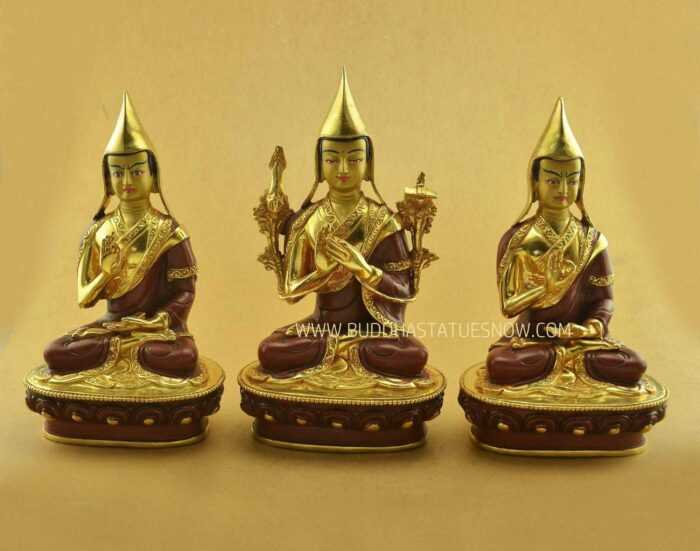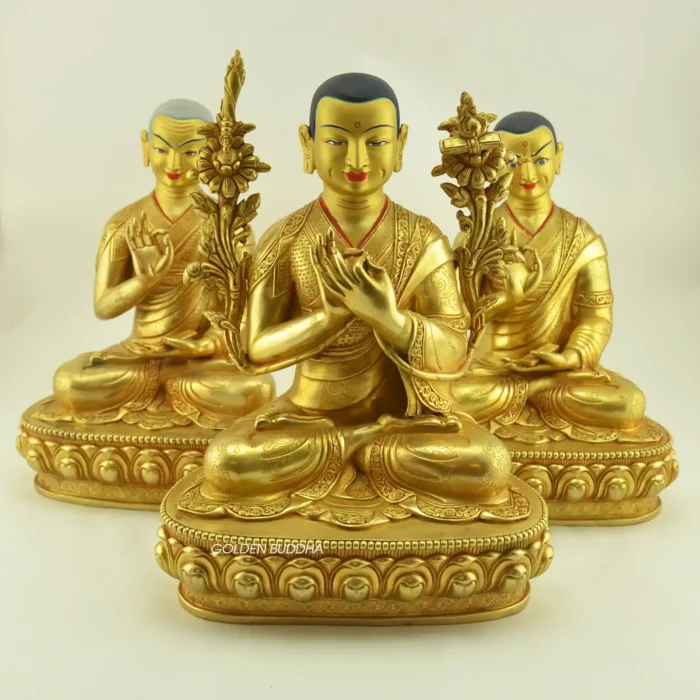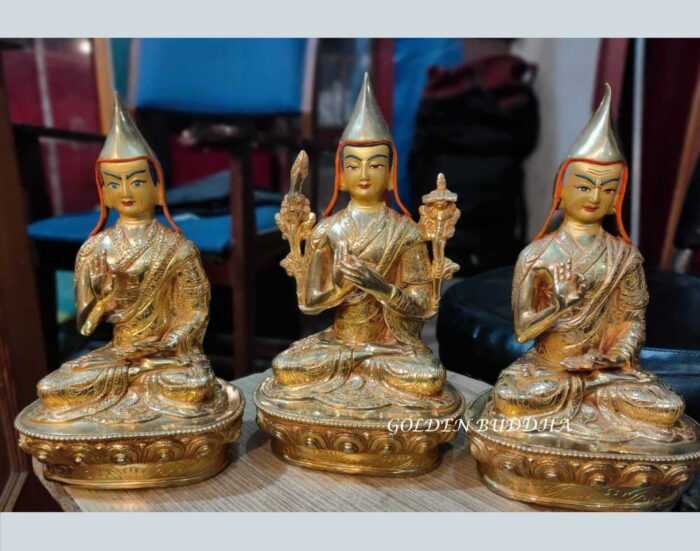
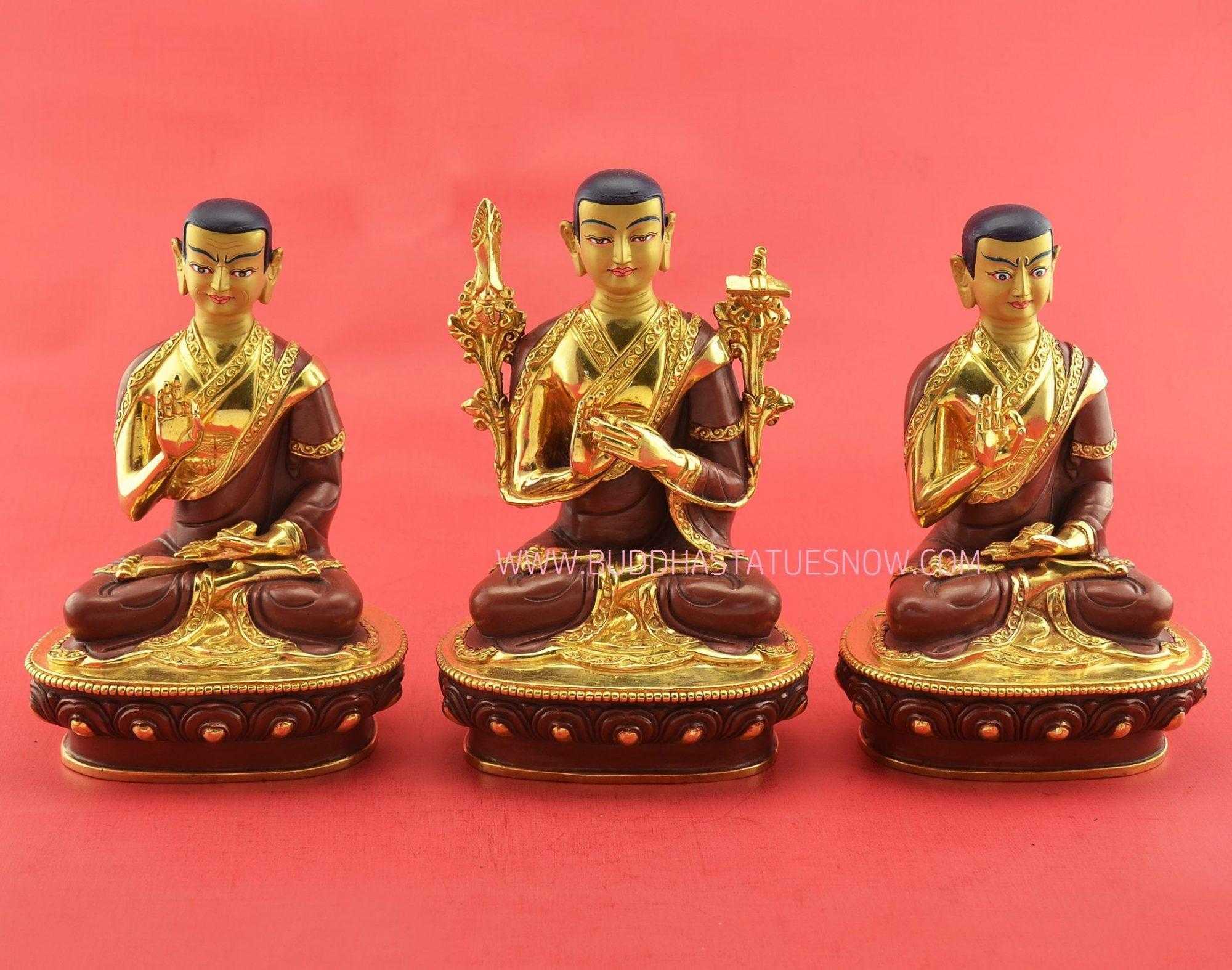
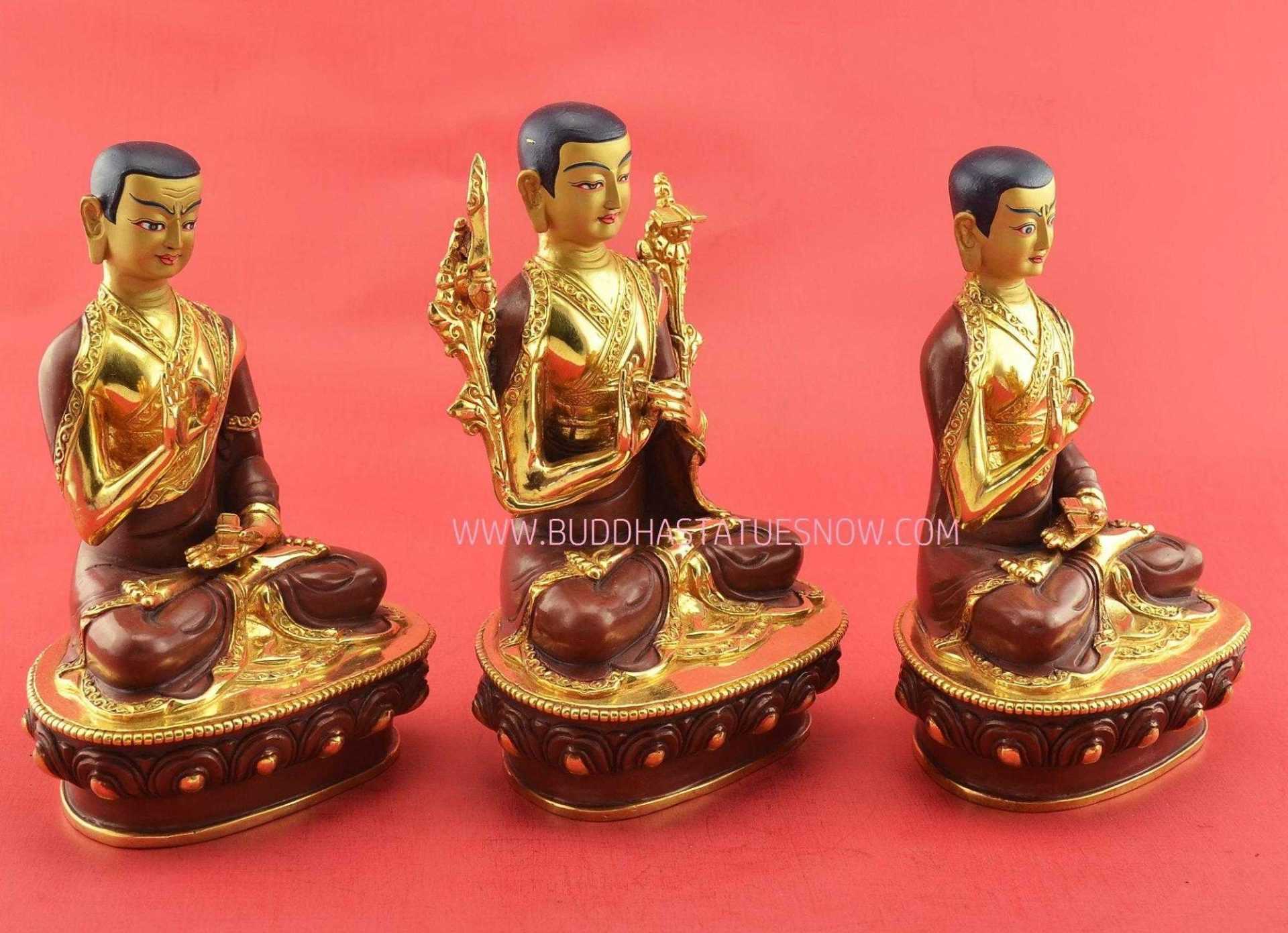
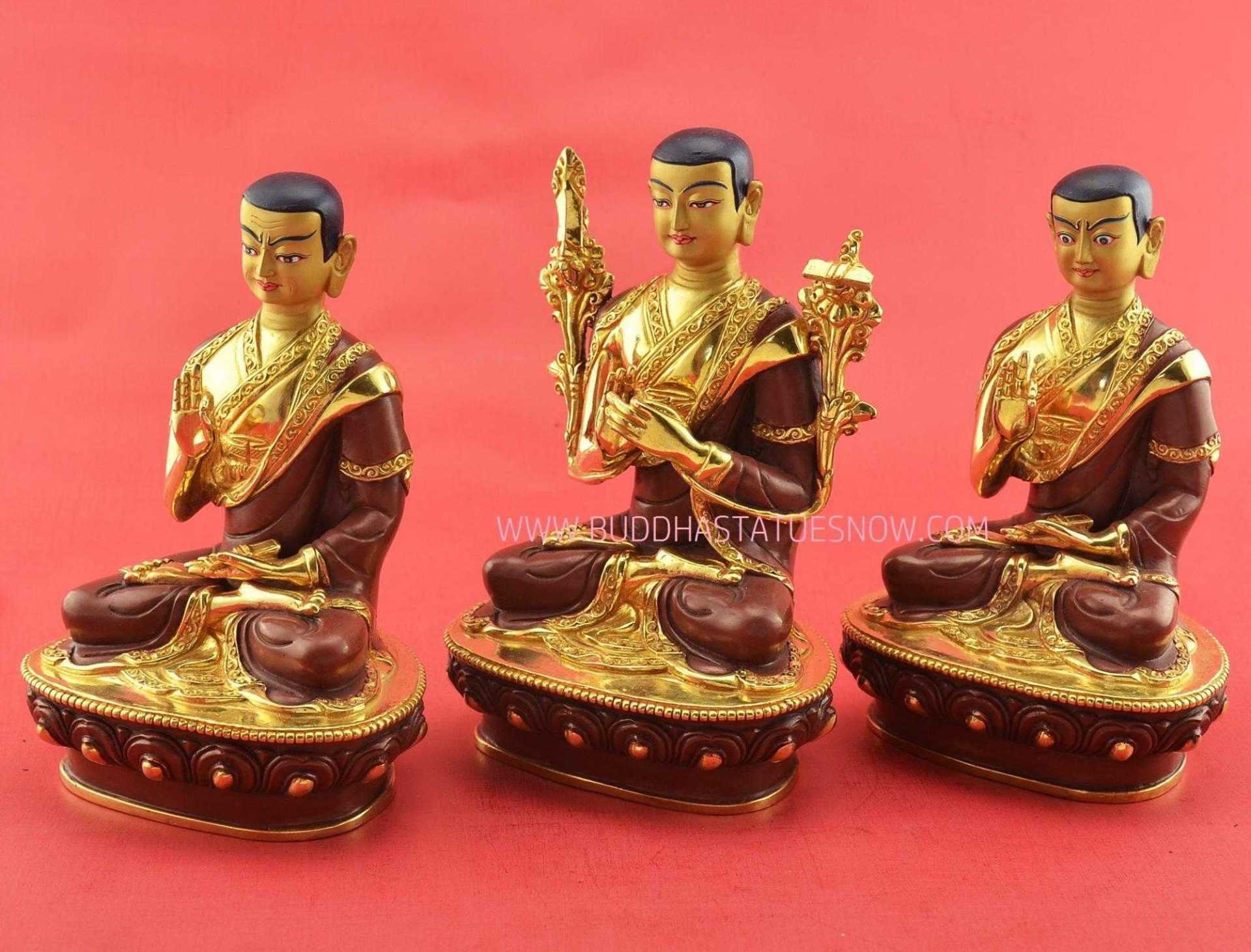
This 8-inch Antiquated Je Tsongkhapa Statues Set presents Je Tsongkhapa, Lobsang Drakpa (1357–1419), together with his two principal disciples, Gyaltsab Je and Khedrub Je. Handmade in Patan, Nepal from copper alloy using the traditional lost-wax casting method, the trio combines 24K gold fire gilding with warm reddish-brown antiquated oxidized areas across the monastic robes and lotus thrones. The faces are hand painted in 18K gold and natural pigments. The photographs show a closely coordinated Gelug lineage set: Tsongkhapa occupies the central and slightly larger position, while his disciples flank him in matching cross-legged postures. Gold-gilded chests, hands, robe borders and attributes stand out against the darker oxidized surfaces, creating strong definition without obscuring the sculpted details.
Antiquated Je Tsongkhapa Statues Set | Gelug Lineage Trio
Je Tsongkhapa, also known as Je Rinpoche, was the great Tibetan scholar-practitioner whose teachings became the foundation of the Gelug tradition. He is traditionally revered as an emanation of Manjushri, the Bodhisattva of Wisdom. His two principal disciples carried his lineage forward: Gyaltsab Je became his immediate successor in the Ganden lineage, followed by Khedrub Je. In the traditional trio, Gyaltsab Je sits on Tsongkhapa’s right and Khedrub Je on his left. Together, the three masters form one of the most recognizable teacher groupings in Gelug Buddhist art. Learn more about Je Tsongkhapa and the Gelug tradition.
Dharmachakra and Vitarka Mudras
Tsongkhapa displays the Dharmachakra mudra before his heart, symbolizing the turning of the Wheel of Dharma. Two flowering lotus stems rise beside his shoulders. The lotus over his right shoulder supports Manjushri’s sword of wisdom, while the lotus over his left carries the Prajnaparamita scripture. These attributes are clearly visible in the photographs and express the wisdom tradition associated with Tsongkhapa’s teachings.
Gyaltsab Je and Khedrub Je each display the Vitarka mudra with the raised right hand. A small scripture rests visibly in the open left palm of each disciple. Their parallel hand positions and seated postures create balance around the central master while their individually painted facial expressions distinguish the two figures. The photographed statues are shown without Gelug pandita hats, leaving their blue-black painted monastic hair visible. Gold-gilded Gelug pandita hats can be included upon request for a more formal “Yellow Hat” presentation.
Antiquated Je Tsongkhapa Statues Set | Gilding and Robe Detail
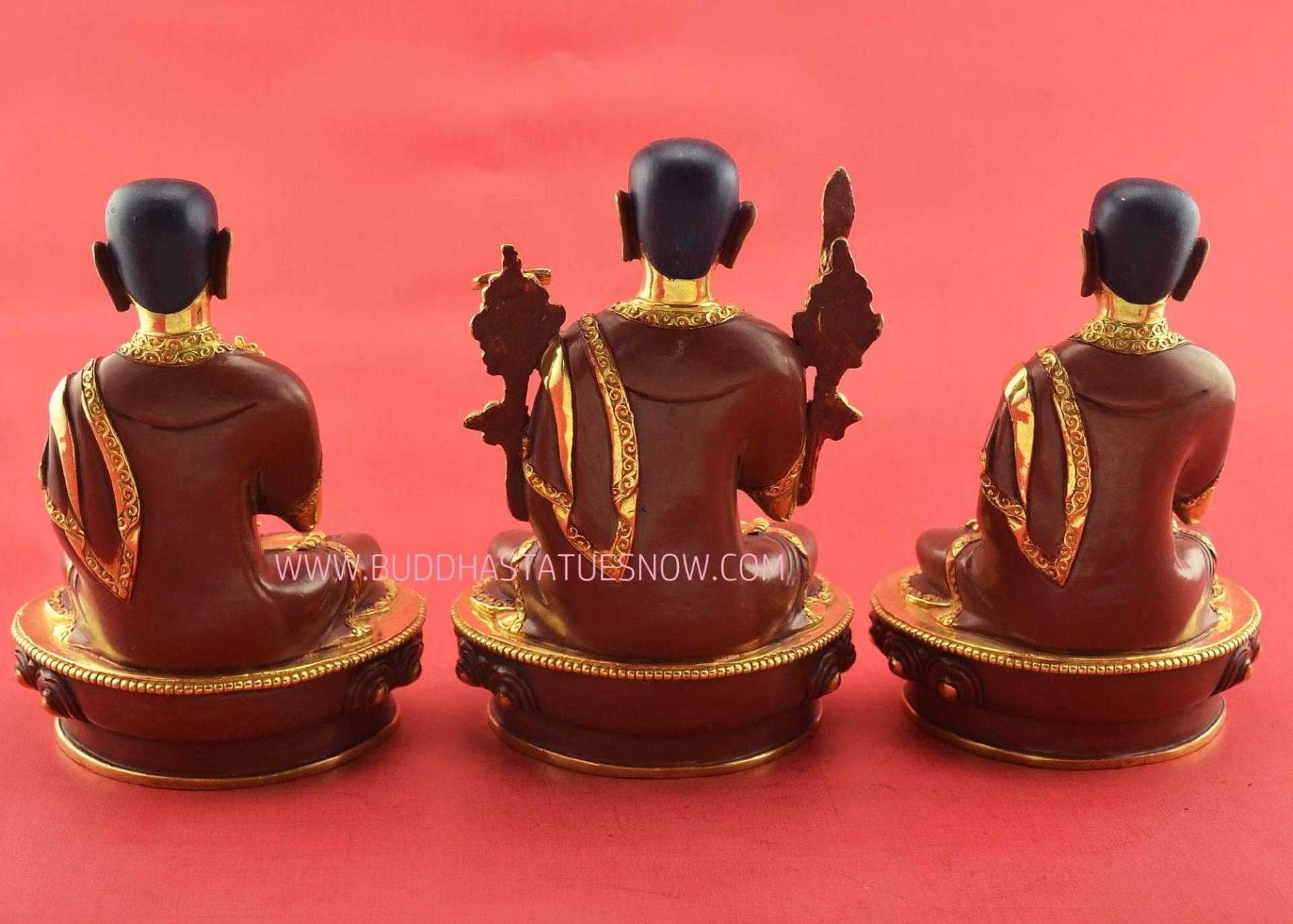
The antiquated finish is one of the defining features of this set. Reddish-brown oxidized surfaces cover substantial areas of the outer robes and the lower lotus-throne registers, while 24K gold fire gilding highlights the torso, hands, robe edging, attributes and upper throne surfaces. Fine scrolling ornament appears along the robe borders, sleeve bands and selected textile panels. The lotus thrones repeat the same visual treatment with raised lotus-petal carvings, gilded petal centers, beaded upper borders and dark oxidized lower sections. The rear photographs confirm that the darker finish continues across the backs of the robes, bordered by gilded trim, producing a consistent appearance from multiple viewing angles.
Je Tsongkhapa and the Two Spiritual Sons
This trio represents a complete lineage relationship rather than three unrelated historical teachers. Tsongkhapa is associated with Manjushri’s wisdom; traditional Gelug accounts associate Gyaltsab Je with Avalokiteshvara, the embodiment of compassion, and Khedrub Je with Vajrapani, the embodiment of enlightened power. The grouping therefore brings wisdom, compassion and spiritual power into a single altar arrangement while preserving the historical relationship between master and disciples. For additional background, see our guide to Tsongkhapa’s two principal disciples.
Antiquated Je Tsongkhapa Statues Set | Filling and Consecration
For practitioners preparing the trio for devotional use, traditional statue filling, blessing and consecration in Kathmandu, Nepal can be arranged before shipment. Mantra rolls, sacred texts and other appropriate consecration substances may be placed inside the hollow copper-alloy statues before they are sealed and ritually blessed. Having all three figures prepared together maintains the devotional unity of Je Tsongkhapa, Gyaltsab Je and Khedrub Je as a complete Gelug lineage set.
Custom Tibetan Buddhist Statues
Collectors, monasteries and Dharma centers seeking another scale or finish may also commission custom Tibetan Buddhist statues handmade in Nepal. A custom Tsongkhapa trio can be created with coordinated proportions, matching robe treatment, consistent lotus-throne designs and iconographically accurate mudras and attributes. Options can include different dimensions, partial or full 24K gold fire gilding, antiquated oxidized finishes and gold-gilded Gelug pandita hats while preserving the established relationship of Je Tsongkhapa with Gyaltsab Je and Khedrub Je.
Authentic, Handmade in Nepal
Every statue is handcrafted in Patan, Nepal, using traditional lost wax casting and comes with a certificate of authenticity issued by Nepal’s Department of Archaeology, verifying its materials, technique, and origin.