
Tibetan Ghau Pendants
Tibetan ghau pendants are portable shrines. Traditionally worn around the neck or carried by pilgrims and travellers, a ghau is a small amulet box that opens, so it can hold something precious – a relic, a written mantra, a blessing cord, a grain of consecrated substance, or a tiny image of a deity – and is then closed and sealed. For a practitioner away from their altar, it is the altar reduced to what can be worn, and ghau have been carried on Himalayan trade routes and pilgrimage roads for centuries.
Our Tibetan ghau pendants are made in Patan, Nepal, in gold plated silver, hand set with semi-precious coral and turquoise, and measure roughly 41 to 46mm across. The range is built around the eight auspicious symbols, the ashtamangala, offered as individual pendants so you can choose the one whose meaning speaks to you: the white parasol of protection, the twin golden fish of freedom, the treasure vase of abundance, the lotus of purity, the conch shell that proclaims the Dharma, the eternal knot of interdependence, and the victory banner. Alongside these we carry Tibetan ghau pendants bearing the mantra Om Mani Padme Hum, the viswa vajra, and deity designs including Manjushri.
Tibetan ghau pendants are the most accessible pieces we make, most priced under a hundred dollars, which makes them a natural first purchase for someone beginning a practice and one of the few genuinely meaningful gifts you can give a practitioner without knowing what is already on their shrine. Each is worked by hand, so no two are identical, and the coral and turquoise are set individually rather than machine placed.
Browse the full selection of Tibetan ghau pendants below, explore the wider range of Tibetan ritual items, or read about the symbols themselves in our guide to the Buddhist pantheon.
Showing 1–12 of 18 resultsSorted by popularity
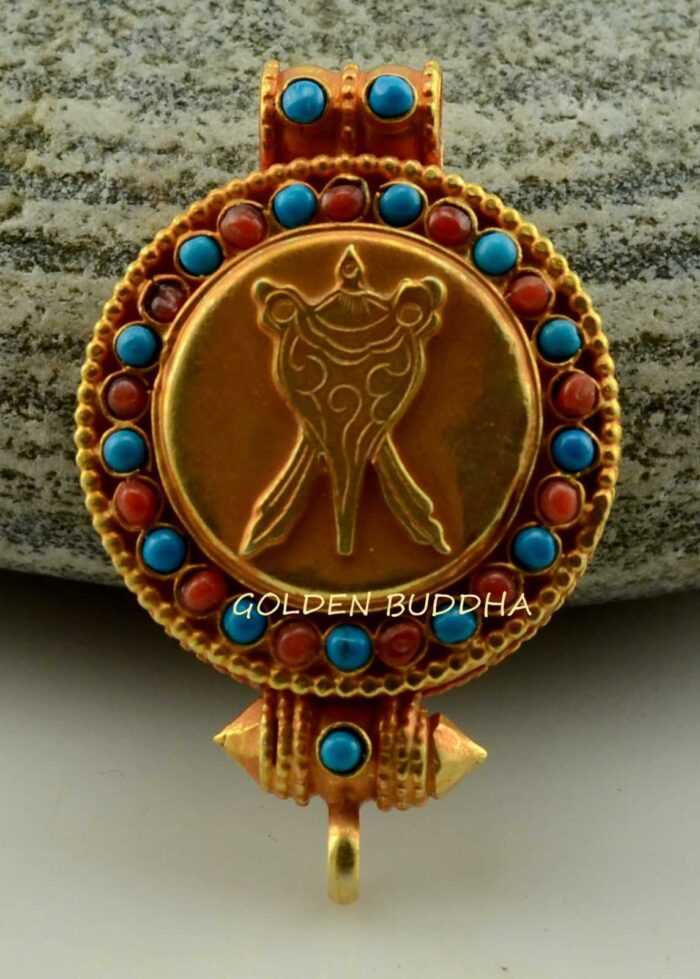
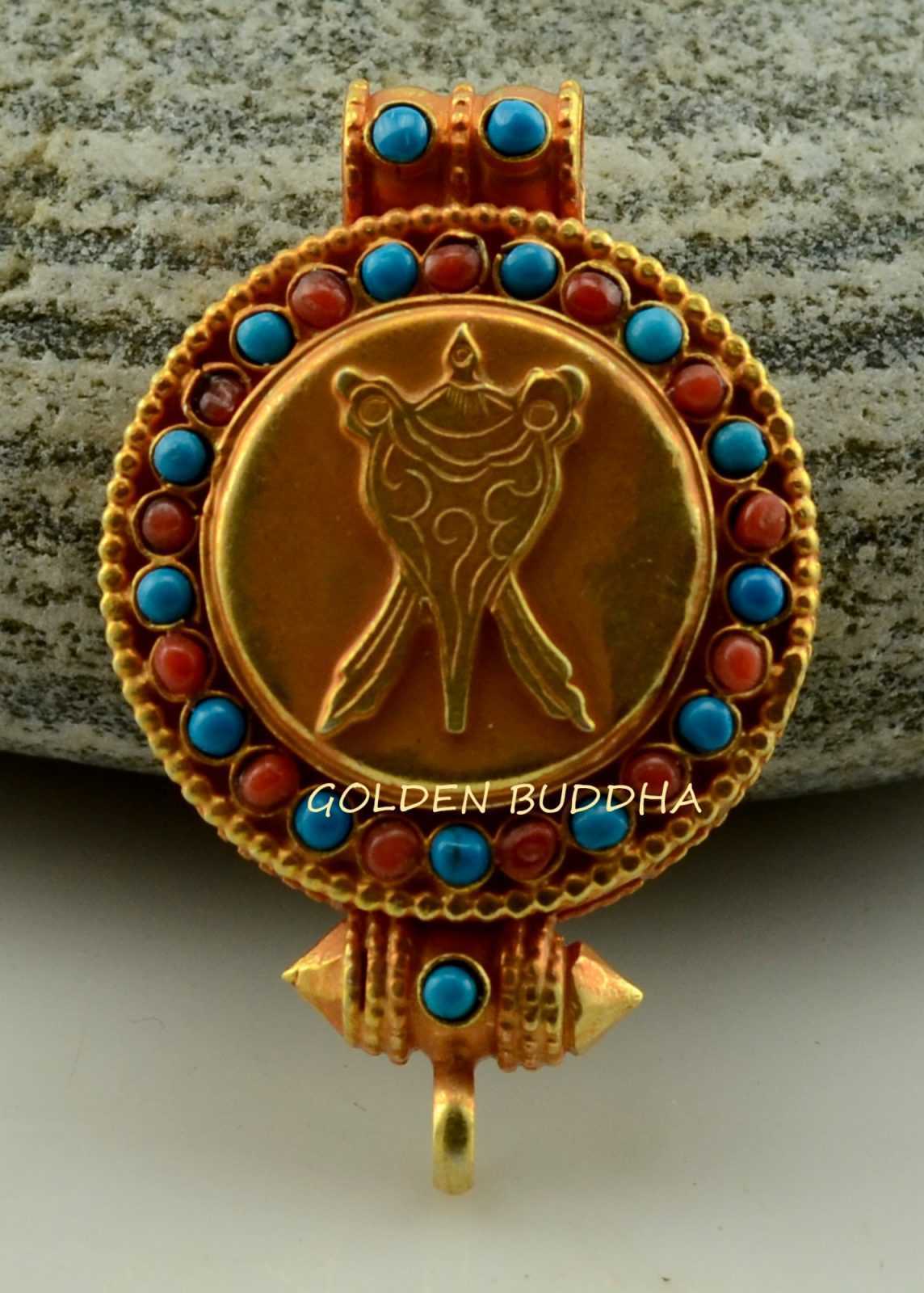
Conch Shell Ghau Pendant 44mm, Gold Plated Silver, Coral and Turquoise
Original price was: $99.00.$69.00Current price is: $69.00.Add to Cart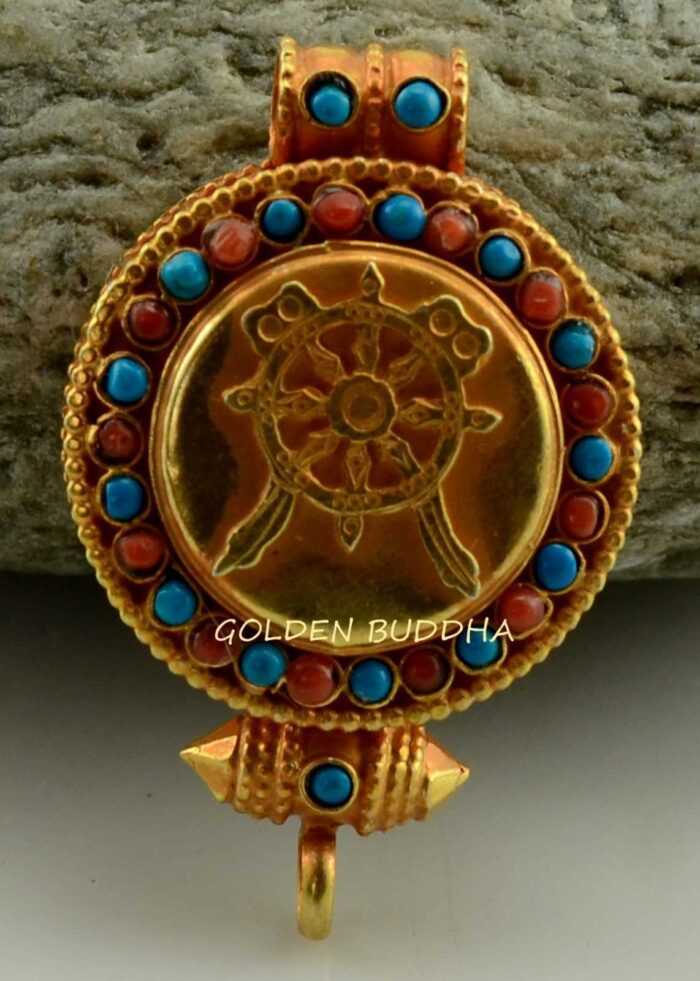
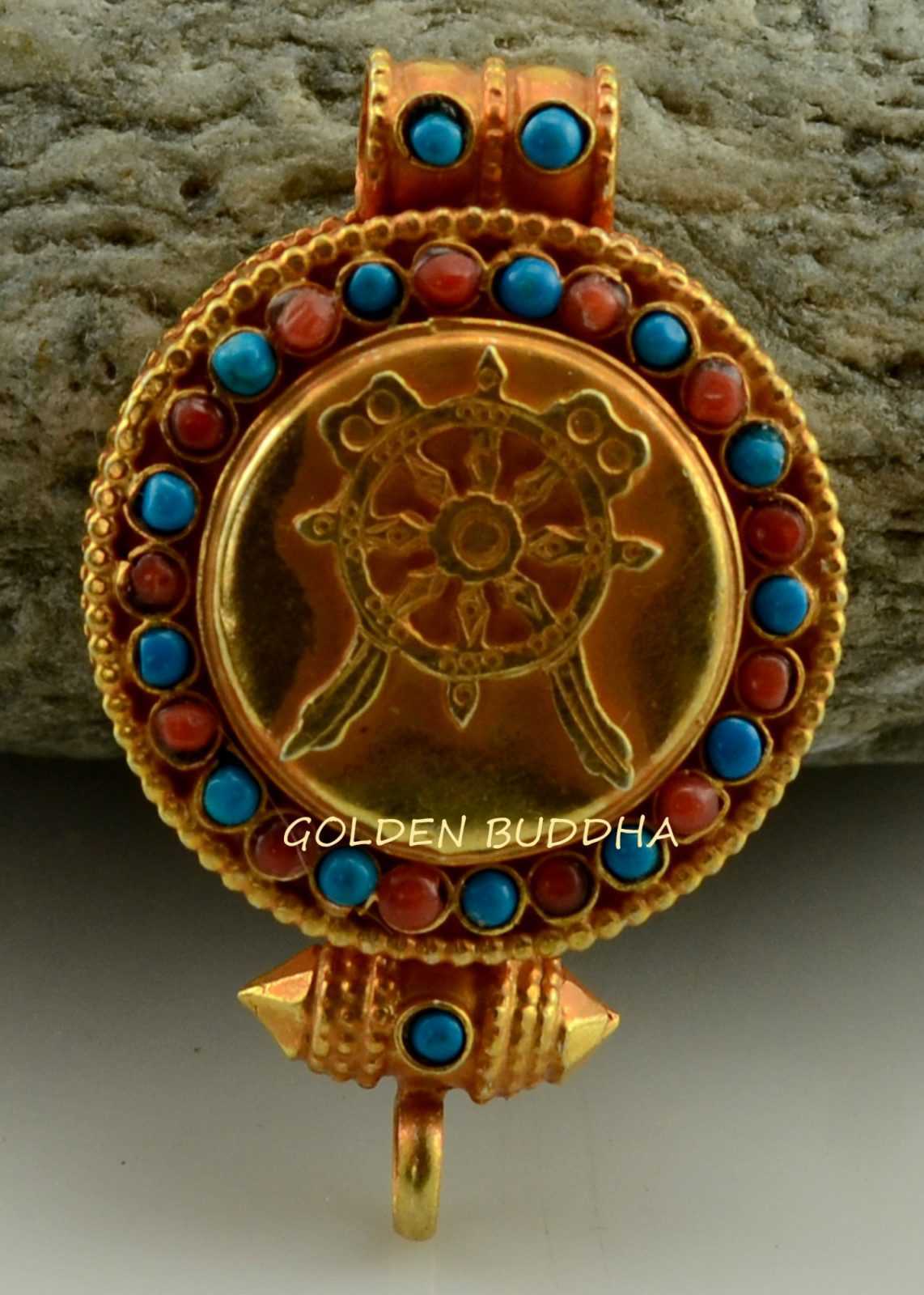
Dharma Wheel Ghau Pendant 45mm, Gold Plated Silver, Coral and Turquoise
Original price was: $99.00.$69.00Current price is: $69.00.Add to Cart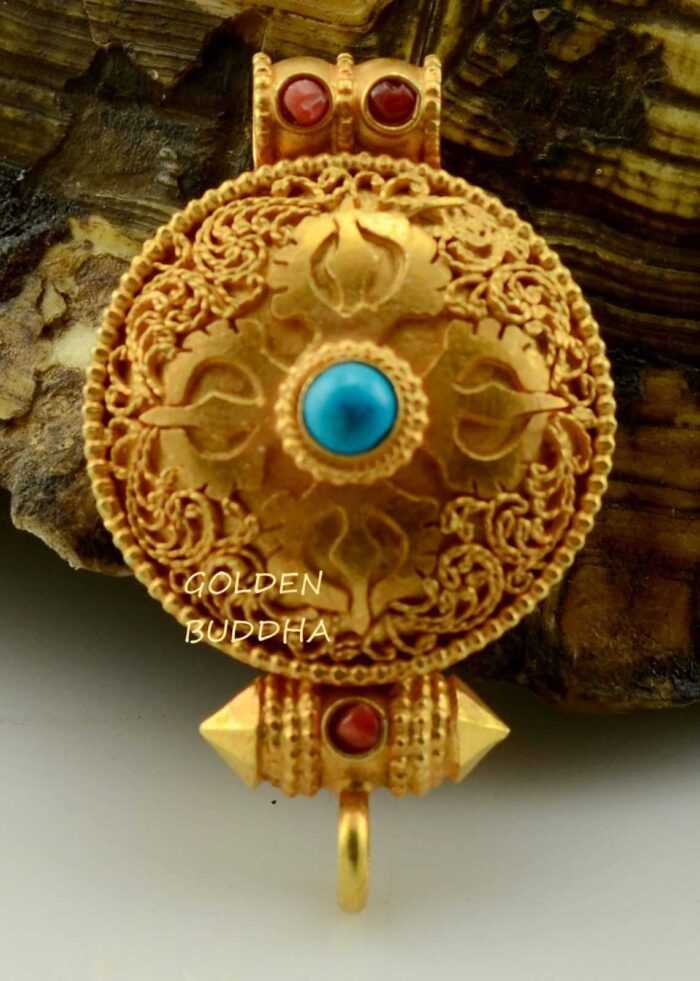
Viswa Vajra Ghau Pendant 43mm, Gold Plated Silver, Coral and Turquoise
Original price was: $99.00.$69.00Current price is: $69.00.Add to Cart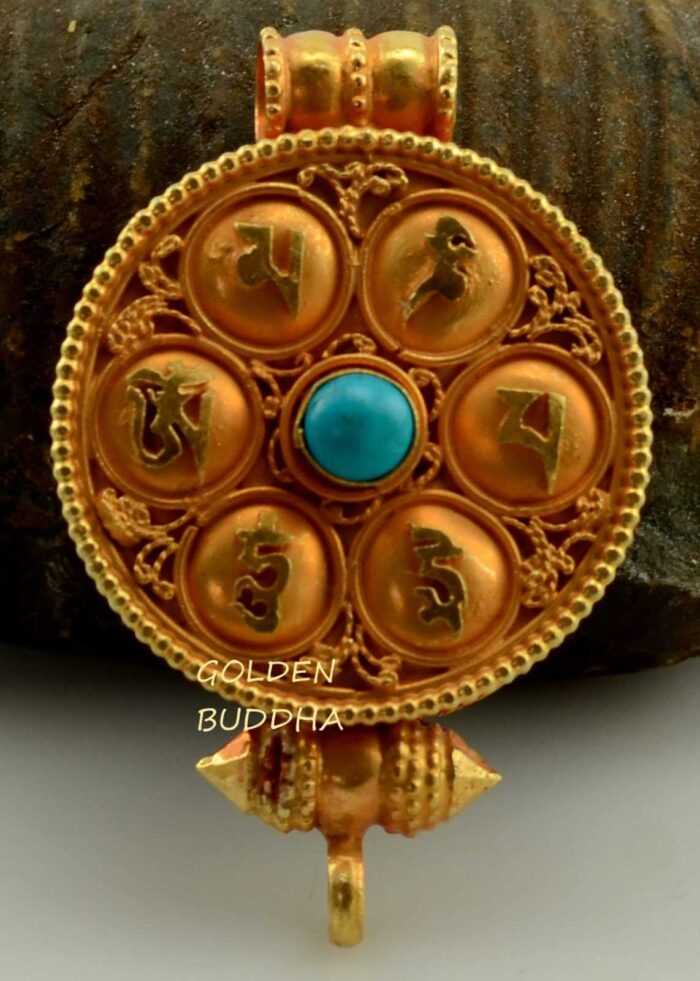
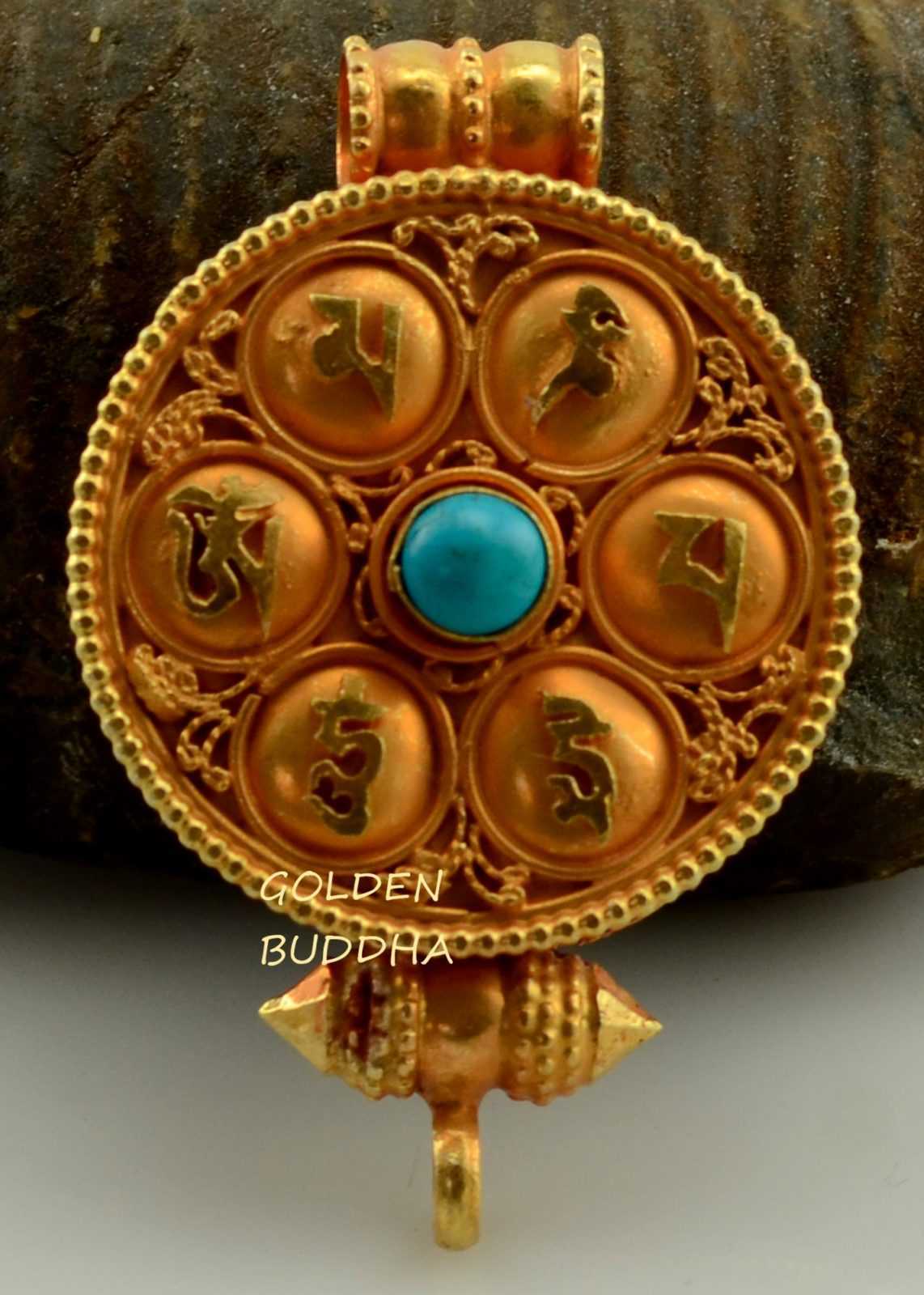
OM MANI PADME HUM Ghau Pendant 46mm, Gold Plated Silver, Turquoise
Original price was: $99.00.$69.00Current price is: $69.00.Add to Cart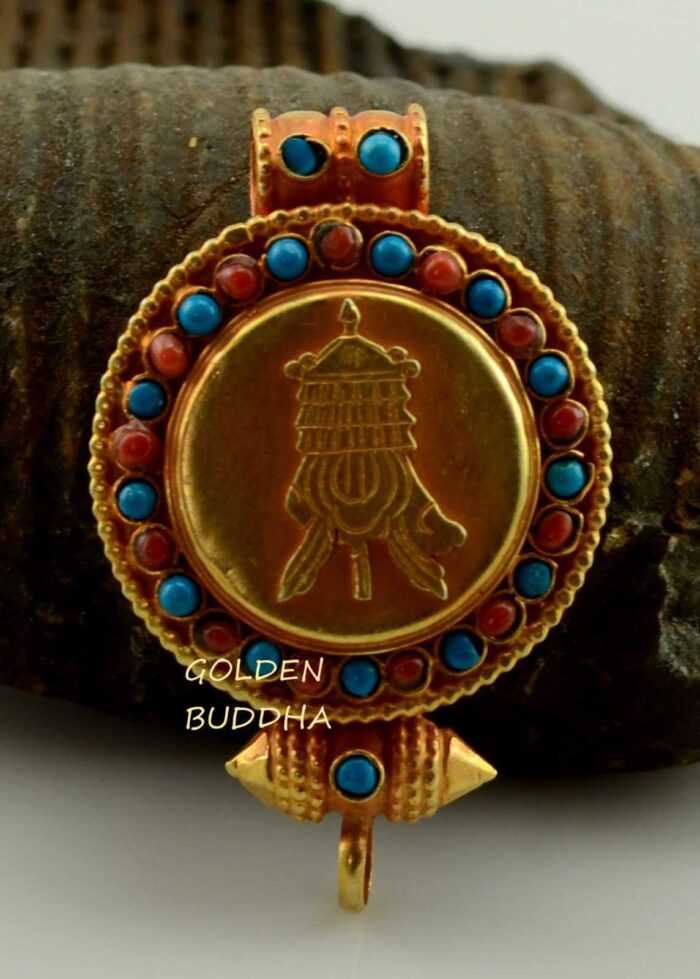
Victory Banner Ghau Pendant 45mm, Gold Plated Silver, Coral and Turquoise
Original price was: $99.00.$69.00Current price is: $69.00.Add to Cart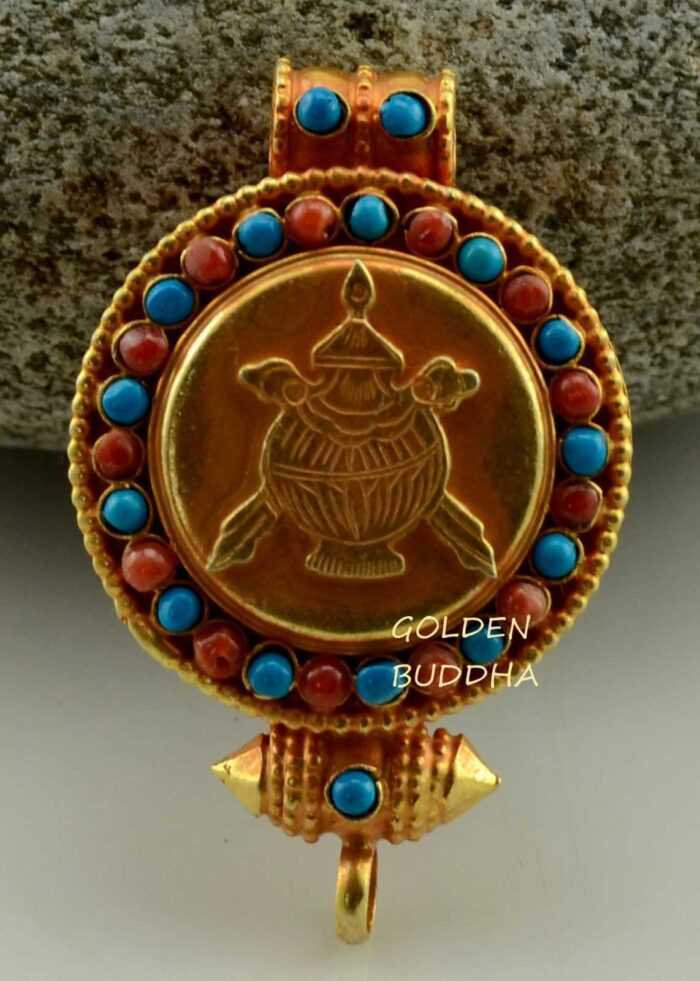
Treasure Vase Ghau Pendant 45mm, Gold Plated Silver, Coral and Turquoise
Original price was: $99.00.$69.00Current price is: $69.00.Add to Cart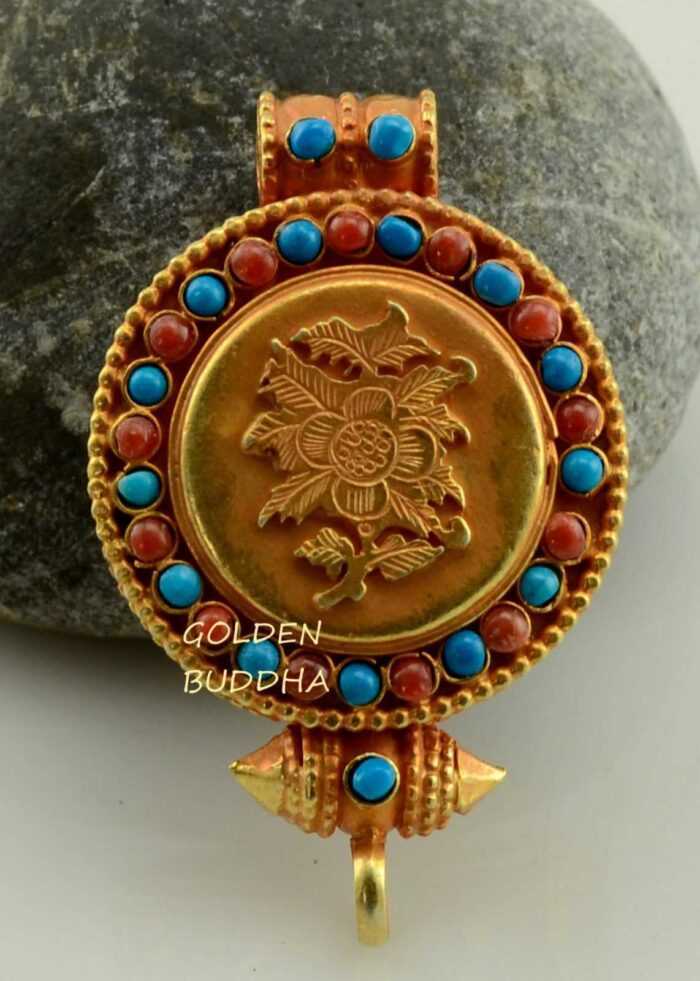
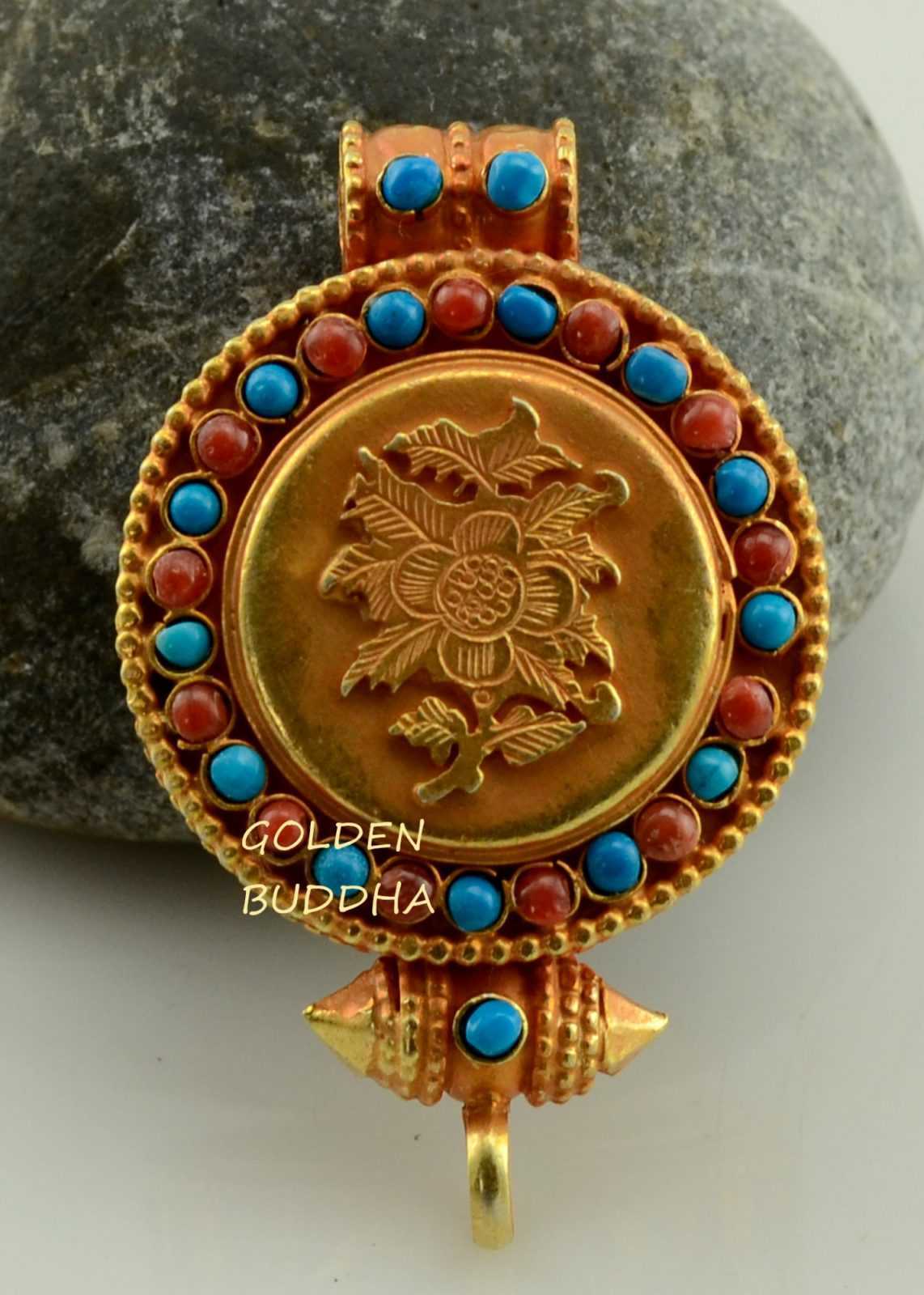
Lotus Flower Ghau Pendant 45mm, Gold Plated Silver, Coral and Turquoise
Original price was: $99.00.$69.00Current price is: $69.00.Add to Cart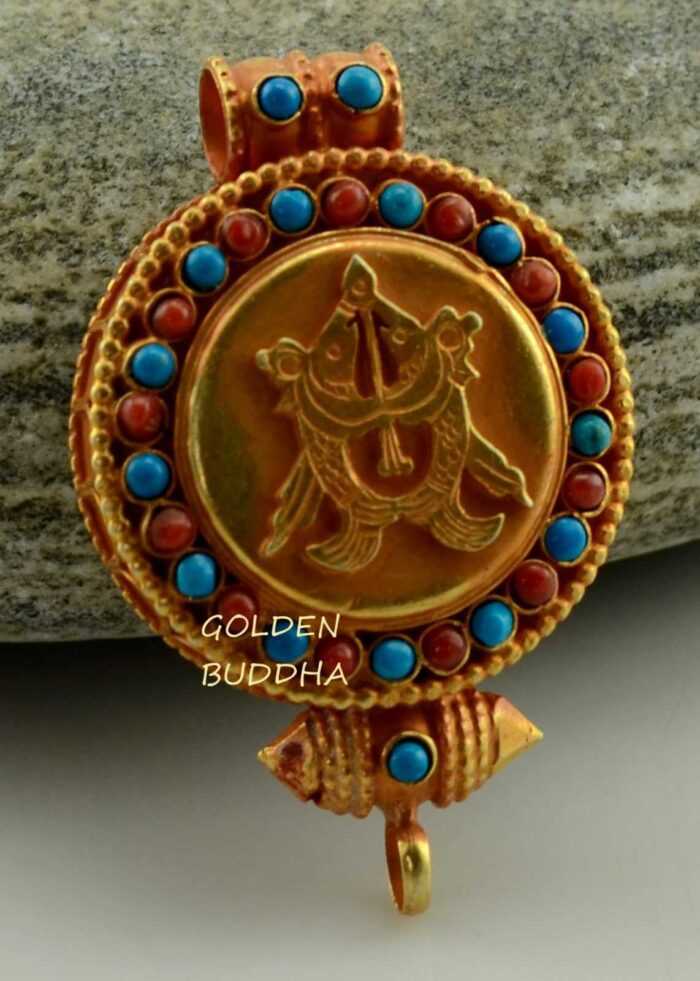
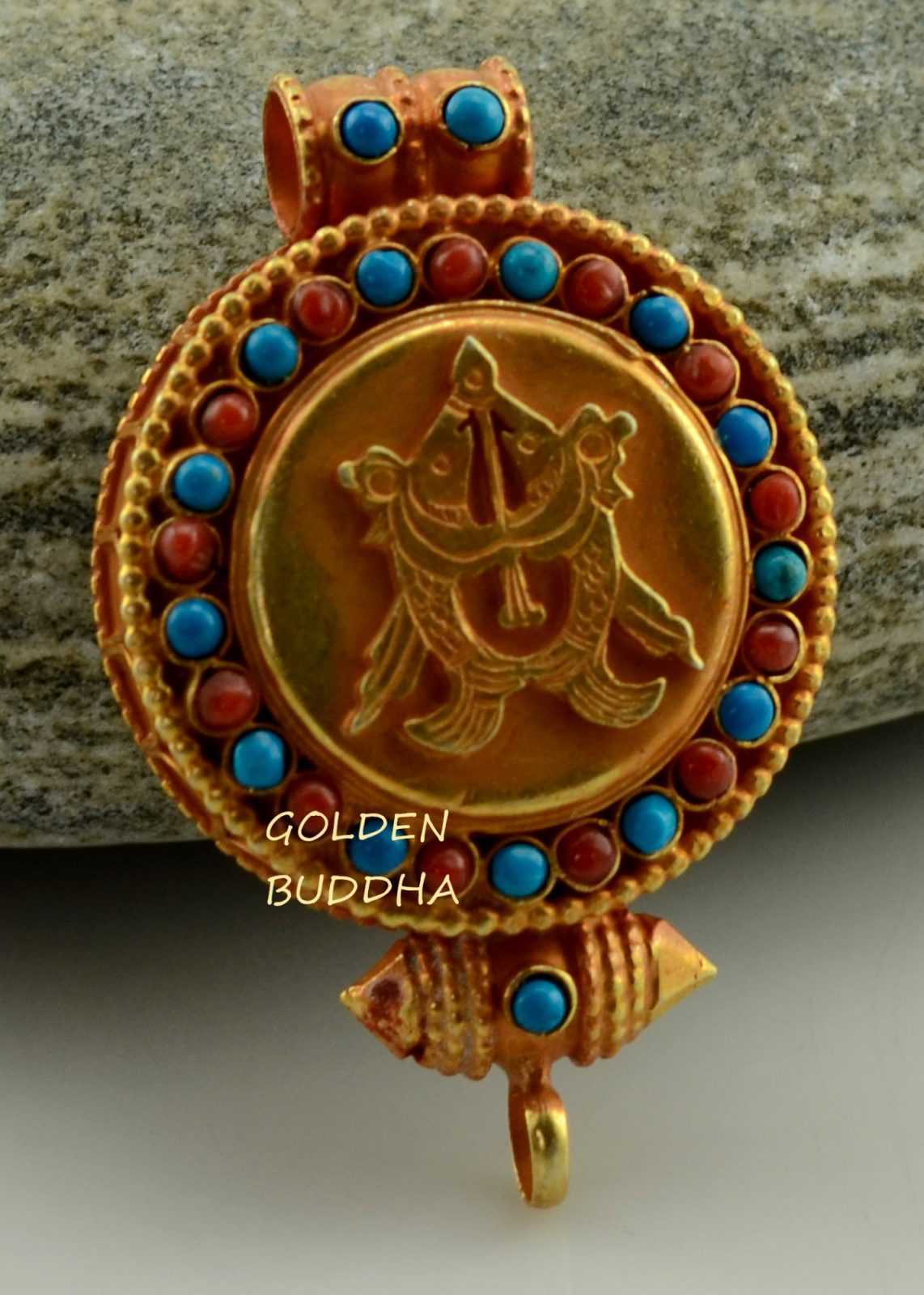
Twin Golden Fish Ghau Pendant 45mm, Gold Plated Silver, Coral and Turquoise
Original price was: $99.00.$69.00Current price is: $69.00.Add to Cart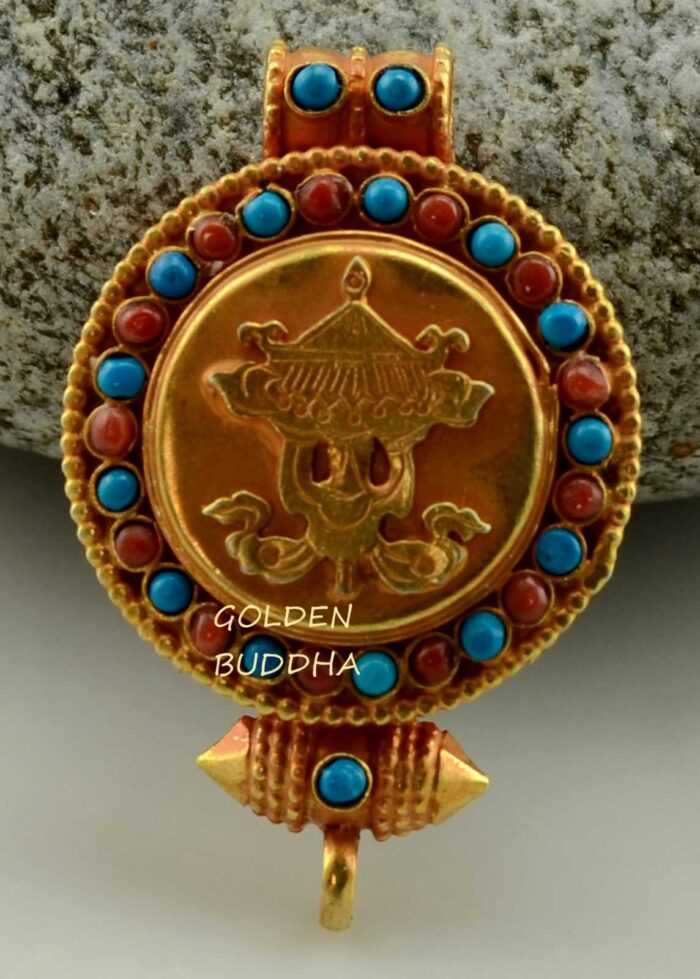
White Parasol Ghau Pendant 44mm, Gold Plated Silver, Coral and Turquoise
Original price was: $99.00.$69.00Current price is: $69.00.Add to Cart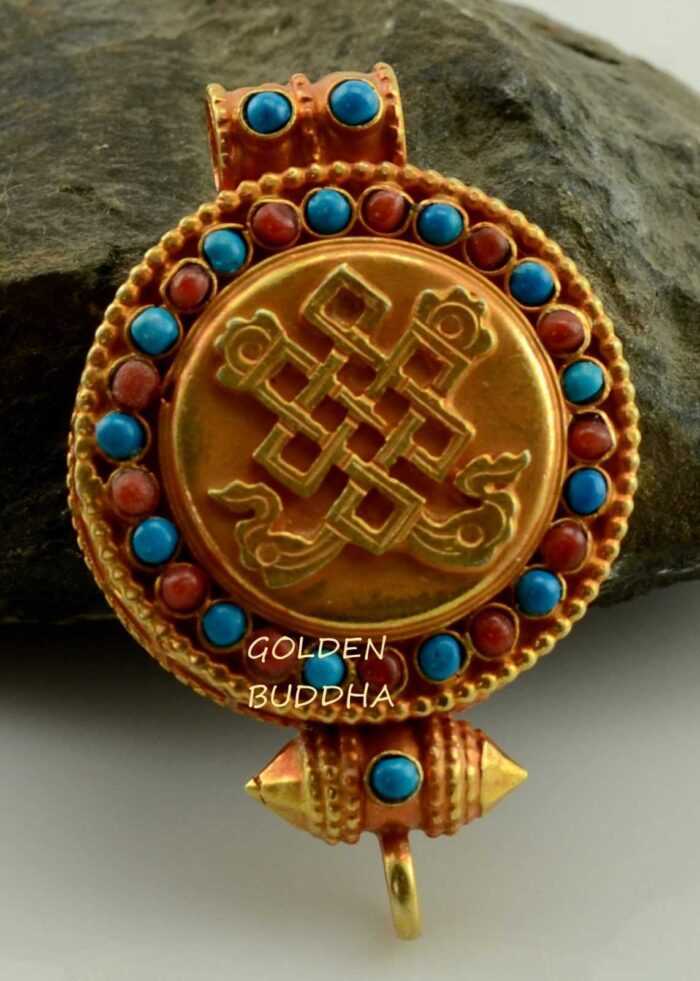
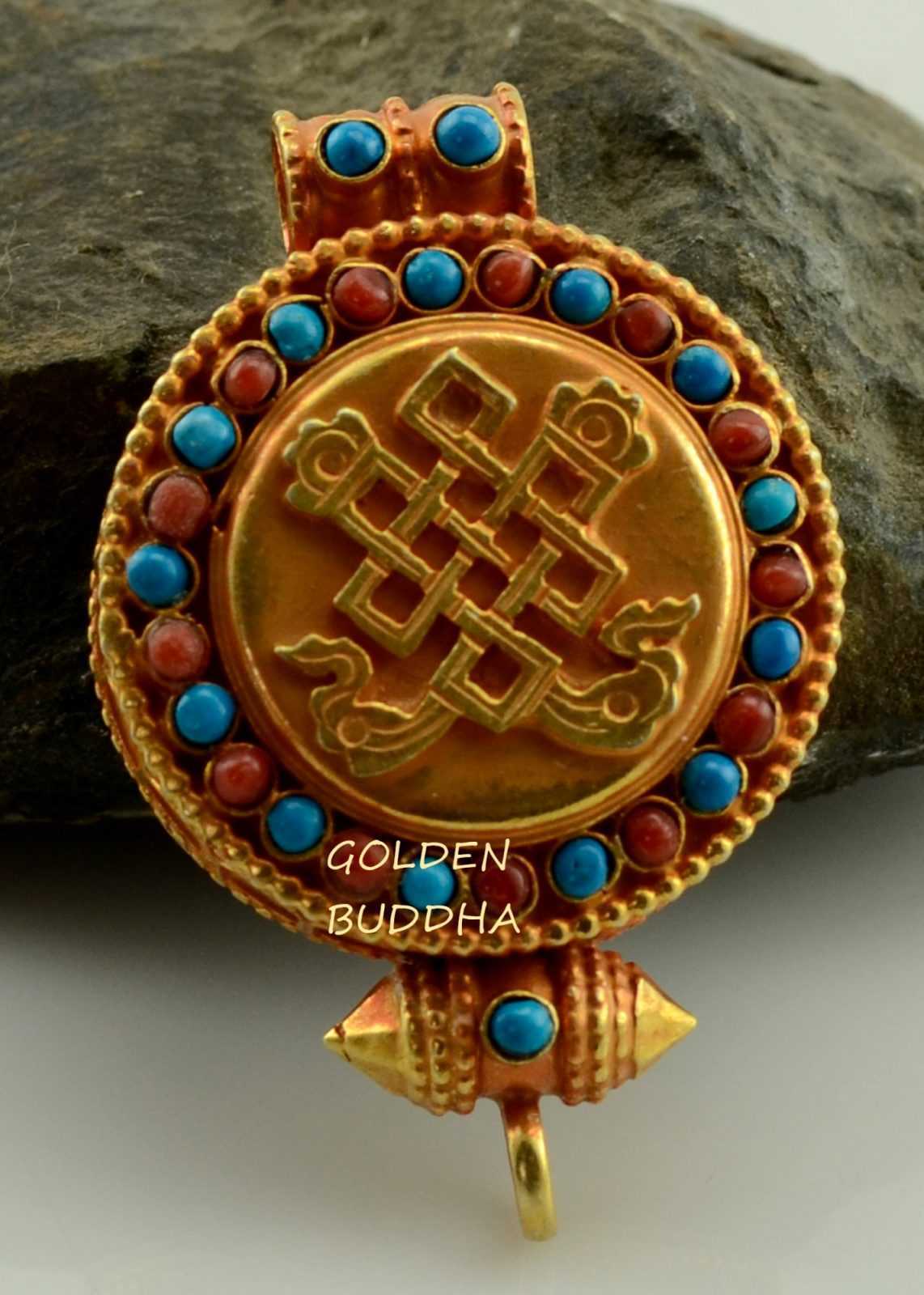
Eternal Knot Ghau Pendant 44mm, Gold Plated Silver, Coral and Turquoise
Original price was: $99.00.$69.00Current price is: $69.00.Add to Cart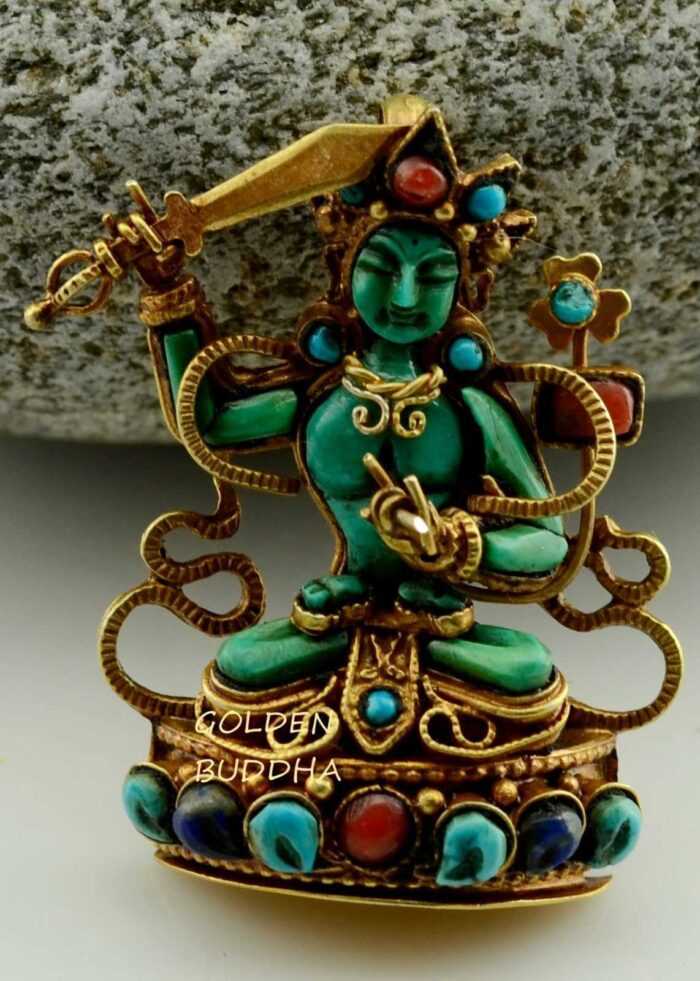
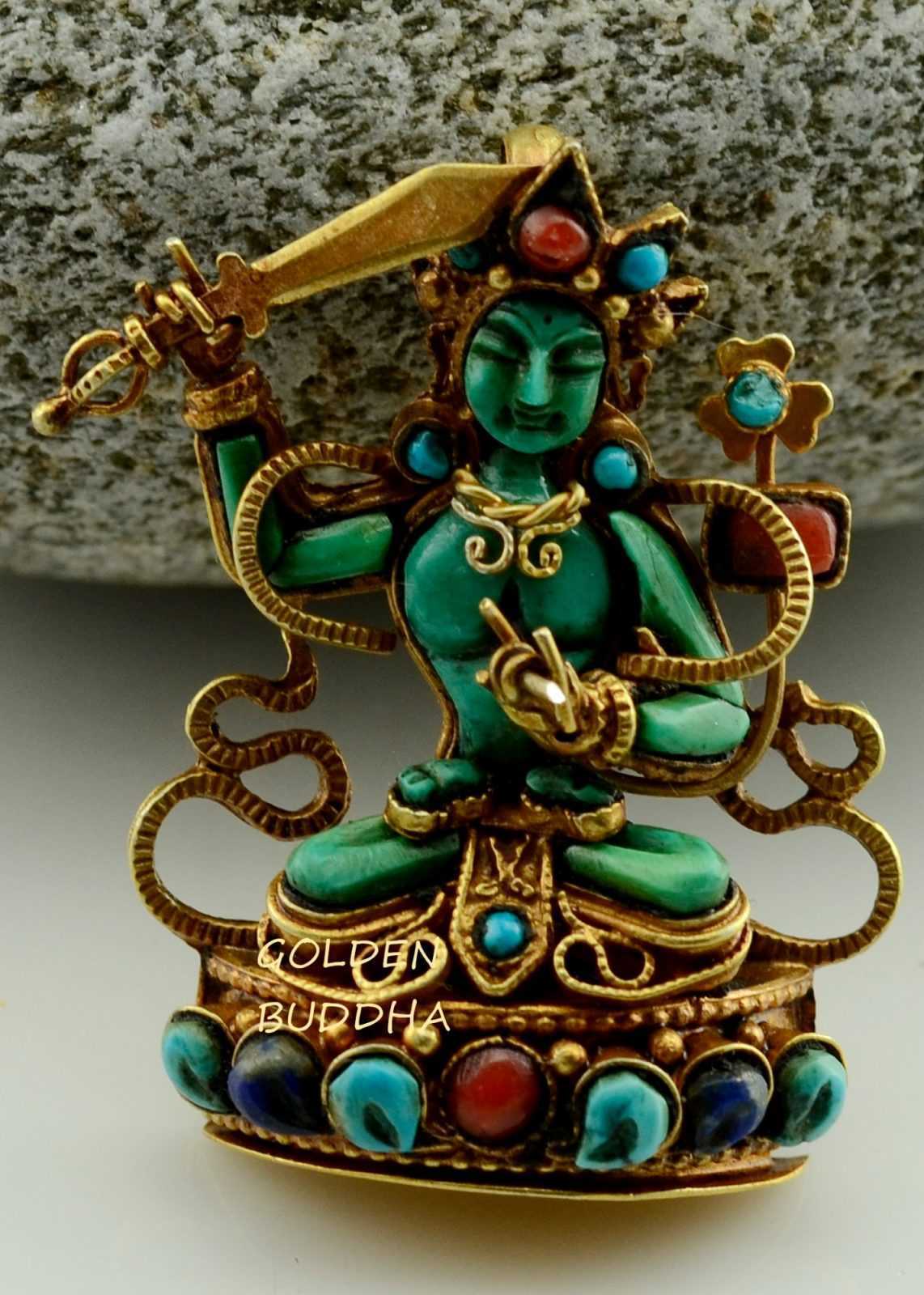
Manjushri Ghau Pendant 41mm, Gold Plated Silver, Coral and Turquoise
Original price was: $429.00.$269.00Current price is: $269.00.Add to Cart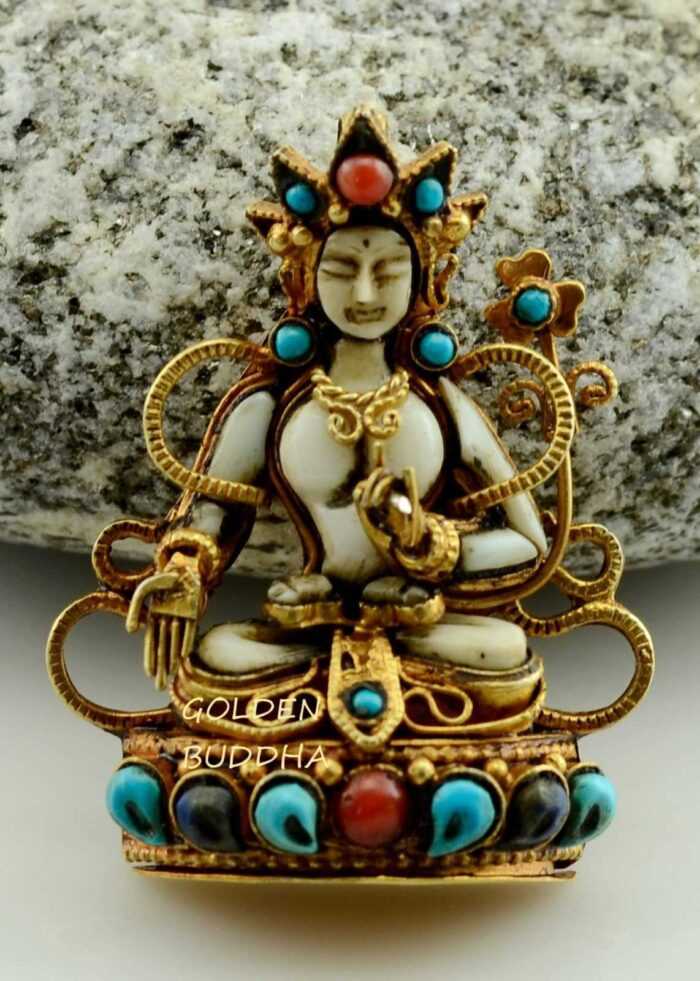
White Tara Ghau Pendant 40mm, Gold Plated Silver, Coral and Turquoise Stones
Original price was: $299.00.$219.00Current price is: $219.00.Add to Cart





The Ghau as a Portable Shrine
Of all the objects in Tibetan Buddhist practice, the ghau is the one that travels. A shrine room stays where it is built and a thangka hangs on a wall, but a ghau goes with its owner - across a mountain pass, into a new country, through a working day. That portability is the whole point of the form, and it explains why ghau are made small, hinged, and strong enough to be worn against the body for years.
What goes inside is chosen by the wearer, often with a teacher's guidance: a mantra written on paper and rolled, a knotted blessing cord received at an empowerment, a pinch of consecrated substance, a relic, or a miniature image. The container is only ever half of the object; the other half is what the owner puts in it.
Materials and Craftsmanship
Our ghau pendants are made in Patan, in the Kathmandu Valley, in gold plated silver and hand set with semi-precious coral and turquoise. They measure roughly 41 to 46mm across, a size that reads as substantial without being heavy to wear. The raised designs are worked by hand rather than stamped, which is why the depth of relief varies slightly from piece to piece and why no two are quite identical.
Coral and turquoise are the two stones most closely associated with Himalayan jewellery - turquoise for the sky and for protection, coral for vitality and long life - and they have been set into Tibetan silverwork for as long as the trade routes have run. Browse the full range of Tibetan ritual items, or read about the deities depicted on the pendants in our guide to the Buddhist pantheon.
Frequently Asked Questions
What is a Tibetan ghau pendant?
A ghau is a portable shrine worn around the neck or carried on the person. Traditionally it holds something consecrated - a written mantra, a blessing cord, a relic, a grain of sacred substance, or a small image of a deity - so that a practitioner travelling away from home still carries the presence of their practice. Ghau have been worn on Himalayan pilgrimage and trade routes for centuries, and remain one of the most personal objects in Tibetan Buddhism.
Do these ghau pendants open?
Yes. Each pendant can be opened, which is what distinguishes a ghau from a solid medallion - the box is meant to be filled. Practitioners commonly place a rolled mantra, a knotted blessing cord received at an empowerment, a grain of consecrated substance, a relic, or a small printed image of a deity inside. Many people ask their teacher what to put in, and some leave a ghau empty until the right thing comes to them. The fitting is fine work in thin silver, so open and close it carefully.
What are the eight auspicious symbols shown on these pendants?
The ashtamangala, or eight auspicious symbols, are the most widely used set of emblems in Tibetan Buddhism: the white parasol of protection, the twin golden fish of freedom and fearlessness, the treasure vase of abundance, the lotus of purity rising unstained from the mud, the right-turning conch that proclaims the Dharma, the eternal knot of interdependence, the victory banner marking the triumph over ignorance, and the wheel of Dharma. We offer them as individual pendants so you can choose the one whose meaning matters most to you.
What does Om Mani Padme Hum mean?
It is the mantra of Avalokiteshvara, the Bodhisattva of Compassion, and the most widely recited mantra in the Buddhist world. It is often rendered as "the jewel in the lotus," though Tibetan teachers generally caution against reducing it to a translation: each of the six syllables is traditionally understood to purify one of the six realms of existence and its corresponding affliction, so the mantra is regarded as holding the whole path in condensed form.
How should I care for gold plated silver set with coral and turquoise?
Wipe the piece with a soft dry cloth after wearing and keep it away from perfume, hairspray, chlorinated water and household cleaners. Turquoise in particular is porous and will discolour if it absorbs oils or chemicals, so it is best to put the pendant on last when dressing and to take it off before swimming or bathing. Never use silver dip or abrasive polish, which will strip the gold plating and damage the stone settings.
Is a ghau pendant a suitable gift for someone who is not Buddhist?
Yes, and it is one of the easier choices to get right. Unlike a statue or a thangka, which commits the recipient to a particular deity and a particular place to put it, a ghau is small, wearable and personal. The eight auspicious symbols carry meanings - protection, abundance, freedom, purity - that translate readily outside a Buddhist context, and the piece can simply be worn as finely made Himalayan silverwork if that is how the recipient prefers to hold it.