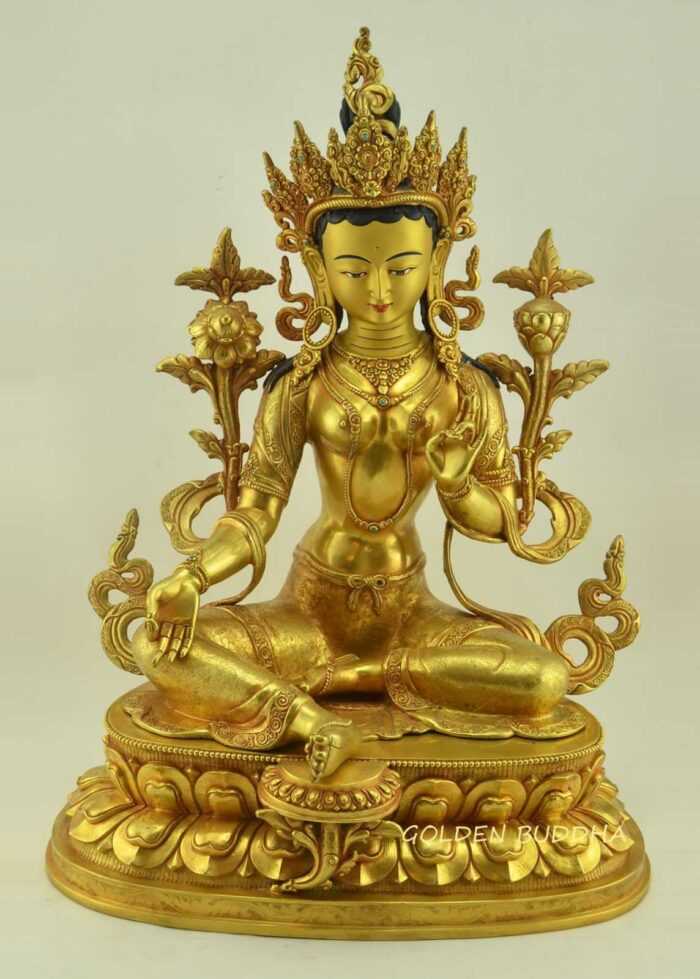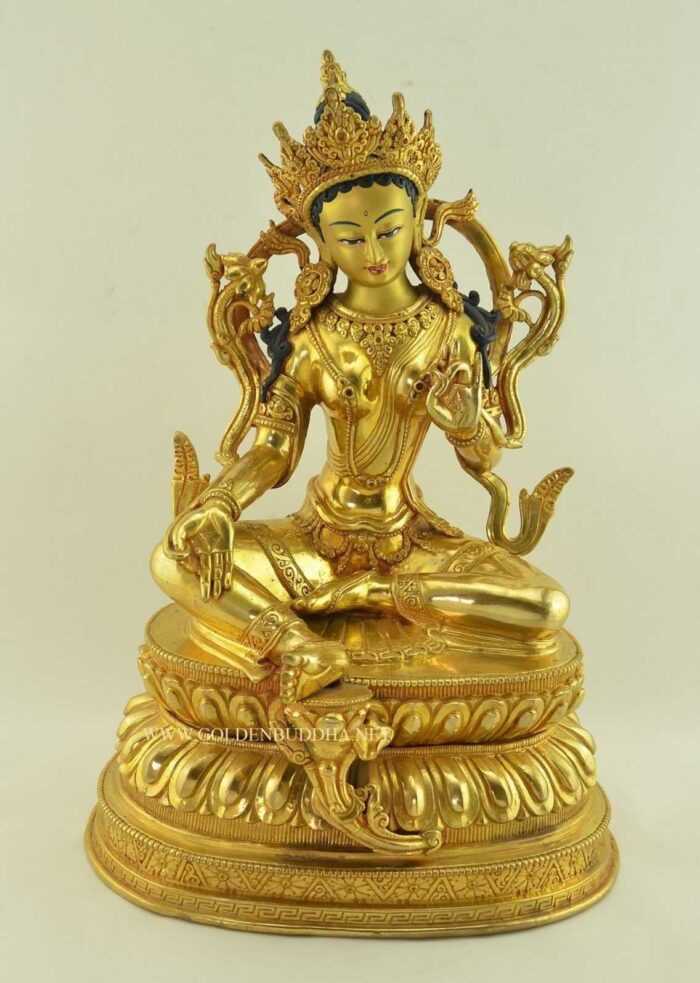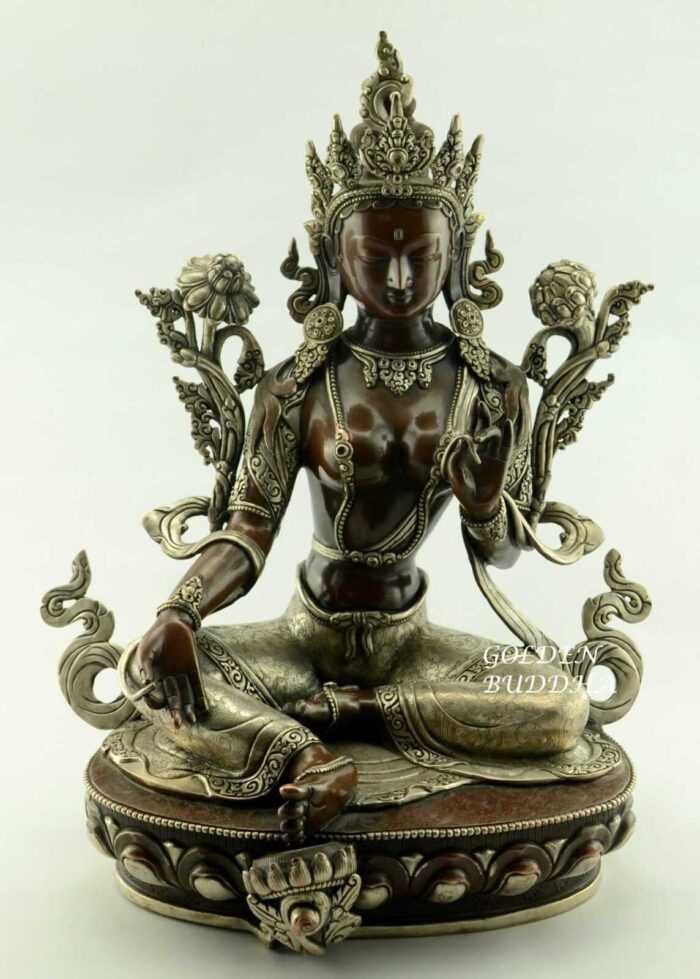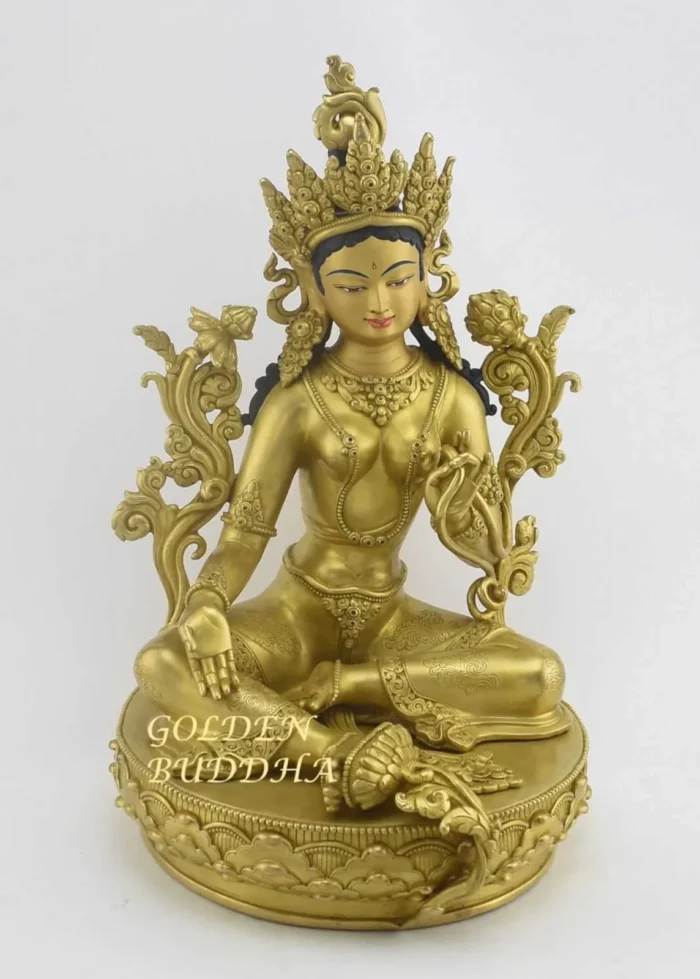
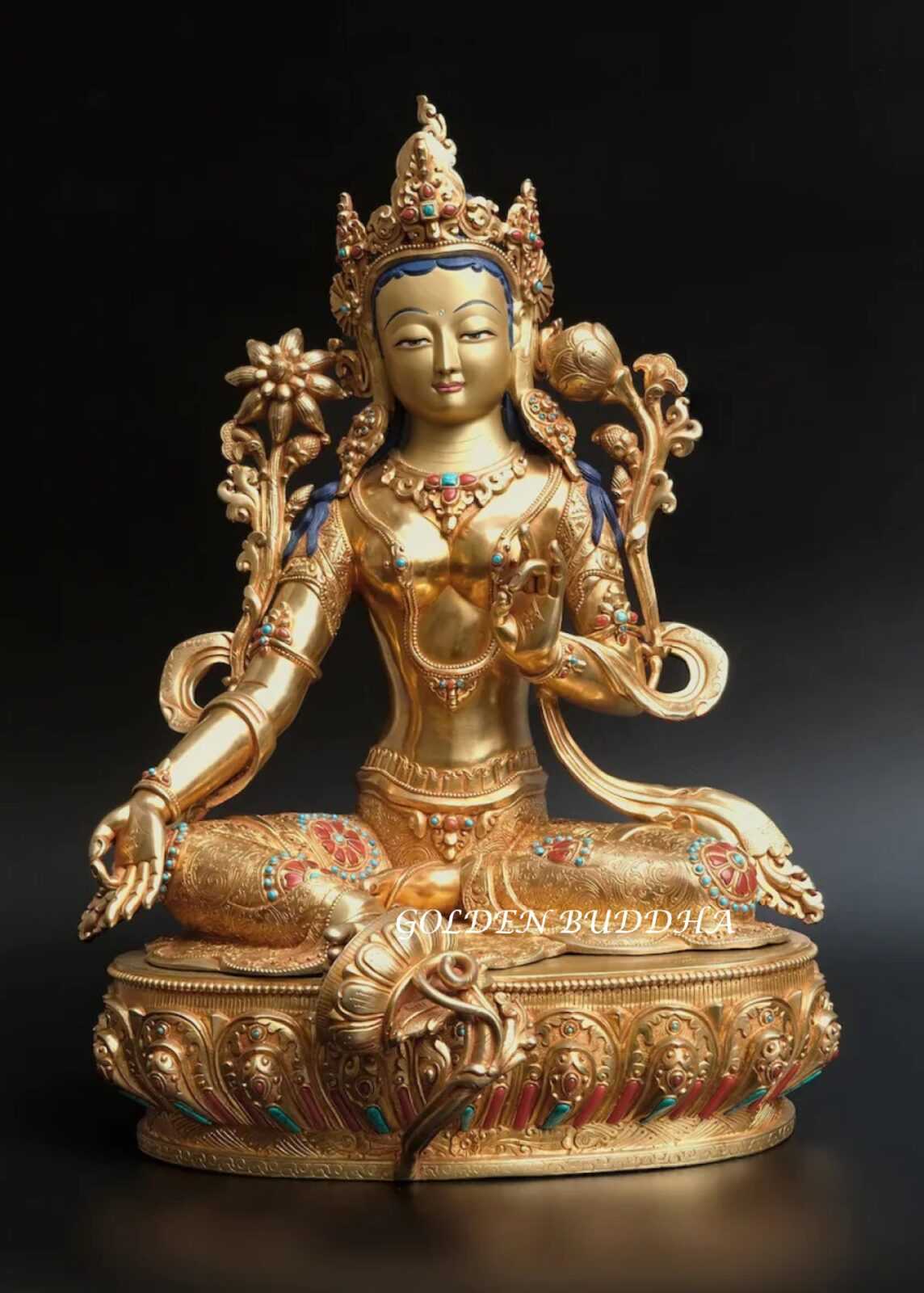
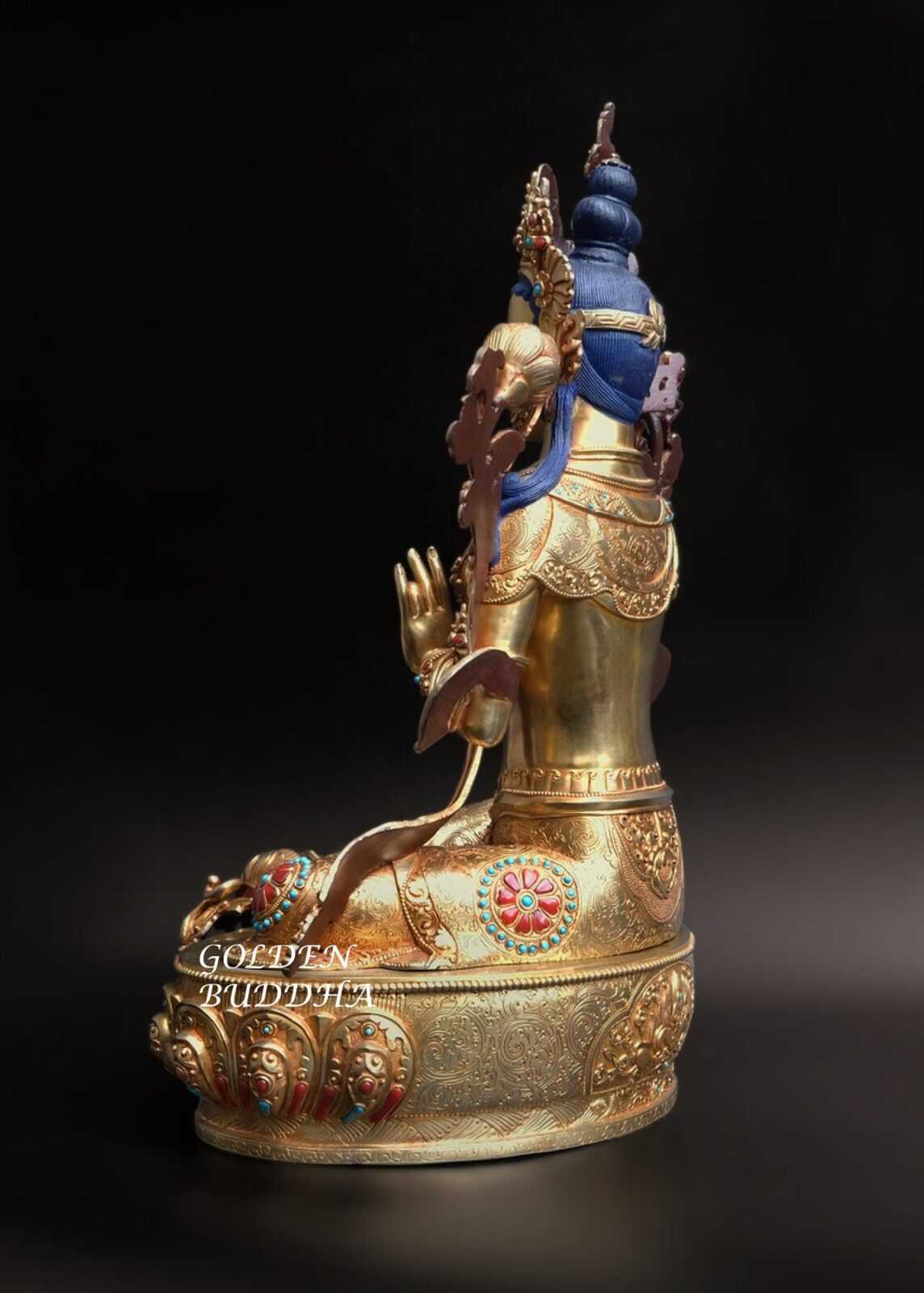
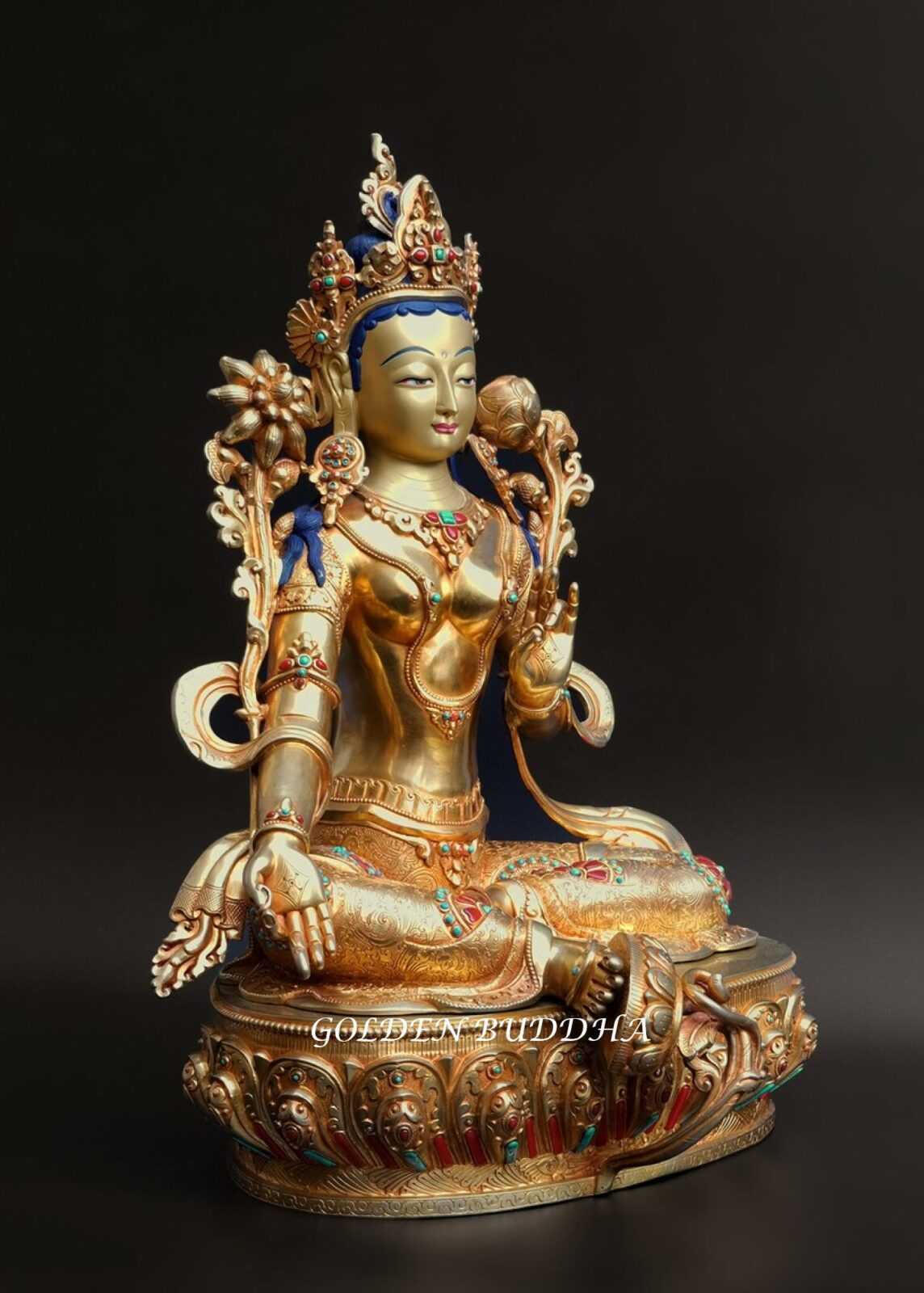
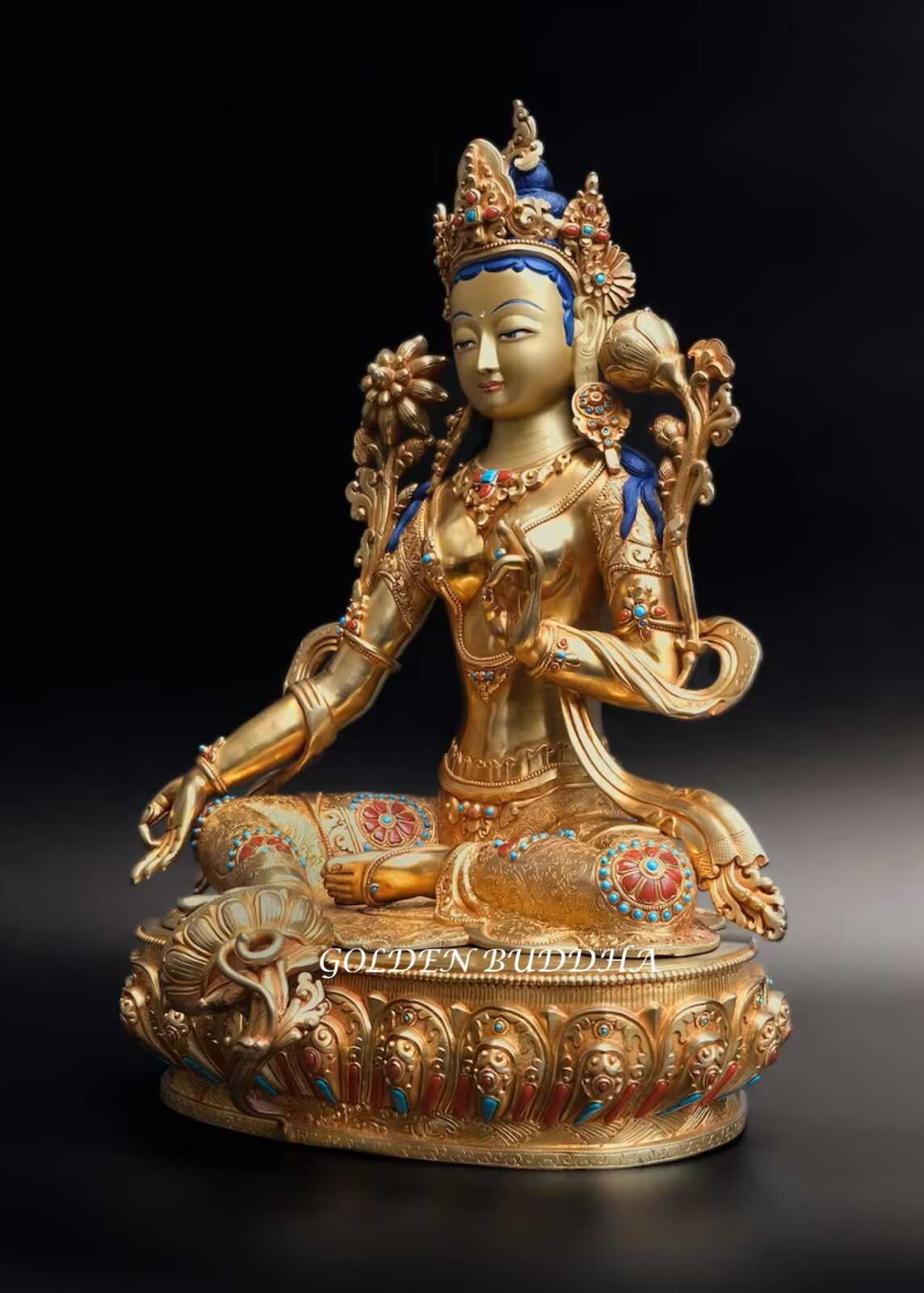
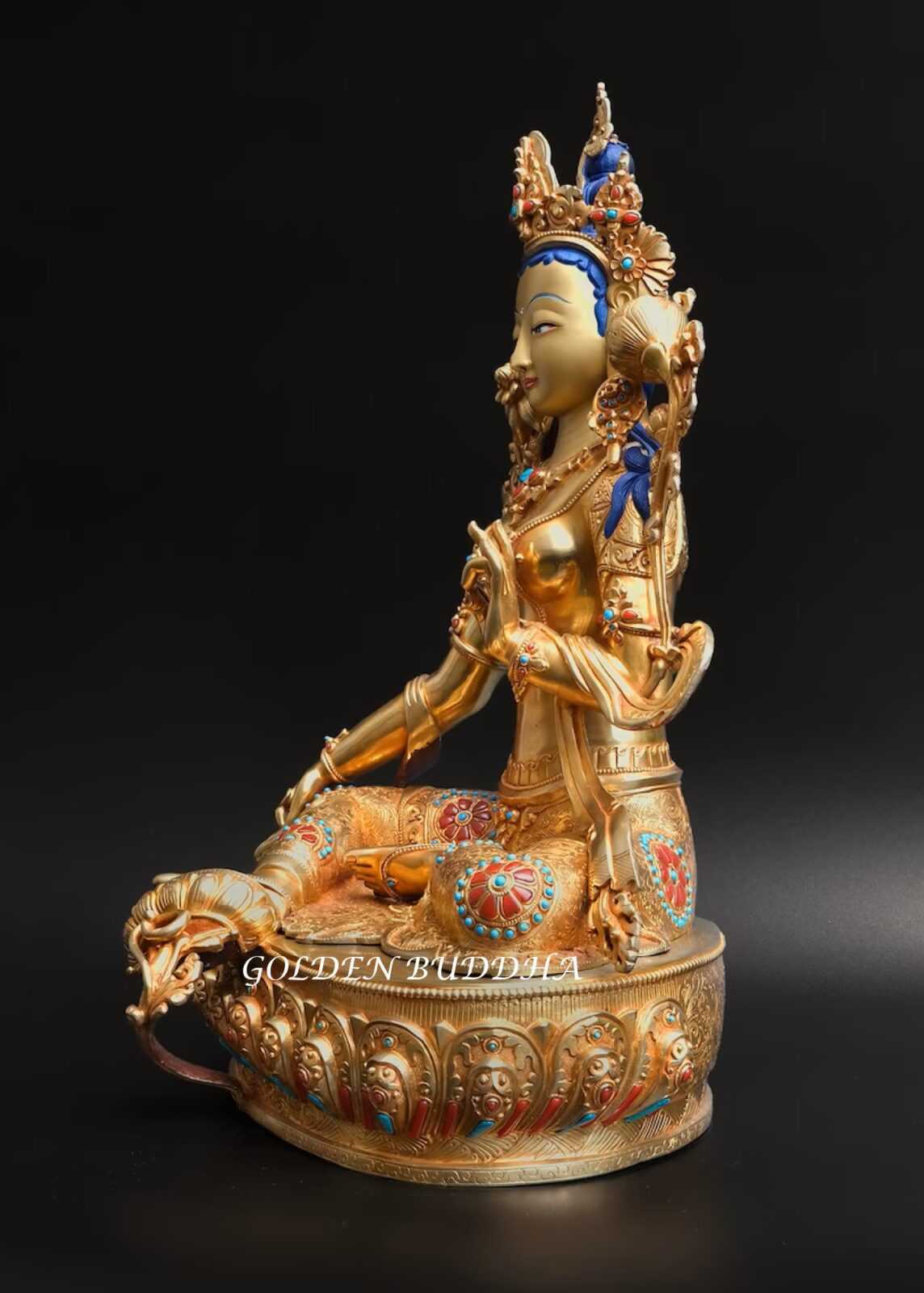
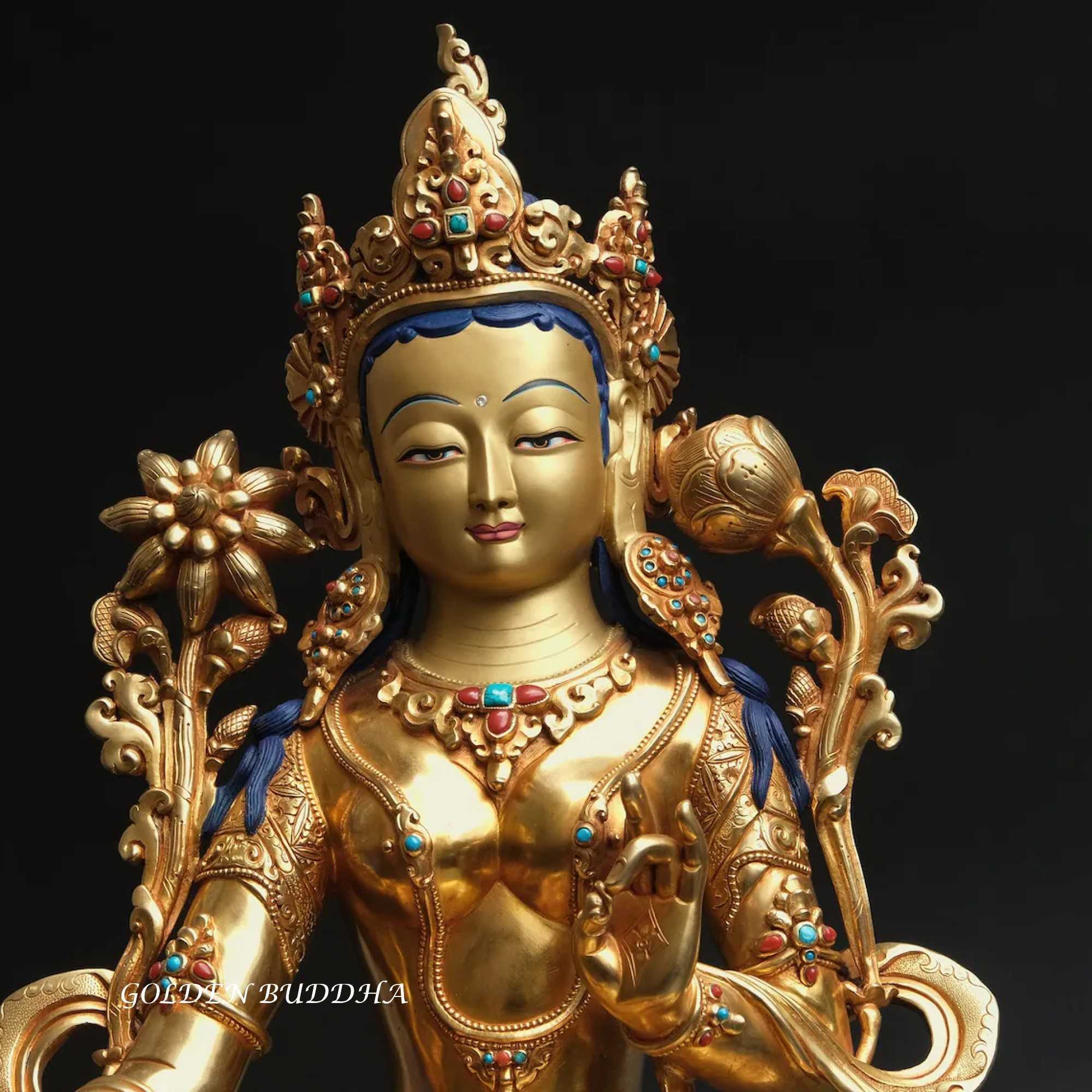

This Masterpiece Jetsun Dolma statue (Green Tara) is fire gilded in genuine 24K gold using traditional techniques and represents the collaborative work between master Newar artisans in Patan, Nepal. Crafted using the centuries-old lost wax casting method, every stage of its creation—from casting and chasing to engraving, gilding, stone setting, and face painting—was completed by specialists in their respective disciplines. The richly engraved robes, lotus throne, Bodhisattva crown, and jewelry are embellished with genuine turquoise and red coral stones, creating exceptional depth and visual richness. The serene face is hand-painted using real 18K gold blended into traditional pigments, producing the warm, natural luminosity reserved for the finest Himalayan Buddhist sculptures. Learn more about 24K fire gilding and real gold face painting in our complete Buddha Statue Buyer’s Guide.
Among Green Tara’s many qualities, one of the most cherished is her role as the embodiment of swift and fearless compassion. Her Sanskrit name derives from the root tri, meaning “to cross” or “to carry across,” reflecting her ability to guide beings safely through the dangers and uncertainties of samsara. For centuries Tibetan practitioners have invoked Green Tara before beginning long journeys, undertaking important decisions, or facing physical, emotional, or spiritual obstacles. Her practice is renowned not only because she removes fear, but because she inspires the wisdom and confidence needed to meet life’s challenges with clarity rather than hesitation. A finely crafted statue such as this becomes more than an object of beauty—it serves as a daily reminder to cultivate the same courageous compassion in one’s own life. Have questions? Read our Green Tara FAQ for answers about iconography, practice, and choosing a statue.
Masterpiece Jetsun Dolma Statue Features
Green Tara is depicted in lalitasana—the royal ease posture—with her left leg folded in meditative stability and her right leg extended, expressing her readiness to arise instantly in response to suffering. Her right hand displays the Varada mudra, the gesture of generosity and the granting of blessings, while her left hand gently holds the stem of the utpala lotus between thumb and forefinger in the graceful gesture traditionally associated with the Vitarka mudra, symbolizing the transmission of enlightened wisdom. The paired lotus blossoms rise gracefully over each shoulder, framing the Bodhisattva with emblems of purity and awakening. Flowing silk ribbons sweep elegantly from her arms, while the elaborately engraved double lotus throne and richly ornamented crown emphasize the refined artistry that distinguishes this collaborative masterpiece from more conventional Himalayan Buddhist sculptures.
Authentic, Handmade in Nepal
Every statue is handcrafted in Patan, Nepal, using traditional lost wax casting and comes with a certificate of authenticity issued by Nepal’s Department of Archaeology, verifying its materials, technique, and origin.