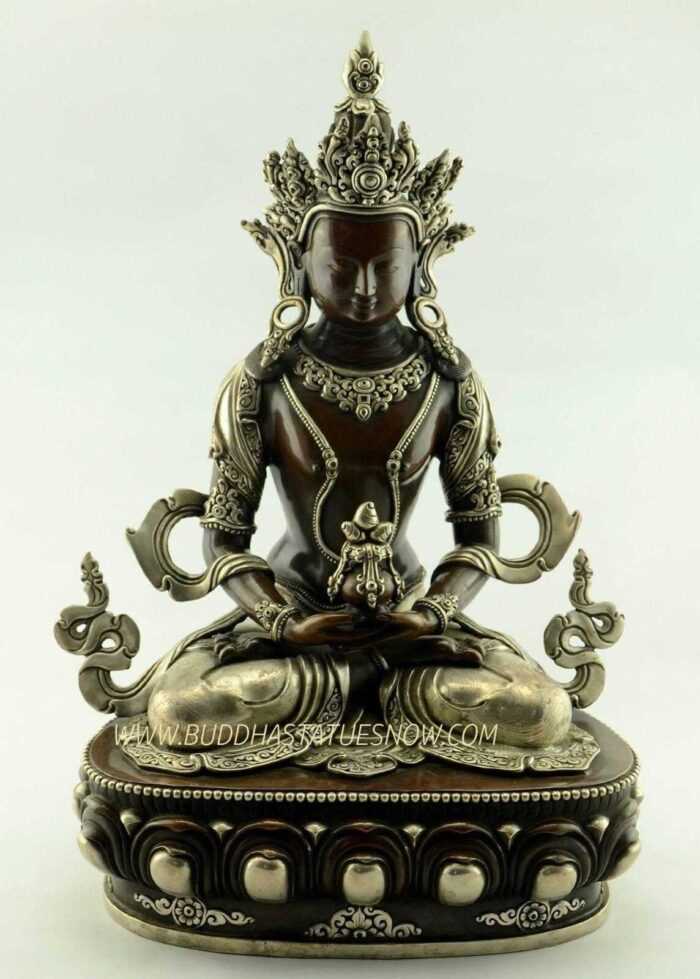
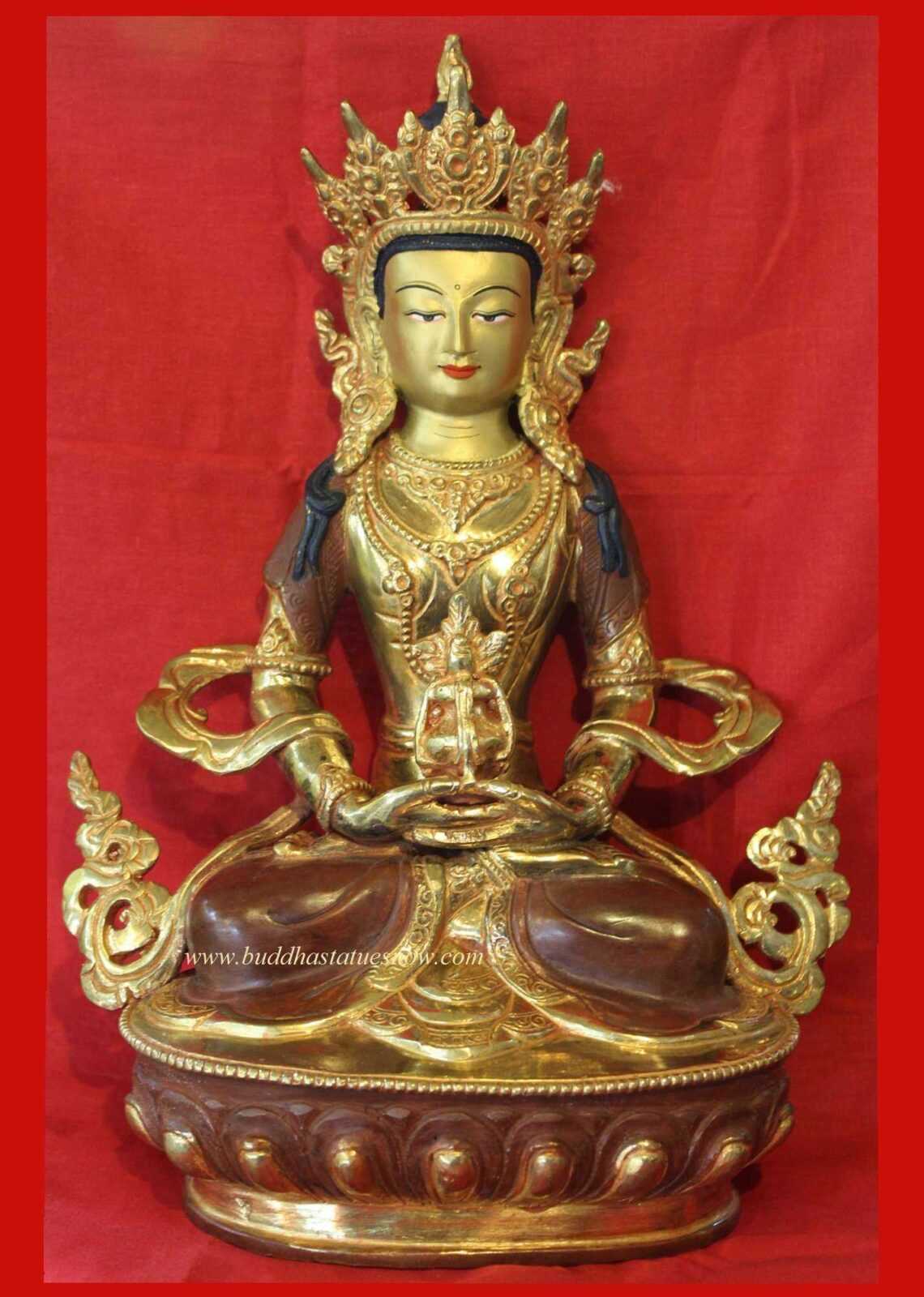
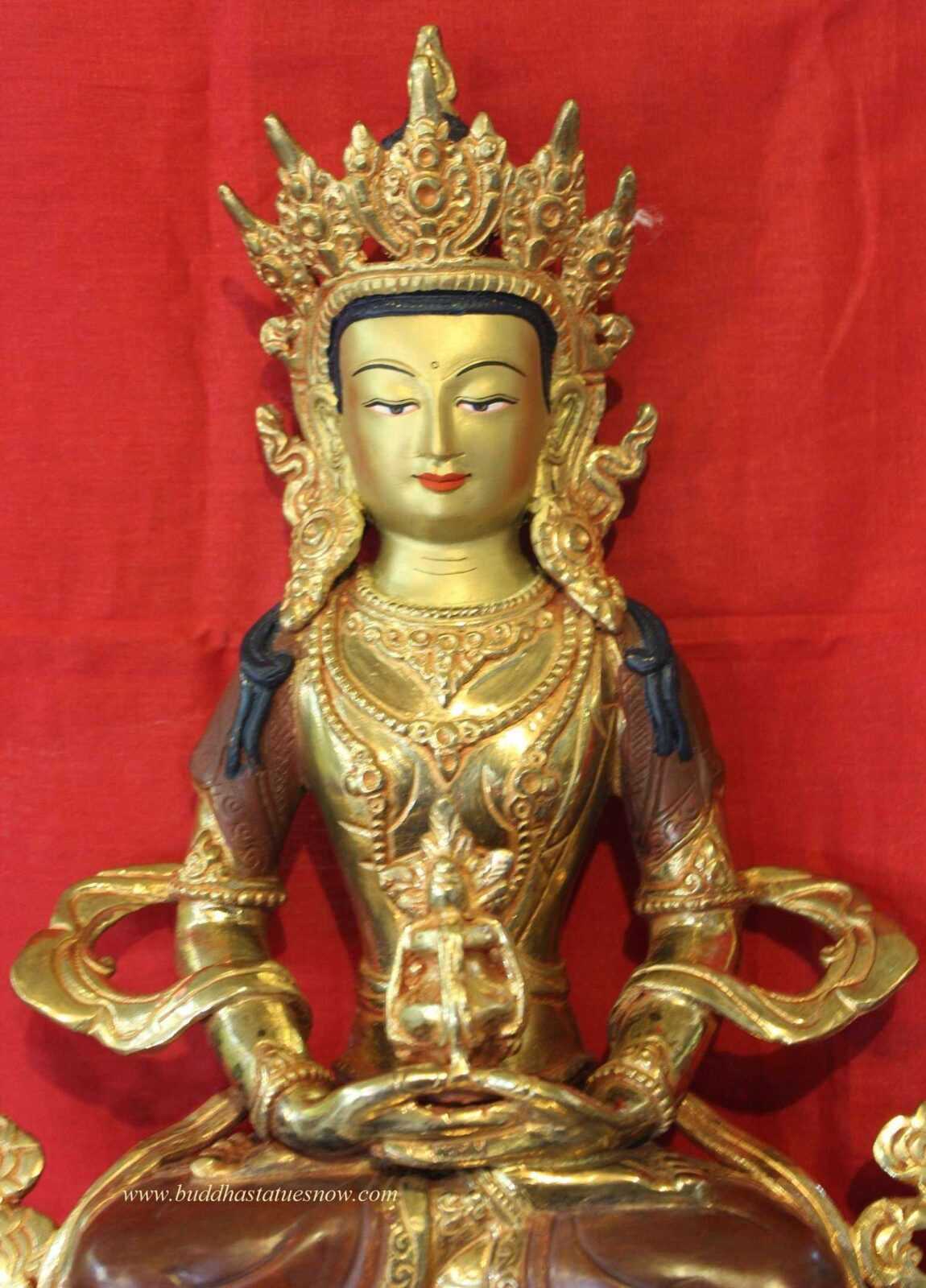
This antiquated Amitayus statue is an embodiment of Amitabha Buddha’s longevity attribute. A Buddha has the ability to take any form necessary to relieve the suffering of sentient beings — this celestial form is known as the sambhogakaya embodiment. Amitayus is highly venerated worldwide, especially among Tibetan Buddhists, and this statue’s distinctive partly gilded finish makes it a piece of special significance: the face, chest, crown, jewelry, and flowing scarves are gilded in gold, while the robe over his legs and the lotus base are left in a warm, antiqued copper brown with gold-trimmed edges — a two-tone contrast that draws the eye upward to his serene, hand-painted expression.
Antiquated Amitayus Statue Features
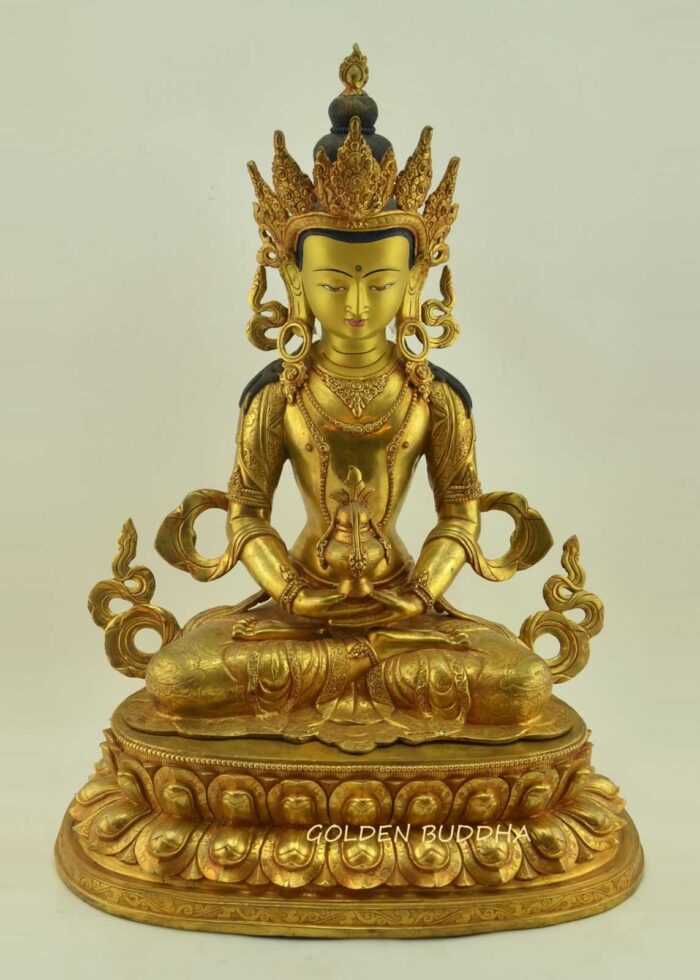
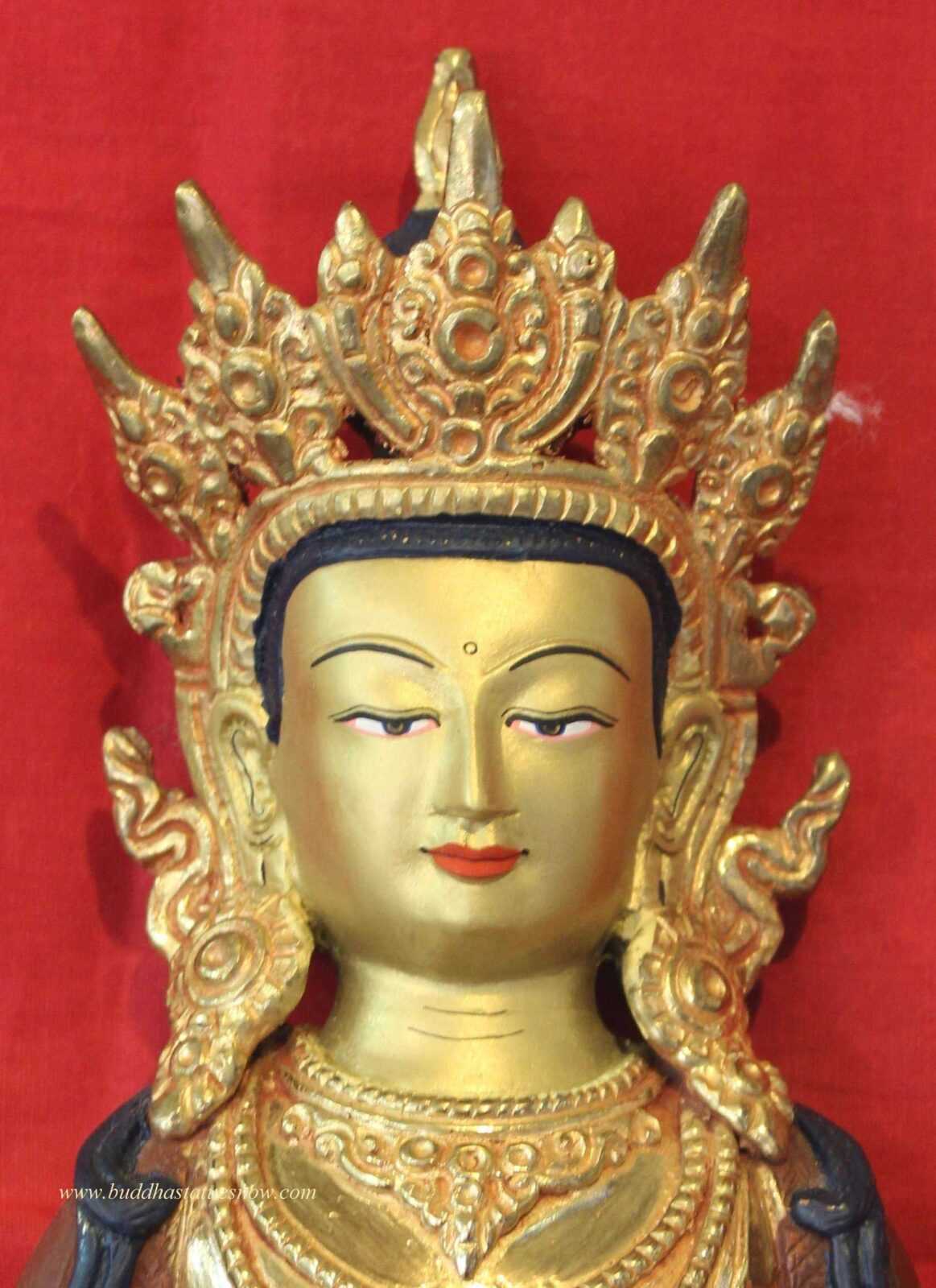
Our antiquated statue depicts Amitayus in classic fashion. He sits in full lotus pose on a single lotus pedestal, wearing the crown and jewels of a Bodhisattva — a characteristic of Nepali sculpture — with a tall, flame-pointed crown rising around his dark gathered topknot, layered collar necklaces draping into a pendant at the chest, and gilded scarves looping around both elbows before descending into leafy scroll swirls that rest on the base beside his knees. His most prominent and personal feature is the longevity vessel placed on his lap, its lid rising into an ornamental sprouting plume. This vessel is believed to be filled with longevity nectar — amrita — which can grant devotees long life.
Amitayus statues are commonly used as the centerpiece of Tibetan longevity rituals. During this ritual, a real vessel is filled with consecrated wine or beer, and each devotee in attendance consumes a small portion in hopes of obtaining longevity. Learn more about the origin of Amitayus in our complete guide to the Tibetan long life deities — White Tara, Amitayus & Namgyalma.
Additional features of the statue include the gathered topknot rising above the crown, the three neck lines counted among the traditional marks of an enlightened being, and the urna, the third eye of wisdom, found between his brows. Amitayus is depicting the Dhyana Mudra, also known as the meditation mudra — a gesture of deep significance in Buddhism, as it is the prescribed hand positioning during the practice of Buddhist meditation. Common questions are answered in our Amitayus Buddha Statues FAQ, or browse our full collection of Amitayus Buddha statues to compare sizes and finishes.
Authentic, Handmade in Nepal
Every statue is handcrafted in Patan, Nepal, using traditional lost wax casting and comes with a certificate of authenticity issued by Nepal’s Department of Archaeology, verifying its materials, technique, and origin.