
Yab Yum Statues — Sacred Union in Tibetan Buddhist Art
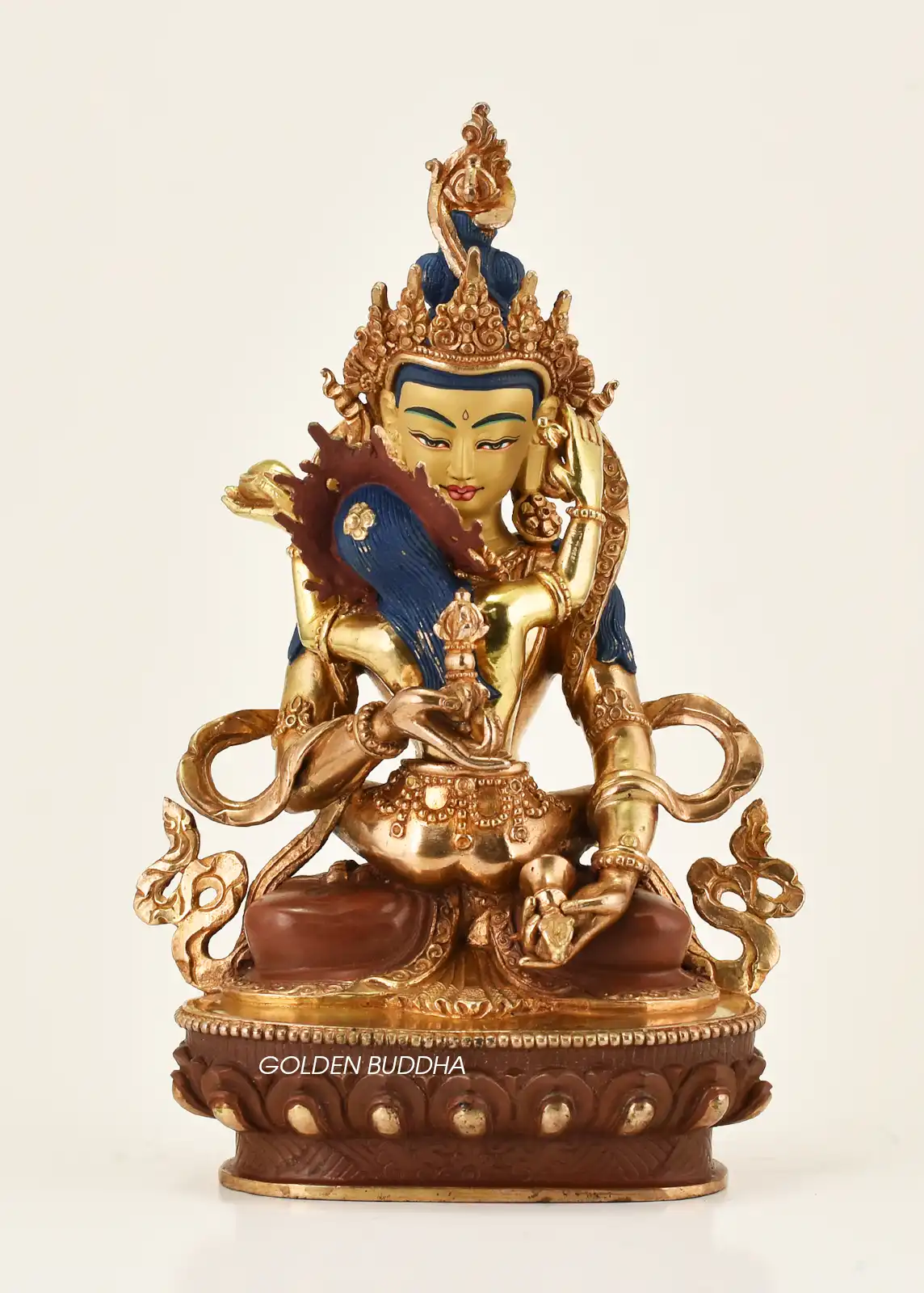
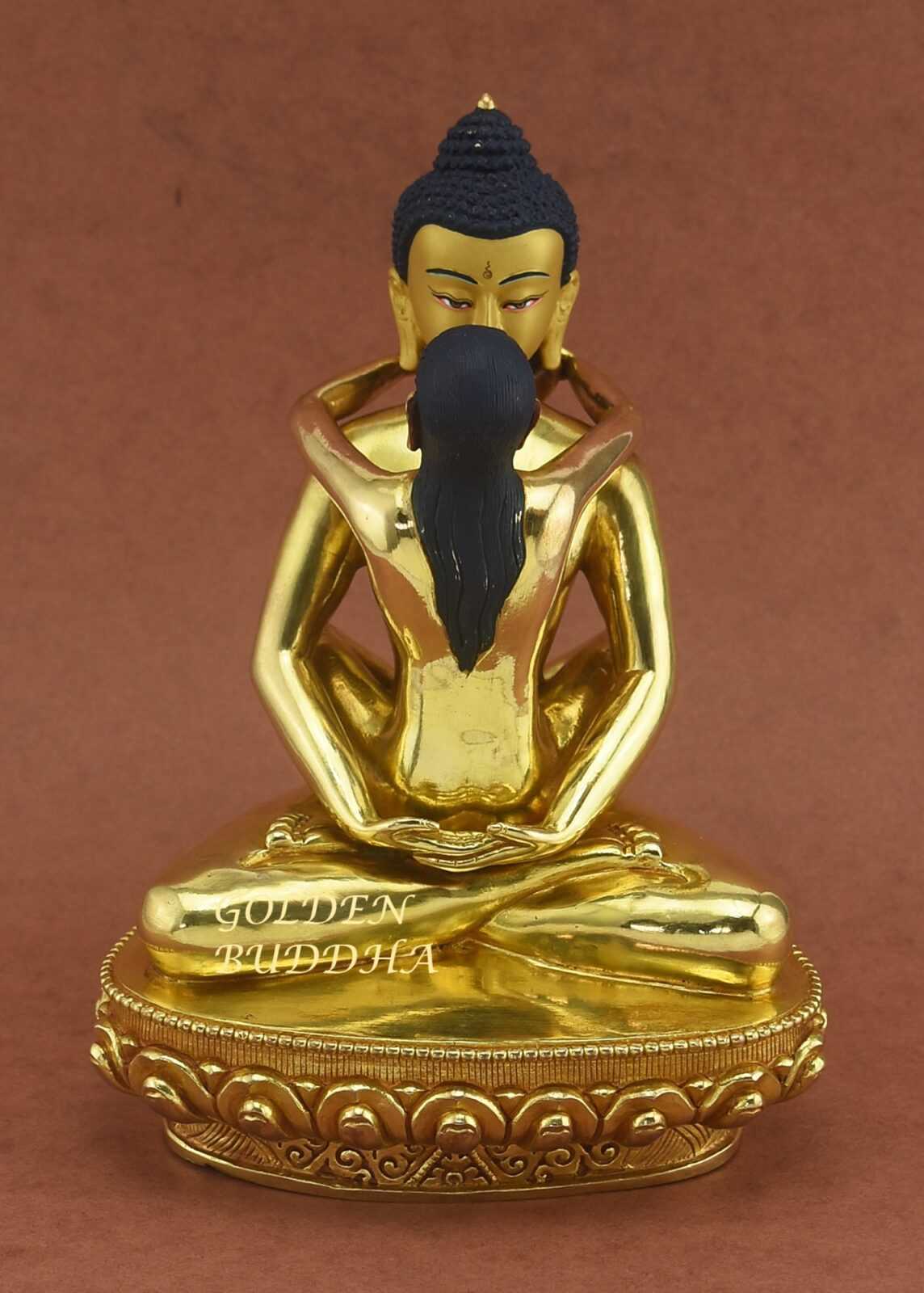
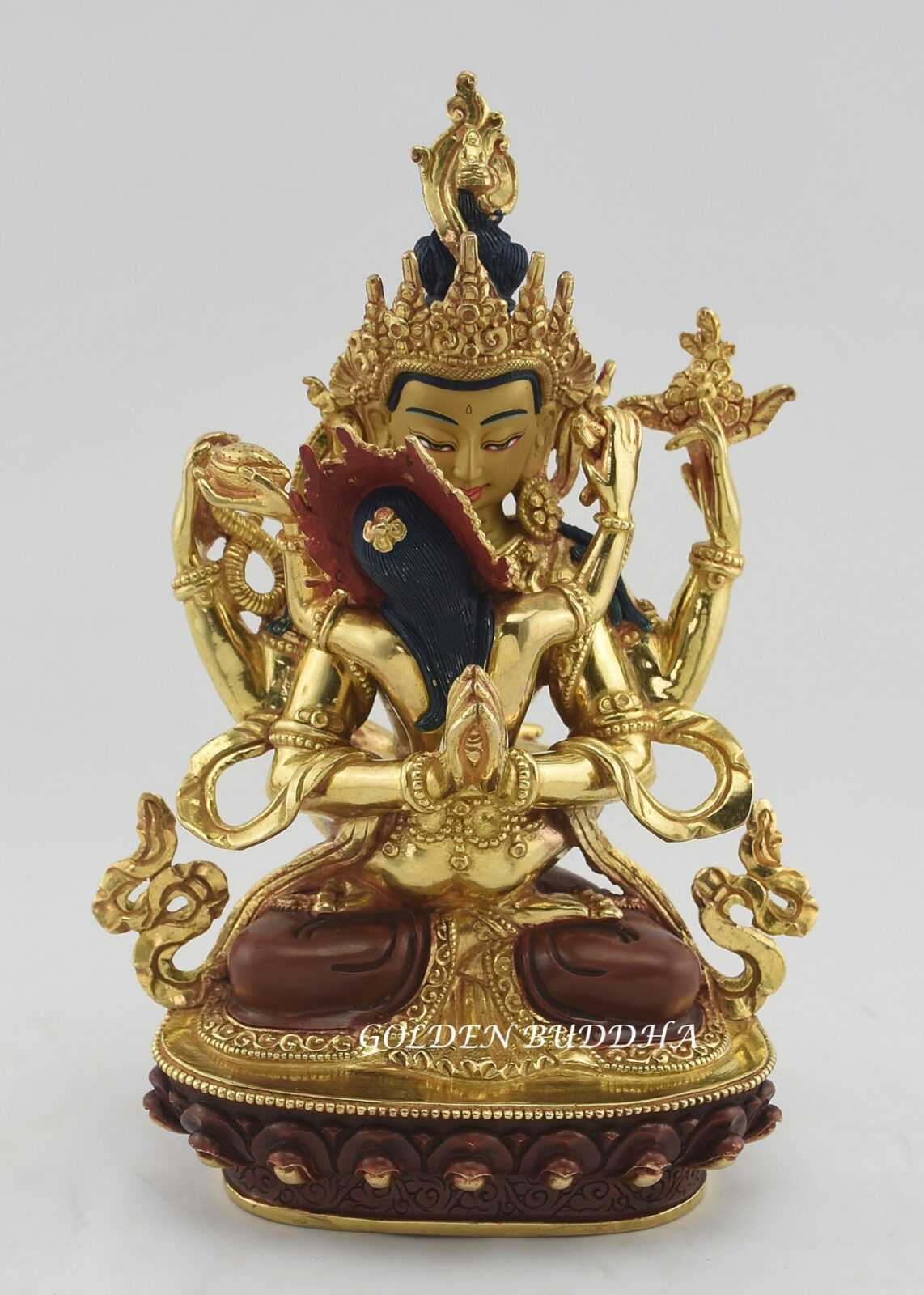
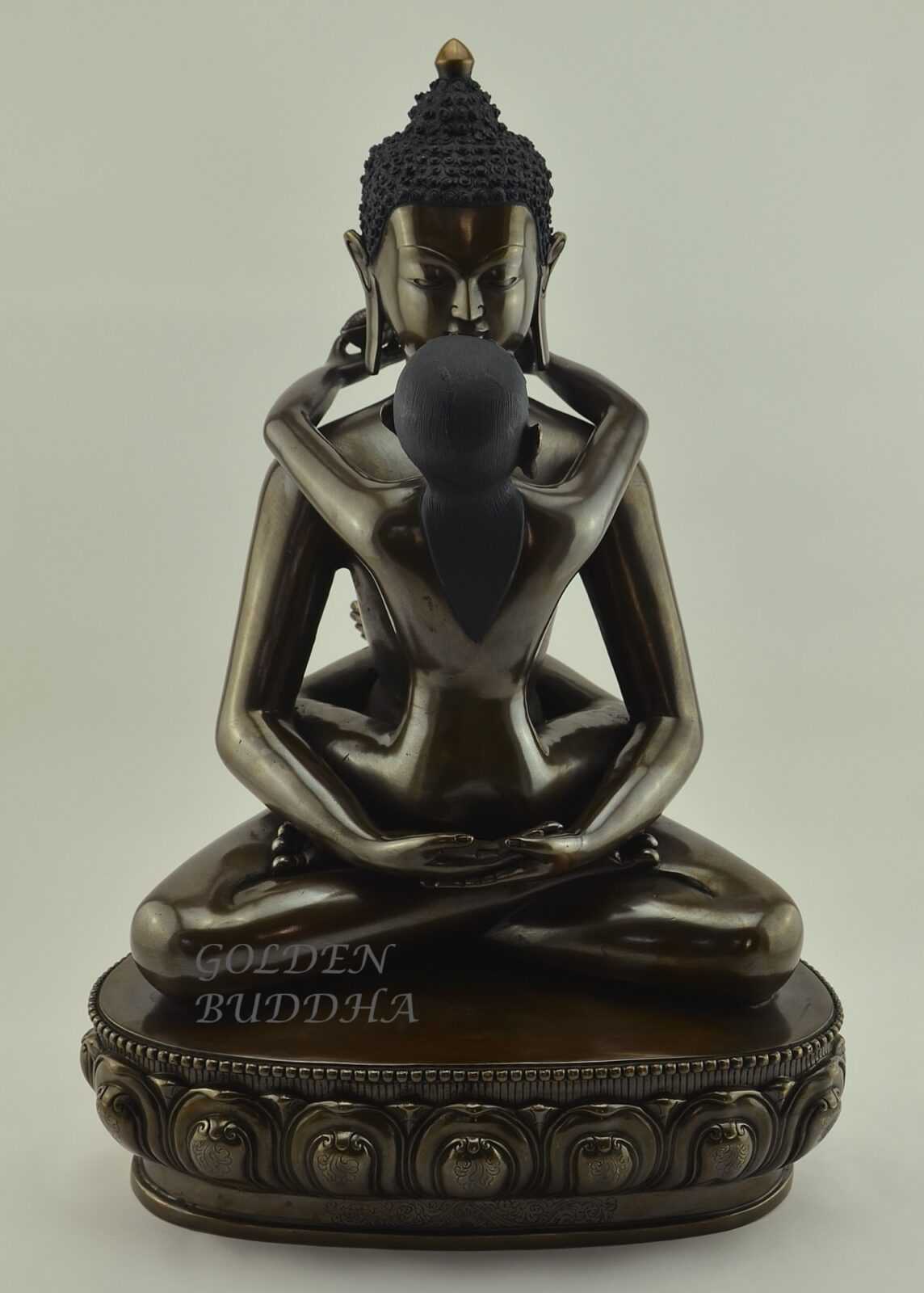
Yab Yum statues depict a male deity in union with his consort. The term is Tibetan for “father-mother,” and the form is one of the most frequently misread in Himalayan art: what it represents is not physical intimacy but the inseparability of the two qualities that together produce enlightenment. The male figure embodies upaya – skilful means, or compassionate method – and the female embodies prajna, transcendent wisdom. Neither reaches awakening alone. Their union is the visual statement that method without wisdom is blind and wisdom without method is inert, and that in an enlightened being the two are not merely combined but indivisible.
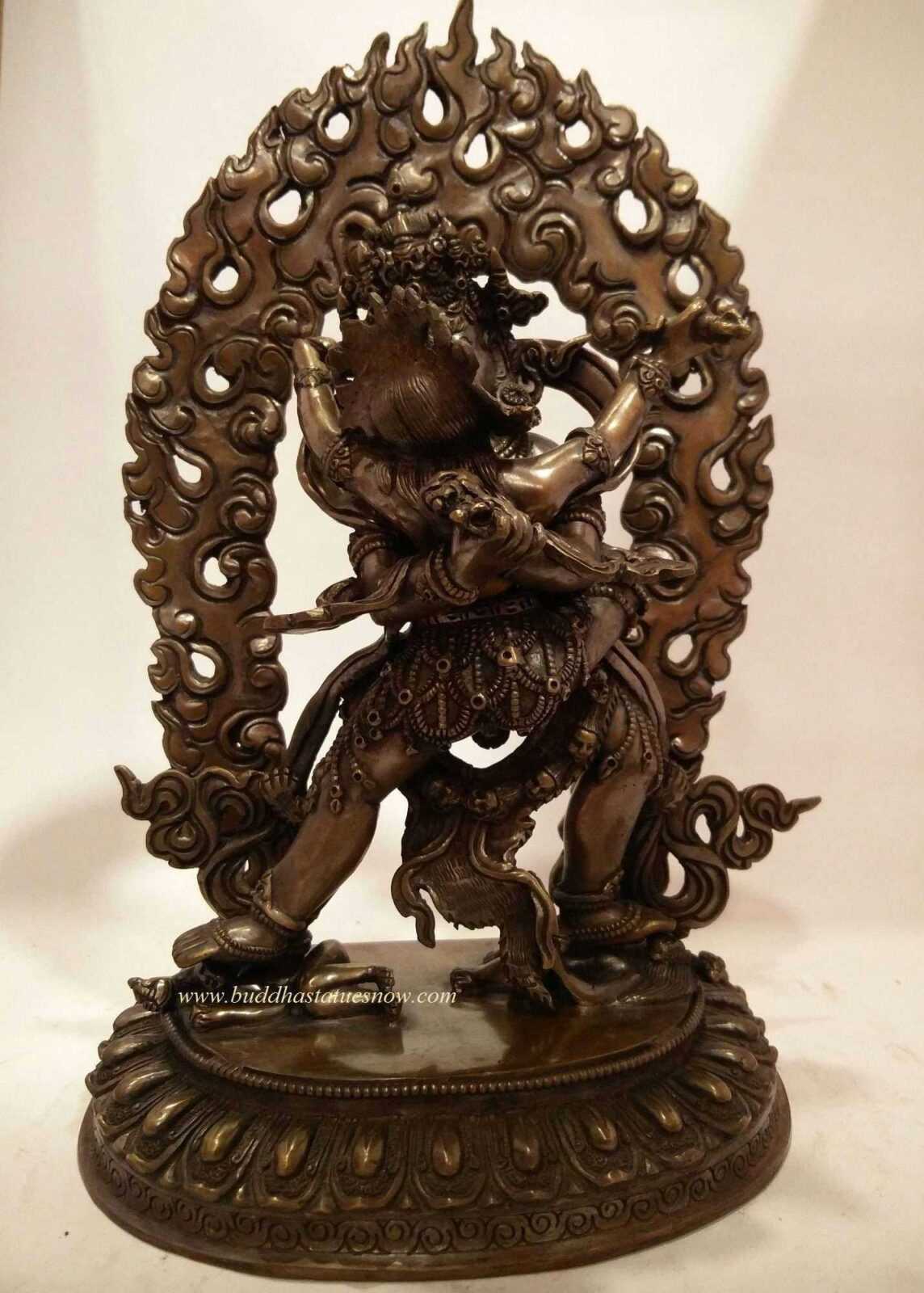
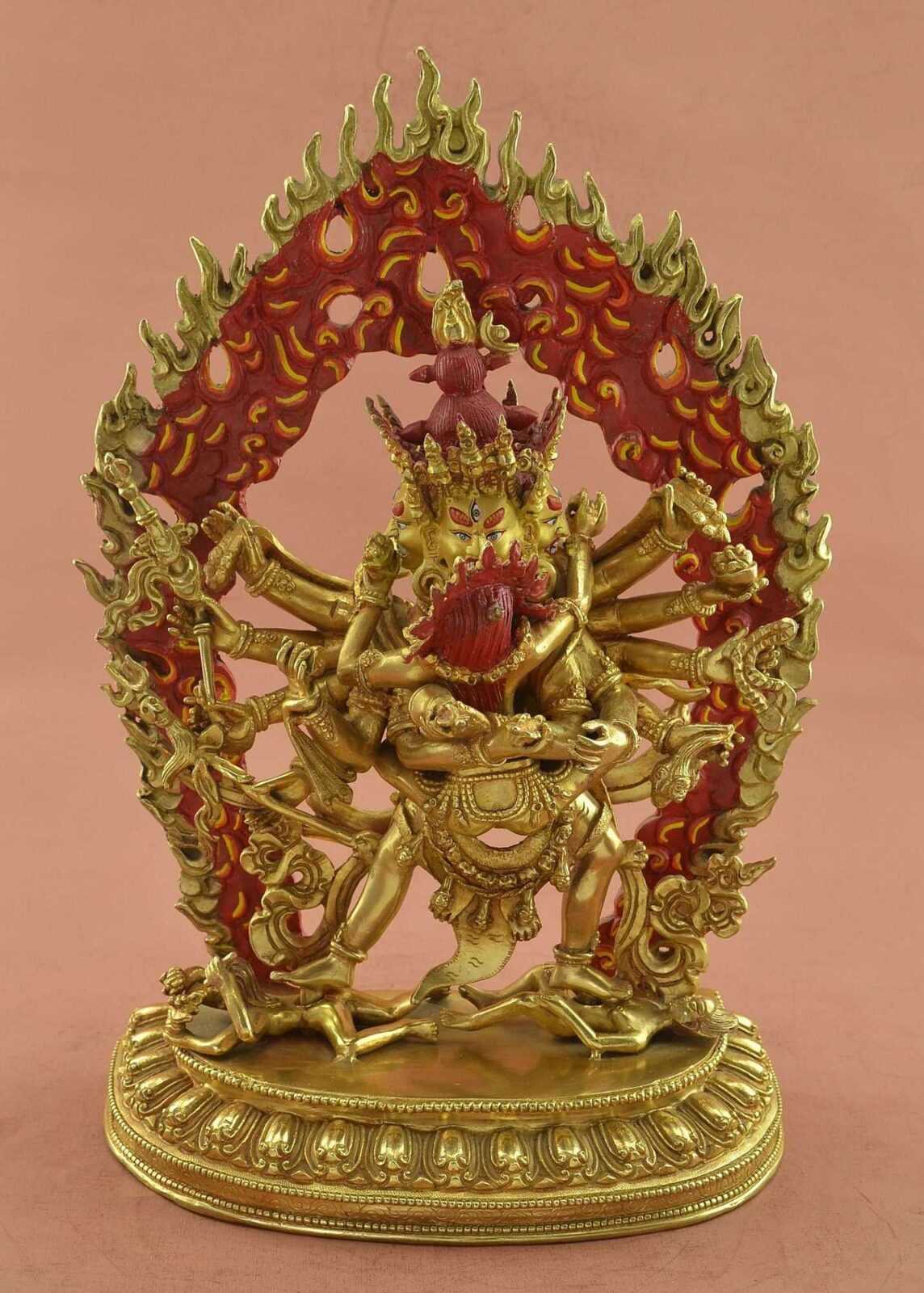
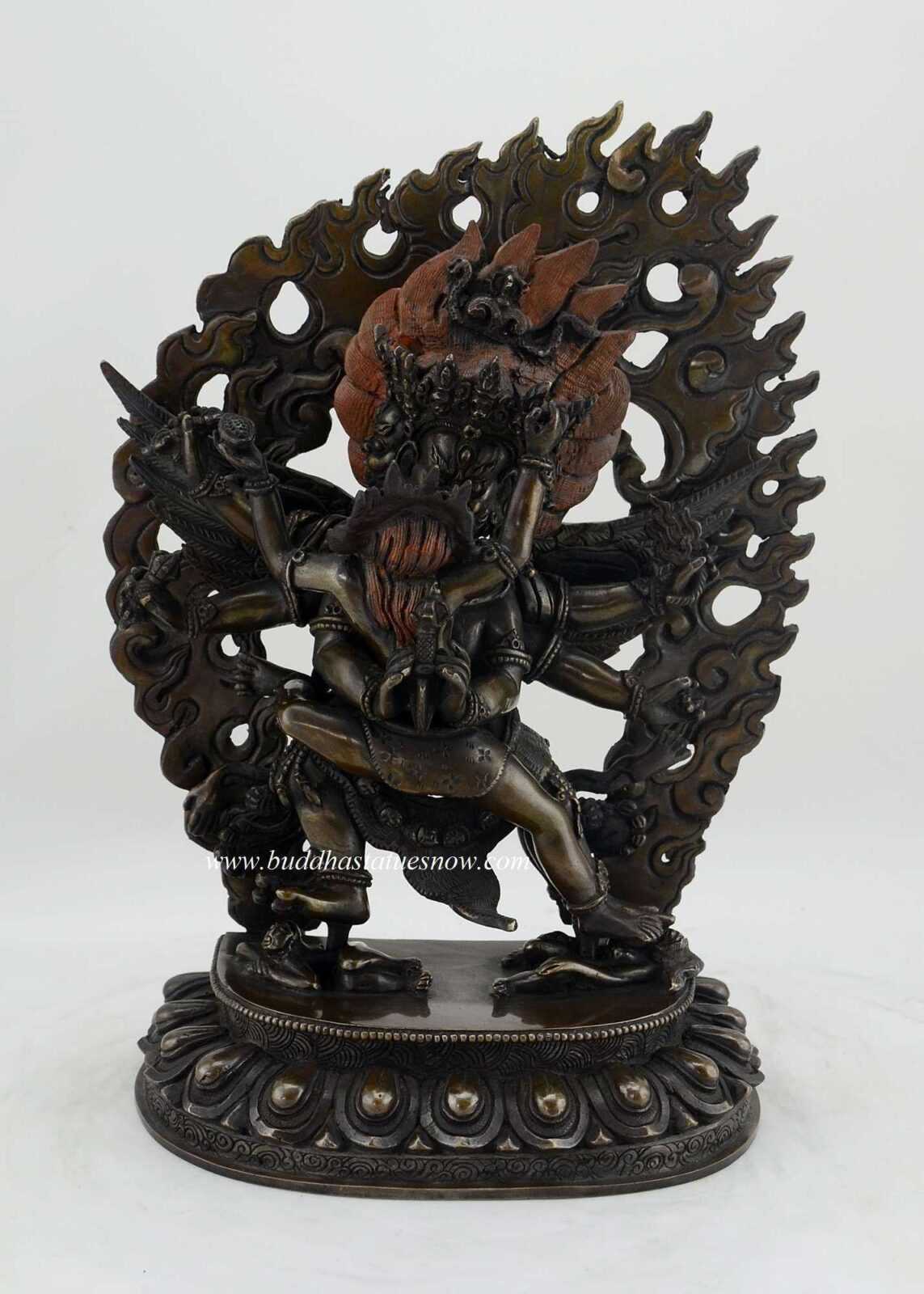
The form belongs to Highest Yoga Tantra and appears across the whole Vajrayana pantheon, which is why the Yab Yum statues in this collection span several classes of deity rather than one. Samantabhadra – Kuntuzangpo, the primordial Buddha of the Nyingma school – appears in union with his consort Samantabhadri, representing awareness in its most fundamental state. The meditational deities of Highest Yoga Tantra are here in strength: Chakrasamvara with Vajravarahi, including the twelve-armed form; Hevajra with Nairatmya; and Vajrakilaya, Dorje Phurba, with his consort. Vajrasattva and Chenrezig appear in their Shakti forms, and among the wrathful deities we carry Hayagriva with his consort and Chuchepa Mahakala, the Tent Lord, with his.
Because the union form is a mode of depiction rather than a class of being, the same deity may be shown alone in one statue and with consort in another – our Chakrasamvara and Vajrakilaya pieces appear in both. In practice these images are used in visualization by practitioners who have received the relevant empowerment, and in Tibetan tradition they are treated with corresponding discretion, often placed where they are not casually on view. Buyers unfamiliar with the iconography sometimes hesitate over the form; the tradition’s own reading of it, consistently and for more than a thousand years, is that it depicts the integration of wisdom and compassion within a single awakened mind.
Our Yab Yum statues are handmade in Patan, in the Kathmandu Valley, by Newar artisans using the traditional lost wax method, in copper alloy finished with 24K fire gilding, gold plate, silver plate, oxidized patina or hand painting, with many set in semi-precious turquoise and coral. Sizes run from around 7 inches to 17.5 inches. The union form demands more of the sculptor than a single figure – two bodies, two sets of ornaments and often multiple arms and implements have to resolve into one balanced composition – which is why these pieces are among the most elaborate work in the collection. Browse our full range of Tibetan Buddhist statues, or read about the deities depicted in our guide to the Buddhist pantheon.
Showing 1–12 of 14 resultsSorted by popularity
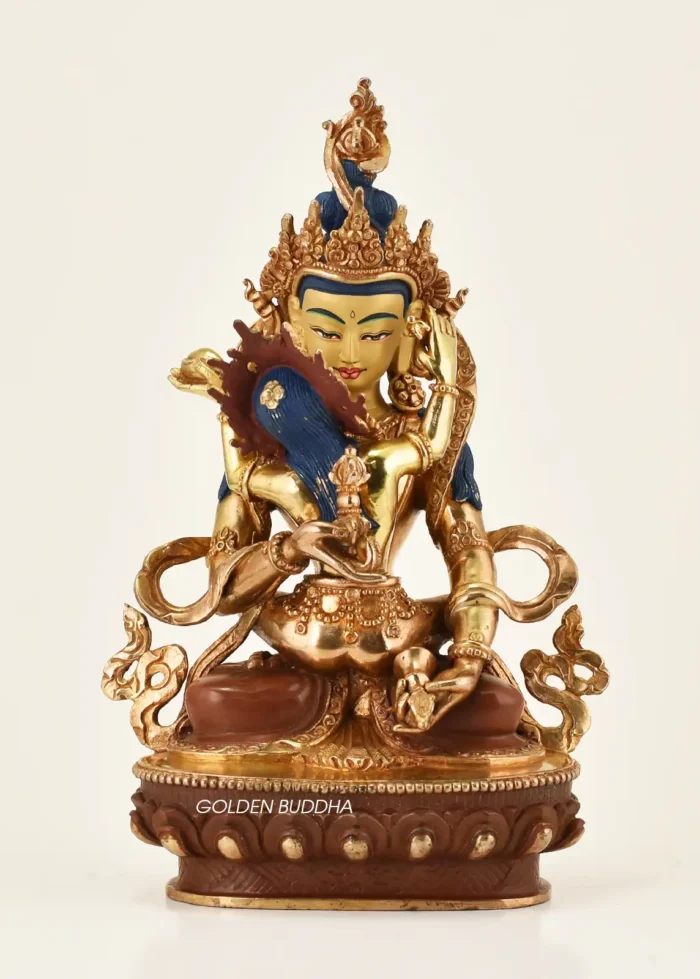
Vajrasattva Shakti Statue 9.75″ | Antiquated, 24K Gold | Yab Yum
Original price was: $1,399.00.$899.00Current price is: $899.00.Add to Cart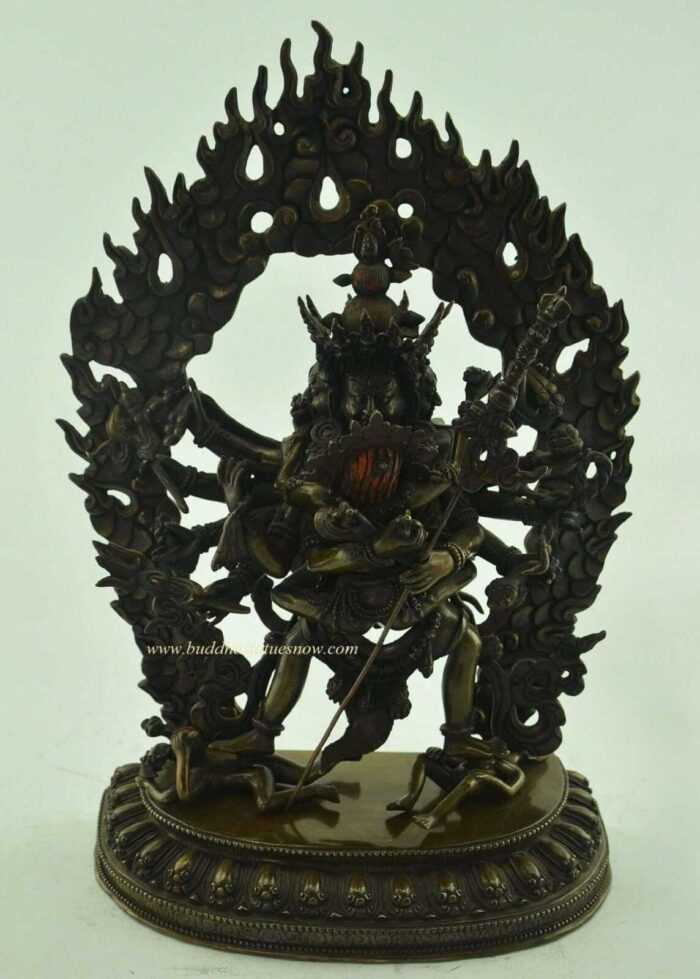
Chakrasamvara Statue with Consort | 13.5″ Antiquated | 12 Arms
Original price was: $2,699.00.$1,999.00Current price is: $1,999.00.Add to Cart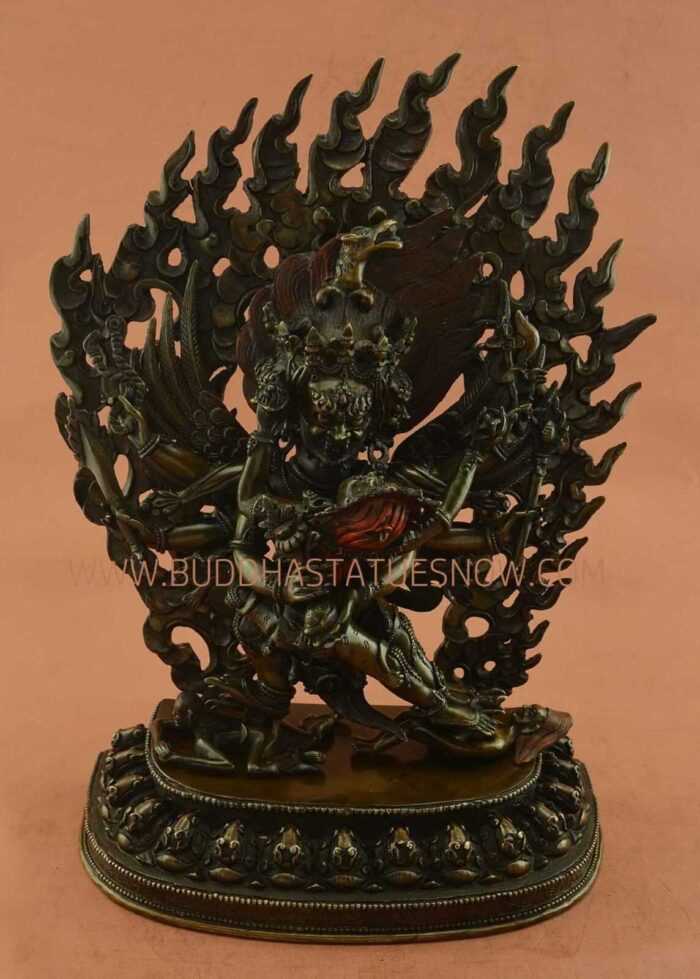
Hayagriva Statue with Shakti 14.5″ | Antiquated Patina | Authentic Nepal
Original price was: $2,799.00.$1,899.00Current price is: $1,899.00.Add to Cart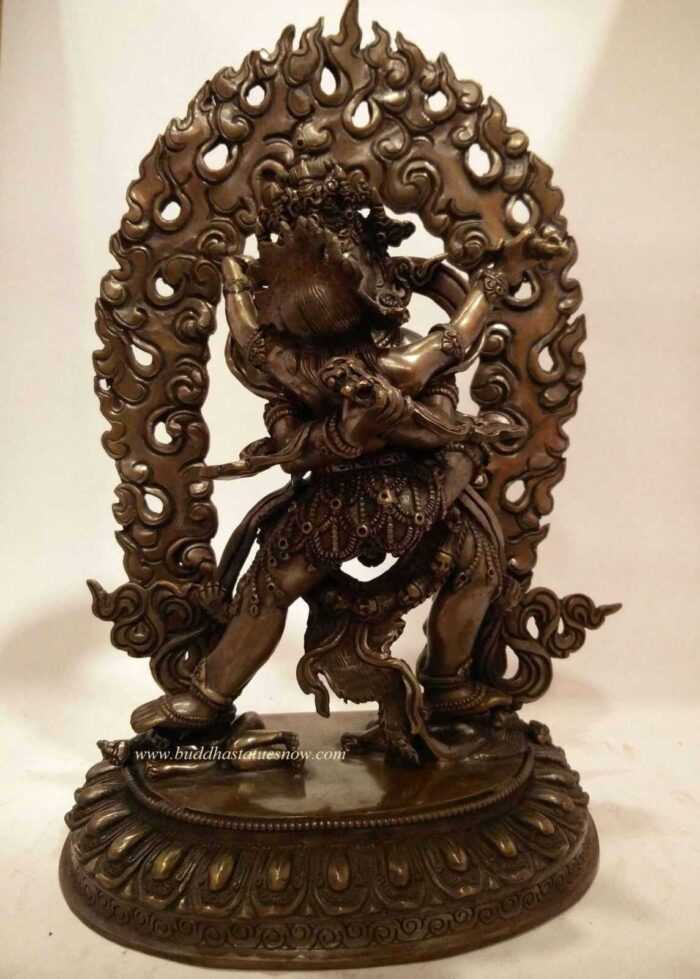
Chakrasamvara Statue with Consort | 25cm Oxidized Copper | Yab-Yum
Original price was: $1,399.00.$789.00Current price is: $789.00.Add to Cart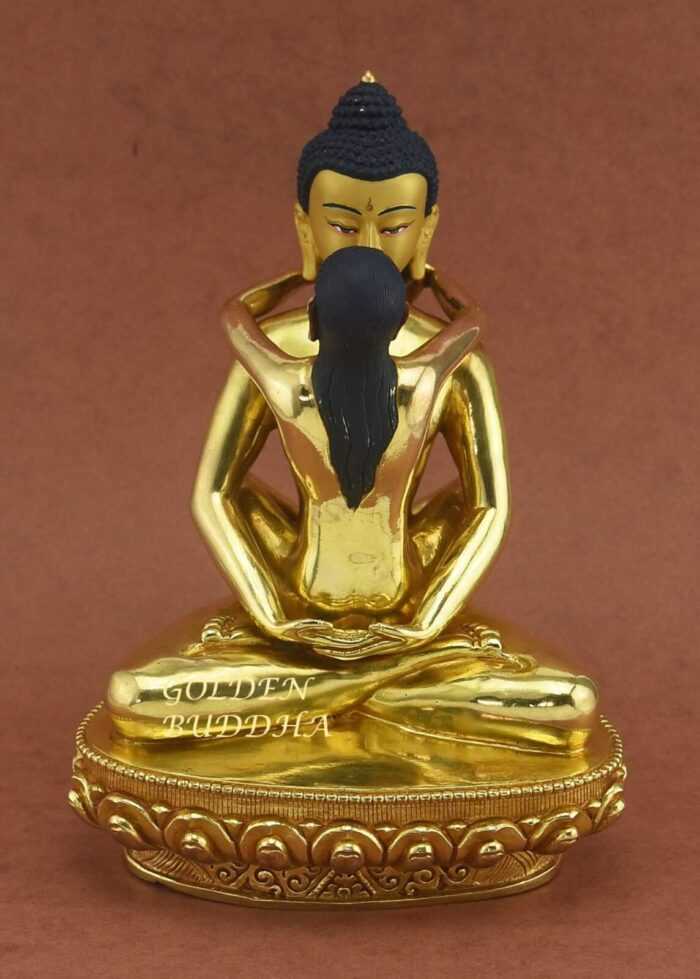
Samantabhadra Statue 9″ | Nyingma Adibuddha in Yab-Yum, 24K Gold
Original price was: $1,399.00.$999.00Current price is: $999.00.Add to Cart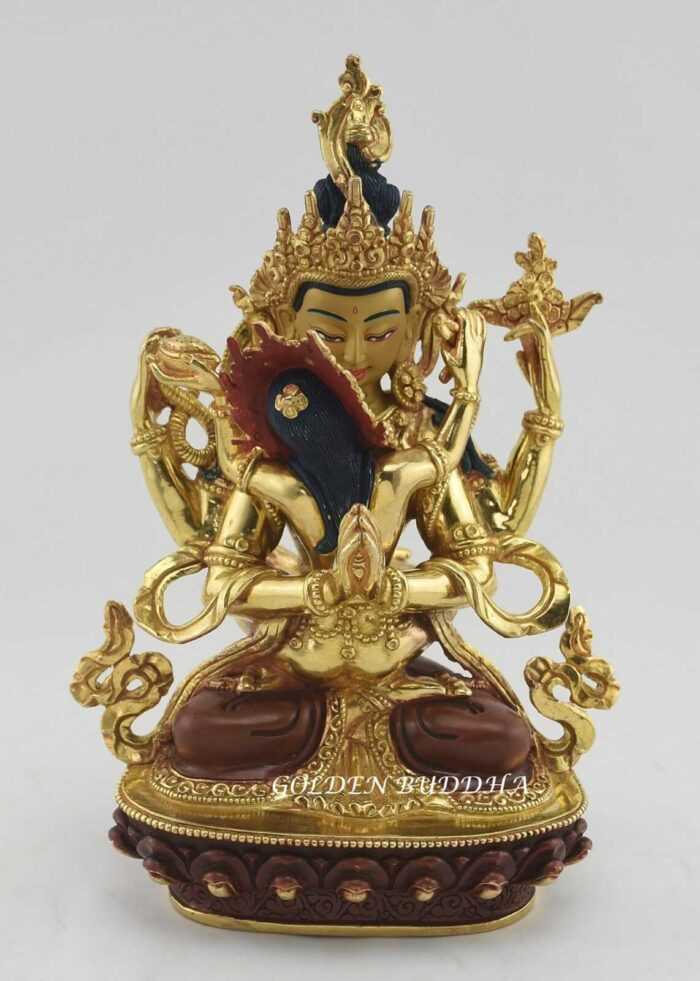
Chenrezig Shakti Statue 9.5″ | 24K Gold Gilded | Authentic Nepal
Original price was: $1,399.00.$899.00Current price is: $899.00.Add to Cart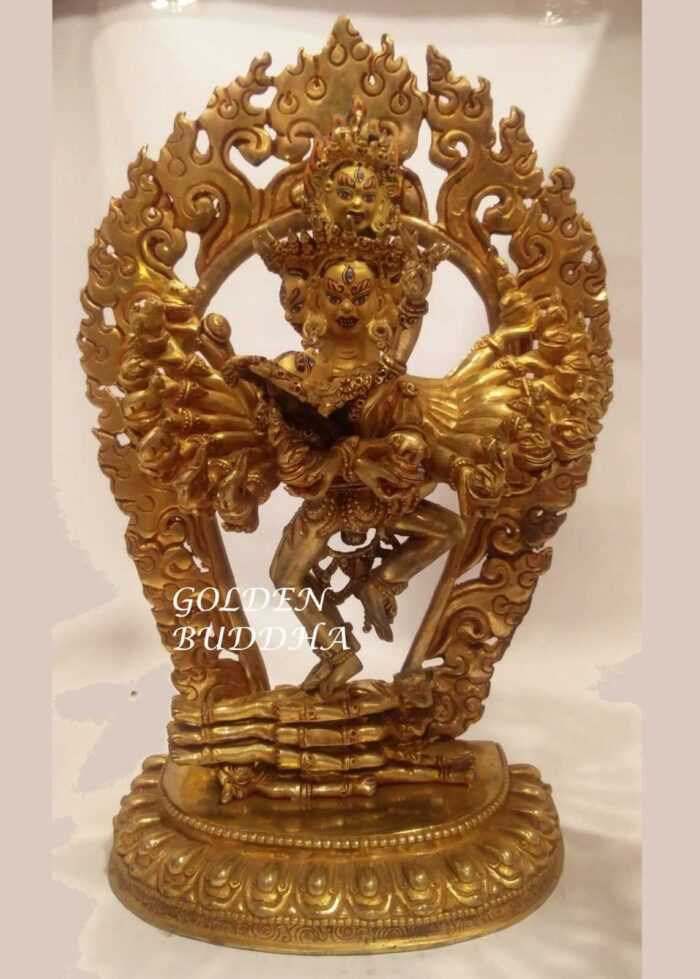
Nepali Hevajra Statue with Consort, 10″ Gold Gilded, Handmade in Nepal
Original price was: $1,178.14.$934.75Current price is: $934.75.Add to Cart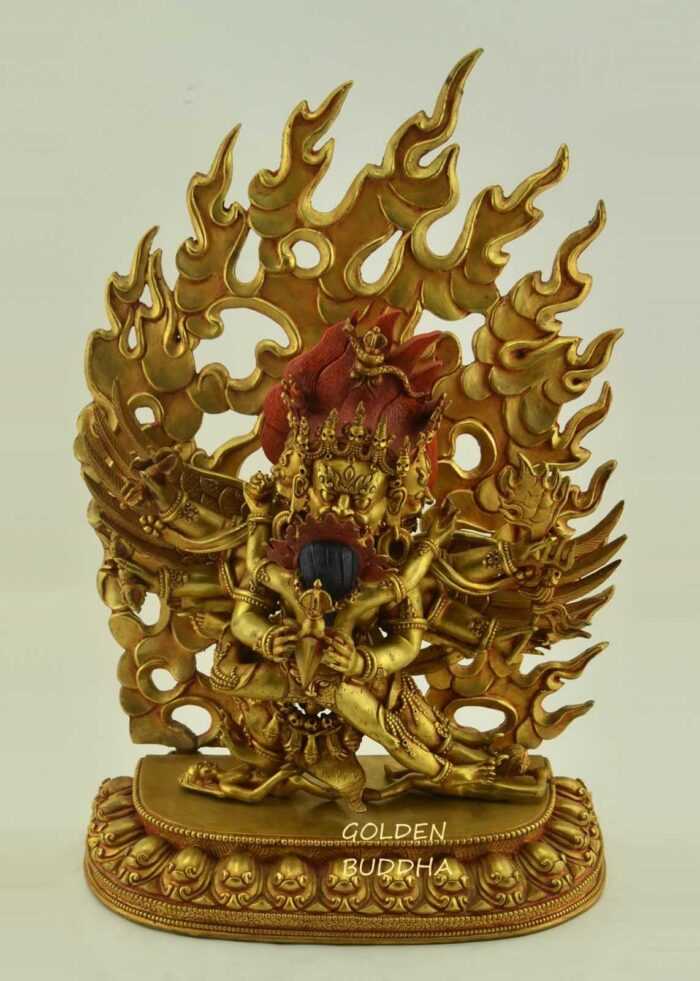
Vajrakilaya Statue | 16″ Fully Gold Gilded | Dorje Phurba Yab-Yum
Original price was: $3,399.00.$2,589.00Current price is: $2,589.00.Add to Cart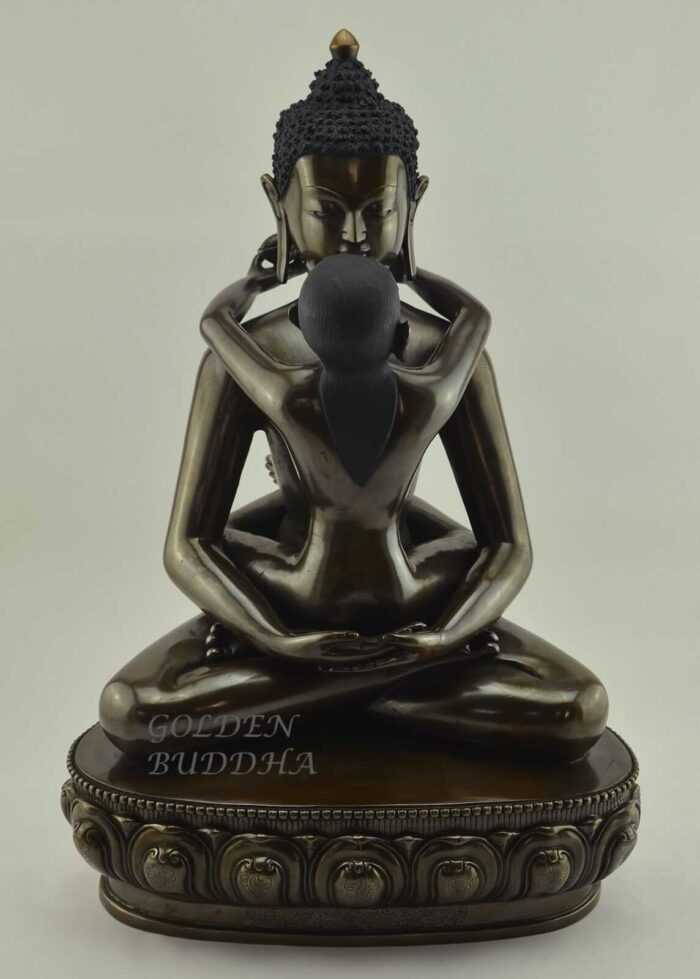
Kuntuzangpo Statue 17.5″ | Samantabhadra & Samantabhadri Yab-Yum
Original price was: $3,999.00.$2,999.00Current price is: $2,999.00.Add to Cart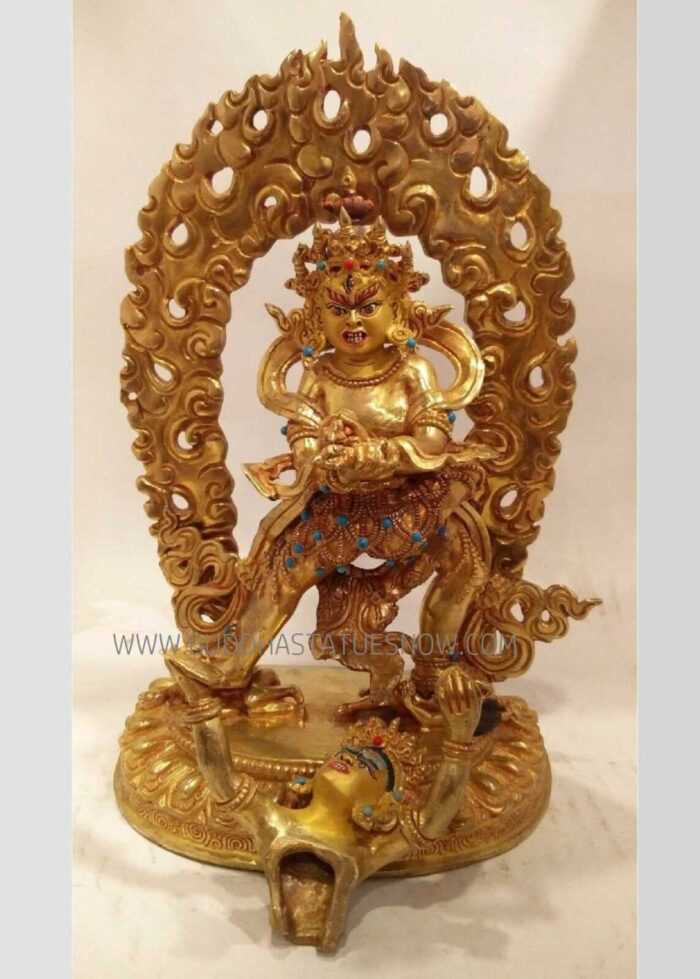
Chakrasamvara Statue with Consort | 25cm Gold Plated | Yab-Yum
Original price was: $1,099.00.$899.00Current price is: $899.00.Add to Cart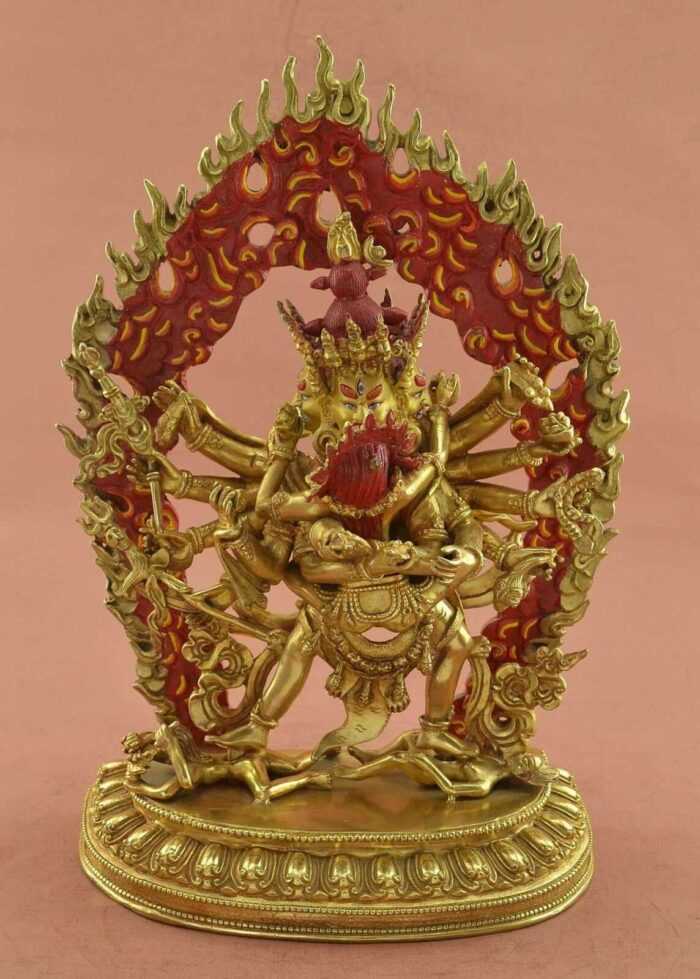
Chakrasamvara Statue with Consort | 13.5″ Fully Gold Gilded | Yab-Yum
Original price was: $3,899.00.$1,399.00Current price is: $1,399.00.Add to Cart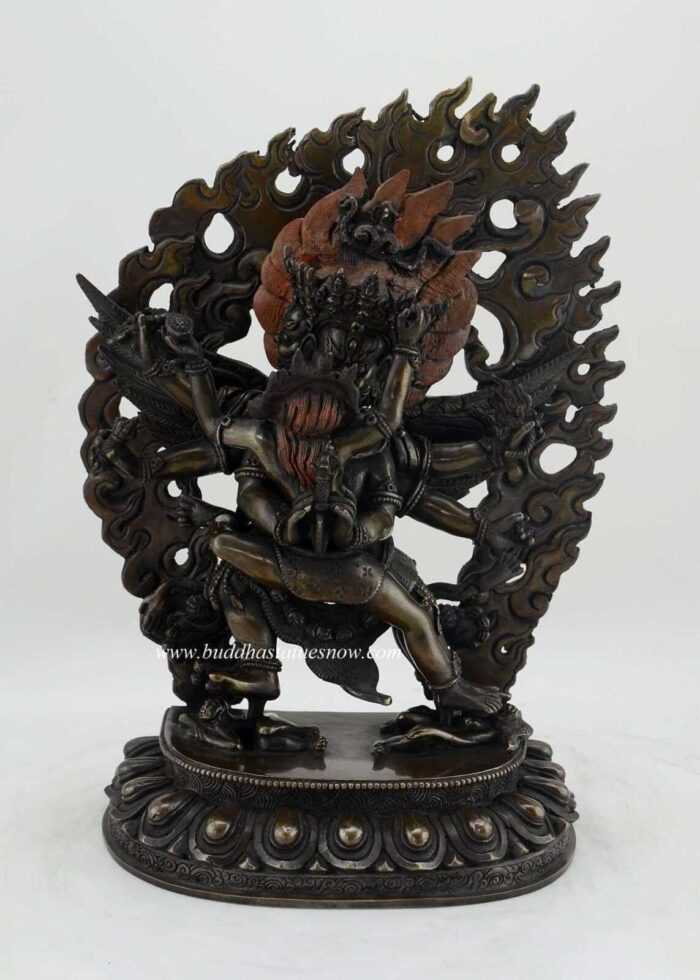
Vajrakilaya Statue | 10.5″ Antiquated | Dorje Phurba with Consort
Original price was: $1,499.00.$999.00Current price is: $999.00.Add to Cart





Wisdom and Method in Union
Vajrayana Buddhism holds that enlightenment requires two things at once. Compassionate method without wisdom becomes sentimental and ineffective; wisdom without compassionate method becomes cold and inert. Neither on its own produces a Buddha. The Yab Yum form is how Himalayan art states that proposition in a single image - not two beings meeting, but one awakened mind shown as the union of the qualities that constitute it.
The male figure carries the attributes of method: the vajra, activity, the skilful engagement with the world. The female carries those of wisdom: the curved knife, the skull cup, the direct perception of emptiness. Where a deity has multiple arms and implements, as the twelve-armed Chakrasamvara does, the same principle governs every pairing. Read about the deities themselves in our guide to the Buddhist pantheon.
The Deities Depicted in Union
Because union is a mode of depiction rather than a category of deity, the form crosses the whole pantheon. At its most fundamental sits Samantabhadra - Kuntuzangpo in Tibetan - the primordial Buddha of the Nyingma school, with Samantabhadri: the pair represent awareness itself, prior to all elaboration. The Highest Yoga Tantra yidams follow, chief among them Chakrasamvara with Vajravarahi, Hevajra with Nairatmya, and Vajrakilaya - Dorje Phurba - with his consort.
Bodhisattvas appear in union too: Vajrasattva and Chenrezig are both carried here in their Shakti forms. So do the wrathful protectors, including Hayagriva with his consort and Chuchepa Mahakala, the Tent Lord. Each is handmade in Patan by Newar artisans using the lost wax method, in copper alloy finished in 24K fire gilding, gold or silver plate, oxidized patina or hand painting, in sizes from around 7 to 17.5 inches. See also our Dharmapala statues and Bodhisattva statues for the same deities depicted alone.
Frequently Asked Questions
What does Yab Yum mean?
Yab Yum is Tibetan for "father-mother" and describes a deity depicted in union with a consort. The male figure represents upaya, skilful means or compassionate method, and the female represents prajna, transcendent wisdom. Their union expresses the central proposition of Vajrayana Buddhism: that wisdom and method are not two things to be balanced but a single inseparable quality in an enlightened mind.
Are Yab Yum statues erotic art?
No. The form is symbolic rather than sexual, and it has been understood that way within the tradition for more than a thousand years. The union depicts the indivisibility of wisdom and compassionate action within one awakened being, not a relationship between two people. Tibetan commentaries are explicit on this point, and the figures are read the way any allegorical image is read - by what the elements stand for rather than what they literally show.
Which deities are shown in Yab Yum form?
The union form appears across every class of deity. In this collection you will find Samantabhadra with Samantabhadri, the primordial Buddha pair of the Nyingma school; the Highest Yoga Tantra meditational deities Chakrasamvara with Vajravarahi, Hevajra with Nairatmya, and Vajrakilaya with his consort; Vajrasattva and Chenrezig in their Shakti forms; and the wrathful deities Hayagriva and Chuchepa Mahakala, the Tent Lord, each with consort.
What is the female figure called?
Several terms are used interchangeably. Yum is the Tibetan, meaning mother. Consort is the usual English rendering. Shakti, borrowed from Sanskrit, appears in some product names and in Newar usage. Each deity also has a named consort of her own - Vajravarahi accompanies Chakrasamvara, Nairatmya accompanies Hevajra, Samantabhadri accompanies Samantabhadra - and she is a fully realised deity in her own right rather than an attribute of the male figure.
Do I need an empowerment to own a Yab Yum statue?
Ownership is not restricted, and collectors of Himalayan art acquire these pieces on artistic and historical grounds. The formal practices associated with these deities do require empowerment and instruction from a qualified teacher, so if you intend to use the statue as a support for a specific practice rather than as a shrine image or a work of art, that is a question for your teacher.
Where should a Yab Yum statue be placed?
Tibetan tradition treats these images with discretion, and they are commonly placed in a private shrine room or personal practice space rather than in a hallway or living room where they will be seen casually by people unfamiliar with the iconography. That is a matter of respect for the image rather than concealment. Beyond that, the usual altar conventions apply: at or above eye level, clear of clutter, and not on the floor.