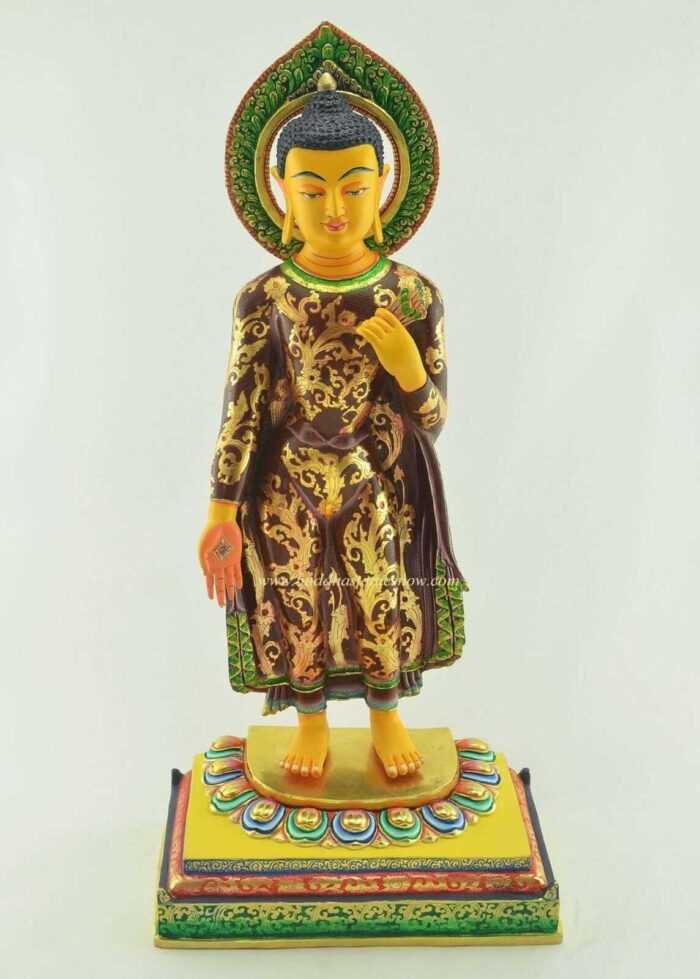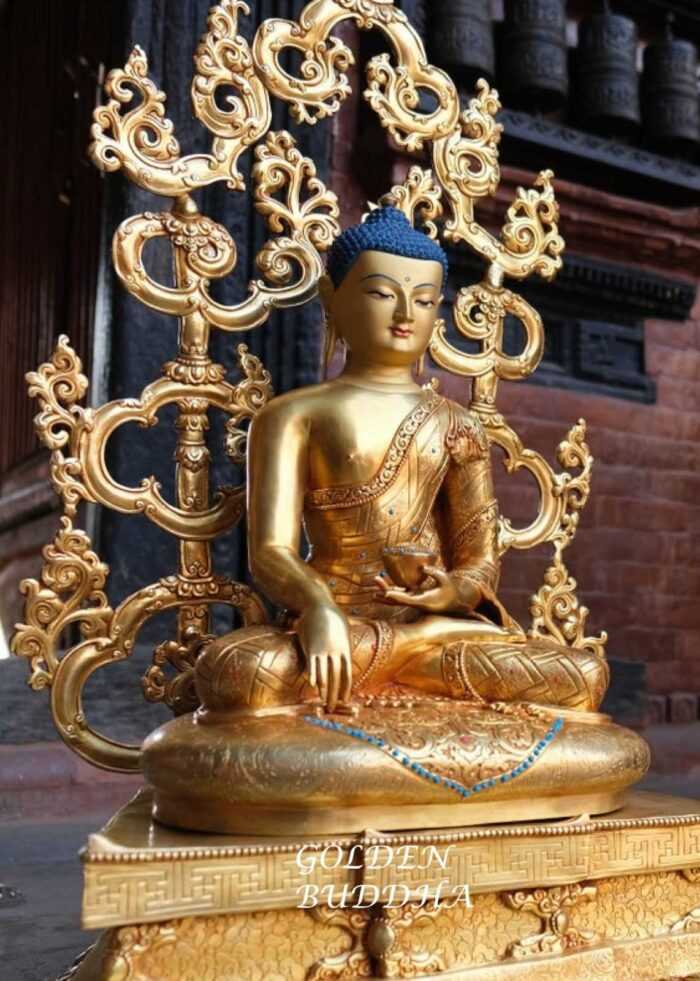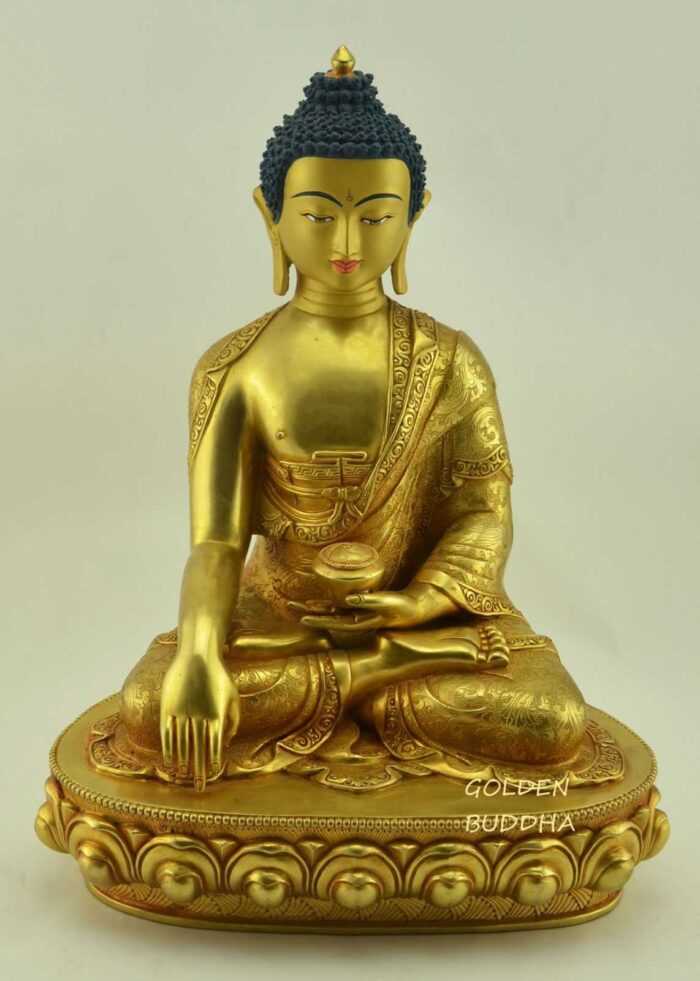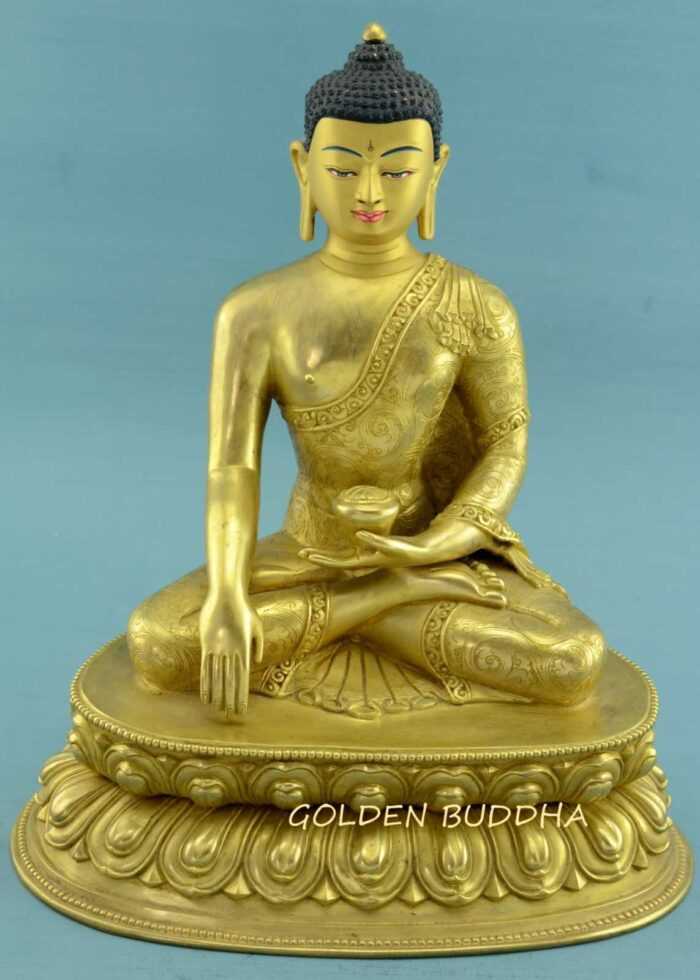

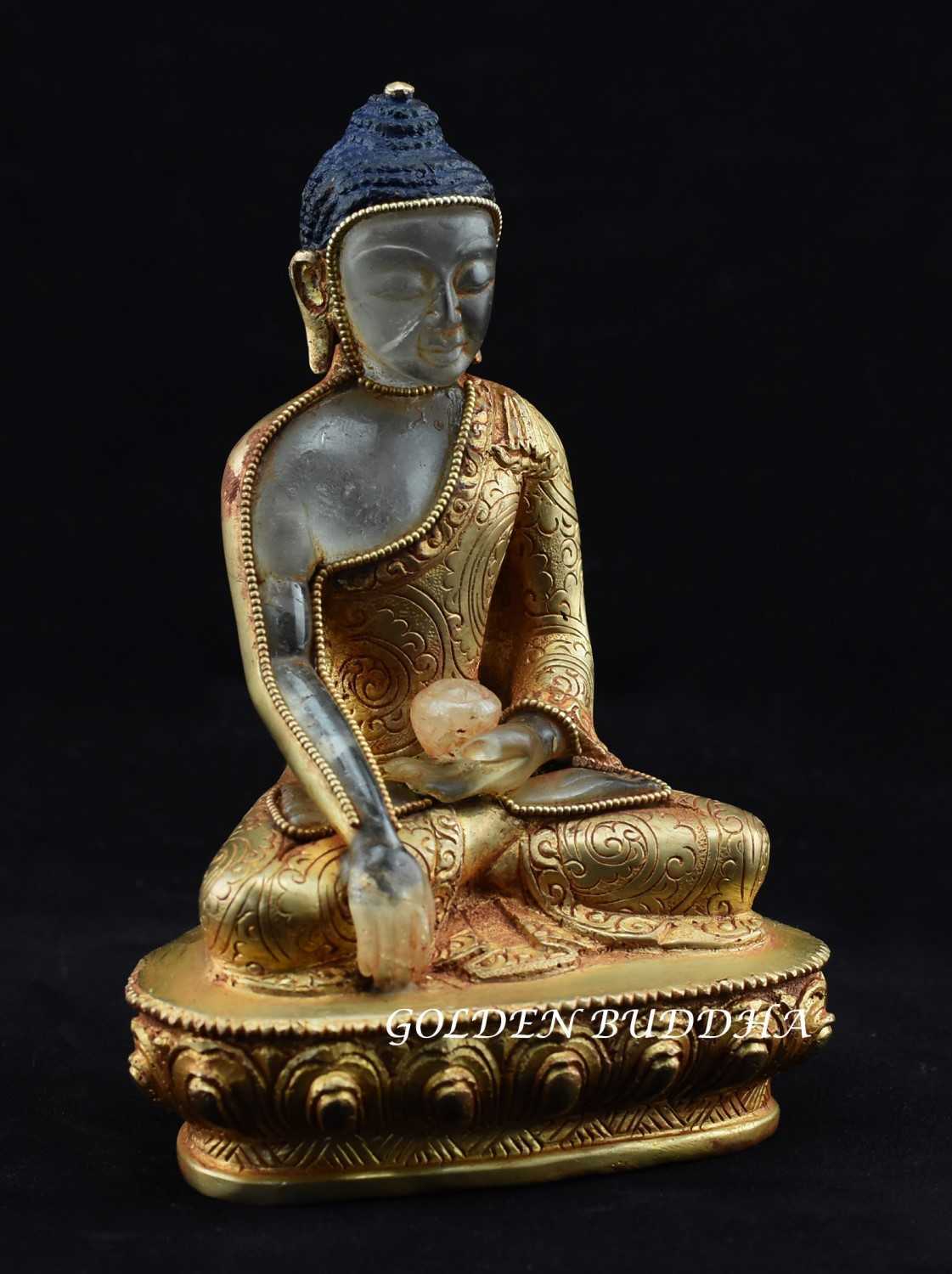
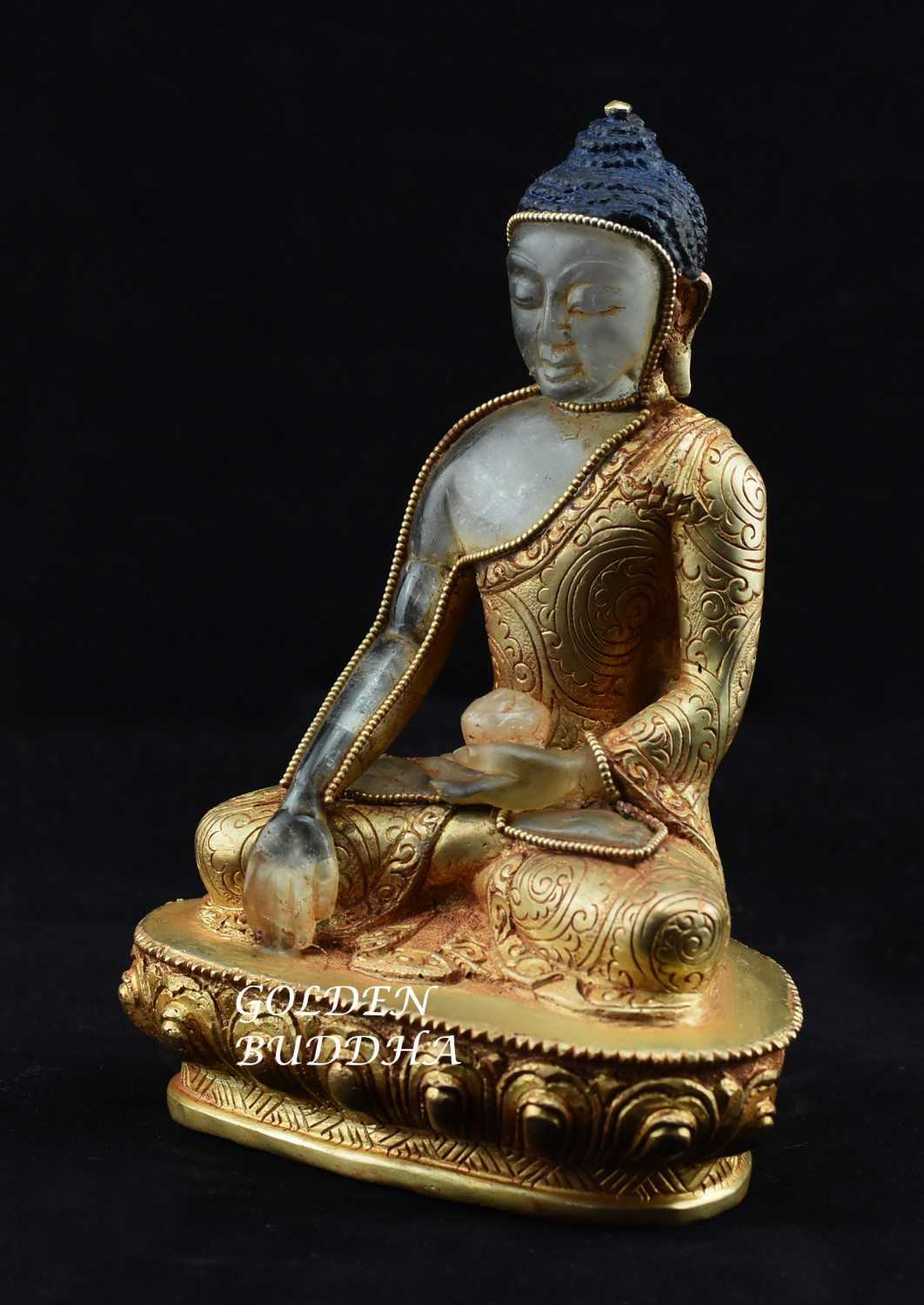
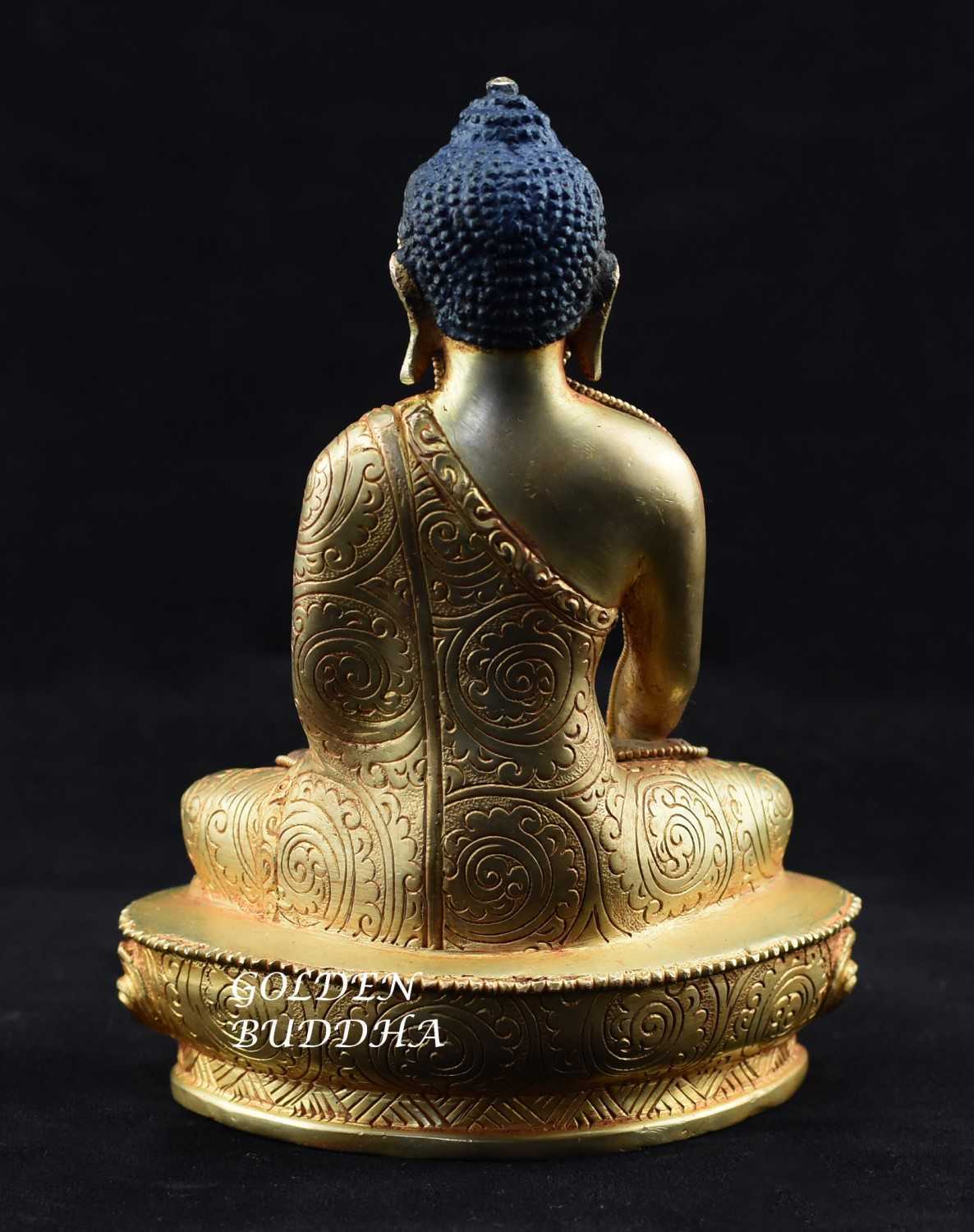
This 5.75″ Shakyamuni Buddha statue is a remarkable combination of two entirely distinct crafting traditions: the authentic gold plated copper throne, lotus pedestal, and robe detailing produced using the traditional lost wax sculpting method, and the body, face, and alms bowl hand-carved directly from natural crystal. The crystal elements give the figure a translucent, internally luminous quality that no real gold plated or copper surface can produce — each one cut and carved by hand, with the crystal alms bowl in the left palm carrying a particular meditative quality given that it represents the vessel of the Buddha’s three nectars. At 5.75″ this is a compact statue well suited to a personal altar, meditation room, or travel shrine where a small but visually exceptional piece is preferred. Have questions about Shakyamuni Buddha statues? Our complete guide covers iconography, mudras, and the historical Buddha’s life story.
Shakyamuni Buddha is the Buddha of our current era — a Sammasambuddha, meaning one who rediscovered the Dharma entirely on his own in a world where it had been forgotten, rather than receiving instruction from an existing tradition. This distinguishes him from his disciples and from Bodhisattvas who receive teachings from others: Shakyamuni realized the nature of suffering, its origin, its cessation, and the path to its cessation through his own investigation and meditation, and then taught that wisdom to sentient beings. The Bhumisparsha mudra depicted on this statue commemorates the precise moment that realization was achieved.
Shakyamuni Buddha Statue Mudras
The right hand displays the Bhumisparsha mudra — the earth-touching gesture — draped over the right knee with the palm facing inward and the fingers extended downward, lightly touching the ground. This is the mudra most closely associated with Shakyamuni and most widely depicted in Himalayan Buddhist statuary: it represents the moment under the Bodhi tree at Bodh Gaya when the Buddha called the earth deity to witness his enlightenment as Mara sought to challenge it. The gesture is the reason Shakyamuni statues in this pose are also known as “Earth Witness” Buddha statues.
The left hand rests in the lap in the Dhyana mudra — the meditation gesture, palm open and facing upward — with the crystal alms bowl resting in the palm. The alms bowl is the symbol of the Buddha’s renunciation of his royal life and his entry into the monastic path, and is understood to hold the three nectars that counteract the three poisons of ignorance, greed, and hatred. Having the alms bowl carved from the same crystal as the body gives this statue an unusual visual coherence — the vessel of liberation rendered in the same luminous material as the figure who offers it.
Authentic, Handmade in Nepal
Every statue is handcrafted in Patan, Nepal, using traditional lost wax casting and comes with a certificate of authenticity issued by Nepal’s Department of Archaeology, verifying its materials, technique, and origin.