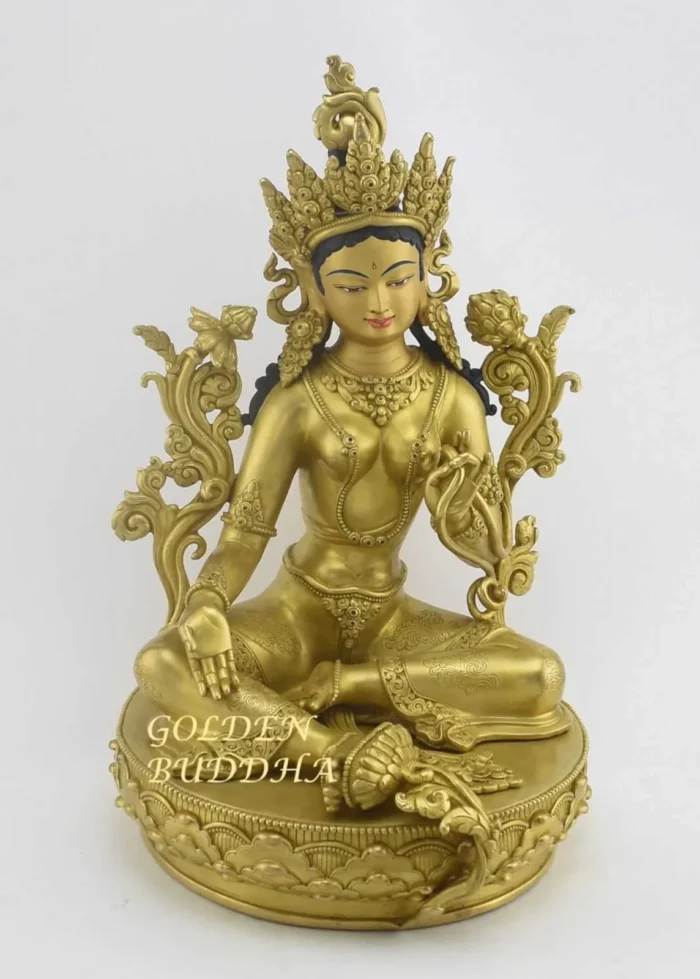
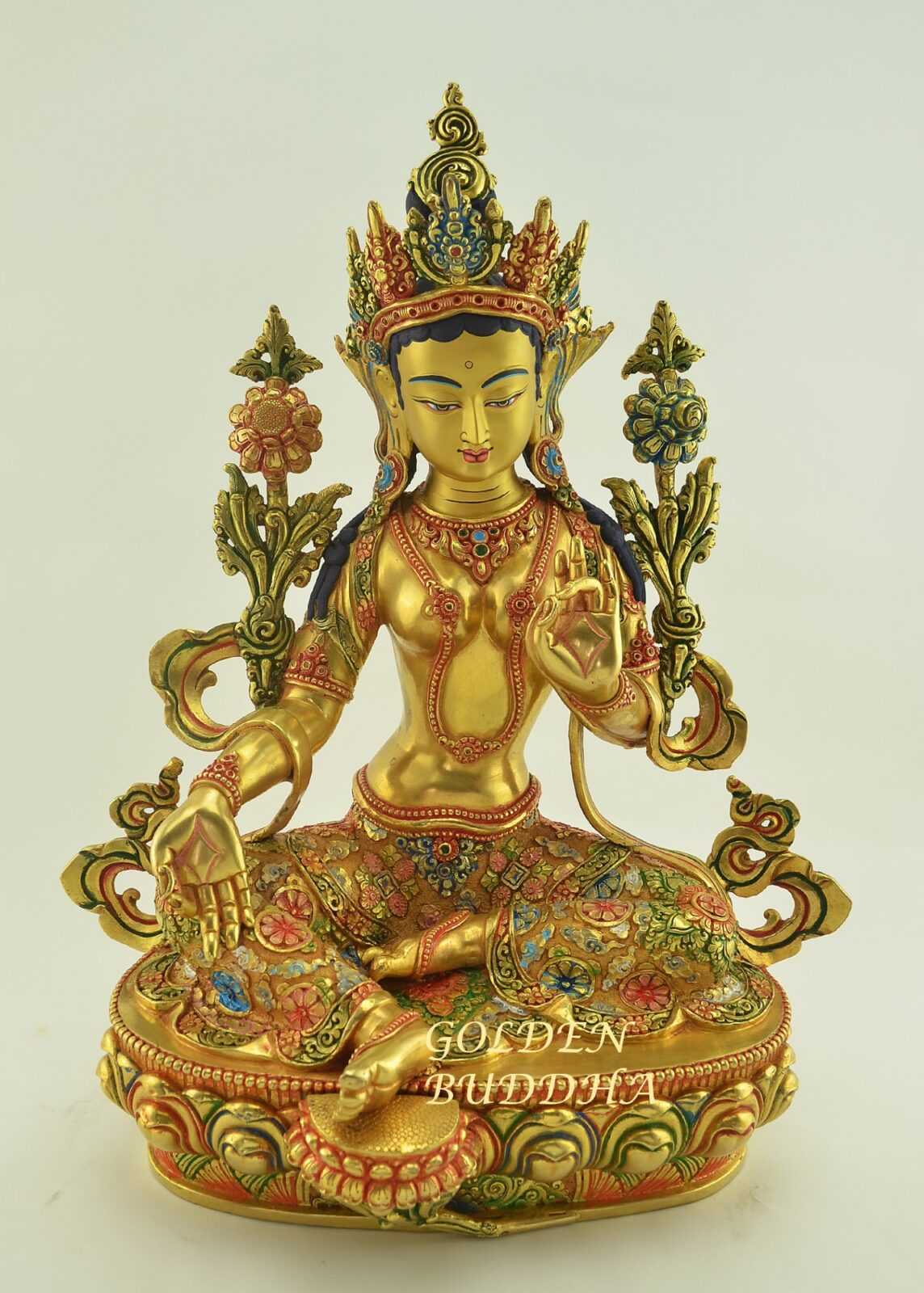
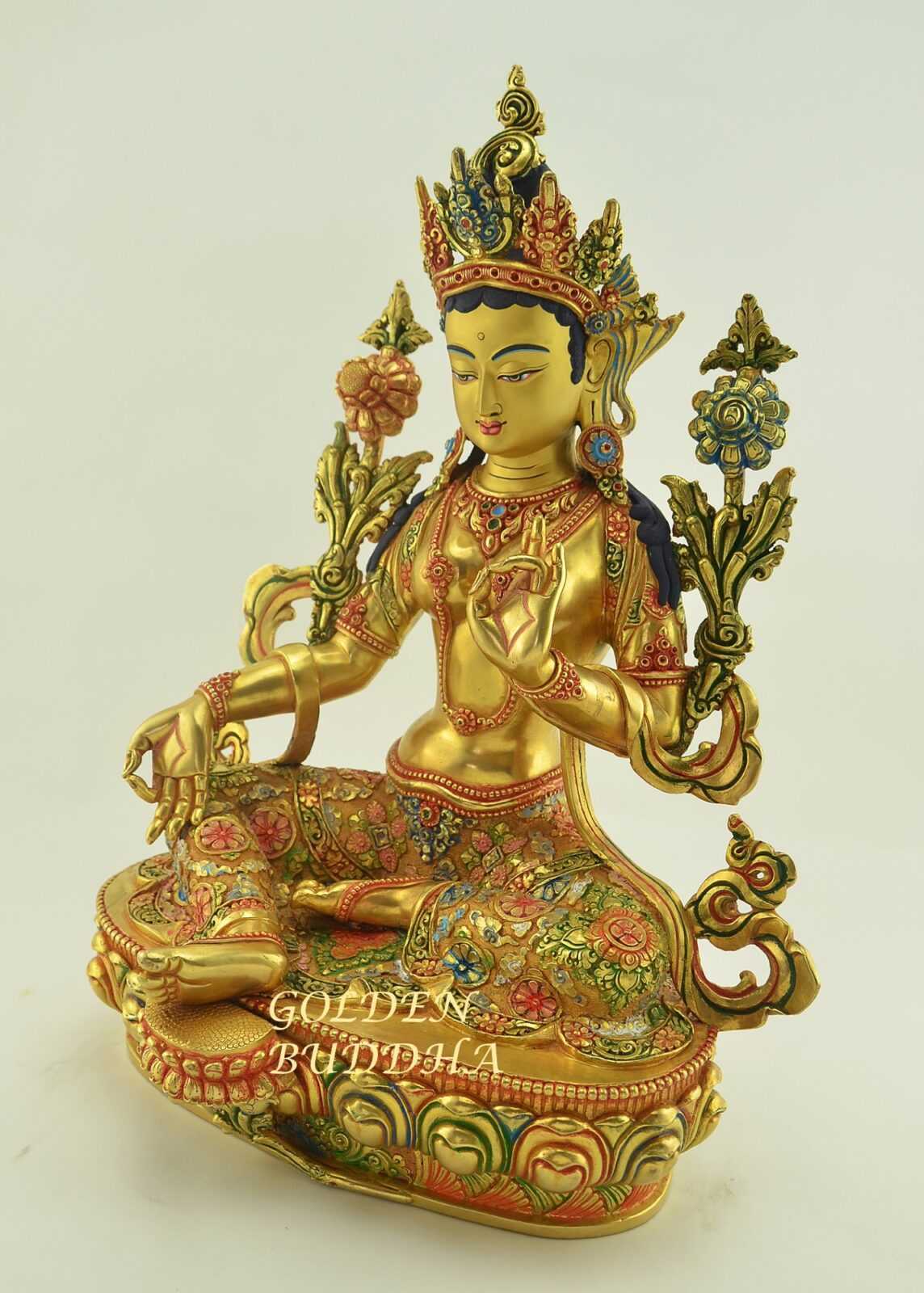
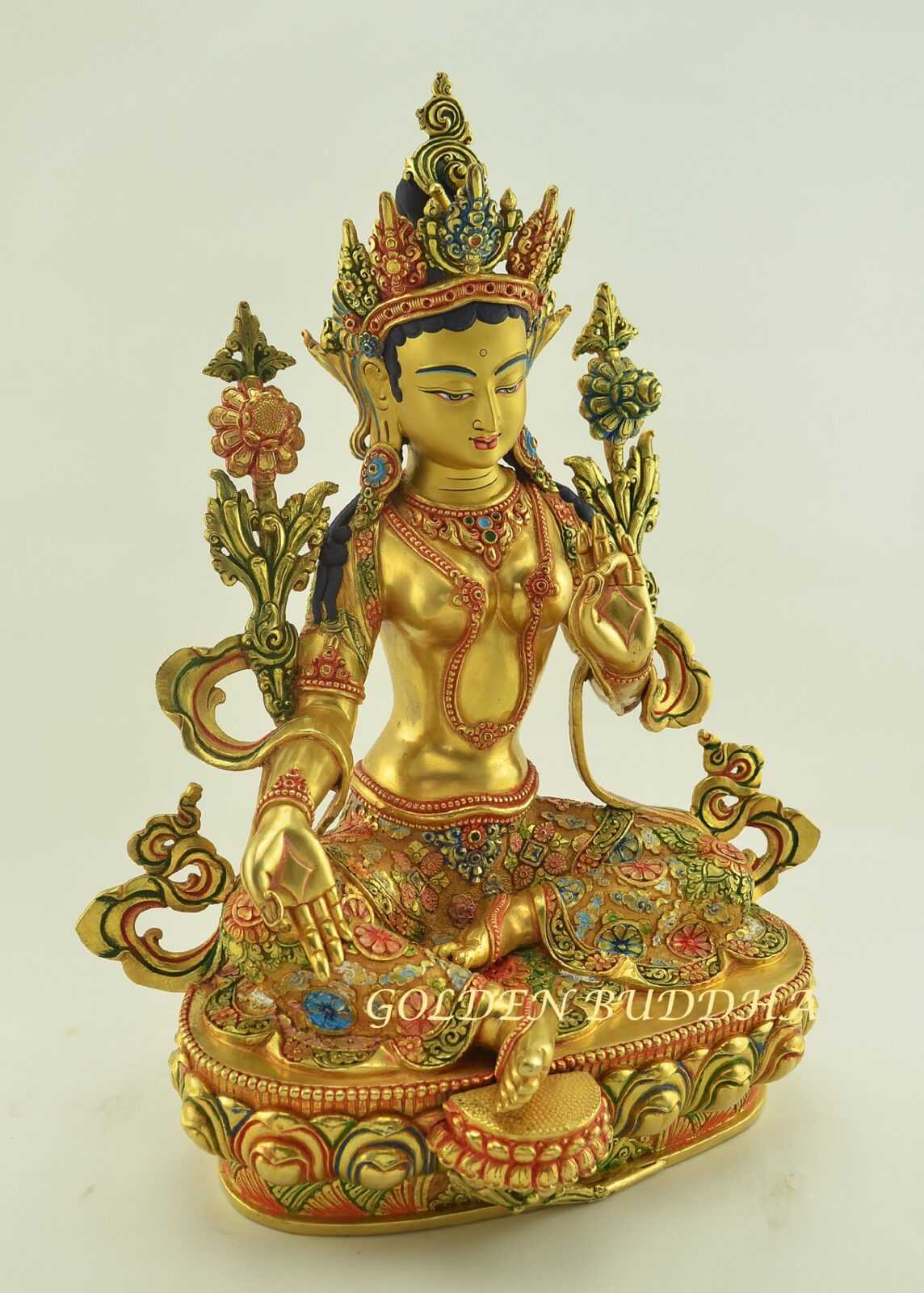
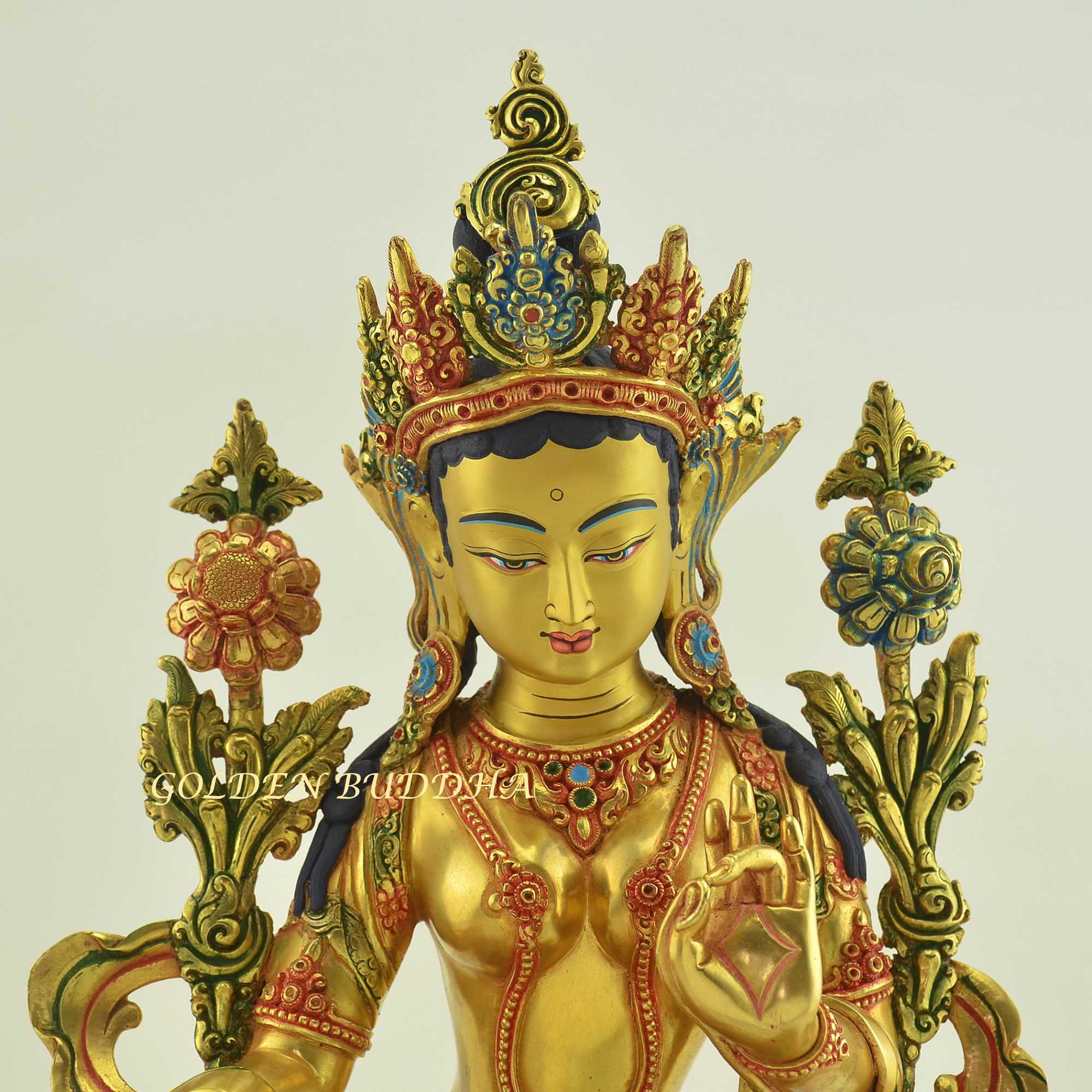
This exceptional 14-inch Masterpiece Green Tara Sculpture portrays Arya Tara, also revered as Jetsun Dolma and Khadiravani Tara, in an extraordinarily elaborate interpretation of traditional Himalayan Buddhist art. Handcrafted from copper alloy by skilled Newar artisans in Patan, Nepal, the sculpture was created using the traditional lost-wax casting method and fire gilded in 24K gold. Her face is separately hand painted with 18K gold and natural pigments, creating the serene yet attentive expression associated with Tara’s enlightened compassion and readiness to act.
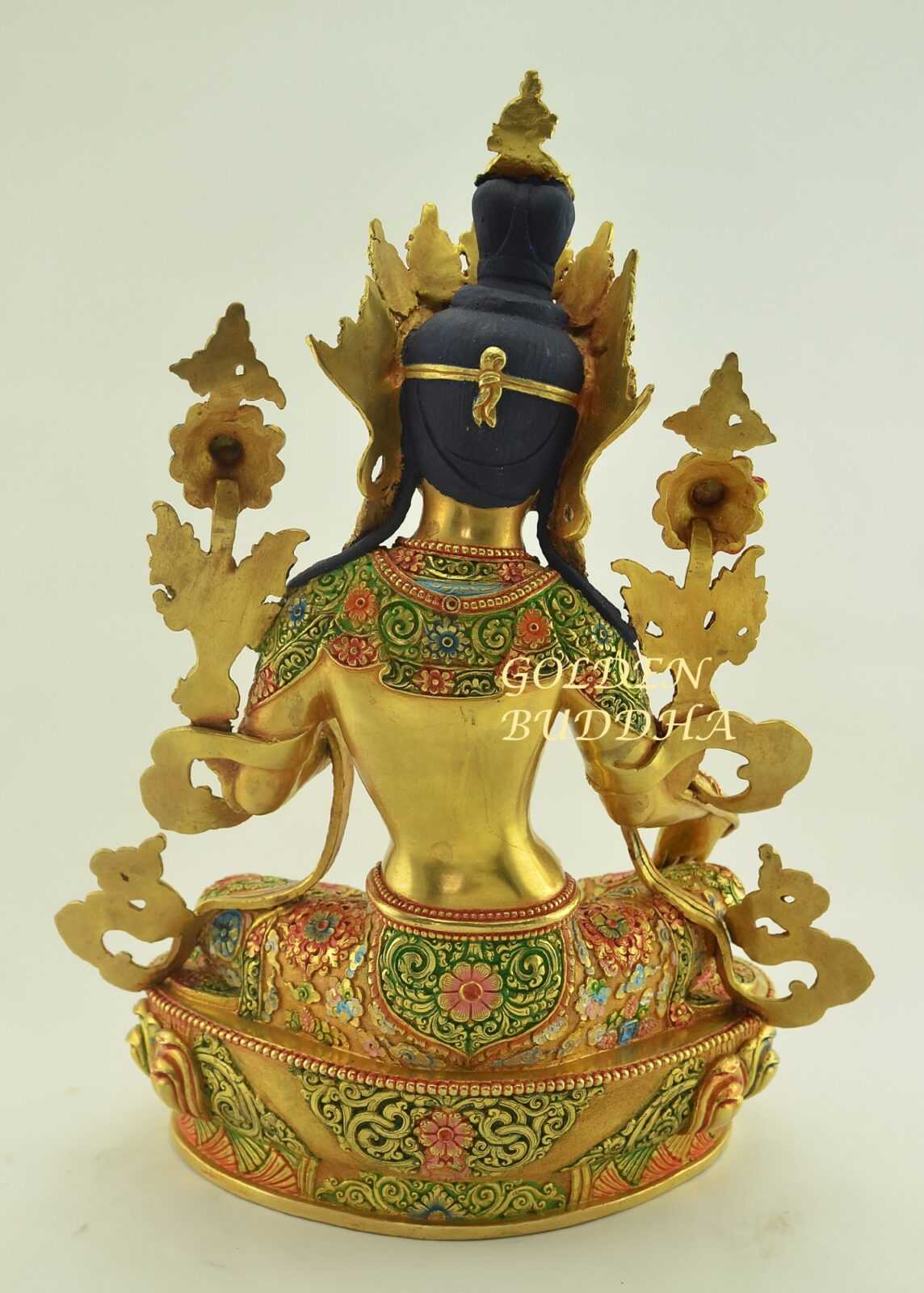
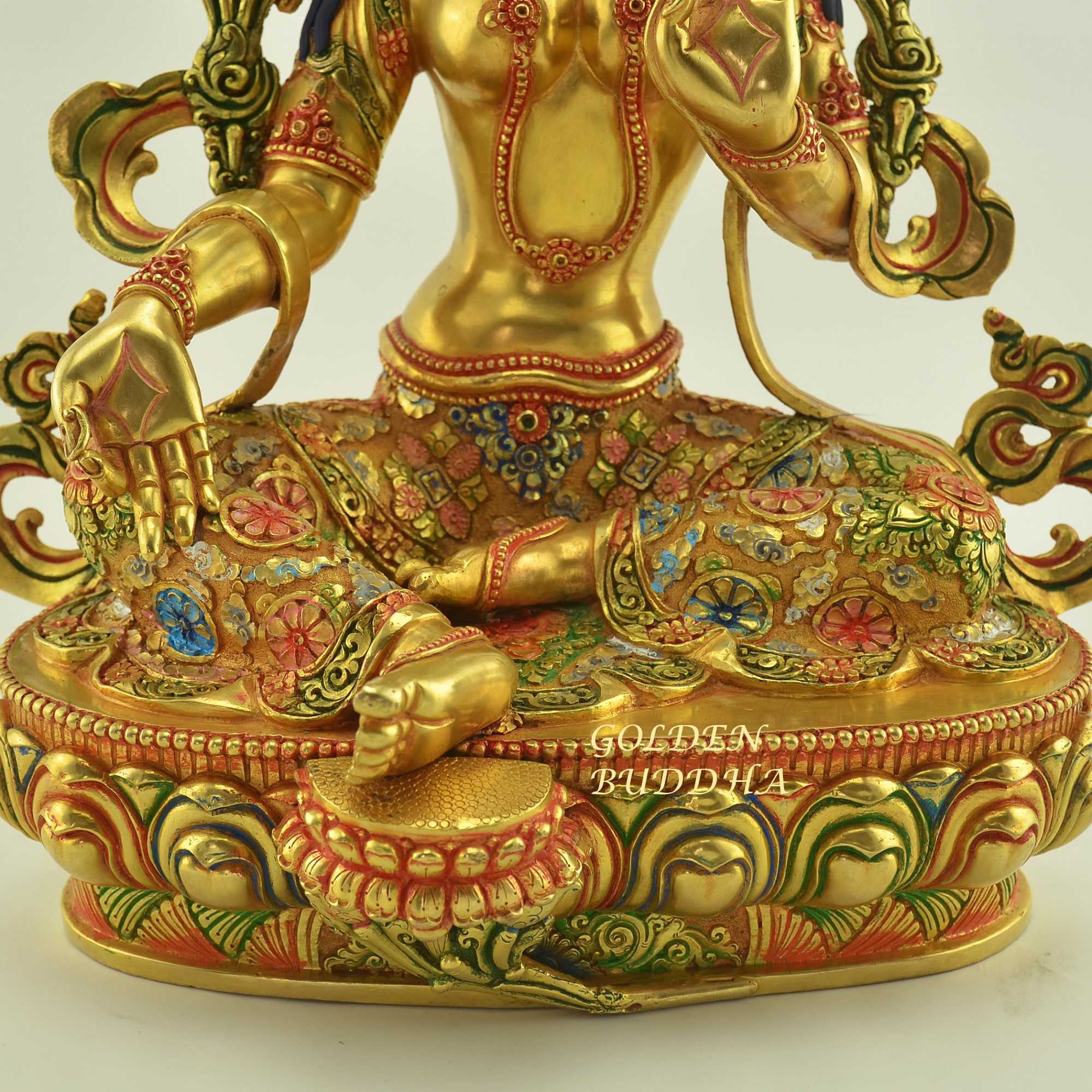
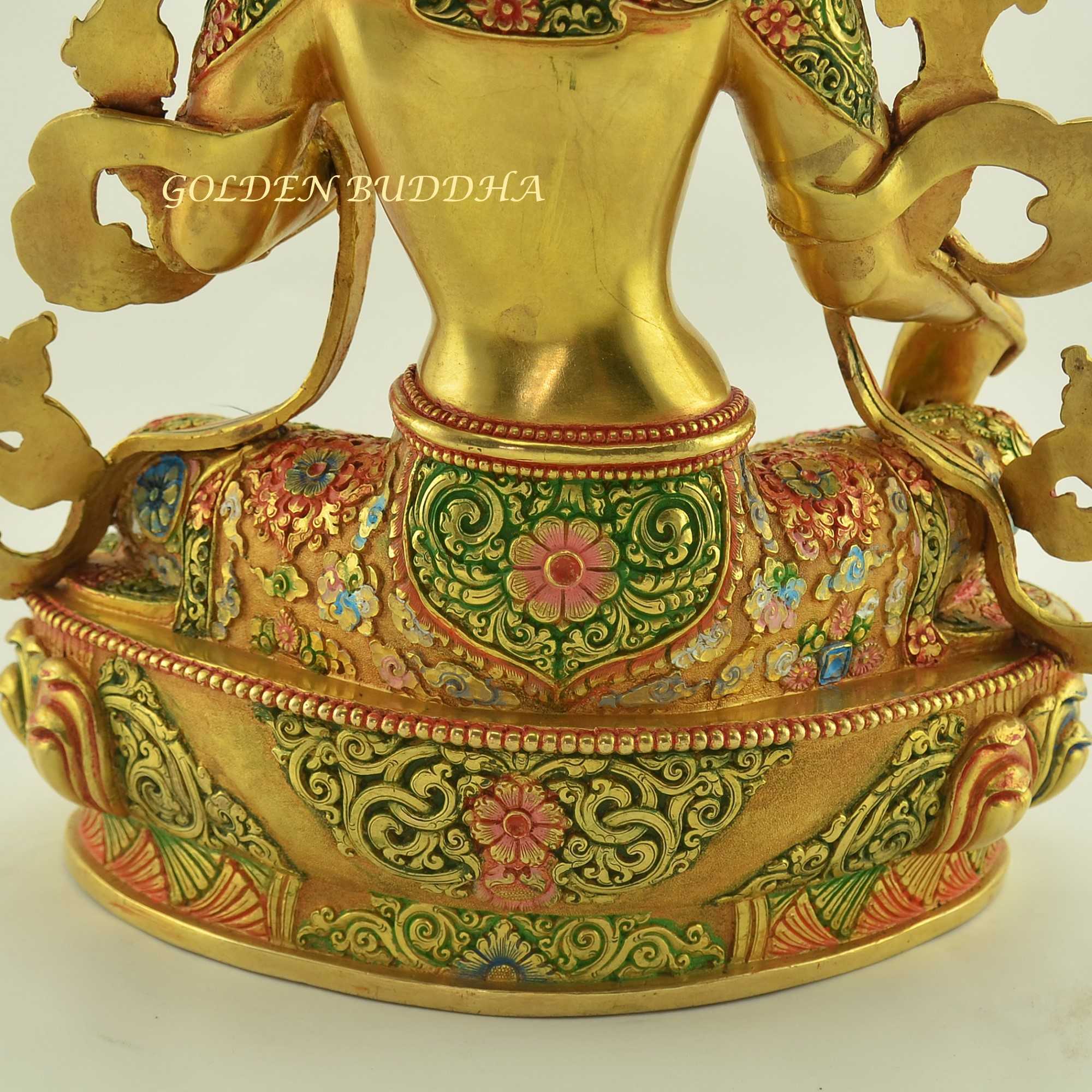
What distinguishes this sculpture is its extensive polychrome ornamentation. Red, green, blue, turquoise-colored and golden details cover the elaborate dhoti, shoulder covering, crown, jewelry and lotus throne. Floral blossoms, curling foliage and ornamental borders follow the contours of the garments, producing the appearance of richly embroidered ceremonial textiles. The decoration continues across the reverse, making this sculpture exceptionally detailed when viewed from multiple directions.
Masterpiece Green Tara Sculpture Iconography
Green Tara embodies enlightened compassion expressed through immediate and fearless activity. She sits in lalitasana, the posture of royal ease, with her left leg folded upon the throne while her right leg extends forward and rests upon a small lotus support. Rather than suggesting complete withdrawal into meditation, this distinctive posture communicates Tara’s readiness to rise immediately in response to suffering. Explore the iconography of Green Tara and the meaning behind her characteristic posture and attributes.
Her lowered right hand displays the Varada mudra, the gesture of generosity, compassionate giving and the bestowal of blessings. The raised left hand forms Tara’s characteristic gesture of refuge and protection. Particularly distinctive on this sculpture are the finely modeled vajra motifs within both palms, visually joining her compassionate activity with the indestructible nature of awakened wisdom.
Utpala Lotuses and Celestial Ribbons
Tall lotus stems rise beside Tara into two prominent blossoms positioned near her shoulders. Their large petals and surrounding foliage create a balanced frame around the upper body. The lotus is among Buddhism’s most enduring symbols of purity and awakening: although rooted in muddy water, its blossom emerges unstained above the surface. Learn more about Green Tara’s meaning and compassionate activity.
Long celestial ribbons emerge around Tara’s shoulders and arms before curling outward in broad decorative loops. Their flowing movement contrasts beautifully with her composed expression. Together with the extended foot, open palm and rising lotus stems, these ribbons give the sculpture an active quality appropriate to Tara’s reputation as the swift Mother of Liberation.
Polychrome Garments and Lotus Throne
The dhoti is among the sculpture’s finest artistic features. Dense floral ornamentation extends across both legs in combinations of red and blue blossoms, green foliage, scrolling forms and gilded borders. The reverse is equally impressive, where a large floral composition dominates the back of the garment beneath an extensively decorated shoulder covering. Tara’s elaborate Bodhisattva crown, necklaces, earrings and arm ornaments repeat this multicolored decorative vocabulary.
The lotus throne continues the same treatment with individually defined petals and richly painted floral and foliate ornamentation extending around the base. Suitable settings within the crown and jewelry may also be embellished with genuine turquoise and red coral stones upon request before shipment. This optional service adds traditional gemstone accents without obscuring the sculpture’s remarkable polychrome workmanship. Browse our Green Tara statues and sculptures for additional interpretations of this beloved deity.
A Doctrinal Pairing with Chenrezig
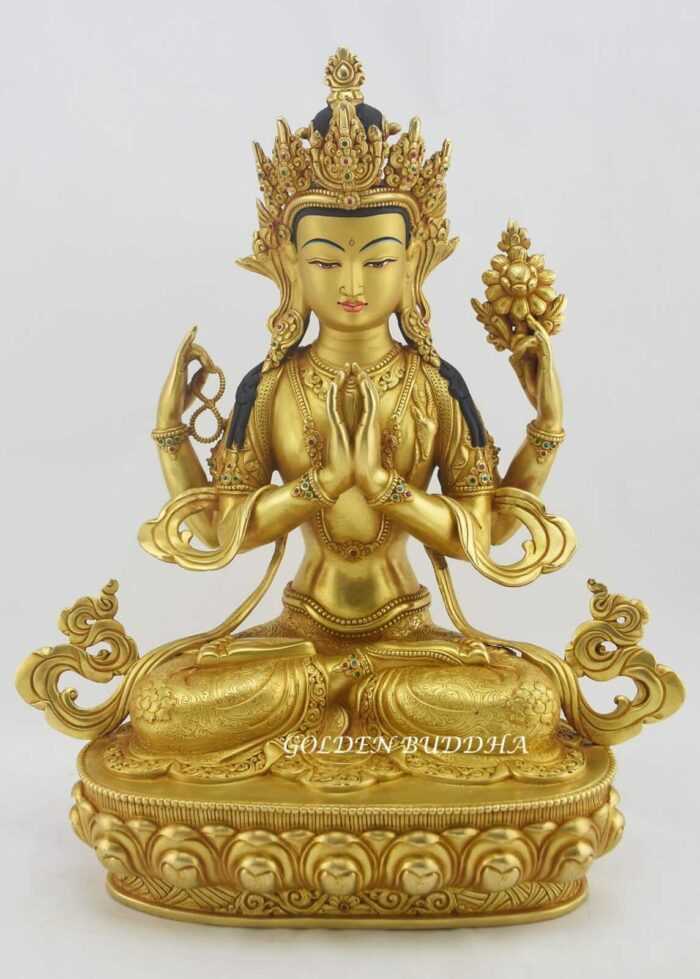
This sculpture makes an especially meaningful companion to our 24K gold gilded Masterpiece Chenrezig sculpture. Chenrezig embodies universal compassion, while Green Tara expresses compassion transformed into swift enlightened action. Tibetan tradition closely associates the two deities, making them a doctrinally harmonious pairing for a shrine or collection. Their contrasting iconography also complements one another beautifully: Tara extends one foot toward beings in need, while four-armed Chenrezig holds the lotus, mala and wish-fulfilling cintamani jewel among his sacred attributes.
Custom Made Masterpiece Green Tara Statues
Collectors, practitioners, monasteries and Dharma centers may also commission a custom made Tibetan Buddhist statue inspired by this Masterpiece Green Tara Sculpture. Custom commissions can accommodate different dimensions, gilding and patina treatments, polychrome designs, gemstone ornamentation and decorative treatments for the garments and lotus throne. A complementary Green Tara and Chenrezig pair may also be commissioned with coordinated proportions, finishes and artistic detailing, creating a visually unified shrine set while preserving the distinct iconographic attributes belonging to each deity.
Authentic, Handmade in Nepal
Every statue is handcrafted in Patan, Nepal, using traditional lost wax casting and comes with a certificate of authenticity issued by Nepal’s Department of Archaeology, verifying its materials, technique, and origin.