


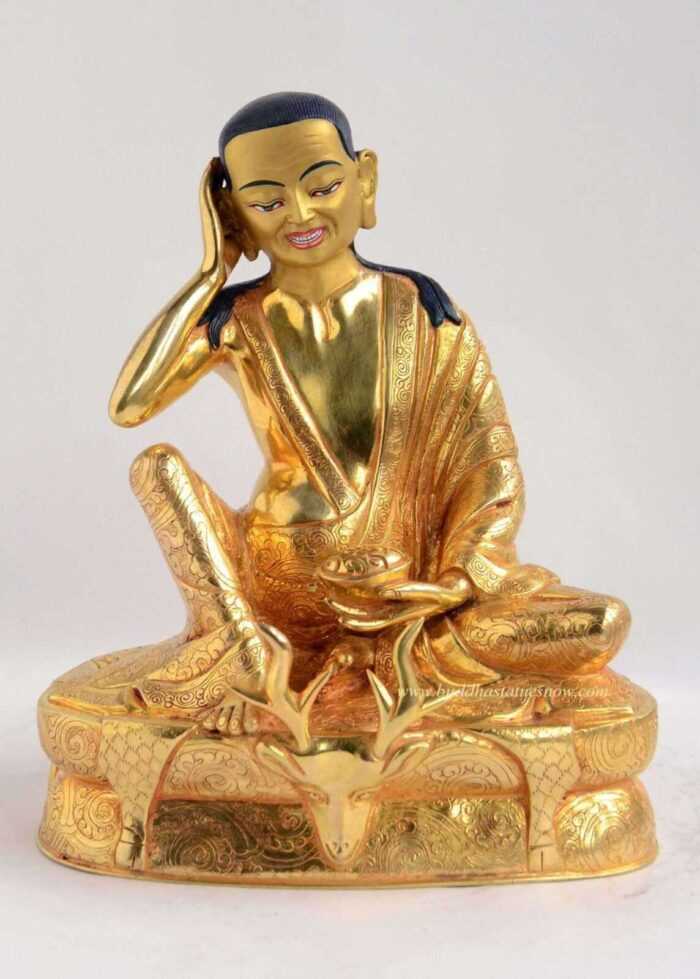
This 7.25″ Guru Milarepa statue is fully fire gilded in 24K gold — figure, seat, and base in a clean unified golden surface — with a hand-painted face capturing the distinctive expression of Tibet’s most celebrated cave yogi. The statue was handcrafted in Patan, Nepal by master Newar artisans using the traditional lost wax sculpting method.
Milarepa (c.1040–1123 CE) began his life in darkness — after the death of his father, his family’s inheritance was stolen by a greedy uncle, and at his mother’s urging he learned black magic and used sorcery to take revenge, killing many people. Consumed by the karmic weight of what he had done, he sought out Guru Marpa to find a path toward purification. Marpa put him through years of trials before granting any teaching — requiring him to build and demolish towers repeatedly, a process understood as burning away the karmic debt that would otherwise have made transmission impossible. One of those towers, built in the eleventh century in Lhodrak, is said to stand to this day. Milarepa then spent years in Himalayan caves in intensive retreat, living on nettles, mastering the tummo (inner heat) practice, and achieving complete enlightenment within a single lifetime. He transmitted the Kagyu lineage to Gampopa — the great physician-turned-monk who combined what he received from Milarepa with the Kadampa scholastic tradition to create the structured Kagyu school as it exists today — completing the three-generation transmission from Marpa through which the entire Kagyu institution was built.
Guru Milarepa Statue Features
The statue depicts Milarepa in his signature posture: right hand raised to his ear — the gesture of one who listens for inspiration and sings the Dharma rather than lecturing it — and left hand holding the kapala (skull cup). In the Tantric tradition the kapala — originally fashioned from a human skull — serves as a constant reminder that the body’s impermanence is not a problem to be solved but a fundamental fact to be understood and used as a support for practice: the cup that holds poison can hold nectar. He sits on an animal skin in the Indian ascetic tradition, the seat of a practitioner who has renounced ordinary comfort as the price of complete realization.
Authentic, Handmade in Nepal
Every statue is handcrafted in Patan, Nepal, using traditional lost wax casting and comes with a certificate of authenticity issued by Nepal’s Department of Archaeology, verifying its materials, technique, and origin.
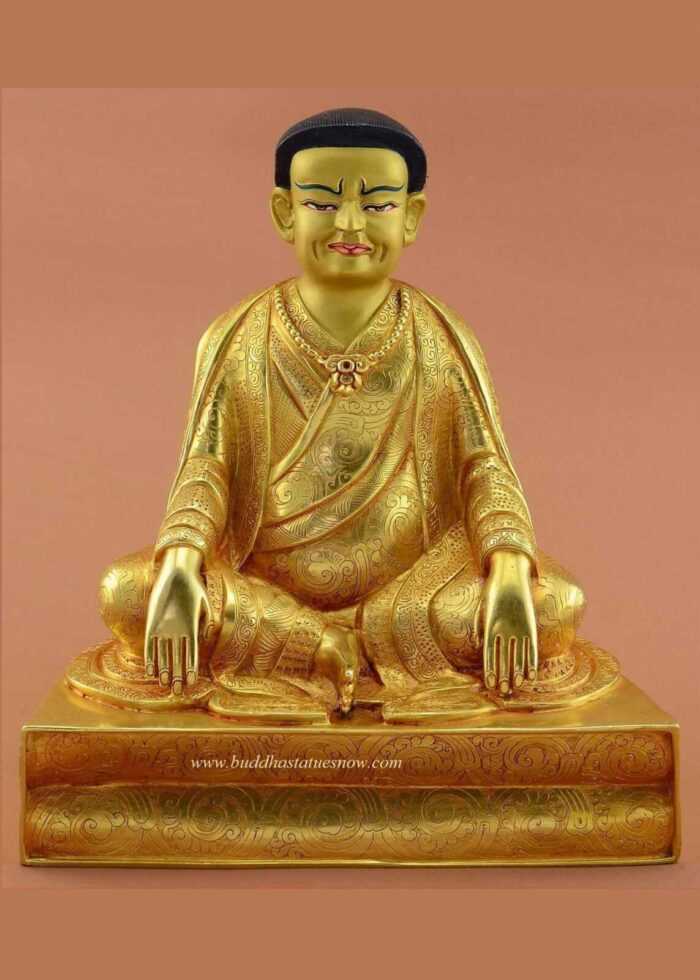
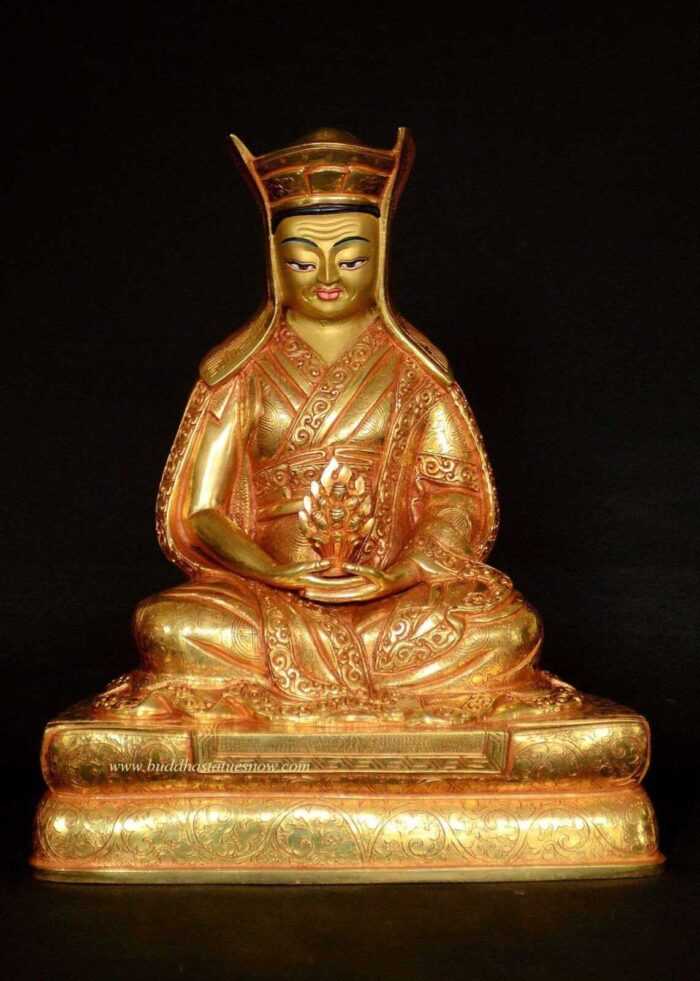
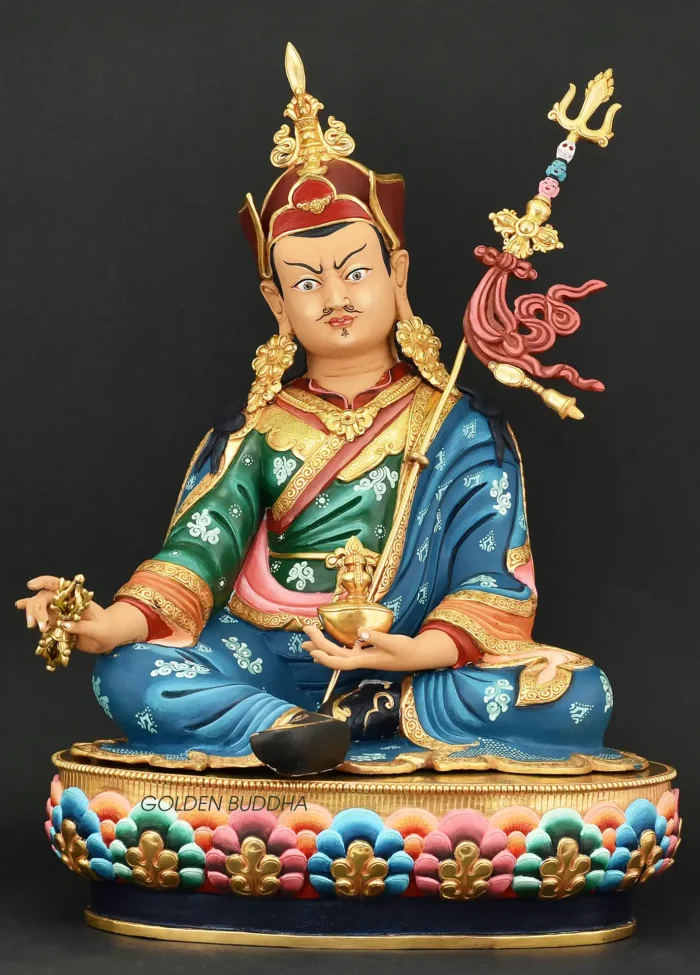
frankfreywis (verified owner) –
It’s a great masterpiece and i am very happy. The consecration and filling was done very well. I am very happy with this statue.
Best regards,
Frank