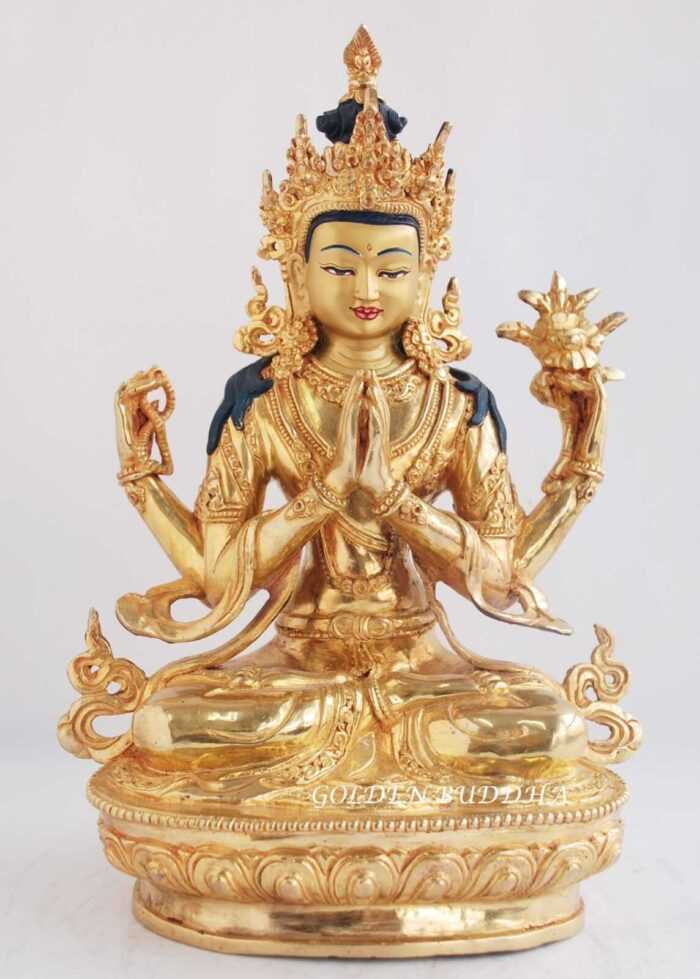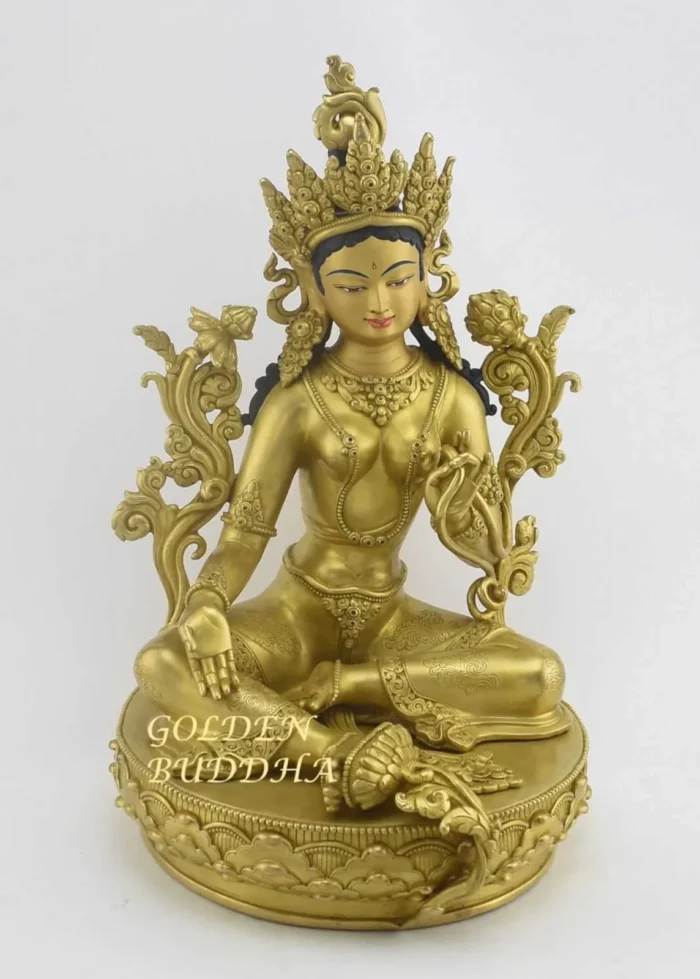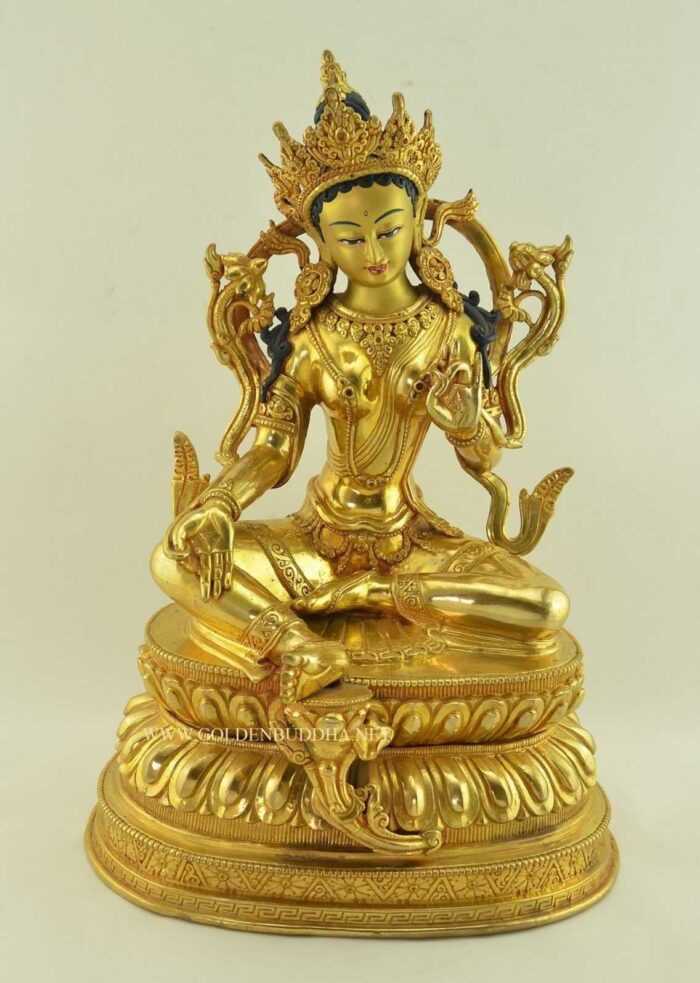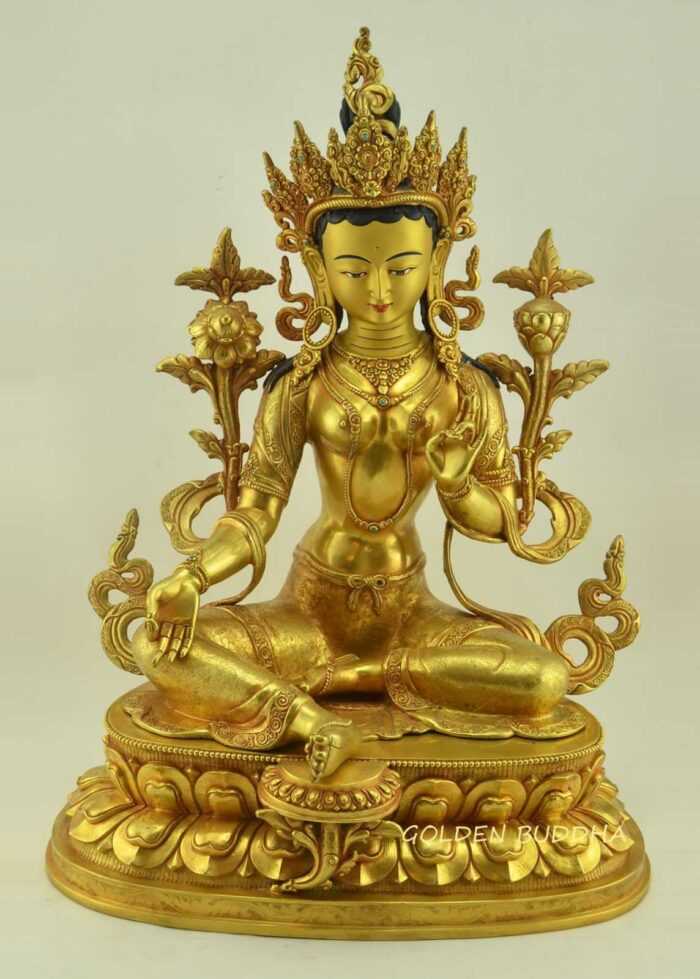

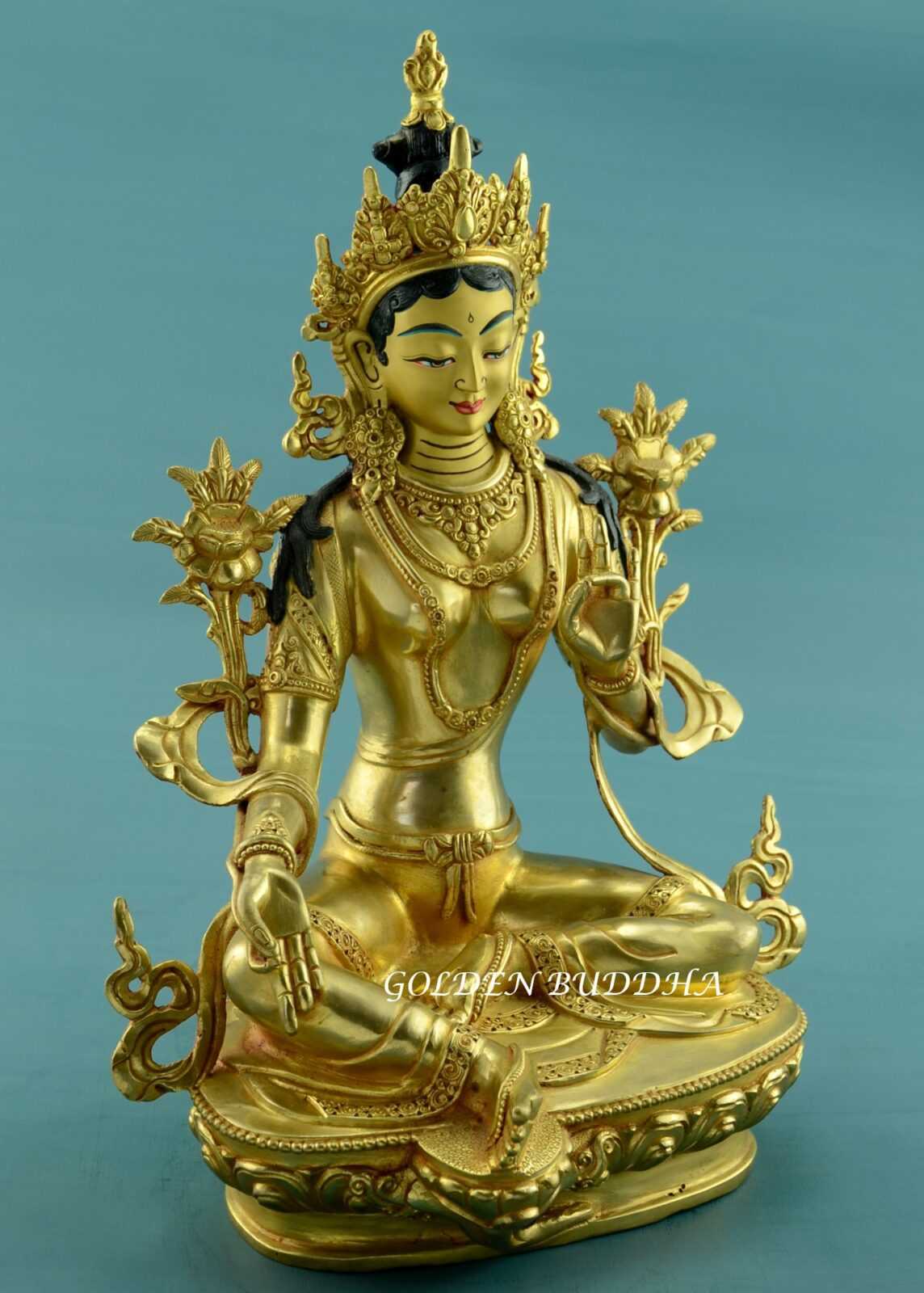
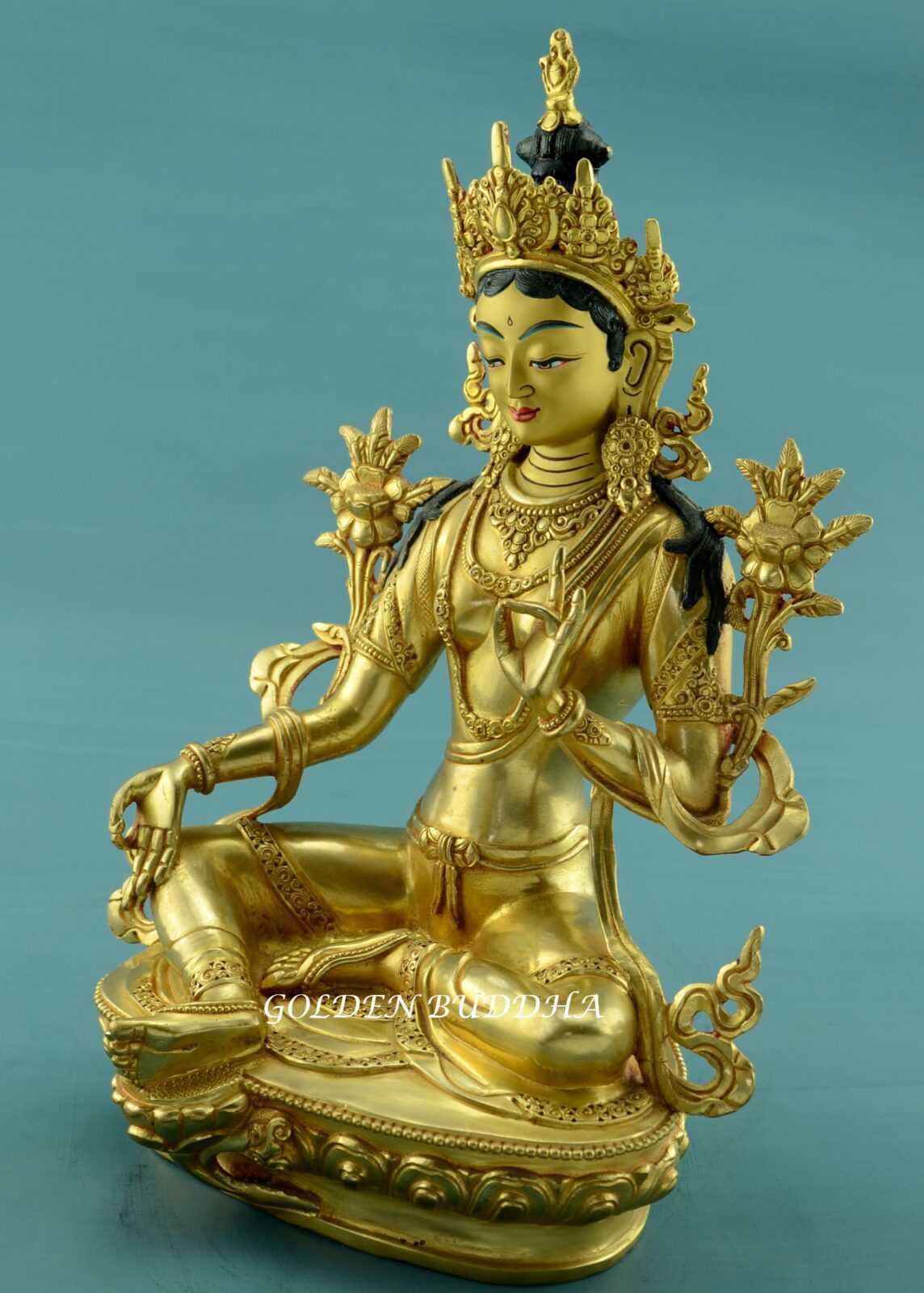
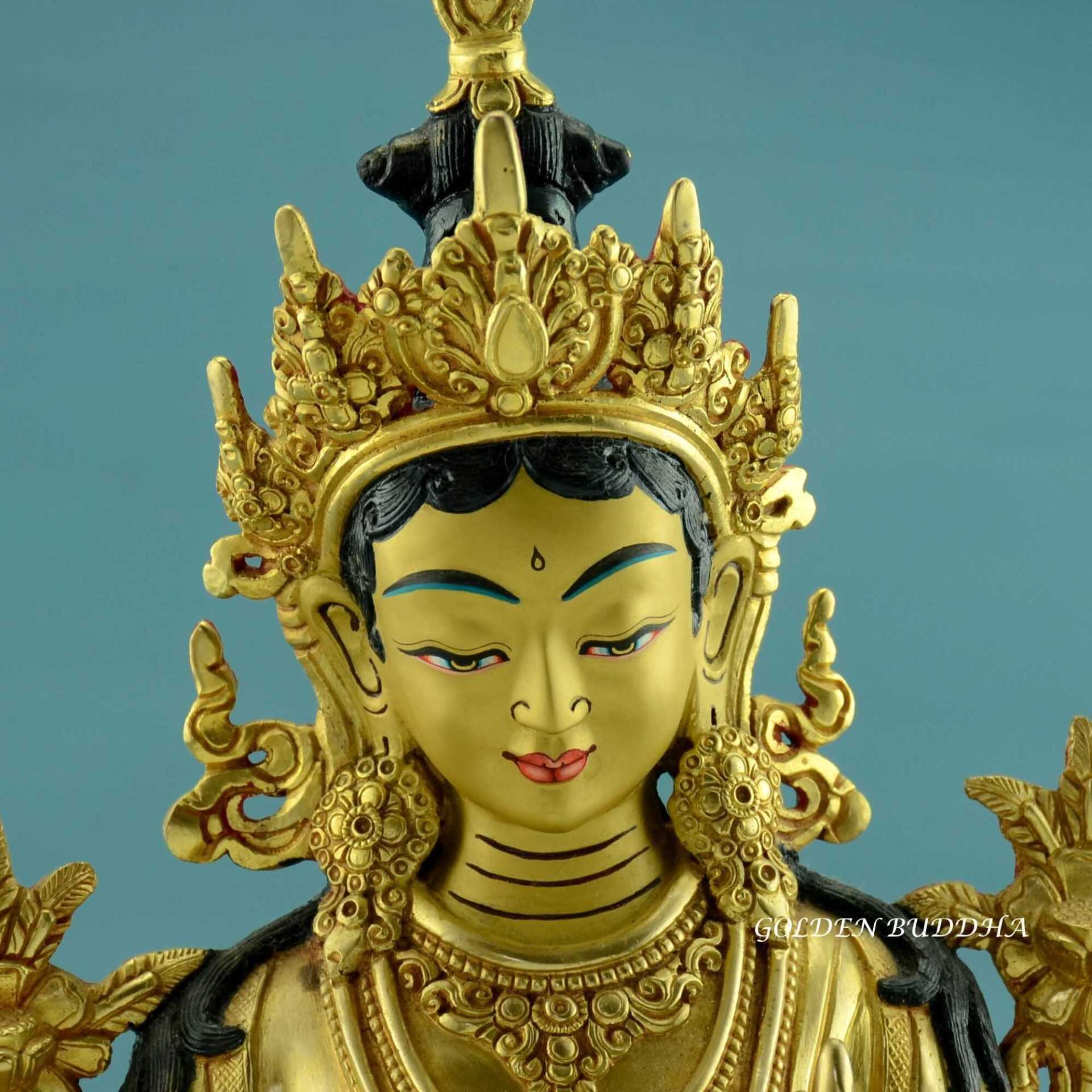
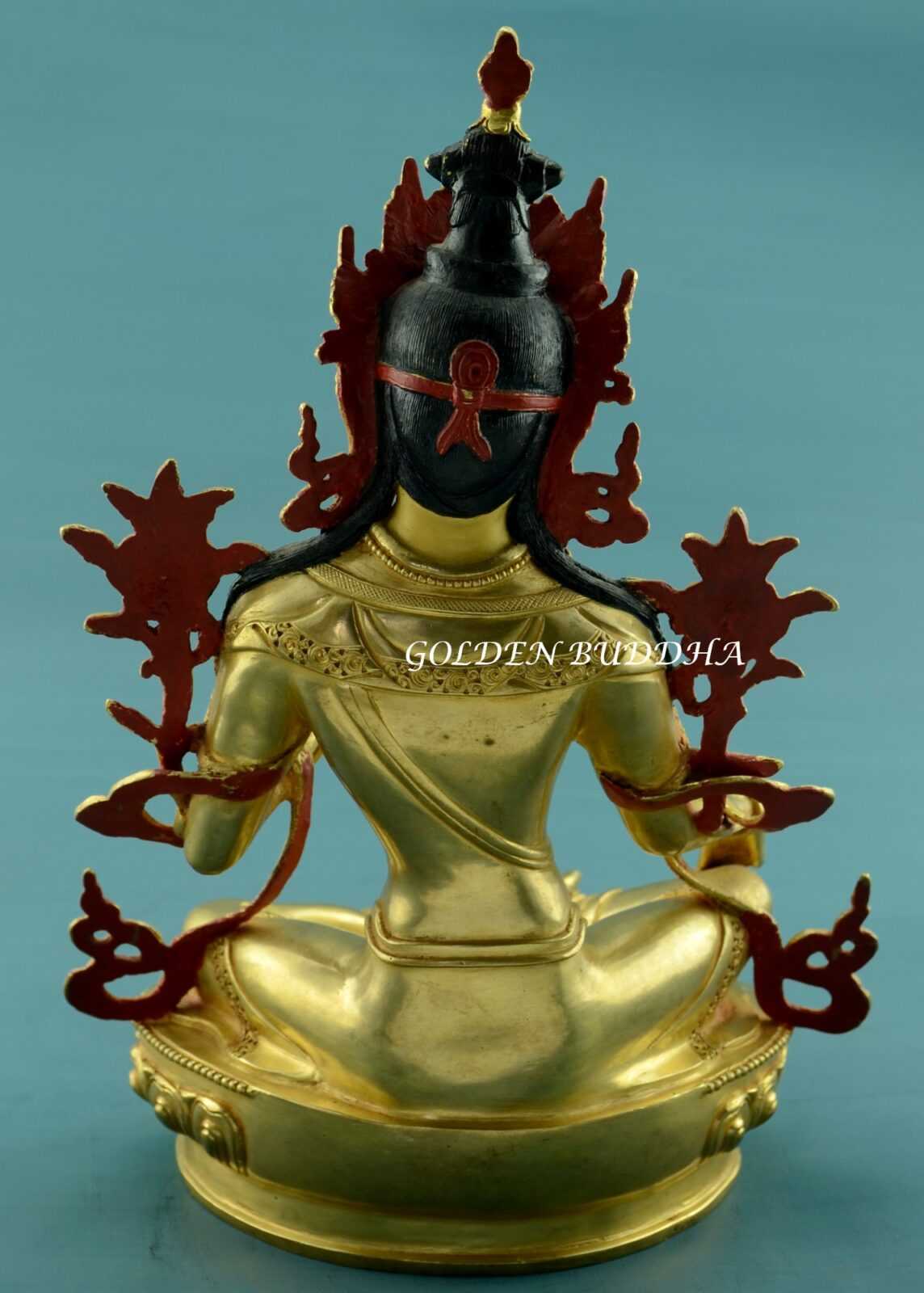
This 13″ Khadiravani Green Tara statue is fire gilded in genuine 24K gold using traditional techniques and handcrafted in Patan, Nepal by a master artisan of the Shakya caste using the centuries-old lost wax casting method. Every detail of the Bodhisattva crown, jewelry, lotus throne, and flowing garments is individually hand-finished before the statue receives its brilliant gold surface. The serene face is hand-painted using real 18K gold blended into traditional pigments, producing the warm golden complexion that distinguishes fine Himalayan Buddhist sculpture. At the buyer’s request, the crown and jewels can be additionally embellished with turquoise and red coral stones at no extra charge before shipping. Learn more about 24K fire gilding and real gold face painting in our complete Buddha Statue Buyer’s Guide.
The title Khadiravani means “She Who Dwells in the Khadira Forest,” referring to a sacred grove of acacia trees where Green Tara is traditionally said to have manifested to practitioners. In Buddhist literature the forest symbolizes more than a physical place—it represents the quiet clarity of contemplative practice, where distractions fall away and compassionate wisdom naturally arises. The association with the khadira acacia also reinforces Tara’s role as the ever-present protector who appears wherever sincere practitioners call upon her. This peaceful woodland imagery complements her identity as the swift embodiment of enlightened activity, always ready to remove obstacles while remaining firmly rooted in wisdom. Have questions? Read our Green Tara FAQ for answers about iconography, practice, and choosing a statue.
Khadiravani Green Tara Statue Features
Khadiravani Green Tara is depicted in lalitasana—the royal ease posture—with her left leg folded in meditative contemplation and her right leg gracefully extended, expressing her constant readiness to assist sentient beings. Her right hand displays the Varada mudra, the gesture of generosity, blessing, and compassionate activity, while both hands gently hold the stems of the sacred utpala lotus flowers between thumb and index finger. The fully opened blossom above her right shoulder symbolizes the complete realization of enlightenment, while the unopened blossom above her left shoulder represents the innate Buddha nature present within every being, waiting only for the proper conditions to unfold. Explore Green Tara’s posture, mudra & attributes in our complete Tara statues guide.
Authentic, Handmade in Nepal
Every statue is handcrafted in Patan, Nepal, using traditional lost wax casting and comes with a certificate of authenticity issued by Nepal’s Department of Archaeology, verifying its materials, technique, and origin.