
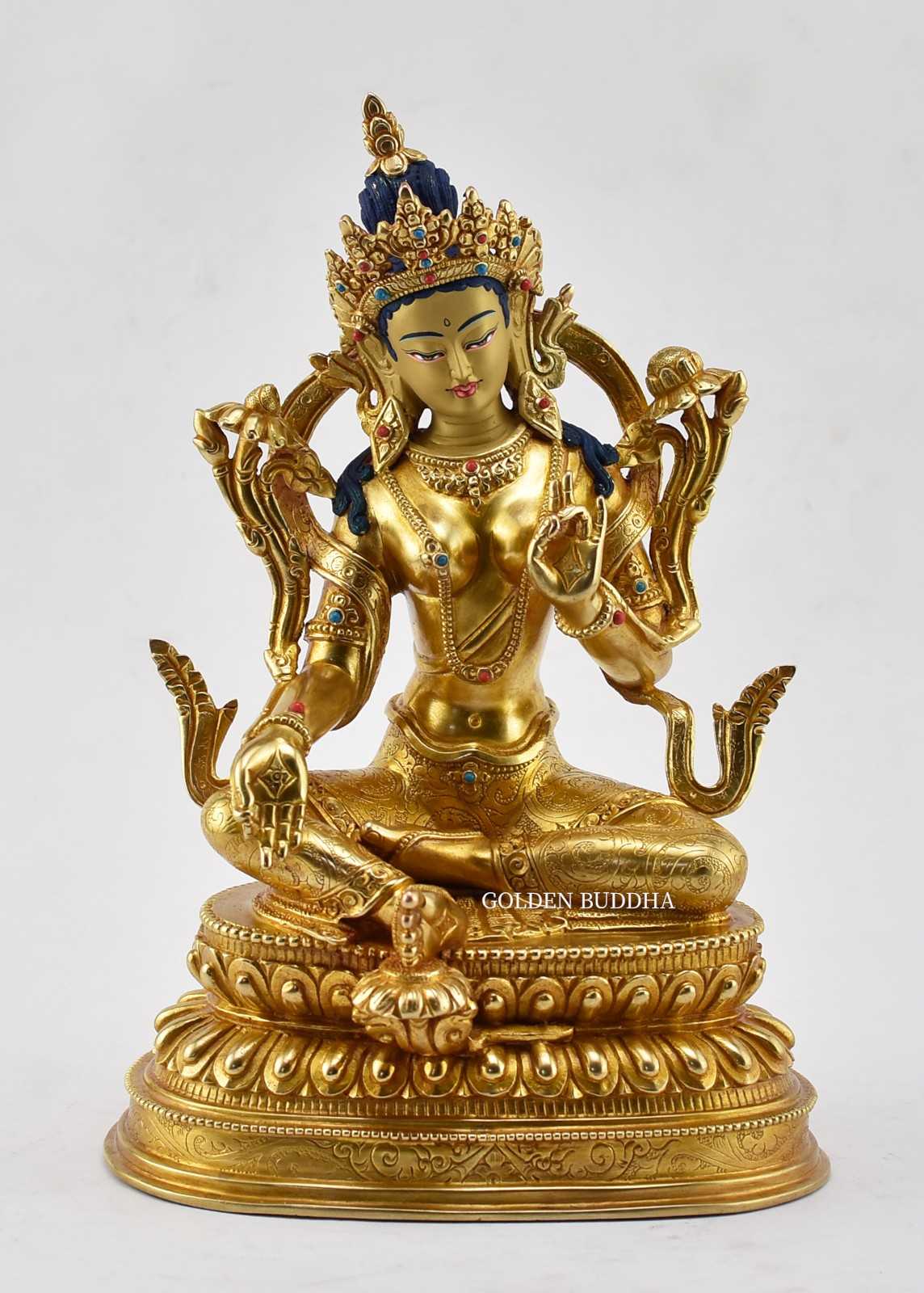


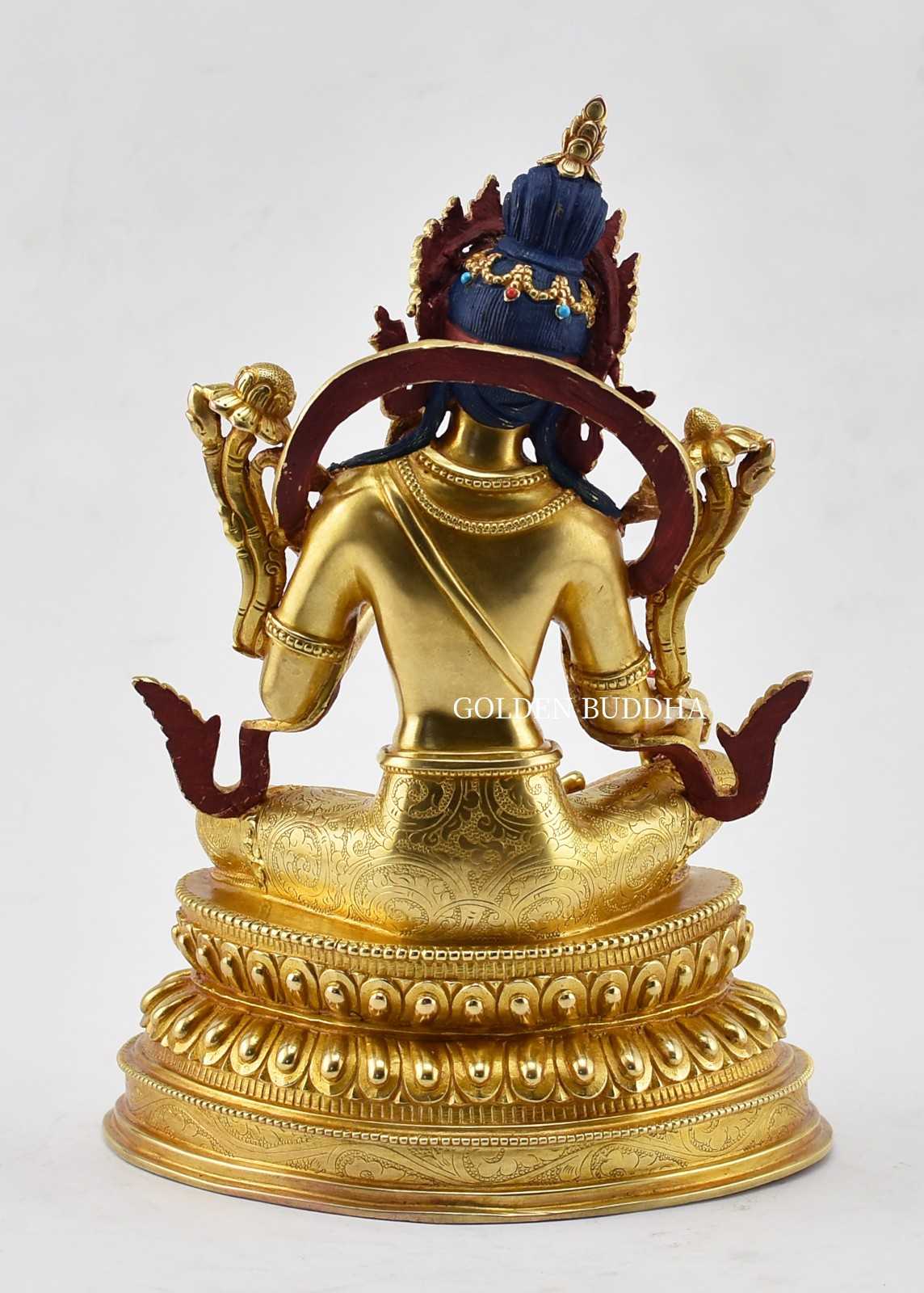
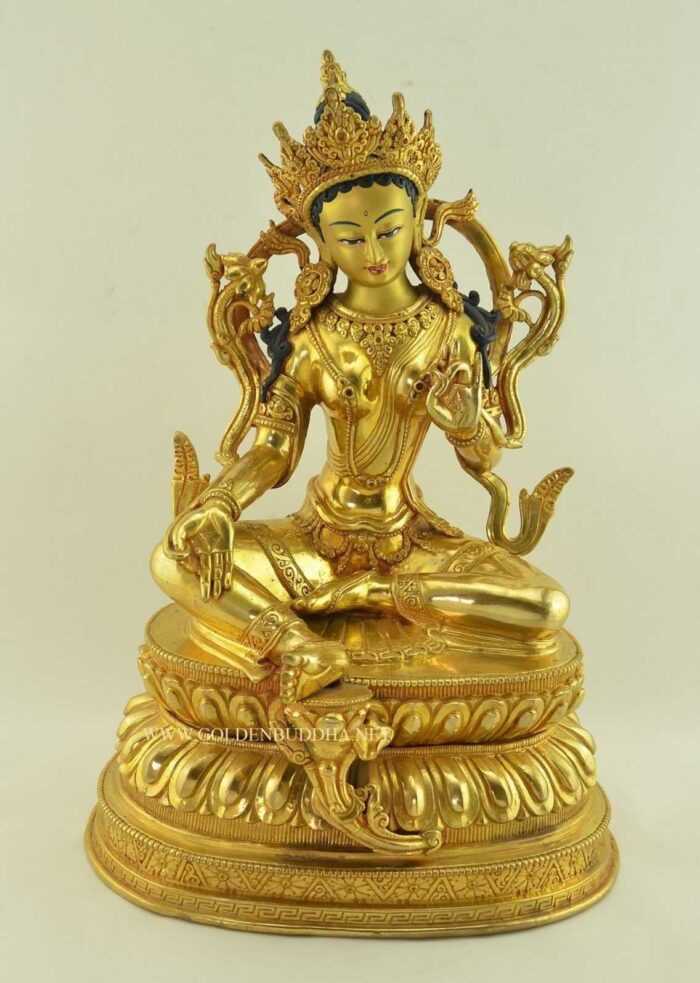
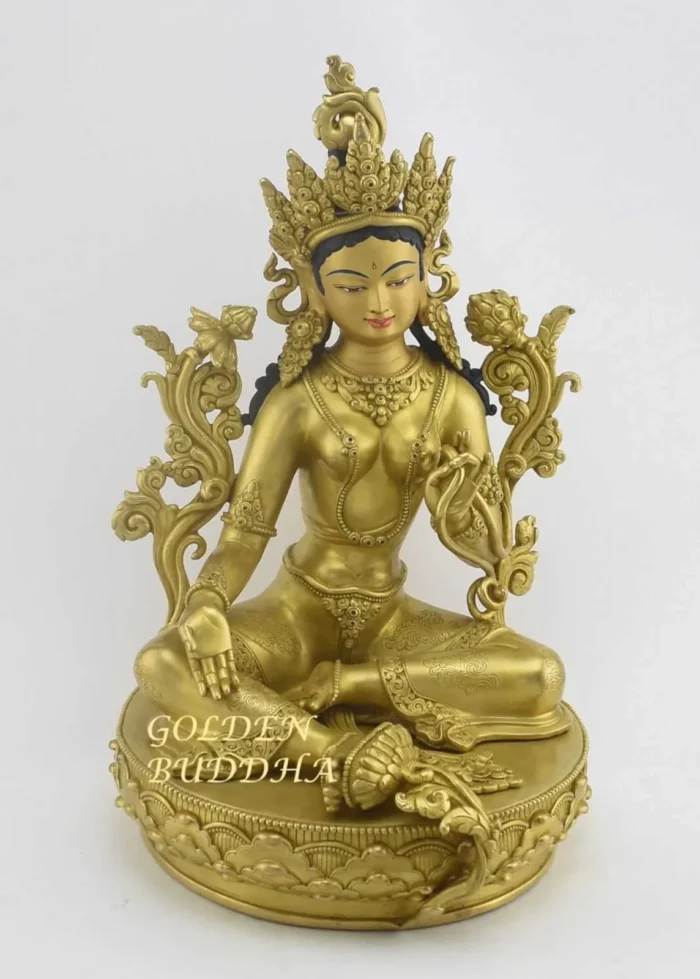
Richly adorned with genuine turquoise and coral stone inlays, this 9.5″ Green Tara statue exemplifies the vibrant artistic tradition of Patan, Nepal. Every element of the figure is fully fire gilded in 24K gold, while the serene facial features are traditionally hand painted using genuine 18K gold blended into natural pigments, producing the soft luminous complexion prized in authentic Himalayan Buddhist sculpture. Created by a master Shakya artisan using the ancient lost wax casting method, the statue also displays finely engraved robes, elegant lotus vines, and a beautifully proportioned double lotus throne. The colorful gemstone inlays provide a striking contrast against the brilliant gold finish while emphasizing Green Tara’s Bodhisattva ornaments.
Green Tara is renowned throughout Tibetan Buddhism as the swift liberator who responds immediately to sincere prayers for protection and guidance. Her sacred mantra, Om Tare Tuttare Ture Svaha, is recited by practitioners seeking to overcome obstacles, cultivate compassion, and develop unwavering courage on the Buddhist path. She is also traditionally invoked for protection from the Eight Great Fears, which symbolize both worldly dangers and the inner emotional afflictions that hinder enlightenment. Discover the meaning of the Green Tara mantra and practice in our complete Tara statues guide.
Green Tara Statue Features
One of this remarkable statue’s most distinctive characteristics is the vajra engraved into the palm of each hand. In Vajrayana Buddhism, the vajra symbolizes the indestructible nature of enlightened wisdom and compassion. The lowered right hand expresses generosity through a traditional Buddhist hand gesture, while the raised left hand offers reassurance and protection as it gently holds the stem of the utpala lotus. To learn more about the symbolism of Buddhist hand gestures, visit our guide to Buddha statue mudras and their meanings.
Graceful utpala lotus flowers rise above both shoulders, symbolizing the purity of enlightenment that remains untouched by the suffering of samsara. The flowing celestial ribbons add movement and elegance to the composition while showcasing the extraordinary casting skill of the Newar craftsmen. Fine floral engravings continue across the robes and double lotus pedestal, where the carefully sculpted lotus petals symbolize spiritual awakening emerging from worldly existence. Learn more about our traditional 24K fire gilding and 18K gold face painting techniques in our Tibetan Buddha Statue Buyer’s Guide.
Authentic, Handmade in Nepal
Every statue is handcrafted in Patan, Nepal, using traditional lost wax casting and comes with a certificate of authenticity issued by Nepal’s Department of Archaeology, verifying its materials, technique, and origin.
Reviews
There are no reviews yet.