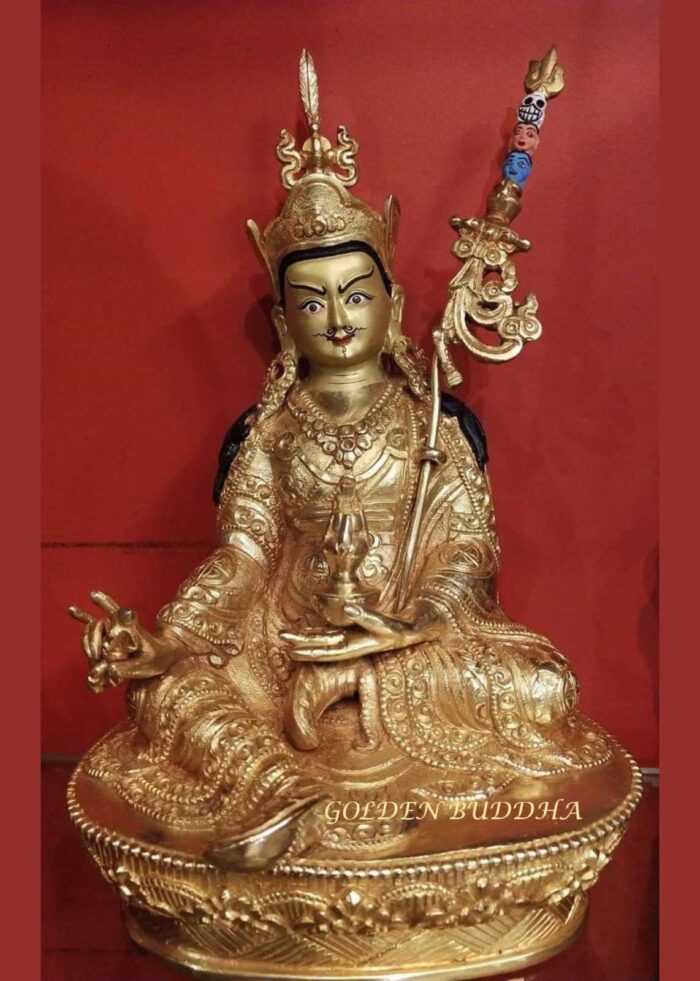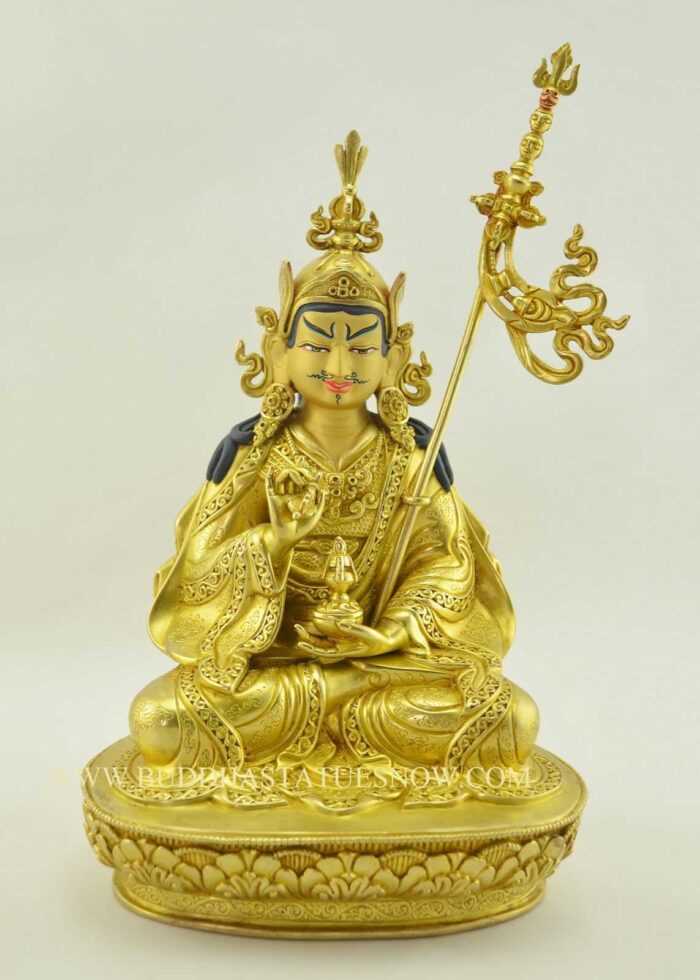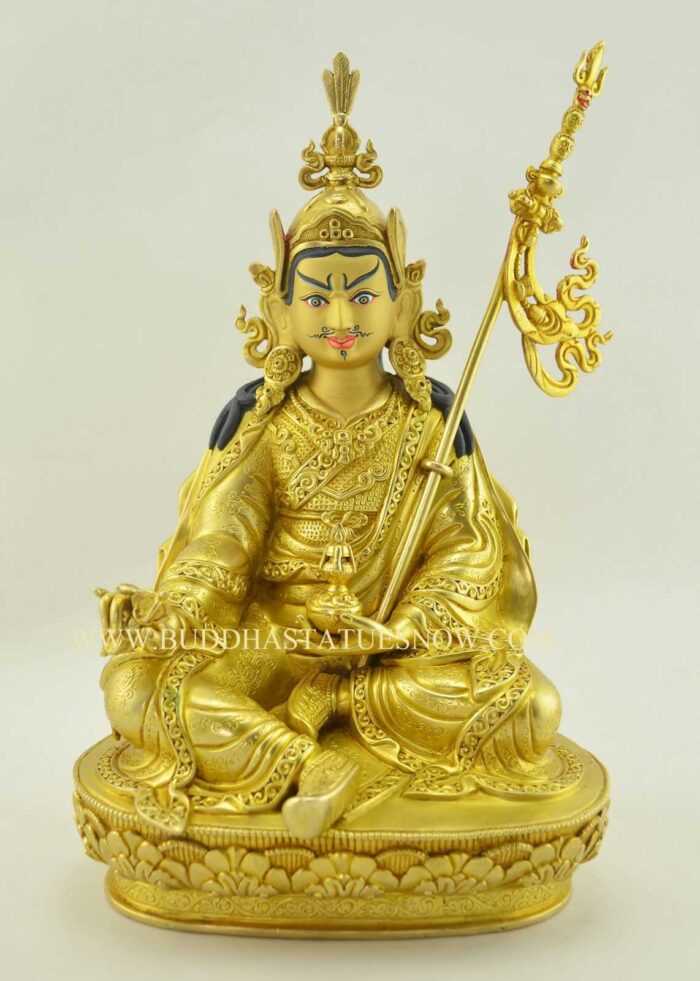
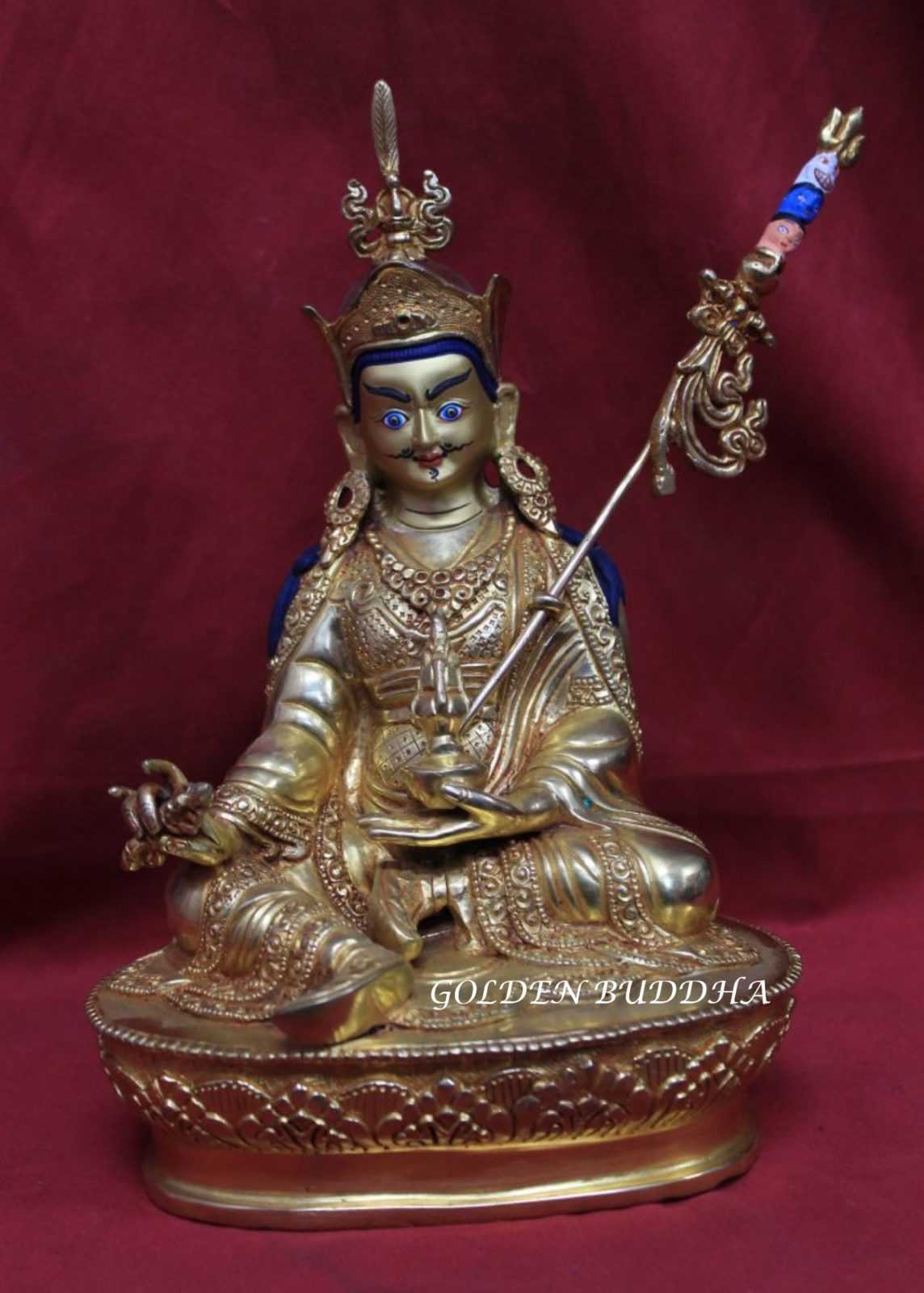
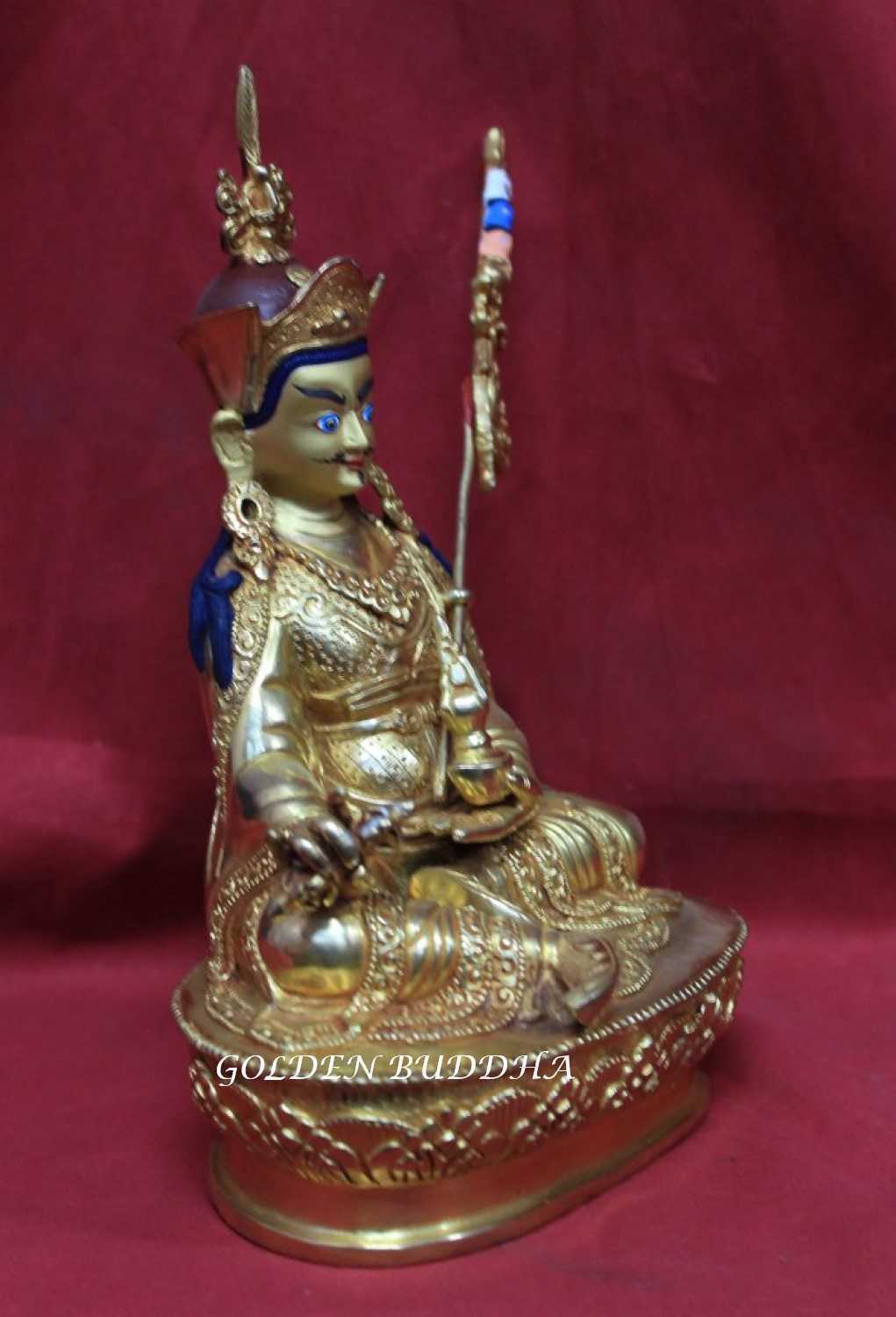
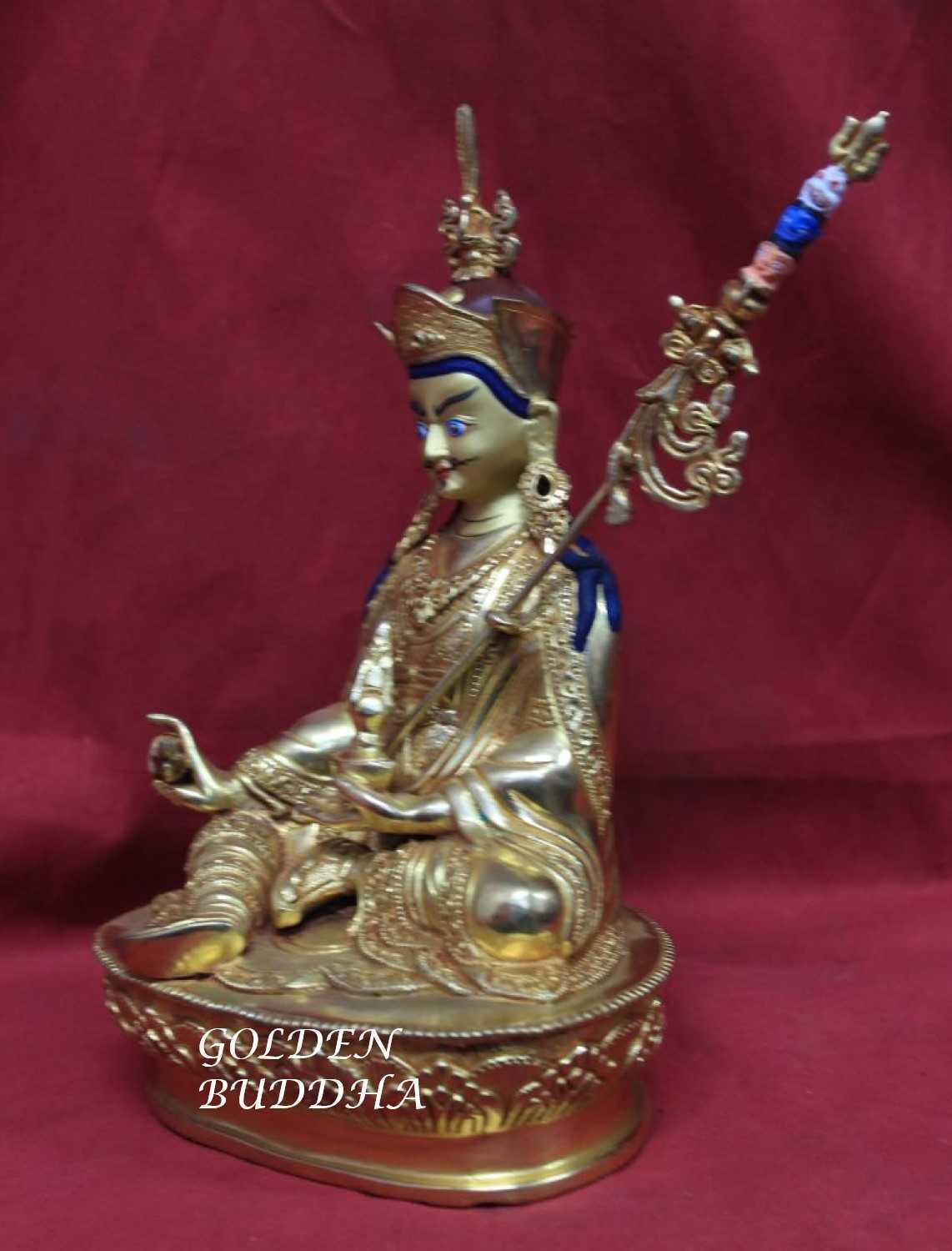
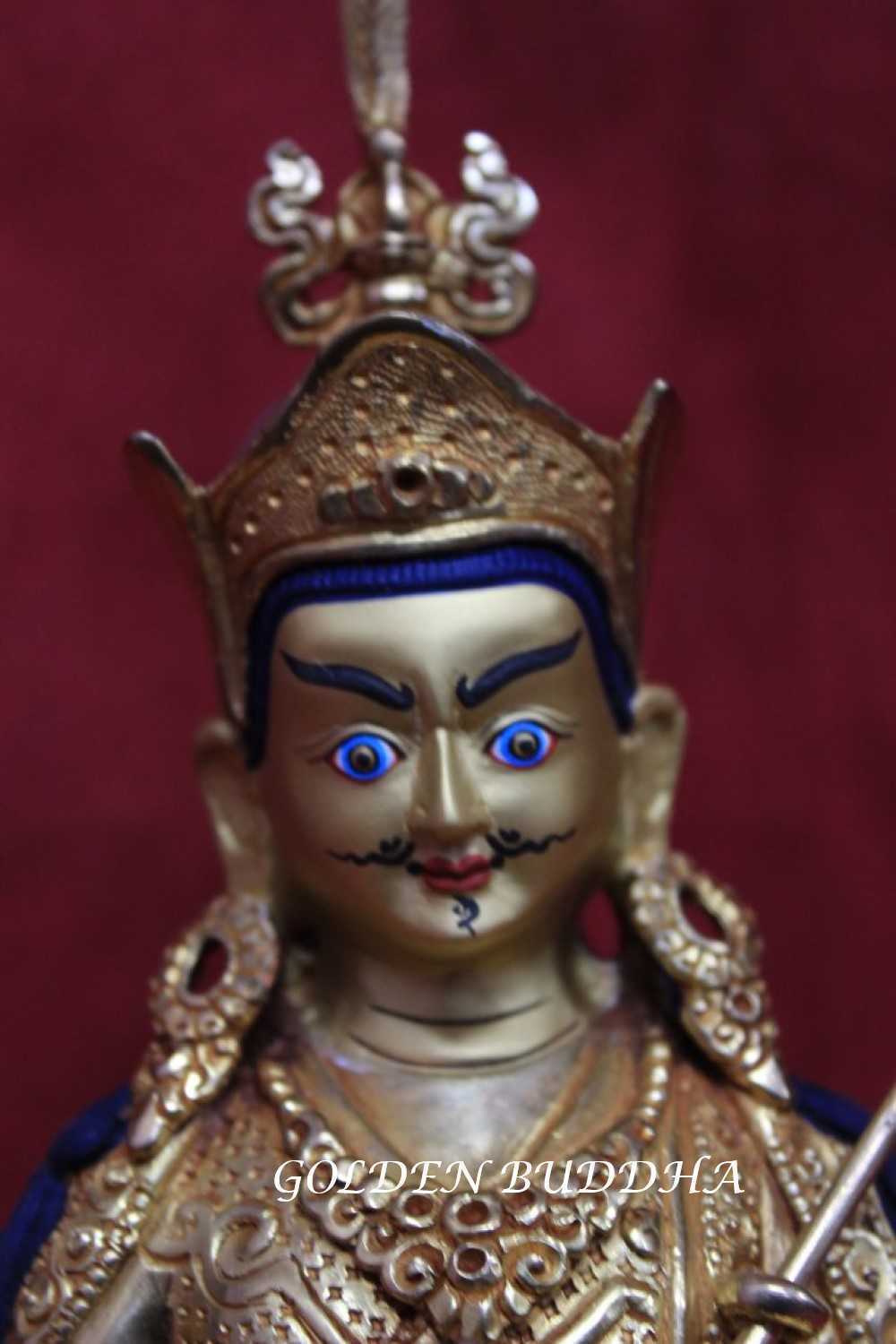
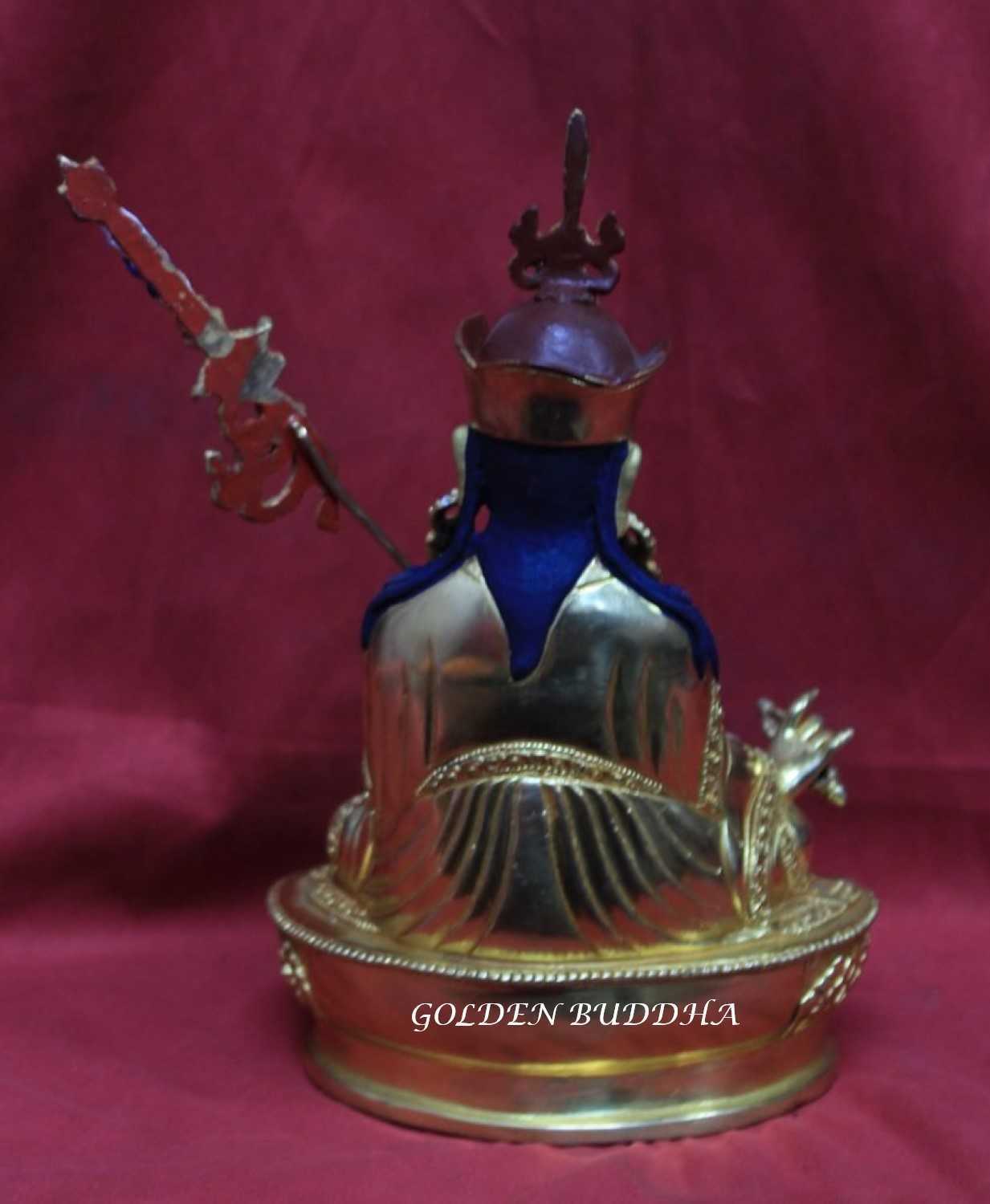
This handcrafted guru rinpoche buddha statue stands 22cm high and portrays Padmasambhava, “The Lotus Born,” in a richly ornamented traditional form. Cast from copper alloy by Nepali artisans using the lost wax method, the sculpture is fire gilded in 24K gold, while the face is separately hand painted with 18K gold and natural pigments. The vivid blue eyes immediately command attention, complemented by carefully painted brows, facial markings and dark blue hair. Raised repoussé work, scrollwork robe hemlines and intricately modeled jewelry give the relatively compact sculpture exceptional visual detail.
Guru Rinpoche Buddha Statue Iconography
Padmasambhava is shown with the principal attributes of his traditional form. His right hand holds the vajra, the diamond or thunderbolt symbol associated with indestructible awakened awareness and skillful means. His left hand supports the kapala skull cup containing the longevity vase, symbolizing deathless wisdom and spiritual accomplishment. Rising beside his left shoulder is the khatvanga, crowned by three distinctly multicolored impaled heads representing transcendence of the realms of desire, form and formlessness. His lotus hat is surmounted by the characteristic vulture feather representing realization of the highest view. Learn more about these sacred attributes in our Guru Rinpoche statue meaning and iconography guide.
Craftsmanship of This Guru Rinpoche Buddha Statue
The photographs reveal particularly fine craftsmanship across the front of the figure. Rows of necklaces, earrings and ornamental borders are sculpted individually, while textured patterns and scrolling designs decorate the garments. Detailed hems trace the cuffs and lower robes, emphasizing the layered clothing surrounding Guru Rinpoche’s seated posture. Below, raised lotus petals create a deeply modeled throne front framed by beaded borders. The back is comparatively smooth and restrained, allowing the polished gilded surface and sculpted folds of the robe to contrast with the highly decorated front. Turquoise and red coral gemstones may also be added to suitable areas of the crown or jewelry at the buyer’s request.
Padmasambhava and the Establishment of Tibetan Buddhism
Padmasambhava combines a historical presence with an extensive sacred biography. Tibetan tradition places his arrival in Tibet during the eighth century, where he became instrumental in establishing Vajrayana Buddhism and overcoming obstacles associated with the construction of Samye Monastery. Known throughout Tibet as Guru Rinpoche, the “Precious Master,” he became especially important to the Nyingma tradition and is revered by practitioners as the Second Buddha. His title Padmasambhava means “Lotus Born,” reflecting accounts of his miraculous appearance in Oddiyana. Discover more about the extraordinary life of Guru Rinpoche.
Guru Rinpoche Buddha Statue with Amitabha
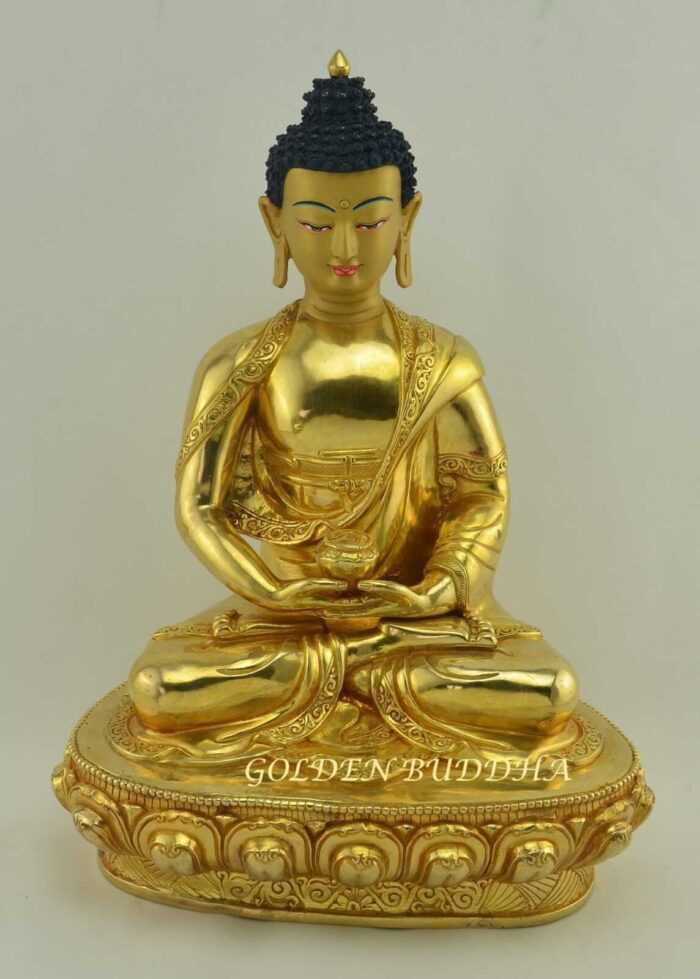
This sculpture also creates a meaningful pairing with an Amitabha Buddha statue. Tibetan Buddhist tradition understands Guru Rinpoche as a speech emanation of Amitabha, the Buddha of Infinite Light. Their relationship therefore connects Amitabha’s transcendent wisdom and compassion with Padmasambhava’s active transmission of Vajrayana teachings. On a coordinated altar, Amitabha may be positioned slightly higher or to the left of Guru Rinpoche, while the distinctive iconography of each figure preserves their individual roles.
Custom Handmade Buddhist Statues
Collectors, practitioners and Dharma centers seeking another size or complementary altar figures may commission a sculpture through our custom Tibetan Buddhist statues service. Guru Rinpoche and Amitabha can be commissioned as a coordinated pair with complementary dimensions, lotus thrones and 24K gold gilded finishes while maintaining the correct iconography of each deity. Amitabha represents Infinite Light and discriminating wisdom, while Padmasambhava manifests enlightened tantric activity and the transmission of Vajrayana teachings. Together they create both a visually harmonious and doctrinally meaningful altar arrangement.
Authentic, Handmade in Nepal
Every statue is handcrafted in Patan, Nepal, using traditional lost wax casting and comes with a certificate of authenticity issued by Nepal’s Department of Archaeology, verifying its materials, technique, and origin.