
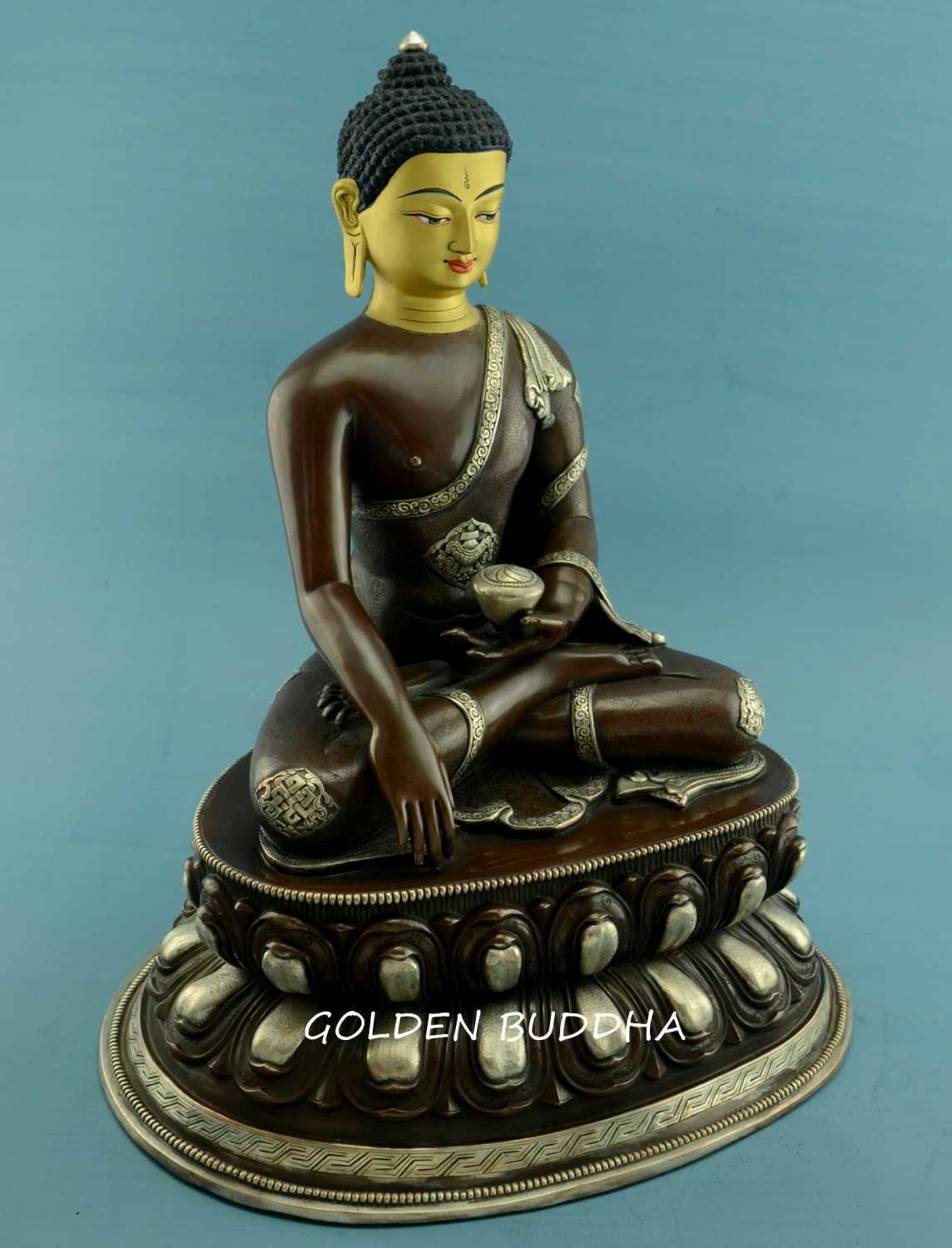
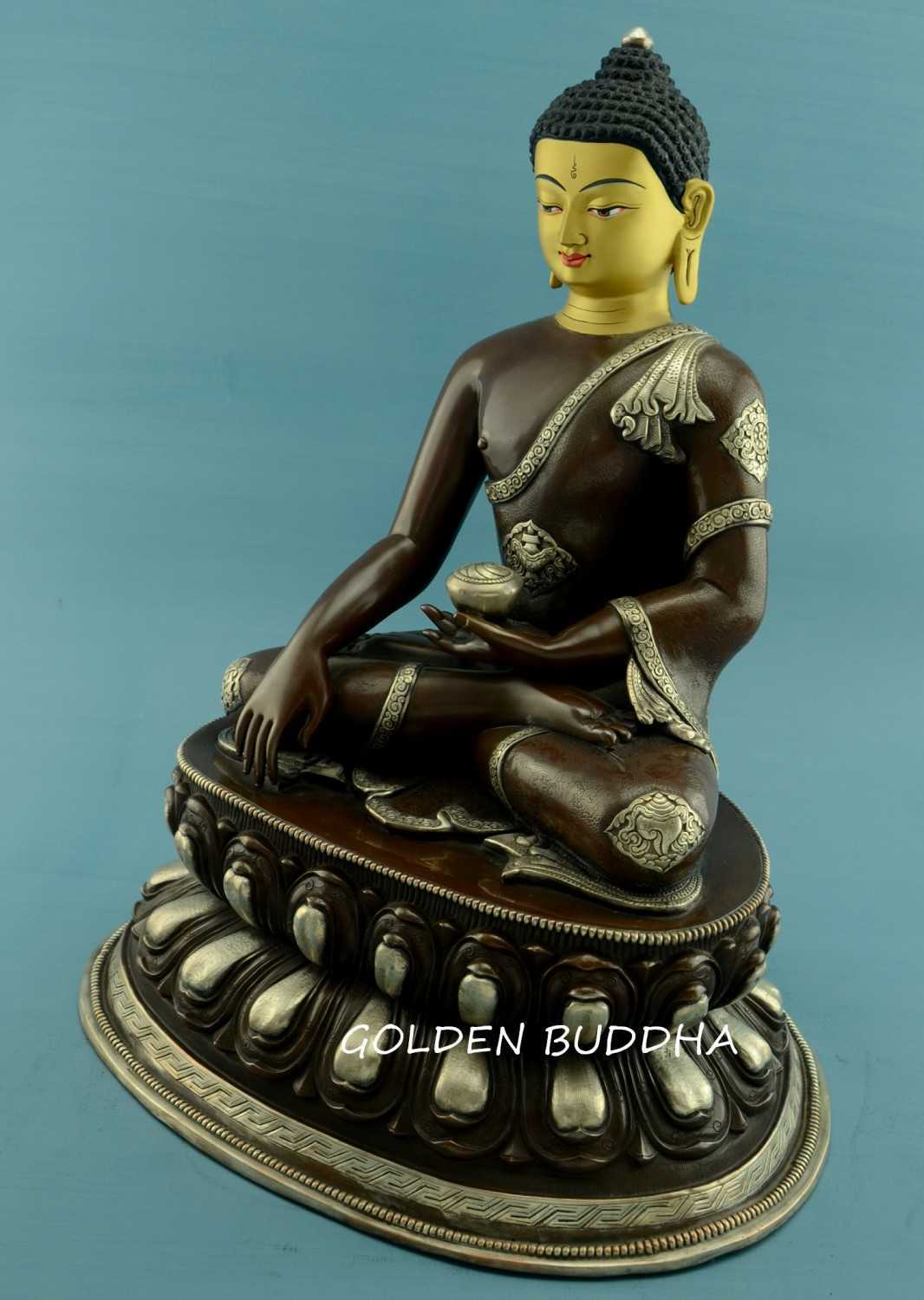
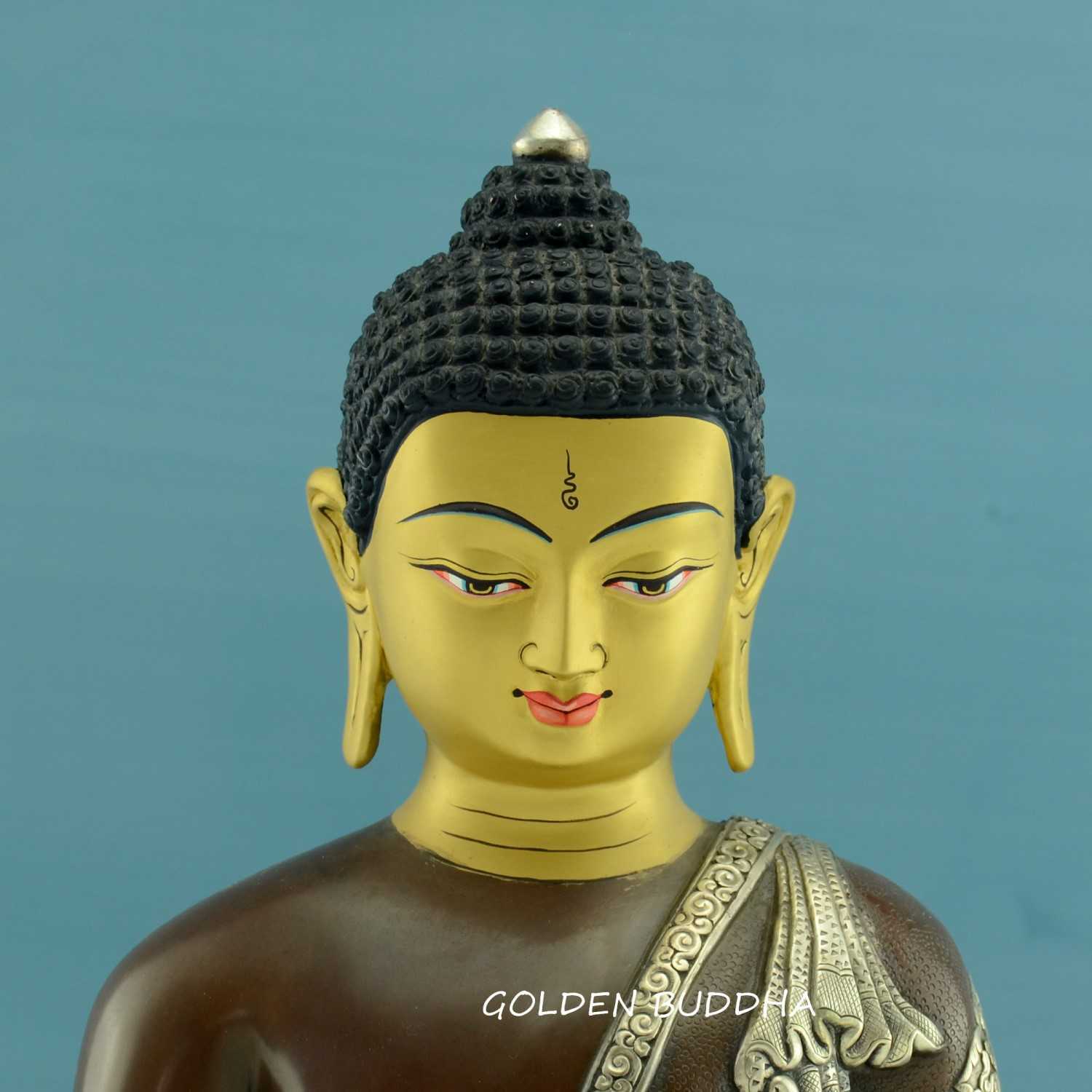
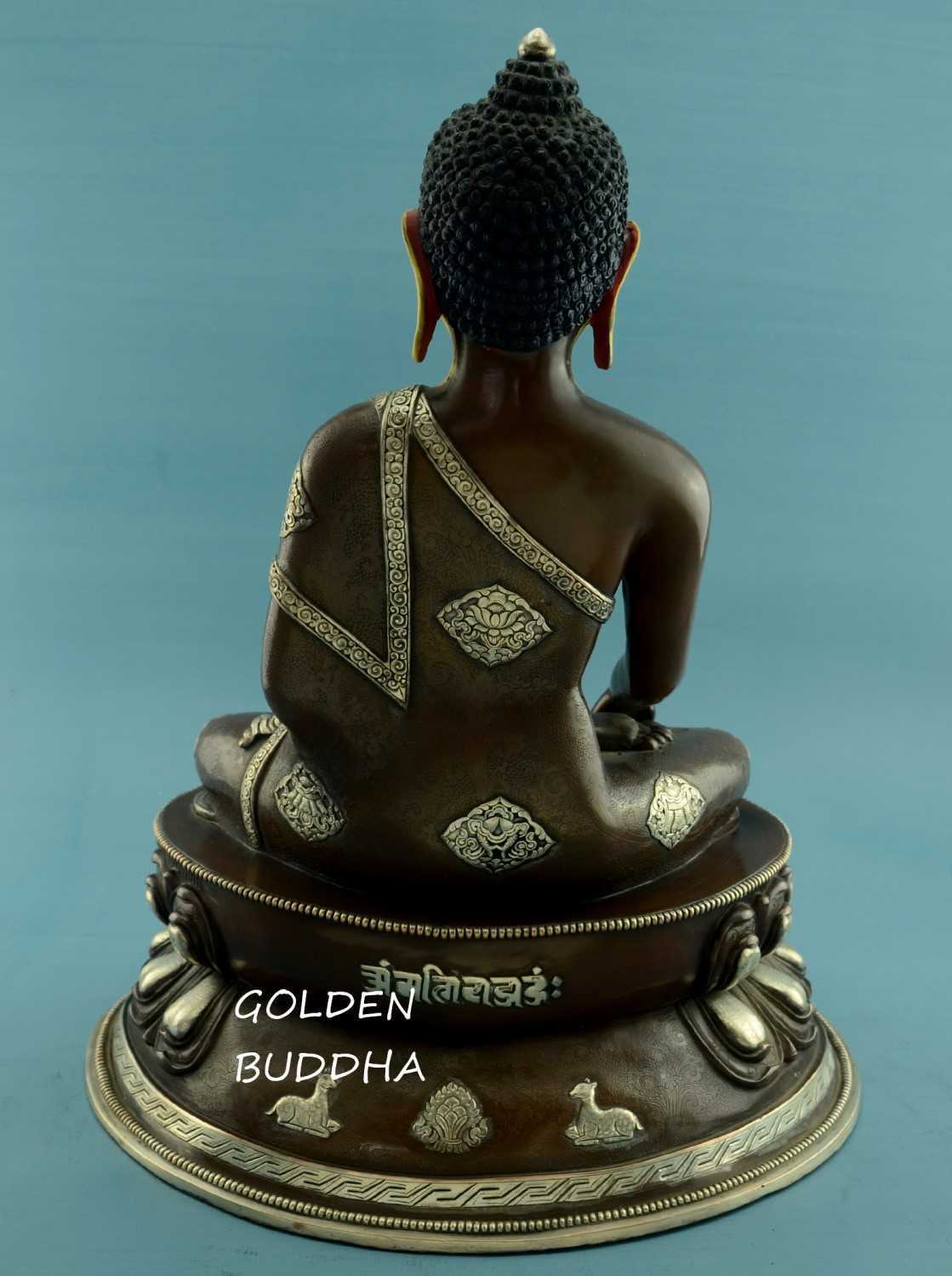
This exceptional 15.5-inch Silver Shakyamuni Statue presents the historical Buddha in a distinctive combination of antiquated oxidized copper, silver-plated sacred details, and a serene face hand painted with 18K gold and natural pigments. Handmade in Patan, Nepal using the traditional lost-wax casting method, the sculpture has an unusually substantial presence at 12.5 inches wide and 10 inches deep. Rather than covering the entire figure in precious metal, the artisan uses contrasting surfaces to emphasize Shakyamuni’s iconography, ornate monastic robes, sacred symbols, and beautifully constructed double lotus throne.
Shakyamuni, meaning “Sage of the Shakya Clan,” is the historical Gautama Buddha whose enlightenment beneath the Bodhi tree established the teachings followed throughout Buddhist traditions today. In Tibet he is known as Shakya Thubpa, “Able One of the Shakyas,” and Sangye Tomba, “The Teacher Buddha.” His calm expression, elongated earlobes, urna, three neck lines, tightly curled hair and prominent ushnisha preserve the classical characteristics associated with an awakened Buddha. The contrast between the warm gold-painted face, dark copper body and pale silver details gives the sculpture remarkable depth without diminishing its contemplative character.
Silver Shakyamuni Statue Iconography and Mudras
Shakyamuni sits in the full vajra meditation posture while his right hand extends over the knee in Bhumisparsha mudra, the earth-touching gesture commemorating the moment he called the earth to witness his enlightenment and victory over Mara. His left hand rests palm upward in Dhyana mudra and supports a silver-plated alms bowl, recalling both his renunciation of princely life and the disciplined simplicity of the monastic path. Our guide to Shakyamuni Buddha mudras explains these gestures and their place within his enlightenment story in greater detail.
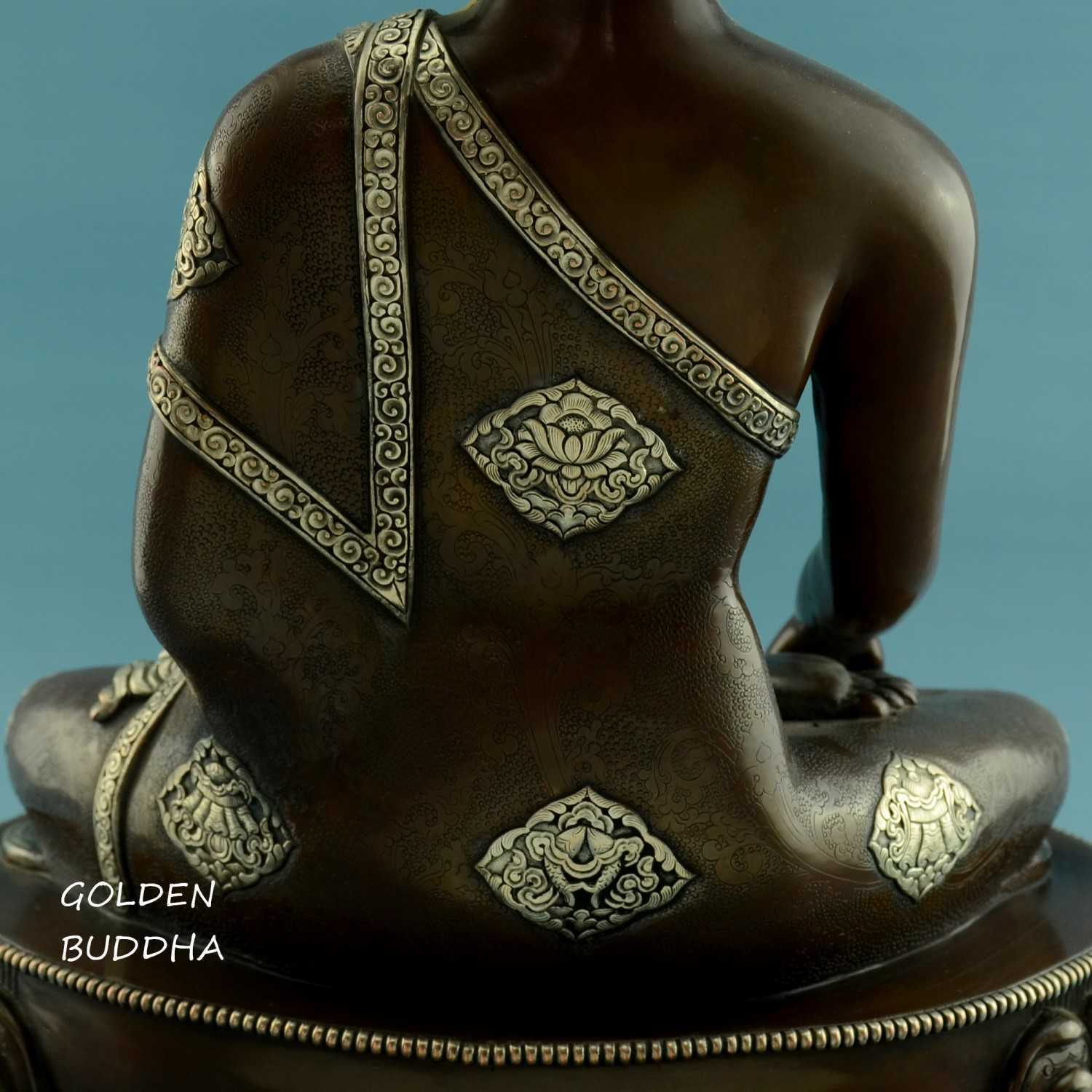
The robe is especially noteworthy. Silver-plated borders, ornamental panels and individual sacred motifs stand against the dark antiquated copper surface, allowing the craftsmanship to be read clearly from a distance. The ornamentation incorporates the Eight Auspicious Symbols of Tibetan Buddhism—the parasol, pair of golden fish, treasure vase, lotus, conch shell, endless knot, victory banner and Dharma wheel. These symbols traditionally express protection, spiritual abundance, purity, the proclamation of Dharma, interdependence, victory over obstacles and the Buddha’s teaching.
Hand-Finished Double Lotus Throne
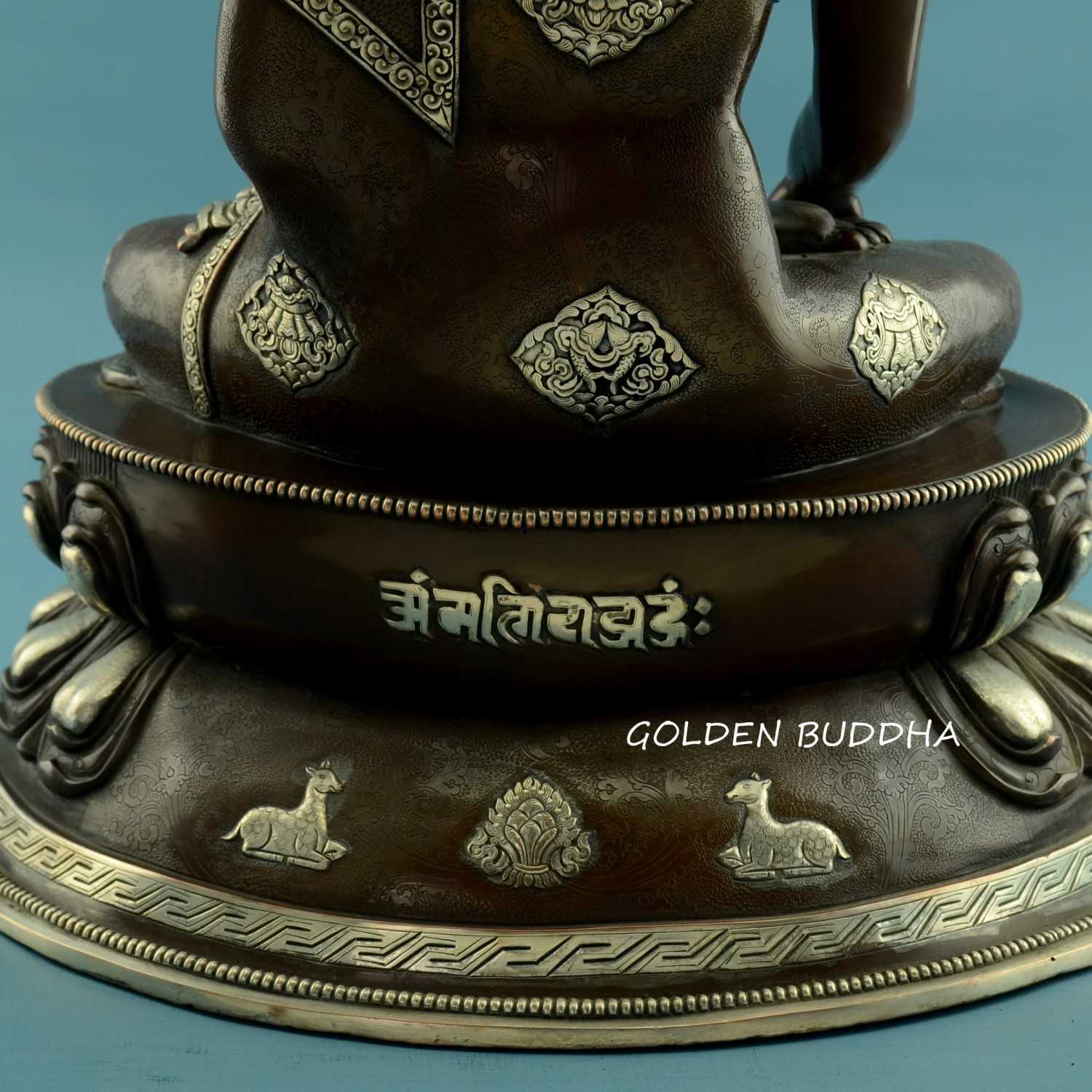
The Silver Shakyamuni Statue rests upon an impressive two-tiered lotus throne whose deeply modeled petals alternate dark oxidized copper with silver-plated highlights. Beaded borders and the geometric lower band add definition without overwhelming the figure above. Particularly interesting is the rear of the throne, where Tibetan script is incorporated into the pedestal together with additional silver symbolic ornamentation. Two deer are also shown along the rear base, recalling the Deer Park at Sarnath where Shakyamuni delivered his first teaching and set the Wheel of Dharma in motion.
Viewed from behind, the workmanship continues across the robe rather than stopping at the front-facing surfaces. The silver-edged sash crosses the back, while individual symbolic panels and carefully finished contours make the sculpture suitable for an open shrine where it may be viewed from every direction.
A Companion to Maitreya, the Future Buddha
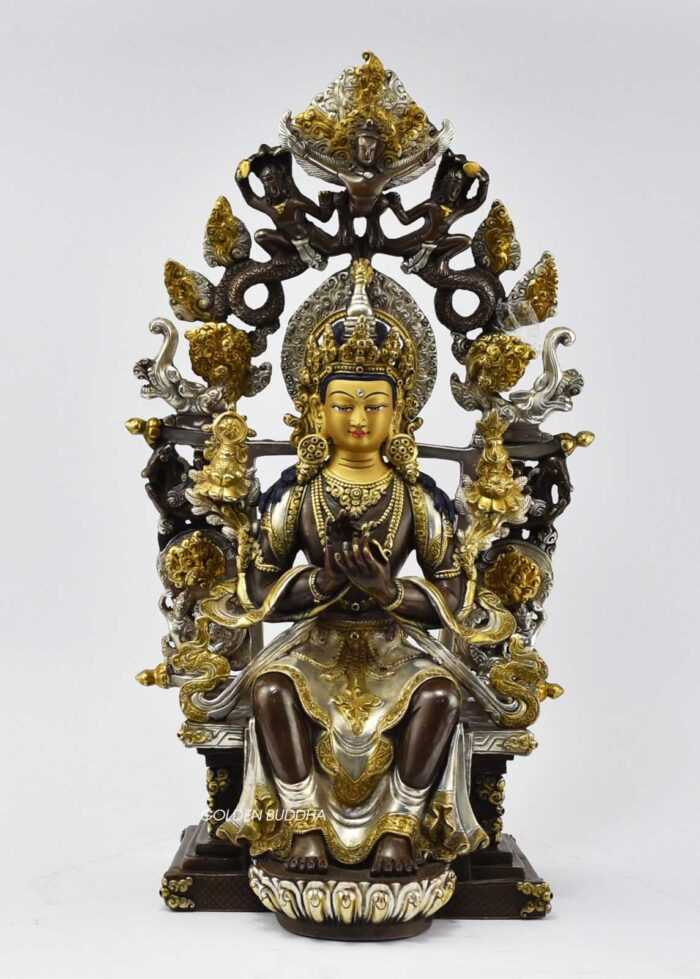
Shakyamuni makes an especially meaningful companion to our Handmade Maitreya Buddha statue. Shakyamuni represents the Buddha and Dharma of the present age, while Maitreya represents the future Buddha who will renew the teachings after they have disappeared from the world. Their finishes also complement one another beautifully: both combine dark antiquated copper with luminous silver surfaces, while the Maitreya introduces selective gold details that harmonize naturally with Shakyamuni’s 18K gold-painted face. Displayed together, they create a visual and doctrinal relationship between the Buddha of our present era and the Buddha yet to come.
Silver Shakyamuni Statue Filling and Consecration
For practitioners who intend to use the statue as a devotional image, arrangements can be made for traditional Buddha statue filling and consecration in Kathmandu, Nepal before shipment. The hollow interior may be prepared with appropriate sacred materials, such as rolled mantras, incense, medicinal and aromatic substances, before the statue is sealed and presented for blessing by a qualified Buddhist practitioner. Consecration transforms an exceptional work of Himalayan sculpture into a formally prepared sacred image for shrine or meditation practice.
Custom Tibetan Buddhist Statues
Collectors, Dharma centers and practitioners seeking a different scale or finish may commission custom Tibetan Buddhist statues directly through our artisans in Patan. Shakyamuni can be created in alternative dimensions and finishes including oxidized copper, silver-plated, partially gilded or 24K gold fire-gilded treatments. Details such as robe ornamentation, lotus pedestal design and traditional gemstone embellishment can also be discussed when appropriate, allowing a commissioned statue to retain authentic Himalayan iconography while meeting the requirements of a particular shrine or collection.
Authentic, Handmade in Nepal
Every statue is handcrafted in Patan, Nepal, using traditional lost wax casting and comes with a certificate of authenticity issued by Nepal’s Department of Archaeology, verifying its materials, technique, and origin.