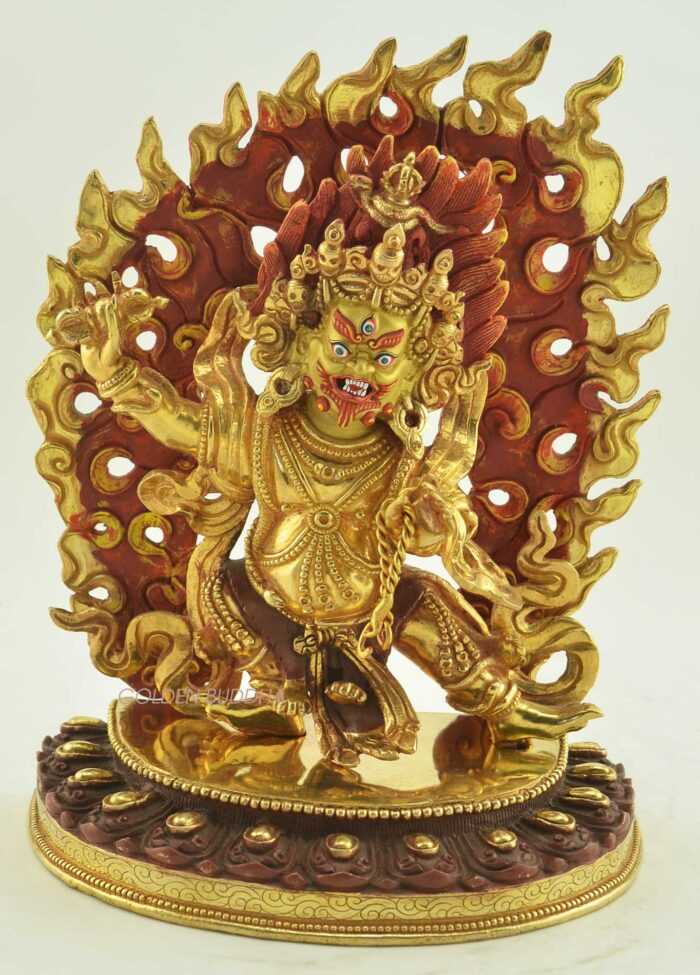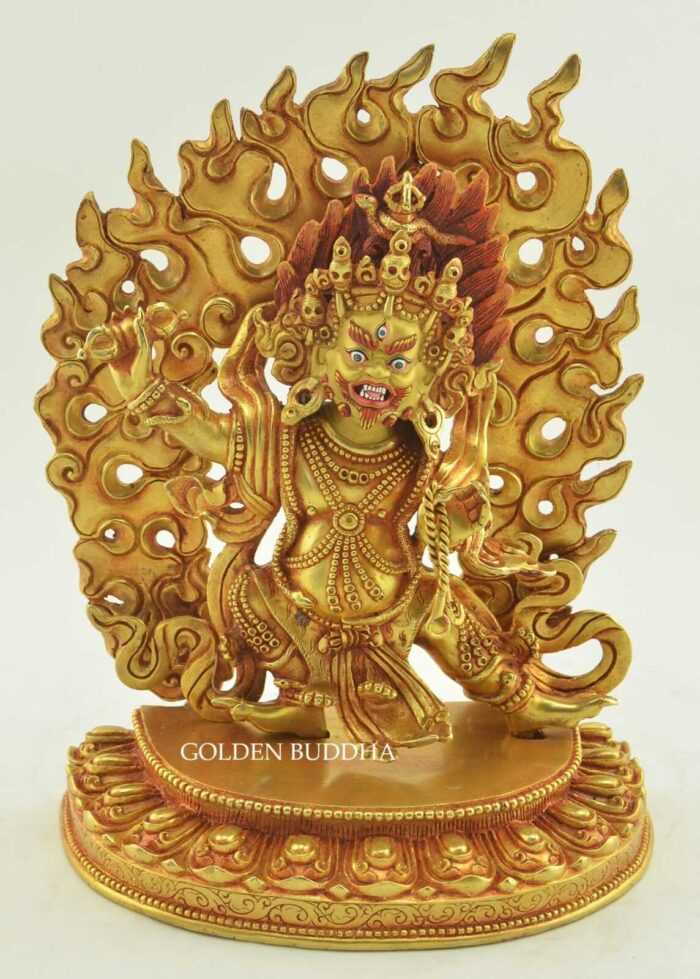

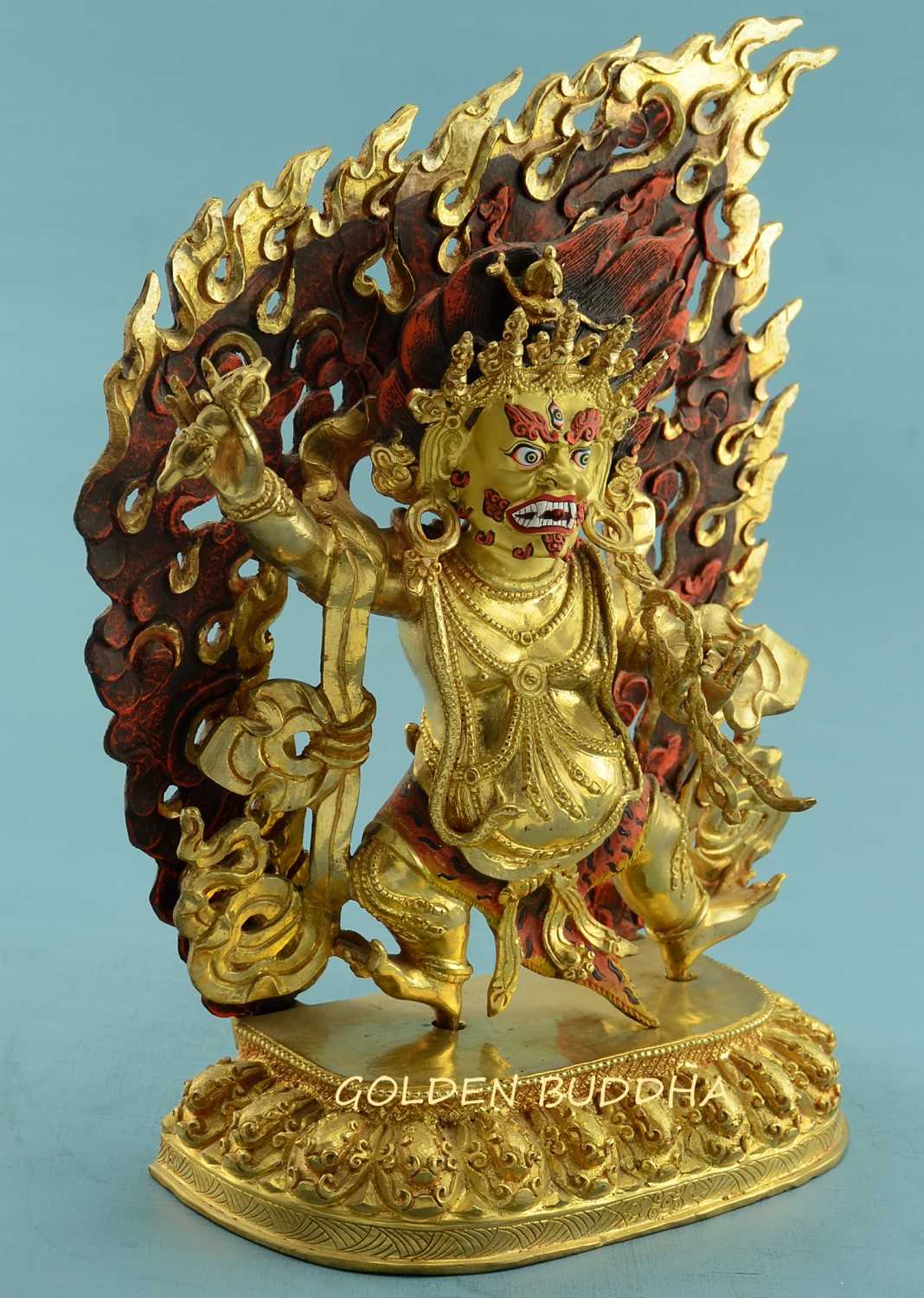
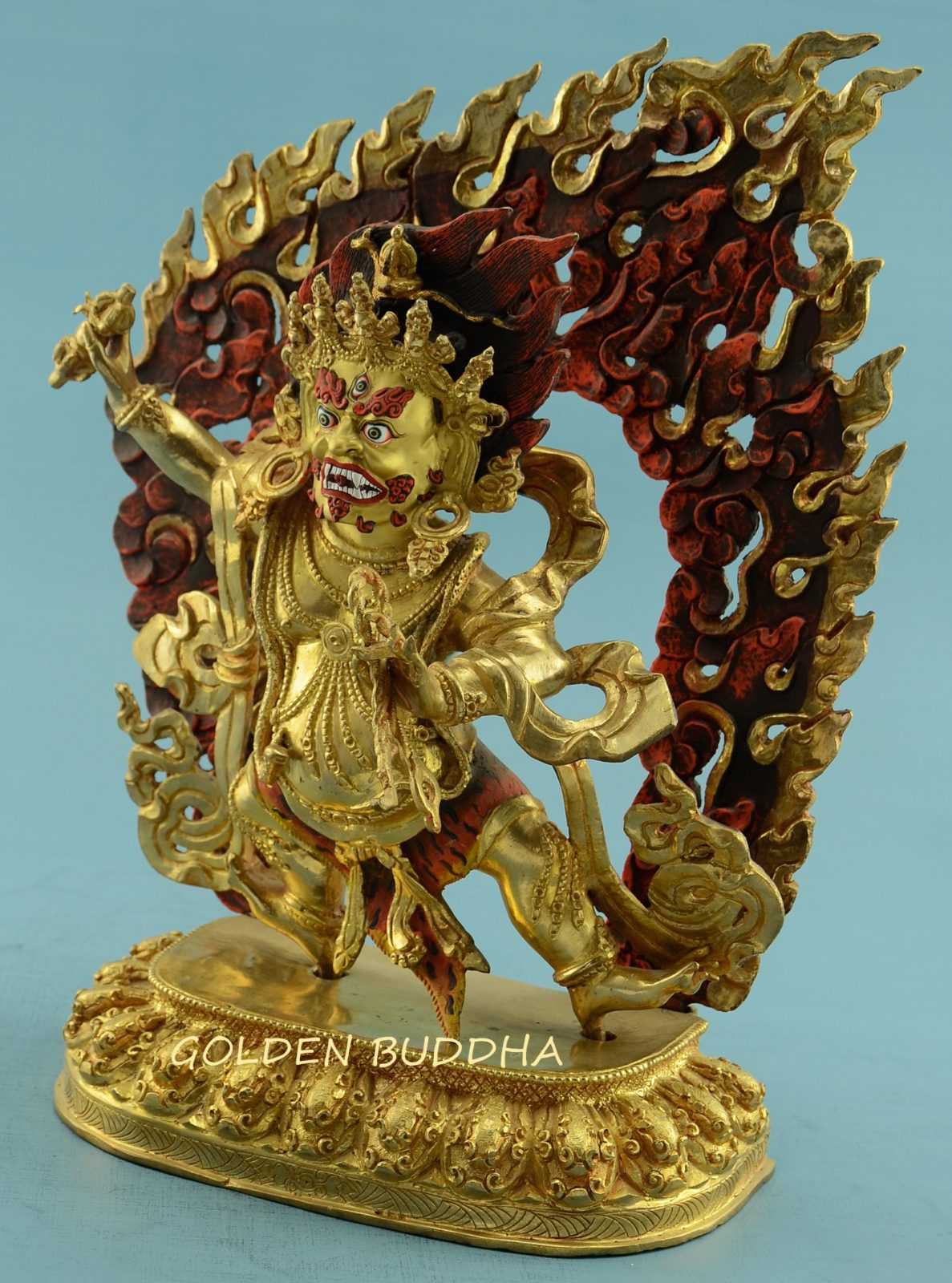
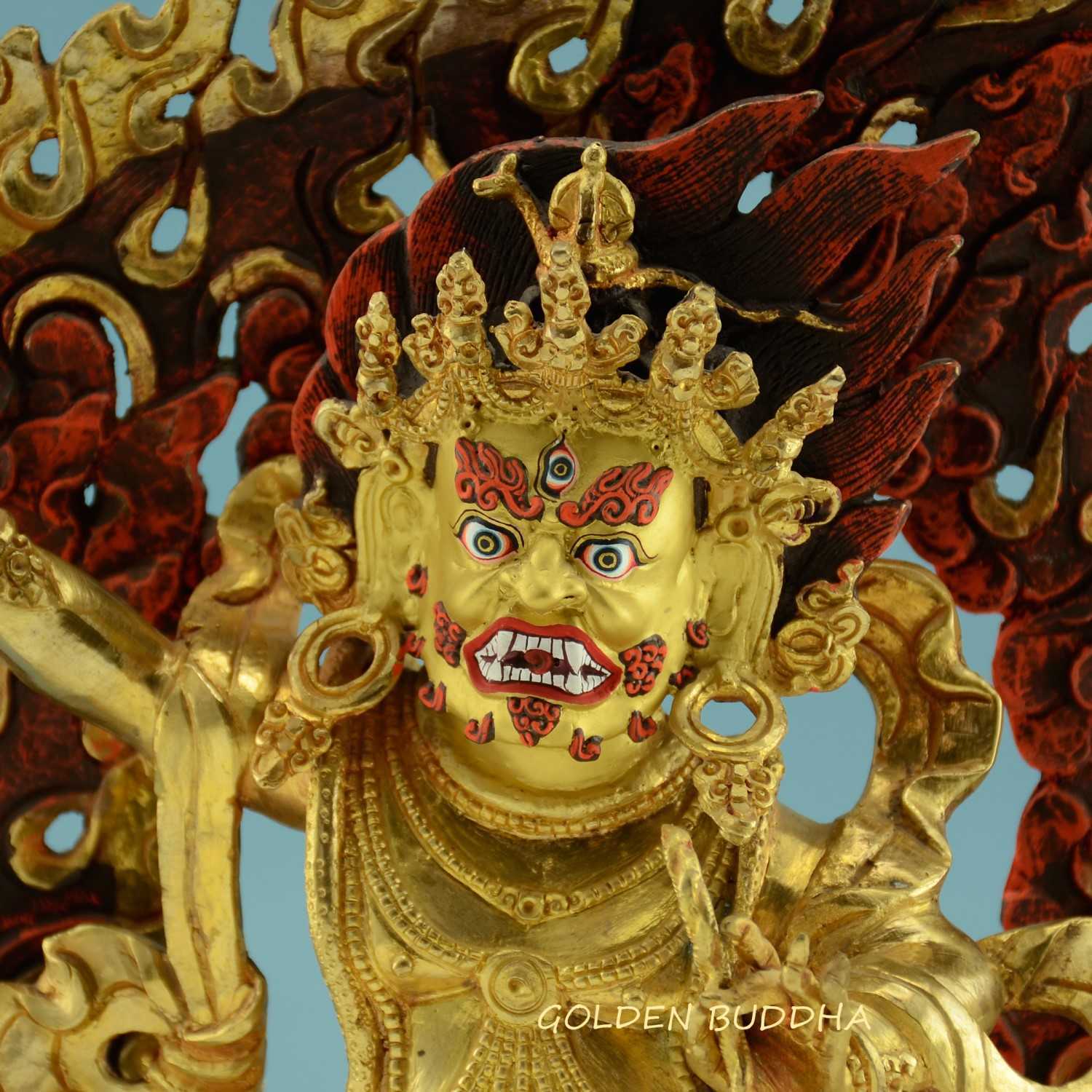
This exceptional 12-inch Handmade Wrathful Vajrapani Sculpture portrays Vajrapani, known in Tibetan as Chana Dorje and also called Guhyapati, the “Lord of Secrets,” in a powerful manifestation of enlightened energy. Handmade in Nepal from copper alloy using the traditional lost-wax casting method, the sculpture measures 12 inches high with its removable flame mandorla and 10.5 inches without the frame. The figure is partly fire gilded in 24K gold and complemented by a carefully antiquated-oxidized finish that creates rich tonal contrast across the sculpture. The wrathful face is hand painted with 18K gold and natural pigments, bringing extraordinary definition to Vajrapani’s three eyes, flaming eyebrows, teeth and fierce expression.
Iconography of the Handmade Wrathful Vajrapani Sculpture
Vajrapani literally means “Vajra in Hand,” while his Tibetan name Chana Dorje carries the same essential meaning. As one of the great Bodhisattvas of Mahayana and Vajrayana Buddhism, he personifies the enlightened power and spiritual energy of the Buddhas. This sculpture captures that character through a vigorous warrior stance, wrathful expression and the dynamic traditional iconography of Vajrapani.
His raised right hand brandishes the vajra, or thunderbolt, representing indestructible spiritual power. His left hand holds a lasso, another characteristic attribute of wrathful Vajrapani. His three wide-open eyes communicate penetrating awareness, while the exposed teeth, fangs and brilliantly painted facial details intensify his formidable appearance. Rather than representing ordinary anger, this wrathful form expresses enlightened power directed toward overcoming ignorance, delusion and obstacles on the path to realization.
24K Gold Gilding and Antiquated-Oxidized Finish
One of the most distinctive qualities of this Handmade Wrathful Vajrapani Sculpture is the interplay between its luminous 24K gold gilding and antiquated-oxidized detailing. Gold emphasizes Vajrapani’s body, elaborate jewelry, crown and ornamental elements, while deeper aged tones accentuate recesses and selected areas of the composition. The resulting contrast gives the sculpture greater visual depth and highlights the extensive hand carving visible throughout the necklaces, bracelets, anklets, garments and crown. The elaborate crown incorporates wrathful skull imagery, complementing the powerful expression of the deity.
Tiger Skin and Removable Flame Mandorla
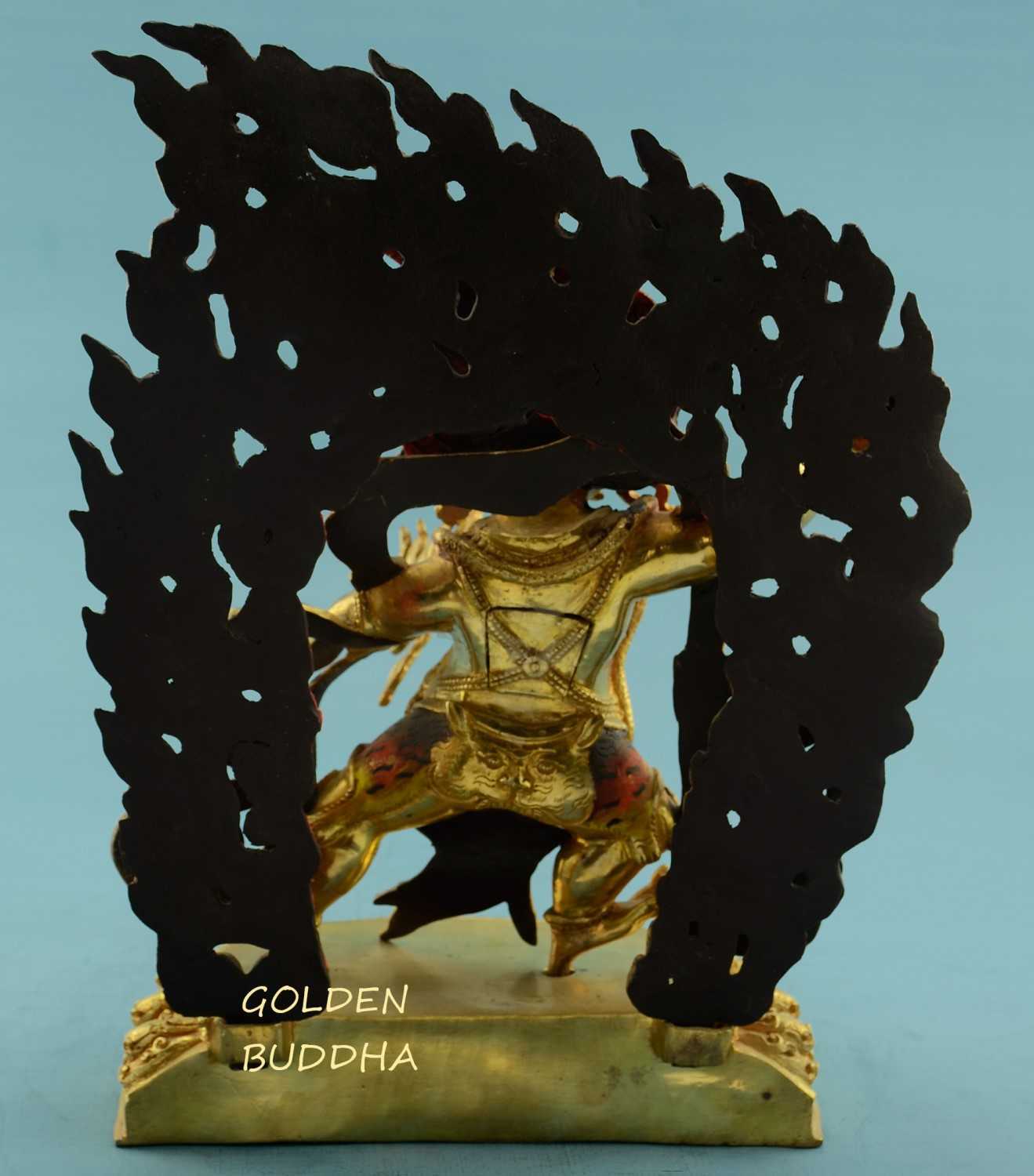
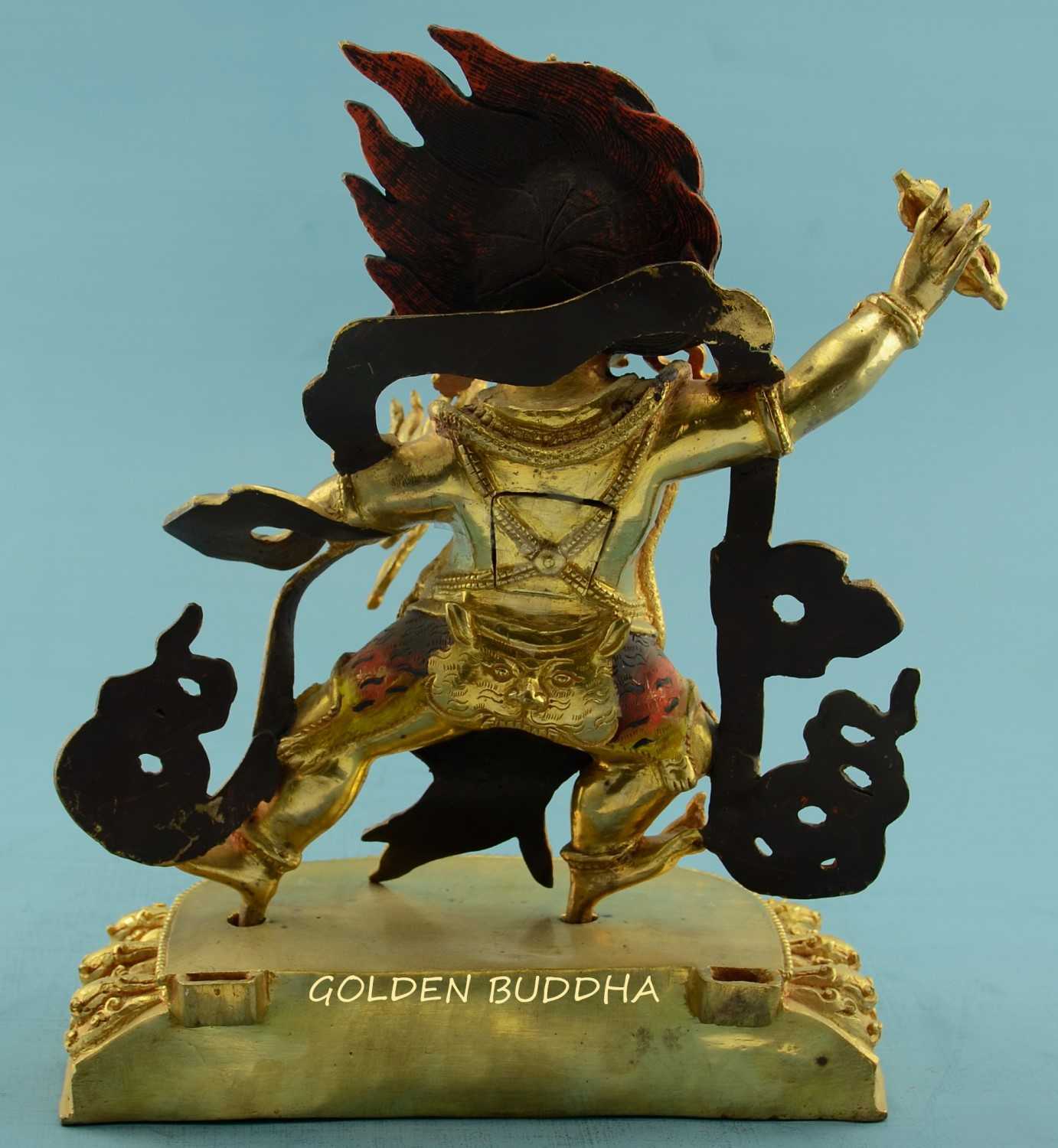
Around Vajrapani’s waist is a carefully rendered tiger-skin garment. The painted pattern is visible from the front, while the sculpted tiger face can be clearly seen across the rear of the garment. Behind the figure rises a large removable mandorla composed of curling flames. Deep oxidized tones and red highlights contrast dramatically with gilded flame tips, creating the impression that Vajrapani is surrounded by blazing awareness. In Buddhist symbolism, these flames represent pristine wisdom consuming ignorance and obscurations. Additional information about these attributes can be found in our guide to Vajrapani and the Buddha’s enlightened power.
Vajrapani, Avalokiteshvara and Manjushri
Vajrapani is traditionally associated with Avalokiteshvara and Manjushri in the celebrated Tibetan Buddhist triad known as Rigsum Gonpo, the Lords of the Three Families. Together they embody three fundamental enlightened qualities: Manjushri represents wisdom, Avalokiteshvara represents compassion, and Vajrapani represents power. Their complementary symbolism makes the three particularly meaningful when displayed together on a Buddhist altar.
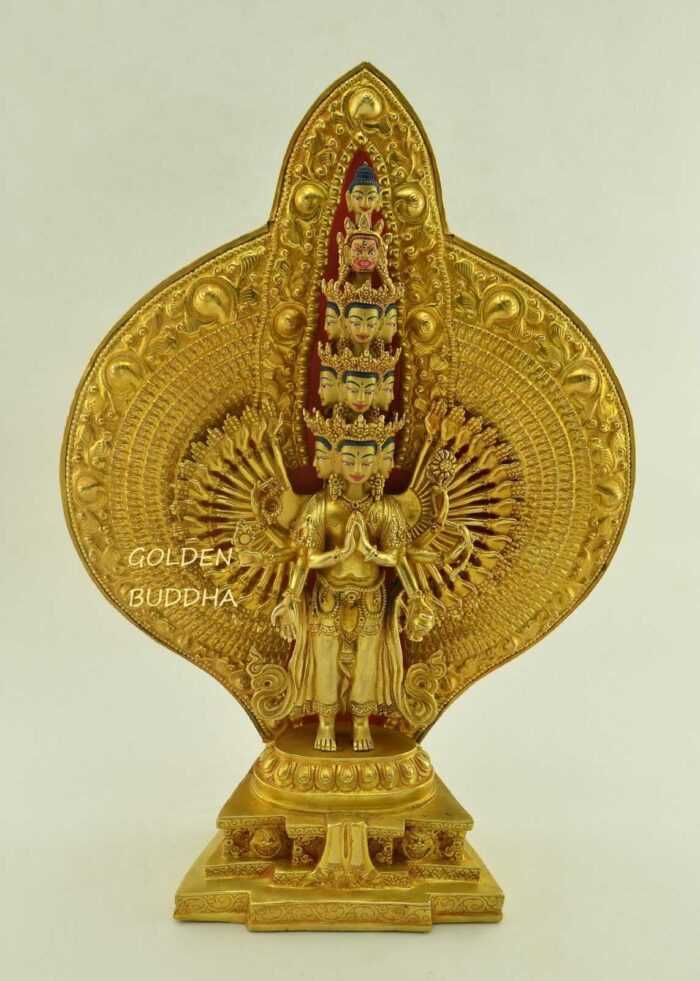
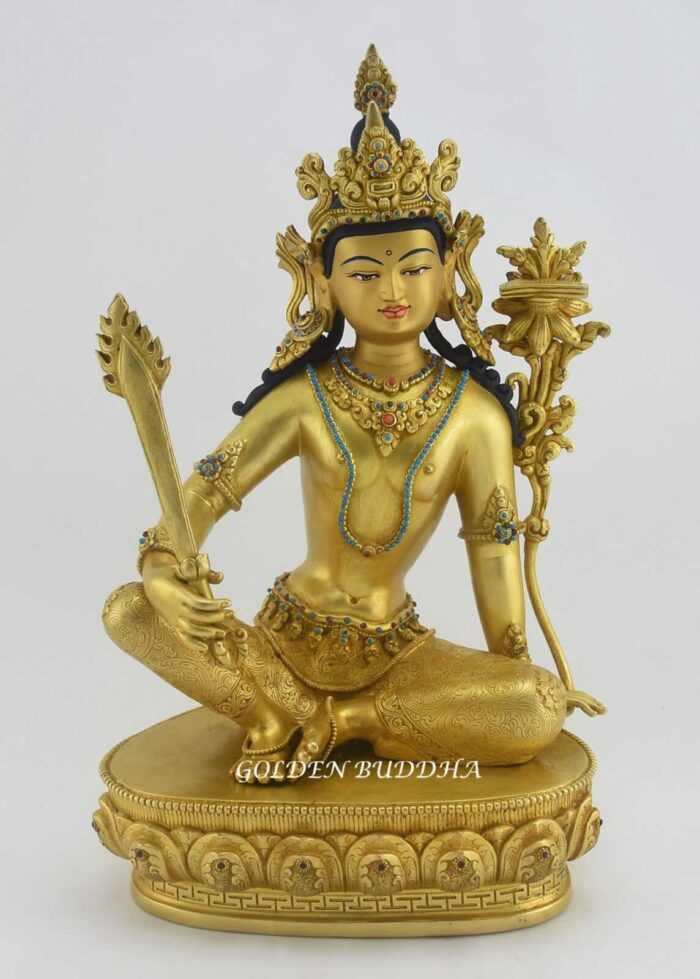
This Vajrapani can therefore be paired with our 1,000-Armed Avalokiteshvara statue and Masterpiece Manjushri sculpture to form a complete Rigsum Gonpo grouping. Vajrapani’s fierce energy provides a striking visual counterpart to the peaceful compassion of Avalokiteshvara and the discerning wisdom embodied by Manjushri.
Optional Turquoise and Red Coral Gemstones
For buyers who prefer additional traditional Himalayan ornamentation, genuine turquoise and red coral gemstones may be embedded into selected areas of Vajrapani’s crown and jewelry upon request. Our artisan in Nepal can add these stones before shipment at no additional charge. This is entirely optional, allowing the sculpture to remain exactly as photographed or to receive the additional color and richness of traditional gemstone decoration.
Filling and Consecration of Your Handmade Vajrapani Sculpture in Nepal
A removable consecration door is located on the back of this statue, providing access to the hollow interior for the traditional placement of sacred mantras and appropriate consecration substances. Buyers may request that their statue be filled and ritually blessed in Nepal before shipment. Our guide to Buddha statue filling, blessing and consecration explains this traditional process and the significance of preparing a Buddhist statue for spiritual practice.
Custom Handmade Wrathful Vajrapani Sculptures
Collectors seeking a Vajrapani in another size, finish or artistic treatment may also commission a custom Tibetan Buddhist statue handmade in Nepal. Our artisans can create a custom Vajrapani according to preferred dimensions, gilding, ornamentation and other traditional specifications. This provides collectors and Buddhist practitioners with the opportunity to commission an individually crafted Vajrapani while preserving the traditional Himalayan workmanship and iconography represented by this remarkable sculpture.
Authentic, Handmade in Nepal
Every statue is handcrafted in Patan, Nepal, using traditional lost wax casting and comes with a certificate of authenticity issued by Nepal’s Department of Archaeology, verifying its materials, technique, and origin.