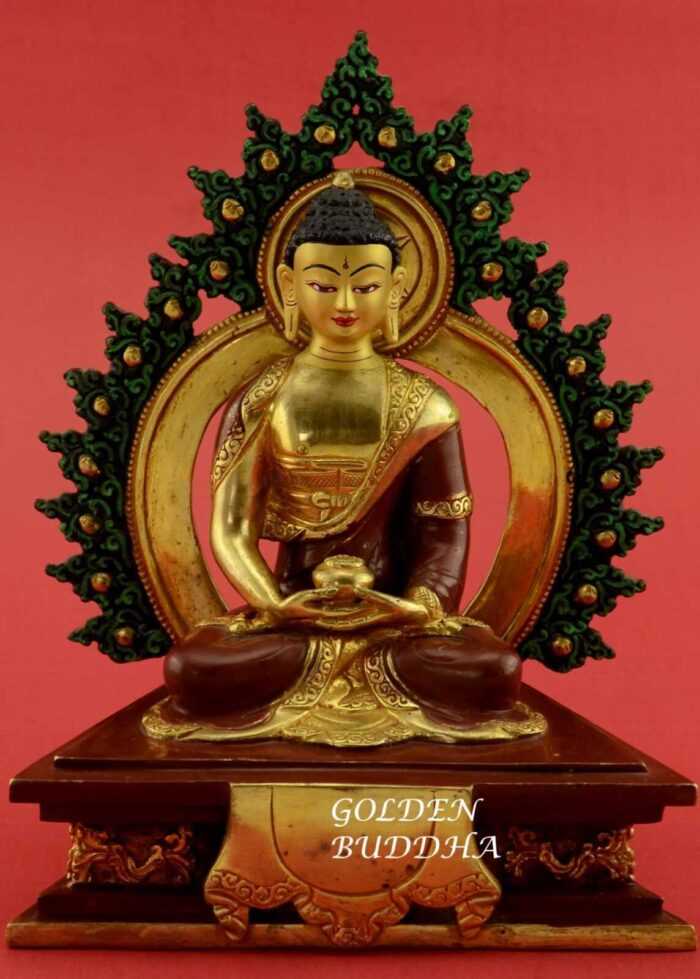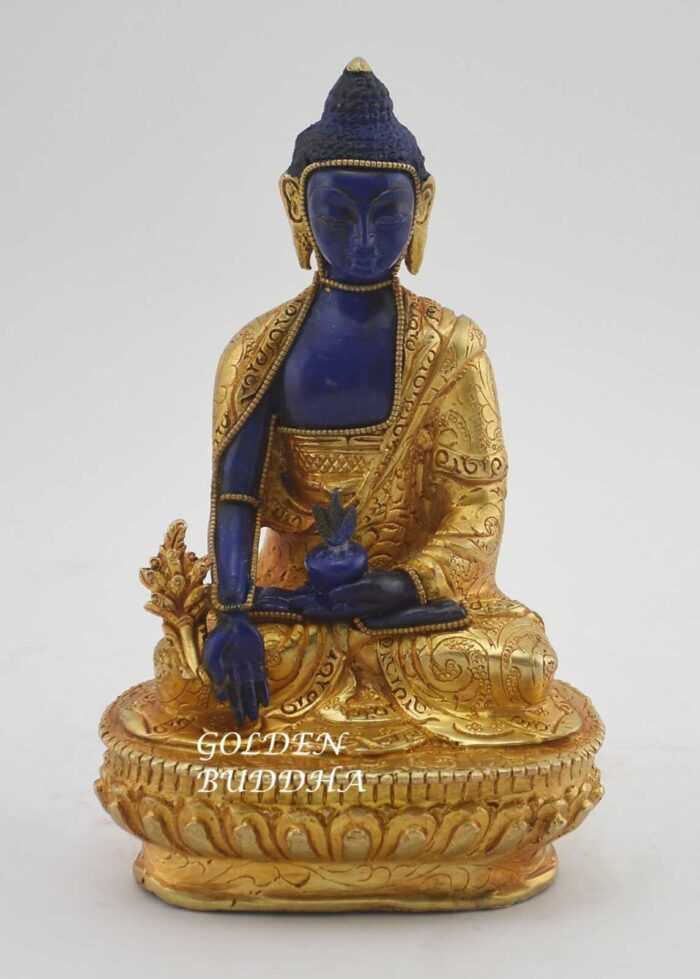
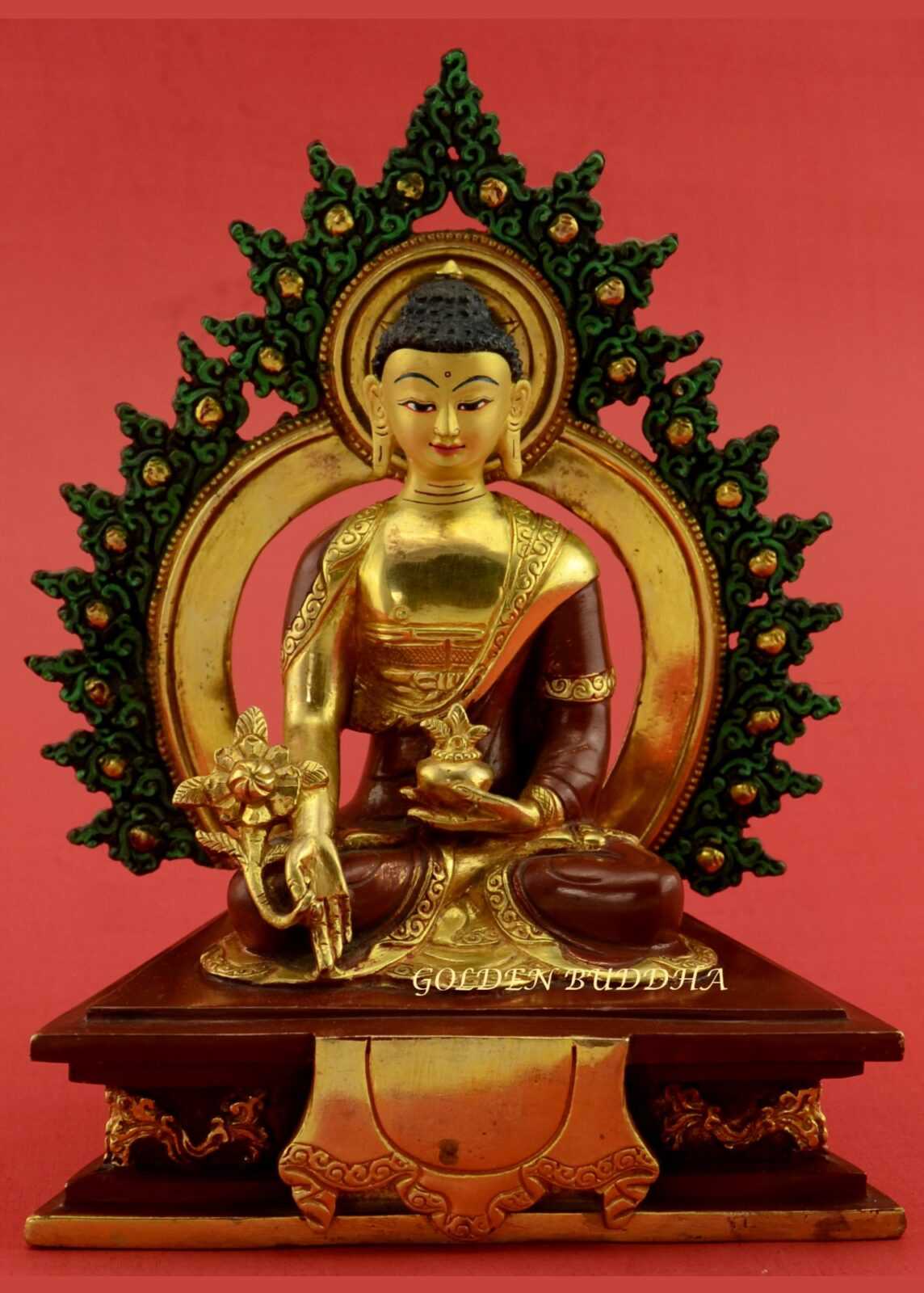
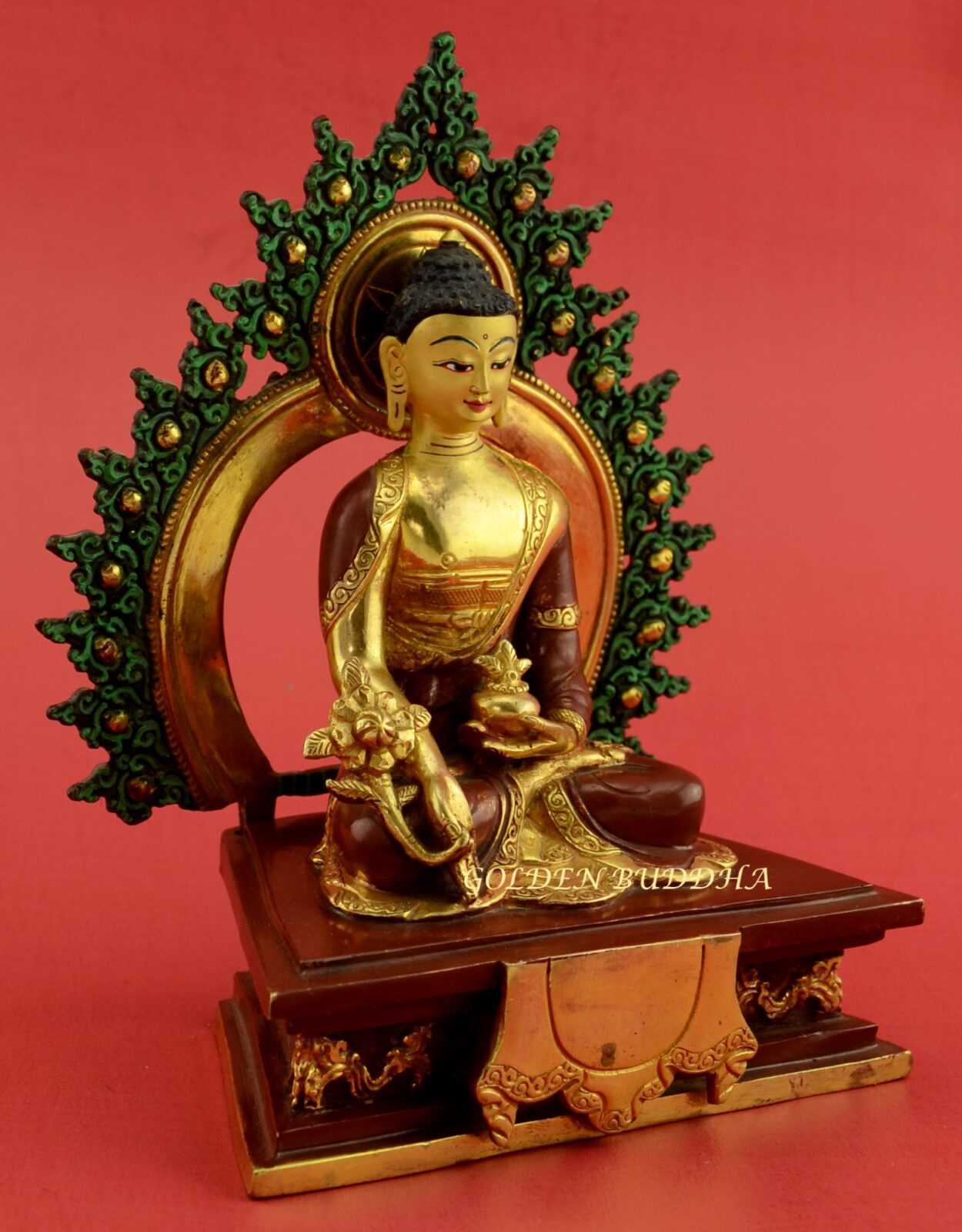
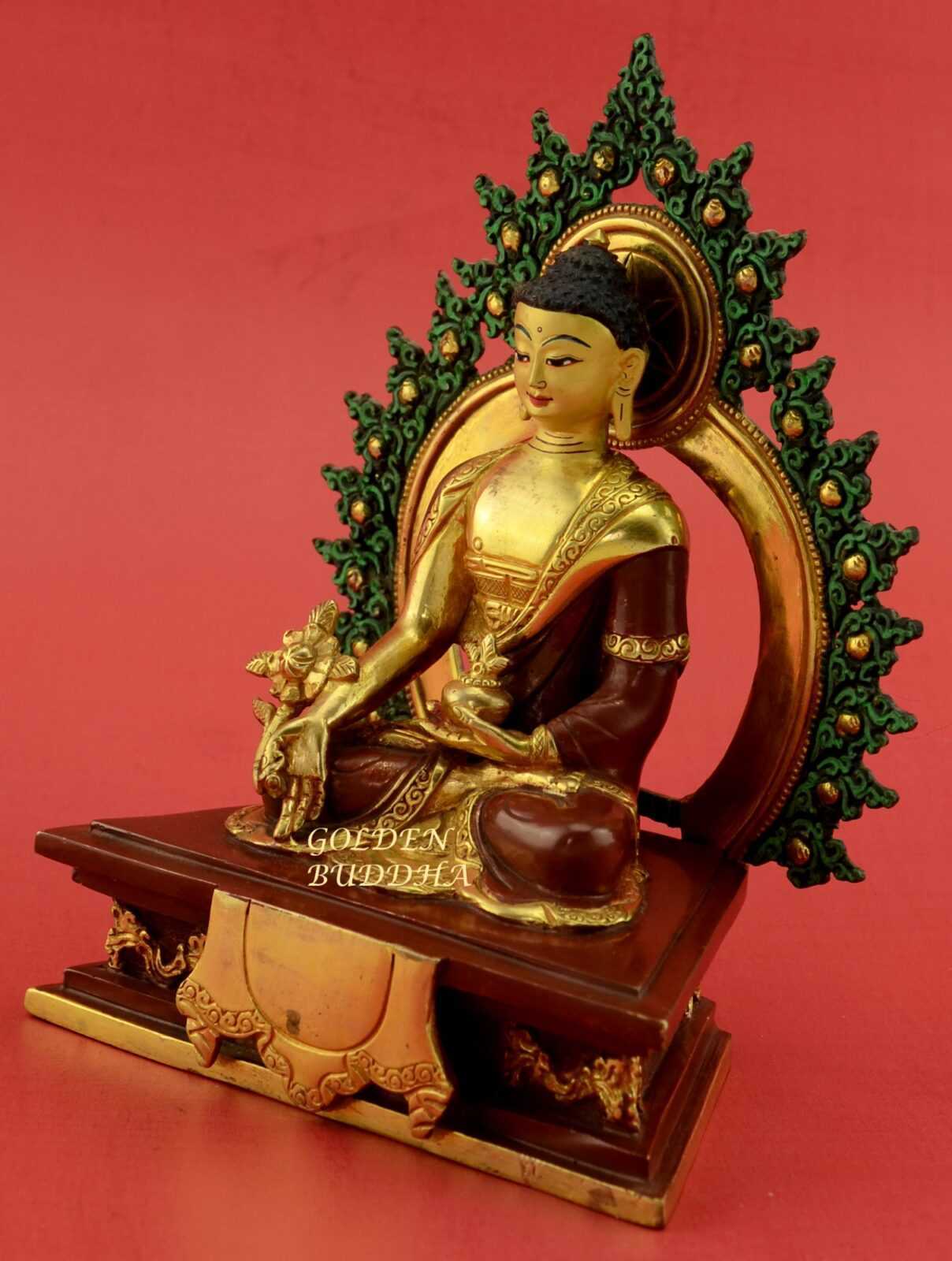
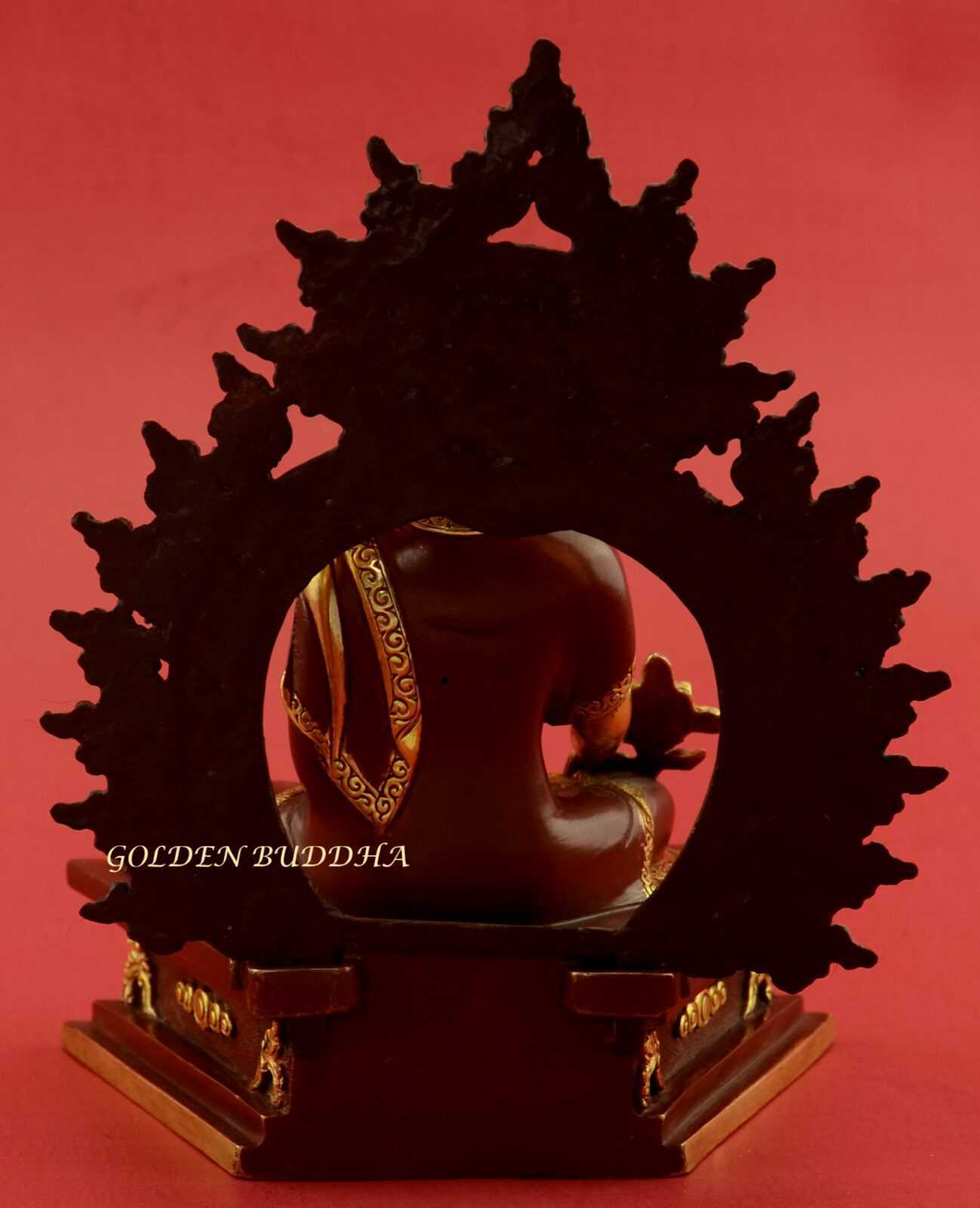
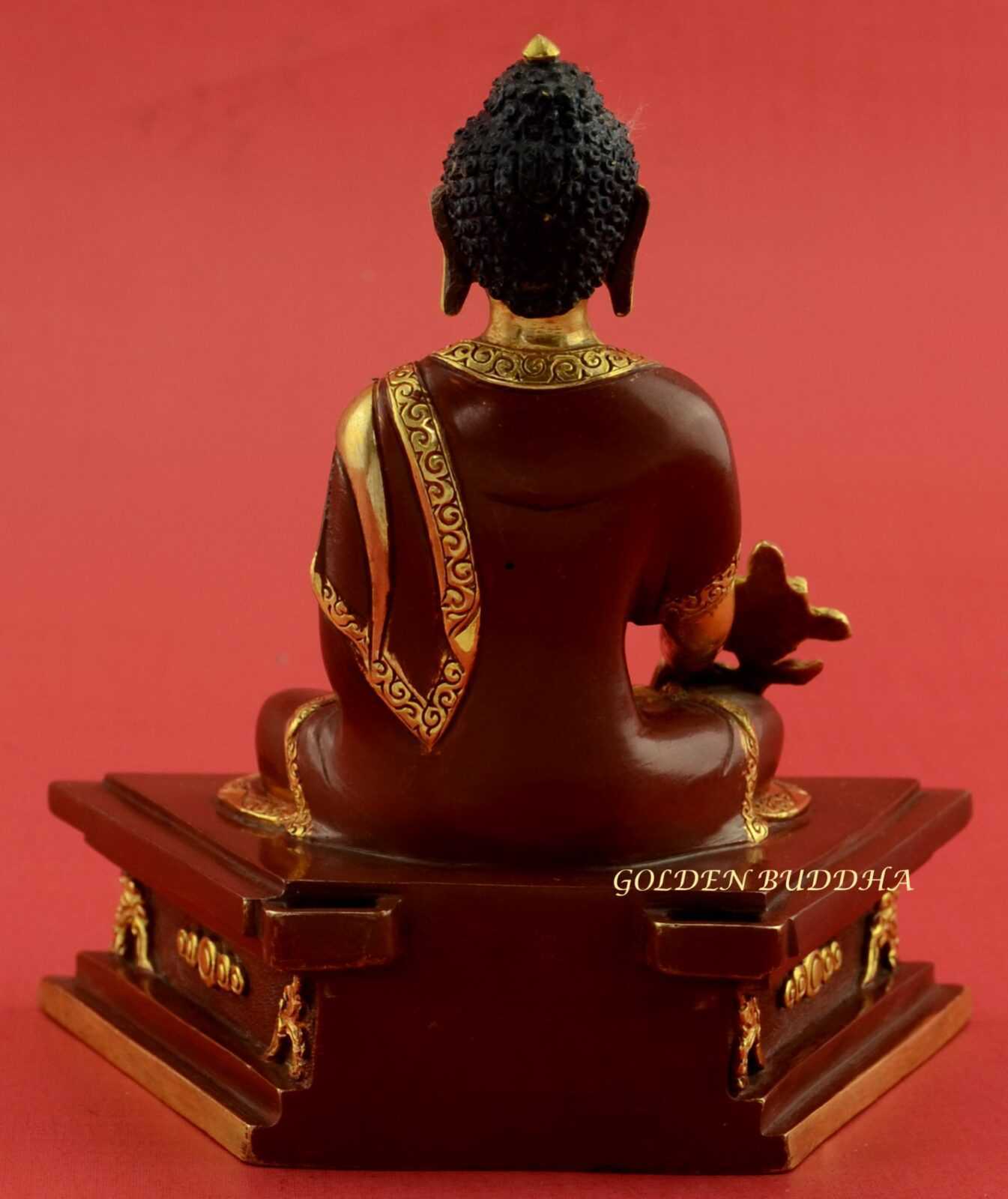
This 7-inch Framed Medicine Buddha Statue portrays Bhaisajyaguru, the Healing Buddha known in Tibet as Sangye Menla, within an unusually elaborate ornamental mandorla. Handmade in Patan, Nepal from copper alloy using the traditional lost-wax casting method, the sculpture is selectively fire gilded in 24K gold while deep oxidized copper creates a warm reddish-brown contrast across the robes, throne, and surrounding structure. Measuring 7″ high with its frame and 6″ without, the compact sculpture combines exceptionally detailed Himalayan craftsmanship with the traditional attributes associated with Medicine Buddha.
Framed Medicine Buddha Statue Features
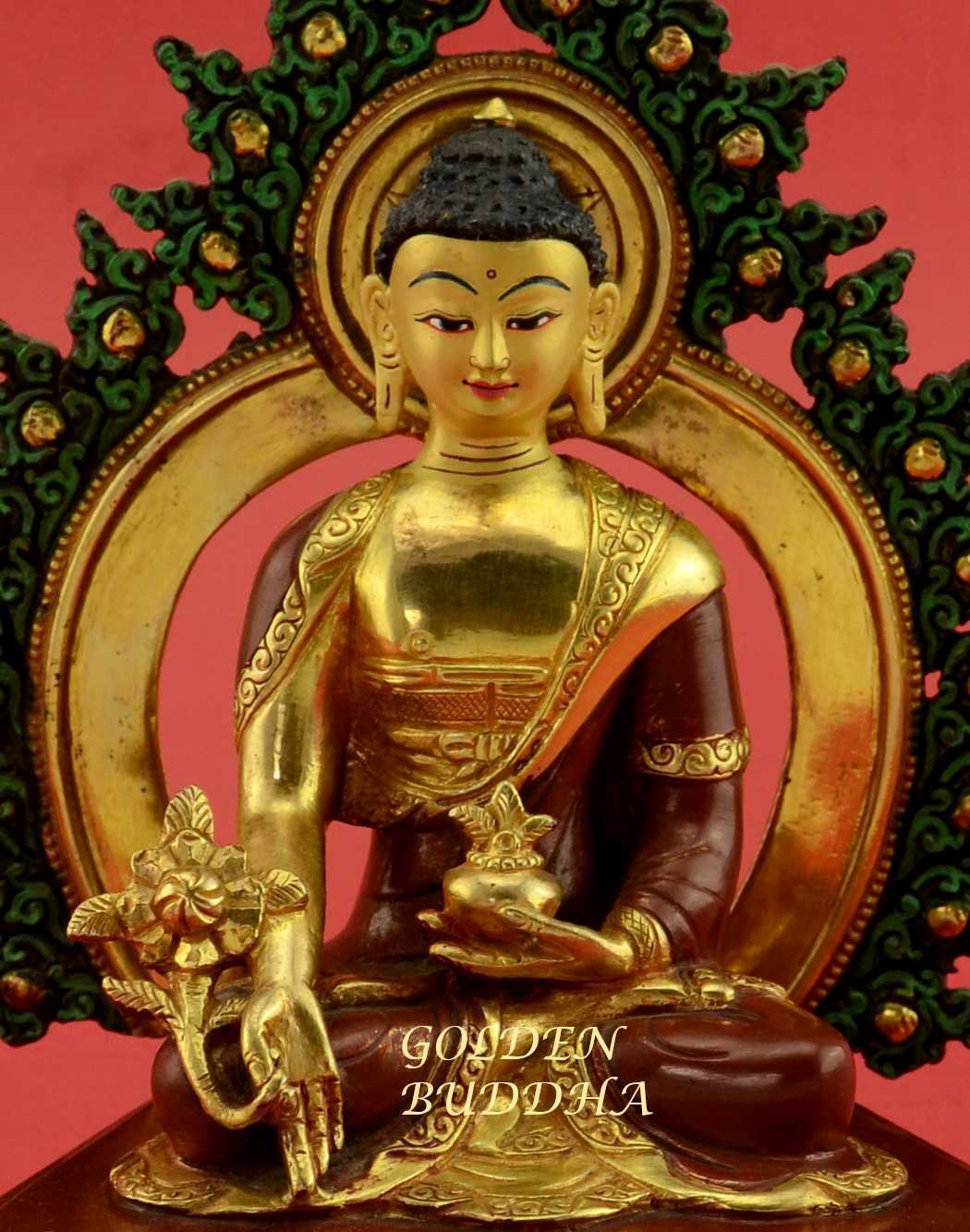
Medicine Buddha sits in the full lotus posture with his right hand extended over his knee in Varada Mudra, the gesture of generosity, compassionate giving, and the granting of blessings. Between his fingers he holds the long stem of the myrobalan medicinal plant. On this particular statue the plant is especially prominent, rising beside his arm as a sculpted arrangement of leaves and fruit. Myrobalan is Medicine Buddha’s characteristic botanical attribute and represents both medicinal healing and the enlightened wisdom capable of addressing the deeper causes of suffering.
His left hand rests upon his lap in Dhyana Mudra, supporting an ornate medicine vessel traditionally understood to contain healing nectar. The complementary gestures unite compassionate activity with meditative wisdom: the extended right hand offers healing outwardly while the left remains centered in contemplative equilibrium. These attributes immediately distinguish Bhaisajyaguru from other seated Buddhas and express the meaning and healing symbolism of Medicine Buddha.
24K Gold Gilding and Ornamental Mandorla
The contrasting finish is one of this sculpture’s strongest artistic qualities. 24K gold emphasizes the face, exposed torso, hands, robe borders, ritual attributes, inner halo, and selected architectural details, while oxidized copper defines much of the monastic robe and throne. Finely patterned gold borders follow the garment across the shoulder, arm, and folded legs. The face is individually hand painted, with gently lowered eyes, dark brows, red lips, and carefully defined features conveying a serene meditative expression.
Behind Medicine Buddha rises an elaborate openwork mandorla crafted from copper alloy. A broad 24K gold-gilded inner aureole frames the Buddha’s head and body, while the outer mandorla is finished in deeply oxidized copper, creating a dramatic dark contrast with the gilded figure. Intricate scrolling and flame-like ornamental forms rise around its perimeter, punctuated by numerous small gold-gilded accents. The alternating dark copper and brilliant gold visually draws attention inward toward Medicine Buddha and gives this compact seven-inch sculpture considerably greater presence and architectural depth.
Bhaisajyaguru – The Healing Buddha
Bhaisajyaguru is associated with healing physical illness while also addressing the mental and karmic conditions from which suffering arises. His traditional Twelve Great Vows encompass far more than relief from disease, extending to ethical restoration, freedom from deprivation, protection from adversity, and helping beings progress toward awakening. Medicine Buddha practice therefore treats healing as both compassionate care for present suffering and a path toward eliminating its deeper causes. Our detailed guide explores the Pure Land of Medicine Buddha and the broader teachings surrounding his enlightened activity.
Medicine Buddha and Amitabha – A Doctrinal Pairing
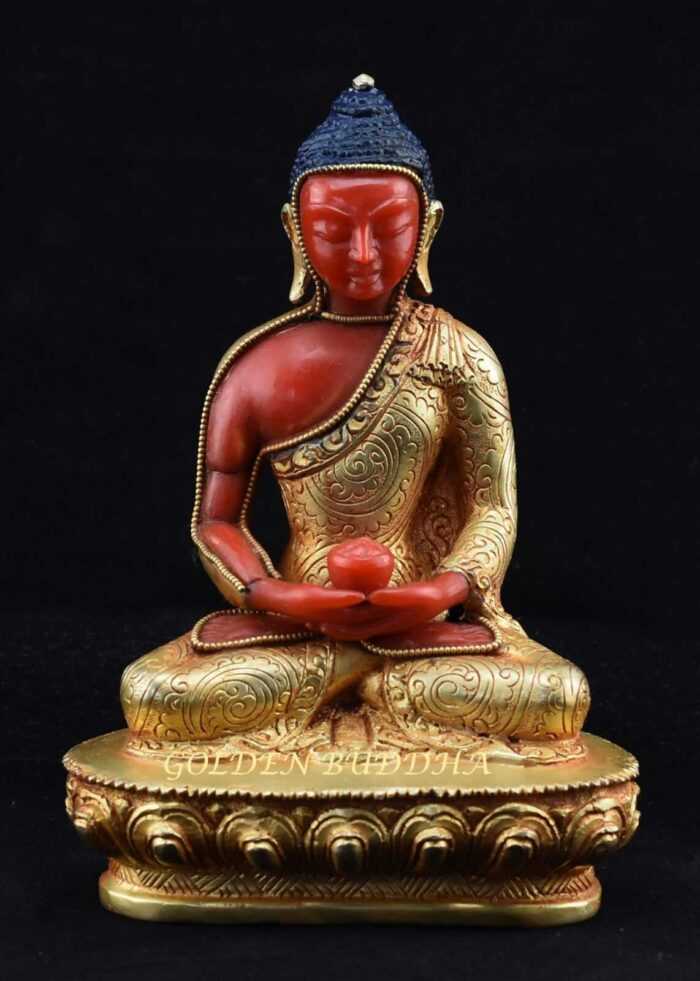
This sculpture makes a particularly harmonious altar pairing with our Framed Amitabha Buddha Statue. Medicine Buddha embodies the healing activity of enlightened wisdom, supporting the alleviation of physical, mental, and spiritual suffering in the present life. Amitabha, the Buddha of Infinite Light, is associated with Sukhavati and the aspiration for rebirth under exceptionally favorable conditions for continued progress toward enlightenment. Their individual mudras and attributes preserve the distinct identity of each Buddha, while their complementary teachings create a meaningful devotional pairing: Bhaisajyaguru represents healing and restoration along the path, while Amitabha represents immeasurable light, compassion, and favorable conditions for its continuation.
Custom Made Framed Medicine Buddha Statues
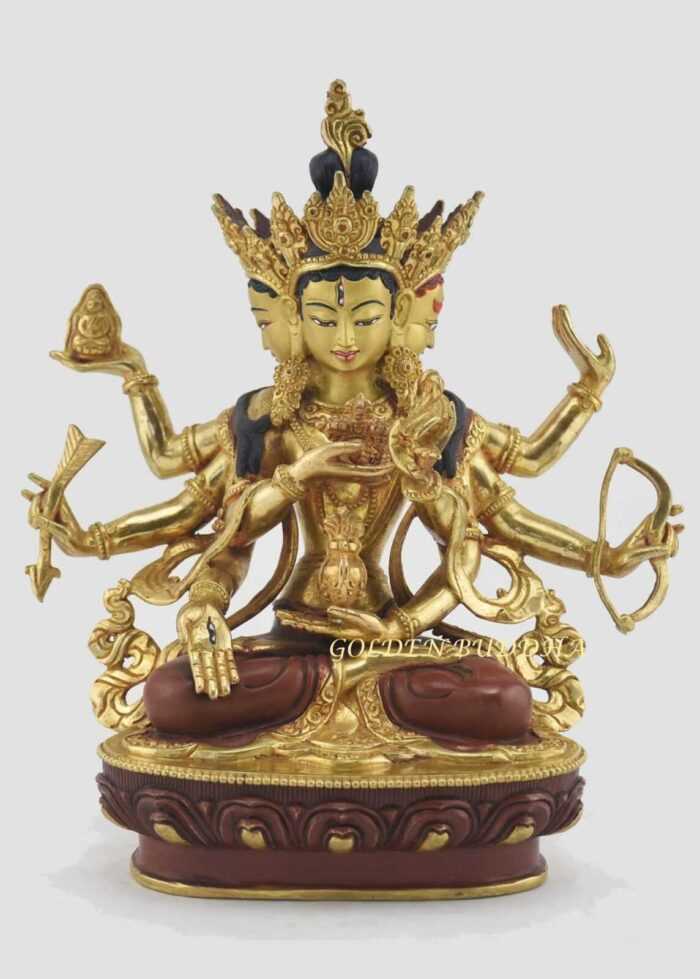
A custom version of this Framed Medicine Buddha Statue may be commissioned in a preferred size, finish, and level of ornamentation through our custom Tibetan Buddhist statue service. Options can include 24K fire gilding, oxidized copper contrasts, alternative mandorla treatments, hand-painted facial details, customized robe decoration, and coordinated throne proportions. A matching Medicine Buddha and Amitabha pair can also be commissioned together, allowing both statues to share corresponding dimensions, gilding, frames, and decorative treatments while retaining the unique iconography and doctrinal meaning of each deity.
Authentic, Handmade in Nepal
Every statue is handcrafted in Patan, Nepal, using traditional lost wax casting and comes with a certificate of authenticity issued by Nepal’s Department of Archaeology, verifying its materials, technique, and origin.