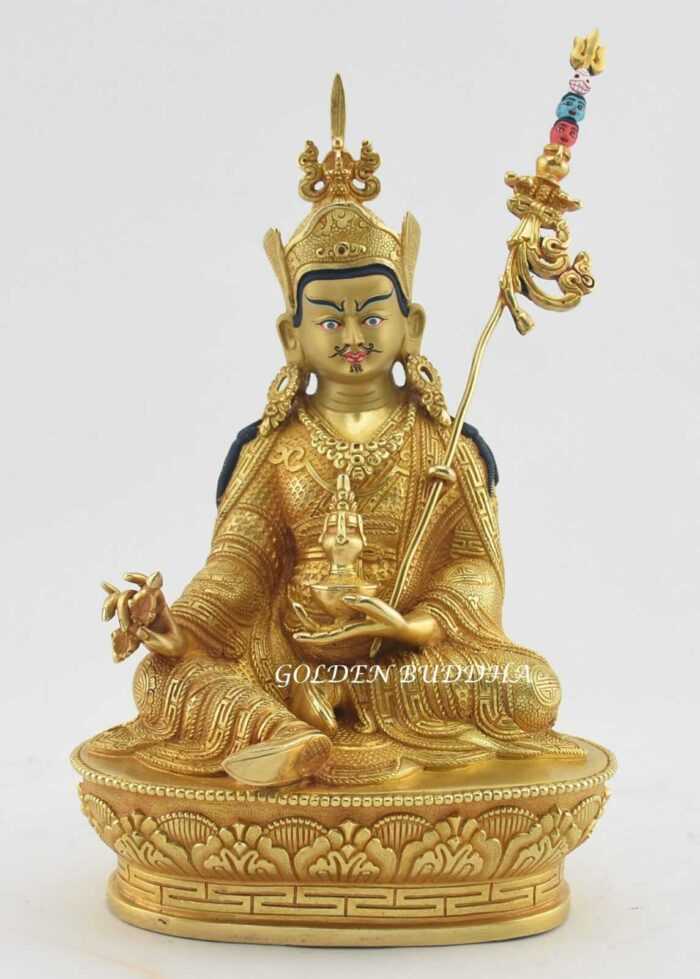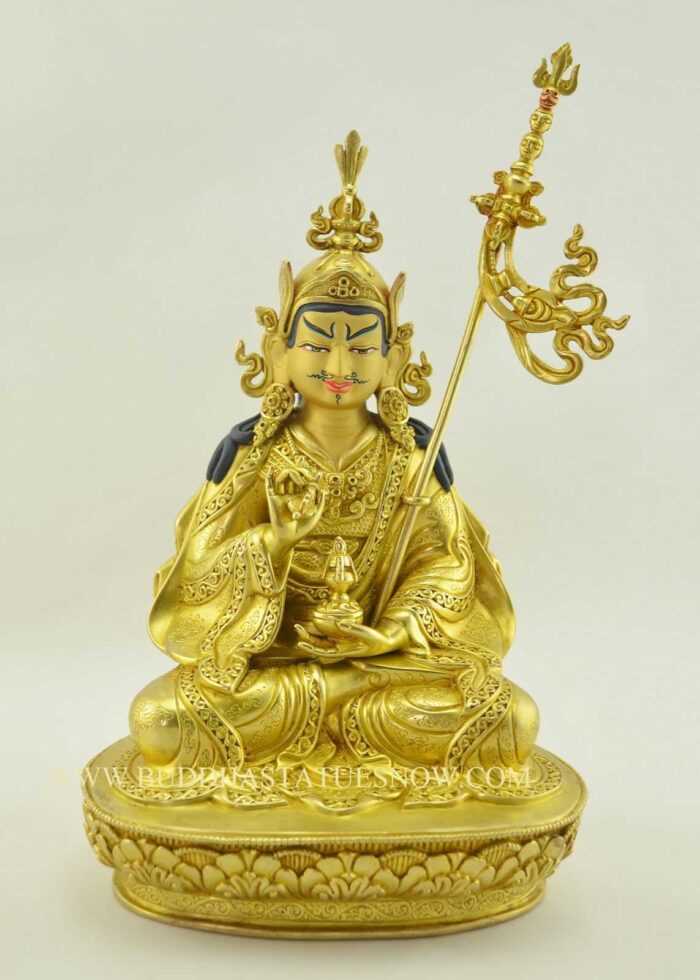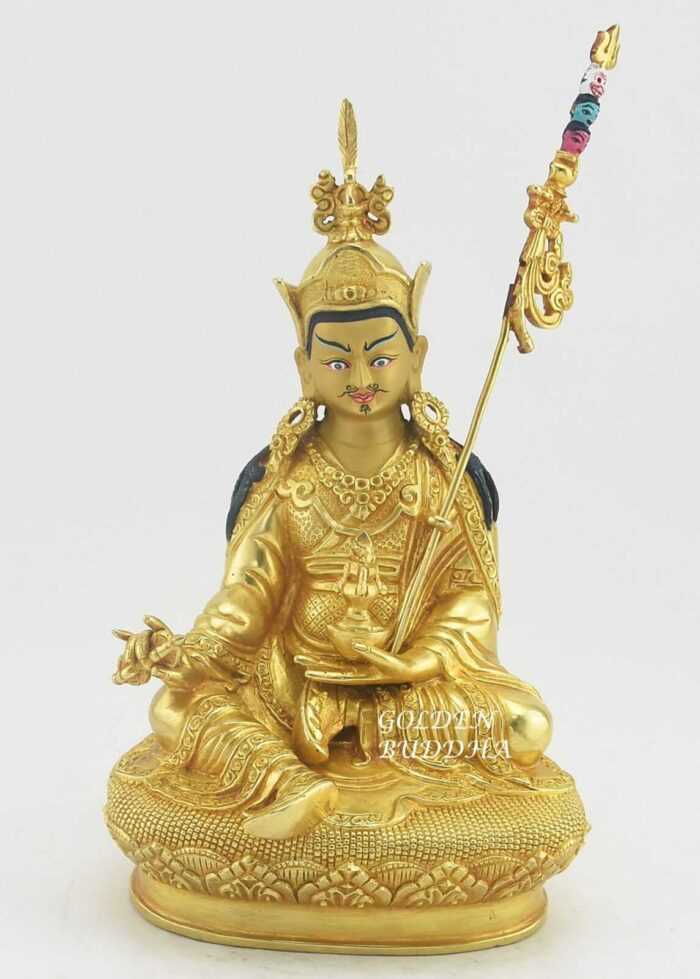
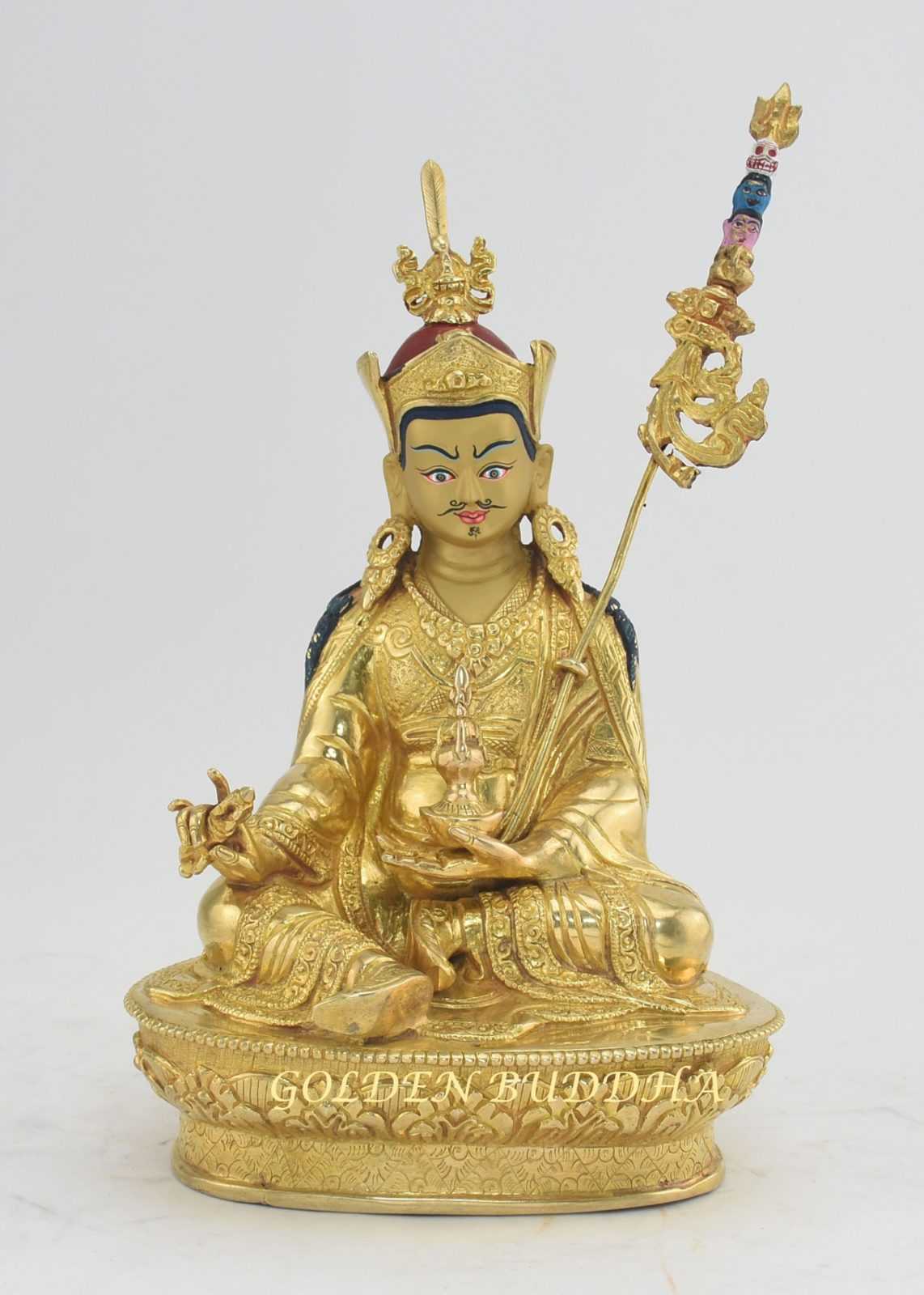
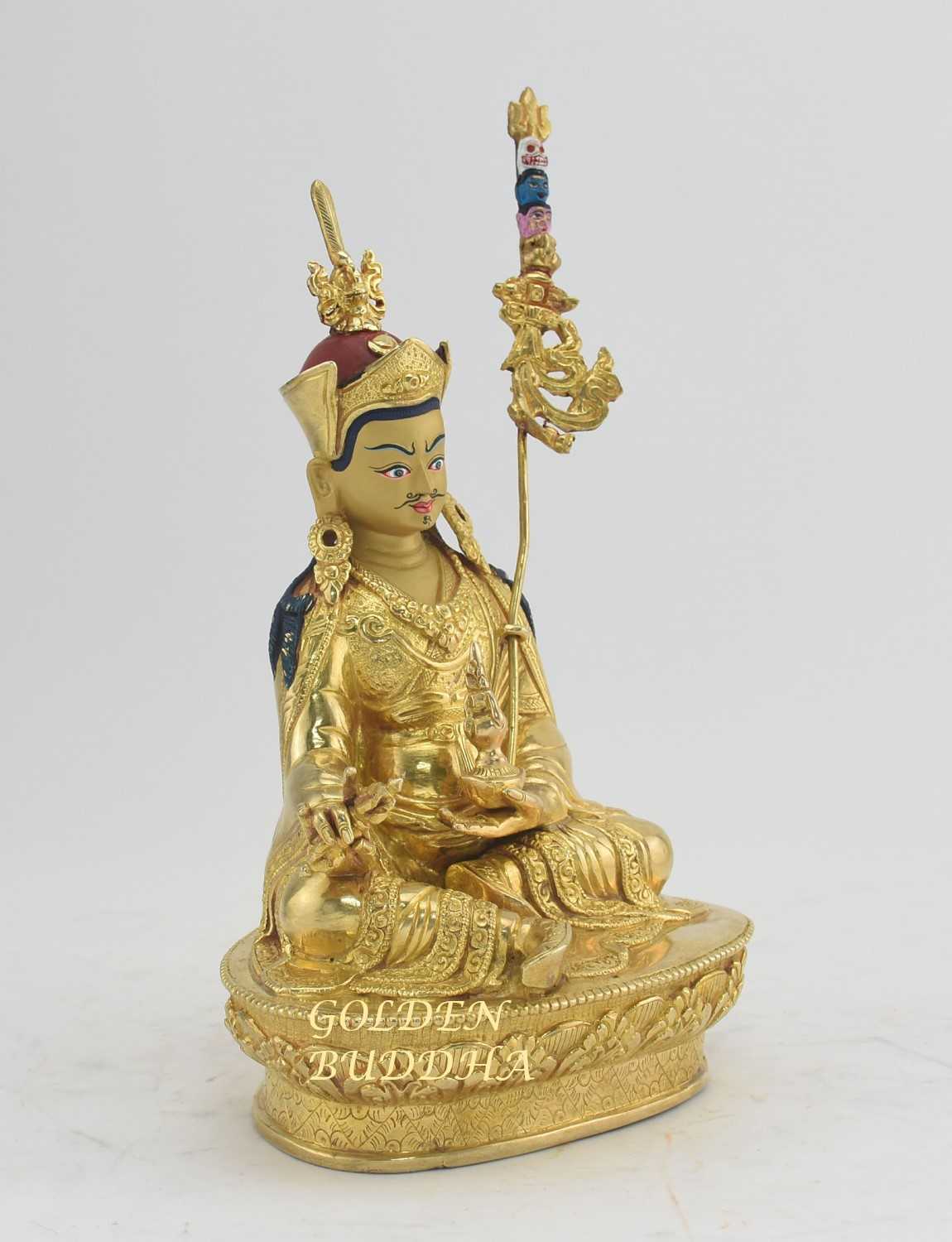
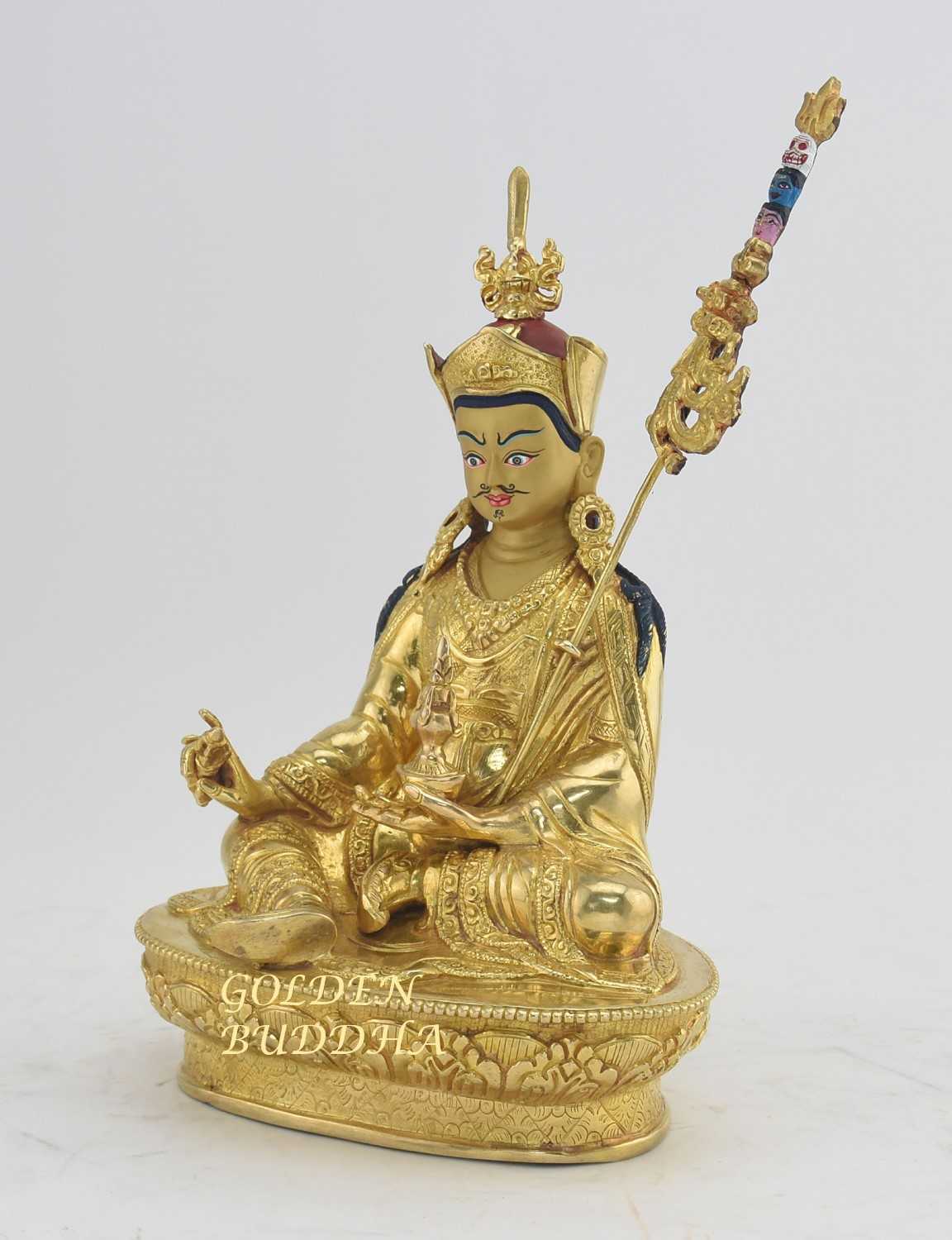
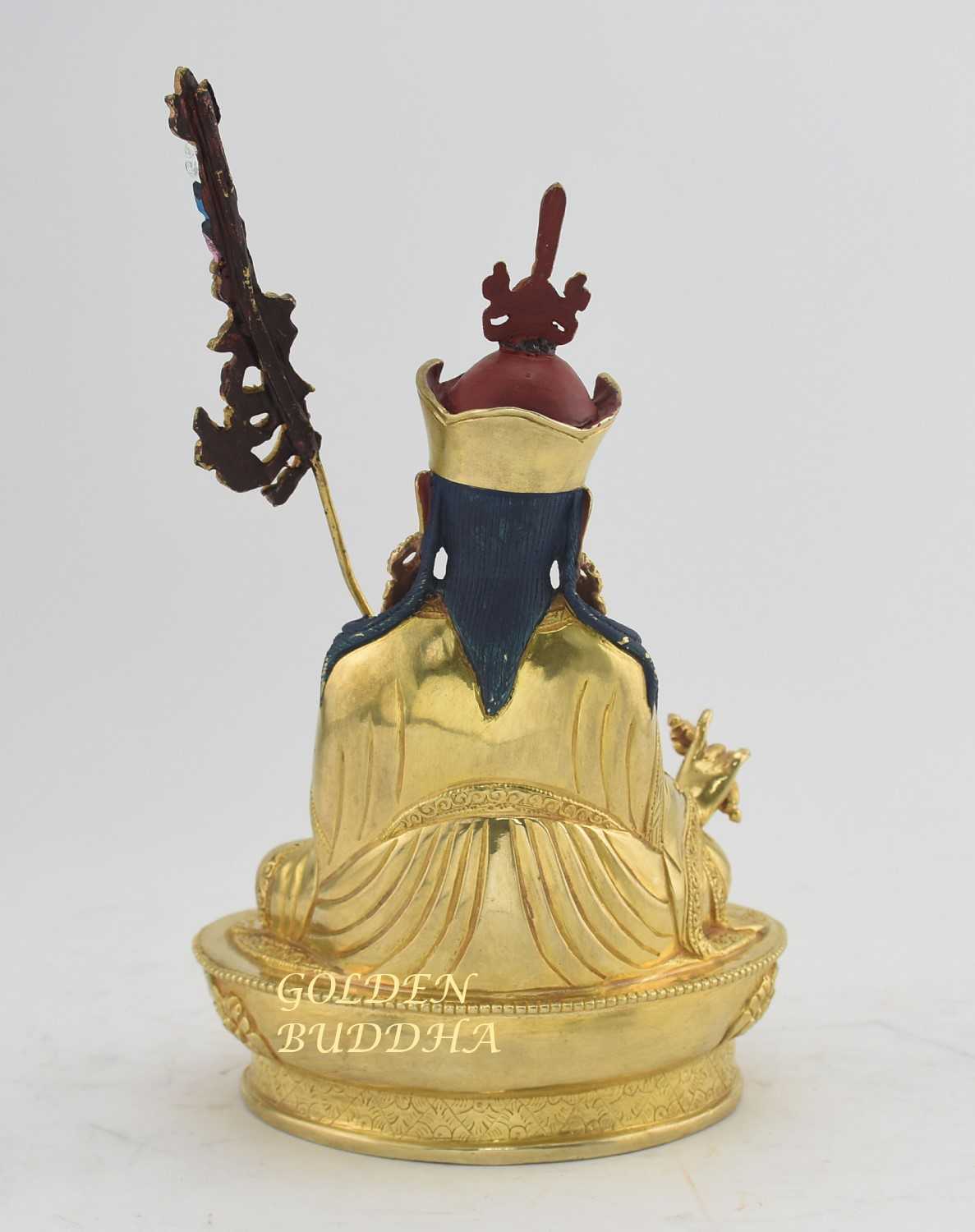
Standing 9.5 inches tall including the khatvanga (9 inches without the khatvanga), this handcrafted Nepali Padmasambhava Sculpture was created in Patan, Nepal by our master Shakya artisans using the traditional lost wax casting method. Cast entirely from copper alloy, this sacred sculpture has been fire gilded in 24K gold before the face was traditionally hand painted with 18K gold and natural pigments. The brilliant gilded finish beautifully highlights Guru Rinpoche’s serene expression, elegant jewelry and finely sculpted lotus throne while remaining faithful to traditional Himalayan Buddhist iconography. At the buyer’s request, genuine turquoise and red coral gemstones can also be embedded into the crown and jewelry at no additional cost, allowing each statue to become a truly personalized work of sacred art.
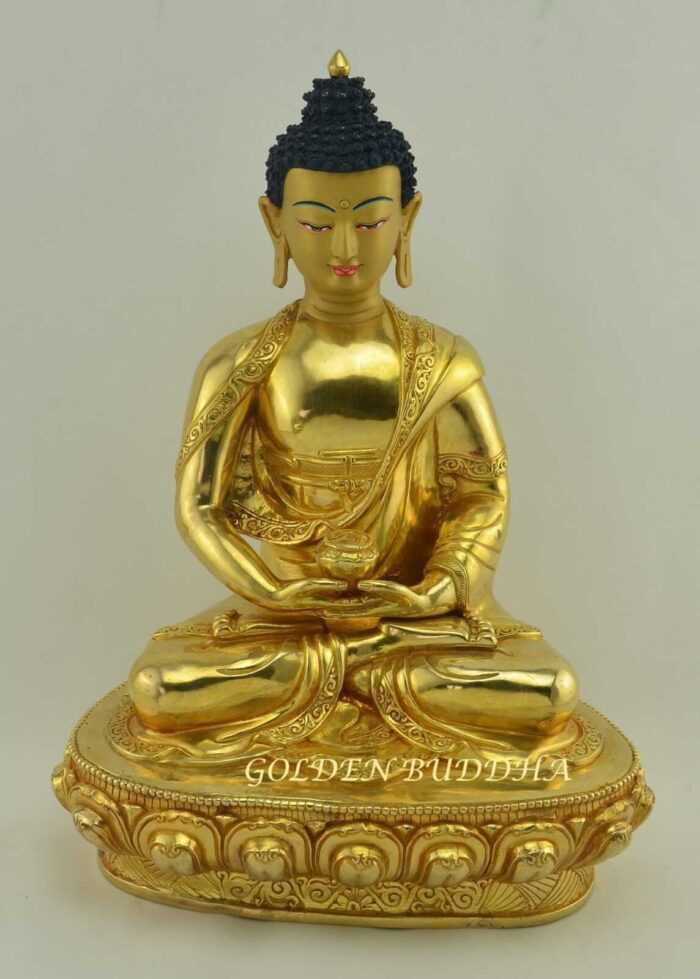
This Nepali Padmasambhava Sculpture has been carefully selected to pair beautifully with our matching Fully Gold Gilded Amitabha Buddha Statue. Their matching 24K fire gilded finish, hand-painted faces and traditional lotus thrones create a harmonious shrine while expressing one of the most profound doctrinal relationships within Vajrayana Buddhism.
Master Craftsmanship of the Nepali Padmasambhava Sculpture
Every detail of this Nepali Padmasambhava Sculpture reflects the centuries-old artistic traditions of the Kathmandu Valley. The luminous 24K fire gilded finish accentuates the carefully balanced proportions while highlighting the finely sculpted ornaments and robe borders. Elegant scrollwork decorates the garment hemlines, necklace and lotus crown, while the beautifully modeled lotus throne features repoussé lotus petals across the front together with delicate floral engraving surrounding the base rim. The result is a sculpture that appears refined from every angle, demonstrating the remarkable precision and patience of Nepal’s master Buddhist craftsmen.
Symbolism of Guru Padmasambhava
Guru Padmasambhava, affectionately known throughout the Himalayan world as Guru Rinpoche, is depicted with the sacred attributes that identify him as the great tantric master who established Vajrayana Buddhism in Tibet. Resting within his right hand is the vajra, symbolizing the indestructible nature of enlightened wisdom and compassionate skillful means. Within his left hand he supports the kapala, or skull cup, containing the vase of longevity that represents inexhaustible spiritual realization and the nectar of immortality. Leaning gracefully against his shoulder is the traditional khatvanga adorned with three multicolored heads representing complete liberation from the three realms of desire, form and formlessness. Completing his appearance are the lotus hat and the vulture feather, symbolizing the highest realization and the perfected view of enlightenment. Learn more about Guru Rinpoche statue meaning and iconography.
The History of Padmasambhava, the Lotus Born
Padmasambhava is Sanskrit for “Lotus Born,” referring to the miraculous account of his appearance upon a lotus blossom in the mystical land of Oddiyana. During the eighth century he journeyed to Tibet at the invitation of the great abbot Śāntarakṣita , where his enlightened activities enabled the successful establishment of Buddhism and the completion of Samye Monastery. Guru Rinpoche later concealed numerous sacred teachings known as terma, intended to be rediscovered by future realized masters when the time was spiritually appropriate. Revered today as the Second Buddha, his teachings continue to influence every school of Tibetan Buddhism. Discover the extraordinary story of Guru Rinpoche and his enduring spiritual legacy.
A Perfect Companion to Amitabha Buddha
This Nepali Padmasambhava Sculpture has been carefully selected to pair beautifully with our matching Fully Gold Gilded Amitabha Buddha Statue. Both sculptures feature brilliant 24K fire gilding, faces hand painted with 18K gold and natural pigments, harmonious lotus thrones, and the refined craftsmanship for which the Shakya artisans of Patan are renowned. Together they create an altar that is visually balanced while expressing one of the deepest spiritual relationships within Vajrayana Buddhism.
According to Tibetan Buddhist tradition, Guru Rinpoche is understood to be the enlightened speech emanation of Amitabha Buddha, the Buddha of Infinite Light. Displaying Amitabha slightly higher or to the left of Guru Rinpoche symbolizes the enlightened source from which Padmasambhava’s compassionate activity manifests. Amitabha embodies limitless wisdom, compassion and the aspiration for rebirth within the Pure Land of Sukhavati, while Guru Rinpoche represents the living transmission of Vajrayana teachings that transformed Tibet into one of the world’s great centers of Buddhist practice. Their complementary symbolism unites enlightened origin with enlightened activity, making this pairing especially meaningful for practitioners, shrine builders and collectors of authentic Himalayan Buddhist art.
Custom Made Nepali Padmasambhava Sculptures
If you would like this Nepali Padmasambhava Sculpture commissioned in a different size or artistic finish, our master artisans can create a custom sculpture tailored specifically to your shrine or meditation room. Whether you desire a larger temple-quality statue, an oxidized copper finish, antiquated patina, additional repoussé work, or a complete matching shrine set, every commission is handcrafted using the traditional lost wax casting method while preserving the authentic iconography of Guru Rinpoche. Upon request, genuine turquoise and red coral gemstones can be embedded into the crown and jewelry at no additional cost, further enhancing the beauty of the completed sculpture before shipment.
A custom shrine featuring both Guru Rinpoche and Amitabha Buddha creates one of the most harmonious doctrinal combinations in Tibetan Buddhism. Amitabha represents Infinite Light, limitless compassion and the aspiration for enlightenment, while Guru Rinpoche embodies the dynamic activity that carried Vajrayana Buddhism throughout Tibet and safeguarded its teachings for future generations. Together they symbolize the inseparable relationship between enlightened wisdom and compassionate action, making them an inspiring focal point for meditation, devotional practice and traditional Buddhist altar arrangements. Learn more about our custom Tibetan Buddhist statues, or discover the deeper iconography of Amitabha Buddha and the symbolism that makes this pairing so spiritually significant.
Authentic, Handmade in Nepal
Every statue is handcrafted in Patan, Nepal, using traditional lost wax casting and comes with a certificate of authenticity issued by Nepal’s Department of Archaeology, verifying its materials, technique, and origin.