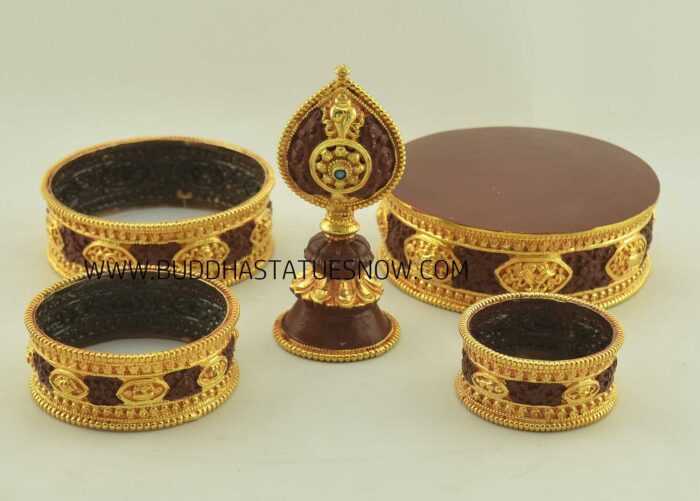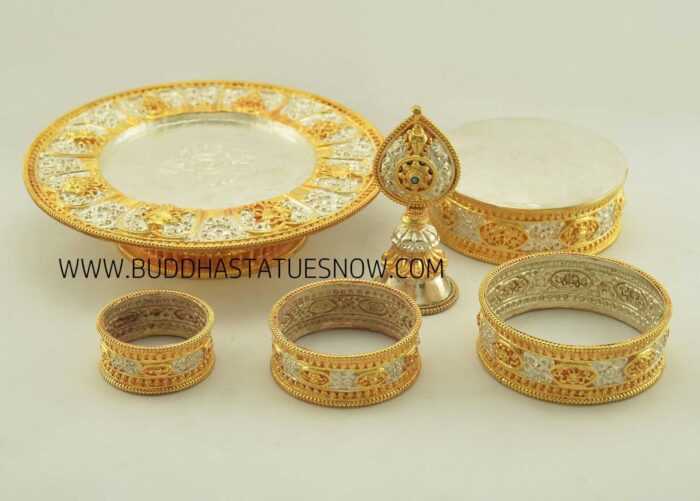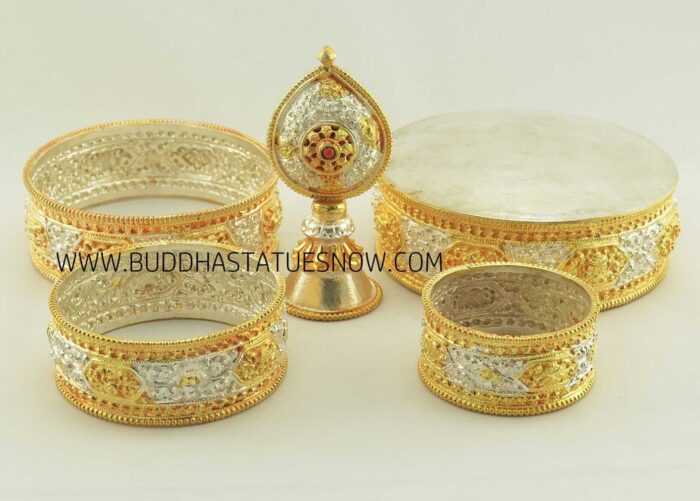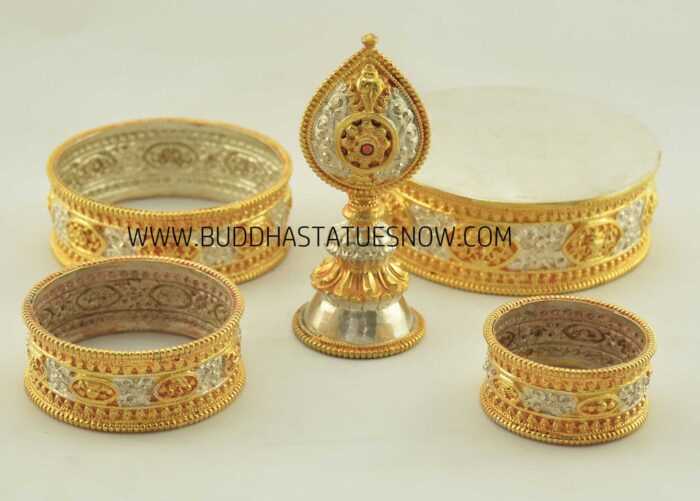
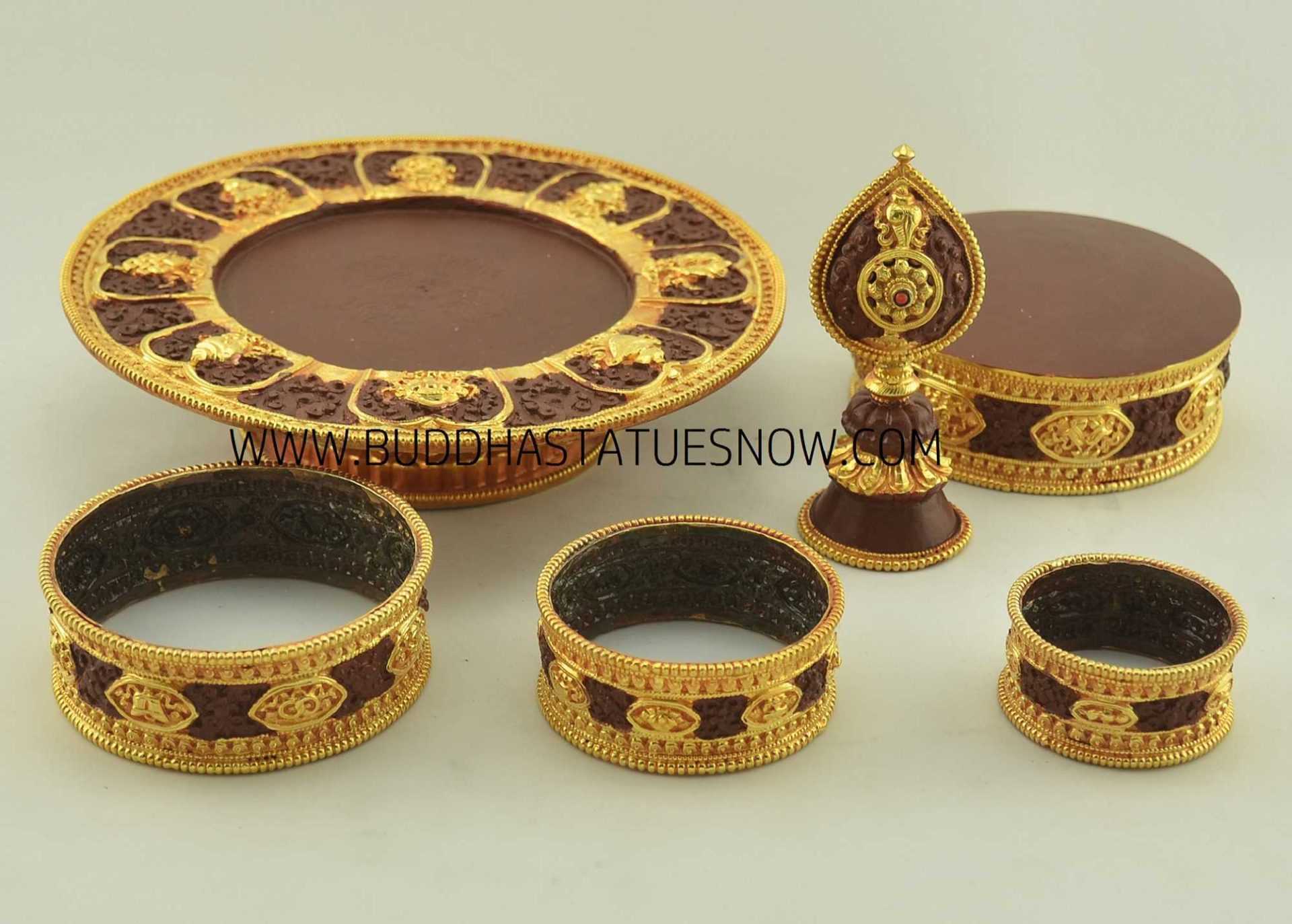
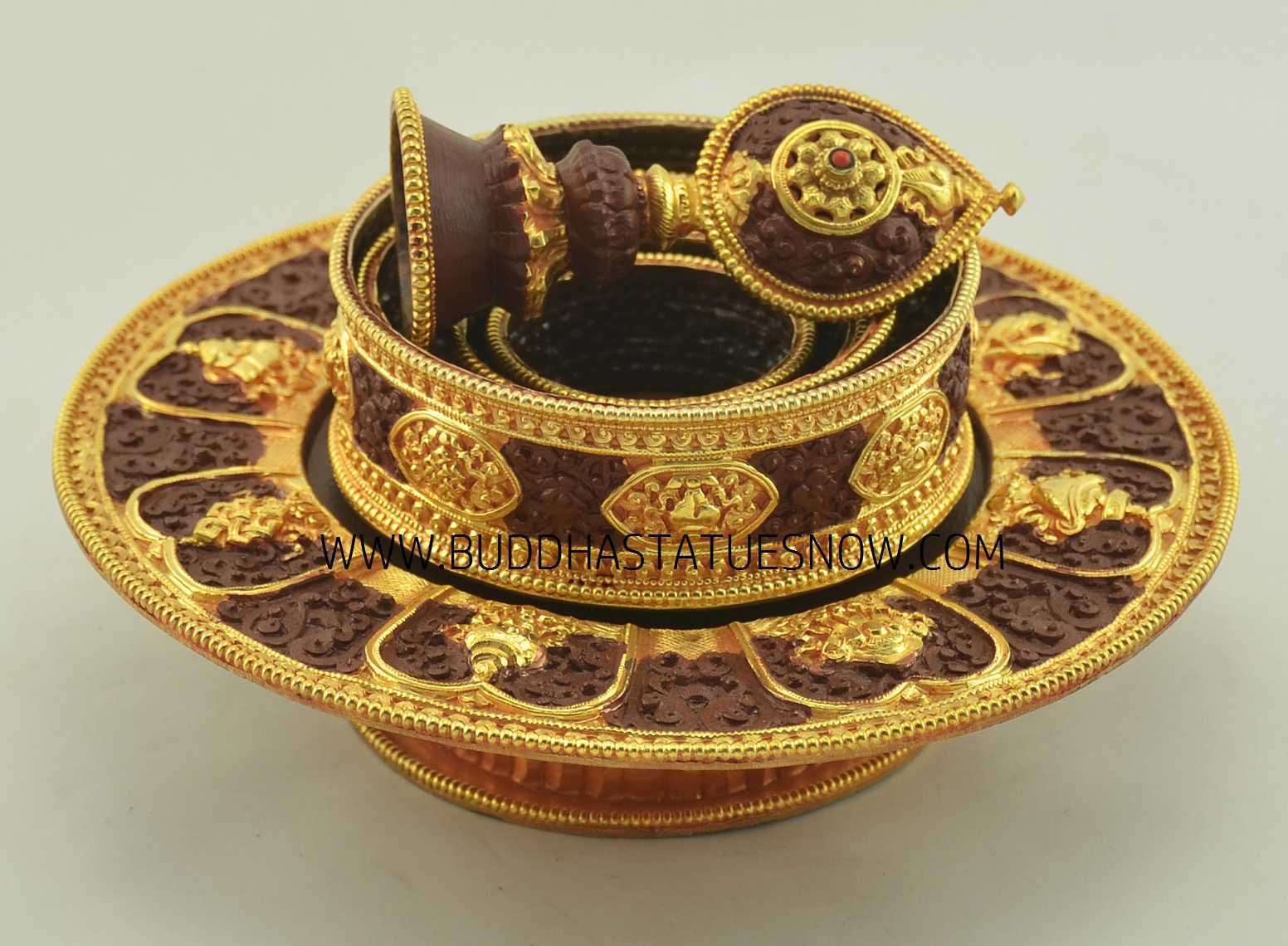
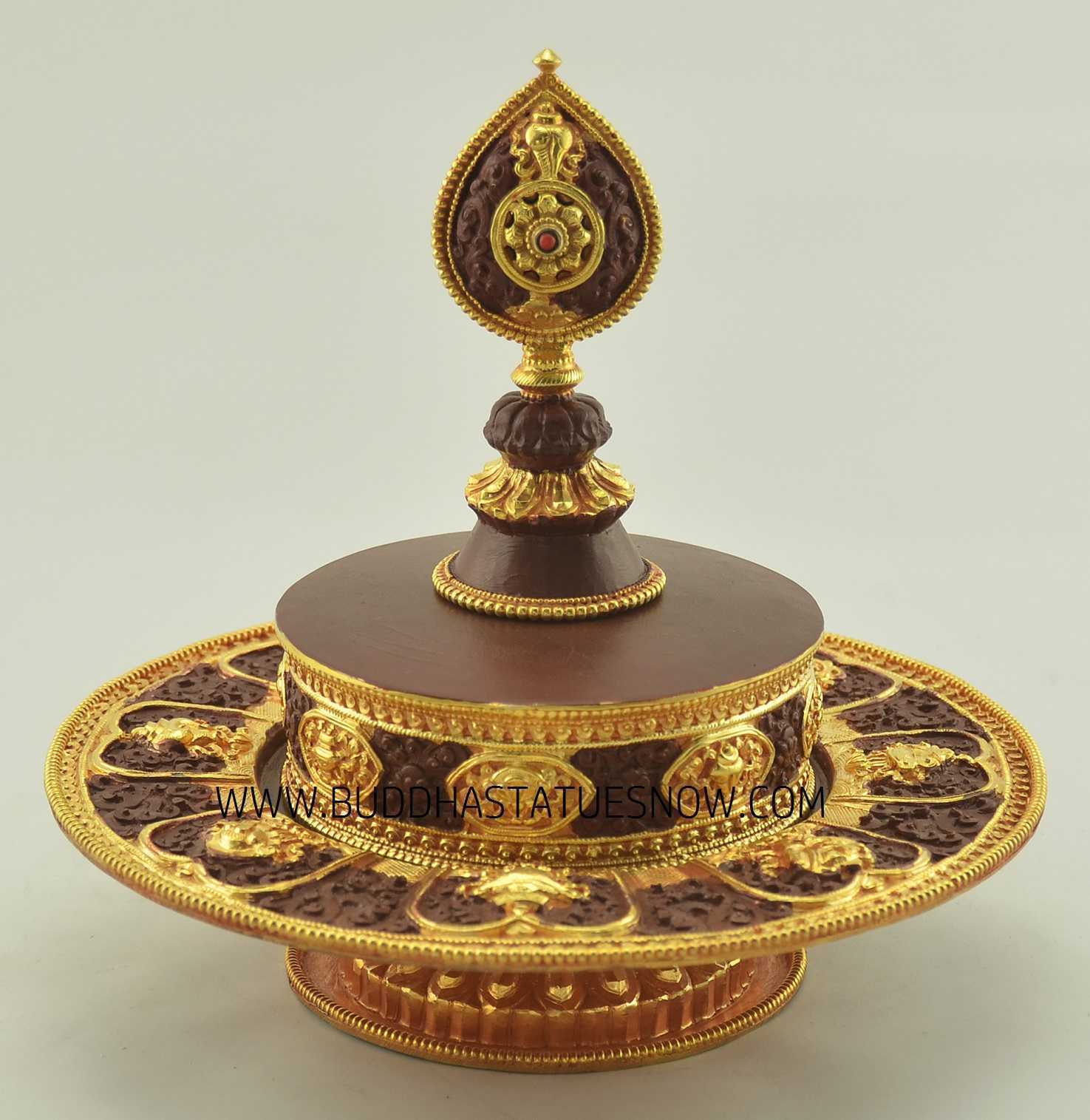
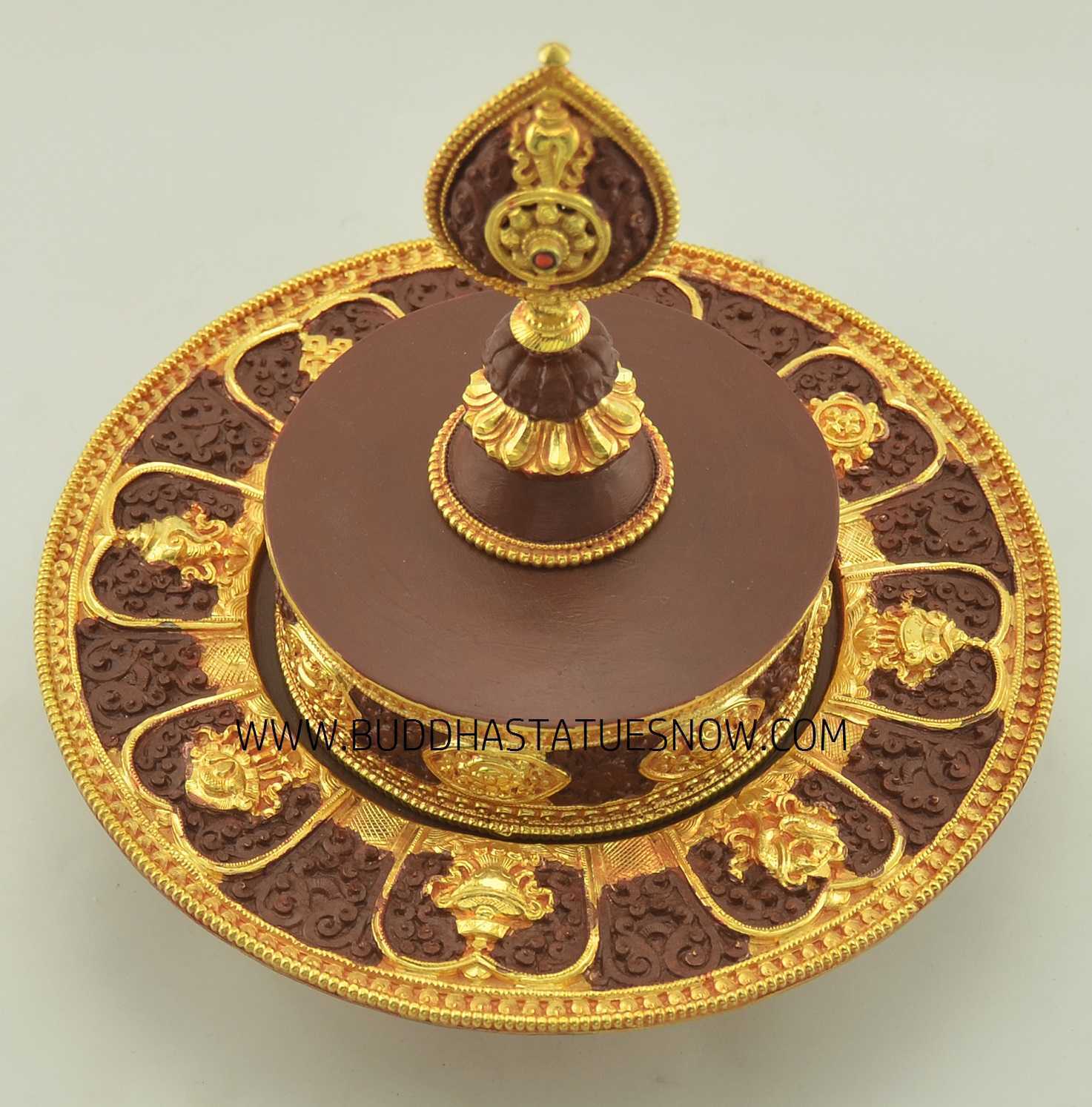
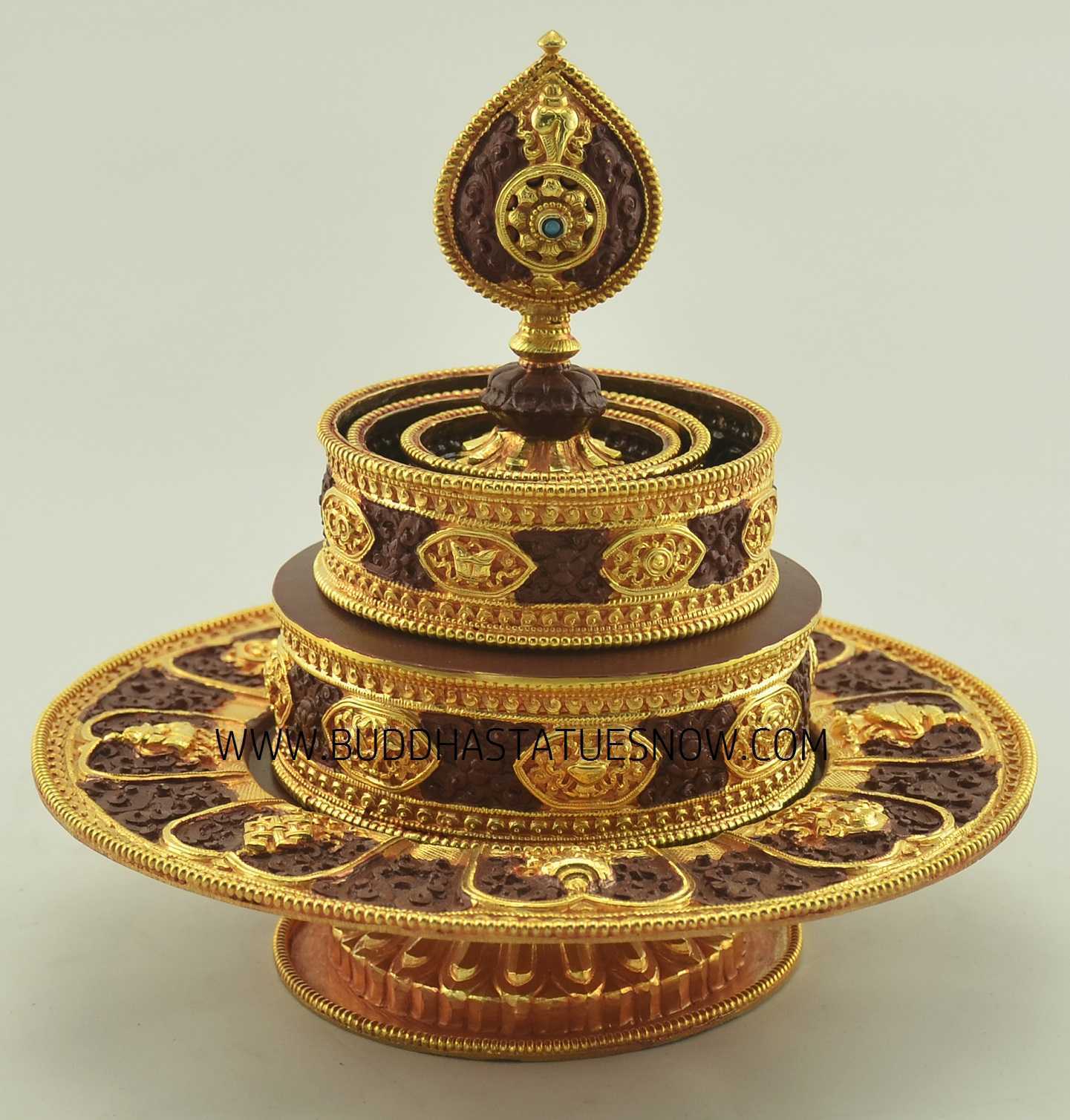
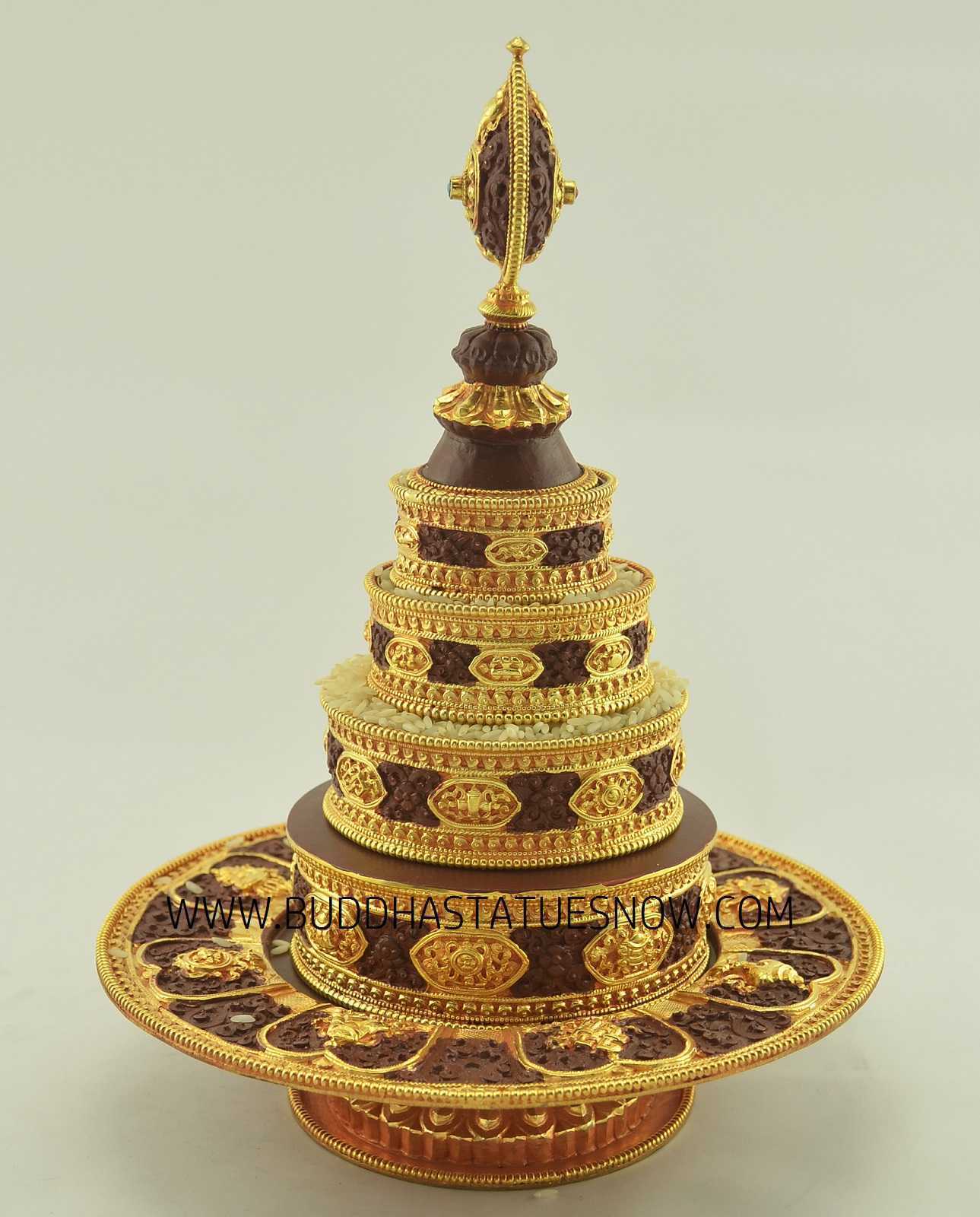
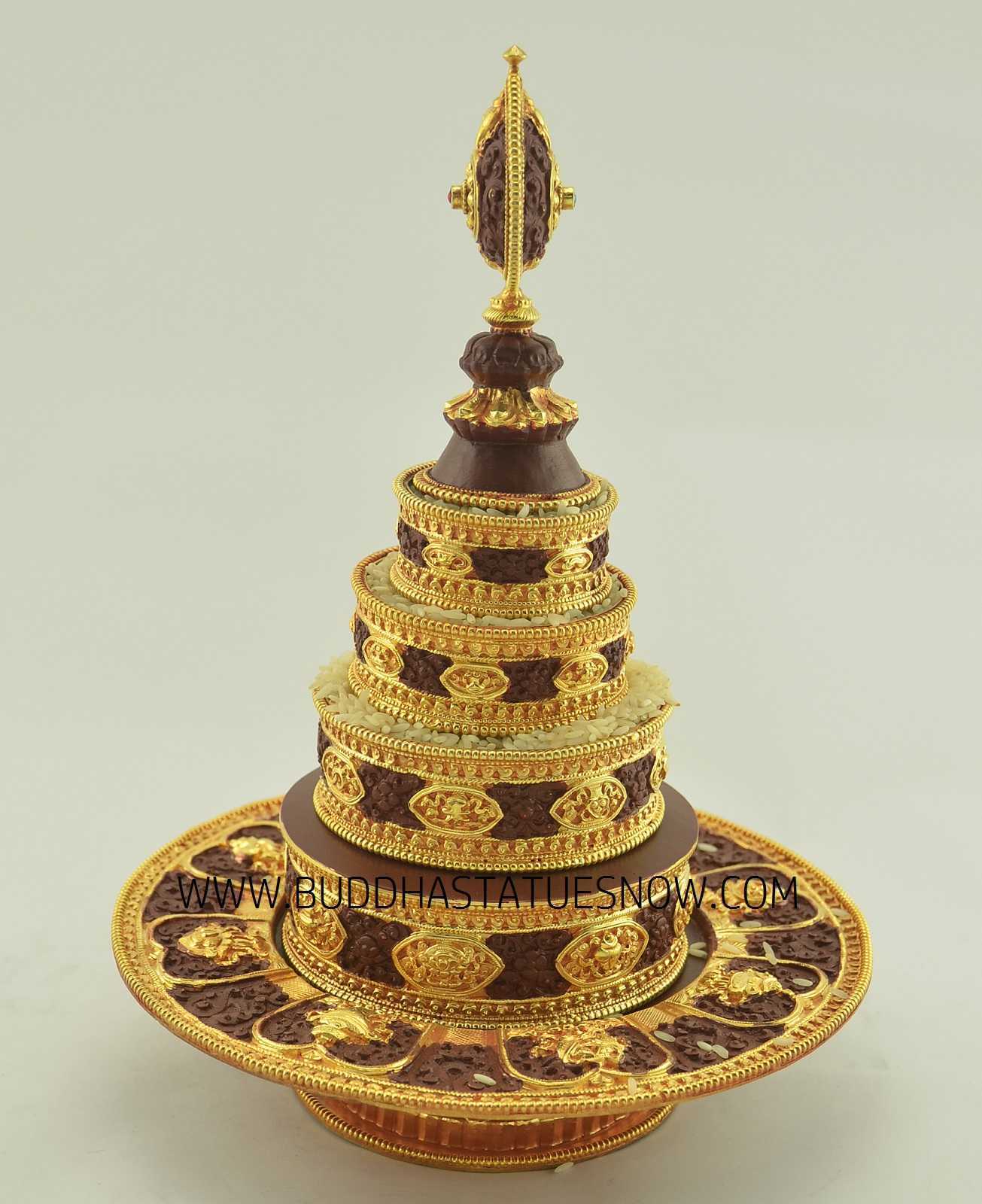
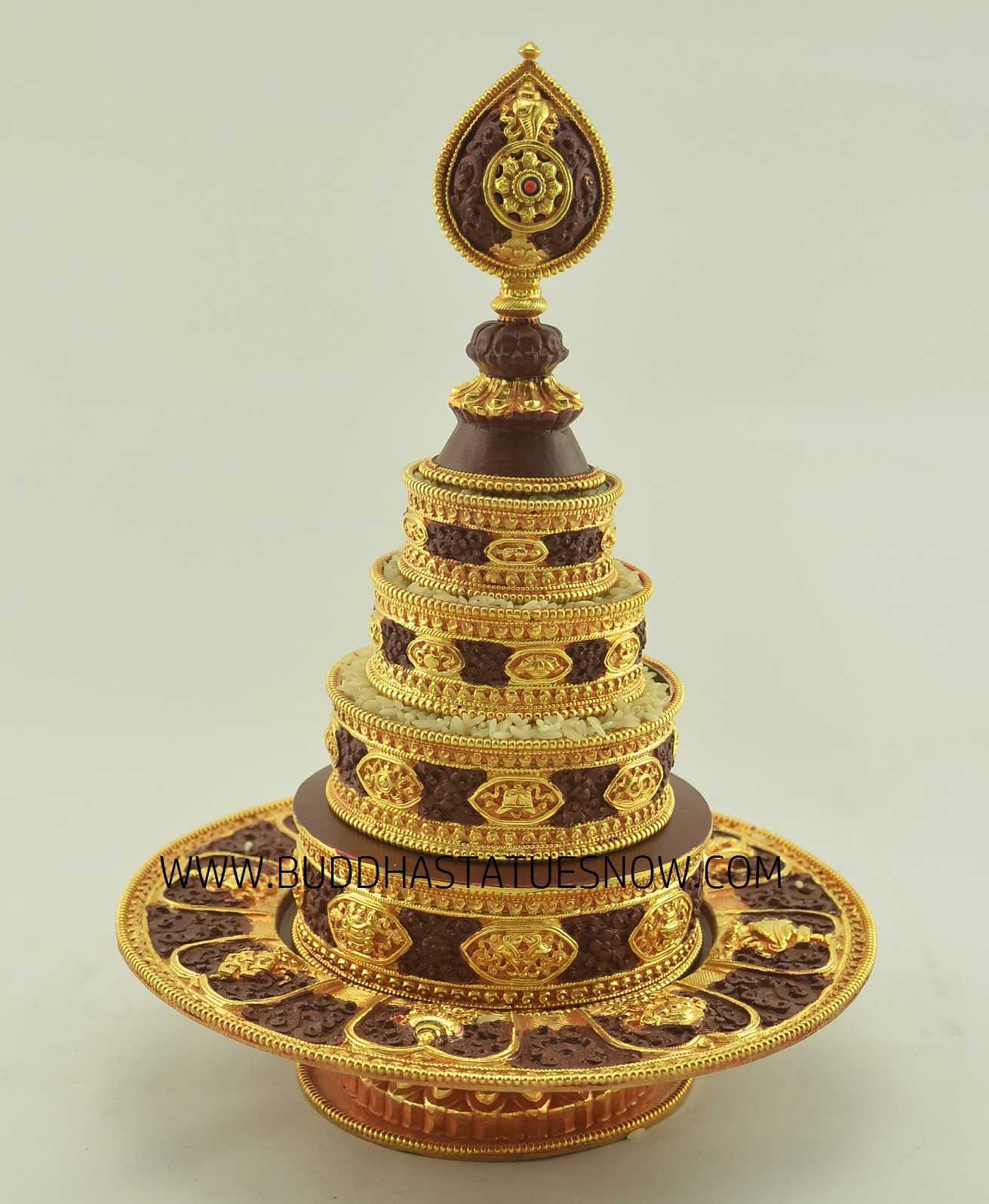
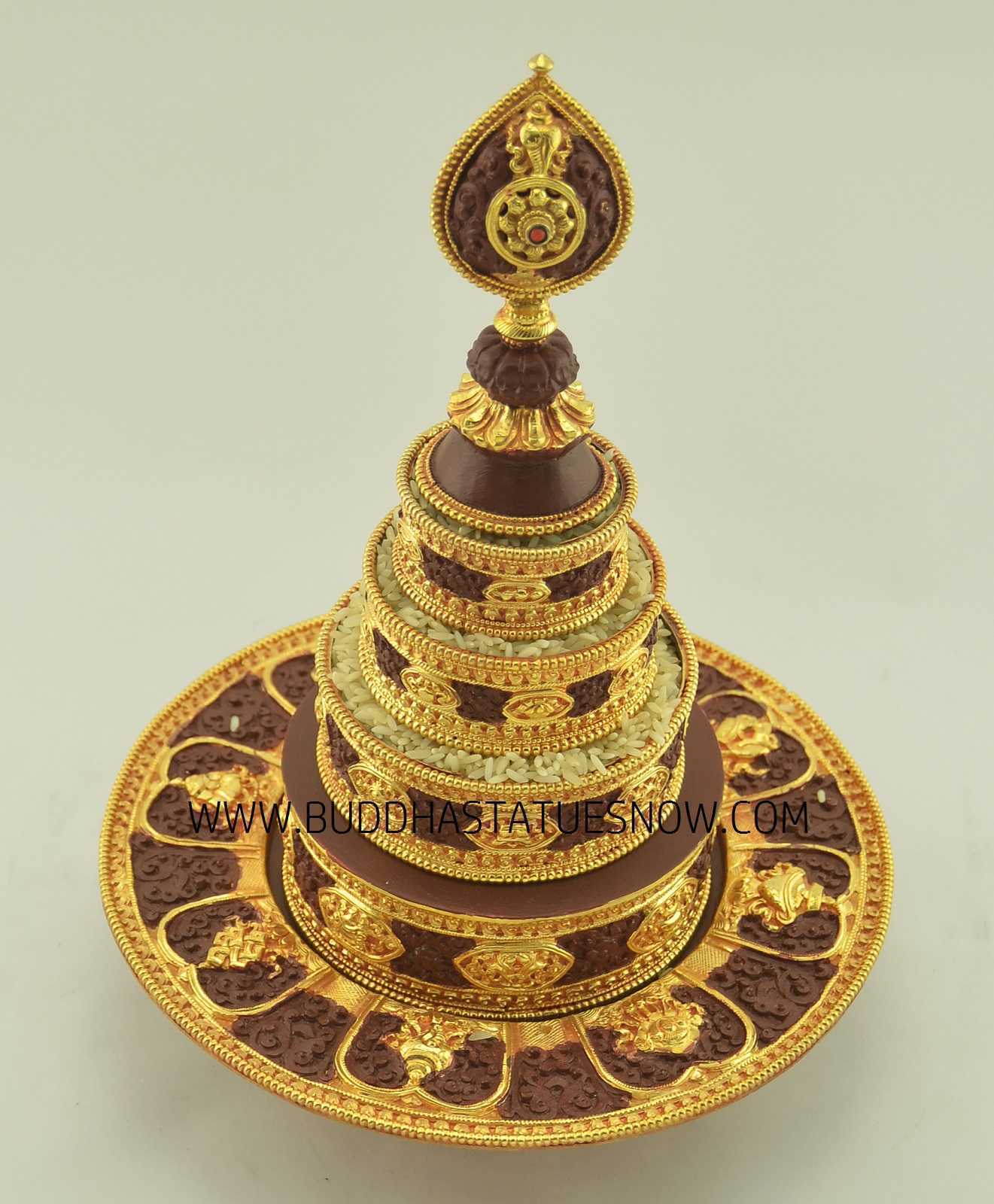
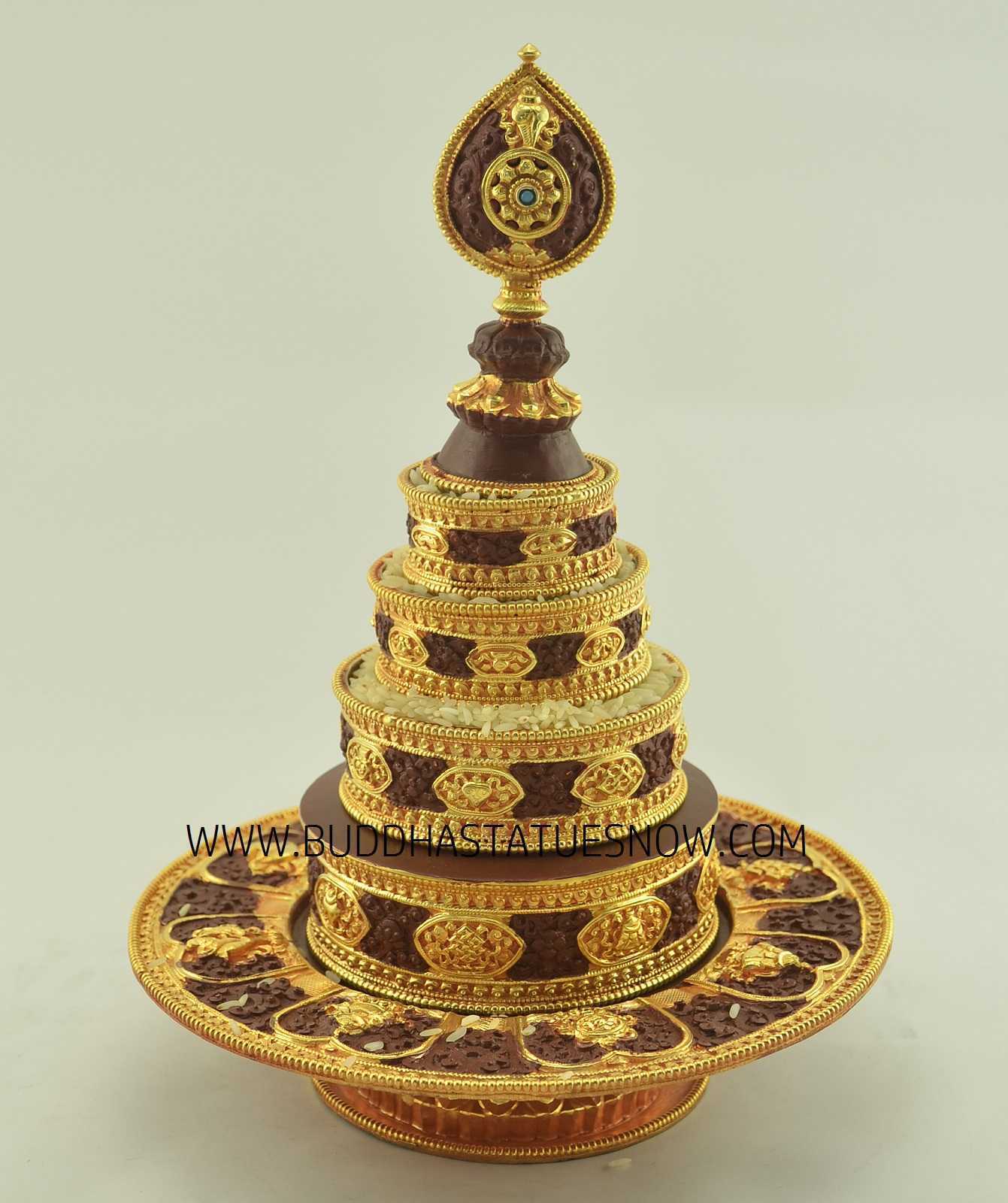
This antiquated Tibetan mandala set measures 9.5 inches when fully assembled and presents an elegant combination of authentic gold plating and deep oxidized copper accents. Crafted by skilled metal artisans in Patan, Nepal, the complete ritual set includes an elevated Vajra Bhumi offering stand, four graduated offering rings, and a removable Dharma Wheel finial. The photographs confirm extensive floral scrollwork, raised auspicious-symbol medallions, finely beaded borders, and contrasting gold details throughout the stand and rings. Red coral and turquoise accents enrich the finial, while the warm antiquated copper finish creates depth beneath the luminous gold-plated ornamentation.
Antiquated Tibetan Mandala Set with Auspicious Symbols
The broad seven-inch offering stand is decorated with individually framed panels arranged around its outer surface. These panels contain raised representations of Tibetan auspicious symbols surrounded by dark floral scrollwork and polished gold-plated borders. The four graduated rings continue this ornamental design with repeating sacred emblems, beaded edging, and richly textured oxidized copper fields. Their smooth interiors provide practical space for rice, grain, or other traditional offering materials.
The teardrop-shaped finial displays a Dharma Wheel at its center, accented by either red coral or turquoise depending upon the visible side. Directly above the wheel is a conch-shell motif, one of Buddhism’s Eight Auspicious Symbols and a representation of the Dharma spreading in every direction. Lotus-inspired forms shape the pedestal beneath the finial, visually connecting the ornament with the offering rings below. This sacred implement may be placed alongside offering bowls and other Tibetan ritual items when arranging a complete Vajrayana Buddhist altar.
Preparing the Traditional Mandala Offering
Begin by holding the Vajra Bhumi in the left hand while keeping the right hand free. Rub the offering surface clockwise three times with the right forearm while visualizing the removal of mental obscurations. Sprinkle a small quantity of rice or grain onto the cleared surface, then position the largest ring securely upon the base. Fill this first tier while arranging heaps in the four cardinal directions and visualizing the continents of the Buddhist cosmos.
Place each smaller ring in sequence, adding grain while imagining the offering of worldly treasures, virtue, happiness, the sun, moon, celestial realms, and every desirable quality within the universe. Crown the completed tiers with the Dharma Wheel finial. The assembled antiquated Tibetan mandala set represents the symbolic offering of the entire cosmos to the guru, Buddhas, Bodhisattvas, and the Three Jewels.
Completing and Dedicating the Offering
Lift the completed mandala with both hands, touch the finial respectfully to the forehead, and then raise the entire offering above the head. Recite the traditional prayer, including Idam Guru Ratna Mandalakam Niryatayami, while maintaining the visualization of offering the complete universe. After dedicating the accumulated merit for the benefit of all sentient beings, lower the set and tip the rings inward toward the chest so the grains collapse toward you, symbolizing the reception of blessings and merit. A devotional image from our collection of Tibetan thangkas can provide an appropriate visual focus behind the altar during this practice.
Antiquated Tibetan Mandala Set Dimensions
| Component | Diameter or Width | Height |
|---|---|---|
| Fully Assembled Mandala | — | 9.5″ |
| Offering Stand | 7″ diameter | — |
| Stand Base | 4″ diameter | 1.5″ |
| Vajra Bhumi Base Ring | 4″ diameter | 1.25″ |
| Second Ring | 3.25″ diameter | 1″ |
| Third Ring | 2.5″ diameter | 1″ |
| Fourth Ring | 2″ diameter | 1″ |
| Dharma Wheel Finial | 1.5″ width and 1.5″ base diameter | 4″ |
Authentic, Handmade in Nepal
Every ritual item is handcrafted in Patan, Nepal, using traditional Newar metalworking and carving methods and comes with a certificate of authenticity issued by Nepal’s Department of Archaeology, verifying its materials, technique, and origin.