
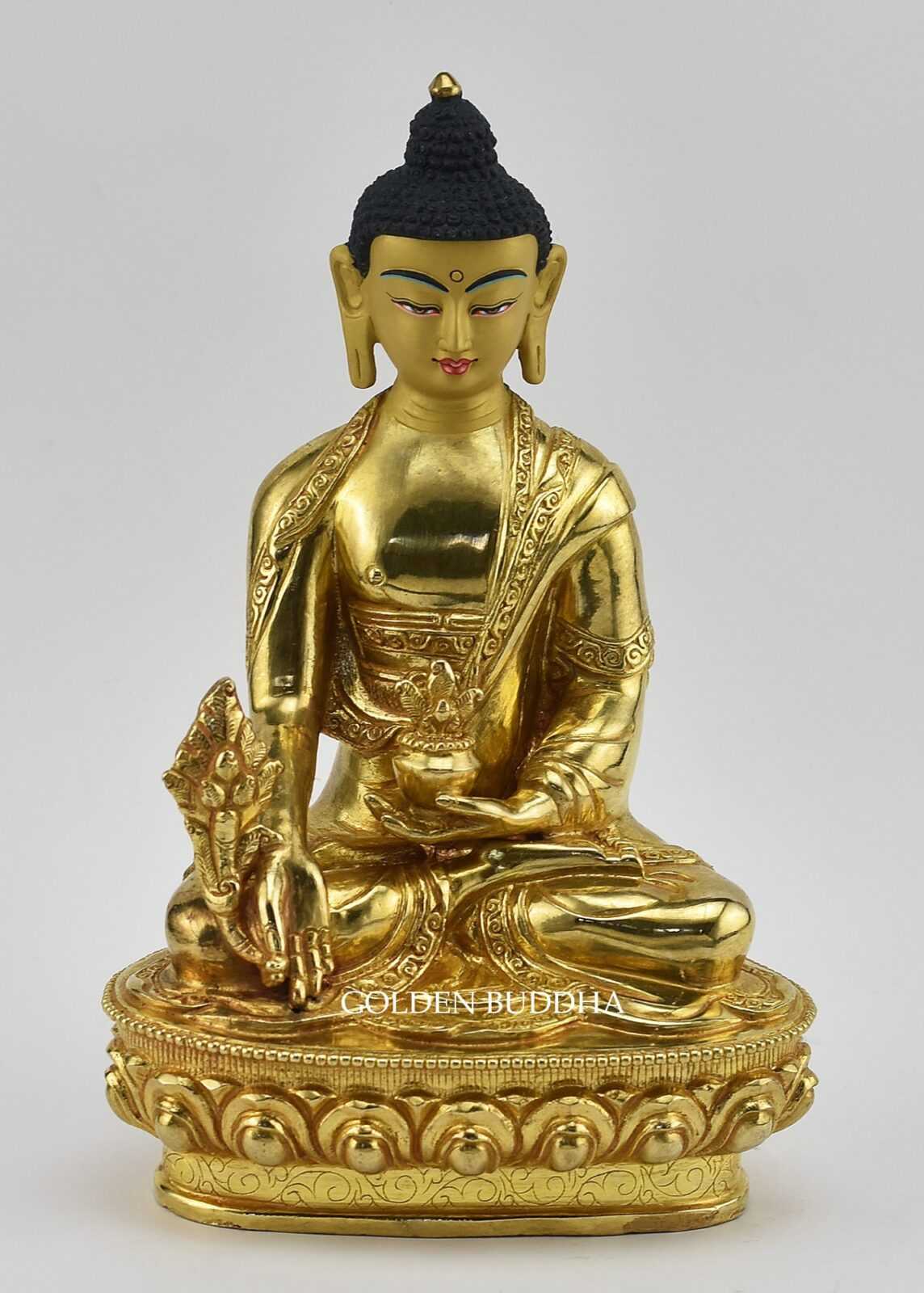
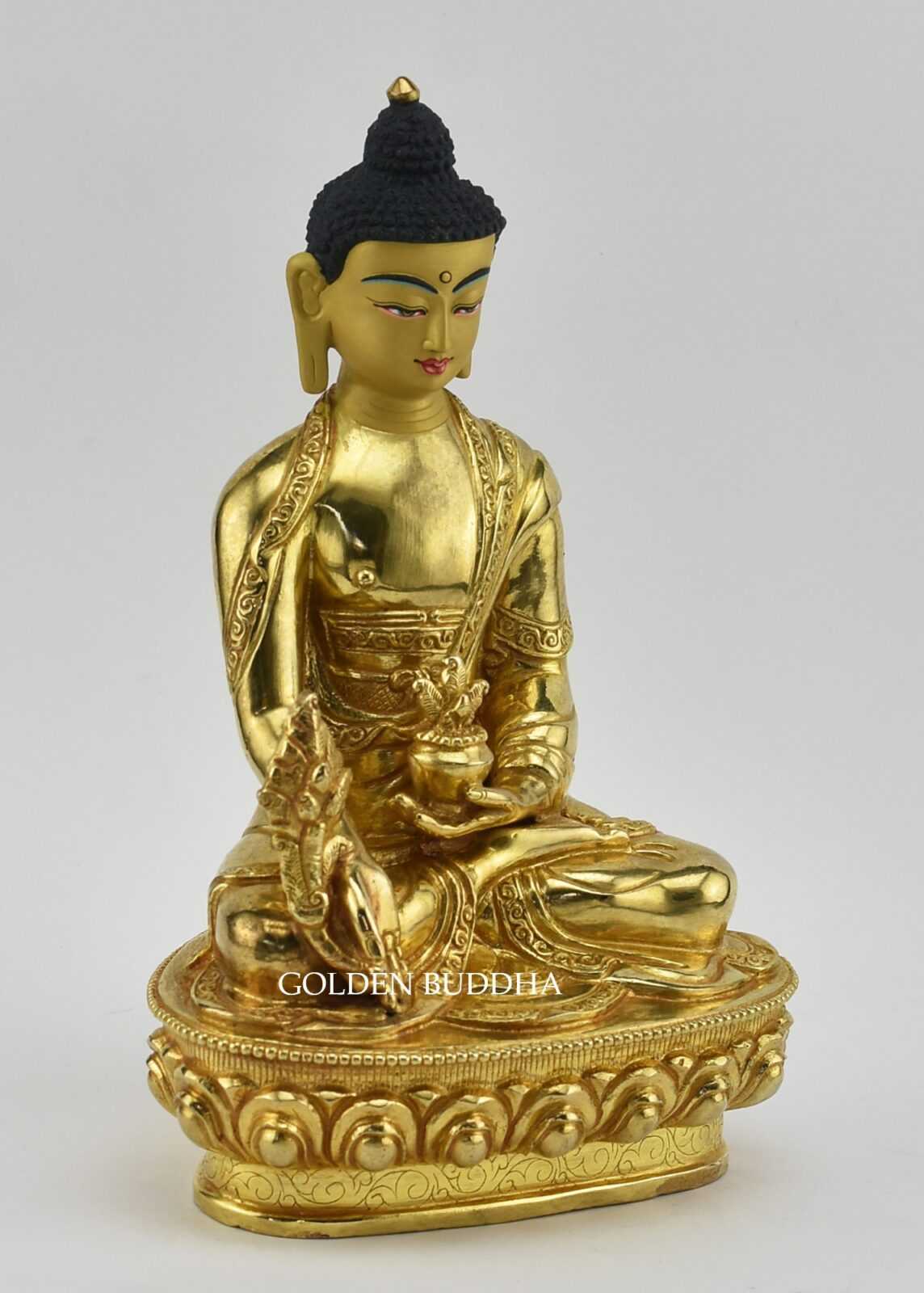
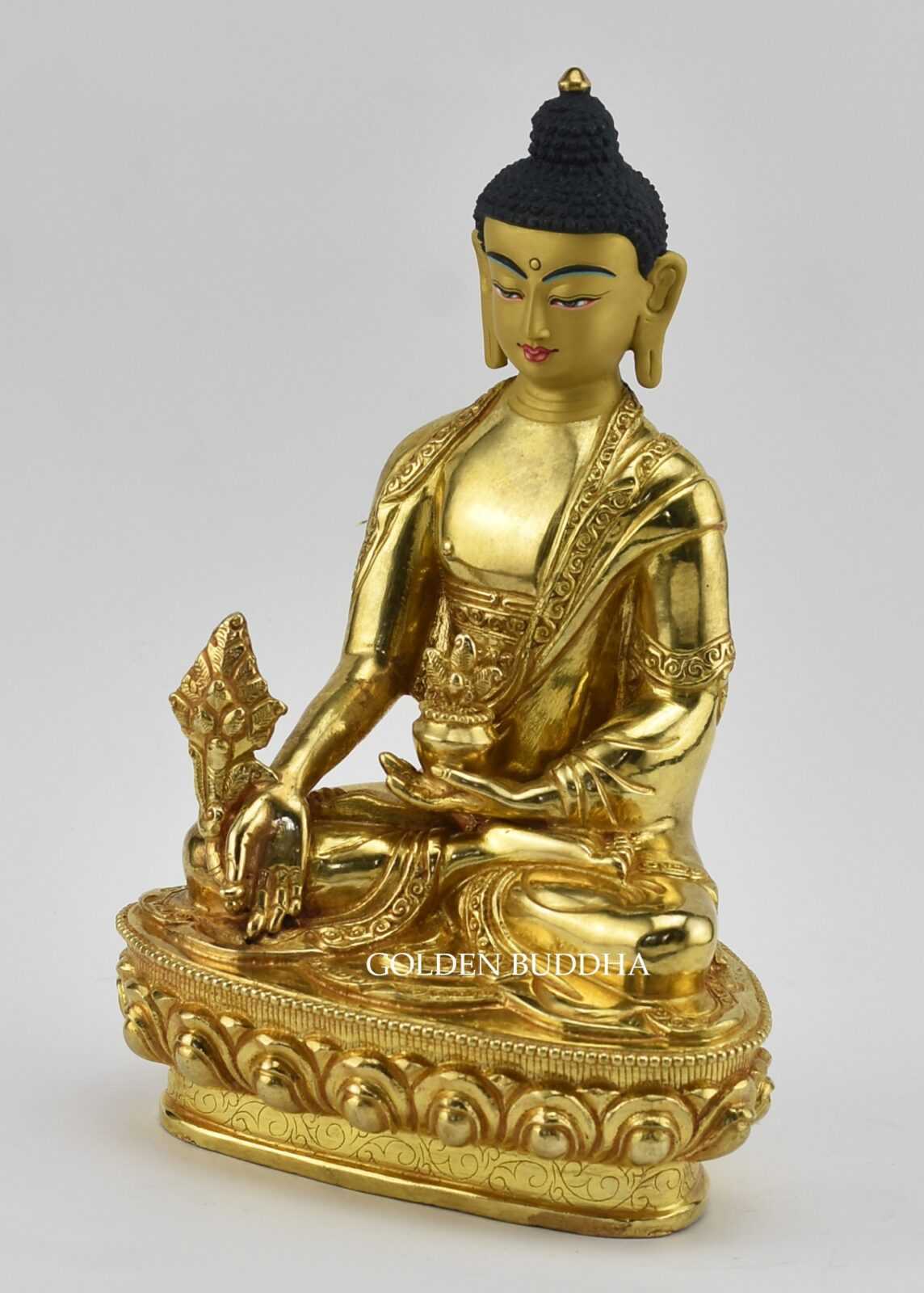
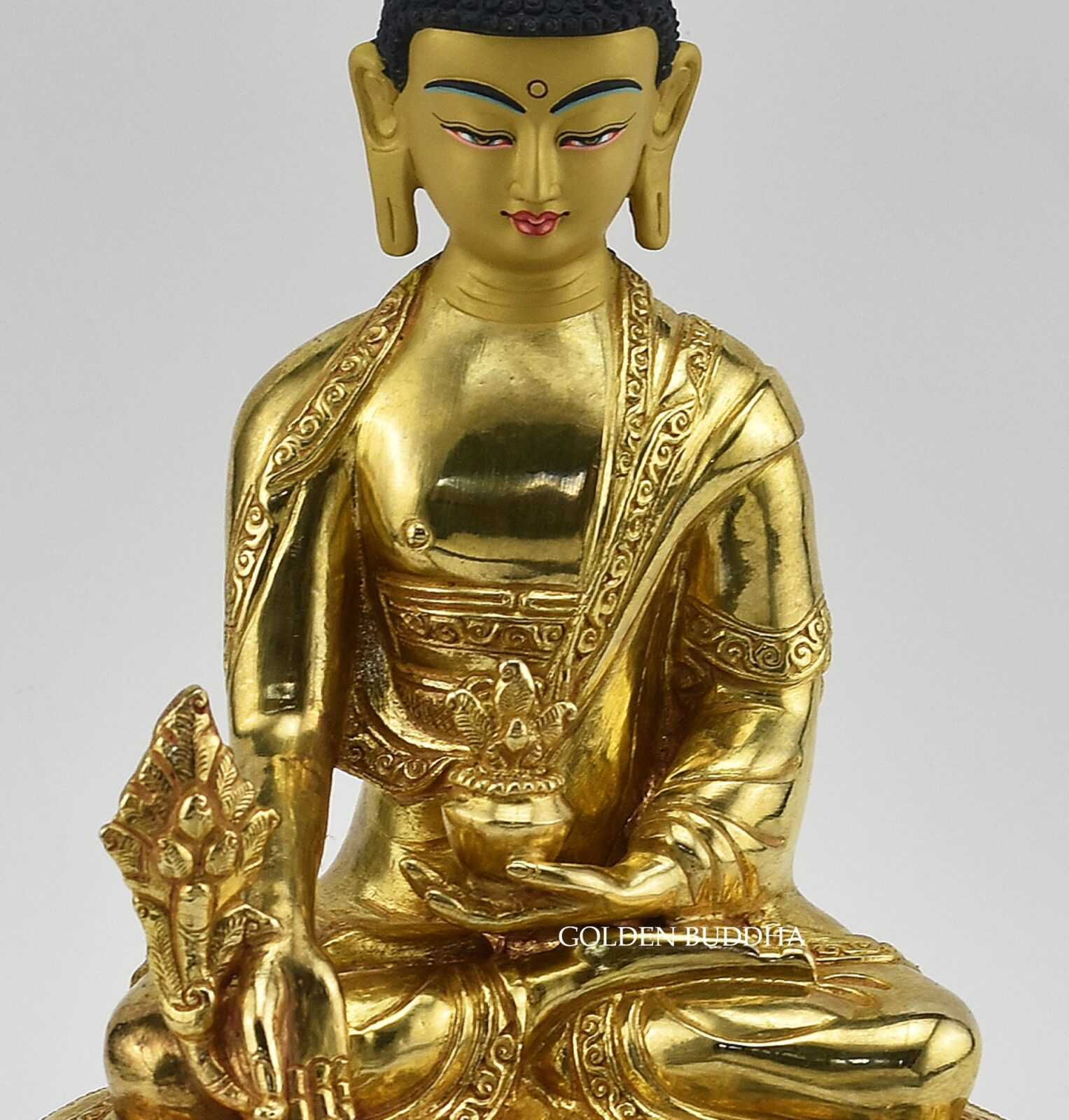
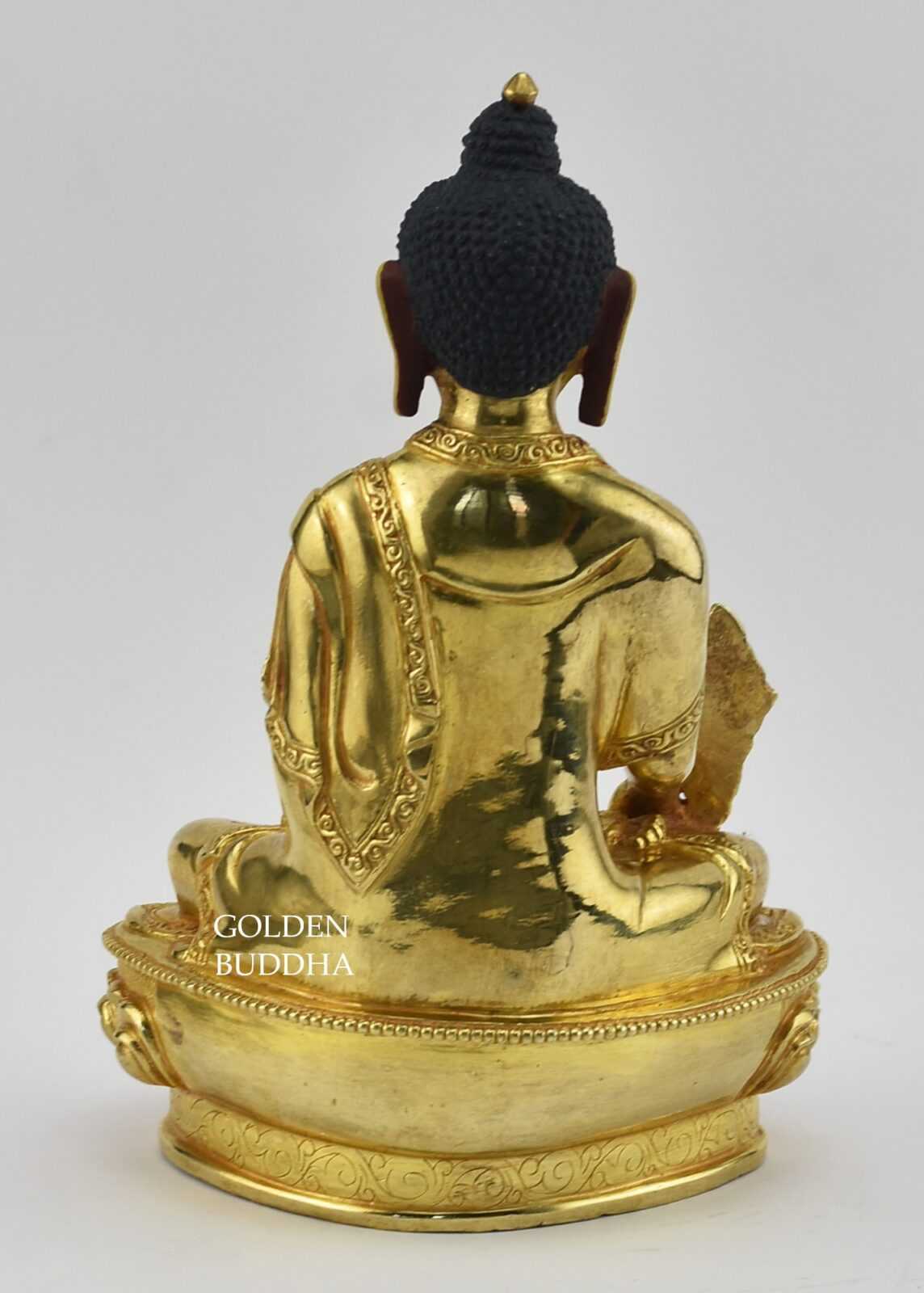
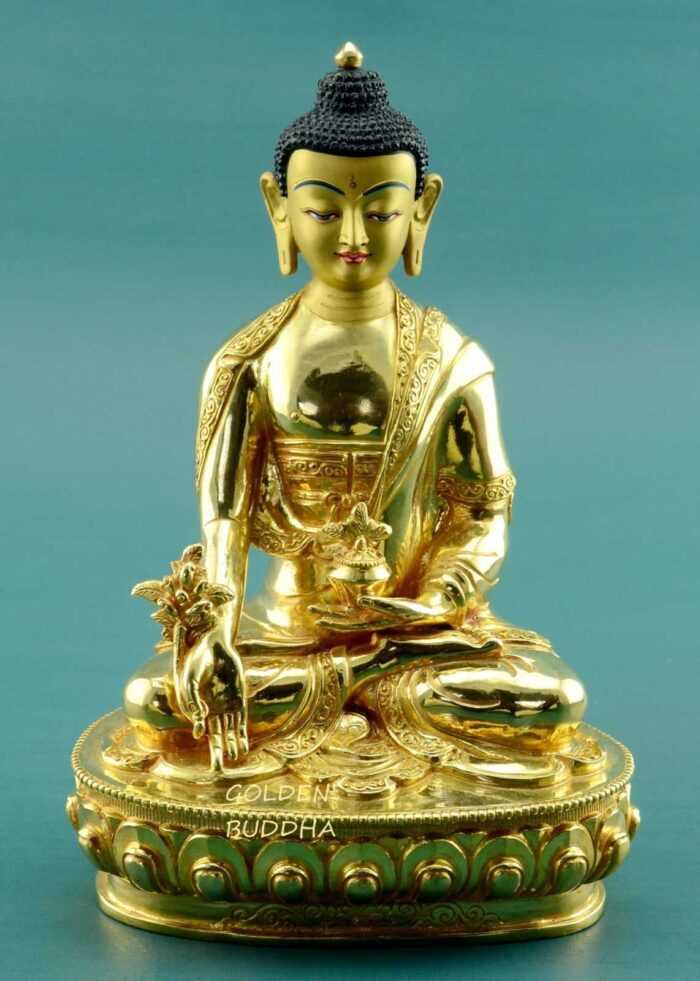
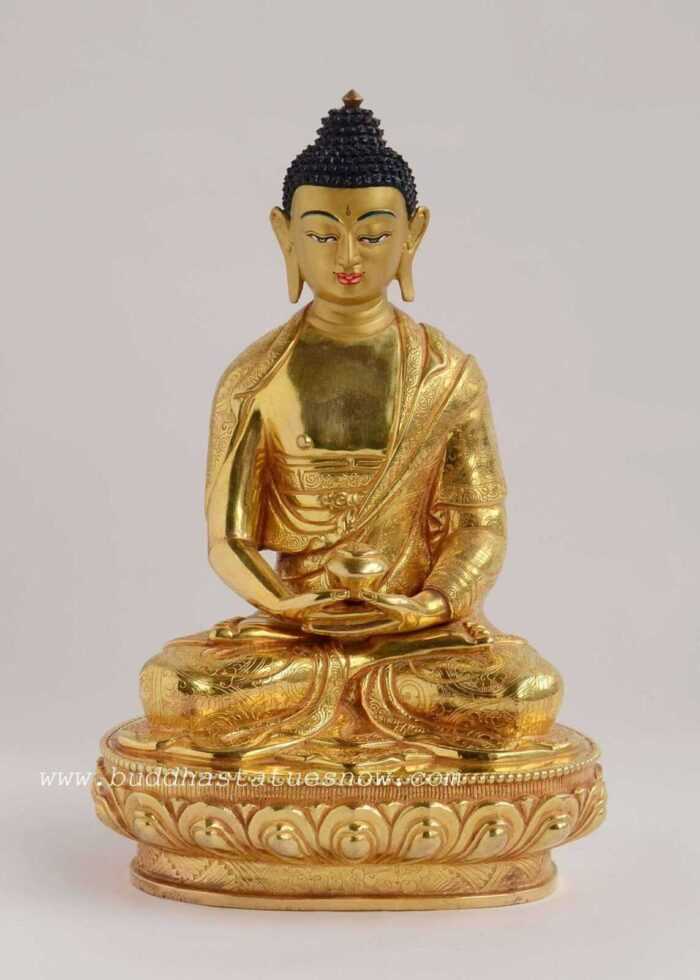
This 8.25-inch Healing Buddha Statue is a finely proportioned representation of Medicine Buddha, or Bhaisajyaguru, handmade in Patan, Nepal from copper alloy using the traditional lost wax casting method. Fire gilded in 24K gold, the sculpture combines a luminous golden surface with hand-carved scrollwork decorating the borders and hemlines of the Buddha’s monastic robes. His face is hand painted with 18K gold and natural pigments, while the dark blue-black hair creates a striking contrast with the warm gilded finish. Measuring 8.25 inches high, 5.5 inches wide, and 3.5 inches deep, this compact shrine-size sculpture is particularly well suited to a home altar, meditation room, or dedicated healing practice space.
Medicine Buddha is known in Sanskrit as Bhaisajyaguru and in Tibetan as Sangye Menla. He embodies the healing activity of enlightened wisdom and is invoked not only in relation to physical illness, but also for overcoming the mental and spiritual causes of suffering. His practice ultimately points beyond temporary relief toward liberation from ignorance and the recurring suffering of samsara. Our guide to Medicine Buddha and his healing practice explores this symbolism and tradition in greater depth.
Healing Buddha Statue Features
The iconography of this Healing Buddha Statue immediately distinguishes Bhaisajyaguru from other seated Buddhas. His right hand extends downward in Varada Mudra, the gesture of generosity and granting blessings, while holding the stem of the medicinal myrobalan plant. Traditionally associated with Tibetan medicine, myrobalan represents the healing activity of Medicine Buddha and, on a deeper level, wisdom capable of treating the fundamental causes of suffering. His left hand rests in Dhyana Mudra and supports the medicine bowl containing healing nectar. Together, these attributes express the union of compassionate healing activity and meditative wisdom.
The Buddha sits in full lotus posture upon a single lotus throne. The sculptor has left broad areas of the gilded robe comparatively smooth while concentrating intricate hand-carved scrollwork along the robe borders, waist, sleeves, and hemlines. This creates an attractive contrast between polished gold surfaces and finely worked ornamentation. The elongated earlobes, urna between the brows, tightly curled hair, and prominent ushnisha complete the traditional physical characteristics of an enlightened Buddha.
Medicine Buddha Mantra and Healing Practice
Medicine Buddha’s mantra, Om Bekandze Bekandze Maha Bekandze Radza Samudgate Soha, is among the best-known healing mantras in Tibetan Buddhism. Its meaning extends beyond physical health. The successive expressions of healing are traditionally understood as addressing ordinary suffering, the deeper afflictions of greed, hatred, and ignorance, and ultimately the fundamental condition that perpetuates death and rebirth. For this reason, a Medicine Buddha statue can serve both as the focal point of healing practices and as a reminder that Buddhist healing ultimately encompasses body, mind, and the causes of suffering themselves.
A Matching Medicine Buddha, Amida and Shakyamuni Statue Set
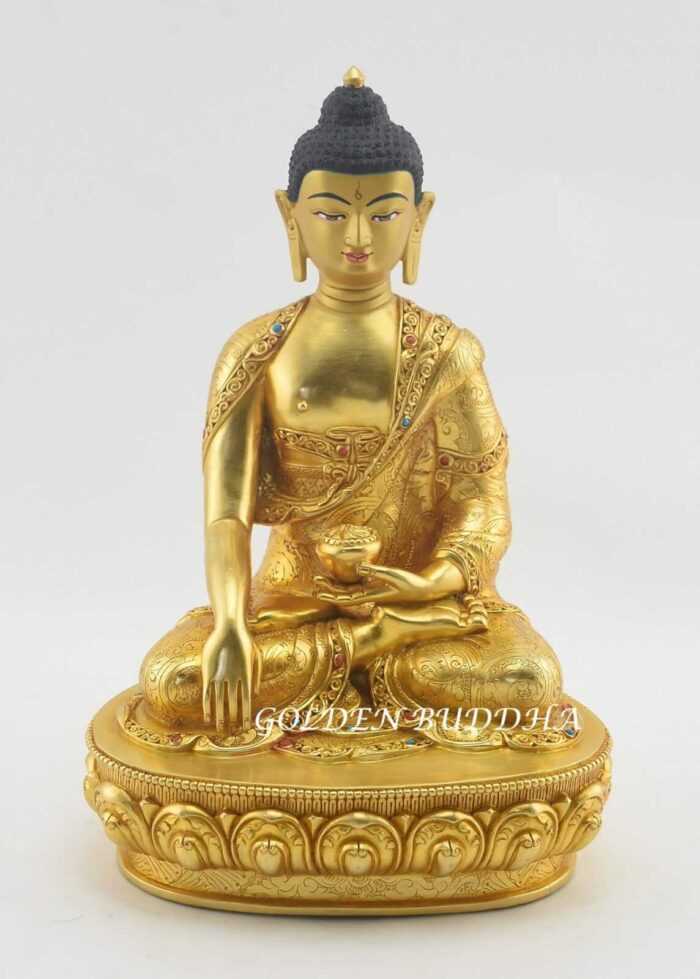
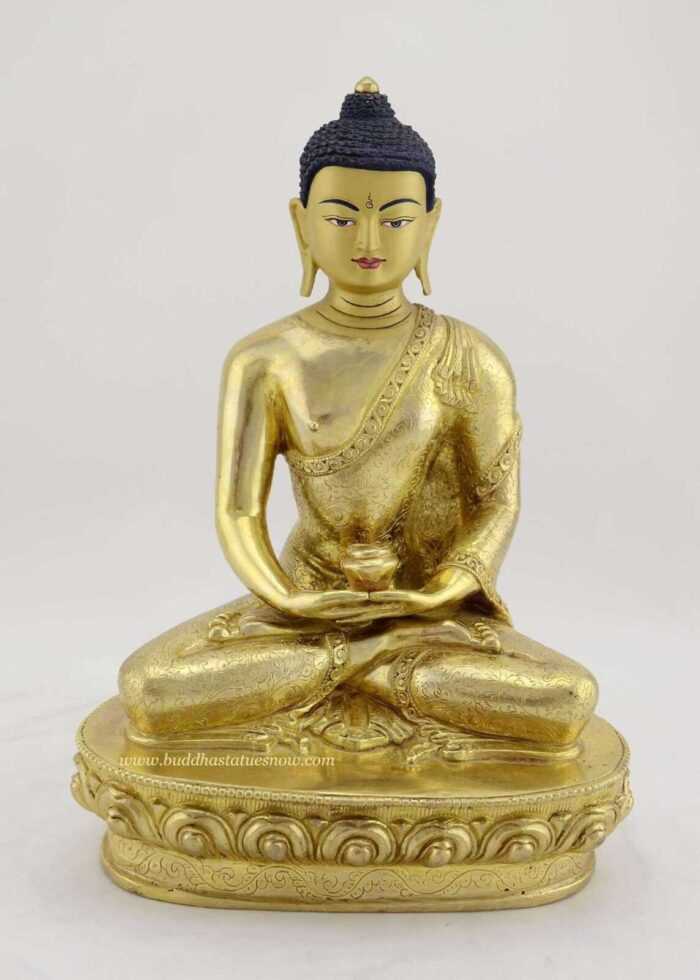
This Healing Buddha makes an especially harmonious three-statue arrangement with our 8.75-inch Amida Buddha sculpture and 9-inch Shakyamuni Buddha statue. Their closely matched dimensions, warm gold gilding, dark blue-black hair, painted faces, ornamental robes, and lotus thrones give the three sculptures a cohesive visual presence while preserving the distinctive iconography of each Buddha.
The grouping is also meaningful doctrinally. Shakyamuni represents the historical Buddha and the awakening through which the Dharma was revealed in our age; his earth-touching Bhumisparsha Mudra recalls his enlightenment beneath the Bodhi tree. Medicine Buddha embodies enlightened healing and the transformation of physical, mental, and spiritual suffering. Amitabha, the Buddha of Infinite Light, represents compassion, meditative wisdom, and the aspiration for rebirth in Sukhavati, the Pure Land. Together they can therefore be understood as a complementary devotional grouping centered upon awakening, healing, and liberation rather than simply three visually matching sculptures.
Custom Made Medicine Buddha Statues
If you appreciate this Healing Buddha Statue but require another size, finish, or altar configuration, we can arrange custom Tibetan Buddhist statues handmade by skilled artisans in Nepal. Medicine Buddha may be commissioned in copper alloy with 24K gold gilding, traditional painted facial details, specialized engraving, and different pedestal proportions. Coordinated Medicine Buddha, Shakyamuni, and Amitabha statues can also be commissioned to create a balanced shrine set with matching dimensions and complementary finishes.
Authentic, Handmade in Nepal
Every statue is handcrafted in Patan, Nepal, using traditional lost wax casting and comes with a certificate of authenticity issued by Nepal’s Department of Archaeology, verifying its materials, technique, and origin.
Reviews
There are no reviews yet.